

Check out our latest collection of compact vacuum sealer for food!
Bulk grocery shopping can save your family serious money, but only if the food stays fresh long enough to use. The real secret is not buying more. It is storing smarter. With the right containers, temperature control, humidity management, and simple rotation habits, families can stretch the life of pantry staples, frozen foods, produce, and meal prep ingredients.
Some foods, like rice, beans, oats, pasta, and canned goods, are ideal for bulk buying because they store well for months or even years. Others, like nuts, fresh produce, cheese, and frozen meat, need better portioning and protection to avoid waste. In this guide, you will learn practical storage, labeling, freezing, and meal planning tips that help bulk groceries last longer while keeping your kitchen organized and your budget on track.
Key Takeaways
- Use airtight containers and keep bulk dry goods at 50-70°F with humidity under 15% for best shelf life
- Set up a FIFO (first-in, first-out) rotation and label everything with dates to avoid waste and keep track
- Match your storage method to the food: oxygen absorbers for grains, vacuum sealers for nuts, and portioning for easy access
Essential Storage Strategies for Bulk Groceries
Good storage turns bulk buying from a gamble into a money-saver. The right containers block air and moisture, and keeping things at stable temps and humidity helps food last for months.
Choosing Airtight Containers and Food-Grade Plastics
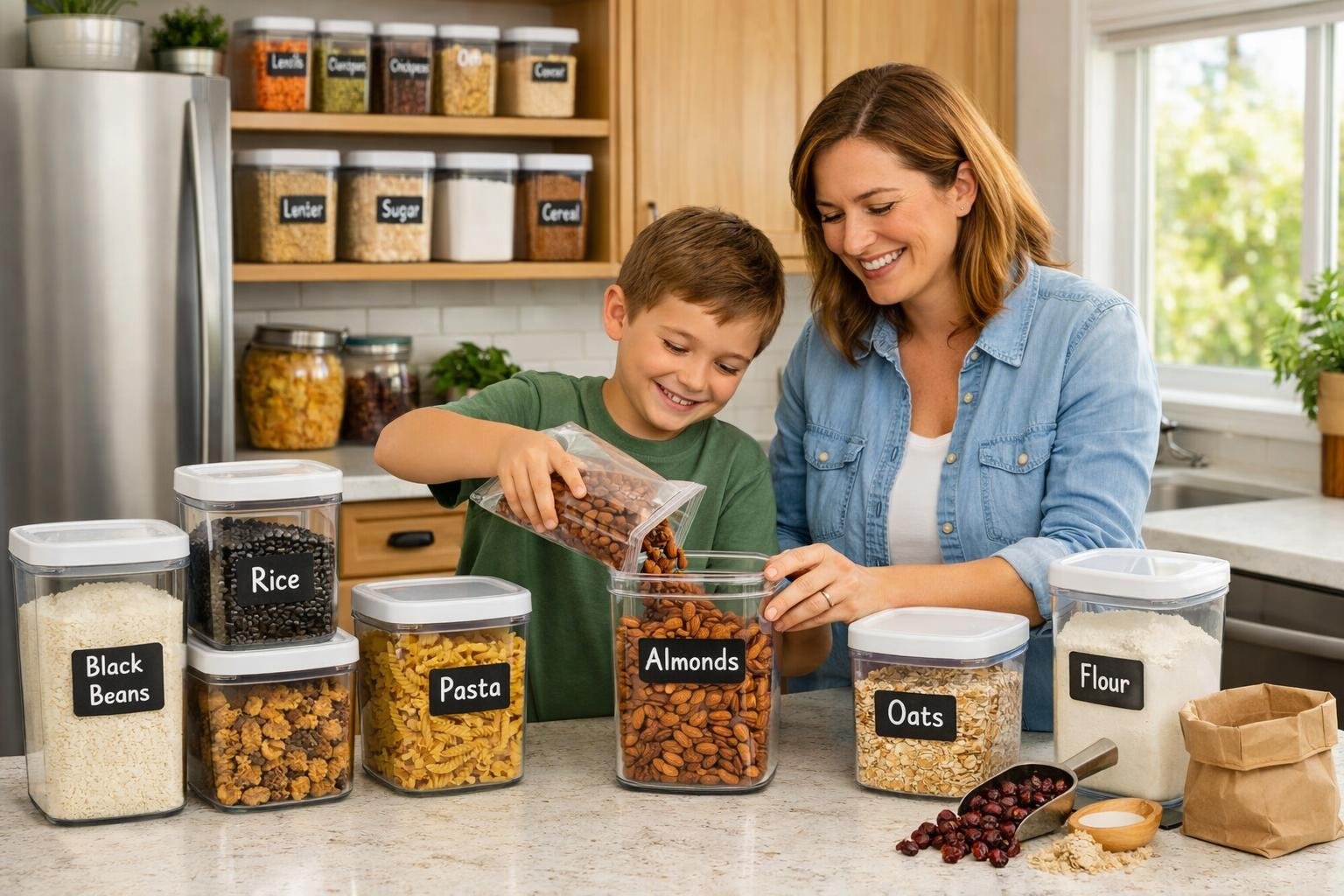
You want containers that really seal out air, moisture, and bugs. Standard food-grade plastic bins are great for dry stuff like flour, rice, and pasta. Look for plastics with recycling codes 1, 2, 4, or 5. Those are safe for food.
Glass mason jars? Perfect for smaller amounts of nuts, seeds, and spices. They’re stackable and you can see what’s inside without opening them. For big batches, stackable plastic bins with gasket lids are the way to go. They keep moisture out.
Container Selection Guide:
| Food Type | Best Container | Capacity Needed |
|---|---|---|
| Flour, sugar | Large stackable bins | 10-25 lbs |
| Rice, grains | Medium containers | 5-10 lbs |
| Nuts, seeds | Small jars or bins | 1-3 lbs |
| Pasta | Tall narrow containers | 3-5 lbs |
Label every container with what’s inside and the expiration date, using permanent marker or good old sticky labels. It’s not fancy, but it saves you from mystery jars and wasted food.
Utilizing Vacuum Sealing and Freezer Bags
Vacuum sealers pull out the air that causes freezer burn and spoilage. We use them for stuff we don’t reach for often, like extra flour, coffee beans, or big bags of dried fruit.
Heavy-duty freezer bags are a good budget option. Squeeze out as much air as you can, seal them up, and store them flat to save space. This works well for bread, nuts, or pre-portioned ingredients.
If you’ll use something within a few weeks, double-bagging in freezer bags is usually fine. For anything you want to keep for months, vacuum sealing is worth it. Flour, for example, stays fresh 1-2 years in the freezer if vacuum sealed, but only 6-8 months in a regular container.
Managing Temperature and Humidity for Longevity
Bulk groceries last longest in cool, dry spots. Think 50-70°F, humidity under 15%. We keep a simple thermometer in the pantry just to check. Basements can be great if they’re dry, but skip them in humid weather.
Sunlight wrecks food quality fast. So, stash your bulk goods in dark pantries or opaque bins, away from windows and hot appliances.
Optimal Storage Locations:
- Grains and flours: Cool pantry or freezer for long-term
- Nuts and seeds: Fridge or freezer to keep them from going rancid
- Dried beans: Room temp in airtight containers
- Sugar and salt: Anywhere dry (these basically last forever)
Don’t let temps swing up and down. Condensation forms inside containers and mold can take over. If you move something from the freezer to the pantry, let it adjust slowly.
Mastering Organization: How to Rotate and Access Your Bulk Buys
Getting organized turns bulk buying from a hassle into a system that saves money and time. A solid rotation method, clear labels, and storage that makes things easy to grab means less food goes to waste.
FIFO Method to Reduce Food Waste
First-in, first-out (FIFO) is the gold standard for bulk storage. Put new stuff behind the old, so you use up what’s closest to expiring first.
It’s easiest if you line things up in single rows. No more digging through piles. In the pantry, keep older cans or boxes at the front. When you buy new stuff, shove it to the back.
How we do FIFO:
- Pantry: Group by type, dates facing out
- Fridge: Oldest dairy, meats, and produce on the front shelf
- Freezer: Stack new items behind or under the old
Set up your storage spots before a big shopping trip. It makes putting groceries away faster and helps you stick to the rotation from the start.
Labeling and Tracking Expiration Dates
Labeling takes out the guesswork. Every bulk buy gets a date. Add when we bought it and when it expires. Permanent marker, masking tape, or labels all work.
If we split stuff into smaller containers, we copy the date info right away. Label with product name, purchase date, and "use by" or "best by" date. We keep a running list on our phones or taped inside a cabinet for anything expiring soon.
This way, we can plan meals around what needs to be used up, instead of finding surprises during a deep clean. We check our list weekly and move “use soon” items to the front.
Date label basics:
- Best if Used By: Peak quality, not a safety thing
- Sell-By: For stores, food’s still good after
- Use-By: Last day for best quality
Freezer and Pantry Layout Best Practices
Where you put stuff matters. We split the freezer into zones. Meats in one spot, veggies in another, prepared meals here, bread there.
Shallow bins beat deep ones. You can see what you have without digging. Clear containers are best, and don’t cram too much in or air can’t move and temps get uneven.
In the pantry, we give each food type its own shelf. Heavy stuff like flour and rice go low, lighter things like cereal go higher. The middle shelves get the foods we use every day.
Keep the freezer at 0°F to -10°F. Don’t block vents, and leave some space between items so air can flow and everything freezes evenly.
Product-Specific Tips to Maximize Freshness
Different foods need different storage tricks. Temperature, containers, and even how foods interact with each other all play a part in keeping your groceries fresh.
How to Store Potatoes, Nuts, and Grains
Potatoes like it cool and dark, around 45-50°F, with air flow. Paper bags or cardboard boxes are better than plastic, which traps moisture and makes them sprout. Don’t stick potatoes in the fridge; it messes with the taste.
For nuts, airtight containers are a must to keep oxygen out. Store them at 35-65°F, in the dark, or freeze them for up to a year. Check once a month for weird smells or off colors, especially with fatty nuts like walnuts or pecans.
Grains need food-grade containers with tight lids and oxygen absorbers if you’re storing long-term. Keep temps at 40-70°F and humidity below 15%. White rice can last 25-30 years if you store it right, but whole grains with oils only last 6-12 months.
Best Practices for Frozen and Perishable Foods
To prevent freezer burn, get as much air out as possible before sealing. Double-wrap with plastic wrap and foil for extra protection. Keep the freezer at 0°F or below, and avoid opening and closing it constantly.
Label everything with what it is and when you froze it. Use veggies within 8-12 months, and meats within 4-12 months, depending on the cut. Stick to FIFO. New stuff goes in the back.
For perishable bulk like cheese or deli meats, portion them right away. Vacuum sealing helps a ton. Store them in the coldest fridge spot, usually at the back of the lower shelves.
Protecting Against Ethylene Gas and Spoilage
Some fruits and veggies, like apples, bananas, and tomatoes, give off ethylene gas, which speeds up ripening and spoilage of nearby produce. Keep these away from things like lettuce, broccoli, and carrots. Ethylene absorbers in the crisper drawer can help, but honestly, just separating stuff works too.
Check your produce weekly for bad spots or mold. One rotten apple really can spoil the bunch, so toss anything suspect right away. Store onions and potatoes apart. Onions make potatoes sprout faster.
For leafy greens, ditch any damaged leaves, wrap the rest in paper towels, and store in a perforated bag. This keeps them fresh for a week or more.
Meal Planning and Portioning for Bulk Success
Portioning bulk buys right away keeps food from going bad and makes dinner easier later. Breaking down big packs into meal-sized bits right after shopping saves time and stress. You won’t stand there staring at a mountain of chicken, wondering what to do.
Prepping and Portioning with a Vacuum Sealer
A vacuum sealer is a game-changer for bulk buyers. We split up meat, cheese, and other ingredients into meal sizes, then vacuum seal to keep air out.
For a family of four, we portion chicken breasts into 1.5-pound bags, ground beef into 1-pound packs. This way, we grab just what we need for dinner. No thawing a whole bulk pack.
Vacuum sealing keeps meat fresh in the freezer for 2-3 years, way longer than regular bags. We write the contents and date right on the bag.
It takes a little time up front, but pays off big when you’re in a rush.
Batch Cooking and Freezing Family Meals
Cooking several meals at once is a lifesaver. We set aside a few hours on weekends to make 4-6 meals that freeze well.
Casseroles, soups, and pasta dishes are perfect for this. A 5-pound bag of beans turns into chili, soup, and burrito filling. We cook, portion, and freeze in meal-sized packs.
Great for batch cooking and freezing:
- Lasagna and baked pasta
- Chili and stews
- Marinated meats
- Breakfast burritos
- Meatballs and meatloaf
Let meals cool before freezing to avoid ice crystals. Store flat in freezer bags. They thaw quicker and take up less room.
How Meal Planning Cuts Down on Food Waste
Planning meals before you shop stops food from sitting around until it’s too late. We make a menu for the week, then shop for those meals.
This keeps us from buying random bulk stuff we won’t use. If we buy a big bag of potatoes, we make sure potato soup, roasted potatoes, and mashed potatoes are on the menu.
We keep a list of what’s already in the pantry and freezer on the fridge. Before buying more, we plan to use up the old stuff first. It’s not perfect, but it keeps things moving and cuts down on surprises.
Meal planning also shows us if we’re buying too much. If half a bag of veggies goes bad every time, we buy less or find new recipes.
Where to Shop and How to Choose What to Buy in Bulk
Warehouse clubs usually have the best deals on bulk, but it only works if you buy what your family actually eats and can store. Stick to shelf-stable staples you use often, not impulse buys that end up in the trash.
Shopping Smart at Costco and Warehouse Clubs
Costco and other warehouse clubs can seriously cut grocery bills if you shop with a plan. Membership fees usually pay for themselves after just a few trips, assuming you stick to the high-value stuff.
It's worth comparing unit prices at warehouse clubs versus regular grocery stores before buying giant packages. Not every bulk item is a deal, especially if you end up tossing half of it.
Only buy what you can actually store and use. Warehouse clubs shine when it comes to non-perishables, frozen foods, and household supplies that won't spoil anytime soon. Things like rice, pasta, canned goods, and paper products are where the savings stack up.
Best warehouse club categories for families:
- Frozen proteins (chicken, beef, fish)
- Dried grains and legumes
- Cooking oils and condiments
- Cheese and butter (can be frozen)
- Cleaning supplies and paper goods
Picking the Best Pantry Staples for Family Needs
Focus on pantry staples your family actually eats, instead of gambling on huge packages of new stuff. Rice, pasta, flour, oats, and dried beans are reliable. They store for months if you keep them airtight.
If you cook a lot, spices and baking supplies are worth buying in bulk. Just keep in mind, ground spices lose their punch after about six months, so whole spices are a better buy if you use them slowly.
Think about how fast you go through things. A 25-pound bag of flour is great for someone who bakes every week, but it’ll go bad for the occasional baker. Same with nuts. They spoil faster than you’d think because of their oils.
Canned goods, pasta sauce, and broths are safe bets for bulk buying since they last a long time and work in lots of meals. It's smart to stock up when prices dip, but always check those expiration dates.
Advanced Techniques and Tools for Food Longevity
Beyond just tossing things in the pantry, some tools and tricks can help your bulk groceries last way longer. Stuff like temperature monitoring and ethylene gas absorbers can make a bigger difference than most people realize.
Using Ethylene Gas Absorbers for Produce
Fruits and veggies release ethylene gas as they ripen, which speeds up spoilage nearby. Ethylene gas absorbers, those little packets you see in produce drawers, actually help a lot by trapping that gas.
They're especially handy for apples, bananas, tomatoes, and avocados, which pump out a ton of ethylene. Tossing an absorber in with lettuce, broccoli, or carrots can keep them crisp for up to two weeks longer. That’s a game-changer if you buy produce in bulk.
Most absorbers use potassium permanganate or activated carbon. They’re cheap and last a couple months, depending on how much produce you store. For families buying lots of fruits and veggies, these little packets save you from watching your groceries wilt before you get to them.
Monitoring Storage with Thermometers
Temperature swings ruin food faster than you’d think, but most of us don’t notice when our storage areas get too warm. Stick a thermometer in your fridge, freezer, and pantry so you know what’s really going on.
Shoot for 35°F to 38°F in the fridge, and keep your freezer at 0°F or below. Pantry? Somewhere between 50°F and 70°F is best, and cooler is usually better.
Digital thermometers with humidity sensors give you a full picture. Some even beep if things get too warm. This can be a lifesaver during a power outage. Even a small temperature jump can cut the life of perishables in half, which is honestly kind of shocking.
Investing in Quality Storage Solutions
Your storage containers make a huge difference in how long bulk buys stay fresh. Airtight containers, food-grade plastic or glass, keep out moisture, oxygen, and pests.
For dry goods like flour, rice, and pasta, we like containers with gasket-sealed lids. They block out humidity and bugs and keep everything tasting right. Glass is great for things you grab often; stackable plastic containers help if you’re short on space.
Key features to look for:
- BPA-free food-grade plastic or tempered glass
- Gasket or silicone seals for airtight closure
- Clear sides so you can see what’s inside
- Stackable shapes for vertical storage
- Wide openings for easy scooping and cleaning
A good set of containers costs more upfront, but you’ll waste less food. We’ve found that decent storage can keep nuts, dried fruit, and baking stuff good for months longer.
Frequently Asked Questions
Smart bulk storage starts with simple habits: seal food well, portion it early, label everything clearly, and store each item in the right place.
What are the best containers and packaging methods to stop pantry staples from going stale or getting buggy?
Use airtight food-grade containers, glass jars, or sealed storage bags for pantry staples. For long-term dry goods like rice, oats, beans, and flour, use containers with tight lids and keep them in a cool, dry, dark space.
How should families portion and label bulk buys so meal prep stays easy and nothing disappears into the freezer abyss?
Portion bulk foods into meal-sized packs before storing. Label each pack with the food name, amount, and storage date. Keep older items at the front so they get used first.
Which foods actually save money in bulk, and which ones tend to spoil before you can use them?
Rice, beans, oats, pasta, canned goods, and frozen proteins are usually strong bulk buys. Fresh berries, leafy greens, herbs, and large spice containers can be wasteful if your family does not use them quickly.
What is the safest way to freeze bulk meat, cheese, and bread without freezer burn or weird texture changes?
Remove as much air as possible before freezing. Use freezer-safe bags, airtight containers, or vacuum sealing. Slice bread before freezing, shred cheese for cooking, and portion meat into meal-sized packs.
How do humidity, heat, and light affect bulk foods, and what is the simplest setup to control them at home?
Heat, moisture, and light can shorten shelf life, cause clumping, and speed up spoilage. Store bulk foods in airtight containers inside a cool, dry, dark pantry or cabinet.
What budget rules help families buy in bulk without wasting food or cash?
Buy only what your family already uses often. Compare price per unit, check storage space first, and avoid bulk purchases for foods you have not tried or cannot finish before they spoil.
Share:
Which Bag Features Matter Most For Sous Vide Cooking At Home
What Causes Frozen Food To Lose Flavor Even When Stored Carefully