

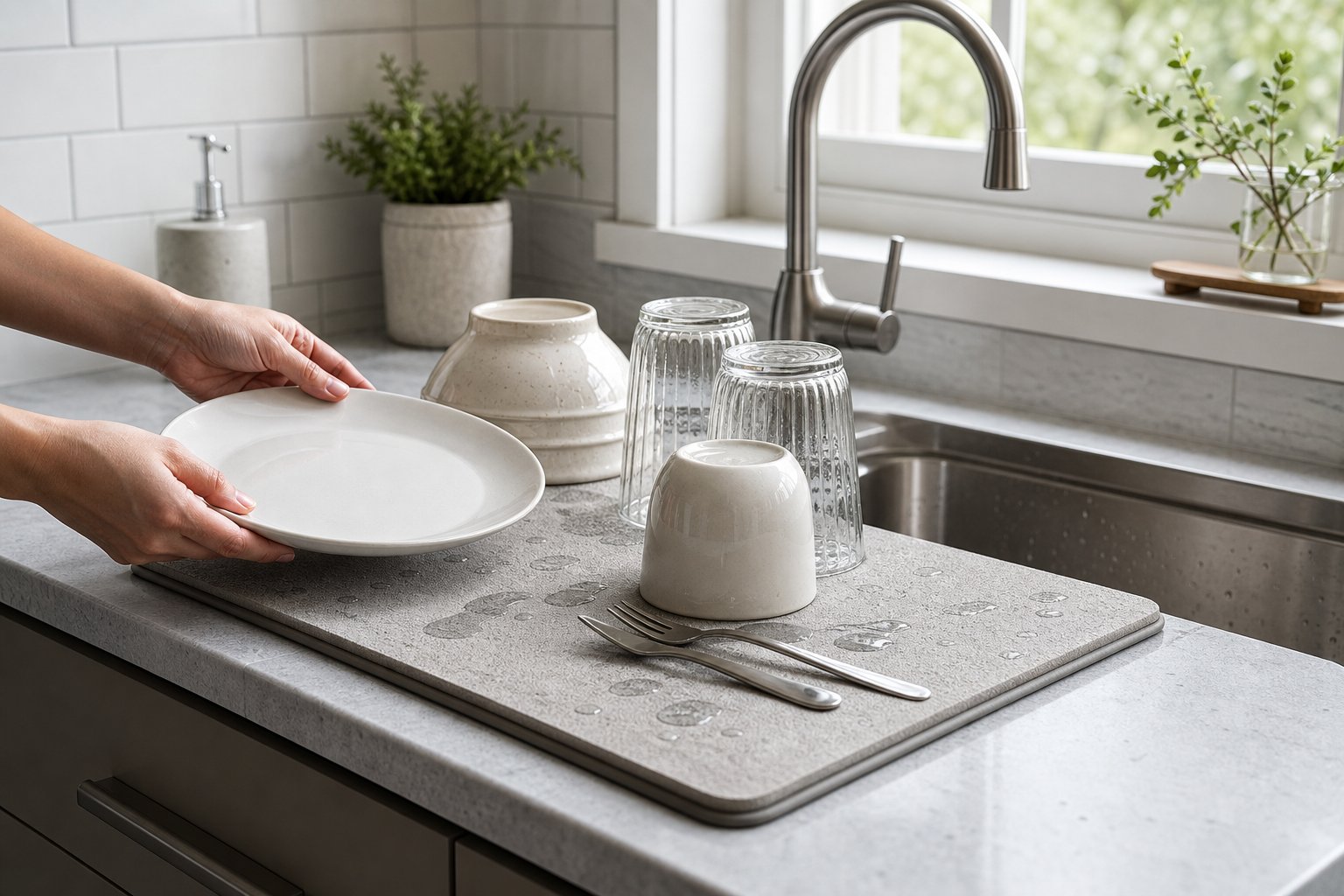
Check out our latest drying mats collection!
Water around the faucet and sink can build up quickly during everyday dishwashing. A stone drying mat can help manage splashes and drips by absorbing moisture into its porous surface, helping keep the surrounding countertop drier between washes. Even with a well-designed sink and dish rack, water can collect around frequently used areas unless there is something in place to catch it.
Getting the most from a stone drying mat involves more than simply placing one on the counter. Choosing the right size, positioning it where water tends to collect, and caring for the absorbent surface can all improve its performance and help maintain a cleaner, more organized sink area.
Key Takeaways
- Diatomite's porous structure allows it to absorb everyday splashes and drips.
- Mat placement, size, and daily dishwashing habits all affect how dry the countertop stays.
- Proper cleaning, airflow, and maintenance help preserve the mat's absorbency and appearance.
Why Diatomite Absorbs Splashes So Quickly
The absorbent performance of many stone drying mats comes from the porous structure of diatomite. Understanding the material makes it easier to see why it works well around frequently wet areas such as kitchen sinks.
Diatomaceous Earth, Diatomite, and Porous Stone
Diatomite is a naturally occurring sedimentary rock formed largely from the fossilized remains of diatoms, microscopic organisms whose silica-rich structures accumulated in deposits over long periods of time.
Diatomaceous earth is closely related to diatomite and is generally associated with softer or more finely processed material from these deposits. Stone drying mats may use diatomite or a diatomite-based composition that has been formed into a rigid, porous surface.
The key feature is the network of microscopic pores within the material. These small spaces allow moisture to move away from the exposed surface rather than remaining as a visible puddle.
How Capillary Action Pulls in Moisture
The tiny pores within diatomite can draw in water through capillary action. A similar principle can be seen when an absorbent material pulls liquid away from a wet surface.
When water drips onto a stone drying mat, moisture moves into the porous structure instead of remaining entirely on top of the mat. This helps reduce visible surface water and allows the moisture to spread through a larger area of the material.
The absorbed water has not disappeared. It remains within the porous structure until it gradually evaporates, which is why adequate airflow is important.
What Fast Air-Drying Can and Cannot Do
Once moisture has entered the stone, evaporation begins. Drying speed varies depending on the amount of water, room temperature, humidity, airflow, mat thickness, and the specific material used.
Stone drying mats are best suited to ordinary splashes, drips, and moisture from freshly washed kitchen items. They are not a substitute for a towel when dealing with a large spill, overflowing sink, or standing water from a plumbing problem.
Giving the mat sufficient airflow and avoiding excessive water in one concentrated area can help it dry more effectively between uses.
Build a Practical Drying Zone Around the Sink
Keeping the sink area drier often comes down to positioning. Look at where water regularly collects, such as around the faucet, beside the soap dispenser, or beneath a dish rack, and place absorbent surfaces where they can catch those drips before they spread.
Position a Faucet Mat Where Drips Collect
The area around the faucet often collects water from wet hands, running taps, and routine cleaning. A properly positioned stone faucet mat can absorb some of these everyday drips before they spread across the countertop.
Choose a mat that fits closely enough around the faucet to cover the primary drip zone without interfering with handles, fixtures, or nearby accessories. Measure the faucet base and available counter space before choosing a size or shape.
Give Dish Soap, Sponges, and Brushes Their Own Tray
Soap dispensers, sponges, and dish brushes can leave small amounts of water on the counter after each use. A dedicated stone tray can help contain these drips in one organized area.
Choose a tray with enough room for the items you use regularly without overcrowding them. Keeping wet accessories spaced apart can also improve airflow and make the area easier to clean.
Because residue from soap, food, and sponges can accumulate on any surface, the tray should still be cleaned regularly and allowed to dry thoroughly.
Place a Stone Mat Under a Dish Rack
Dish racks can release a significant amount of water as freshly washed dishes drain. Placing a suitably sized stone mat beneath a compatible rack can help absorb some of those drips and reduce water collecting directly on the countertop.
This setup can be especially useful for households that air-dry dishes regularly. Make sure the rack is stable, the mat is large enough to accommodate the drip area, and the arrangement follows the mat manufacturer's care and weight recommendations.
Keeping standing moisture off the countertop may also be beneficial for surfaces that can be affected by prolonged water exposure.
Choose the Right Mat Style and Size
The best stone drying mat for your kitchen depends on the available counter space, sink configuration, typical dish load, and countertop material. A mat that fits the space properly is easier to use and less likely to create overcrowding around the sink.
Select a Stone Dish Drying Mat for Hand-Washed Dishes
If you regularly hand-wash dishes, choose a stone drying mat that provides enough usable surface area for the items you normally wash. Smaller mats can work well for cups, utensils, and compact kitchens, while larger mats provide more room for plates, bowls, cookware, and cutting boards.
Rather than relying on a standard size category, measure your available counter space and consider how many items typically need to dry at once. The mat should fit comfortably without blocking the sink, faucet controls, or frequently used preparation areas.
A mat that is too small may encourage dishes to overlap, which can trap water and slow air-drying.
Measure Faucet Clearance Before Buying
Before choosing a stone drying mat or faucet mat, measure the available space around your sink. The distance between the faucet, backsplash, sink edge, and surrounding accessories can determine which dimensions will fit properly.
For a faucet mat, check the width of the faucet base and the available depth behind or beside it. Some designs include a notch or curved opening that allows the mat to sit closer to the fixture while covering the surrounding drip zone.
Always compare your measurements with the dimensions and fit information provided for the specific mat you are considering.
Look for Protective Features for Delicate Counters
Rigid stone mats should be used carefully on delicate countertops. A stable, non-slip backing or protective layer can help reduce movement and limit direct abrasion between the mat and the countertop.
When choosing a mat, consider features that:
- Improve stability: A secure base can help prevent the mat from shifting during normal use.
- Protect the countertop: A suitable backing can provide separation between the rigid mat and surfaces that may scratch or mark easily.
Check both the mat manufacturer's instructions and your countertop manufacturer's care guidance before placing a rigid mat on marble, natural stone, engineered stone, laminate, or other sensitive finishes.
Use a Stone Mat Effectively During Dishwashing
A stone drying mat performs best when dishes are given enough space to drain, excess water is kept under control, and larger loads are supported with a suitable rack when necessary.
Keep Wet Dishes Spaced for Better Drying
Give dishes enough room for air to circulate. When plates, bowls, cups, and utensils overlap, moisture can become trapped between surfaces instead of draining or evaporating efficiently.
The mat can only absorb water that reaches its surface. Crowded or stacked dishes may hold water in areas that do not make contact with the mat.
Whenever possible, keep items in a single layer or use a rack that holds them securely apart. Position cups and glasses so they can drain safely, and give larger pieces such as cutting boards enough space for airflow.
Match the Mat to Light Drips Rather Than Heavy Soaking
A stone drying mat is most effective for routine drips and moisture from rinsed dishes. Large cookware or containers holding substantial amounts of water can overwhelm a small section of the mat and temporarily reduce its ability to absorb additional moisture.
For wetter items, allow excess water to drain into the sink before transferring them to the drying area. This reduces concentrated saturation and helps the mat dry more evenly.
Add a Rack or Protective Layer When Needed
For larger dishwashing loads, a dish rack can complement a stone drying mat by holding plates, cookware, and other items upright while water drains below.
If your mat requires additional countertop protection, use only a backing or protective layer that is compatible with the mat and allows it to remain stable. Avoid arrangements that trap moisture beneath the stone.
Combining a properly sized rack with an absorbent mat can create a practical drying area while keeping dishes organized and reducing water around the sink.
Clean and Maintain the Absorbent Surface
Regular care helps preserve a stone drying mat's absorbency and appearance. Cleaning methods vary by product, so always follow the manufacturer's instructions before using detergents, abrasives, or other cleaning products.
Rinse Away Residue and Let Both Sides Dry
Food particles, soap residue, oils, and other buildup can interfere with the porous surface over time. When appropriate for your mat, rinse away loose residue with water and wipe the surface gently with a soft cloth or sponge.
Use cleaning products only when permitted by the manufacturer's care instructions. Some formulas or residues may affect absorbency.
After cleaning, allow the mat to dry thoroughly with adequate airflow. If the product design permits it, standing the mat upright can help expose both sides to the air instead of trapping moisture underneath.
Use Fine-Grit Sandpaper Only If Recommended
Some uncoated diatomite mats can be lightly sanded to remove surface stains or restore absorbency, but this method is not suitable for every stone drying mat.
If the manufacturer specifically recommends sanding, use a fine-grit abrasive and light pressure to avoid damaging the surface. Afterward, remove any dust and allow the mat to dry completely before using it again.
Do not sand coated, printed, treated, or composite mats unless the product's care instructions specifically allow it.
Prevent Chips, Odors, and Reduced Absorbency
Rigid stone drying mats can chip or crack if dropped or struck with heavy cookware. Handle the mat carefully, particularly around its edges and corners.
Avoid leaving the mat submerged or continuously saturated unless the manufacturer states that the product is designed for that use. Prolonged moisture can also encourage odors when residue remains on the surface and the mat does not dry thoroughly.
If absorbency decreases, clean the surface according to the manufacturer's instructions and allow the mat to dry completely. Use abrasive maintenance methods only when they are specifically recommended for that product.
Compare Stone Mats With Other Drying Options
Stone, microfiber, silicone, and traditional dish racks manage water differently. Understanding those differences can help you choose the right option for your kitchen and dishwashing habits.
Stone Mat Versus Microfiber Mat
Microfiber drying mats absorb water into textile fibers and remain damp until that moisture evaporates or the mat is washed and dried. Stone drying mats also absorb moisture, but their rigid porous structure allows water to spread through the material and gradually evaporate.
Actual drying time for either option depends on the amount of water, airflow, humidity, thickness, and material construction.
Microfiber mats generally require regular laundering according to their care instructions. Stone mats are typically cleaned by wiping or rinsing, although the exact maintenance method depends on the product.
Stone Mat Versus Silicone Mat and Drying Rack
Silicone mats are non-absorbent, so water remains on the surface or moves through molded grooves or drainage channels. Depending on the design, excess water may need to be emptied, wiped away, or directed toward the sink.
Dish drying racks primarily organize dishes and allow water to drain away rather than absorbing it themselves. Some include drainage boards or trays, while others are designed to sit over a sink or drying surface.
A stone mat absorbs everyday drips directly into its porous surface, making it useful when reducing visible water on the countertop is a priority.
| Feature | Stone Mat | Silicone Mat | Dish Drying Rack |
|---|---|---|---|
| Absorbs water | Yes | No | No |
| May require draining or wiping | Usually not for light drips | Often | Depends on the drainage design |
| Best suited for | Everyday drips and drying smaller loads | Non-absorbent drying surfaces and cookware | Organizing and draining larger dish loads |
For large amounts of cookware or dishes, a drying rack may provide the most useful support. For everyday cups, utensils, plates, and sink-area drips, a stone drying mat can provide a compact absorbent surface.
Other Useful Places for Quick-Dry Stone
Stone drying trays can also be useful in other areas where small amounts of water regularly collect.
Near a bathroom sink, a suitable stone tray can hold soap dispensers, toothbrush cups, or other accessories while absorbing routine splashes. For shower areas, use only a stone mat specifically designed and rated for use as a bathroom or floor mat, with appropriate slip resistance.
A stone tray can also work well at a coffee station beneath frequently rinsed mugs or beside a kettle or coffee maker, helping manage small drips and wet rings. Make sure the surface is suitable for the appliance and does not interfere with ventilation, stability, or electrical components.
Frequently Asked Questions
Here are common questions about using a stone drying mat around the kitchen sink.
How does a stone drying mat help keep water from pooling around the kitchen sink?
The porous material absorbs everyday drips and splashes instead of allowing all the water to remain on the surface. The absorbed moisture then gradually evaporates as the mat dries.
Where should I place a stone drying mat for the best splash protection during dishwashing?
Place it where water collects most often, such as beside the sink, beneath a dish rack, or near the faucet. Choose a position that does not interfere with sink access or faucet controls.
Can I use a stone drying mat under a dish rack, soap dispenser, and sponge holder?
Yes, provided the mat is appropriately sized and designed for that use. Keep the surface clean, allow it to dry thoroughly, and follow the manufacturer's weight and care instructions.
How quickly does a stone drying mat absorb water after washing dishes?
Absorption and drying times vary by material, construction, water volume, airflow, and humidity. A clean, dry mat should absorb routine drips effectively, but larger amounts of water may take longer to absorb and evaporate.
What is the best way to clean and maintain a stone drying mat?
Follow the manufacturer's care instructions. In general, remove residue gently, allow the mat to dry thoroughly, and use detergents or sanding only when they are approved for the specific product.
Will a stone drying mat damage or stain my countertop?
A properly used mat should not normally damage a compatible countertop, but rigid stone can scratch some delicate surfaces if it moves. Keep the underside clean and dry, use suitable protective backing when recommended, and check your countertop's care guidelines.
Share:
Modular vs One-Piece Stone Drying Mat: Which Setup Fits Your Kitchen Counter Better?
Snack Box vs Bento Box: Which Works Better for Snacks, Small Meals, and Day Trips?