

Check out our latest home & kitchen collection!
Meal prep saves hours during busy weeks, but if you don’t store things right, even the most carefully cooked meals can go bad, lose their flavor, or just get weirdly unappetizing.
Prep and storage aren’t really separate steps, they’re tangled together from the start. What you do while prepping directly affects how your meals hold up, taste, and stay safe all week.
Just think about it: how you cool that roasted chicken, the containers you grab for your quinoa bowls, even the way you divvy up leftovers, all of it shapes how long your food lasts.
Most of us have opened the fridge only to find wilted salads or freezer-burned casseroles, and it’s usually because something went sideways with storage. Once you catch on to the connection between prep and storage, you can dodge most of those letdowns.
This guide digs into how your prep choices set you up for storage success, from picking the right containers to getting the hang of refrigeration and freezing. I’ll share practical moves for keeping food fresh, nutritious, and safe, so you actually get to enjoy what you cooked all week.
Key Takeaways
- Prep and storage work as one ongoing process, not separate steps
- Your choices—containers, cooling, portioning—decide how long food stays good
- Good storage keeps food tasty, cuts waste, and makes meal prep worth the effort
Why Prep and Storage Are Inseparable
Meal prep only pays off when you store things right. How you handle food straight after cooking decides if it stays safe, whether nutrients hang around, and if you end up tossing half your work anyway.
Food Safety Fundamentals
Food safety is all about timing between prep and storage. Bacteria love the “danger zone” between 40°F and 140°F, so your meals need to get out of that range fast.
You’ve got about two hours to cool cooked food before it goes in the fridge. Splitting big batches into smaller, shallow containers gets things cold quicker and keeps you out of the danger zone.
Avoiding cross-contamination starts at prep and carries through to storage. Always stash raw meats away from ready-to-eat foods, and use separate containers. Raw proteins go on the bottom fridge shelf, where they can’t drip on anything else.
Airtight containers aren’t just for freshness—they also block bacteria and keep smells from spreading.
Preserving Freshness and Nutrition
The second you chop, cook, or expose ingredients to air, nutrition starts to slip. Good storage slows that down, though it can’t freeze time.
Vitamin C and B vitamins are quick to break down with air and temperature swings. Airtight containers and a fridge at or below 40°F help you hang onto more nutrients.
Different foods last different amounts of time, so prep and storage need to match:
- Leafy greens: 3-5 days if washed, dried, and stored with paper towels
- Cooked grains: 4-6 days in sealed containers
- Proteins: 3-4 days after cooking if refrigerated right
Freezing at 0°F stretches shelf life a lot, but you need to cool food first and leave room in containers for expansion.
Reducing Food Waste Through Smarter Storage
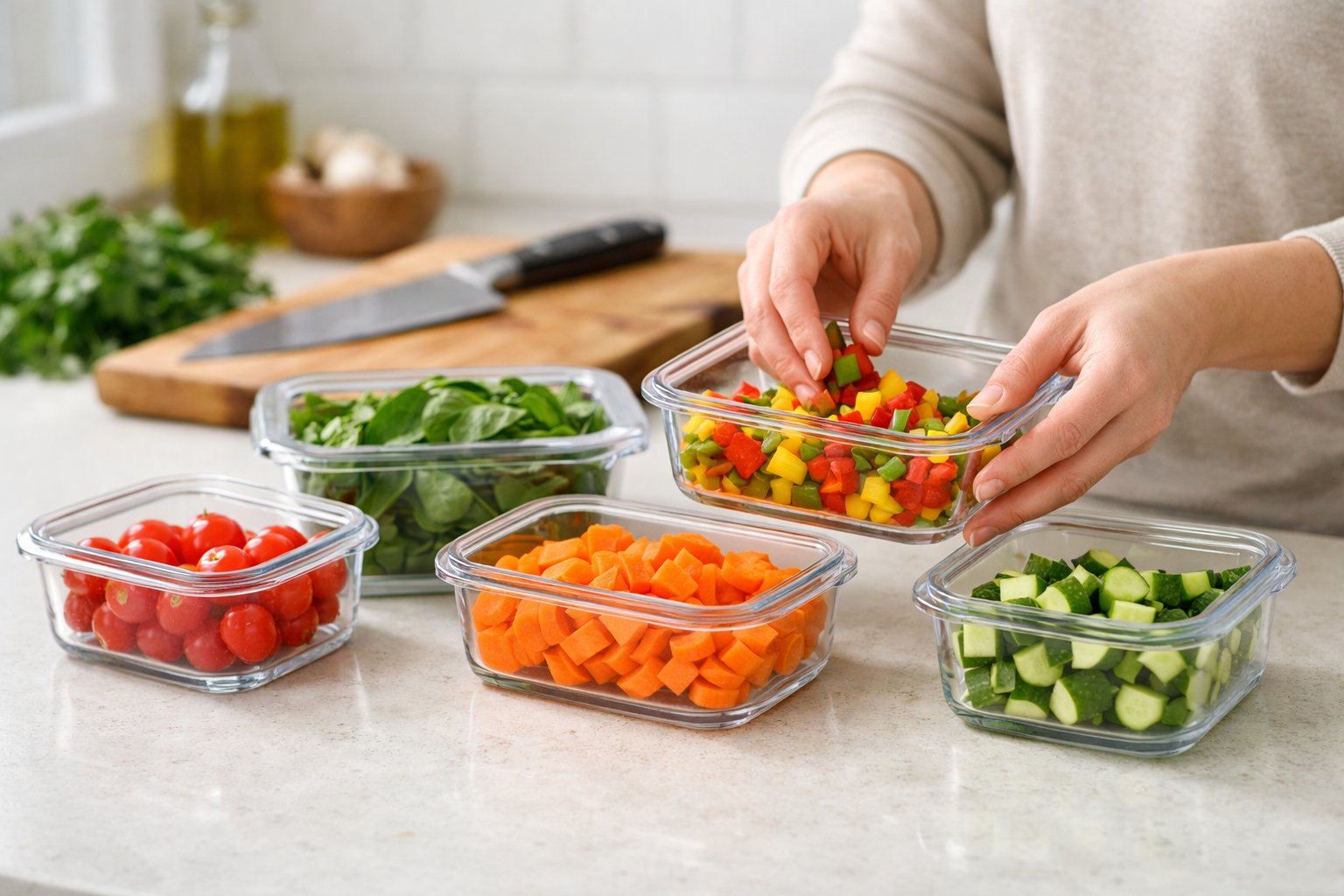
A good storage setup keeps you from forgetting meals in the back of the fridge. Clear containers make it easy to see what’s left.
Labeling with prep dates helps you use things before they’re past their prime. Most cooked meals last 3-4 days in the fridge, and frozen ones keep for 2-3 months before quality drops.
Prepping ingredients separately (veggies, proteins, grains) instead of full meals gives you more flexibility and cuts down on waste. You can mix and match, using up each part before it spoils.
Some foods, like apples and tomatoes, give off ethylene gas that speeds up ripening. Keep them away from sensitive foods like leafy greens and berries to make everything last longer.
The right containers help too. Glass doesn’t hold onto smells or stains, so you’ll actually want to reuse them. Portioning into individual containers stops you from exposing the whole batch to air and temperature changes every time you open one.
Choosing Containers: The Foundation of Freshness
The container you pick makes a huge difference in how long food stays fresh and how easy it is to keep your kitchen organized. Materials, seals, and stackability all play a part in stopping spoilage and making meal prep less of a headache.
Glass vs. Plastic vs. Stainless Steel
Glass is the safest bet for acidic foods like tomato sauce or citrusy dishes. It doesn’t absorb smells or stains, and you can use it in the oven, microwave, or freezer. Mason jars are great for dry goods and leftovers. Downside? Glass is heavy and breaks if you drop it.
Plastic is light and cheap, so it’s everywhere. Just make sure it’s BPA-free to avoid chemicals leaching into your food. It’s not the best for hot foods or reheating, and it’ll stain and pick up odors over time.
Stainless steel is tough and doesn’t rust. It’s good for lunches on the go and dry goods, but you can’t microwave it, and you have to open it to see what’s inside. Still, if you’re hauling food around a lot, it’s practical.
Airtight, Stackable, and Freezer-Safe Options
Airtight seals are what keep food truly fresh. They block out moisture and air, slow bacteria, and keep snacks like nuts and crackers from going stale. You can test a seal by closing the lid and pressing down—if air whooshes out, it’s not airtight.
Stackable containers save fridge and pantry space. Look for flat lids and matching sizes so they nest together. This matters more than you’d think when you’re prepping a bunch of meals.
Freezer-safe containers need to handle cold without cracking. Glass and some plastics work, but always leave space for liquids to expand. Vacuum-sealed bags are another solid option—they squeeze out all the air and save even more space.
Labeling and Dating for Easy Organization
Every container needs a label and a date, even if you swear you’ll remember what’s inside (you won’t). Masking tape and a marker, erasable pens on glass, or reusable labels all work. Mark what it is and when you stored it. For meal prep, you might jot down reheating tips too.
Cooked food is usually safe in the fridge for 3-4 days, and frozen stuff keeps quality for 2-3 months. Labeling helps you use up older items first and keeps waste down.
Refrigeration: The Art of Keeping It Cool
Good refrigeration comes down to the right temperature, knowing your fridge zones, and rotating foods before they expire. Get these basics right and you’ll waste a lot less food.
Temperature Control and Food Safety
Aim for 33°F to 40°F in your fridge. That range keeps bacteria in check but won’t freeze your lettuce.
Most of us never check our fridge temp, but we really should. Bacteria double every 20 minutes in the danger zone. A cheap fridge thermometer can save you a lot of trouble.
Let hot leftovers cool for about 30 minutes before putting them in the fridge. If you toss hot food straight in, it can warm up everything around it. For big batches, use shallow containers so they chill faster.
Refrigerator Zones and Crisper Drawers
Different spots in the fridge aren’t equally cold. Top shelves are a bit warmer—good for drinks and leftovers. Middle shelves are steady and best for dairy and eggs. The bottom shelf is coldest, so that’s where raw meat, poultry, and fish should go.
Crisper drawers control humidity for produce. High humidity (closed vents) keeps greens and herbs from wilting. Low humidity (open vents) is better for fruits and veggies that give off ethylene, like apples and peppers. Keep those away from foods that spoil easily.
The door is the warmest place because it gets opened a lot. Store condiments there, but not milk or eggs, no matter what the built-in holders suggest.
First In, First Out: Managing Expiration
FIFO—first in, first out—is the rule in restaurant kitchens, and it works at home too. Put new groceries behind the old, so you use up what you already have.
Expiration dates can be confusing. "Sell by" is for stores, not you. "Use by" means peak quality. "Best by" is just about flavor. Most foods are still safe after these dates if stored right, though taste or texture might drop off.
Label leftovers with dates right on the container. Keep a quick inventory on your phone or a notepad on the fridge. Maybe dedicate a shelf to "eat this week" stuff. It’s not fancy, but it saves money and food.
Freezing Fundamentals: Long-Term Meal Prep Magic
Freezing lets you stretch meal prep from a week to a month, but it only works if you prep and package things right. Nail the basics and you’ll have weeks of ready meals that actually taste good.
Prepping Meals for the Freezer
Not everything freezes well. Always cool food completely before freezing—otherwise, you’ll get ice crystals and mushy results.
Proteins like cooked chicken, beef, and fish freeze great. So do beans and cooked grains. For veggies like broccoli or green beans, blanch first to keep color and nutrients.
Skip freezing watery veggies like lettuce or cucumbers—they’ll just turn to mush. Cooked potatoes can get weirdly grainy, and dairy-heavy sauces sometimes separate (though stirring usually brings them back).
Portioning is huge. Freeze in single servings or family-sized packs so you only thaw what you need. Smaller portions freeze faster and reheat better.
Label everything with what it is and the date. Mystery meals at the back of the freezer? Never as fun as they sound.
Preventing Freezer Burn
Freezer burn happens when air hits food, drying it out and leaving gray patches. It’s safe but ruins taste and texture.
Keep air out. Heavy-duty freezer bags are great—just squeeze out as much air as you can. If you’re serious, vacuum sealing is even better.
Rigid containers with tight lids work for delicate stuff. Leave about half an inch of space for liquids to expand.
Double-wrapping helps: plastic wrap first, then a freezer bag. For soups and sauces, freeze them flat in bags—they’ll thaw faster and save space.
Freeze things quickly in the coldest part of your freezer. Fast freezing means smaller ice crystals and better texture later.
Thawing and Safe Reheating
Thawing in the fridge is safest. Move meals from freezer to fridge the night before—most need 12-24 hours.
If you’re in a hurry, use cold water. Put the food in a sealed bag, submerge in cold water, and change the water every 30 minutes. Never thaw on the counter—bacteria love that temperature range.
Microwaves are quick for reheating, but can be uneven. Stir halfway and make sure the center hits 165°F. Stovetop is better for soups; ovens work for casseroles.
Some things go straight from freezer to heat—soups and stews, for example. Add a splash of water or broth if they’ve thickened.
Smart Techniques for Batch Cooking and Portion Control
Batch cooking really comes down to three things: cooling food quickly to keep it safe, measuring portions for nutrition, and keeping prep areas separate so you don’t cross-contaminate.
Batch Cooking and Rapid Cooling
Cooking in big batches brings real food safety headaches. Letting hot food sit out at room temperature means it quickly hits that danger zone between 4°C and 60°C—prime time for bacteria to go wild.
To keep things safe, we’ve got to cool our meals from hot-off-the-stove down to 4°C within two hours, tops. The simplest way? Split everything into shallow containers, no deeper than 5 centimeters. More surface area, faster cooling—simple as that.
Small batches can go straight into the fridge, but if we’re dealing with a mountain of food, that just warms up everything else in there. For big preps, I like to use an ice bath: set the containers in a sink full of ice water and let the temp drop before sticking them in the fridge. A food thermometer comes in handy here—poke around to make sure the inside is just as cool as the outside.
Don’t stack hot containers while they’re cooling. They need airflow, and stacking just traps heat right where you don’t want it.
Measuring and Portioning for Success
Getting portions right with batch cooking is all about consistency and having the right gear. We reach for measuring cups, kitchen scales, and containers that actually fit the meal—no more guessing.
A digital scale is a game-changer, especially for proteins and grains. Volume can lie, but grams don’t. For meal prep, we usually shoot for 115-170 grams of protein, 150-200 grams of veggies, and 100-150 grams of grains or starches per serving.
Using identical containers makes portioning almost automatic. If every box is the same size, we get even meals without extra math. It’s worth labeling each container with the contents and date—just slap on some tape or use a marker. Trust me, future-you will thank you when you’re not playing “freezer surprise.”
I’m a big fan of the assembly line method: lay out all your containers, then add each ingredient one by one. It’s quicker, and you don’t end up shortchanging the last meal.
Avoiding Cross-Contamination
Cross-contamination is sneaky. Raw stuff and ready-to-eat foods don’t mix, so our cutting board game needs to be on point.
We keep separate boards for raw proteins and everything else. Color coding helps—red for meat, green for veggies, blue for fish. If you’re stuck with just one board, prep veggies and cooked stuff first, then tackle raw proteins last.
During a big prep, we split the workspace into zones. Raw chicken and its gear stay in one area, cooked food in another. That simple separation keeps things safer.
Washing hands between tasks is basic, but easy to forget when you’re in the meal prep zone. We also hit counters and tools with hot soapy water or a bleach solution (about a tablespoon per gallon). Knives and tools that touch raw meat? Straight to the sink, not back in the drawer.
Special Storage Tips for Specific Foods
Not all foods play by the same storage rules. Produce, proteins, and sauces each have quirks that make a difference in how long they stay fresh and safe.
Storing Fruits, Veggies, and Leafy Greens
Fruit and veggie storage starts with understanding ethylene gas. Apples, bananas, and tomatoes release it, which can make nearby produce ripen (and spoil) quicker. We keep those away from greens and berries.
Leafy greens last longer if we line their containers with paper towels to soak up extra moisture. We don’t wash them until we’re ready to eat. For cut carrots or celery, storing them submerged in water in the fridge keeps them snappy for days.
Berries are fussy—they mold fast. We stash them unwashed in containers that let them breathe, only rinsing right before eating. For fruits that brown, like apples or avocados, a quick toss with lemon or lime juice keeps them looking (and tasting) good.
Root veggies—think potatoes and onions—like a cool, dark, dry spot outside the fridge. But don’t store them together; potatoes go bad faster next to onions.
Meal Prep for Proteins, Grains, and Oats
Cooked proteins need to cool off fast. We break up big batches into shallow containers and get them below 40°F within two hours. Chicken, fish, and beef usually last 3-4 days in the fridge if sealed up tight.
With grains like rice and quinoa, letting them cool fully before refrigerating prevents sogginess. They’ll keep for 4-6 days. We portion them ahead so they’re ready to reheat.
Overnight oats are a meal prep favorite. We make them in single-serve jars with a 1:1 oats-to-milk ratio, and they last up to 5 days. Add fresh fruit just before eating to avoid a mushy mess.
Raw proteins? Always store them on the bottom fridge shelf to avoid dripping on other foods. Either use them within a day or two, or freeze them in meal-sized packs.
Maintaining Freshness for Sauces and Marinated Dishes
Sauces and dressings need their own storage strategies. Oil-based dressings turn solid in the fridge, so let them warm up on the counter for a bit before using. Dairy-based sauces spoil faster—give them just 2-3 days.
When marinating proteins, do it right in the storage container or a freezer bag, squeezing out as much air as you can. Always marinate in the fridge. Acidic marinades (think vinegar or citrus) start breaking down meat if left too long, so we keep it under 24 hours.
For homemade sauces, freezing in small portions—like ice cube trays—makes it easy to grab just what you need. Most keep 5-7 days in the fridge if sealed up tight.
Tomato-based sauces need a little space in the container for expansion. And we skip reactive metal containers for anything acidic—glass or BPA-free plastic is safer.
Meal Prep Storage Hacks for Maximum Efficiency
Smart storage isn’t just about containers. We need systems that help us keep track, spot issues early, and make meal prep actually fit into real life.
Inventory, Organization, and Minimizing Waste
Labeling with dates isn’t optional. We write the prep date on every container with tape or a marker, and stick to the First In, First Out rule.
Setting up fridge “zones” helps a ton. Prepped proteins go up top for steady temps, raw ingredients hang out in the crisper, and ready-to-eat meals sit right at eye level so we don’t forget them.
Meal prep bags make grab-and-go lunches a breeze. We keep dressings separate to avoid soggy salads. A quick fridge check mid-week helps us spot anything about to go south.
Clear containers are a must. Seeing what’s inside at a glance means less waste—nothing gets lost in the back to become a science experiment.
Recognizing Signs of Spoilage
First thing we notice is the smell. Cooked meats and veggies should smell clean, not sour or weirdly sweet.
Visual clues help too. Grains and beans sprout mold when they’re done. Veggies get slimy, meats turn gray or green. Containers with bulging lids or lots of moisture inside? Toss them.
Texture matters. Rice that’s stickier than usual or veggies that go mushy are probably past their prime. If something seems off, we don’t taste it—better safe than sorry. Generally, cooked proteins get 3-4 days, and raw prepped veggies last 3-5 days if stored right.
Essential Tools for Prep and Storage
We reach for airtight glass containers in all sizes—they work for everything, don’t hold smells, and go from fridge to microwave, no problem.
A decent food processor saves a ton of time chopping veggies. Sharp knives are worth it too—clean cuts mean longer-lasting produce.
Stackable containers make the most of fridge space. We actually measure our shelves before buying to avoid the classic “doesn’t fit” problem. Silicone dividers are handy for keeping foods separate, especially when prepping veggies for different meals.
| Tool | Primary Use | Storage Benefit |
|---|---|---|
| Glass containers | All meals | Microwave-safe, no odor absorption |
| Vacuum sealer | Proteins, baked goods | Extends freezer life 3-5x |
| Silicone bags | Snacks, chopped vegetables | Space-efficient, reusable |
| Mini containers (2 oz) | Dressings, sauces | Portion control, prevents sogginess |
Frequently Asked Questions
How we store and time our meal prep makes all the difference in how long it stays safe and tasty. The details depend on what we’re prepping and if it’s headed for the fridge or freezer.
How long can I expect my meal-prepped steak to stay fresh in the fridge?
Cooked steak usually stays fresh for 3 to 4 days if it’s sealed up tight in the fridge (at 40°F or below) within two hours of cooking.
The trick is cooling it quickly and keeping it airtight. If it starts to smell funky, gets slimy, or changes color before day four, just toss it.
Want to keep it longer? Freeze cooked steak for 2 to 3 months in freezer bags or containers—just push out as much air as you can.
What's the shelf life of rice when prepped ahead of time for meals?
Cooked rice keeps for about 4 to 6 days in the fridge if you use airtight containers and cool it within two hours. Rice is weirdly risky because certain bacteria can survive cooking—so don’t mess around with cooling or storage temps.
If you want to prep way ahead, rice freezes well for up to 6 months. It reheats better than most grains, honestly.
What are some top tips for meal prepping safely to dodge those kitchen mishaps?
Keep cold foods at 40°F or below, and never let cooked foods hang out between 40°F and 140°F for more than two hours. Wash hands, surfaces, and tools before and during prep.
Always use separate boards for raw meat and produce. Cool hot foods quickly in shallow containers so they hit fridge-safe temps fast.
Date everything, and follow first-in, first-out. Reheat leftovers to 165°F to kill off any lingering bacteria.
Freezing my chicken meal prep: How long before it turns into a frosty no-go?
Cooked chicken is good in the freezer for 2 to 6 months if you pack it in airtight, freezer-safe containers or bags. Squeeze out the air to avoid freezer burn—that’s what dries out the chicken.
After two months, quality drops, but it’s still safe up to six. Freezing single portions before combining them makes it easier to thaw just what you need.
When you’re ready to eat, thaw chicken in the fridge overnight. Always reheat to 165°F.
After meal prepping, should I chill out before chilling my food in the fridge?
Let food cool for 30 minutes to 2 hours before refrigerating—no more. Leaving it out longer is a bacteria party.
Forget the old advice about waiting for food to cool all the way down. Modern fridges can handle warm food just fine.
Speed up the process by dividing big batches into shallow containers. That helps heat escape faster so your food gets safe, sooner.
Got a load of meal prep dishes—can I just stash them in the freezer, or is that a recipe for disaster?
Freezing works great for some meal prep dishes, but not all of them. Soups, stews, casseroles, cooked grains, and most proteins hold up really well in the freezer—they usually keep their texture and flavor for months.
But if you've got dishes loaded with water, like salads, raw veggies, or anything with a creamy sauce, expect some disappointment. Those tend to turn watery or weirdly separated after thawing. Pasta and fried foods? They usually just get mushy, which nobody really wants.
I like to freeze meals in individual portions, so I’m not stuck thawing a giant container just for one serving. If you label everything with what it is and when you made it, you’ll have a much better shot at eating things while they’re still at their best—usually within three to six months.
Share:
When Cooking Feels Disorganized Despite a Clean Kitchen
When Cooking Feels Disorganized Despite a Clean Kitchen