

Check out our latest collection of vacuum storage essentials.
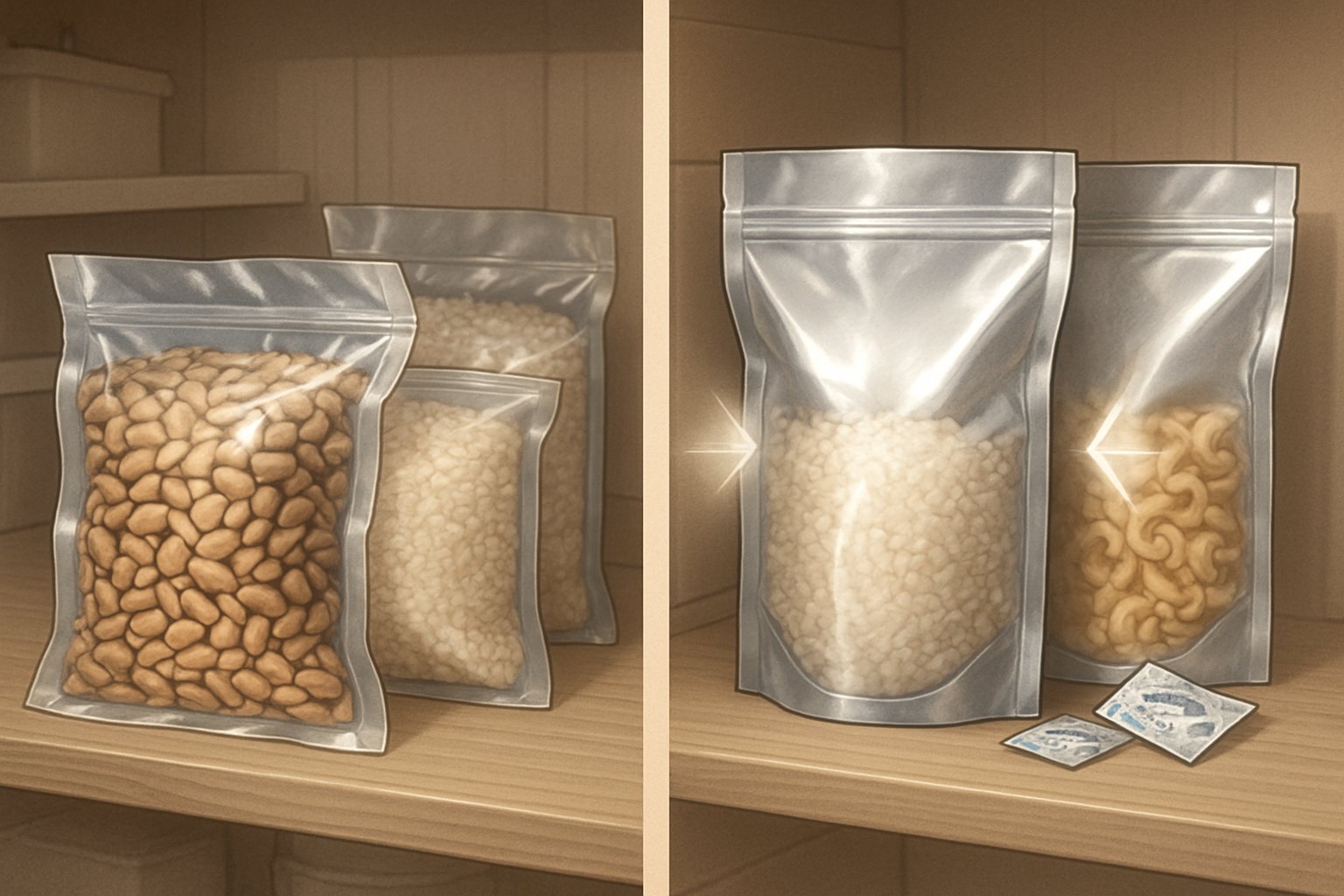
When you're thinking about long-term pantry storage, the vacuum sealed bags vs. Mylar bags with oxygen absorbers debate isn't just a matter of preference. It's about choosing packaging that suits the food and how long you plan to keep it. Opening a bag of rice or beans only to find stale food or pantry pests is frustrating. Both methods can help preserve quality, but they work differently and are suited to different storage needs.
For dry staples you want to store for many years, properly sealed foil-laminate Mylar bags with oxygen absorbers generally offer better oxygen and light protection than standard plastic vacuum bags. Vacuum sealing is convenient for foods you rotate more frequently and for properly refrigerated or frozen foods. Neither method makes unsafe food safe or eliminates the need for temperature control.
Here's how each method works, when to use it, and which mistakes to avoid when organizing your pantry.
Key Takeaways
- Mylar bags with oxygen absorbers are a strong option for long-term storage of appropriately dry, low-fat staples, but shelf life depends on the food and storage conditions.
- Vacuum bags are convenient for shorter-term pantry storage and refrigerator or freezer use. Perishable foods must still be kept at safe temperatures.
- A sound seal, suitable packaging and a cool, dry storage area matter as much as the method you choose.
How Vacuum Sealed Bags and Mylar + Oxygen Absorbers Work
Both methods reduce oxygen exposure, but they do it differently. Vacuum sealers remove air mechanically, while oxygen absorbers react with oxygen inside a sealed package. Neither approach is effective if the package leaks.
Vacuum Sealing and Oxygen Removal
Many countertop vacuum sealers remove air from compatible plastic bags before heat-sealing them. Handheld systems may instead remove air through a valve in a reusable zipper bag.
The amount of air removed varies by machine, bag, food and sealing technique. A snug-looking package shows that air has been withdrawn, but it doesn't prove a particular oxygen level or that the food is safe at room temperature.
Vacuum bags use layered plastic materials that slow oxygen transfer, but their barriers vary. Over long storage periods, oxygen may enter through the film, valves, closures or an imperfect seal.
Role of Oxygen Absorbers in Food Preservation
Most food-safe oxygen absorber packets contain iron-based material that reacts with oxygen. Unlike vacuum sealing, which removes air, an absorber consumes oxygen in the sealed package, including oxygen in spaces between pieces of dry food.
Absorber capacity is measured in cubic centimeters (cc): a 300cc absorber is designed to capture approximately 300cc of oxygen under specified conditions, not 300cc of total air. The amount needed depends on the remaining air space, the food's shape and the package size.
Use oxygen absorbers only as directed for suitable dry foods. Reduced-oxygen storage of moist foods at room temperature can create a serious botulism risk.
Oxygen Absorber Sizing Chart
The following are approximate starting points for well-filled Mylar bags containing suitably dry pantry staples. Bulky foods such as pasta may trap more air than dense grains. Always follow the absorber manufacturer's sizing instructions.
| Container size | Typical absorber capacity | Notes |
|---|---|---|
| 1 pint | 50–100cc | For compact, well-filled dry-food packages. |
| 1 quart | 100–300cc | Use the higher end where more air remains. |
| 1 gallon | 300–500cc | Bulky foods may require more capacity. |
| 5-gallon Mylar-lined bucket | 2,000–3,000cc | Capacity depends on the amount of air trapped among the contents. |
These ranges are general planning guidance, not universal requirements. If the bag is loosely filled or the food traps substantial air, the manufacturer may recommend a larger absorber. Open absorber packaging only when you're ready to work, and promptly protect unused packets in an appropriate airtight container.
Heat Sealing and Creating an Airtight Seal
Traditional heat-seal vacuum bags and foil-laminate Mylar bags need a continuous, intact heat seal. Countertop vacuum machines often heat-seal automatically. For Mylar, use an appropriate impulse sealer or suitable iron according to the bag manufacturer's instructions; the correct temperature and sealing time depend on film thickness and equipment.
Reusable valve bags work differently: their zipper closure must be fully closed, and the valve must be clean and secure. Check any type of bag for wrinkles, punctures or trapped crumbs that could compromise its closure.
How to Test a Seal
For vacuum-sealed bags:
- Before sealing, wipe the closure area clean and check the bag for tears.
- Run the vacuum cycle following the sealer's instructions; close the zipper first if using a reusable valve bag.
- Inspect the heat-seal seam or zipper and valve for gaps, wrinkles or trapped food.
- Check whether the bag holds its snug fit after sealing. If air returns, inspect and reseal or replace the bag.
For Mylar bags with oxygen absorbers:
- After adding the correctly sized absorber, flatten the open edge and make a continuous heat seal following the bag manufacturer's directions.
- Let the seal cool, then visually inspect the entire seam for gaps, folds and weak spots.
- Gently tug the sealed edge to check that the layers remain bonded without pulling the seam apart.
- After the absorber has had time to work, check for new swelling or damage. A tighter bag may be reassuring, but lack of visible shrinkage does not necessarily mean failure, and appearance alone cannot confirm oxygen removal.
If you find a puncture or failed seal, repackage the food promptly using a sound bag and a fresh absorber where needed. These checks assess packaging integrity; they do not establish microbiological safety or prove the contents will last for decades.
Comparing Longevity and Food Freshness
For food stored over years, a package's oxygen and moisture barriers matter. Mylar bags made with a suitable foil barrier and correctly used oxygen absorbers generally provide better long-term protection than ordinary vacuum bags.
Shelf Life of Dried Foods
Mylar is not a guarantee of a 25-year shelf life for every dry food. Under suitable cool, dry conditions, properly packaged white rice may retain acceptable quality for 25–30 years. Dried beans can remain usable for 10 years or more, although older beans may take longer to cook and gradually lose quality. Higher-fat foods, such as brown rice, nuts and some whole-grain products, usually have shorter quality lifespans.
That explains why you may see both “25+ years” and “10–30 years” in long-term storage discussions. Neither is a universal Mylar shelf-life claim: the range varies with the food, its starting condition, packaging and storage temperature. Use food-specific guidance instead of applying one duration to everything.
Vacuum-sealed dry foods can remain in good condition longer than foods left in loosely closed packaging, but there is no single dependable one-to-three-year shelf life for all vacuum bags and contents. Rotate pantry food according to the product's quality, packaging instructions and storage conditions.
Nutrient and Flavor Retention
Oxygen and heat can accelerate changes in flavor, color and some nutrients. A properly sealed foil-barrier Mylar bag limits oxygen and light exposure, helping protect suitable dry staples in long-term storage.
Vacuum sealing also reduces oxygen exposure, but the barrier properties of plastic bags vary. Even well-packaged foods can slowly lose flavor and nutrients over time, especially when stored in warm conditions.
Risks of Oxygen and Light Exposure
Opaque Mylar helps limit light exposure, while clear vacuum bags make it easy to identify the contents. If you use clear bags, place them in a dark cupboard or opaque bin.
Oxygen and light exposure can contribute to:
- Rancidity in foods containing fats and oils
- Loss of certain sensitive vitamins
- Fading flavors and colors
- Changes in the texture and quality of stored foods
Packaging helps slow these changes, but it does not stop all deterioration.
Best Use Cases for Each Method
Choose based on moisture content, fat content, storage location and how soon you'll eat the food.
Dry Goods and Pantry Staples
For long-term storage, properly dried white rice, wheat berries and dried beans are commonly packaged in foil-barrier Mylar with oxygen absorbers. Other foods, such as pasta, flour, oats and commercially freeze-dried products, need food-specific guidance because shelf life and packaging requirements vary.
Examples of foods commonly considered for long-term dry storage include:
- White rice and wheat berries
- Dried beans and lentils
- Dry pasta
- Selected low-fat dry grains
- Commercially freeze-dried foods when the manufacturer approves this storage method
For sugar and salt, an airtight, moisture-resistant container is usually more appropriate than oxygen absorbers, which can cause clumping or hardening. Brown rice, nuts, seeds and other oil-rich foods should not be given the same decades-long shelf-life expectations as white rice.
Freezer Storage and Moist Foods
Vacuum bags are useful for portioning properly refrigerated or frozen meats, fish, vegetables and leftovers. Reducing air contact can help limit freezer burn, but it does not sterilize food or make perishable food shelf-stable.
Vacuum bags can be useful for:
- Meats and fish kept refrigerated or frozen
- Vegetables prepared and frozen using appropriate handling methods
- Meal-prep portions and leftovers kept at safe temperatures
- Some nuts and other foods stored frozen to help protect quality
Do not store moist, perishable foods in oxygen-reduced bags at room temperature. Refrigerate promptly at 40°F (4°C) or below, or freeze at 0°F (-18°C) or below, and follow applicable storage-time guidance. Vacuum packaging does not remove the risk of botulism or other foodborne illness.
Short-Term vs. Long-Term Storage
Vacuum bags generally suit foods you regularly use and rotate, while suitable foil-barrier Mylar packaging is better suited to dry staples intended for long-term emergency storage.
Vacuum storage is convenient for:
- Weekly meal prep and leftovers stored safely
- Portioned foods for the freezer
- Pantry ingredients used frequently
- Bulk purchases divided into smaller portions
Mylar with oxygen absorbers is useful for:
- Emergency supplies of appropriate dry staples
- Bulk white rice, wheat and dried beans
- Foods intended for storage over multiple years
Using both methods for different purposes can make a pantry more convenient without relying on a single packaging approach for every food.
Where Reusable Vacuum Bags Fit
Reusable valve-style vacuum bags are especially practical for short- and medium-term kitchen routines, such as portioning groceries, organizing freezer foods and storing ingredients that get used regularly. The Giraffy & Co. Vacuum Sealer Set includes a cordless handheld sealer and 30 reusable valve bags in three sizes. Those bags are not a replacement for properly sealed foil-barrier Mylar and oxygen absorbers when storing suitable dry staples for many years. Keep refrigerated and frozen foods at the appropriate temperatures regardless of the bag used.
Advantages and Disadvantages
Both methods have benefits and limitations. What matters is matching each to the food and intended storage period.
Mylar Bags with Oxygen Absorbers: Pros and Cons
Pros:
- Foil-barrier packaging offers strong resistance to oxygen and light transmission.
- Oxygen absorbers remove oxygen from the sealed package, including air spaces among dry food pieces.
- Suitable for long-term storage of selected dry, low-fat foods.
- Can be stored inside food-grade buckets for additional physical protection.
- Can be sealed with appropriate equipment without a vacuum machine.
Cons:
- Not suitable for room-temperature oxygen-reduced storage of moist, perishable foods.
- Requires the right absorber capacity and a reliable heat seal.
- Opaque bags make contents harder to identify without labels.
- Bags can be punctured or chewed through by rodents.
- Long-term shelf life varies significantly with the food.
Vacuum Sealed Bags: Pros and Cons
Pros:
- Convenient for portioning and organizing groceries.
- Can help reduce freezer burn when used correctly.
- Many bags are transparent, making food easy to identify.
- Some systems offer washable, reusable bags.
- Removing excess air can make packages more compact.
Cons:
- Plastic barriers, zippers and valves can allow oxygen to enter over time.
- Bags can tear, puncture or lose their seal.
- Requires compatible sealing equipment.
- Not a substitute for refrigeration, freezing or a validated preservation process.
- Generally less suited than foil-barrier Mylar to multi-year dry storage.
Special Considerations and Common Mistakes
Moisture, pests, light exposure and damaged packaging can undermine either method. Avoid assuming that removing oxygen makes every food safe or shelf-stable.
Moisture Content and Botulism Risks
Reduced-oxygen packaging can create conditions that allow Clostridium botulinum to grow in improperly stored foods. For long-term room-temperature storage with oxygen absorbers, extension guidance generally limits use to sufficiently dry foods, approximately 10% moisture or less. Moisture content alone is not a complete food-safety assessment, so follow food-specific guidance and do not guess based on whether an item feels dry.
Take particular care with:
- Dried fruits that retain substantial moisture, including many raisins
- Jerky and dried meat products
- Fresh herbs and vegetables
- Home-dried foods with uncertain dryness
- Any moist cooked food or other perishable food
Vacuum sealing is not a safe room-temperature alternative for those foods. Refrigerate or freeze perishable vacuum-packed products and follow reliable handling instructions. If you're unsure whether a dry food is suitable for years of reduced-oxygen pantry storage, choose an established food-specific storage method instead.
Pest and Rodent Protection
Vacuum bags can be damaged by insects, sharp foods and rough handling. Foil-laminate Mylar offers a tougher barrier for dry-food storage but is not rodent-proof.
Common risks include:
- Rodents chewing through bags
- Sharp pasta or other edges puncturing packaging
- Weak seams caused by folds or improper sealing
- Rough handling that damages the barrier
For long-term dry food, placing sealed Mylar bags inside sturdy food-grade buckets adds protection from handling and some pests. Inspect your storage area regularly for rodent activity.
Light and UV Exposure
Foil-barrier Mylar protects contents from light, while clear vacuum bags need a dark storage location for similar protection. Store dry staples in a cool, dry place away from direct sunlight.
Light protection is particularly useful for foods containing sensitive oils, natural pigments or added vitamins. However, light blocking alone cannot prevent oils from becoming rancid; appropriate storage duration and temperature still matter.
Alternative Storage Options and Pro Tips
Mylar and vacuum bags aren't the only options. Jars and food-grade buckets can also help organize dry goods, particularly when you keep everyday supplies separate from long-term reserves.
Mason Jars and Their Uses
Mason jars are useful for organizing small quantities of dry foods. With a compatible vacuum attachment, some jars can be vacuum sealed for food-quality purposes, but jar vacuum sealing is not a substitute for pressure canning or other safe preservation methods.
Suitable everyday uses include:
- Spices and dried herbs
- Dry snacks and pantry ingredients
- Salt and sugar
- Small amounts of coffee beans
Glass doesn't absorb odors easily, and clear jars let you check your supplies. The drawbacks are breakage, weight and the amount of shelf space they require.
Combining Methods for Maximum Results
A practical combination is to keep long-term dry staples in sealed Mylar bags inside food-grade buckets, while storing everyday portions in jars or vacuum bags.
Useful combinations include:
- Sealed Mylar bags inside food-grade buckets for physical protection
- Mason jars for frequently used dry goods and Mylar for reserve supplies
- Vacuum bags for freezer portions alongside a separate long-term dry pantry supply
Putting vacuum bags inside Mylar is usually unnecessary for ordinary home storage. Use one well-matched primary packaging method and add a protective outer container when needed.
Reusable and Eco-Friendly Solutions
Reusable storage can help reduce packaging waste when bags and containers are cared for properly. Glass jars and food-grade buckets are durable options, and purpose-made reusable vacuum bags can serve foods you rotate regularly.
Reusable options include:
- Glass containers for everyday dry goods
- Food-grade buckets for sturdy outer storage
- Manufacturer-designated reusable vacuum bags for compatible foods
Do not assume every disposable heat-seal bag can be safely washed and reused. Follow the manufacturer's cleaning and reuse instructions, and discard bags with damaged closures, punctures or contamination that cannot be cleaned safely. Some Mylar bags can be resealed if enough clean, undamaged material remains, but replace oxygen absorbers as appropriate after reopening.
If you rotate your food often, reusable containers may be the more practical choice. For properly selected dry staples intended to last for years, high-barrier Mylar remains useful.
Frequently Asked Questions
The most common questions about vacuum bags and Mylar come down to shelf life, food suitability and how to create a reliable seal.
Should I use vacuum sealed bags or Mylar bags for long-term rice and bean storage?
For appropriately dry white rice and beans stored over multiple years, properly sealed foil-barrier Mylar with correctly sized oxygen absorbers is generally the better choice. Under suitable conditions, white rice may maintain acceptable quality for 25–30 years, while dried beans are often described as suitable for 10 years or more. Those are food-specific estimates, not guarantees for all dry goods.
Can I use a vacuum sealer on Mylar bags?
Some specialized machines can vacuum seal compatible Mylar bags, but many household countertop models need textured bags to remove air effectively. For conventional long-term dry storage, an appropriate heat sealer and correctly sized oxygen absorber are usually sufficient.
Should I combine vacuum sealing and oxygen absorbers in Mylar?
Usually not for typical household dry-food storage. Properly sized absorbers and a sound Mylar seal provide the intended oxygen reduction without a separate vacuum step. Follow the packaging manufacturer's instructions for your particular method.
How much oxygen can absorbers remove compared with vacuum sealing?
Oxygen absorbers consume oxygen inside the sealed package; vacuum sealers mechanically remove air. Actual remaining oxygen levels depend on the equipment, packaging, absorber capacity and sealing quality. Neither a vacuum-packed appearance nor a tight Mylar bag confirms a specific residual oxygen percentage.
How do I properly seal a Mylar bag?
Use a suitable heat sealer or iron according to the bag manufacturer's instructions. Keep the sealing area dry and free of food particles, apply even heat and pressure, and let the seam cool before checking it. Inspect for gaps and wrinkles, and avoid puncturing the bag after sealing.
Share:
Wine & Beverage Preservation: How to Reseal Bottles With a Vacuum Sealer
Wine & Beverage Preservation: How to Reseal Bottles With a Vacuum Sealer