

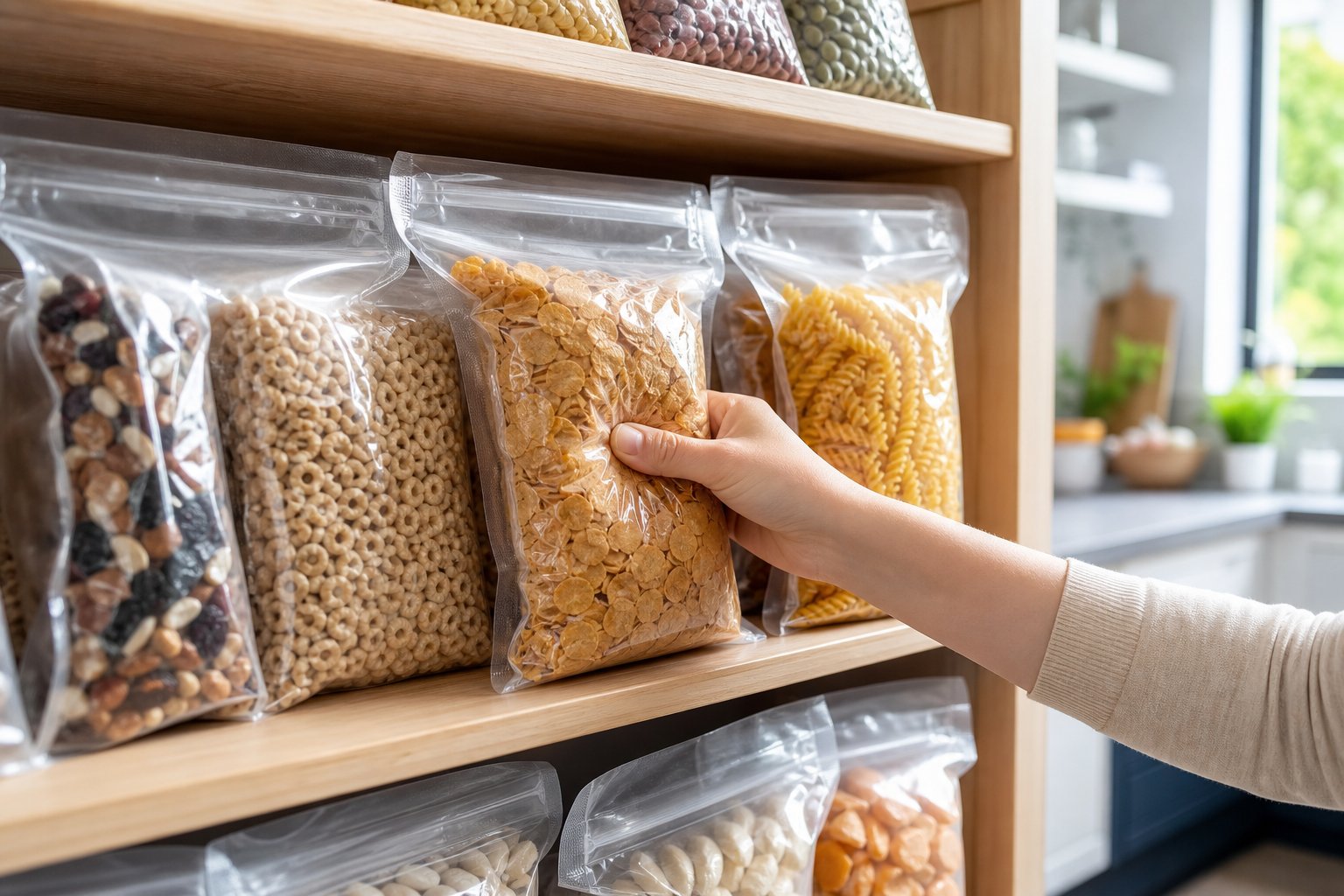
Entdecken Sie unsere neueste Kollektion von kompakten Vakuumierern für Lebensmittel!
Geöffnete Vorratspackungen können ein ordentliches Regal schnell in ein Chaos verwandeln. Eine halbvolle Müslischachtel, ein offener Beutel Mehl oder eine angebrochene Packung Cracker nehmen Platz weg, lassen Lebensmittel schneller alt werden und erschweren es, zu sehen, was man bereits hat.
Vakuumverpackungen bieten geöffneten Trockenwaren einen saubereren, intelligenteren Aufbewahrungsort. Durch das Entfernen überschüssiger Luft und das Erzeugen eines dichteren Verschlusses hilft es, das Altwerden zu verlangsamen, vor Feuchtigkeit zu schützen, das Chaos in der Speisekammer zu reduzieren und Snacks, Backzutaten, Kaffee, Müsli und Getreide leichter zu lagern. In diesem Leitfaden erfahren Sie, wie Vakuumverpackungen funktionieren, welche Lebensmittel am meisten davon profitieren und wie Sie sie für eine frischere und besser organisierte Speisekammer verwenden können.
Wichtigste Erkenntnisse
- Vakuumieren entzieht geöffneten Vorratspackungen die Luft, hält Lebensmittel frisch und bekämpft das Altwerden.
- Vakuumverpackte Artikel sparen Platz und lassen sich ordentlich stapeln, viel besser als lose Beutel und Kartons.
- Die Lagerung von vakuumverpackten Trockenwaren an kühlen, dunklen Orten hält sie monate- oder sogar jahrelang frisch.
- Mehl: von 6-8 Monaten auf 1-2 Jahre
- Getreide und Reis: 6 Monate auf 2+ Jahre
- Nüsse und Samen: 3-6 Monate auf 12+ Monate
- Getrocknete Pasta: 1-2 Jahre auf 3+ Jahre
- Kaffeebohnen: 3-5 Monate auf 6-9 Monate
- Artikelbezeichnung
- Versiegelungsdatum
- Menge oder Gewicht
- Ablaufdatum (falls relevant)
- Jeden Beutel vor dem Einfrieren mit Inhalt und Datum beschriften
- Beutel beim Versiegeln flach hinlegen, um Platz im Gefrierschrank zu sparen
- Versiegelte Beutel vertikal wie Akten stapeln für einfachen Zugriff
- Gemüse vor dem Vakuumieren blanchieren, um Farbe und Textur zu erhalten
Die Wissenschaft hinter dem Vakuumieren für die Vorratslagerung
Vakuumieren funktioniert, indem Luft aus der Verpackung gesaugt und diese dann heißversiegelt wird. Das bedeutet deutlich weniger Sauerstoff im Inneren, was die chemischen und biologischen Prozesse verlangsamt, die Lebensmittel verderben lassen. Außerdem hilft es, Feuchtigkeit und Schädlinge fernzuhalten.
Wie Vakuumierer Luft entfernen und Frische einschließen
Vakuumierer verwenden eine Pumpe, um die Luft aus speziellen Beuteln zu saugen, bevor sie diese mit Hitze verschließen. Kammervakuumierer legen den gesamten Beutel in eine Kammer, entfernen die Luft sowohl aus der Kammer als auch aus dem Beutel und versiegeln ihn dann, sobald der Druck ausgeglichen ist. Diese Methode eignet sich sehr gut für Flüssigkeiten und empfindliche Lebensmittel.
Handvakuumierer und externe Modelle funktionieren etwas anders. Sie werden an Beutel oder Kanister mit Ventilen angeschlossen und saugen die Luft durch das Ventil ab. Diese sind kleiner und einfacher zu lagern, ziehen aber nicht ganz so viel Luft ab wie Kammertypen.
Ein guter Vakuumierer kann den Druck im Beutel auf etwa 5-10 Torr senken (im Vergleich zum normalen Luftdruck von 760 Torr). Alles unter 50 Torr (etwa 93 % Vakuum) verlangsamt die Oxidation und die meisten Mikroben ausreichend für die Lagerung im Vorratsschrank. Es bleibt immer noch ein wenig Sauerstoff übrig, aber nicht genug, um schnell Probleme zu verursachen.
Auswirkungen auf Sauerstoff, Feuchtigkeitsgehalt und Lebensmittelsicherheit
Wenn Sie Sauerstoff entfernen, verhindern Sie das Wachstum der meisten Bakterien, Schimmelpilze und Hefen. Diese Organismen benötigen Luft, um sich zu vermehren. Das Vakuumieren von Vorratsprodukten wie Mehl, Nüssen, Kaffee und Trockenfrüchten verhindert daher, dass sie so schnell verderben.
Sauerstoff lässt auch Fette in Lebensmitteln ranzig werden. Deshalb schmecken Nüsse und Kaffee nach einer Weile eigenartig. Durch das Vakuumieren verlangsamen Sie diesen Prozess und sorgen dafür, dass diese Lebensmittel viel länger gut schmecken.
Das Verschließen des Beutels hält äußere Feuchtigkeit fern, sodass trockene Lebensmittel knusprig bleiben und Dinge wie brauner Zucker oder pulverförmige Zutaten nicht verklumpen. Bei Lebensmitteln, die bereits etwas Feuchtigkeit enthalten, hilft das Vakuumieren, diese einzuschließen, anstatt sie austrocknen zu lassen.
Was eine luftdichte Versiegelung so wichtig macht
Nach dem Entfernen der Luft benötigen Sie eine feste Heißversiegelung. Selbst kleinste Lecks lassen Sauerstoff eindringen und machen den ganzen Sinn zunichte. Die besten Vakuumbeutel verwenden Schichten aus Materialien wie Polyethylen, Polyamid oder EVOH, um Sauerstoff zu blockieren und dicht zu verschließen.
Um eine gute Versiegelung zu erhalten, verwenden Sie die richtige Temperatur und geben Sie ihr ausreichend Zeit. Überprüfen Sie immer die Naht, keine Falten oder Lücken. Beutel mit niedrigen Sauerstoffdurchlässigkeitsraten (unter 15 cm³/m²/Tag) eignen sich am besten für die Langzeitlagerung. Dickere, mehrschichtige Beutel leisten eine bessere Arbeit als normales Plastik, selbst wenn die Versiegelung hält.
Verlängerung der Haltbarkeit und Bewahrung des Geschmacks
Die Vakuumaufbewahrung entzieht dem Beutel Sauerstoff und verlangsamt so die Prozesse, die Lebensmittel abgestanden oder fade machen. Sie erhalten auch eine Barriere gegen Feuchtigkeit und Luft, sodass Lebensmittel ihren Geschmack und ihre Textur viel länger behalten, als wenn Sie nur einen Clip oder einen normalen Behälter verwenden würden.
Wie die Vakuumaufbewahrung die Haltbarkeit von Grundnahrungsmitteln verlängert
Sauerstoff ist der Hauptgrund, warum geöffnete Lebensmittel im Vorratsschrank schnell verderben. Wenn Sie Mehl, Reis, Nüsse oder Trockenfrüchte vakuumieren, entziehen Sie den Bakterien und Schimmelpilzen die Luft, die sie zum Wachsen benötigen.
Reis in seiner normalen Verpackung mag sechs Monate halten, aber vakuumverpackt? Er kann jahrelang haltbar sein. Brauner Reis, der mehr Öl enthält, verdirbt normalerweise innerhalb eines halben Jahres, hält aber vakuumverpackt viel länger.
Nüsse sind extrem empfindlich gegenüber Luft. Ihre Öle werden ranzig und schmecken seltsam, wenn sie offen liegen. Das Vakuumieren hält diese Öle frisch, sodass Nüsse über ein Jahr lang gut bleiben statt nur ein paar Monate.
Typische Haltbarkeitssteigerungen:
Geschmackserhalt und Vermeidung von Altwerden
Vakuumieren verlangsamt die Oxidation, den Prozess, der den Geschmack von Lebensmitteln zerstört. Das ist ein großer Vorteil für Produkte wie Kaffee, Tee, Gewürze und getrocknete Kräuter.
Kaffeebohnen verlieren ihre Öle und ihr Aroma, wenn sie der Luft ausgesetzt sind. Wenn wir sie vakuumieren, behalten sie ihren Geschmack sechs bis neun Monate lang, statt nur drei bis fünf. Sie werden nicht so frisch schmecken wie am ersten Tag, aber Sie werden den Unterschied deutlich bemerken.
Gewürze und Kräuter verlieren an Intensität, wenn ihre Öle verdampfen. Die Vakuumaufbewahrung schließt diese Aromen ein.
Chips, Cracker und andere Snacks verlieren ihre Knusprigkeit durch Feuchtigkeit und Fettoxidation. Vakuumieren hilft, sie knusprig und schmackhaft zu halten, obwohl einige Lebensmittel besser halten als andere.
Feuchtigkeitskontrolle zur Verhinderung von Verderb
Feuchtigkeit ist ein Nährboden für Schimmel und Bakterien. Vakuumbeutel halten Feuchtigkeit fern, was in feuchten Klimazonen oder für Lebensmittel in einem feuchten Vorratsschrank ein Lebensretter ist.
Zucker, Salz und Backpulver bleiben lose, anstatt zu verklumpen. Getrocknete Früchte behalten ihre zähe Textur, anstatt klebrig oder schimmelig zu werden.
Es ist wichtig sicherzustellen, dass Lebensmittel vor dem Verschließen vollständig trocken sind. Jede verbleibende Feuchtigkeit im Beutel kann Kondensation und Verderb verursachen. Wenn Sie hausgemachtes Granola oder dehydrierte Lebensmittel vakuumieren, lassen Sie sie zuerst vollständig abkühlen und trocknen.
Vakuumieren funktioniert noch besser, wenn Sie die Beutel auch an einem kühlen, dunklen Ort aufbewahren. Hitze und Licht können Lebensmittel immer noch beeinträchtigen, auch ohne Sauerstoff.
Arten von Vakuum-Aufbewahrungslösungen
Nicht alle Vakuum-Aufbewahrungswerkzeuge sind gleich. Das richtige hängt davon ab, was Sie versiegeln und wie oft Sie es verwenden. Vertrauen Sie mir, das Wissen um die Unterschiede zwischen Beuteltypen, Versiegelungsarten und was für bestimmte Lebensmittel funktioniert, kann Ihnen Geld und Ärger ersparen.
Vakuumierbeutel im Vergleich zu anderen Aufbewahrungsbeuteln
Es gibt zwei Hauptarten von Vakuumierbeuteln: geprägte und glatte Kammerbeutel. Geprägte Beutel haben eine strukturierte Oberfläche, damit Luft beim Verschließen entweichen kann. Sie funktionieren mit den meisten externen Vakuumierern und sind als vorgeschnittene Beutel oder Rollen erhältlich, die Sie selbst zuschneiden können.
Glatte Kammerbeutel sind einfach flache Plastikbeutel, ohne Struktur. Sie passen nur zu Kammervakuumierern, aber wenn Sie viel versiegeln, sind sie pro Beutel günstiger. Wir wählen normalerweise Kammerbeutel für große Vorratsprojekte.
Normale Ziploc-Beutel können kein Vakuum halten. Einige Handgeräte verwenden Ventilbeutel, mit denen Sie Luft durch ein Einwegventil absaugen können. Diese sind für die kurzfristige Lagerung in Ordnung, halten Lebensmittel aber nicht so lange frisch wie heißversiegelte Vakuumbeutel.
Kammer- im Vergleich zu Handvakuumierern
Kammervakuumierer legen den gesamten Beutel in eine Kammer, saugen die gesamte Luft ab und versiegeln den Beutel, bevor der Druck wiederhergestellt wird. Sie eignen sich für Flüssigkeiten und feuchte Lebensmittel und verwenden günstigere Beutel, sind aber größer und teurer.
Handvakuumierer sind kleine Geräte, die mit speziellen Ventilbeuteln oder Behältern funktionieren. Man drückt sie gegen das Ventil, saugt die Luft ab, und das Ventil schließt sich danach. Diese eignen sich hervorragend für Dinge wie Mehl, Reis, Nüsse oder Müsli, die man häufig öffnen und wieder verschließen möchte.
Externe Vakuumierer (die, die die meisten Leute kaufen) klemmen den Beutel außerhalb der Maschine fest, saugen die Luft ab und versiegeln ihn dann mit Hitze. Sie sind erschwinglich, verarbeiten die meisten trockenen Lebensmittel, kommen aber mit Flüssigkeiten nicht gut zurecht. Für die meisten Anforderungen im Vorratsschrank erledigen sie die Arbeit.
Die richtigen Beutel für bestimmte Lebensmittel auswählen
Trockenwaren wie Mehl, Zucker, Nudeln und Getreide funktionieren mit jedem Vakuumbeutel. Für Sachen mit scharfen Kanten, wie Nudeln oder Müsli, wähle ich dickere Beutel (3-4 mil), um Löcher zu vermeiden.
Nüsse, Kaffeebohnen und Gewürze halten länger in Beuteln mit höheren Sauerstoffbarrieren. Wenn Sie noch einen Schritt weiter gehen möchten, verwenden Sie lichtundurchlässige Beutel für Kaffee und einige Gewürze, um sie vor Lichtschäden zu schützen.
Wenn Sie dieselbe Verpackung immer wieder verschließen, sind wiederverwendbare Vakuumbehälter oder Ventilbeutel sinnvoller als heißversiegelte Beutel. Das Schneiden und Wiederverschließen traditioneller Vakuumbeutel verschwendet Material und verkleinert den Beutel jedes Mal.
Bei feuchten Lebensmitteln (wie nicht vollständig getrockneten Früchten) ist Vorsicht geboten. Externe Versiegelungsgeräte könnten Feuchtigkeit in die Maschine saugen, daher hilft es, diese Artikel kurz einzufrieren oder einen Kammerversiegler zu verwenden.
Beste Praktiken zum Verschließen geöffneter Vorratspackungen
Um das Beste aus dem Vakuumieren herauszuholen, muss man auf Feuchtigkeit, Portionsgrößen und Beschriftung achten. Ein paar zusätzliche Schritte im Voraus zahlen sich wirklich aus in Form von frischeren Grundnahrungsmitteln und weniger Abfall.
Vorgefrieren und Portioniertechniken
Vorgefrieren hilft bei feuchten Lebensmitteln vor dem Vakuumieren. Wenn Sie getrocknete Früchte oder halbtrockene Artikel versiegeln, verteilen Sie sie auf einem Blech und frieren Sie sie ein bis zwei Stunden ein, damit sie nicht zerdrückt werden.
Portionieren spart Zeit und verhindert, dass Lebensmittel verderben. Teilen Sie Großpackungen wie Reis, Mehl oder Nudeln in portionsgerechte Mengen auf. Teilen Sie zum Beispiel einen 1-kg-Beutel Mehl in vier kleinere Portionen, die tatsächlich in Ihren Vorratsschrank passen.
Bei Chips oder Crackern bedeutet das Verschließen von portionsgroßen Packungen, dass Sie nicht den ganzen Beutel auf einmal öffnen, sodass nichts alt wird, bevor Sie es essen können.
Tipps zur Vermeidung häufiger Fehler und Versiegelungsfehler
Für eine gute Heißversiegelung muss der Beutelrand sauber und trocken sein. Wischen Sie die Innenseite oben mit einem Papiertuch ab, besonders nach dem Versiegeln von Mehl oder pulverförmigen Sachen.
Feuchtigkeit ruiniert Versiegelungen. Wenn Ihr Essen etwas feucht ist, verwenden Sie die Feuchteinstellung Ihres Versiegelungsgeräts, falls vorhanden. Beeilen Sie sich nicht; Beutel, die sich nach ein paar Tagen wieder öffnen, sind normalerweise das Ergebnis des Überspringens dieses Schritts.
Lassen Sie ein paar Zentimeter zwischen dem Lebensmittel und der Versiegelungslinie. Überfüllte Beutel lassen sich nicht gut versiegeln. Ich falte die Oberseite des Beutels vor dem Befüllen um, um Krümel aus dem Versiegelungsbereich fernzuhalten.
Ziehen Sie nach dem Verschließen vorsichtig an beiden Seiten der Naht, um sie zu überprüfen. Wenn sie sich löst, verschließen Sie sie sofort wieder.
Beschriftung und Organisation für schnellen Zugriff
Wir beschriften jeden verschlossenen Beutel mit Inhalt und Datum mit einem Permanentmarker. Glauben Sie mir, nach drei Monaten kann man den Unterschied zwischen Weizenmehl und Brotmehl ohne Etikett einfach nicht mehr erkennen.
Versuchen Sie, in Ihrer Speisekammer Zonen für verschiedene Lebensmittelkategorien einzurichten. Wir bewahren alle Backzutaten zusammen auf, Getreide in einem anderen Bereich und Snacks an einem dritten Ort. Dieses kleine System hilft uns, den Kauf von Doppelgängern zu vermeiden.
Unser Beschriftungssystem umfasst:
Wir drehen den Bestand, indem wir neu versiegelte Artikel hinter die älteren stellen. Unsere einfache „First-in, first-out“-Methode verhindert, dass Dinge im hinteren Bereich verloren gehen. Da vakuumversiegelte Beutel durchsichtig sind, ist es einfach, den Inhalt zu sehen, ohne herumwühlen zu müssen.
Vakuumversiegelung im Vergleich zu Sauerstoffabsorbern
Vakuumieren zieht die Luft mechanisch ab und versiegelt den Beutel, während Sauerstoffabsorber eine chemische Reaktion nutzen, um Sauerstoff nach dem Verschließen des Beutels zu entfernen. Beide reduzieren die Oxidation, aber jeder funktioniert am besten in unterschiedlichen Situationen, je nachdem, wie lange Sie Ihre Lebensmittel lagern möchten und welche Art von Verpackung Sie verwenden.
Vor- und Nachteile für die Langzeit- und Kurzzeitlagerung
Für die kurzfristige Lagerung geöffneter Vorratspackungen liefert das Vakuumieren schnelle Ergebnisse und hält Lebensmittel wochen- oder monatelang frisch. Das Gerät entfernt etwa 99 % der Luft, was das Altwerden verlangsamt und die Vermehrung der meisten Bakterien verhindert. Man sieht genau, was drin ist, und die Beutel umschließen alles fest, um Platz in der Schublade zu sparen.
Aber hier ist der Haken: Sauerstoff dringt mit der Zeit durch den Kunststoff zurück. Für die Langzeitlagerung, länger als ein oder zwei Jahre, ist das Vakuumieren daher nicht so zuverlässig. Wenn es sich um geöffnete Cracker, Müsli oder Nudeln handelt, die Sie in ein paar Monaten aufbrauchen werden, funktioniert das Vakuumieren hervorragend.
Sauerstoffabsorber mit Mylar-Beuteln sind der König für die Langzeitlagerung. Sie senken den Sauerstoffgehalt auf unter 0,01 % und halten trockene Waren 25+ Jahre frisch. Der Unterschied ist riesig. Aber sie sind nur einmal verwendbar, die Beutel komprimieren nicht so stark, und ehrlich gesagt gibt es eine Lernkurve, um sie richtig zu verschließen. Für alltägliche Vorratsartikel ist das meistens viel mehr, als man braucht.
Kombination von Techniken für maximalen Schutz
Manchmal verwenden wir beide Methoden zusammen für zusätzlichen Schutz. Wir vakuumieren zuerst, um die Lebensmittel zu komprimieren und den größten Teil der Luft zu entfernen, und legen dann einen kleinen Sauerstoffabsorber hinein, um den Sauerstoff aufzunehmen, den das Vakuumgerät nicht erfasst hat. Diese Kombination hilft wirklich bei Lebensmitteln mit unregelmäßigen Formen, die Lufteinschlüsse bilden.
Sie können Lebensmittel auch in normalen Plastikbeuteln vakuumieren und diese dann für die Feuchtigkeitskontrolle und eine längere Haltbarkeit in einen größeren Mylar-Beutel mit Sauerstoffabsorbern stecken. Denken Sie jedoch daran, dass Sauerstoffabsorber nur bei trockenen Lebensmitteln mit einem Feuchtigkeitsgehalt unter 10 % sicher wirken. Bei feuchten Lebensmitteln sollten Sie beim Vakuumieren allein bleiben, um das Risiko von Botulismus in sauerstofffreien Umgebungen zu vermeiden.
Vakuumaufbewahrung in der realen Küche
Die Vakuumaufbewahrung verändert die Art und Weise, wie wir mit Vorräten, Tiefkühlkost und Großeinkäufen umgehen. Sie hält Lebensmittel länger frisch und erleichtert die Organisation, selbst auf kleinstem Raum.
Kleine Vorratsschränke organisieren und Lebensmittelverschwendung vermeiden
Kleine Vorratsschränke können Kopfzerbrechen bereiten, wenn man versucht, alles unterzubringen und trotzdem zu sehen, was man hat. Wir haben festgestellt, dass Vakuumbehälter und -beutel helfen, indem sie Dinge zu stapelbaren, sichtbaren Portionen komprimieren, anstatt diese unpraktischen, sperrigen Verpackungen zu verwenden.
Wenn wir geöffnete Cracker, Müsli oder Chips in vakuumversiegelte Behälter umfüllen, bleiben sie wochenlang knusprig, nicht nur Tage. Man wirft weniger weg und hat weniger Schuldgefühle wegen Verschwendung. Da man alles sehen kann, kauft man außerdem seltener Doppeltes oder vergisst, was sich im hinteren Bereich versteckt.
Für Grundnahrungsmittel wie Mehl, Zucker und Reis hält das Vakuumieren Feuchtigkeit und Schädlinge fern und verlängert gleichzeitig die Haltbarkeit. Wir teilen Großeinkäufe gerne in kleinere vakuumversiegelte Beutel auf, die ordentlich in schmale Regale passen. Selbst kleinste Räume fühlen sich plötzlich überschaubarer an.
Tipps für Großeinkäufe und die Gefrierlagerung
Großeinkäufe sparen Geld, wenn man alles auch tatsächlich aufbrauchen kann, bevor es verdirbt. Wir empfehlen, große Mengen Fleisch, Käse und Gemüse in portionsgerechte Mengen aufzuteilen und diese sofort nach dem Einkauf vakuumzuversiegeln.
Beste Praktiken für die Gefrierlagerung:
Vakuumverpacktes Fleisch hält im Gefrierschrank 2-3 Jahre, verglichen mit nur 6 Monaten bei normaler Lagerung. Harte Käsesorten bleiben 4-8 Monate frisch, und Gemüse behält seine Qualität 2-3 Jahre. Sie können bei Sonderangeboten einkaufen, ohne sich Gedanken über Gefrierbrand oder Qualitätsverlust machen zu müssen.
Alltagsszenarien: Von Snacks bis zu Backzutaten
Wir verwenden Vakuumaufbewahrung täglich für Dinge, die schnell ihre Frische verlieren. Geöffnete Tüten Tortilla-Chips, Brezeln und Kekse kommen nach dem ersten Gebrauch direkt in Vakuumbehälter. Selbst nach zwei Wochen sind sie spürbar knuspriger im Vergleich zur Verwendung eines Clips oder Gummibandes.
Backzutaten lieben die Vakuumaufbewahrung. Brauner Zucker bleibt weich, anstatt zu einem Ziegelstein zu werden, Nüsse werden nicht ranzig und Schokoladenchips behalten ihren Geschmack, ohne seltsame Gerüche anzunehmen. Kaffee und Tee behalten auch ihr Aroma und ihren Geschmack, wenn sie vakuumverpackt sind, was großartig ist, wenn man wählerisch ist, was seine Bohnen oder losen Tee angeht.
Für Familien mit Kindern ist das Portionieren von Snacks in einzelne vakuumverpackte Beutel einfach und hält alles frisch. Studentenfutter, Trockenfrüchte und Müsli halten alle länger, wenn die Luft ferngehalten wird.
Häufig gestellte Fragen
Das Vakuumieren geöffneter Vorratsprodukte ist einfach, wenn man weiß, welche Lebensmittel am besten funktionieren, wie man Zerdrücken vermeidet und welches Zubehör den täglichen Gebrauch erleichtert.
Was sind die größten Nachteile des Vakuumierens trockener Vorräte wie Chips, Müsli und Cracker?
Der größte Nachteil ist das Zerdrücken. Empfindliche Lebensmittel wie Chips, Cracker und Müsli-Flocken können brechen, wenn die Saugleistung zu stark ist. Es kann auch weniger praktisch sein für Lebensmittel, die man täglich öffnet, da Beutel geschnitten und wieder verschlossen werden müssen.
Wie vakuumiert man eine geöffnete Snack- oder Vorratstüte, ohne den Inhalt zu zerdrücken?
Verwenden Sie die Pulsfunktion, falls Ihr Versiegelungsgerät eine hat, und stoppen Sie das Absaugen, bevor das Lebensmittel komprimiert wird. Für zerbrechliche Snacks sind Vakuumbehälter oft eine bessere Wahl, da sie die Luft entfernen, ohne den Inhalt stark zusammenzudrücken.
Wie lange bleiben geöffnete, vakuumierte Grundnahrungsmittel frisch?
Die meisten Snacks bleiben einige Wochen länger frisch, während trockene Grundnahrungsmittel wie Mehl, Reis, Nudeln und Zucker bei richtiger Versiegelung und Lagerung an einem kühlen, trockenen Ort viel länger haltbar sind.
Kann man Pulver, Kaffee oder Mehl vakuumieren, ohne das Vakuumiergerät zu verschmutzen?
Ja. Legen Sie pulverförmige Lebensmittel in eine Papiertüte oder verwenden Sie einen Kaffeefilter in der Nähe der Öffnung, bevor Sie sie versiegeln. Lassen Sie am oberen Ende des Beutels zusätzlichen Platz, damit feine Partikel nicht in das Gerät gesaugt werden.
Was ist der einfachste Weg, Vakuumbeutel wieder zu verschließen, wenn kein Vakuumiergerät zur Hand ist?
Für die kurzfristige Lagerung verwenden Sie einen festen Beutelclip, einen Vakuumbeutel mit Reißverschluss oder ein Impulsschweißgerät. Diese Optionen entfernen nicht so viel Luft wie ein Vakuumiergerät, können aber dazu beitragen, dass Vorräte besser verschlossen und länger frisch bleiben.
Welche Vakuumbeutelgrößen und Zubehörteile eignen sich am besten, um halb aufgebrauchte Vorratsartikel in Schränken und Schubladen organisiert zu halten?
Quart-Beutel eignen sich gut für kleine Snacks und Backzutaten. Gallonen-Beutel sind besser für Großpackungen. Rollenbeutel sind nützlich, wenn Sie individuelle Größen wünschen, während Vakuumbehälter am besten für Lebensmittel geeignet sind, die Sie häufig öffnen, wie Kaffee, Zucker, Müsli oder Cracker.
Teilen:
So erstellen Sie ein Vorratssystem mit Vakuumbeuteln für den Nachschub und Vorratsbehältern für den täglichen Gebrauch
Welche Vakuumbeutelmerkmale sind für den täglichen Wiedergebrauch, die Reinigung und die Aufbewahrung am wichtigsten?