

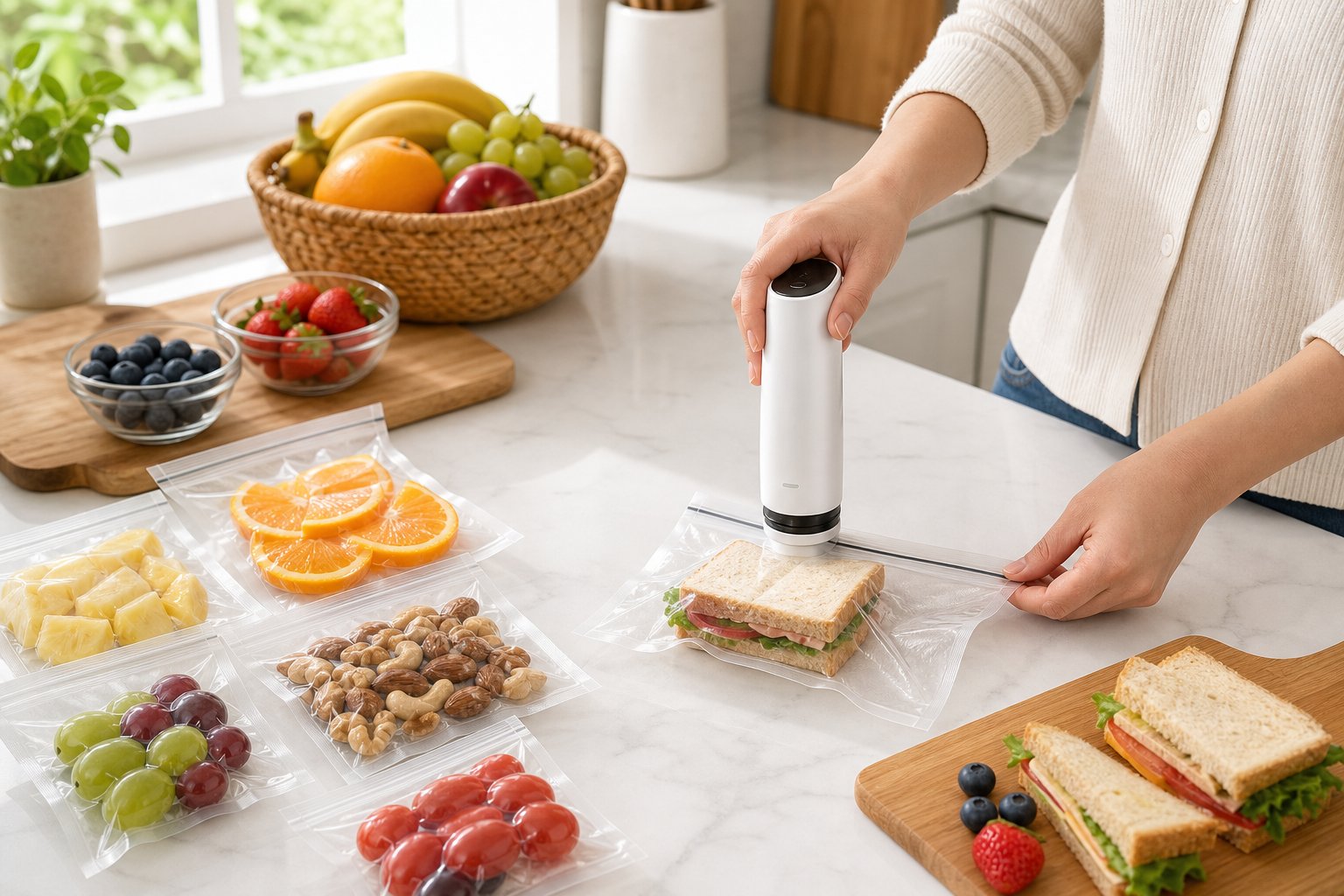
Entdecken Sie unsere neueste Kollektion von kompakten Vakuumiergeräten für Lebensmittel!
Kleine Reste, angebrochene Snacktüten und halb verbrauchte Zutaten können schnell verderben. Ein kabelloses Vakuumiergerät hilft, dieses Problem zu lösen, indem es Luft aus Frischhaltebeuteln entfernt, sodass alltägliche Portionen länger frisch bleiben, mit weniger Abfall und weniger Unordnung in der Küche.
Da es tragbar und leicht zu handhaben ist, eignet es sich gut für schnelle Aufgaben wie das Verschließen von Nüssen, Käse, geschnittenem Gemüse, Pasta oder Mittagsportionen, ohne Arbeitsfläche freiräumen oder nach einer Steckdose suchen zu müssen.
In diesem Leitfaden erfahren Sie, wie Sie die richtigen Beutel auswählen, Snacks und Reste richtig vakuumieren, häufige Fehler vermeiden und kleine Tagesportionen mit besseren Ergebnissen lagern.
Wichtigste Erkenntnisse
- Kabellose Vakuumiergeräte erleichtern das Vakuumieren kleiner Mengen für die tägliche Aufbewahrung von Lebensmitteln und die Essenszubereitung – ohne Kabel, ohne Ärger.
- Durch Vakuumieren wird Luft entfernt, wodurch Snacks und Reste viel länger frisch bleiben, als wenn man sie einfach in einen Beutel oder Behälter wirft.
- Für beste Ergebnisse wählen Sie Beutel, die zu Ihren Lebensmitteln passen, lassen Sie die Artikel vor dem Vakuumieren abkühlen und lagern Sie die vakuumierten Portionen richtig.
Kabellose Vakuumiergeräte verstehen
Kabellose Vakuumiergeräte legen die Lebensmittelkonservierung direkt in Ihre Hände, wo immer Sie sie brauchen. Diese kleinen Geräte werden mit wiederaufladbaren Batterien (meist Lithium-Ionen) betrieben, die einen kleinen Motor antreiben, der die Luft aus speziellen Beuteln saugt, bevor ein Heizstreifen sie dicht verschweißt.
Wie kabellose Modelle funktionieren
Die Verwendung eines kabellosen Vakuumiergeräts ist ziemlich unkompliziert. Der Motor saugt die Luft durch ein Ventil oder einen schmalen Kanal aus dem Beutel. Wenn die Luft entwichen ist, verschließt ein Heizelement den Beutel.
Die meisten kabellosen Modelle funktionieren mit zwei Hauptarten von Beuteln. Ventilbeutel haben einen kleinen Anschluss, an dem Sie die Düse des Vakuumierers anbringen, um Luft abzusaugen. Randversiegelungsbeutel funktionieren wie klassische Vakuumierbeutel: Sie schieben das offene Ende in das Gerät, und es erledigt den Rest.
Die Akkulaufzeit reicht je nach Modell für 30 bis 100 Versiegelungen mit einer einzigen Ladung. Das ist genug für eine Woche Essenszubereitung oder das Vakuumieren von Resten nach ein paar Abendessen. USB-Laden ist heute Standard, sodass Sie fast überall aufladen können.
Typen: Handgeräte versus Tischgeräte
Handgeräte sind für die meisten Leute die kabellose Lösung der Wahl. Sie sind leicht, klein genug, um in einer Schublade Platz zu finden, und perfekt für schnelle Aufgaben, wie das Vakuumieren einer halben Zwiebel, einer Snacktüte oder das Wiederverschließen einer Chipstüte.
Tragbare Tischvakuumiergeräte bieten mehr Leistung als Handgeräte, benötigen aber immer noch kein Kabel. Sie stehen auf der Arbeitsplatte, können aber überall hin bewegt werden, wo Sie sie benötigen, und verbinden stärkere Saugkraft mit kabelloser Freiheit.
Der Hauptunterschied? Saugleistung und Kapazität. Handgeräte eignen sich hervorragend für alltägliche Portionen und leichtere Aufgaben. Tragbare Tischgeräte können größere Beutel verarbeiten und ein stärkeres Vakuum erzeugen, sind aber etwas sperriger.
Häufige Anwendungsfälle für Snacks und Reste
Kabellose Vakuumiergeräte verdienen ihren Platz im Küchenalltag. Das Verschließen einzelner Portionen Nüsse, Studentenfutter oder Cracker hält Snacks in Lunchboxen oder im Vorratsschrank frisch. Angebrochene Chipstüten oder Kekse werden nicht alt, wenn man sie richtig wieder verschließt.
Reste sind ein Kinderspiel, man kann das letzte Hähnchenbrustfilet, ein Stück Käse oder etwas extra Nudelsoße direkt am Kühlschrank vakuumieren, ohne eine große Maschine herauszuholen. Die Tragbarkeit bedeutet, dass Sie Lebensmittel überall dort vakuumieren können, wo Sie arbeiten, nicht nur auf der Arbeitsplatte.
Das Vorbereiten von Snacks für Kinderlunchpakete oder für Reisen ist so viel einfacher. Sie können Karottensticks, Apfelscheiben (etwas Zitronensaft hilft) oder Müsli für die ganze Woche portionsweise vakuumieren. Diese kleineren, häufigeren Vakuumierarbeiten sind mit einem kabellosen Vakuumiergerät sinnvoll, anstatt jedes Mal ein großes Tischmodell hervorholen zu müssen.
Wesentliche Vorteile des Vakuumierens kleiner Portionen
Das Vakuumieren kleiner Portionen verändert die Art und Weise, wie wir Lebensmittel aufbewahren, grundlegend. Sie pressen die Luft heraus, bewahren die Frische, kontrollieren die Portionsgrößen und reduzieren den Abfall. Das ist ein echter Gewinn für Ihren Tagesablauf, Ihr Lebensmittelbudget und wie lange Ihre Lebensmittel wirklich gut schmecken.
Lebensmittel länger frisch halten
Durch das Vakuumieren wird Sauerstoff entfernt, was den Verderb erheblich verlangsamt. Ohne Luft behalten Lebensmittel ihre Farbe, Textur und ihren Geschmack viel länger, als wenn man sie nur in normalen Behältern oder Beuteln aufbewahren würde.
Im Gefrierschrank halten vakuumierte Lebensmittel drei- bis fünfmal länger als in normalen Beuteln. Eine Hähnchenbrust, die in sechs Monaten austrocknen würde, kann bei richtiger Versiegelung zwei bis drei Jahre haltbar sein. Der dichte Verschluss verhindert auch Gefrierbrand, sodass Sie keine traurigen, ausgetrockneten Lebensmittel mehr haben.
Auch im Kühlschrank hilft das Vakuumieren. Käse kann vier bis acht Monate statt nur ein oder zwei Wochen haltbar sein. Aufschnitt bleibt bis zu zwei Wochen gut, nicht nur ein paar Tage. Sogar trockene Lebensmittel wie Nüsse und Kaffeebohnen behalten ihren Geschmack länger, wenn man die Luft fernhält.
Nur ein kleiner Hinweis: Vakuumieren tötet keine Bakterien ab oder macht Lebensmittel haltbar. Sie müssen versiegelte Lebensmittel weiterhin kühlen oder einfrieren, um sie sicher zu halten.
Portionskontrolle und Großlagerung
Großeinkäufe sparen Geld, aber nur, wenn Sie auch wirklich alles verbrauchen, bevor es schlecht wird. Mit dem Vakuumieren können Sie große Packungen in portionsgerechte Mahlzeiten aufteilen, die Sie tatsächlich verwenden.
Wenn Sie eine große Packung Hackfleisch kaufen, teilen Sie sie in 450-Gramm-Beutel für Rezepte auf. So tauen Sie nur das auf, was Sie brauchen, und müssen sich nicht mehr mit einem riesigen gefrorenen Block herumschlagen oder Reste wegwerfen. Das Gleiche gilt für Snacks: Verschließen Sie einzelne Portionen Studentenfutter oder Cracker, damit sie frisch bleiben und Sie nicht die ganze Packung auf einmal essen.
Einige Großpackungen, die wir gerne portionieren und versiegeln:
- Fleisch und Fisch in portionsgerechten Beuteln
- Käseblöcke in kleinere Stücke geschnitten
- Nüsse und Samen in Snackportionen
- Trockenfrüchte für das Mittagessen
- Kaffeebohnen für die Woche
Dies erleichtert auch die Essenszubereitung. Sie können gekochte Proteine, gehacktes Gemüse oder sogar ganze Mahlzeiten in Einzel- oder Familiengrößenbeuteln vakuumieren. Alles lässt sich sauber im Gefrierschrank stapeln und nimmt weniger Platz ein als sperrige Behälter. Außerdem sehen Sie auf einen Blick, was Sie haben.
Reduzierung von Lebensmittelabfällen im Alltag
Der durchschnittliche kanadische Haushalt wirft jedes Jahr Lebensmittel im Wert von über 1.300 US-Dollar weg, hauptsächlich weil Dinge verderben, bevor wir sie verwenden. Vakuumieren hilft Ihnen, das zu essen, was Sie kaufen.
Übrig gebliebenes Gemüse vom Abendessen? Vakuumieren und einfrieren, dann sind sie nächsten Monat bereit für Suppe, anstatt im Kühlschrank zu Matsch zu werden. Extra Brot aus einem Sonderangebot? Vakuumverpacktes Brot bleibt monatelang weich und vermeidet Gefrierbrand. Sogar eine halbe Zwiebel oder Paprika kann vakuumiert werden, anstatt im Kühlschrank schlecht zu werden.
Vakuumieren schützt Lebensmittel auch vor Feuchtigkeit, Luft und Gerüchen. Geöffnete Chips bleiben knusprig. Cracker werden nicht alt. Trockenwaren bleiben vor Vorratsschädlingen geschützt.
Wenn Ihr Haushalt unterschiedliche Zeitpläne hat, bedeuten vakuumverpackte Portionen, dass jeder Mahlzeiten oder Snacks nehmen kann, ohne den Rest der Luft auszusetzen. Jeder Beutel behält seine Qualität, sodass Sie sich keine Sorgen machen müssen, dass die Reste schlecht werden, nur weil jemand den Behälter geöffnet hat.
Auswahl der richtigen Beutel und Zubehörteile
Die besten Ergebnisse erzielen Sie mit Ihrem kabellosen Vakuumiergerät, wenn Sie Beutel verwenden, die sowohl zu Ihrem Gerät als auch zu Ihren Aufbewahrungsgewohnheiten passen. Die richtige Beutelart, -größe und das richtige Material sorgen dafür, dass Sie zuverlässige Verschlüsse für Snacks, Reste und Mahlzeiten erhalten, ohne Plastik zu verschwenden oder mit nicht passenden Beuteln zu kämpfen.
Auswahl der Beuteltypen: Vorgeschnittene Beutel, Rollen und wiederverwendbare Beutel
Vorgeschnittene Beutel sind am schnellsten für den täglichen Gebrauch. Sie sind in Standardgrößen erhältlich und sofort einsatzbereit – einfach einen nehmen und Ihren Käse, Cracker oder Nüsse vakuumieren.
Mit Rollen können Sie Beutel genau auf die Größe zuschneiden, die Sie benötigen. Wenn Sie Reste in ungewöhnlichen Formen haben oder keine Plastik verschwenden möchten, ist das Zuschneiden eigener Beutel von einer Rolle der richtige Weg. Außerdem sind Rollen pro Quadratzentimeter meist günstiger.
Wiederverwendbare Beutel sind unsere Wahl für Dinge wie Sandwiches oder die regelmäßige Snackzubereitung. Sie sind dicker, waschbar und können bei guter Qualität mindestens zehnmal verwendet werden. Achten Sie einfach darauf, dass sie lebensmittelecht und BPA-frei sind.
Passende Beutel für Ihr Vakuumiergerät
Die meisten kabellosen Vakuumiergeräte benötigen strukturierte oder geprägte Beutel, damit die Luft richtig abgesaugt werden kann. Glatte Beutel funktionieren mit diesen Maschinen einfach nicht.
Bevor Sie eine große Packung Beutel kaufen, überprüfen Sie die Spezifikationen Ihres Vakuumierers. Die meisten kabellosen Modelle funktionieren mit Beuteln, die 3-4 mil dick sind, gut genug für den Kühlschrank oder den leichten Gefrierschrankgebrauch. Für scharfkantige Lebensmittel oder Knochen gehen Sie auf 4-5 mil für zusätzliche Haltbarkeit.
Einige Vakuumiergeräte funktionieren nur mit Beuteln ihrer eigenen Marke. Wenn Sie unsicher sind, versuchen Sie es zuerst mit einer kleinen Packung. Die meisten universellen strukturierten Beutel passen, aber es lohnt sich, die Breite mit der Öffnung Ihres Vakuumierers abzugleichen.
Benutzerdefinierte Beutelgrößen für verschiedene Bedürfnisse
Wir bemessen unsere Beutel nach dem, was wir lagern. Kleine Beutel (15-20 cm) eignen sich hervorragend für Snacks, Käse oder Kekse. Mittlere Beutel (20-28 cm) funktionieren für Familienreste, Gemüse oder Sandwiches.
Das Zuschneiden individueller Größen von Rollen spart Platz im Gefrierschrank und vermeidet Frustration. Lassen Sie immer 5-8 cm am oberen Rand für einen festen Verschluss.
Wenn Sie viel zubereiten, messen Sie eine Menge Beutel im Voraus ab und schneiden Sie sie zu. Das spart Ärger, wenn Sie beschäftigt sind.
Schritt-für-Schritt-Anleitung zur Verwendung Ihres kabellosen Vakuumierers
Eine gute Versiegelung beginnt mit einem geladenen Gerät und dem Wissen, wie es funktioniert. So machen wir es: Aufladen, den Beutel richtig platzieren, den Versiegelungsknopf drücken und manchmal doppelt versiegeln, wenn Sie zusätzliche Sicherheit wünschen.
Einrichten des Geräts und Sicherstellen der Ladung
Stellen Sie vor dem Verschweißen sicher, dass Ihr kabelloses Vakuumiergerät ausreichend geladen ist. Die meisten Modelle verfügen über eine kleine LED, die grün leuchtet, wenn der Akku voll ist, und rot, wenn er schwach ist. Wir laden es in der Regel vor dem ersten Gebrauch vollständig auf, was etwa 2-3 Stunden dauert.
Stellen Sie das Vakuumiergerät während des Ladevorgangs auf eine ebene Fläche. Einige Modelle funktionieren, während sie angeschlossen sind, aber ehrlich gesagt ist die Batterieleistung viel flexibler, um Snacks oder Reste spontan zu verschweißen. Überprüfen Sie den Akku vor einer großen Verschweißsitzung, damit Sie nicht mittendrin der Saft ausgeht.
Halten Sie das Ladekabel in der Küche griffbereit. Wenn der Akku schwach ist, erhalten Sie nicht genügend Saugkraft, und Ihre Beutel könnten nicht richtig verschweißt werden.
Beutelplatzierung und Portionierungstipps
Die richtige Platzierung des Beutels macht den Unterschied aus. Lassen Sie immer 5-8 cm Abstand zwischen dem Lebensmittel und der Beutelöffnung. So können Feuchtigkeit oder Krümel die Versiegelung nicht stören.
Für Snacks wie Nüsse oder Cracker portionieren Sie diese in einzelne Portionen, damit Sie nicht denselben Beutel immer wieder öffnen und wiederverschließen müssen. Bei Resten drücken Sie diese vor dem Vakuumieren etwas flach, um überschüssige Luft herauszudrücken.
Schieben Sie das offene Ende des Beutels in die Versiegelungskammer und achten Sie darauf, dass er flach liegt, ohne Falten oder Knicke. Wenn Sie kleine Tagesportionen versiegeln, verwenden Sie passende, vorgeschnittene Beutel, anstatt große Beutel für winzige Portionen zu verschwenden.
Ordnungsgemäße Bedienung des Vakuumierers
Sobald der Beutel sitzt, schließen wir den Deckel fest, bis er einrastet. Wir drücken und halten den Versiegelungsknopf, um das Vakuumieren zu starten. Das Gerät saugt die Luft ab, und Sie werden sehen, wie der Beutel um das Verpackte schrumpft.
Die meisten kabellosen Vakuumiergeräte benötigen nur einen einzigen Knopf, aber einige Modelle teilen Vakuum und Versiegelung in zwei auf. Wenn Ihr Gerät einen Puls-Vakuum-Modus hat, verwenden wir diesen besonders für empfindliche Snacks, Chips oder Cracker, da volle Saugkraft diese zerquetschen kann. Der Versiegelungsbalken heizt sich auf und erzeugt den luftdichten Verschluss, was normalerweise etwa 6-10 Sekunden dauert.
Öffnen Sie den Deckel nicht sofort nach dem Versiegeln. Warten Sie, bis die Anzeigelampe anzeigt, dass der Vorgang abgeschlossen ist und der Balken etwas abgekühlt ist. Ein zu frühes Öffnen kann die Versiegelung lösen.
Doppelter Verschluss und Verwendung der Verschluss-Taste
Bei Flüssigkeiten, feuchten Resten oder Lebensmitteln, die wir länger einfrieren wollen, versiegeln wir immer doppelt. Nachdem der erste Verschluss fertig ist, bewegen wir den Beutel nur ein kleines Stückchen nach oben, etwa einen halben Zentimeter, und drücken den Verschluss-Knopf erneut, um eine zweite Linie hinzuzufügen.
Doppeltes Versiegeln bietet zusätzlichen Schutz vor Lecks und Gefrierbrand. Dies tun wir bei mariniertem Fleisch, Suppen oder jedem Snack mit Restfeuchtigkeit. Halten Sie den Verschluss-Knopf gedrückt, bis die Anzeigeleuchte anzeigt, dass der Vorgang abgeschlossen ist.
Wenn der erste Verschluss dünn oder lückenhaft aussieht, fügen Sie sofort einen zweiten hinzu. Das dauert nur wenige Sekunden und hilft wirklich, Lebensmittel länger frisch zu halten.
Bewährte Praktiken zum Vakuumieren und Lagern von Snacks und Resten
Ein bisschen Vorbereitung und die richtigen Lagerungstricks machen den Unterschied zwischen Lebensmitteln, die wochenlang gut bleiben, und Lebensmitteln, die schnell verderben. Die richtige Temperatur vor dem Vakuumieren, eine gute Organisation und clevere Gewohnheiten im Gefrierschrank helfen Ihnen, alles frisch zu halten und Abfall zu vermeiden.
Speisen zum Vakuumieren abkühlen und vorbereiten
Wir lassen heiße oder warme Speisen immer auf Raumtemperatur abkühlen, bevor wir sie vakuumieren. Das Vakuumieren warmer Speisen erzeugt Dampf, der die Versiegelung beeinträchtigt und das Bakterienwachstum fördern kann. Die meisten Reste brauchen etwa 30 Minuten auf der Arbeitsplatte, um abzukühlen.
Für sehr flüssige Lebensmittel wie Suppen, Soßen oder Marinaden frieren wir sie gerne ein oder zwei Stunden vor dem Vakuumieren vor. Das verhindert, dass die Flüssigkeit in die Maschine gesaugt wird. Das Kippen des Beutels während des Vakuumierens kann auch dazu beitragen, Feuchtigkeit von der Versiegelung fernzuhalten.
Portionieren Sie die Lebensmittel vor dem Vakuumieren in einzelne Portionen oder mahlzeitengroße Mengen. So tauen Sie nur das auf, was Sie brauchen. Für Snacks wie Nüsse oder Chips teilen Sie sie in Portionen auf, die Sie tatsächlich auf einmal aufessen werden.
Tupfen Sie feuchte Lebensmittel mit einem Papiertuch trocken, um überschüssige Feuchtigkeit zu entfernen. Dies hilft, die Versiegelung zu halten und Flüssigkeit aus der Maschine fernzuhalten.
Beschriften und Datieren zur einfachen Organisation
Jeder versiegelte Beutel sollte den Inhalt und das Datum tragen. Wir verwenden einfach einen Permanentmarker oder gefrierschrankgeeignete Etiketten, die im kalten Zustand nicht abfallen.
Wenn etwas eine besondere Erwärmung benötigt, notieren Sie das ebenfalls auf dem Etikett. Das spart später Zeit, wenn Sie sich nicht mehr erinnern können, was Sie verpackt haben.
Wir führen eine einfache Bestandsaufnahme auf unserem Handy oder einem Notizblock am Kühlschrank. Streichen Sie Dinge ab, sobald Sie sie verbrauchen, damit Sie nicht mit mysteriösen Beuteln enden.
Gruppieren Sie ähnliche Artikel. Alle Snacks in einem Behälter, Proteine in einem anderen, Mahlzeiten an ihrem eigenen Platz. Das macht es schneller, das zu finden, was Sie wollen, und hilft Ihnen, ältere Sachen zuerst zu verbrauchen.
Lagerung im Gefrierschrank und Vermeidung von Gefrierbrand
Vakuumieren reduziert Gefrierbrand, indem es die Luft entzieht, die Eiskristalle verursacht. Wir frieren vakuumverpackte Lebensmittel zuerst flach ein und stellen die Beutel dann aufrecht, um Platz zu sparen.
Vakuumverpacktes Fleisch hält im Gefrierschrank zwei bis drei Jahre, viel länger als die sechs Monate, die man mit normaler Verpackung erreicht. Gekochte Reste bleiben zwei bis drei Monate gut, und Snacks wie Nüsse können über ein Jahr haltbar sein. Obst und Gemüse halten ein bis zwei Jahre, wenn sie richtig versiegelt werden.
Halten Sie Ihren Gefrierschrank bei -18 °C oder kälter. Wärmere Temperaturen beschleunigen den Verderb, auch wenn die Lebensmittel vakuumverpackt sind.
Legen Sie die Beutel zum Einfrieren flach auf ein Backblech. Sobald sie fest sind, können Sie sie nach Belieben stapeln oder einordnen. Dies verhindert, dass Beutel in ungewöhnlichen Formen einfrieren, die Platz verschwenden.
Überprüfen Sie Ihre Versiegelungen von Zeit zu Zeit auf Undichtigkeiten. Wenn ein Beutel lose wird, versiegeln Sie ihn erneut oder planen Sie, ihn bald zu verzehren.
Tipps zur Maximierung der Vielseitigkeit bei der täglichen Essenszubereitung
Ein kabelloser Vakuumierer ist nicht nur zum Lagern da. Sie können ihn für Sous-Vide, zum Frischhalten von Snacks und sogar für die schnelle Essenszubereitung verwenden, wenn Sie ihn regelmäßig reinigen und warten.
Sous-Vide-Kochen und Marinieren
Das Vakuumieren verändert das Sous-Vide-Kochen zu Hause. Der dichte Verschluss hält Wasser während des langsamen Garvorgangs draußen. Wir versiegeln Proteine wie Hähnchen, Lachs, Schweinekoteletts mit etwas Gewürzen und Öl, bevor wir sie ins Wasserbad geben.
Das Vakuumieren beschleunigt auch das Marinieren. Was früher Stunden dauerte, dauert jetzt vielleicht 15-30 Minuten. Das Vakuum drückt die Marinade viel schneller ins Fleisch.
Verwenden Sie die Pulsfunktion für Flüssigkeiten oder Marinaden. Das verhindert, dass Flüssigkeit in die Maschine gesaugt wird und eine Sauerei entsteht. Wenn Ihr Vakuumierer Trocken- und Feuchtigkeitsmodi hat, stellen Sie bei allem, was Soße enthält, immer auf Feuchtigkeit um.
Wenn die Marinade dünnflüssig ist, frieren Sie das Fleisch und die Marinade etwa eine Stunde vor dem Vakuumieren zusammen ein. Das hält alles zusammen und bewahrt Ihre Auffangschale vor dem Überlaufen.
Verwaltung kleiner Portionen und Snacks für unterwegs
Das Portionieren von Snacks und täglichen Mahlzeiten verhindert das Problem der "Grab-Bag", bei dem man zu viel isst oder halb geöffnete Packungen verschwendet. Wir vakuumieren einzelne Portionen Nüsse, Trockenfrüchte, Müsli und Cracker in kleinen Beuteln, die in Brotdosen oder Rucksäcke passen.
Vakuumverpacktes geschnittenes Gemüse, Karotten, Sellerie, Paprika, bleibt 7-10 Tage im Kühlschrank knackig. Wir legen ein gefaltetes Papiertuch dazu, um überschüssige Feuchtigkeit aufzunehmen. Käseportionen bleiben weich, ohne auszutrocknen, und Aufschnitt hält doppelt so lange, wenn er direkt nach dem Einkauf versiegelt wird.
Einzelportionen Dips wie Hummus oder Guacamole eignen sich hervorragend, wenn sie in kleinen Portionen vakuumiert werden. Das Vorportionieren hält auch die Essenszubereitung auf Kurs, da jeder Beutel eine Portion ist.
Kabellose Vakuumiergeräte machen dies einfach, da Sie nicht an eine Steckdose gebunden sind. Halten Sie einen Stapel kleiner Beutel für Ihre Lieblingssnacks bereit.
Umgang mit häufigen Fallstricken und Reinigung
Die Auffangschale fängt Flüssigkeiten auf, muss aber regelmäßig entleert und gereinigt werden, sonst fängt sie an zu riechen. Nehmen Sie sie nach einigen Versiegelungsvorgängen heraus, besonders nach dem Versiegeln von feuchten Lebensmitteln. Warmes Seifenwasser tut es.
Feuchtigkeit in der Vakuumkammer führt zu schwachen Versiegelungen und manchmal zu Schimmel. Wischen Sie die Kammer nach dem Versiegeln feuchter Lebensmittel ab und lassen Sie die Maschine offen trocknen. Wenn Sie Kondenswasser sehen, lassen Sie sie ruhen, bevor Sie weitere Lebensmittel versiegeln.
Lebensmittelreste entlang der Versiegelungslinie können Undichtigkeiten verursachen. Wir wischen die Innenseite des Beuteloberteils immer vor dem Versiegeln ab, um es sauber zu halten. Wenn eine Versiegelung fehlschlägt, liegt es normalerweise an Krümeln, Öl oder Feuchtigkeit genau dort, wo der Heizbalken arbeiten muss.
Kabellose Geräte können die Saugkraft verlieren, wenn der Akku unter 40 % fällt. Laden Sie ihn vor großen Zubereitungstagen auf und achten Sie auf die Anzeige für schwachen Akku. Wischen Sie den Versiegelungsstreifen einmal im Monat mit einem feuchten Tuch ab, damit er gut funktioniert.
Häufig gestellte Fragen
Kabellose Vakuumiergeräte sind einfach zu bedienen, sobald Sie wissen, welche Lebensmittel, Beutel und Einstellungen für kleine Tagesportionen am besten geeignet sind.
Welche Lebensmittel eignen sich am besten für einen kabellosen Vakuumierer für schnelle Snacks und kleine Portionen?
Feste, wasserarme Lebensmittel eignen sich am besten. Nüsse, Cracker, Brezeln, Käsewürfel, Wurstwaren, geschnittenes Gemüse, Trockenfrüchte, Müsli und gekochte Proteine sind großartige Optionen für schnelle Portionen und die Essenszubereitung.
Wie vakuumiert man weichere Lebensmittel wie Sandwiches, Beeren oder Backwaren, ohne sie zu zerdrücken?
Verwenden Sie die Puls- oder Schonstufe, um die Saugleistung zu kontrollieren. Beeren oder weiche Backwaren sollten zuerst auf einem Tablett eingefroren und dann nach dem Festwerden versiegelt werden.
Benötigt man spezielle Beutel oder Behälter und wie wählt man die richtige Größe für Tagesportionen aus?
Ja. Verwenden Sie Vakuumierbeutel, Rollen oder kompatible wiederverwendbare Beutel. Kleine Beutel eignen sich am besten für Snacks, mittlere Beutel für Sandwiches und größere Beutel für Reste oder Gefrierportionen.
Wie vakuumiert man Reste wie Pasta, Curry oder Suppen am besten, ohne Chaos zu verursachen?
Kühlen Sie die Speisen zuerst ab und halten Sie den Verschlussbereich trocken. Suppen, Saucen oder Curry vor dem Versiegeln leicht anfrieren. Bei feuchten Lebensmitteln den Pulsmodus verwenden und oben im Beutel zusätzlichen Platz lassen.
Wie lange bleiben versiegelte Snacks und Reste typischerweise im Kühlschrank oder Gefrierschrank frisch?
Trockene Snacks können Wochen länger frisch bleiben als geöffnete Verpackungen. Reste im Kühlschrank halten sich normalerweise ein paar zusätzliche Tage, während Gefrierportionen bei richtiger Versiegelung und Lagerung mehrere Monate haltbar sein können.
Was sind die häufigsten Versiegelungsprobleme wie schwache Saugleistung oder Undichtigkeiten und wie behebt man sie schnell?
Schwache Saugleistung wird oft durch Falten, Feuchtigkeit, Krümel oder einen schwachen Akku verursacht. Glätten Sie den Beutel, wischen Sie den Verschlussbereich trocken, laden Sie das Gerät auf und fügen Sie bei Bedarf eine zweite Versiegelung hinzu.
Teilen:
Portionen für die Arbeit, Schule und den Feierabend vakuumieren
So wählen Sie die richtige Vakuumbeutelgröße für Mittagessen, Snacks und Essensreste