

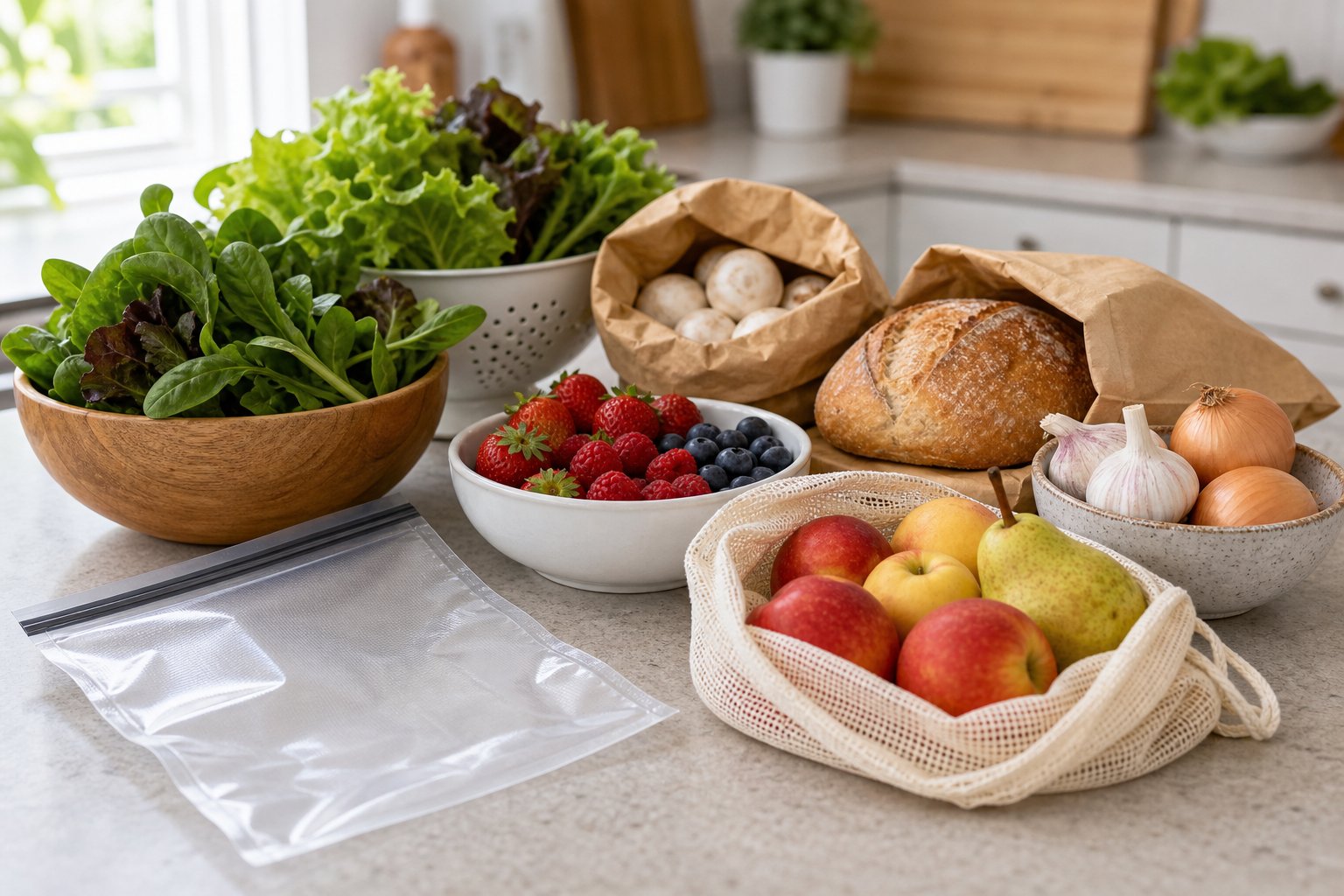
Schauen Sie sich unsere neueste Kollektion von kompakten Vakuumiergeräten für Lebensmittel an!
Haben Sie schon einmal in Ihrer Küche gestanden, die Reste vom letzten Abendessen betrachtet und sich gefragt, ob Sie sie in einen luftdichten Behälter oder in einen Vakuumbehälter legen sollen? Beide Optionen haben ihren Platz in einer praktischen Routine zur Lebensmittelaufbewahrung. Luftdichte Behälter sind praktisch für alltägliche Reste und empfindliche Produkte, während Vakuumbehälter nützlich sein können für trockene Vorräte und Lebensmittel, die von einer reduzierten Luftexposition profitieren.
Der Hauptunterschied liegt darin, wie jede Methode mit Luft umgeht. Vakuumbehälter entfernen einen Teil der Luft im Inneren des Behälters, was dazu beitragen kann, die Oxidation zu verlangsamen und die Lebensmittelqualität zu erhalten. Luftdichte Behälter verhindern, dass zusätzliche Außenluft und Feuchtigkeit eindringen, sobald der Deckel verschlossen ist. Dieses Verständnis macht es einfacher, die richtige Aufbewahrungsmethode für jede Art von Lebensmittel zu wählen.
Unten vergleichen wir, wie die beiden Aufbewahrungsmethoden funktionieren und wo jede am sinnvollsten ist, einschließlich der Lagerung im Vorratsschrank, der Lagerung im Gefrierschrank, von rohen Proteinen und der Sous-Vide-Zubereitung.
Wichtige Erkenntnisse
- Luftdichte Behälter und Vakuumbehälter handhaben Luft unterschiedlich, was die Lebensmittelqualität und die Lagerleistung beeinflussen kann.
- Luftdichte Behälter sind praktisch für alltägliche Reste und häufig verwendete Vorratsprodukte, während die Vakuumlagerung zusätzlichen Schutz für bestimmte trockene Lebensmittel und eine längere Lagerung im Gefrierschrank bieten kann.
- Die richtige Aufbewahrungsmethode hängt vom Lebensmittel ab, wie oft Sie darauf zugreifen und ob es zur sicheren Lagerung gekühlt oder eingefroren werden muss.
Wie jede Aufbewahrungsmethode mit Luft umgeht
Der Hauptunterschied zwischen luftdichten Behältern und Vakuumbehältern ist die Menge an Luft, die nach dem Verschließen im Inneren verbleibt. Luftdichte Behälter verhindern das Eindringen von zusätzlicher Luft, während Vakuumsysteme einen Teil der bereits vorhandenen Luft entfernen. Dieser Unterschied kann Oxidation, Feuchtigkeitseinwirkung, Textur und Gefrierbrand beeinflussen.
Was eine luftdichte Versiegelung bewirkt
Ein luftdichter Behälter hat einen einfachen Zweck: Er verhindert das Eindringen von Außenluft und Feuchtigkeit, sobald der Deckel geschlossen ist. Viele Designs verwenden einen fest sitzenden Deckel und eine Dichtung, um die Versiegelung zu erzeugen.
Die bereits im Behälter befindliche Luft bleibt jedoch dort. Für die kurzfristige Lagerung und für Lebensmittel, die häufig geöffnet werden, ist dies in der Regel praktisch und bequem.
Trockene Lebensmittel wie Cracker, Müsli, Reis und Mehl profitieren von einer luftdichten Lagerung, da sie so vor Feuchtigkeit und äußeren Verunreinigungen geschützt werden. Lebensmittel, die besonders oxidationsempfindlich sind, können von einer zusätzlichen Luftentfernung profitieren.
Wie die Vakuum-Entfernung die Umgebung verändert
Die Vakuumlagerung entfernt vor dem Verschließen einen Teil der Luft aus dem Behälter. Die Reduzierung der Luftexposition kann die Oxidation verlangsamen und dazu beitragen, die Qualität geeigneter Lebensmittel zu erhalten.
Dies kann nützlich sein für bestimmte trockene Vorratsgüter, Hartkäse und Lebensmittel, die für eine längere Lagerung im Gefrierschrank vorbereitet werden. Die Vakuumlagerung sterilisiert jedoch keine Lebensmittel und ersetzt nicht die richtige Kühlung, das Einfrieren oder sichere Handhabungspraktiken.
Der Unterschied kann besonders im Gefrierschrank nützlich sein. Die Reduzierung der Luftmenge um Lebensmittel herum kann dazu beitragen, Feuchtigkeitsverlust und Gefrierbrand über die Zeit zu begrenzen.
Warum die Qualität der Versiegelung und die Materialwahl des Behälters wichtig sind
Die Wirksamkeit jeder Aufbewahrungsmethode hängt vom Zustand der Dichtung ab. Eine beschädigte, gedehnte oder schlecht sitzende Dichtung kann das Eindringen von Luft und Feuchtigkeit ermöglichen.
Bei Vakuumbehältern bestimmt die Dichtung auch, wie gut der Behälter den reduzierten Druck aufrechterhält. Ist die Dichtung oder das Ventil beschädigt oder verschmutzt, kann allmählich Luft zurückkehren.
Auch das Behältermaterial ist wichtig. Glas ist langlebig, geruchsresistent und weniger anfällig für Flecken, obwohl es schwerer und zerbrechlicher ist. Kunststoff ist leicht und praktisch, aber Kratzer, Verformungen oder Hitzeschäden können seine Fähigkeit, richtig zu verschließen, beeinträchtigen.
Regelmäßiges Überprüfen von Deckeln, Ventilen und Dichtungen kann dazu beitragen, dass beide Arten von Behältern wie vorgesehen funktionieren.
Die bessere Wahl für alltägliche Reste
Für die meisten gekühlten Reste und die alltägliche Essenszubereitung sind luftdichte Behälter in der Regel die bequemere Wahl. Sie sind leicht zu öffnen, in verschiedenen Größen erhältlich und gut geeignet für Lebensmittel, die häufig zugänglich sein müssen.
Essenszubereitung, Aufwärmen und einfacher Zugang
Luftdichte Behälter eignen sich gut für die Essenszubereitung, da Lebensmittel portioniert, gekühlt und zugänglich gemacht werden können, ohne jedes Mal ein Vakuum neu erzeugen zu müssen.
Einige Behälter sind auch für die Mikrowelle geeignet, obwohl Deckel wie angegeben entfernt oder belüftet werden sollten und die Anweisungen des Herstellers immer befolgt werden müssen.
Durchsichtige Behälter können auch die Organisation des Kühlschranks erleichtern, indem sie es Ihnen ermöglichen, Mahlzeiten und Zutaten zu identifizieren, ohne jeden Behälter öffnen zu müssen.
Umgang mit Soßen und Flüssigkeiten
Suppen, Eintöpfe, Currys, Saucen und andere flüssigkeitsreiche Lebensmittel lassen sich oft leichter in stabilen luftdichten Behältern handhaben. Einige Vakuumsysteme sind nicht für Flüssigkeiten ausgelegt, und das Ansaugen von Flüssigkeit in eine Pumpe oder ein Ventil kann die Ausrüstung beeinträchtigen.
Ein sicherer Deckel und eine richtig angepasste Dichtung können auch dazu beitragen, das Verschütten zu reduzieren, wenn Behälter im Kühlschrank bewegt oder gestapelt werden.
Unabhängig vom verwendeten Behälter sollten verderbliche Reste umgehend gekühlt und bei 4 °C (40 °F) oder darunter gelagert werden.
Frisches Obst und Gemüse ohne Zerdrücken
Empfindliche Früchte, Gemüse und Kräuter profitieren oft von starren Behältern, die sie vor Druckstellen oder Quetschungen schützen. Geeignete Beispiele sind:
- Beeren und Trauben
- Blattgemüse
- Geschnittene Melone und weiche Früchte
- Frische Kräuter
Auch die Feuchtigkeitsregulierung ist wichtig. Übermäßige Feuchtigkeit kann den Verfall fördern, während übermäßig trockene Bedingungen dazu führen können, dass einige Produkte welken. Der Lagerbedarf variiert je nach Zutat, daher sollte der Behälter den natürlichen Anforderungen des Lebensmittels entsprechen.
Ein gut verschlossener Behälter kann auch dazu beitragen, dass sich starke Lebensmittelgerüche nicht im Kühlschrank ausbreiten.
Die bessere Wahl für trockene Lebensmittel und Vorratshaltung
Für häufig geöffnete Vorratsprodukte sind luftdichte Behälter oft die bequemste Option. Für Lebensmittel, die über längere Zeit gelagert werden, können Vakuumbehälter zusätzlichen Schutz bieten, indem sie die Lufteinwirkung reduzieren.
Schutz von Nüssen, Samen und anderen fetthaltigen Lebensmitteln
Nüsse und Samen enthalten Öle, die oxidieren und schließlich ranzige Geschmäcker entwickeln können. Ein gut verschlossener Behälter hilft, die Exposition gegenüber Außenluft, Feuchtigkeit und Speisekammergerüchen zu reduzieren.
Für eine längere Lagerung können Kühlung oder Einfrieren dazu beitragen, die Qualität zu erhalten, je nach Lebensmittel. Egal welche Methode Sie wählen, die Lagerung von Nüssen und Samen in einer kühlen, trockenen Umgebung kann dazu beitragen, ihren Geschmack zu bewahren.
Aufbewahrung von häufig verwendeten Grundnahrungsmitteln
Häufig verwendete Grundnahrungsmittel wie Reis, Hafer, Mehl, Nudeln und Linsen profitieren von Behältern, die leicht zu öffnen und wieder zu verschließen sind.
Luftdichte Behälter sind besonders praktisch für diesen Zweck, da sie den täglichen Zugang ermöglichen, ohne dass nach jedem Gebrauch ein Vakuum neu erzeugt werden muss. Klare Behälter können es auch erleichtern, Mengen zu überwachen und die Vorratskammer organisiert zu halten.
Verwendung von Sauerstoffabsorbern für längere Lagerung
Sauerstoffabsorber können für bestimmte richtig getrocknete, feuchtigkeitsarme Lebensmittel, die über längere Zeiträume gelagert werden, nützlich sein. Wenn sie in einen geeigneten versiegelten Behälter gegeben werden, reduzieren sie den Rest-Sauerstoff und können dazu beitragen, geeignete Lebensmittel vor Oxidation zu schützen.
Sie sollten nur mit Lebensmitteln und Lagerungsmethoden verwendet werden, für die sie bestimmt sind. Befolgen Sie die Anweisungen des Absorberherstellers und verwenden Sie sie nicht als Ersatz für die Kühlung oder das Einfrieren von feuchten oder verderblichen Lebensmitteln.
Gefrierlagerung, rohe Proteine und Sous Vide
Die Reduzierung der Luftexposition wird besonders im Gefrierschrank nützlich. Vakuumversiegelte Beutel können eng um Lebensmittel liegen, nehmen weniger Platz ein als starre Behälter und helfen, den Feuchtigkeitsverlust im Zusammenhang mit Gefrierbrand zu begrenzen.
Vermeidung von Gefrierbrand bei langfristigem Einfrieren
Gefrierbrand entsteht, wenn gefrorene Lebensmittel Feuchtigkeit verlieren, was zu trockenen oder verfärbten Stellen und Veränderungen in Textur oder Geschmack führt. Lufteinwirkung kann zu diesem Prozess beitragen.
Das Vakuumversiegeln reduziert die Luftmenge um das Lebensmittel herum und kann somit dazu beitragen, Gefrierbrand bei längerer Lagerung zu begrenzen. Luftdichte Behälter können ebenfalls gut funktionieren, insbesondere wenn sie so bemessen sind, dass übermäßiger leerer Raum minimiert wird.
Für Lebensmittel, die über einen längeren Zeitraum eingefroren bleiben, können vakuumversiegelte Gefrierbeutel einen konstanteren Schutz vor Lufteinwirkung bieten.
Portionieren von rohem Fleisch, Fisch und Meeresfrüchten
Rohe Proteine sind einfacher zu handhaben, wenn sie vor dem Einfrieren in portionsgerechte Größen geteilt werden. Hähnchen, Fischfilets, Meeresfrüchte und andere Proteine können einzeln versiegelt werden, so dass sie effizient gestapelt und in der benötigten Menge aufgetaut werden können.
Flache Packungen nutzen den Gefrierraum auch effizient und können die Portionsverwaltung bequemer machen.
Marinaden können bei Bedarf vor dem Versiegeln hinzugefügt werden, was die Zubereitung des Lebensmittels nach dem Auftauen erleichtert. Befolgen Sie immer sichere Kühl- und Auftaupraktiken für rohes Fleisch und Meeresfrüchte.
Wenn Beutel besser sind als starre Kanister
Starre Behälter sind nützlich für viele Vorratsprodukte und gekühlte Reste, aber flexible Beutel eignen sich oft besser für unregelmäßig geformte Lebensmittel und die kompakte Lagerung im Gefrierschrank.
Für das Sous-Vide-Kochen sind hitzebeständige Beutel, die für die Kochtemperatur ausgelegt sind, in der Regel die praktischste Option, da sie einen engen Kontakt zwischen dem Lebensmittel und dem umgebenden Wasser ermöglichen.
Eine Wasserverdrängungsmethode kann auch mit einem geeigneten lebensmittelechten, hitzebeständigen Beutel angewendet werden. Befolgen Sie immer die Temperatur- und Gebrauchsanweisungen des Beutelherstellers.
Lebensmittelsicherheit, Kosten und nachhaltige Nutzung

Entwickelt, um Ihr Zuhause, Ihre Küche und Ihren Alltag zu vereinfachen.


Kontaktieren Sie uns
Fragen? Wir sind Montag bis Freitag von 10:00 bis 18:00 Uhr PST für Sie da.
Kontaktinformationen