

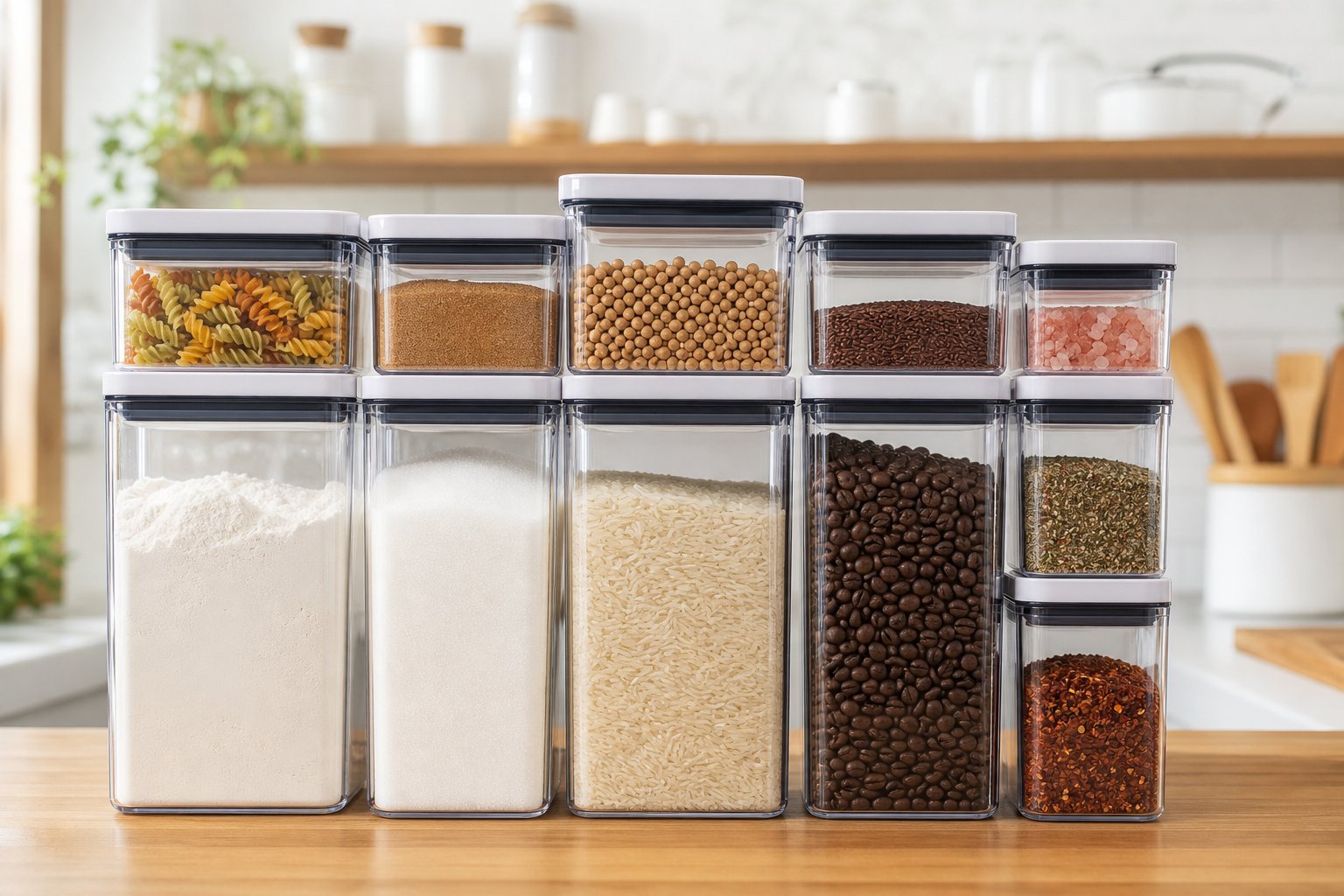
Entdecken Sie unsere neueste Kollektion an kompakten Vakuumiergeräten für Lebensmittel!
Grundnahrungsmittel sollten frisch bleiben, bis Sie sie verwenden möchten, und nicht in schwacher Verpackung alt, klumpig oder geschmacklos werden. Mehlsäcke reißen, Kartons lassen Luft herein, und dünne Plastikbeutel schützen trockene Zutaten nach dem Öffnen selten.
Vakuumbehälter helfen, Mehl, Zucker, Kaffee, Reis, Nudeln, Nüsse, Getreide, Gewürze und Backzutaten zu lagern, indem sie den Luftkontakt reduzieren, Feuchtigkeit abblocken und Schädlinge von zerbrechlichen Verpackungen fernhalten. Dies macht sie zu einem praktischen Upgrade für die tägliche Speisekammerorganisation und langfristige Frische.
Egal, ob Sie oft backen, Trockenwaren in großen Mengen kaufen oder eine ordentlichere Speisekammer wünschen, die richtigen Vakuumbehälter können helfen, Zutaten zu schützen und Abfall zu reduzieren. Dieser Leitfaden erklärt, welche trockenen Zutaten am meisten profitieren, wie Sie die richtigen Behälter auswählen und wie Sie Ihre Speisekammer effektiver organisieren.
Wichtige Erkenntnisse
- Vakuumbehälter halten Mehl, Kaffee, Nüsse, Getreide und die meisten trockenen Grundnahrungsmittel viel länger frisch, indem sie den Kontakt mit Luft und Feuchtigkeit eliminieren.
- Originalverpackungen schützen Zutaten fast immer nicht vor Luft, Feuchtigkeit und Schädlingen, den Hauptursachen für das Altwerden und die Verschwendung.
- Die Wahl der richtigen Behältergröße und des Materials für jede Zutat und die Häufigkeit der Verwendung hilft Ihnen, sowohl die Frische als auch die Organisation zu maximieren.
Wie Vakuumbehälter die Lagerung von trockenen Zutaten verändern
Vakuumbehälter schaffen eine sauerstofffreie Umgebung, die trockene Zutaten vor ihren größten Feinden schützt: Luft, Feuchtigkeit und Oxidation. Originalverpackungen bieten dieses Schutzniveau selten, daher werden Sie feststellen, dass Ihre Zutaten frischer bleiben und viel länger halten, wenn Sie auf vakuumversiegelte Lagerung umsteigen.
Hermetische Technologie im Vergleich zur Originalverpackung
Die meisten trockenen Zutaten werden in Verpackungen geliefert, die für den Versand und ein schönes Aussehen im Ladenregal gemacht sind, nicht aber, um Dinge tatsächlich zu Hause frisch zu halten. Papiertüten, Kartons, dünne Plastikbeutel – sie alle lassen mit der Zeit Luft und Feuchtigkeit eindringen.
Vakuumbehälter verwenden spezielle Dichtungsmechanismen, die die Luft absaugen, bevor sie alles fest verschließen. Dies stoppt die ständige Sauerstoffzufuhr, die Sie bei Originalverpackungen haben. Jedes Mal, wenn Sie einen Beutel Mehl oder Kaffee öffnen, lassen Sie Luft herein, was den Prozess des Altwerdens nur beschleunigt.
Nach meiner Erfahrung versagt die Standardverpackung oft innerhalb weniger Wochen. Diese kleinen Clips oder umgeklappten Oberteile? Sie halten Luft und Feuchtigkeit nie wirklich fern. Vakuumbehälter halten ihre Dichtung, bis Sie sie öffnen, sodass Sie jeden Tag zuverlässigen Schutz erhalten.
Sie werden den Unterschied bei Dingen wie braunem Zucker bemerken. Er härtet in normalen Behältern aus, bleibt aber in vakuumversiegelten weich. Kaffeebohnen behalten ihr Aroma, anstatt ein paar Tage nach dem Öffnen der Packung alt zu werden.
Vakuumversiegelung und Verlängerung der Haltbarkeit
Wenn Sie Sauerstoff aus Lagerbehältern entfernen, verlangsamen Sie die chemischen Reaktionen, die Lebensmittel verderben lassen. Trockene Zutaten in Vakuumbehältern halten in der Regel 3 bis 5 Mal länger als solche, die in ihrer Originalverpackung verbleiben.
Getreide, Nüsse und Samen enthalten natürliche Öle, die ranzig werden, wenn sie Luft ausgesetzt sind. Vakuumversiegelung verlangsamt diesen Prozess erheblich, sodass Ihre Zutaten monatelang frischer schmecken. Ich habe gesehen, wie Vollkornmehl in Vakuumlagerung 6 Monate lang gut blieb, während es in einem normalen Behälter kaum 6 Wochen hält.
Gewürze und Kräuter behalten ihre Intensität viel länger ohne Luft. Gemahlene Gewürze verlieren ihren Geschmack schnell in normalen Gläsern, aber vakuumversiegelte Lagerung schließt sowohl Geschmack als auch Aroma ein. Teeblätter funktionieren genauso. Sie verlieren ihre feinen Aromen, wenn sie Luft und Feuchtigkeit ausgesetzt sind, aber nicht in Vakuumbehältern.
Es geht also nicht nur darum, das Verderben zu stoppen. Es geht darum, die ursprüngliche Qualität und den Nährwert Ihrer Zutaten so lange wie möglich zu erhalten.
Lebensmittelsicherheit und Qualitätsvorteile
Vakuumversiegelte Behälter schließen gewöhnliche Speisekammer-Schädlinge aus. Kornkäfer, Motten und andere Insekten brauchen Luft zum Überleben, daher hält ein ordnungsgemäß versiegelter Vakuumbehälter sie fern.
Die Lebensmittelqualität bleibt in sauerstofffreien Umgebungen konstant, da der Feuchtigkeitsgehalt genau dort bleibt, wo er sein sollte. Ihre Zutaten nehmen keine Feuchtigkeit auf und trocknen auch nicht zu stark aus. Das ist besonders wichtig beim Backen, wo Mehl und Zucker genau richtig sein müssen, damit Rezepte funktionieren.
Sie werden große Verbesserungen bei der Lebensmittelsicherheit bei Zutaten feststellen, die Schimmel entwickeln können. Schimmel benötigt sowohl Feuchtigkeit als auch Luft, daher entfernen Vakuumbehälter eine dieser Schlüsselzutaten und senken so das Risiko von Mykotoxinen in gelagertem Getreide und Nüssen.
Die meisten Vakuumbehälter sind durchsichtig, sodass Sie Ihre Zutaten im Auge behalten können. Wenn etwas nicht stimmt, werden Sie es sofort bemerken, und nicht erst, wenn Sie einen mysteriösen Beutel oder Karton öffnen.
Beste Trockenzutaten zum Vakuumversiegeln
Getreide, Nudeln, Backzutaten und Öle zersetzen sich, wenn sie in Standardverpackungen Luft und Feuchtigkeit ausgesetzt sind. Vakuumbehälter verhindern das Eindringen von Sauerstoff und blockieren Feuchtigkeit, wodurch die Dinge viel länger frisch bleiben, als es Kartons oder Papiertüten jemals könnten.
Getreide und Reis
Weißer Reis hält Jahrzehnte, 20 bis 30 Jahre, wenn er vakuumversiegelt und richtig gelagert wird. Das Entfernen von Sauerstoff verhindert, dass die Öle im Reis ranzig werden, und hält Insekten vollständig fern.
Brauner Reis benötigt etwas mehr Pflege, da seine Öle schneller verderben. Frieren Sie ihn 48 Stunden lang ein, bevor Sie ihn vakuumversiegeln, um eventuelle Insekteneier abzutöten. Sobald Sie braunen Reis in Vakuumbehältern fern von Hitze und Licht lagern, kann er etwa 2 Jahre statt der üblichen 6 Monate halten.
Quinoa, Gerste und andere Vollkornprodukte sind ebenfalls viel besser in der Vakuumlagerung aufgehoben. Ihre Originalverpackung lässt Luft und Feuchtigkeit herein, sodass das Verderben schnell eintritt. Füllen Sie sie in vakuumversiegelte Behälter um, um die Nährstoffe zu erhalten und den muffigen Geschmack zu vermeiden, der bei halb leeren Beuteln auftritt.
Nudeln und Teigwaren
Trockene Pasta und Nudeln eignen sich hervorragend für Vakuumbehälter. Sie sind bereits haltbar, aber sie halten viel länger und behalten ihre Textur besser bei richtiger Lagerung. Kartons lassen Feuchtigkeit herein, was die Textur beeinträchtigen und sogar zu Schimmel führen kann.
Verwenden Sie breitere vakuumversiegelte Beutel oder Behälter für empfindliche Formen wie Farfalle oder Lasagne, damit sie nicht zerdrückt werden. Starre Behälter schützen die Pasta, während sie gleichzeitig die Luft entfernen.
Lange Nudeln wie Spaghetti passen hervorragend in hohe Vakuumbehälter. Die luftdichte Versiegelung verhindert, dass Feuchtigkeit Klumpen verursacht. Ordnungsgemäß vakuumversiegelte Pasta kann 8-10 Jahre halten, verglichen mit nur 1-2 Jahren in der Originalverpackung.
Mehle und Backmischungen
Allzweck- und Vollkornmehl benötigen Schutz vor Feuchtigkeit, Luft und Schädlingen. Legen Sie das Mehl in einen Papiersack in Ihren Vakuumbehälter, um zu verhindern, dass feine Partikel das Vakuum verstopfen.
Vollkornmehle mit ihren natürlichen Ölen werden schnell ranzig, wenn sie Luft ausgesetzt sind. Vakuumversiegelung kann ihre Haltbarkeit von 3-6 Monaten auf bis zu 5 Jahre verlängern. Es ist klug, Mehl in 2-Tassen-Portionen aufzuteilen, damit Sie Ihren Hauptvorrat nicht jedes Mal öffnen müssen, wenn Sie backen.
Backmischungen, Maismehl und Spezialmehle wie Mandel- oder Kokosmehl bleiben in Vakuumlagerung frischer. Die Verpackung, in der sie geliefert werden, ist meist zu dünn und lässt Luft eindringen. Füllen Sie sie direkt nach dem Kauf in Vakuumbehälter um, um die Qualität zu erhalten.
Nüsse, Samen und Kaffeebohnen
Nüsse und Samen enthalten viel Öl, das in normalen Behältern schnell ranzig wird. Das Vakuumversiegeln entzieht den Sauerstoff, so dass sie über ein Jahr halten, anstatt nur ein paar Monate.
Kaffeebohnen verlieren ihre Frische in 2-3 Wochen, wenn sie im Originalbeutel bleiben. Vakuumbehälter bewahren den Kaffeegeschmack und das Aroma für 3-6 Monate, indem sie Luft und Feuchtigkeit abblocken. Verwenden Sie undurchsichtige Behälter oder lagern Sie sie im Dunkeln, da Licht auch Kaffeeöle zerstört.
Rohe Samen wie Leinsamen, Chiasamen und Sonnenblumenkerne behalten ihre Nährstoffe, wenn sie vakuumversiegelt sind. Ihre Öle verderben schnell in der Speisekammer, aber sie bleiben in Vakuumlagerung 1-2 Jahre gut. Teilen Sie Samen in kleinere Behälter auf, damit Sie den Hauptbehälter nicht ständig öffnen müssen.
Häufige Herausforderungen in der Speisekammer mit Originalverpackung
Originalverpackungen reichen einfach nicht für langfristige Frische aus. Sie setzen Lebensmittel Luft, Feuchtigkeit und Schädlingen aus. Diese Konstruktionsfehler führen zu mehr verdorbenen Lebensmitteln und verschwendeten Lebensmitteln, besonders wenn Sie Dinge länger als ein paar Wochen lagern.
Risiken von Luft- und Feuchtigkeitsexposition
Papiertüten, dünne Plastikfolien und Kartons wurden nicht zum Frischhalten von Lebensmitteln hergestellt. Sauerstoff dringt ein, beschleunigt das Altwerden und den Nährstoffverlust. Mehlsäcke reißen an den Nähten. Müslipackungen verlieren nach wenigen Anwendungen ihre Dichtung. Zuckertüten nehmen Feuchtigkeit auf.
Das wird noch schlimmer, wenn sich die Bedingungen in der Speisekammer ändern. Wenn die Temperaturen schwanken, bildet sich Kondenswasser in den Verpackungen, das unerwünschte Feuchtigkeit hinzufügt. Brauner Zucker wird zu einem Stein. Pulverförmige Waren werden klumpig und schwer zu verwenden.
Luftkontakt beschleunigt auch das Ranzigwerden von Nüssen und Samen. Ihre Öle verderben schnell, wenn Sauerstoff durch billige Verpackungen dringt. Sogar Getreide wie Reis und Hafer verlieren ihre beste Textur und ihren besten Geschmack, wenn sie zu lange in ihren Originalbeuteln bleiben.
Schädlingsprävention und Frischhalteprobleme
Speisekammer-Motten, Kornkäfer und andere Insekten fressen sich direkt durch Pappe, Papier und dünnen Kunststoff. Die Originalverpackung verlangsamt sie kaum. Ein schlechter Mehlsack kann alles in der Nähe ruinieren.
Wenn Sie einen Beutel nicht richtig verschließen oder wenn er reißt, dringen Schädlinge und Feuchtigkeit ein. Selbst aufgerollte Beutel mit Clips lassen Lücken. Kartons mit Klappdeckeln scheinen nie zweimal auf die gleiche Weise zu schließen.
Wenn die Verpackung nicht vor der Umgebung schützen kann, ist das Verderben nur eine Frage der Zeit. Nudeln nehmen Feuchtigkeit auf und werden spröde. Getrocknete Bohnen, die Feuchtigkeit ausgesetzt sind, lassen sich möglicherweise nicht einmal richtig kochen. Dies ist besonders bei Großkäufen ein Problem, da große Mengen lange Zeit in schwacher Verpackung liegen.
Auswahl der richtigen Vakuumdosen und Behälter
Material, Flexibilität und die Funktionsweise des Siegels sind entscheidend, wenn Sie Vakuumbehälter auswählen, um trockene Zutaten vor Feuchtigkeit, Schädlingen und dem Altwerden zu schützen. Zu wissen, worauf Sie achten müssen, hilft Ihnen, die Behälter sowohl an Ihre Speisekammer als auch an Ihre Zutaten anzupassen.
Vorratsdosen aus Glas vs. BPA-freier Kunststoff
Glasbehälter blockieren Gerüche und Flecken, daher sind sie ideal für Gewürze, Kaffee und alles mit einem starken Geschmack. Sie absorbieren niemals Öle oder Gerüche.
BPA-freie Kunststoffbehälter sind leichter und brechen nicht so leicht, was großartig ist, wenn Sie ständig nach Mehl oder Zucker greifen. Sie sind auch praktisch in Haushalten mit Kindern oder wenn Sie Behälter häufig bewegen.
Es kommt wirklich auf die Haltbarkeit im Vergleich zum Gewicht an. Glas bleibt klar und nutzt sich nie ab, aber es ist schwerer und nimmt mehr Platz ein. Kunststoff ist billiger und im Alltag einfacher zu handhaben.
Materialvergleich:
| Merkmal | Glas | BPA-freier Kunststoff |
|---|---|---|
| Geruchsresistenz | Ausgezeichnet | Gut |
| Gewicht | Schwer | Leicht |
| Bruchgefahr | Höher | Geringer |
| Klarheit | Permanent | Verblasst mit der Zeit |
| Preis | Höher | Geringer |
Stapelbare und modulare Aufbewahrungslösungen
Stapelbare Behälter ermöglichen es Ihnen, den vertikalen Raum optimal zu nutzen und alles organisiert zu halten. Achten Sie auf flache Deckel und stabile Böden, damit sie nicht umkippen.
Modulare Systeme verwenden passende Größen, die ordentlich zusammenpassen. Ein Set mit 1-Liter-, 2-Liter- und 4-Liter-Optionen ermöglicht es Ihnen, je nachdem, was Sie lagern, zu kombinieren. Messen Sie Ihre Regale vor dem Kauf aus, damit Sie keinen Platz verschwenden.
Quadratische und rechteckige Behälter nutzen den Raum besser als runde. Sie stehen an der Wand und passen mehr pro Regal.
Wahl zwischen Schnappdeckeln und Vakuumversiegelungen
Schnappdeckel mit Silikondichtungen sorgen für eine solide luftdichte Abdichtung, die für die meisten trockenen Waren wie Nudeln, Reis und Müsli ausreicht. Sie sind erschwinglich und benötigen keine spezielle Ausrüstung.
Vakuumversiegelungsbehälter mit manuellen oder elektrischen Pumpen entziehen noch mehr Luft für längere Frische. Sie lohnen sich für teurere Zutaten wie spezielle Mehle, Nüsse oder ganze Kaffeebohnen, die schnell verderben. Das Siegel ist entscheidend, nicht wirklich, wie Sie die Luft entfernen.
Ich verwende Schnappdeckel für Dinge, die ich täglich verwende, und bewahre die Vakuumbehälter für Großeinkäufe oder Dinge auf, die ich langsam verbrauche. Einige Vakuumsysteme haben Schlauchaufsätze, die mit verschiedenen Größen funktionieren, was praktisch ist und Ihnen den Kauf zusätzlicher Pumpen erspart.
Vakuumaufbewahrung für Essenszubereitung, Sous Vide und mehr
Vakuumbehälter sind nicht nur für trockene Waren. Sie eröffnen neue Kochtechniken wie Sous Vide und erleichtern die wöchentliche Essenszubereitung, indem sie Ihnen ermöglichen, lose Zutaten effizient zu lagern.
Vakuumversiegelte Zutaten für Sous-Vide-Garen
Das Sous-Vide-Garen hängt wirklich von einer luftdichten Verpackung ab. Andernfalls erhalten Sie einfach keine gleichmäßige Wärmeübertragung im Wasserbad. Die meisten Hobbyköche greifen zu den Einweg-Vakuumierbeuteln, aber ehrlich gesagt sind Vakuumbehälter eine großartige Option, um trockene Zutaten vorzubereiten, bevor Sie sie in einen Kochbeutel geben.
Ich habe festgestellt, dass das Vorportionieren von Gewürzmischungen, Mehlbeschichtungen und Trockenreibungen in Vakuumbehältern sie frisch hält, bis Sie bereit sind, sie zu verwenden. Nehmen Sie einfach heraus, was Sie brauchen, und Sie setzen nicht die gesamte Charge Feuchtigkeit aus. Es ist ein einfacher Trick, aber er verhindert das Verklumpen und hält die Aromen stark.
Warum sich die Mühe mit Vakuumbehältern für die Sous-Vide-Vorbereitung machen?
- Trockenreibungen und Gewürzmischungen bleiben trocken, keine Feuchtigkeit dringt mehr ein
- Zucker- und Salzmischungen werden nicht zu einem steinharten Durcheinander
- Vorportionierte Mengen sparen Ihnen Zeit, wenn Sie in Eile sind
- Sie vermeiden Kreuzkontaminationen durch den Umgang mit feuchten Zutaten
Die Verwendung der Vakuumpumpe entzieht die gesamte Luft, die sonst bei jedem Öffnen des Behälters Feuchtigkeit mit sich bringen würde. Das ist besonders wichtig für Dinge, die Sie zum Beschichten von Proteinen oder Gemüse für präzises Sous-Vide-Garen verwenden.
Effizienz bei der Großlagerung und Essensplanung
Der Kauf von Trockenwaren in großen Mengen kann Ihnen viel Geld sparen, aber nur, wenn Sie sie tatsächlich lange genug frisch halten, um sie aufzubrauchen. Vakuumbehälter machen den Großeinkauf für die wöchentliche Essenszubereitung tatsächlich machbar.
Ich schlage immer vor, Dinge wie Reis, Quinoa, Hafer und getrocknete Bohnen in kleineren Vakuumbehältern zu lagern, anstatt sie in den Originalbeuteln zu lassen. Es ist einfach einfacher. Sie können genau das nehmen, was Sie brauchen, ohne durch unordentliche Regale zu wühlen oder mit zerrissenen Beuteln zu hantieren.
So können Sie die Essenszubereitung optimieren:
- Füllen Sie Ihre Behälter am Einkaufstag und verschließen Sie sie fest
- Beschriften Sie alles mit Inhalt und Datum
- Stapeln Sie die Behälter ordentlich in Ihrer Speisekammer
- Füllen Sie sie nach Bedarf aus Ihrem großen Vorrat auf
Sie werden bemerken, wie viel Zeit Sie an arbeitsreichen Abenden sparen, wenn Sie einfach ausgießen können, was Sie brauchen, ohne Verschütten, ohne lästiges Hantieren mit Messbechern. Außerdem hält die vakuumversiegelte Lagerung Speisekammer-Motten und andere Schädlinge von Ihren Lebensmitteln fern, so dass Ihre Großeinkäufe monatelang statt nur wochenlang halten.
Tipps für eine clevere Speisekammerorganisation
Die Organisation Ihrer Speisekammer hängt wirklich davon ab, die richtigen Behälter auszuwählen und ein System zu befolgen, das Ihnen hilft, den Überblick zu behalten, was frisch ist und was aufgebraucht werden muss.
Organisieren mit stapelbaren und luftdichten Behältern
Zuerst das Wichtigste: Trockene Zutaten aus der Originalverpackung nehmen und in luftdichte Behälter umfüllen. Diese Beutel und Kartons sind einfach nicht für die Langzeitlagerung gemacht. Sie reißen leicht, machen ein Chaos, und man verliert den Überblick, was man eigentlich hat.
Stapelbare Behälter nutzen den Platz im Regal optimal aus. Ich gruppiere gerne ähnliche Dinge zusammen, Backzutaten auf einem Regal, Getreide auf einem anderen. Quadratische oder rechteckige Behälter passen viel besser zusammen als runde, so dass man keinen Platz verschwendet.
Luftdichte Verschlüsse sind unerlässlich, wenn Sie Dinge wie Mehl, Zucker und Müsli vor dem Altwerden oder dem Anlocken von Insekten schützen wollen. Suchen Sie nach Behältern mit Dichtungen oder Verriegelungsdeckeln, die wirklich dicht schließen. Durchsichtige Behälter sind meine erste Wahl. Sie können sehen, was drin ist, ohne alles öffnen zu müssen.
Wählen Sie Behältergrößen, die zu Ihren Einkaufsgewohnheiten passen. Ein 16-Tassen-Behälter passt für einen Standard-5-Pfund-Beutel Mehl, und ein 12-Tassen-Behälter funktioniert gut für 4 Pfund Zucker.
Beschriftung, Rotation und Überwachung der Lebensmittelqualität
Beschriften Sie Ihre Vorratsbehälter immer mit dem Inhalt und dem Datum, an dem Sie sie gefüllt haben. Das ist ein kleiner Schritt, aber er erspart später viel Verwirrung. Ablösbare Etiketten oder trocken abwischbare Marker auf den Deckeln eignen sich hervorragend, wenn Sie die Behälter später für etwas anderes wiederverwenden möchten.
Praktizieren Sie die First-in-First-out-Rotation, indem Sie neue Dinge hinter die alten stellen. Wenn Sie nachfüllen, verbrauchen Sie zuerst das, was noch übrig ist, oder kombinieren Sie es einfach, wenn es noch frisch ist. Das reduziert den Abfall und stellt sicher, dass Sie die Zutaten in ihrer besten Qualität verwenden.
Behalten Sie Ihre Lagerbedingungen im Auge. Achten Sie auf Anzeichen von Feuchtigkeit, Verklumpungen oder seltsamen Gerüchen. Selbst luftdichte Behälter können Ihre Lebensmittel nicht immer retten, wenn Ihre Speisekammer feucht oder in der Nähe des Herdes ist. Ich bewahre meine am häufigsten verwendeten Artikel auf Augenhöhe auf und lagere Groß- oder Ersatzvorräte auf unteren Regalen.
Häufig gestellte Fragen
Hier finden Sie schnelle Antworten auf häufig gestellte Fragen zur Lagerung trockener Zutaten in Vakuumbehältern.
Welche Grundnahrungsmittel bleiben in Vakuumbehältern wirklich frischer als in ihren Originalbeuteln oder -kartons?
Kaffeebohnen, Nüsse, Samen, Mehl, Backzutaten, Gewürze, Getreide und spezielle Trockenwaren bleiben in Vakuumbehältern in der Regel frischer. Sie profitieren am meisten, da die Vakuumlagerung den Kontakt mit Luft, Feuchtigkeit und Speisekammer-Schädlingen begrenzt.
Welche trockenen Zutaten verklumpen, werden alt oder verderben am ehesten, wenn sie in ihrer Originalverpackung belassen werden?
Brauner Zucker, Puderzucker, Mehl, gemahlener Kaffee, Gewürze, Trockenfrüchte, Nüsse und Samen verlieren am ehesten an Qualität in der Originalverpackung. Vakuumbehälter helfen, Verklumpungen, Altwerden und ranzige Geschmäcker zu reduzieren.
Welche Zutaten ziehen die meisten Speisekammer-Schädlinge an, und wie können Vakuumbehälter helfen, Insekten fernzuhalten?
Mehl, Reis, Hafer, Nudeln, getrocknete Bohnen, Linsen, Müsli und Granola ziehen oft Speisekammer-Schädlinge an. Vakuumbehälter bilden eine stärkere Barriere als Papier, Pappe oder dünne Kunststoffverpackungen.
Sind Mehl, Zucker, Reis und Nudeln besser in Vakuumbehältern aufzubewahren, und welche Größen eignen sich tatsächlich für jedes?
Ja. Verwenden Sie 2 bis 3 Liter Behälter für Mehl und Reis, 1,5 bis 2 Liter Behälter für Zucker und 2 bis 3 Liter Behälter für Nudeln. Hohe Behälter eignen sich am besten für Spaghetti.
Welche Lebensmittel eignen sich besser in vakuumversiegelten Gläsern im Vergleich zu Vakuumbehältern, und wann ist jedes davon sinnvoll?
Vakuumbehälter eignen sich besser für alltägliche Zutaten, die Sie oft öffnen, wie Mehl, Zucker, Kaffee und Reis. Vakuumversiegelte Gläser eignen sich gut für kleine Mengen, Reservevorräte und Zutaten, die Sie langfristig lagern.
Wie sollten Sie Vakuumbehälter auf Bodenhöhe lagern und welche trockenen Lebensmittel eignen sich am besten für die Lagerung im unteren Regal?
Halten Sie Behälter auf Bodenhöhe versiegelt, beschriftet und leicht erhöht, wenn der Vorratsbereich feucht ist. Reis, Nudeln, getrocknete Bohnen, Hafer und loses Getreide eignen sich gut für die Lagerung im unteren Regal, wenn sie vor Hitze, Feuchtigkeit und Schädlingen geschützt sind.
Teilen:
Was sollten Erstkäufer in ein einfaches Vakuumaufbewahrungs-Set aufnehmen?
Stein-Trockenmatte vs. Geschirrabtropfgestell: Was ist besser für eine kleine Küchenarbeitsplatte?