

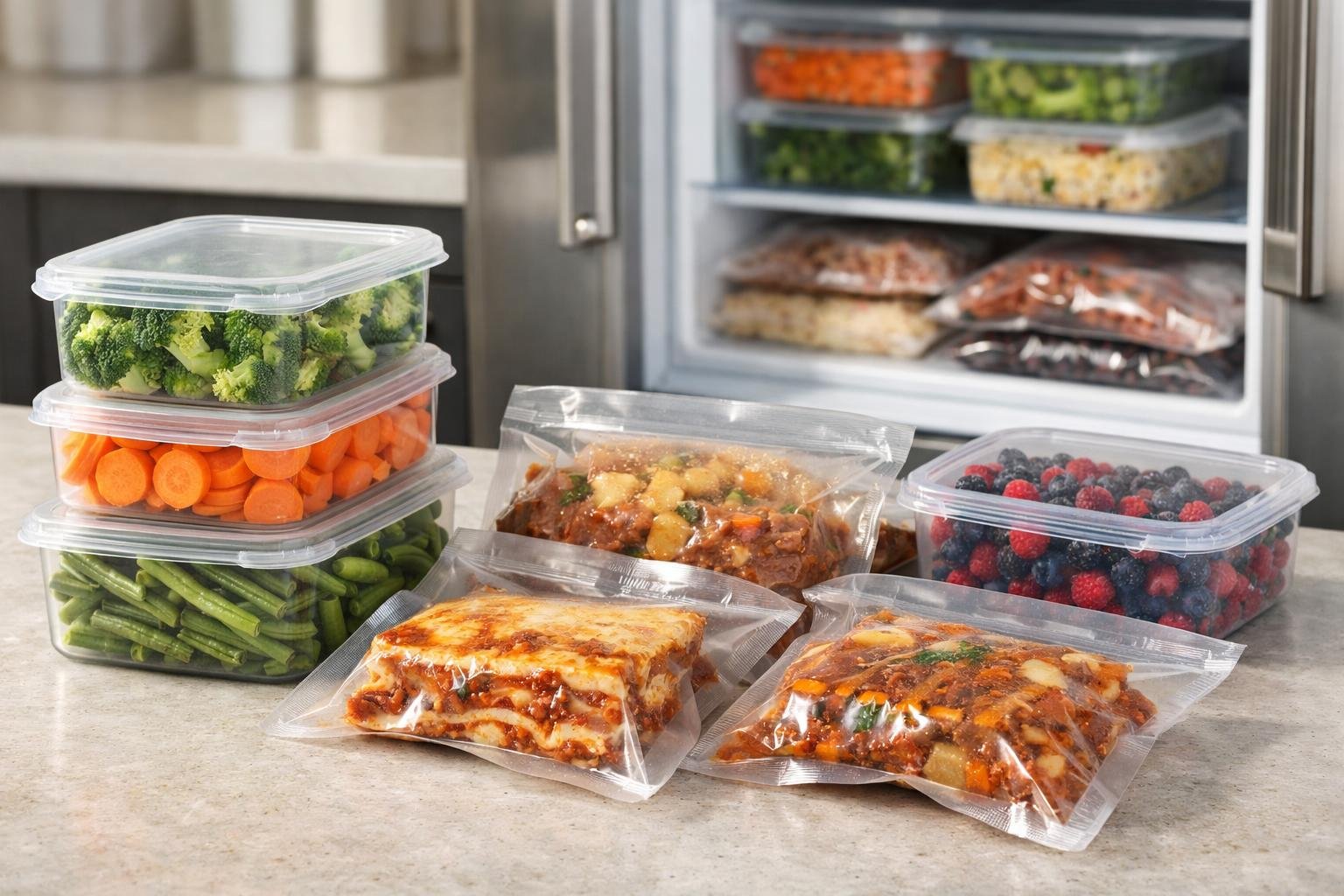
Entdecken Sie unsere neueste Kompakt-Vakuumiergeräte für Lebensmittel Kollektion!
Lebensmittel einzufrieren sollte das Leben einfacher machen und nicht zu eisigem Gemüse, trockenem Fleisch oder Resten führen, die niemand essen möchte. In vielen Fällen liegt das Problem nicht am Gefrierschrank selbst. Es ist die Art und Weise, wie die Lebensmittel verpackt wurden, bevor sie hineingelegt wurden.
Lebensmittel mit hohem Feuchtigkeitsgehalt, empfindlichen Texturen oder reichen Aromen profitieren oft am meisten von einer luftdichten Portionierung vor dem Einfrieren, darunter Suppen, Soßen, gekochte Getreidesorten, blanchiertes Gemüse und zubereitetes Fleisch. Eine bessere Portionierung hilft, Gefrierbrand zu reduzieren, die Textur zu schützen und das Auftauen zu vereinfachen, wenn Sie nur einen Teil dessen benötigen, was Sie gelagert haben.
Wir haben im Laufe der Zeit viele Einfriermethoden getestet, und einige funktionieren eindeutig besser als andere. In diesem Leitfaden erfahren Sie, welche Lebensmittel eine sorgfältige Portionierung wert sind, warum eine luftdichte Lagerung wichtig ist und wie Sie sie so einfrieren, dass Geschmack, Geld und Zeit gespart werden.
Wichtige Erkenntnisse
- Luftdichte Portionierung hält Gefrierbrand, seltsame Texturen und verblasste Aromen fern, indem sie Luft ausschließt.
- Feuchtigkeitsreiche Lebensmittel wie Suppen, Soßen, gekochte Getreidesorten und blanchiertes Gemüse erfordern die größte Sorgfalt beim Portionieren und Versiegeln.
- Die richtigen Behälter, weniger Luft und mahlzeitengerechte Portionen bedeuten weniger Abfall und schnelleres Auftauen.
Warum luftdichte Portionierung für den Gefriererfolg wichtig ist
Gefrierbrand ruiniert mehr Tiefkühlkost, als die meisten von uns zugeben wollen, und fast immer sind Luftzufuhr und schlechte Portionierung schuld. Wenn Sie verstehen, wie Luft und Feuchtigkeit Tiefkühlkost beeinträchtigen, können Sie den Verlust von Textur und Geschmack verhindern, bevor er überhaupt beginnt.
Wie Gefrierbrand entsteht
Gefrierbrand entsteht, wenn die Luft im Gefrierschrank Feuchtigkeit von den Lebensmitteloberflächen entzieht. Das ist nicht gefährlich, hinterlässt aber trockene, gräuliche Stellen, die wie Pappe schmecken. Das wird schlimmer in Behältern, die nicht gut verschlossen sind, oder wenn Lebensmittel ewig im Gefrierschrank liegen.
Große, ungetrennte Portionen sind besonders gefährdet, denn jedes Mal, wenn Sie den Behälter öffnen, setzen Sie die gesamte Charge der Luft aus. Gefriergeeignete Behälter helfen, aber nur, wenn sie zum Lebensmittel passen und richtig gefüllt sind. Eine halb leere Gallone Suppe? Das ist nur eine Lufttasche, die darauf wartet, Ihr Abendessen zu ruinieren.
Diese weißen oder grauen Flecken auf gefrorenem Fleisch oder die Eisschicht auf Ihrem Gemüse sind Beweise für Feuchtigkeitsverlust. Sobald es passiert ist, können Sie die Textur nicht wirklich reparieren.
Die Rolle von Luft und Feuchtigkeit
Luft ist im Gefrierschrank der öffentliche Feind Nummer eins. Sauerstoff oxidiert Fette und entzieht Feuchtigkeit. Das Einfrieren von Lebensmitteln in überdimensionierten Behältern oder schlaffen Beuteln lädt die Luft praktisch dazu ein, die Dinge auszutrocknen.
Feuchtigkeit verursacht ebenfalls Probleme. Zusätzliches Wasser auf Lebensmitteln verwandelt sich in Eiskristalle, die die Zellwände zerstören, sodass Sie beim Auftauen matschige Lebensmittel erhalten. Deshalb lohnt es sich, blanchiertes Gemüse gut abtropfen zu lassen und gekochte Speisen vor dem Einfrieren abkühlen zu lassen.
Wenn Luft und Feuchtigkeit zusammenwirken, wird es hässlich. Eis bildet sich, Luft dringt ein, und Ihre sorgfältig zubereiteten Mahlzeiten werden traurig.
Gefrierbrand mit intelligenter Lagerung verhindern
Das Portionieren in kleinere, mahlzeitengerechte Mengen bedeutet, dass Sie jeden Behälter nur einmal öffnen. Das hat sich bei uns bewährt:
Flüssigkeiten: Füllen Sie gefriergeeignete Behälter fast vollständig – lassen Sie etwa einen halben Zentimeter oben frei, damit es sich ausdehnen kann, aber lassen Sie keine zusätzliche Luft übrig.
Feste Stoffe: Drücken Sie Lebensmittel in Beuteln flach, drücken Sie die Luft heraus und verschließen Sie sie fest. Flache Packungen frieren schneller ein und tauen schneller auf und lassen sich besser stapeln.
Reste: Passen Sie den Behälter an die Portion an. Keine einzelne Portion sollte in einem Literbehälter schwimmen.
Vakuumiergeräte sind großartig, aber Sie brauchen keines – drücken Sie einfach die Luft aus den Gefrierbeuteln, bevor Sie sie verschließen. Das Einwickeln von Lebensmitteln in Frischhaltefolie, bevor sie in Behälter kommen, bietet eine zusätzliche Schutzschicht.
Lebensmittel, die von luftdichter Portionierung profitieren
Manche Lebensmittel sind einfach besser, wenn man sie vor dem Einfrieren portioniert und versiegelt. Der Unterschied liegt darin, wie gut man Luft und überschüssige Feuchtigkeit fernhält, was die Textur, den Geschmack und sogar den Nährwert im Laufe der Zeit verändert.
Gemüse: Frische und Textur erhalten
Gemüse benötigt etwas Vorbereitung, um gut einzufrieren, und eine luftdichte Portionierung hilft wirklich. Das Blanchieren von Gemüse stoppt Enzyme, die Farbe und Textur beeinträchtigen – auch im Gefrierschrank.
Bestes Gemüse zum luftdichten Einfrieren:
- Paprika (gewürfelt oder geschnitten)
- Brokkoli- und Blumenkohlröschen
- Grüne Bohnen
- Maiskörner
- Erbsen
- Spinat und Blattgemüse
Portionieren Sie diese in mahlzeitengerechten Mengen, bevor Sie sie versiegeln. Wenn Sie normalerweise zwei Tassen Brokkoli zum Abendessen verwenden, frieren Sie ihn in Zwei-Tassen-Packs ein. So tauen Sie nicht immer wieder denselben Beutel auf und frieren ihn wieder ein.
Wurzelgemüse wie Karotten und Süßkartoffeln eignen sich hervorragend, wenn sie blanchiert, abgekühlt und mit so wenig Luft wie möglich versiegelt werden. Eine luftdichte Lagerung verhindert, dass sie diese ausgetrockneten, seltsamen Stellen bekommen.
Feuchtigkeit ist hier der eigentliche Übeltäter. Tupfen Sie Gemüse vor dem Einfrieren trocken, damit Sie nicht eine Tonne Eiskristalle in Ihren Behältern haben.
Obst: Süße und Farbe bewahren
Das Einfrieren von Obst erfordert einen etwas anderen Ansatz, aber eine luftdichte Portionierung ist dennoch wichtig für die Qualität. Beeren, geschnittene Pfirsiche und Mangostücke profitieren alle vom einzelnen Einfrieren vor dem Portionieren.
Verteilen Sie Obst auf einem Tablett in einer einzigen Schicht und frieren Sie es ein, bis es fest ist. Dann übertragen Sie es in luftdichte Behälter in Mengen, die Sie tatsächlich verwenden werden.
Früchte, die sich hervorragend für luftdichtes Einfrieren eignen:
- Beeren (Erdbeeren, Heidelbeeren, Himbeeren)
- Steinobst (Pfirsiche, Pflaumen, Kirschen)
- Bananen (geschält und geschnitten)
- Mango- und Ananasstücke
Etwas Zucker hilft, die Fruchtzellen zu schützen. Bestreuen Sie die Früchte mit etwas Zucker oder frieren Sie sie in einem leichten Sirup ein, wenn Sie sie länger lagern möchten.
Lassen Sie nur wenig Freiraum in den Behältern – Früchte dehnen sich beim Einfrieren nicht stark aus. Beschriften Sie die Portionen mit Datum und Inhalt. Nach ein paar Monaten sehen einige Früchte ziemlich ähnlich aus, und man kann leicht den Überblick verlieren.
Fleisch und Fisch: Qualität und Geschmack bewahren
Fleisch und Fisch profitieren sehr von einer luftdichten Portionierung. Fettige Stücke sind besonders anfällig für Gefrierbrand und Geschmacksveränderungen.
Bei Fisch sollten Sie nicht warten – frieren Sie ihn innerhalb eines Tages nach dem Kauf ein. Portionieren Sie Filets oder mahlzeitengerechte Packungen und drücken Sie jede Spur Luft heraus.
Hackfleisch friert am besten ein, wenn es in Beuteln flachgedrückt wird. Eine ein Pfund schwere Flachpackung taut viel schneller auf als ein dickes Stück. Steaks und Koteletts lassen sich gut einzeln einwickeln und dann in einem größeren luftdichten Beutel oder Behälter gruppieren.
Optimale Portionierungsstrategien:
- Hackfleisch: 1-Pfund-Flachpackungen
- Hähnchenbrust: Einzelstücke
- Fischfilets: Eines pro Packung
- Gulaschfleisch: 2-Tassen-Portionen
Rohes Fleisch hält sich 3-12 Monate, wenn es gut verschlossen ist; gekochtes Fleisch 2-6 Monate. Lassen Sie gekochtes Fleisch immer abkühlen, bevor Sie es verschließen, um Kondensation im Behälter zu vermeiden.
Fisch ist empfindlich – seine Öle werden schnell ranzig. Frieren Sie ihn sofort nach dem Kauf ein und versuchen Sie, ihn innerhalb von 3 Monaten zu verbrauchen, auch wenn Sie ihn perfekt verschlossen haben.
Gemüsevorbereitung: Blanchier- und Portionierungsgeheimnisse
Das Blanchieren von Gemüse vor dem Einfrieren verhindert, dass Enzyme Nährstoffe und Textur abbauen. Eine ordnungsgemäße Portionierung in luftdichten Behältern verhindert Gefrierbrand und erleichtert die Essenszubereitung später. Diese Schritte wirken zusammen, um Ihr gefrorenes Gemüse monatelang frisch zu halten.
Wichtige Blanchiertipps für Gemüse
Verwenden Sie viel Wasser – etwa vier Liter pro Pfund Gemüse. Das hält den Siedepunkt stabil, auch nachdem Sie das Gemüse hinzugefügt haben.
Das Eisbad ist wichtiger, als Sie denken würden. Kaltes Leitungswasser reicht nicht aus, also füllen Sie eine große Schüssel mit Eis und Wasser, bevor Sie beginnen. Sie möchten, dass das Gemüse schnell abkühlt, wenn es aus dem Topf kommt.
Die Zeit ist wirklich wichtig. Blattgemüse braucht nur ein oder zwei Minuten, während dickes Gemüse wie Rosenkohl 3-5 Minuten benötigt. Stellen Sie einen Timer ein, sobald das Gemüse ins Wasser kommt – nur 30 Sekunden zu lang können knusprigen Brokkoli in Matsch verwandeln.
Arbeiten Sie in kleinen Mengen. Ein Pfund oder weniger auf einmal hält das Wasser heiß und die Ergebnisse konstant.
Welches Gemüse vom Blanchieren am meisten profitiert
Brokkoli, Spargel, grüne Bohnen und Blattgemüse müssen vor dem Einfrieren blanchiert werden. Lässt man dies aus, werden sie dunkel und matschig, egal was man später tut.
Manches Gemüse kann das Blanchieren überspringen. Paprika, Zwiebeln, Mais und Tomaten frieren so wie sie sind gut ein, was Zeit spart. Die meisten Wurzelgemüse (insbesondere Kartoffeln) frieren auch nach dem Blanchieren nicht gut ein, daher verzichten wir normalerweise auf das Einfrieren.
Hier sind unsere bevorzugten Blanchierzeiten:
- Spargel: 2-4 Minuten (dickere Stiele brauchen länger)
- Grüne Bohnen: 3 Minuten
- Brokkoliröschen: 2 Minuten
- Blumenkohl: 3 Minuten
- Blattgemüse: 1-2 Minuten
- Rosenkohl: 3-5 Minuten
Nach dem Blanchieren und Abkühlen drücken wir überschüssiges Wasser aus Blattgemüse, bevor wir es verpacken. Zu viel Feuchtigkeit bedeutet mehr Eiskristalle und eine schlechtere Textur.
Fehler, die beim Einfrieren von Gemüse vermieden werden sollten
Das Überspringen des Blanchierens ist der größte Fehler. Rohes Gemüse enthält Enzyme, die das Einfrieren überleben und Lebensmittel abbauen, was zu matschigen, verfärbten Ergebnissen führt.
Portionieren Sie Gemüse nicht, solange es noch warm oder feucht ist. Hitze oder Feuchtigkeit verwandeln sich in Eis im Behälter und verursachen Gefrierbrand. Tupfen Sie alles trocken, bevor Sie es verpacken.
Lassen Sie etwas Platz – etwa einen halben Zoll – damit gefrorene Lebensmittel sich ausdehnen können, ohne den Deckel zu sprengen oder die Versiegelung zu brechen.
Beschriften Sie alles mit Daten. Auch perfekt blanchiertes Gemüse verliert mit der Zeit an Qualität, daher versuchen wir, es innerhalb von 6-8 Monaten zu verbrauchen.
Spezialitäten und ihre Portionierung
Manche Lebensmittel erfordern eine besondere Behandlung beim Einfrieren. Brot muss vor dem Austrocknen geschützt werden, Milch braucht Platz zum Ausdehnen, und Dinge wie Paprika und Kräuter gedeihen am besten mit etwas Vorbereitung.
Brot einfrieren ohne Austrocknen
Brot vor dem Einfrieren in Scheiben schneiden – das macht das Frühstück einfacher. Sie können Scheiben direkt aus dem Gefrierschrank toasten, und Sie müssen nicht einen ganzen Laib für ein Sandwich auftauen.
Doppeltes Einwickeln ist entscheidend. Wenn es in einem Beutel ist, wickeln Sie diesen in Folie oder legen Sie ihn in einen Gefrierbeutel, wobei Sie die Luft herausdrücken. Für selbstgebackenes Brot wickeln Sie es fest in Plastikfolie, dann in Alufolie.
Bagels, English Muffins und Brötchen sind am einfachsten, wenn Sie sie mit Backpapier zwischen den Stücken portionieren. So können Sie das nehmen, was Sie brauchen, ohne einen gefrorenen Klotz auseinanderbrechen zu müssen.
Best Practices für Brot:
- Laibe vorschneiden
- Doppelt einwickeln, um Feuchtigkeit zu speichern
- Backpapier zwischen den Stücken verwenden
- Bis zu 3 Monate einfrieren
Milch richtig einfrieren
Lassen Sie einen Freiraum – mindestens einen Zoll – da sich Milch beim Einfrieren ausdehnt.
Sie können sie im Originalkarton einfrieren, aber kleinere Behälter sind besser. Portionieren Sie die Milch in Mengen von 1 oder 2 Tassen für Rezepte und schnelleres Auftauen.
Nach dem Auftauen gut schütteln, um eventuell abgesetztes Fett zu vermischen. Gefrorene Milch eignet sich gut zum Kochen, Backen und für Smoothies, aber manche Leute bemerken eine leichte Veränderung der Textur, wenn sie sie pur trinken.
Richtlinien zum Einfrieren von Milch:
- 1 Zoll oben frei lassen
- In 1-2 Tassenportionen aufteilen
- Nach dem Auftauen schütteln
- Innerhalb von 3 Monaten verbrauchen
Paprika, Kräuter und andere besondere Artikel einfrieren
Paprika und scharfe Paprika lassen sich gut ohne Blanchieren einfrieren. Wir würfeln oder schneiden sie normalerweise, je nachdem, wie wir sie später verwenden werden. Wenn Sie die Stücke etwa eine Stunde lang auf einem Backblech verteilen, verklumpen sie in den Gefrierbeuteln nicht.
Frische Kräuter behalten ihren Geschmack besser, wenn Sie sie in Eiswürfelformen mit Wasser oder Öl portionieren. Wir füllen jedes Fach zu etwa zwei Dritteln mit gehackten Kräutern, füllen sie mit Flüssigkeit auf und frieren sie ein. Jeder Würfel entspricht etwa einem Esslöffel Kräuter – praktisch, um sie in Rezepte zu werfen.
Andere Lebensmittel benötigen ihre eigenen Tricks. Wir portionieren geriebenen Käse in 1-Tassen-Mengen, frieren Keksteig in vorgeformten Kugeln ein und lagern gekochten Reis in 2-Tassen-Portionen. Tomatenmark? Wieder Eiswürfelformen – die meisten Rezepte benötigen nur ein oder zwei Esslöffel.
Schnelle Portionierungsreferenz:
| Lebensmittel | Portionsgröße | Zubereitungsmethode |
|---|---|---|
| Paprika | 1-2 Tassen gewürfelt | Schockfrosten auf Blech |
| Frische Kräuter | 1 Esslöffel pro Würfel | In Öl oder Wasser einfrieren |
| Geriebener Käse | 1 Tasse Portionen | Beutel mit entfernter Luft |
| Tomatenmark | 1 Esslöffel | Eiswürfelform |
Behälter und Methoden für luftdichtes Einfrieren
Der richtige Behälter, gepaart mit einer guten Versiegelungsmethode, macht den entscheidenden Unterschied. Wenn Sie möchten, dass Lebensmittel Monate später noch frisch schmecken, müssen Sie Luft fernhalten und Gefrierbrand in Schach halten. Außerdem sollte die Portionierung einfach genug sein, damit Sie Ihre gefrorenen Vorräte an geschäftigen Abenden tatsächlich nutzen.
Die besten gefriergeeigneten Behälter auswählen
Starre Plastikbehälter mit Schnappverschlussdeckeln eignen sich hervorragend für Suppen, Eintöpfe und Aufläufe, die Sie direkt aus dem Gefrierschrank aufwärmen möchten. Achten Sie nur darauf, dass sie als gefriergeeignet gekennzeichnet sind – normale Behälter können in der Kälte reißen.
Glasbehälter mit luftdichten Deckeln sind eine solide plastikfreie Option und nehmen keine Gerüche oder Flecken an. Wir mögen Weithalsgläser, weil das Herausnehmen von Lebensmitteln einfacher ist, besonders wenn sie nur teilweise aufgetaut sind. Lassen Sie immer etwa einen Zoll Freiraum in Glasbehältern, da sich Flüssigkeiten beim Einfrieren ausdehnen.
Worauf wir achten:
- Materialien, die Feuchtigkeit und Dampf widerstehen
- Auslaufsichere Dichtungen, die bei Kälte flexibel bleiben
- Gerade Seiten für einfacheres Entfernen von Lebensmitteln
- Stapelbare Formen, um Gefrierraum zu sparen
Silikonbeutel und -behälter sind mittlerweile überall erhältlich. Sie sind wiederverwendbar, robust und eignen sich hervorragend für marinierte Fleischsorten oder Flüssigkeiten.
Vakuumversiegelung vs. Gefrierbeutel
Vakuumiergeräte saugen fast die gesamte Luft ab, wodurch Lebensmittel frischer bleiben und Gefrierbrand viel besser verhindert wird als mit jeder anderen Methode. Wir verwenden Vakuumversiegelung für Proteine, Fertiggerichte und alles, was wir länger als drei Monate lagern.
Standard-Gefrierbeutel sind günstiger und eignen sich für die kurzfristige Lagerung. Drücken Sie einfach so viel Luft wie möglich heraus, bevor Sie sie verschließen. Manchmal verwenden wir den Wasserverdrängungstrick: Tauchen Sie den Beutel langsam in Wasser (mit der Öffnung über der Oberfläche), um die Luft herauszudrücken, und verschließen Sie ihn dann.
Starke Gefrierbeutel sind dicker und reißen in der Kälte weniger wahrscheinlich. Überprüfen Sie immer, ob auf Ihren Beuteln „Gefrier“ steht.
Portionieren für Mahlzeiten zum Mitnehmen
Wir portionieren Lebensmittel vor dem Einfrieren in Einzel- oder Familiengrößen. Auf diese Weise müssen Sie nicht eine ganze Charge auftauen, wenn Sie nur eine Mahlzeit wünschen.
Flachdrücken Sie Gefrierbeutel mit Suppen, Saucen oder Hackfleisch zu dünnen Rechtecken – diese „Gefriersteine“ tauen schneller auf, stapeln sich ordentlich und sparen Platz. Beschriften Sie alles mit Inhalt und Datum mit gefriergeeigneten Markern (vertrauen Sie uns, Sie werden es vergessen).
Muffinbleche und Eiswürfelbehälter eignen sich perfekt zum Vorportionieren von Saucen, Pesto oder Babynahrung. Sobald sie gefroren sind, nehmen Sie sie heraus und werfen Sie sie in beschriftete Beutel. Jeder Würfel ist eine bekannte Menge, sodass Sie später nicht raten müssen.
Was nicht eingefroren werden sollte (oder nur mit Vorsicht)
Nicht alles gehört in den Gefrierschrank, auch wenn man perfekt portioniert. Manche Lebensmittel überleben die Kälte einfach nicht, während andere eine besondere Vorbereitung benötigen, um es zu überstehen.
Lebensmittel, die zu Texturveränderungen neigen
Milchprodukte sind heikel. Milch, Sahne und Frischkäse trennen sich nach dem Einfrieren – die Fette zerfallen, und man erhält eine geronnene oder wässrige Masse. Butter ist die Ausnahme; sie friert ein und taut wie ein Champion für bis zu neun Monate auf.
Gerichte auf Mayonnaisebasis werden im Gefrierschrank gummiartig und seltsam. Wenn Sie Aufläufe oder Nudelsalate zubereiten, lassen Sie die Mayonnaise weg oder fügen Sie sie nach dem Aufwärmen hinzu.

Entwickelt, um Ihr Zuhause, Ihre Küche und Ihren Alltag zu vereinfachen.


Kontaktieren Sie uns
Fragen? Wir sind Montag bis Freitag von 10:00 bis 18:00 Uhr PST für Sie da.
Kontaktinformationen