

Schau dir unsere neueste Golf-Kollektion an!
Ein sauberer Ballkontakt kann Golf sofort lohnender machen. Für Anfänger besteht die Herausforderung nicht nur darin, härter zu schwingen oder mehr Ausrüstung zu kaufen. Es geht darum, zu lernen, den gleichen Stand, Schwungweg, das gleiche Tempo und Schlagmuster oft genug zu wiederholen, damit der Ball mit mehr Kontrolle startet. Die richtigen Golf-Trainingshilfen können dabei helfen, indem sie einfaches Feedback geben, das man beim Üben fühlen, sehen und wiederholen kann.
Dieser Leitfaden stellt anfängerfreundliche Hilfsmittel vor, die einen besseren Ballkontakt unterstützen, von Griff- und Ausrichtungshilfen bis hin zu Schwungverbindungs-Tools, Putt-Trainern, Tempo-Hilfen und Indoor-Übungsmöglichkeiten. Du erfährst, welche Trainingshilfen häufige Probleme wie dünne Schläge, fette Schläge, schlechte Ausrichtung, inkonsistenten Griff und überstürzte Schwünge beheben, sodass du Werkzeuge auswählen kannst, die deinen tatsächlichen Übungsbedürfnissen entsprechen.
Nachdem ich eine Reihe von Trainingshilfen für neue Golfer ausprobiert habe, ist klar, dass die besten diejenigen sind, die direkt an die Ursachen ungleichmäßiger Schläge gehen. Schwungtrainer, die Arme und Körper zusammenarbeiten lassen, Griffhilfen, die den Händen die richtigen Positionen beibringen, und Tempotrainer, die einen verlangsamen, all das schafft die Wiederholbarkeit, die ein konstanter Ballkontakt erfordert. Die eigentliche Herausforderung ist nicht, einen guten Schlag zu erzielen, sondern viele davon aneinanderzureihen.
Die richtige Trainingshilfe hängt wirklich davon ab, was deinen Ballkontakt stört. Wenn deine Arme vom Körper wegfliegen, wirst du andere Fehlschläge bekämpfen als jemand, dessen Griff sich bei jedem Schwung ändert oder dessen Rückschwung abweicht. Schauen wir uns die Werkzeuge an, die jedes Problem angehen, wie sie funktionieren und wie du die auswählen kannst, die tatsächlich zu dem passen, womit du auf dem Platz kämpfst.
Wichtigste Erkenntnisse
- Konstanter Ballkontakt entsteht durch die Verbindung von Armen und Körper, das Halten der Schwungbreite und die jedes Mal wiederholbare Durchführung des Rückschwungs.
- Trainingshilfen, die physisches Feedback zu Verbindung, Griff und Tempo geben, sind für Anfänger, die lernen, den Ball sauber zu schlagen, am nützlichsten.
- Das Herausfinden deines spezifischen Kontaktproblems hilft dir, eine Trainingshilfe zu wählen, die tatsächlich hilft, anstatt dass ein weiteres Gerät Staub ansammelt.
Schlüsselmerkmale effektiver Trainingshilfen für Anfänger
Die besten Trainingshilfen für Anfänger haben ein paar Dinge gemeinsam: Sie geben klares Feedback, funktionieren praktisch überall und sind auch dann nützlich, wenn man besser wird.
Konsistenter Kontakt und Treffmoment
Trainingshilfen, die sich auf die Kontaktqualität konzentrieren, erzielen bei Anfängern meist die schnellsten Ergebnisse. Schlagmatten zeigen genau an, wo dein Schläger den Boden trifft, ob hinter dem Ball, dünn oder genau richtig. Dieses Feedback ist entscheidend, da schlechter Kontakt der Hauptgrund ist, warum Anfänger Schwierigkeiten haben, den Ball in die Luft zu bekommen oder die Distanz zu kontrollieren.
Hilfsmittel, die für das Schlagtraining entwickelt wurden, helfen dir, die grundlegendste Fähigkeit im Golf zu entwickeln. Wenn du zuerst den Ball und dann den Boden triffst, wird alles andere viel einfacher. Achte auf Werkzeuge, die eine sichtbare Markierung oder Spur hinterlassen, damit du dein Treffmuster sehen kannst.
Kontaktorientierte Hilfen sollten mit mehr als einem Schläger funktionieren. Übe mit Wedges, Eisen oder sogar Fairwayhölzern auf derselben Trainingsfläche. So kannst du sehen, wie sich deine Treffposition von Schläger zu Schläger ändert, ohne eine Menge verschiedener Geräte zu benötigen.
Feedback-Mechanismen: Taktil, Audio und Visuell
Anfänger lernen schneller, wenn sie gleichzeitig Feedback auf verschiedene Weisen erhalten. Taktiles Feedback, also das, was man in den Händen und am Körper spürt, sagt sofort, wenn etwas nicht stimmt. Auch der Klang eines sauberen Schlags im Vergleich zu einem Fehlschlag hilft. Visuelles Feedback zeigt den Schwungweg und die Schlägerposition.
Grifftrainer geben starkes taktiles Feedback, indem sie die Hände physisch in Position bringen. Man spürt, wann der Griff richtig ist oder wann die Hände zu wandern beginnen. Dieses sensorbasierte Lernen baut viel schneller Muskelgedächtnis auf, als sich nur Anweisungen zu merken.
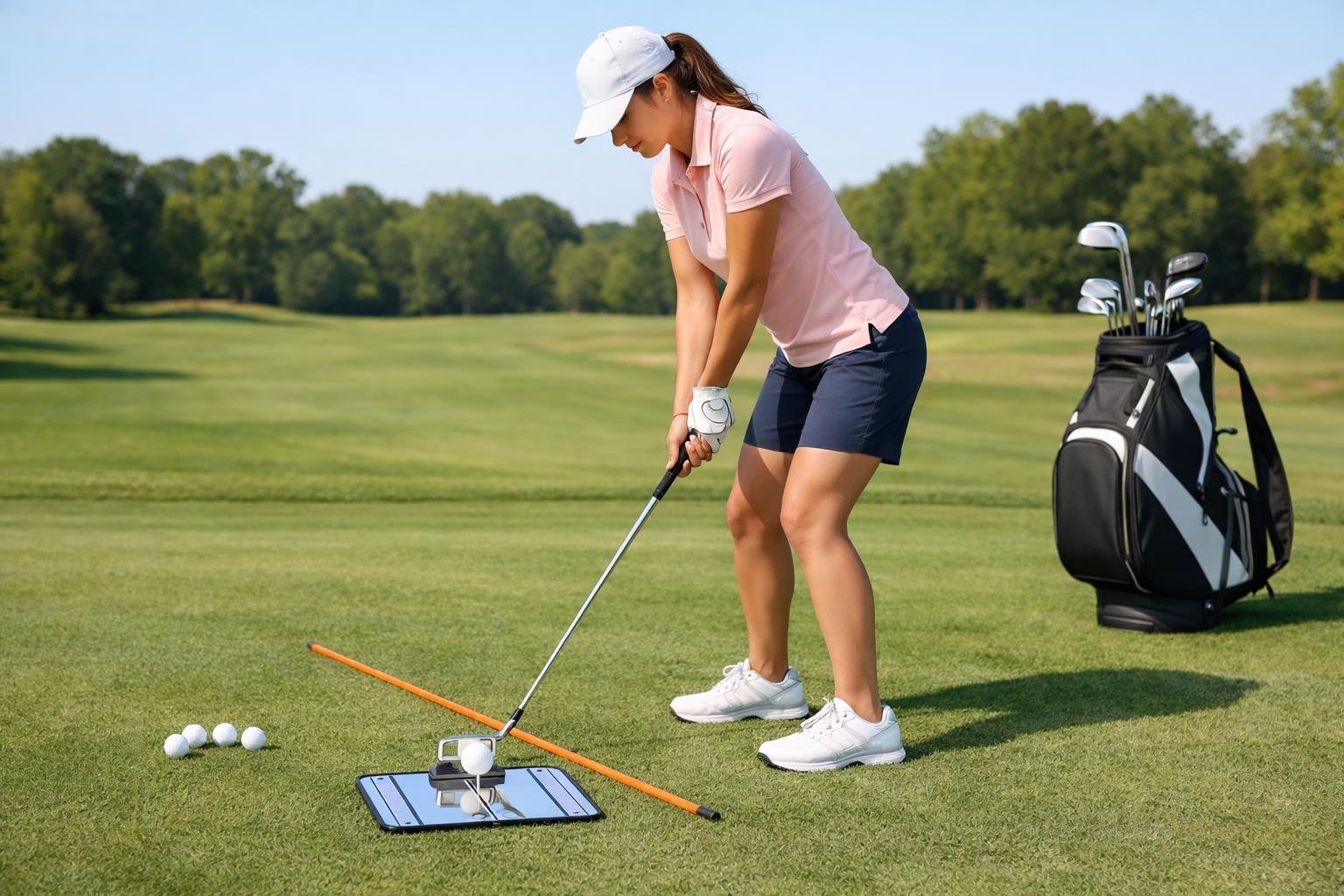
Visuelle Hilfsmittel wie Ausrichtungsschläger zeigen sofort, ob der Stand oder die Schwungebene falsch ist. Legt man sie auf den Boden, sieht man sofort, ob Füße, Hüften und Schultern ausgerichtet sind oder ob der Rückschwung abweicht.
Portabilität und Haltbarkeit für das Training zu Hause
Man wird eine Trainingshilfe viel eher nutzen, wenn sie im Wohnzimmer oder in der Garage funktioniert. Kompakte Tools, die keine volle Driving Range benötigen, ermöglichen es, jederzeit zu üben, wenn man ein paar Minuten Zeit hat. Kleine Putt-Trainer, Ausrichtungsschläger und Griffhilfen passen alle in einen Schrank und sind schnell aufgebaut.
Haltbarkeit ist wichtig. Billige Hilfsmittel gehen kaputt und geraten in Vergessenheit. Investiere in Dinge aus soliden Materialien wie Gummischeiben, stabilen Kunststoffstäben und gut verarbeiteten Putt-Führungen. Diese halten jahrelang.
Indoor-freundliche Optionen helfen, weiter zu üben, wenn das Wetter schlecht ist oder man wenig Zeit hat. Ein Puttingbogen funktioniert auf Teppich, Ausrichtungsschläger markieren die Positionen auf jeder ebenen Fläche, und Grifftrainer lassen sich an Schlägern befestigen, die man bereits zu Hause hat.
Anpassung an unterschiedliche Leistungsniveaus
Deine Fähigkeiten werden sich ändern, daher wachsen die besten Trainingshilfen mit dir. Ausrichtungsschläger zum Beispiel bleiben nützlich, wenn du dich verbesserst. Sie sind anfangs hervorragend für die grundlegende Ausrichtung, später dann für Schwungebenen- oder Tempoübungen.
Anpassbare Hilfsmittel bieten dir mehr für dein Geld. Einige Putt-Trainer ermöglichen es, die Bogenbreite oder die Torgröße zu ändern, wenn dein Schlag besser wird. Schlagmatten funktionieren, egal ob du gerade erst den Ballkontakt lernst oder ballorientierte Schläge mit verschiedenen Eisen feinabstimmst.
Beginne mit Mehrzweckwerkzeugen, die die Grundlagen vermitteln. Ein Golfhandtuch ist günstig und eignet sich für Ball-First-Kontaktübungen hinter dem Ball. Wenn du besser wirst, hilft dasselbe Handtuch bei Verbindungsübungen oder Pre-Shot-Routinen. Du wirst die Grundlagen nicht überwachsen.
Schwungtrainer, die zuverlässigen Ballkontakt aufbauen
Die besten Schwungtrainer für Anfänger zielen auf die wichtigsten mechanischen Fehler ab, die den Ballkontakt ruinieren: sich lösende Arme, abweichende Schwungebene, Verlust der Schwungbreite und unsaubere Ausholbewegung.
Smart Ball und Armverbindungs-Tools
Ein Unterarm-Verbindungsball ist einer der besten Verbindungstrainer für Anfänger, die Schwierigkeiten mit dem Ballkontakt haben. Man drückt den aufblasbaren Ball während des Schwungs zwischen die Unterarme, was Arme und Körper als Einheit bewegt.
Wenn sich die Arme mitten im Schwung vom Oberkörper lösen, wird der Schwungbogen unkontrollierbar. Manchmal trifft man sauber, manchmal fett oder dünn, und es gibt kein Muster. Ein Verbindungsball behebt dies, indem er Arme und Brust verbunden hält.
Beginne mit Halbschwüngen, um das Gefühl zu bekommen, und gehe dann zu vollen Schwüngen über. Wenn die Verbindung verloren geht, fällt der Ball herunter. Das gibt sofortiges Feedback, das man allein durch das Gefühl nicht bekommen kann. Es ist besonders hilfreich bei mittleren Eisen, wo man den Ballkontakt wirklich beurteilen kann.
Andere Arm-Verbindungstrainer verwenden Schaumstoffbänder oder -gurte. Sie funktionieren nach dem gleichen Prinzip, aber einige Anfänger finden sie weniger offensichtlich, da sie nicht das klare Fehlersignal eines herunterfallenden Balls geben.
Schwungebenen- und Schwungbahnführer
Schwungebenentrainer helfen dabei, den richtigen Schlägerweg zu verinnerlichen, was sich direkt auf den Treffpunkt des Schlägerkopfes mit dem Ball auswirkt. Viele Kontaktprobleme resultieren aus einer Schwungebene, die sich bei jedem Schwung ändert, sodass man ständig kompensiert.
Gängige Schwungebenen-Trainingsgeräte:
- Ausrichtungsstäbe, die im Ziel-Ebenenwinkel positioniert sind
- Brettartige Unterlagen, die den Schläger führen
- Laserführer, die eine Schwungbahn projizieren
- Geformte Führungen mit Rillen
Ausrichtungsstäbe sind super vielseitig. Stecke zwei in den Boden, um eine Ebene parallel zu deiner Ziellinie zu schaffen. Dein Schläger sollte sich beim Rückschwung und Durchschwung zwischen ihnen befinden.
Voreingestellte Schwungebenen-Stationen bieten feste Winkel, sind aber für unterschiedliche Schwünge weniger flexibel. Nach unserer Erfahrung kommen Anfänger mit visuellen Hilfen besser zurecht als mit physischen Barrieren, da das Treffen einer harten Führung mitten im Schwung ziemlich entmutigend sein kann.
Schwungweite und Balance beibehalten
Die Schwungweite steuert den Radius deines Schwungbogens. Wenn dieser Radius mitten im Schwung schrumpft, springt dein Tiefpunkt umher und der Kontakt wird unregelmäßig. Anfänger kollabieren oft den führenden Arm oder ziehen die Hände ein, wodurch die für saubere Schläge notwendige Streckung verloren geht.
Weitentrainer verwenden in der Regel Widerstandsbänder von der führenden Schulter zur Hand oder ein Gurtsystem, das die Arme gestreckt hält. Der Widerstand lässt dich spüren, wann du hereinziehst, sodass du es korrigieren kannst.
Gleichgewichtstrainer sind wichtig, denn der Verlust des Gleichgewichts oder eine falsche Gewichtsverlagerung bringt alles andere durcheinander. Schaumstoffpolster oder Balancebretter zwingen dich, während des Schwungs stabil zu bleiben. Wir haben gesehen, wie Anfänger einen besseren Kontakt erzielten, nur indem sie auf einer instabilen Oberfläche übten, die sie dazu zwang, auf das Gleichgewicht zu achten.
Beginne mit statischen Übungen auf dem Balance-Pad, bevor du schwingst. Die Idee ist, Stabilität aufzubauen, die du auf den normalen Boden übertragen kannst, wo ein fester Stand einen wiederholbaren Schwung und einen besseren Kontakt unterstützt.
Beseitigung von Chicken Wing und Takeaway-Problemen
Der gefürchtete Chicken Wing tritt auf, wenn der führende Ellbogen beim Aufprall beugt und sich hebt, und das zerstört den Ballkontakt für so viele Anfänger. Er verkürzt den Schwungradius im denkbar ungünstigsten Moment, was zu dünnen Schlägen, schwachen Treffern und unvorhersehbaren Tiefpunkten führt.
Anti-Chicken-Wing-Trainer werden am führenden Arm befestigt und verhindern, dass du deinen Ellbogen beim Aufprall beugst. Manche verwenden starre Schienen, andere Spannbänder. Bänder sind normalerweise besser, weil sie eine natürliche Armbewegung zulassen, aber dennoch die extreme Biegung verhindern, die den Ballkontakt ruiniert.
Der One-Piece-Takeaway ist enorm wichtig. Wenn du den Schwung nur mit den Händen oder Armen beginnst, ändert sich deine Rückschwungposition jedes Mal. Das bedeutet unterschiedliche Kompensationen auf dem Weg nach unten, und der Ballkontakt wird zufällig.
Takeaway-Trainer fungieren oft auch als Verbindungswerkzeuge. Hier ist eine einfache Übung: Klemme eine Schlägerhaube oder einen kleinen Gegenstand während des Takeaways unter deine führende Achselhöhle. Wenn er herausfällt, bevor deine Hände Hüfthöhe erreichen, hast du dich zu früh gelöst, und dein Ballkontakt wird darunter leiden.
Trainingshilfen, die Griff und Ansprechposition verbessern
Ein solider Griff und eine gute Ansprechposition sind die Grundlage für einen konstanten Ballkontakt, und die richtigen Trainingshilfen machen das Erlernen und Beibehalten dieser Grundlagen viel einfacher.
Golf-Grifftrainer für Anfänger
Ein Golf-Grifftrainer ist eine vorgeformte Führung, die auf den Schläger geklippt wird und den Fingern genau zeigt, wohin sie gehören. Diese sind ein Lebensretter für Spieler, die die richtige Handposition immer wieder vergessen oder in alte Gewohnheiten zurückfallen.
Ein anfängerfreundlicher Golf-Grifftrainer wird an einem Standardschläger befestigt und funktioniert mit verschiedenen Griffstilen. Erhöhte Rillen oder farbcodierte Punkte führen Daumen, Handflächen und Finger in einen neutralen Griff. Dieses physische Feedback baut Muskelgedächtnis viel schneller auf, als nur Anweisungen zu hören.
Verwende einen Grifftrainer für Aufwärmschwünge und kurze Übungseinheiten, nicht den ganzen Tag. Der Sinn ist, den Händen die richtige Position beizubringen, bis sie sie natürlich finden. Die meisten Anfänger sehen nach ein oder zwei Wochen eine bessere Griffkonsistenz, und diese kosten in der Regel 15 bis 30 US-Dollar.
Ausrichtungsstäbe und Setup-Anleitungen
Ausrichtungsstäbe sind einfache Fiberglasstangen, die dir helfen, deinen Körper, die Schlagfläche und die Ziellinie richtig auszurichten. Sie sind für Anfänger unerlässlich, da eine schlechte Ausrichtung eine heimtückische Ursache für schlechten Ballkontakt ist und ohne Referenz schwer zu erkennen ist.
Lege einen Stock parallel zu deinem Ziel auf den Boden, einen anderen senkrecht für die Ballposition. Du kannst auch einen Stock über deine Schultern oder Hüften halten, um zu überprüfen, ob dein Körper mit deinem beabsichtigten Weg übereinstimmt. Diese Übungen dauern weniger als eine Minute, machen aber einen großen Unterschied in der Setup-Genauigkeit.
Die meisten Stäbe kommen im Doppelpack, kosten 20 bis 30 US-Dollar und sind einfach auf die Driving Range mitzunehmen. Sie sind vielseitig genug für unzählige Übungen, wenn du besser wirst.
Putting-Tools für Konstanz rund ums Grün
Puttings machen etwa 40 % deiner Schläge aus, aber die meisten Leute üben es kaum. Die richtigen Trainingshilfen helfen dir, eine gute Ausrichtung, einen wiederholbaren Schlag und das Muskelgedächtnis aufzubauen, um mehr Putts zu lochen.
Beste Golf-Putt-Hilfen und Spiegel
Putting-Spiegel sind immer noch eines der besten Werkzeuge, um den Stand zu überprüfen. Diese flachen Spiegel haben Ausrichtungslinien, die dir helfen, deine Augen über dem Ball zu positionieren und deine Schultern gerade zu halten.
Die meisten Spiegel haben Markierungen für die Ballposition und die Ausrichtung der Putterfläche. Lege den Spiegel einfach auf eine ebene Fläche und benutze ihn 5 bis 10 Minuten vor jeder Übung. Er schafft ein Bewusstsein für die Körperhaltung, ohne ein Grün oder gar einen Ball zu benötigen.
Sofortiges visuelles Feedback hilft dir, Fehler beim Setup zu erkennen, die du sonst vielleicht nicht bemerken würdest. Sogar Tour-Profis benutzen Spiegel vor Turnieren, weil sie so nützlich sind.
Putting Gates, Matten und Stroke-Trainer
Putting Gates sind einfache Stangen oder Rahmen, die einen schmalen Kanal für deinen Putter bilden, durch den er schwingen kann. Sie zwingen dich, einen geraden Schlag zu entwickeln, indem sie sofortiges Feedback geben, wenn dein Weg abweicht.
Die meisten Gates lassen sich auf verschiedene Breiten einstellen. Beginne weit und verenge sie, wenn du besser wirst.
Putting Matten bieten eine Übungsfläche mit konstantem Rollverhalten. Die guten haben Distanzmarkierungen, Ausrichtungsführungen und manchmal eingebaute Löcher oder Ziele. Wähle Matten von 9 bis 12 Fuß Länge, um sowohl das Lag-Putting als auch kurze Putts zu üben.
Stroke Trainer verwenden Schienen, Bögen oder Führungen, um deinen Putter auf Kurs zu halten. Sie helfen dir zu fühlen, wie ein guter Schlag ist, was sich auf echte Grüns überträgt.
Wichtige Utensilien für das Putt-Training zu Hause
Für ein gutes Training zu Hause braucht man eigentlich nur ein paar Grundlagen. Eine ordentliche Puttingmatte ist dein Ausgangspunkt, und du brauchst eine Tasse oder eine Art Ziel, auf das du zielen kannst.
Ehrlich gesagt, Ausrichtungsstäbe helfen, aber du kannst auch einfach Dinge verwenden, die du herumliegen hast, wie Münzen, Bleistifte oder was auch immer sonst funktioniert, um Referenzpunkte für deine Ballposition und dein Zielen zu setzen. Versuche, einen Stock oder ein Lineal parallel zu deiner Ziellinie, vielleicht sechs Zoll hinter dem Ball, zu legen, um zu überprüfen, wie sich dein Schlag bewegt.
Wenn du drinnen übst, kannst du dich auf deine Mechanik konzentrieren, ohne dir Sorgen um Wind oder holprige Grüns machen zu müssen. Nur 15 bis 20 Minuten, ein paar Mal pro Woche, schlägt die gelegentliche lange Sitzung jedes Mal.
Halte eine Handvoll Golfbälle bereit, damit du ein paar Putts einschieben kannst, wenn du fünf Minuten Zeit hast. Wenn alles vorbereitet ist, ist es viel einfacher, tatsächlich zu üben, anstatt nur darüber nachzudenken.
Analyse und Fortschrittsverfolgung mit technologiegestützten Hilfsmitteln
Technisch ausgeklügelte Trainingshilfen verwandeln all diese vagen „Gefühle“ über deinen Schwung in echte, nutzbare Informationen. Launch Monitore sagen dir genau, was beim Ballkontakt passiert. Handgelenks- und Bewegungstrainer zeigen dir, wie sich deine Hände bewegen. Manchmal ist es nicht das, was du denkst.
Launch Monitore für Feedback
Launch Monitore messen die Details: Ballgeschwindigkeit, Schlägerweg, Schlagflächenwinkel und wo du den Ball triffst. Wenn du mit unregelmäßigem Kontakt kämpfst, erkennen diese Geräte Muster, die du alleine nie bemerken würdest.
Erschwingliche Launch Monitore decken die Grundlagen ab. Sie zeigen dir, ob du die Mitte triffst oder unten auf der Schlagfläche verfehlst und wie sich dein Schläger beim Ballkontakt bewegt. Das ist viel hilfreicher, als nur zu raten.
Das Verfolgen deiner Zahlen im Laufe der Zeit zeigt dir wirklich den Fortschritt. Manchmal hast du das Gefühl, dass du es großartig triffst, aber die Daten sagen etwas anderes. Dann weißt du, dass es Zeit ist, deinen Stand oder Schwungweg anzupassen.
Verlier dich nicht in einem Meer von Zahlen. Beschränke dich am Anfang auf zwei oder drei Schlüsselstatistiken. Trefferposition und Schlägerweg sind ein guter Anfang. Die meisten Monitore werden mit Apps geliefert, die deine Sitzungen speichern und deine Verbesserung grafisch darstellen.
Handgelenks- und Bewegungstrainer wie Handgelenkssensoren
Mit Handgelenksbewegungstrainern befestigst du einen Sensor an deinem führenden Handgelenk und erhältst in Echtzeit Feedback zu deinen Handgelenkswinkeln. Für die meisten Anfänger zeigt dies, ob sich ihre Handgelenke beim Aufprall lösen, was ein sehr häufiger Grund für schlechten Ballkontakt ist.
Du erhältst sofortige Pieptöne oder Bildschirmnachrichten, wenn dein Handgelenk aus dem Zielbereich abweicht. Diese Art von Feedback beschleunigt das Lernen und hilft, das Muskelgedächtnis aufzubauen.
Du kannst Handgelenkssensoren auf der Driving Range oder einfach zu Hause beim Schwungtraining verwenden. Die Daten zeigen, ob du deine Handgelenkswinkel während des Aufpralls stabil hältst oder ob du den Schläger umklappst oder schaufelst. Diese Bewegungen können sich gut anfühlen, aber sie ruinieren oft deinen Schlag.
Die App kann deine Handgelenkspositionen mit idealen Referenzwerten vergleichen. Die meisten Leute merken, dass ihr führendes Handgelenk an bestimmten Stellen viel zu stark gewinkelt oder gekrümmt ist, sodass du genau weißt, woran du arbeiten musst.
Tempo- und Geschwindigkeitstraining zur Entwicklung besserer Schwünge
Konstanter Ballkontakt beginnt mit einem Schwung, der Rhythmus hat. Trainingshilfen, die sich auf das Tempo konzentrieren, helfen dir, die richtige Reihenfolge zu verinnerlichen, und Geschwindigkeitstrainer lehren dich, schneller zu schwingen, ohne die Kontrolle zu verlieren.
Tempo- und Rhythmustrainingsgeräte
Gewichtete Trainingsschläger mit einstellbarer Belastung sind überraschend effektiv für das Tempo. Sie sind kopflastig und etwas flexibel, sodass man langsamer werden und jeden Teil des Schwungs wirklich spüren muss. Wenn das Tempo nicht stimmt, merkt man es sofort.
Tempo-Stöcke ermöglichen in der Regel das Austauschen von Gewichten. Beginne leicht, um die Bewegung zu verinnerlichen, und füge dann Gewicht hinzu, wenn du dich wohler fühlst. Einstellbare Gewichtssysteme machen es einfach, sich mit zunehmender Verbesserung zu steigern.
Für drinnen passt ein mittelgroßer Trainer, etwa 40 Zoll, in die meisten Räume und ermöglicht trotzdem einen anständigen Schwungbogen. Achte auf den Übergang vom Rückschwung zum Abschwung, denn hier eilen die meisten Leute. Sanft und stetig ist das Ziel.
Speed-Trainer für kontrollierte Power
Geschwindigkeitstrainingssysteme verwenden leichtere und schwerere Schläger, um die Schlägerkopfgeschwindigkeit zu erhöhen, ohne die Technik zu ruinieren. Multi-Schläger-Systeme trainieren deinen Körper, sich schneller zu bewegen, aber im Gleichgewicht zu bleiben.
Verstellbare Widerstandssätze ermöglichen es dir, den Widerstand während deiner Aufwärm- und Geschwindigkeitssitzungen zu ändern. Beginne leicht, um deine schnellzuckenden Muskeln zu aktivieren, und gehe dann schwerer, um Kraft durch deinen Schwung aufzubauen.
Das schrittweise Erhöhen der Geschwindigkeit hilft dir, Distanz sicher zu gewinnen. Zwei oder drei 15-minütige Sitzungen pro Woche reichen aus für echte Fortschritte, und du wirst dabei deinen Schwung nicht durcheinander bringen. Der Trick ist, nur dann Geschwindigkeit hinzuzufügen, wenn deine Schwungsequenz standhält. Andernfalls schlägst du einfach mit vollem Einsatz.
Aufbau der Schwungsequenz zu Hause
Man braucht keine komplette Driving Range, um an der Schwungsequenz zu arbeiten. Tragbare radarbasierte Launch Monitore können die Schwunggeschwindigkeit und das Tempo verfolgen, selbst wenn man nur in der Garage schwingt.
Es hilft, deine Zahlen in einem Übungsprotokoll zu notieren. Notiere deine Schwunggeschwindigkeit, eventuelle Timing-Probleme und wie sich verschiedene Gewichte anfühlen. Du wirst Muster erkennen und wissen, wann du tatsächlich Fortschritte machst.
Beginne jede Einheit mit 5 bis 10 Schwüngen, bei denen du den leichtesten Trainer verwendest, um deinen Rhythmus zu finden. Konzentriere dich darauf, dein Tempo vom Ausholen bis zum Finish gleichmäßig zu halten. Füge erst dann Gewicht hinzu, wenn dein Tempo stabil ist, und überprüfe, ob deine Schultern, Hüften und dein Kopf nichts Ungewöhnliches tun, wenn der Widerstand zunimmt. Auf diese Weise vermeidest du, dir schlechte Angewohnheiten anzueignen, die deinen Kontakt beeinträchtigen.
Häufig gestellte Fragen
Golftrainingshilfen für Anfänger sind am nützlichsten, wenn sie ein klares Feedback geben und einfach und regelmäßig zu üben sind. Hier sind schnelle Antworten auf häufige Fragen zur Verbesserung von Kontakt, Setup, Schwungbahn, Rotation und Indoor-Training.
Welche Trainingshilfen für die Schwungbahn sind für Anfänger zu Hause am einfachsten korrekt zu verwenden?
Ausrichtungsstäbe sind die einfachste Option. Lege einen auf den Boden als Ziellinie und verwende einen anderen, um deine Schlägerbahn bei langsamen Probeschwüngen zu überprüfen.
Welche Trainingshilfen verbessern tatsächlich den Ballkontakt und reduzieren dünne oder fette Schläge bei High Handicappern?
Impact-Matten, Schlagbretter und Schlagflächen-Tape sind hilfreich, da sie zeigen, wo der Schläger den Boden oder die Schlagfläche trifft. Das erleichtert es, dünne, fette, Spitzen- oder Fersenkontakte zu erkennen.
Welche anfängerfreundlichen Rotationstrainer helfen Ihnen, sich zu drehen, ohne zu schwanken oder das Gleichgewicht zu verlieren?
Verbindungsbälle, Schaumstoffrollen und Tempo-Sticks können helfen. Sie lehren dich, mit deinem Körper zu rotieren, anstatt seitlich zu rutschen oder dich nur auf deine Arme zu verlassen.
Welche Golfschwungtrainer geben das beste Feedback für einen konstanten Kontakt, ohne dass ein Trainer anwesend sein muss?
Impact-Bags, Schlagmatten, Ausrichtungsstäbe und Verbindungsbälle geben einfaches Feedback, das du alleine nutzen kannst. Sie zeigen, ob sich dein Setup, deine Schwungbahn und deine Impact-Position verbessern.
Was sind die nützlichsten preisgünstigen Trainingshilfen zur Behebung eines Slice, während man am Kontakt arbeitet?
Ausrichtungsstäbe, Handtuchübungen und Schaumstoff-Schwungbahnführungen sind erschwingliche Optionen. Sie helfen dir, deine Schwungbahn zu erkennen und die Außen-Innen-Bewegung zu reduzieren, die oft Slices verursacht.
Welche Indoor-Golftrainingshilfen lohnen sich, wenn man nur wenig Platz zum Üben hat?
Schaumbälle, ein kleines Netz, eine Impact-Bag, eine Puttingmatte und Ausrichtungsstäbe funktionieren gut auf engem Raum. Sie ermöglichen es Ihnen, Kontakt, Tempo, Setup und Putten zu Hause zu üben.
Teilen:
Wie Sous-Vide-Menüplanung das Kochen zu Hause effizienter machen kann
Wie können neue Golfspieler zwischen einem Komplettset und individuellen Schläger-Upgrades wählen?