

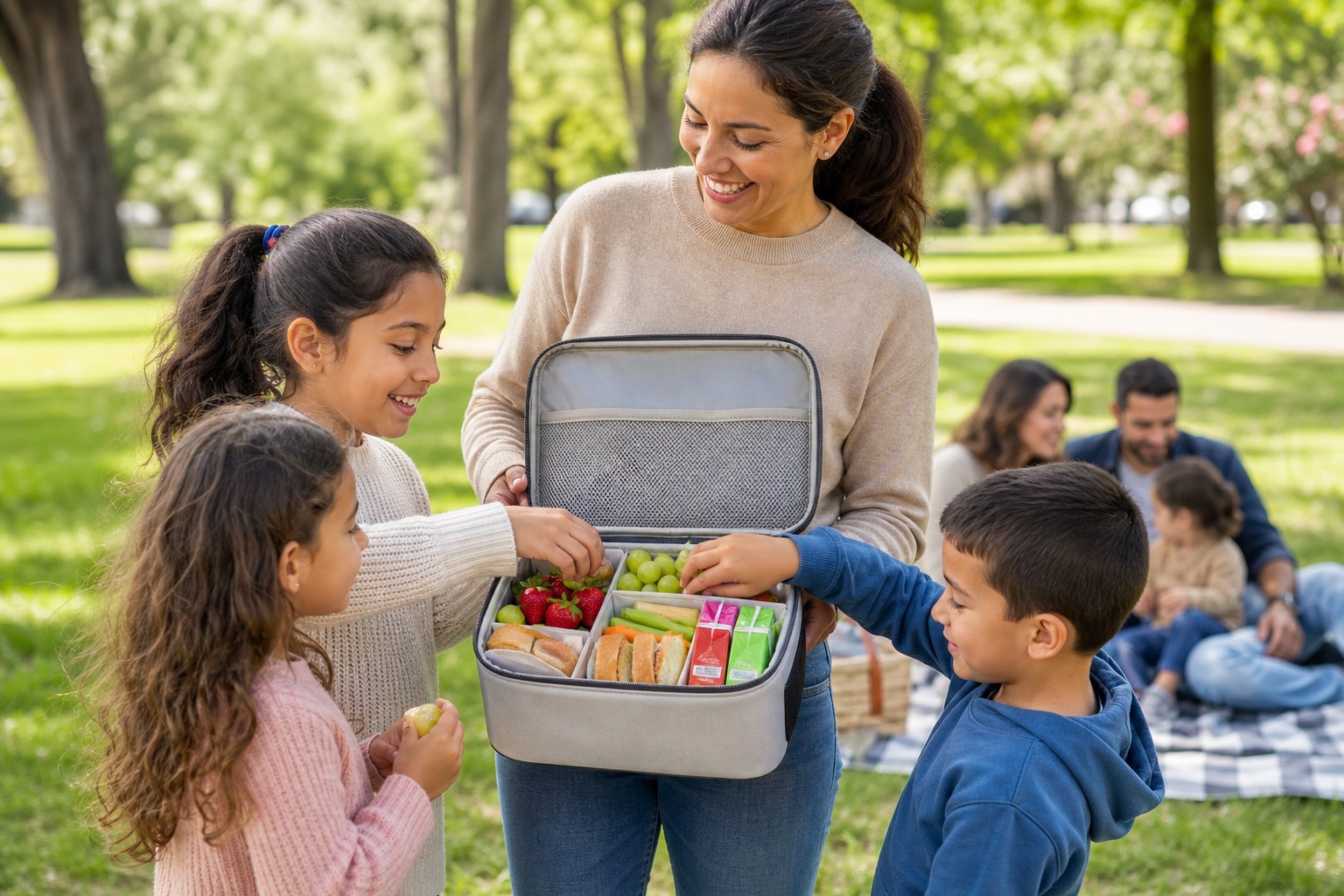
Check out our latest snack box collections!
Family outings get easier when snack time stops turning into a mess.
A snack box carry bag keeps snacks sorted, fresh, and easy to grab, so you can pack once and avoid loose bags, crumbs, and sticky surprises. It gives families one portable setup for parks, road trips, school events, beach days, and quick errands.
Instead of digging through backpacks or juggling separate containers, you can organize favorites in divided sections and clean up fast when the day is done. This guide explains how snackle boxes work, what features matter, and how to choose the right setup for easier family outings.
Key Takeaways
- Snack boxes with compartments keep food separate and help avoid messes during family outings.
- The best container depends on your family size, how long you’ll be out, and if you need leak-proof or stackable options.
- Reusable snack containers save money over time and make cleanup easier than disposable bags.
What Is a Snackle Box and Why Is It Trending?
Snackle boxes combine the portability of tackle boxes with the organization of snack containers. They’re a super practical solution for families who need to bring along lots of snacks but don’t want a huge mess. Social media has gone wild for them, with over 34 million TikTok views and counting, because they actually fix problems that old-school snack packing never did.
How Snackle Boxes Differ From Traditional Snack Containers
Traditional snack containers usually hold just one or two snack types, maybe in a couple of compartments or bags. Snackle boxes borrow the tackle box design, with multiple adjustable compartments to keep snacks totally separate in one box.
Tackle box-style snackle boxes have a handle for easy carrying and sturdy latches that keep everything inside, even if you toss them in the car. We really like this setup because it means you don’t have to juggle a bunch of bags or containers every time you go out.
Here’s what sets them apart:
- Flexible compartments: Removable dividers let you make sections for anything from candy to granola bars.
- Capacity: Multi-layered boxes can fit 8 or more snack types in one go.
- Durability: Hard shells protect snacks better than soft lunch bags.
- Visibility: Clear or open designs mean you can see what’s inside without digging around.
Most regular snack trays and boxes just don’t offer this level of organization in one container. The modular design keeps crumbs in their own compartments, making cleanup way easier than picking up bits all over your car or backpack.
Evolution of the Snackle Box Trend
The snackle box trend really started on social media, where people began sharing creative ways to organize snacks for travel. TikTok creators made it big by showing how tackle boxes could become “carcuterie” boxes for eating on the go.
The trend caught on fast because it checks both the practical and the visual boxes. Parents liked the organization, and social media users loved making those pretty snack arrangements for their feeds.
What began as a quirky idea quickly turned into a go-to for families with picky eaters or long days out. Even the name combines “snack” and “tackle” to show how the idea borrows from fishing gear for food storage.
Now, people use snackle boxes for beach days, sports events, movie nights, and even regular meal prep. That versatility has kept the idea going, long after its first viral moment.
Essential Features That Define a Great Snackle Box
Adjustable compartments really stand out as the most important feature. Fixed dividers just limit what you can pack, but removable sections let you change things up for different outings or family members.
A strong latching system is a must. You don’t want snacks flying everywhere if the box gets tossed around. Go for boxes with closures that even kids can open on their own.
Size and portability are big factors. Smaller, single-layer boxes fit in personal bags for plane rides, while bigger, multi-tiered ones work better for long days or bigger groups.
A few practical features to look for:
- See-through or labeled compartments for quick snack checks
- Handles that don’t hurt your hands, even when the box is full
- Materials that clean up easily and don’t hold onto smells
- Deep enough sections so snacks don’t get squished
Some snackle boxes even have space for mini ice packs, which is nice for cheese or yogurt. Just remember, tackle boxes won’t keep things cold for long, so eat perishables within a few hours.
Choosing the Right Snack Box Carry Bag for Your Family
Picking a snack box carry bag that actually works for your family means matching the size, portability, and materials to how you’ll really use it when you’re out and about.
Comparing Sizes and Compartments for Different Needs
From what we’ve tried, the number of compartments usually matters more than the overall size. A snackle box with 6-8 sections handles variety better than one big container because kids want options, not just a pile of one snack.
Smaller families do fine with single-layer boxes with 4-6 sections. They’re great for quick stops at the park or short errands. Bigger families or all-day trips need stacking containers or boxes with 8+ compartments to keep everyone happy.
Typical compartment setups:
- 4-section: Toddlers, quick trips (1-2 hours)
- 6-8 section: Elementary kids, half-day outings
- 10+ section or stackable: Multiple kids, full-day adventures
Adjustable dividers give you options as your needs change. Some snack trays let you take out dividers for bigger items like sandwiches. It’s worth measuring your usual snack portions before buying so you do not end up with a box that’s too cramped or too big.
Portability and Carrying Features to Consider
Handles are a game-changer. If a box doesn’t have a comfortable handle, you’ll probably just leave it in the cupboard. Look for handles that don’t hurt your hands when loaded, and make sure they lock securely.
Weight matters, especially if your kids want to carry their own snacks. Lightweight plastic tackle box-style containers are easier for kids, though they might not feel as fancy as stainless steel. Let your kids try carrying it before you buy, if you can.
Top carrying features:
- Locking lids: No spills in your bag or backpack
- Compact size: Fits in diaper bags, backpacks, or even cup holders
- Flat bottoms: Won’t tip over on picnic tables or car seats
- Stackable design: Makes it easier to pack for bigger groups
Material Safety and Food-Grade Certifications
Go for food-grade plastics that are BPA-free. Only pick snack containers that say they meet FDA food contact standards.
If you’ll use the box daily, check that it’s dishwasher safe. Some cheap plastics warp in high heat and then the seals don’t work anymore. Polypropylene and some food-grade polycarbonates hold up better in the dishwasher.
Stainless steel containers skip the plastic worries, but cost more. They also keep food cooler longer, which is nice on hot days. If you’re packing wet snacks like berries, containers with silicone gaskets in the lids stop leaks better than friction-fit lids.
Best Snackle Box for Durability and Convenience
The best snackle box is one you’ll actually use, that fits your favorite snacks, and survives being handled by kids. We’ve watched families go through a few cheap boxes in a year, but a good one lasts for years.
Dishwasher-safe boxes save you time. If you have to hand-wash tricky lids or corners, you’ll probably use it less.
Look for boxes with reinforced corners and thicker walls if you’ll be tossing them in backpacks or beach bags. Thin plastic cracks under pressure. Boxes with recessed lids stack better and protect the seal.
Start with one good snackle box, not a bunch of cheap ones. Try it out on different outings to see if the size and compartments work for your family before buying extras.
Keeping Snacks Fresh and Mess-Free on the Go
A good seal and smart design keep snacks fresh and mess-free. The right setup separates perishables from shelf-stable snacks and makes the most of your space.
Airtight Seals for Travel and Storage
Airtight seals are the difference between fresh crackers and stale ones. Go for containers with silicone ring seals that block air and moisture. These rings fit into a groove around the lid and make a tight seal when you close the box.
Spring-loaded locks add extra security on the go. These snap in place and hold the lid against the seal, so nothing pops open in your bag. Good seals handle heat up to 160°F and cold down to -4°F without cracking.
Before your trip, test the seal by filling the box with water, closing it, and turning it upside down. If it doesn’t leak, your snacks are safe from air and moisture.
Leakproof and Spill-Resistant Snack Boxes
Leakproof designs are a must for wet snacks like fruit cups or dips. Choose snackle box options with separate compartments that keep liquids away from dry snacks. The best boxes have raised edges between sections, so spills stay put.
Buckle systems are more reliable than snap lids. Four-corner buckles spread pressure evenly, so there are fewer weak spots for leaks. We’ve found four-buckle boxes work better for wet snacks than two-buckle ones.
Material thickness matters, too. BPA-free polypropylene or stainless steel holds up better to drops and temperature swings. Thin plastic cracks over time, especially at the hinges.
Snack Spinner and Stackable Options
A snack spinner organizes different snacks in rotating sections. These round containers usually have 4-6 wedge-shaped spots that spin for easy access. Kids can pick a snack without opening every section, so the rest stay sealed.
Stackable containers make the most of vertical space in bags and coolers. Some stackable jars twist together, but you can detach them as needed. This setup works well for families who want different snacks at different times.
Portable snack tray designs with removable dividers let you change things up. Make big sections for bulky snacks or more divisions for variety. Transparent trays help everyone see what’s available without opening every lid.
Tips for Organizing Perishable and Non-Perishable Snacks
Keep cold stuff separate from shelf-stable snacks. Use insulated bags for perishables like cheese, yogurt, and cut fruit. Crackers, nuts, and dried fruit can go in regular containers.
Try packing snacks like this:
- Bottom: Ice packs or frozen water bottles
- Middle: Perishable snack containers that need to stay cold
- Top: Room-temp snacks like pretzels or granola bars
Pre-portion snacks at home to avoid opening big packages on the go. Small containers (about 1/2 cup) are great for single servings. This keeps snacks fresher and reduces mess.
Wash containers as soon as you get home to prevent stuck-on gunk. Most BPA-free plastic and stainless steel containers can go in the dishwasher, but check the limits. Sometimes, washing by hand with warm soapy water works better for sticky or oily snacks.
Snackle Box Ideas for Every Age and Outing
Different ages want different snacks, and different outings call for different packing strategies. Matching your snackle box to who’s eating and where you’re headed can mean the difference between an empty box and one that comes back untouched.
Snackle Box Ideas for Kids
Kids want snacks they recognize, that are fun to eat, and give them enough energy to keep going. We like packing mini cheese cubes, string cheese, and turkey sticks for protein. Grapes (whole for older kids, halved for younger ones), strawberries, and apple slices work well for fruit.
For a fun twist, throw in goldfish crackers, pretzel sticks, mini rice cakes, or popcorn in separate sections. Veggies can be tricky, but baby carrots, cucumber slices, and sugar snap peas usually get eaten if they’re packed with favorites.
Some kid-friendly combos:
- Cheese cubes + grapes + pretzels + mini chocolate chips
- Turkey pieces + apple slices + goldfish crackers + dried cranberries
- Hard-boiled egg quarters + blueberries + veggie straws + fruit leather
A little variety goes a long way. Kids are way more likely to try new foods when they’re mixed in with things they already love.
Snackle Box Ideas for Adults
Adult snackle boxes can go for more sophisticated flavors and higher protein. We usually toss in beef jerky, roasted edamame, raw almonds, and hard-boiled eggs for steady energy. Hummus in a tiny sealed cup pairs nicely with bell pepper strips, celery sticks, or jicama.
When it comes to fruit, we like pomegranate arils, kiwi slices, or freeze-dried mango. These options just feel punchier than the usual kid snacks. For a little something sweet, dark chocolate chips, cacao nibs, or homemade protein bites hit the spot without hogging much space.
Favorite adult combos:
- Beef jerky + cherry tomatoes + almonds + dark chocolate
- Hard-boiled egg + cucumber + olives + pita chips + hummus
- Roasted chickpeas + bell pepper strips + dried cherries + cheese cubes
Honestly, most adults seem to enjoy dips more than kids do. Greek yogurt mixed with ranch seasoning or a small cup of guacamole makes veggies and crackers way more appealing.
Creative Snack Combinations
Mixing up textures and flavors keeps snacking from getting boring. We like to pair crunchy snacks with creamy ones, salty with sweet, and always try to balance protein and carbs.
Texture-based pairings:
- Celery sticks + nut butter + raisins
- Wheat crackers + cheese slices + salami pieces
- Apple slices + sunflower seeds + yogurt-covered pretzels
Sweet and savory mixes:
- Mini pepperoni + dried apricots + cashews
- Peanut butter filled pretzels + banana chips + mini chocolate chips
- Ham cubes + pineapple chunks + macadamia nuts
If we add at least one dippable snack, people seem to eat more of the healthy stuff. Veggies with ranch, crackers with cheese spread, or fruit with nut butter make each compartment feel a bit more special.
Theme-Based Snackle Box Inspiration
Themed boxes make packing a bit more fun and work well for specific plans. On beach days, we stick with snacks that don’t melt or get sandy: pretzels, dried fruit, nuts, beef sticks, and sealed fruit pouches.
Road trip boxes call for mess-free picks: cheese crackers, trail mix, apple slices, mini rice cakes, and individually wrapped snacks that won’t spill if the box flips.
Sports practice boxes focus on quick energy and hydration: orange segments, salted nuts, string cheese, granola bar chunks, and electrolyte-rich dried fruits like dates.
Movie night boxes get a little more indulgent with popcorn, candy pieces, brownie bites, cheese cubes, salami, and dark chocolate. We’ll still throw in grapes or berries to keep it from being just a sugar rush.
For kids’ playdates, we set up “build your own” boxes with crackers, cheese slices, lunch meat, and veggies so everyone can make their own snack plate.
Packing, Serving, and Cleaning Up: Real-World Family Scenarios
A snack box carry bag really simplifies things, from morning prep to final cleanup, whether you’re heading to the park or packing for a trip. We’ve watched families cut their packing time in half and skip most of the usual crumb disasters.
Speeding Up Prep for School, Sports, and Trips
Mornings run smoother when snack containers are already filled and set to go. On Sunday nights, we fill our snackle box compartments with pre-portioned crackers, nuts, dried fruit, and other shelf-stable snacks. By the time Tuesday’s soccer practice comes up, we just grab the box and head out. No more digging through the pantry.
The separate compartments let each kid pick their favorites without mixing everything together. One spot holds pretzels, another has cheese crackers, and a third keeps trail mix. No more morning arguments about who gets what.
For longer trips, we load up the best snackle box options the night before and keep them in the fridge. Cheese cubes, grapes, and veggie sticks stay fresh in their own compartments. The sealed lid keeps any smells in, which is huge when you’re packing next to sports gear or backpacks.
Group Outings, Outdoor Adventures, and Picnics
Playground meetups and hikes work better with the portable buffet method. We’ll bring a couple snackle boxes for the group, and everyone can see what’s available. The clear compartments cut down on the “what snacks did you bring?” questions.
Beach days used to mean sandy snacks and wasted food. Now we just pop open the box, let everyone pick, and snap it closed. Sand stays out, and the sealed design keeps moisture away from crackers and cookies. The sturdy handle is a lifesaver for lugging it across parking lots or trails.
At outdoor birthday parties, we use snack containers to make mini snack stations. Each compartment holds something different, so kids can help themselves without crowding a table. Parents like the built-in portion control, and we’re not chasing down a dozen open bags.
Simplifying Cleanup at Home and Away
Cleanup after snacking drops from a ten-minute hassle to maybe two minutes. We close the lid, wipe the outside if it’s sticky, and that’s it. No more searching for twist ties, shoving half-eaten bags back in the pantry, or finding mystery crumbs in the car.
At parks and picnic spots, the contained box means we’re not chasing wrappers in the wind. Everything stays inside until we find a trash can. Any leftovers stay fresh in their compartments for the ride home or next trip.
Home snack time gets easier, too. We set the box on the counter, let the kids pick, and put it back in the pantry. Some models have removable compartments we can throw in the dishwasher, but usually a quick rinse does the trick.
Reducing Waste and Food Mess With Snackle Boxes
Single-use plastic bags just disappear from our routine when we use compartmented boxes. We buy snacks in bulk, portion them into reusable containers, and refill as needed. It takes a bit of effort upfront, but it cuts down on packaging waste and saves money on groceries.
Spills almost never happen because the compartments keep everything in place. Grapes don’t roll under car seats, and crackers don’t crumble everywhere. If there’s a mess, it’s contained to one little section instead of the whole bag.
Food waste drops because the portions are visible and controlled. Kids take what they’ll actually eat, instead of grabbing a whole bag and leaving half behind. We see less “I don’t like this anymore” waste since they can see all the options before choosing.
Safety and Sustainability Considerations for Snack Organization
Choosing the right materials for snack storage protects your family’s health and helps the environment. We stick to food-safe, reusable options that keep snacks fresh and cut down on waste.
Why Food-Safe Tackle Boxes Matter
Not every tackle box works for food storage. Standard fishing tackle boxes often use plastics that aren’t meant for food and can leach chemicals into snacks.
We always look for containers labeled food-safe or food-grade. These meet FDA standards and won’t have BPA, phthalates, or other nasty chemicals that could get into food. This is even more important if you’re storing snacks for a while or leaving them in a hot car or backpack.
A food-safe tackle box usually uses polypropylene or other approved plastics that don’t let chemicals migrate. Always check the product specs before you buy any snack organizer. If the company doesn’t say the materials are food-safe, that’s a dealbreaker.
Some families like clear containers so kids can see inside, but we always put safety first. There are transparent food-grade plastics, but make sure they’re certified for food contact.
Reusable Snack Containers Versus Single-Use Options
Single-use packaging creates a ton of waste when you’re out with the family. We’ve seen people go through dozens of plastic bags and wrappers on one day trip.
Reusable snack containers break that cycle. You make a one-time investment, and it pays off within a few weeks compared to always buying disposable bags. We crunched the numbers, and a family of four can save over $200 a year by switching from single-use to reusable containers.
Why reusable containers are better:
- Cut down on landfill waste and plastic pollution
- Keep food fresher than thin plastic bags
- Hold up to daily use and washing
- Fit perfectly in snackle box compartments
- No more buying boxes of bags every month
Reusable containers also help with portion control. We fill them with the right serving size, instead of bringing giant bags that encourage overeating.
Sustainability goes beyond just the containers. Pair them with a sturdy carry bag, and you’ve got a setup that lasts through years of adventures.
Caring for Your Snackle Box Carry Bag
Taking care of your snack organization system keeps it working and safe for food. We wash our snackle box carry bags after every outing to avoid crumb buildup.
Most fabric carry bags can go in the washing machine, but always check the label. Take out all the containers first, use a gentle cycle with mild detergent, and air dry to avoid shrinking and keep the bag in good shape.
For the food-safe tackle box insert, hand wash with warm, soapy water. Pay attention to corners and dividers since crumbs hide there. Dry it well before storing to keep mold away.
We keep a small brush just for cleaning the compartment edges and hinges. That little bit of extra cleaning helps, since food stuck in crevices can get gross fast.
Store your clean, dry system in the pantry or mudroom so it’s ready for next time. Regular care turns your snack setup into a reliable tool that’ll last for years.
Frequently Asked Questions
Here are quick answers to common questions about choosing, packing, and cleaning a snack box carry bag for family outings.
What features should I look for in a snack box carry bag to keep snacks organized and upright during travel?
Choose a bag with a flat base, secure closure, and snug interior fit for your containers. Padded dividers, mesh pockets, and a comfortable handle also help keep snacks steady and easy to carry.
How do I choose the right size snack box and carry bag for a day trip with kids versus a full-day outing?
For short trips, a compact box with four to six compartments is usually enough. For full-day outings, choose a larger or stackable setup with extra room for meals, treats, drinks, and ice packs.
Which materials and linings are easiest to wipe clean after spills, sticky fruit, or melted chocolate?
Food-grade plastic containers are easy to rinse and often dishwasher safe. For the carry bag, choose wipeable polyester or nylon lining with minimal seams so crumbs and sticky spills clean up fast.
How can I pack a healthier mix of snacks in a snack box, including high-protein and low-carb options, without everything getting soggy?
Keep wet foods, dips, and juicy fruit in sealed cups or separate compartments. Add protein-rich options like cheese cubes, hard-boiled eggs, turkey sticks, nuts, or jerky, then keep crackers and dry snacks away from moisture.
Can I take a packed snack box and carry bag through TSA, and what foods or ice packs are most likely to cause issues?
Solid foods are usually fine in carry-on bags. Spreads, dips, yogurt, and nut butter must follow the 3.4-ounce liquid rule. Ice packs are allowed when fully frozen at screening.
What are practical ways to use a snack box setup for camping or road trips, including non-food essentials you might want in the compartments?
Use compartments for snacks, wipes, napkins, utensils, condiment packets, small trash bags, and basic first-aid items. For camping, a clean empty box can also organize batteries, matches, repair supplies, or small gear.
Partager:
What Makes a Portable Snack Box Useful for Sports Days, Park Trips, and Car Rides?
How to Vacuum Seal Cooked Rice, Pasta, and Grains for Weekly Meal Prep