

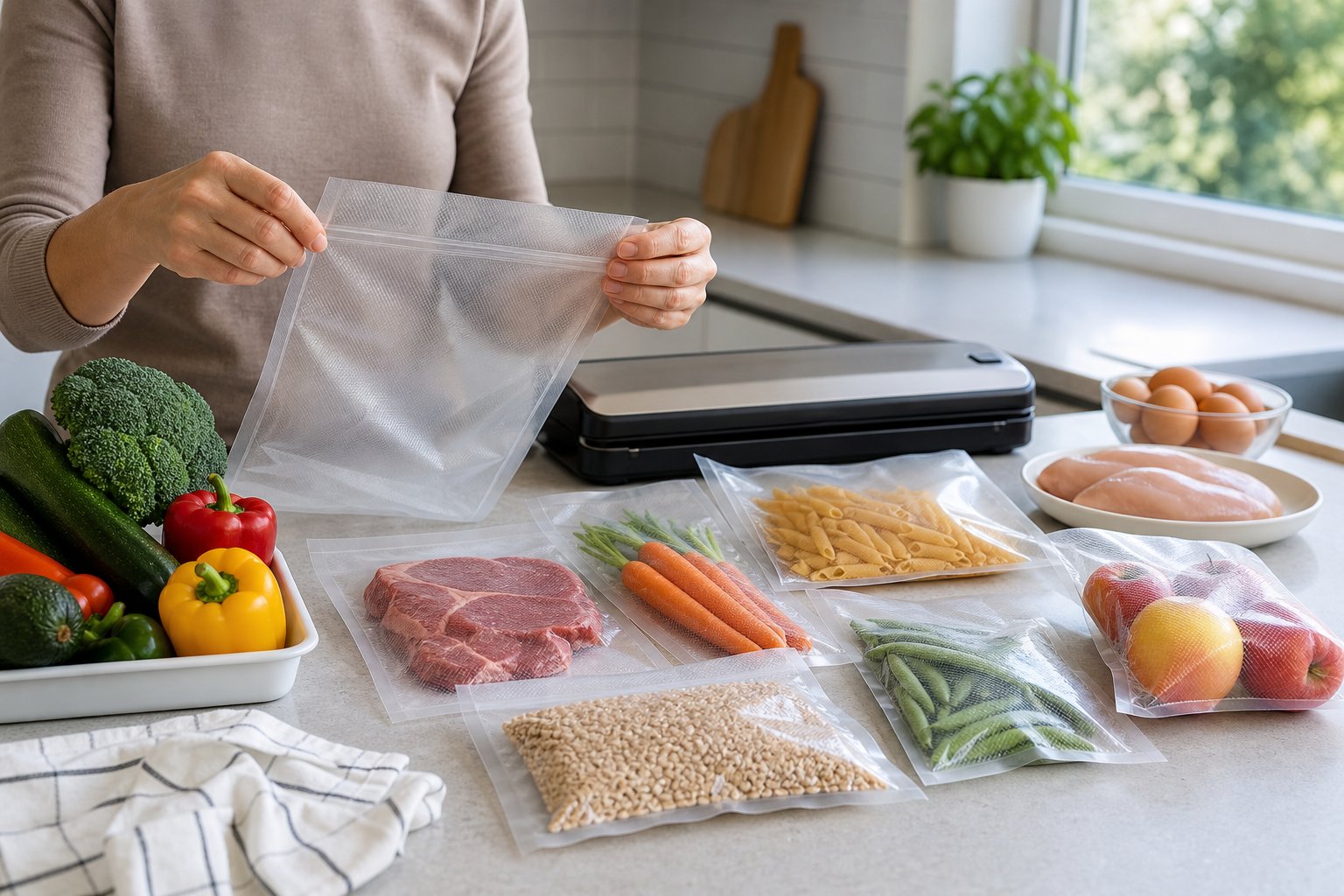
Check out our latest collection of compact vacuum sealer for food!
There is no universal number of times a vacuum sealer bag can be safely reused. How often you can reuse one depends on the type of bag, what it previously held, how thoroughly it can be cleaned, and whether the material and seal remain in good condition.
Dry foods and other low moisture items are generally better candidates for bag reuse than foods that leave behind grease, liquids, or potentially harmful bacteria. Bags that have held raw meat, poultry, fish, seafood, or raw egg should generally be discarded unless they are specifically designed for reuse and the manufacturer provides appropriate cleaning instructions.
Bag construction, heat exposure, and careful handling also affect whether reuse is practical. Whether you are sealing leftovers, preparing meals, or portioning produce, inspecting each bag before reuse can help you decide when it is still suitable and when it is time to replace it.
Key Takeaways
- There is no fixed number of safe reuses for every vacuum sealer bag.
- Dry and low moisture foods are generally better candidates for reuse than raw proteins, oily foods, or foods with liquids.
- Cleaning, complete drying, and careful inspection are essential before reusing a bag.
- Always follow the bag manufacturer's instructions, especially for reusable or heat rated bags.
The Practical Reuse Limit
A vacuum sealer bag may remain usable after its first use, but its condition matters more than a specific reuse count. Cutting, washing, handling, and repeated heat sealing can gradually reduce the amount of usable material and affect the bag's ability to maintain a reliable seal.
Why There Is No Universal Reuse Count
Every time you cut open a sealed bag, you lose some of its length. After repeated use, there may not be enough clean material left to create another secure seal.
Repeated vacuuming, handling, and heat sealing may also put additional stress on the bag. How quickly this happens depends on the bag's construction and the manufacturer's intended use.
What the bag previously held is equally important. A bag used for clean, dry foods may be easier to wash and inspect than one that contained raw proteins, grease, sauces, or other difficult to remove residues.
How Bag Material and Construction Affect Reuse
Vacuum sealer bags vary in thickness, construction, texture, and intended use. Some are designed primarily for a single sealing cycle, while others are specifically marketed as reusable.
| Bag Type | Reuse Consideration | What to Check |
|---|---|---|
| Standard vacuum sealer bags | Reuse depends on condition and manufacturer guidance | Seal quality, punctures, remaining bag length, and cleanliness |
| Reusable vacuum bags | Designed for repeated use when properly maintained | Manufacturer cleaning instructions and signs of wear |
| Heat rated or sous vide bags | Previous heat exposure should be considered before reuse | Heat rating, seal integrity, and manufacturer instructions |
Do not assume that a thicker bag can automatically be reused more often. Follow the instructions provided for the specific bag you are using.
Signs a Bag Has Reached Its Limit
Inspect every used bag before filling and sealing it again. Visible wear or an unreliable seal is a clear reason to replace it.
Watch for:
- Cloudy, stretched, or weakened areas in the film
- Pinholes, cuts, or tears anywhere in the bag
- Seal areas that separate easily or cannot be resealed evenly
- Bags that lose their vacuum shortly after sealing
- Persistent stains, residue, or odors after cleaning
If you are uncertain about a bag's condition, replacing it is the safer option. A damaged bag cannot provide the reliable seal needed for vacuum storage.
Foods That Are Better Candidates for Bag Reuse
Bags that have held relatively clean, low moisture foods are generally easier to wash, dry, and inspect. The bag should also be suitable for reuse according to its manufacturer's instructions.
Dry Pantry Staples and Snacks
Dry foods such as pasta, rice, nuts, crackers, bread, coffee beans, and dried fruit tend to leave less residue behind than moist or oily foods.
After emptying the bag, inspect it for crumbs, oils, punctures, and other signs of contamination or damage. If the bag is designed for reuse and can be cleaned appropriately, it may be suitable for another similar storage task.
For households that regularly portion bulk pantry staples, reserving reusable bags for dry foods can make cleaning and organization simpler.
Clean Produce and Chilled Cooked Foods
Some produce and fully cooled cooked foods may also be suitable for reusable bags. However, the bag should not contain lingering sauce, grease, food residue, stains, or odors.
Foods such as cheese can leave oils behind, so the bag should only be considered for reuse if it can be thoroughly cleaned and completely dried according to the manufacturer's instructions.
If residue remains after washing, replace the bag rather than using it again.
Match Bags With Similar Foods
One practical approach is to reuse a bag for the same general type of food it previously held. This does not replace proper cleaning, but it can help reduce unnecessary cross contact between different types of food.
- Dry foods: pasta, rice, nuts, crackers, and coffee beans
- Produce: clean vegetables and similar low moisture foods
- Avoid switching categories: do not move a bag from raw animal proteins to ready to eat foods
When in doubt, use a fresh bag.
When to Toss a Bag After One Use
Some uses make a vacuum sealer bag a poor candidate for reuse. In these situations, replacing the bag is generally the more cautious approach.
Raw Meat, Poultry, Fish, and Seafood
Bags that have held raw meat, poultry, fish, seafood, or leaking raw egg should generally be discarded after use unless the bag is specifically designed for repeated use and the manufacturer provides appropriate cleaning instructions for that application.
Raw animal products can leave juices and residue in seams, textured channels, and corners that may be difficult to clean thoroughly. Using a fresh bag also reduces the risk of transferring contamination to other foods.
If you frequently vacuum seal raw proteins, plan for these bags to be single use unless your specific reusable bag system states otherwise.
Marinades, Liquids, and Oily Foods
Marinades, sauces, oils, and other liquids can settle into seams, corners, and textured areas of a bag. These residues may be difficult to remove completely.
If a bag cannot be thoroughly cleaned and dried, or if grease, stains, or odors remain, discard it rather than attempting another use.
Mold, Bad Smells, and Damage
If you see mold, discard the bag immediately.
A persistent odor after washing is another reason not to reuse a bag, particularly when it suggests that food residue remains inside.
Always inspect for punctures, tears, stretched film, damaged seams, and weak areas. Even a small hole can prevent the bag from maintaining a vacuum.
Heat exposure may also affect some bag materials. Follow the manufacturer's temperature and reuse guidance if a bag has been exposed to cooking temperatures or other sources of heat.
How to Clean, Dry, and Reseal Bags
If a bag is suitable for reuse, careful opening, washing, drying, and inspection can help maintain its condition and reduce sealing problems.
Open the Bag Without Wasting Material
Cut as close to the original seal as practical while leaving a clean, straight edge. Preserving more of the bag gives you additional material for the next seal.
Use clean kitchen scissors rather than tearing the bag. Torn or uneven edges can make resealing more difficult and may create areas where food residue can collect.
If you expect to reuse a cut to size bag, allowing a little extra length when you first prepare it can leave more room for future seals.
Hand Wash With Warm Soapy Water
Wash reusable bags according to the manufacturer's instructions. When hand washing is appropriate, use warm water, mild dish soap, and a soft cleaning tool that can reach the corners without damaging the material.
Rinse thoroughly to remove all soap and food residue.
Do not place a bag in the dishwasher unless the manufacturer specifically identifies it as dishwasher safe. Excessive heat or washing conditions may damage bags that are not designed for machine cleaning.
Inspect and Make a Fresh Seal
Allow the bag to dry completely before storing or resealing it. Moisture around the sealing area can interfere with the seal and may contribute to unwanted microbial growth during storage.
Once dry, inspect the inside and outside for holes, thinning, residue, stains, or other damage. Trim the opening if necessary so that the sealer has a clean, flat surface to work with.
After sealing, confirm that the seal is smooth and complete and that the bag maintains its vacuum before placing it into storage.
Bag Type, Appliance Compatibility, and Heat
The type of vacuum sealer, bag construction, and intended temperature range can all affect whether reuse is appropriate. Textured bags, smooth chamber bags, and bags intended for sous vide use should each be handled according to their specific instructions.
External Sealers and Textured Bags
External vacuum sealers commonly use bags with textured channels that allow air to move toward the appliance during vacuuming.
Those channels can also make cleaning more difficult because crumbs, liquids, or other residue may settle into the textured surface. Inspect these areas carefully before considering reuse.
Repeated cutting and sealing can also reduce the amount of usable material near the opening. Replace the bag if the seal area becomes distorted, damaged, or unreliable.
Chamber Sealers and Smooth Bags
Chamber sealers typically use smooth bags because the vacuum is created around the entire bag inside the chamber.
The smooth surface may be easier to inspect and clean than heavily textured material, but that does not automatically make every chamber bag reusable.
Check the manufacturer's instructions to determine whether the specific bag is intended for repeated use and how it should be cleaned.
Why Sous Vide Bags Need Extra Caution
Sous vide cooking exposes bags to elevated temperatures for extended periods. This is different from using a bag only for refrigerated or frozen storage.
Only use bags that are specifically suitable for the temperature and cooking method you plan to use. After cooking, inspect the bag carefully for weakened seals, punctures, distortion, or other signs of damage.
Reuse a sous vide bag only when the product is designed for repeated use and the manufacturer's cleaning and reuse instructions support it. Bags that have held raw or cooked animal proteins should be handled particularly cautiously.
Standard storage or freezer bags should not be substituted for sous vide bags unless the manufacturer specifically identifies them as suitable for that cooking method.
Getting Better Value From Every Bag
Using the right bag size, protecting the film from damage, and choosing reusable storage alternatives when vacuum sealing is unnecessary can help reduce waste without compromising storage quality.
Cutting Bags to the Right Size From the Start
For cut to size rolls, leave enough material above the food to create a clean seal without overfilling the bag.
A little additional length can also leave room to trim away the previous seal if the bag is later suitable for reuse.
Rolls can be useful when you regularly seal foods of different sizes because they allow you to adjust the bag length to the item rather than relying on a fixed precut size.
Protecting Frozen Food From Freezer Burn
Freezer burn occurs when frozen food loses moisture after exposure to air. A properly formed vacuum seal can help limit air contact during freezer storage.
When reusing an appropriate bag, make sure it still pulls a complete vacuum and that the new seal is smooth, flat, and free from wrinkles or food residue.
Foods with sharp edges can puncture the film, particularly if the bag has already been handled or washed. Inspect the entire bag carefully before relying on it for freezer storage.
Lower Waste Alternatives for Everyday Storage
Not every food needs to be vacuum sealed. Reusable food storage bags and containers can be practical options for snacks, produce, leftovers, and other foods that do not require vacuum storage.
Jars and reusable containers can also work well for many dry pantry staples. Keeping several types of storage containers available allows you to reserve vacuum sealer bags for foods that benefit most from reduced air exposure.
Frequently Asked Questions
How can you tell when a vacuum sealer bag is no longer safe to reuse?
Check the seal area, the film, and the cleanliness of the bag. Replace it if you find punctures, tears, stretched material, persistent residue or odors, or a seal that no longer holds a vacuum reliably.
Can vacuum sealer bags be reused after storing raw meat, poultry, or fish?
Generally, it is safer to discard bags that have held raw meat, poultry, fish, or seafood unless the bag is specifically designed for reuse and its manufacturer provides appropriate cleaning instructions for raw proteins.
Is it safe to reuse vacuum sealer bags for sous vide cooking?
Only reuse a sous vide bag if it is specifically designed for repeated use at cooking temperatures. Follow the manufacturer's cleaning instructions and replace any bag showing damage, weakened seals, or contamination.
How should reusable vacuum sealer bags be washed and dried between uses?
Follow the manufacturer's instructions. When hand washing is appropriate, use warm water and mild dish soap, rinse thoroughly, and allow the bag to dry completely inside and out before storing or resealing it.
Do reusable vacuum sealer bags lose their seal strength after several uses?
Repeated cutting, handling, washing, and heat sealing can eventually affect a bag's condition. Replace it as soon as it becomes damaged or can no longer create and maintain a reliable vacuum seal.
Which foods are best stored in reusable vacuum sealer bags?
Clean, dry, and low moisture foods such as rice, pasta, nuts, crackers, and dried fruit are generally easier candidates for bag reuse. Avoid reusing bags with difficult to remove grease, sauces, marinades, or raw animal protein residue unless the bag's manufacturer specifically supports that use.
Partager:
Vacuum Canister vs Airtight Container: Which Is Better for Leftovers and Dry Foods?
How to Vacuum Seal Bone-In Meat Without Puncturing Reusable Bags