

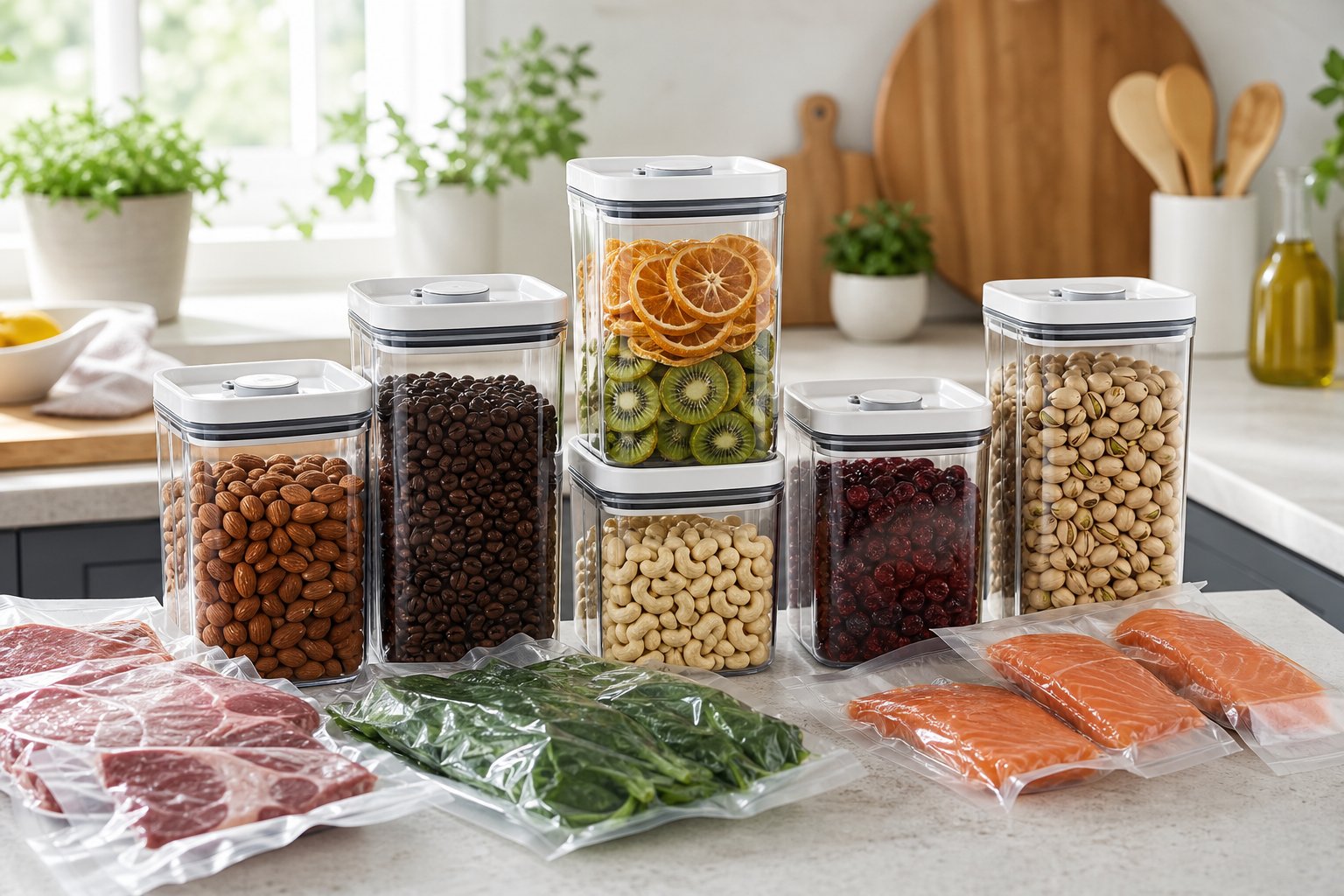
Check out our latest collection of compact vacuum sealer for food!
Some foods should never be flattened into a vacuum sealer bag. Cookies, chips, berries, bread, coffee, flour, and other delicate pantry staples need freshness protection without heavy pressure. That is where vacuum canisters make everyday food storage easier.
Vacuum canisters are best for foods that need to keep their shape, texture, aroma, or easy access. They remove air while protecting fragile snacks, baked goods, dry ingredients, and frequently used foods from being crushed or packed too tightly.
Choosing between vacuum canisters and vacuum sealer bags is not about which option is better. It is about matching the storage method to the food. In this guide, you will learn which foods belong in canisters, when bags still make sense, and how to store both everyday and specialty items with less waste.
Key Takeaways
- Vacuum canisters are best for delicate, crushable, or often-used foods that need to keep their shape and be easy to grab
- Dry goods like coffee, flour, sugar, nuts, and baked treats stay fresher without getting squished in rigid canisters
- Your choice depends on the food, how often you open it, and whether you care about keeping its shape
When to Choose Vacuum Canisters Over Vacuum Seal Bags
Canisters protect foods that bruise, collapse, or leak in vacuum seal bags. They create an airtight seal but skip the crushing force that ruins soft textures. When the food’s structure matters as much as freshness, we reach for a canister.
Understanding the Difference in Airtight Seal
Vacuum seal bags suck out the air and then press plastic right against the food to seal it up. That tight contact works great for sturdy things like chicken breasts or ground beef. Canisters are different: they pull out air through a valve, but the hard walls keep the contents safe from getting squished.
We use bags when we want the tightest seal and need to save space in the freezer. Bags mold around odd shapes and stack flat. But that same pressure can crush berries, squeeze out moisture from soft cheeses, or flatten pastries you spent hours making.
Canisters remove oxygen without physically pressing on the food. The hard shell keeps everything in shape, so your strawberries or muffin tops stay looking good. The downside? Canisters take up more space than bags, but honestly, for fragile foods, it’s worth it.
| Method | Seal Type | Best For |
|---|---|---|
| Bags | Contact compression | Meats, firm vegetables, bulk freezing |
| Canisters | Rigid protection | Berries, baked goods, chips, herbs |
Foods That Are Too Delicate for Bag Sealing
Soft fruits like raspberries, blackberries, and ripe strawberries just can’t handle bag vacuum pressure. You’ll see juice leaks and crushed fruit if you try. Fresh herbs get bruised and lose their shape, basil or cilantro ends up matted and sad-looking.
Baked goods have the same problem. Muffins, cupcakes, and croissants have airy structures that compress when you vacuum seal them in bags. The crumb turns dense and the tops go flat. Cookies and crackers? They shatter and turn into a bag of crumbs.
If you chill or partially freeze things first, you might get away with it, but canisters take away the risk completely. Anything with air pockets, fragile cell walls, or decorative tops, glazed pastries, meringues, delicate crackers, really needs a canister.
Pressure-Sensitive vs. Durable Foods
Durable foods handle compression because their structure doesn’t break down under pressure. Raw meat, dense veggies like carrots, and firm cheeses do fine in vacuum seal bags. The tight contact pulls out every air pocket and extends freezer life.
Pressure-sensitive foods have weak cell walls, trapped air, or moisture that shifts around during vacuuming. Soft cheeses like brie lose their creamy texture. Liquids in marinades can get sucked into the sealer. Chips and pretzels? They turn into dust if you don’t protect them.
We usually tell people: if you wouldn’t squeeze it firmly in your hand, don’t put it in a bag. Canisters get the air out without the squeeze, so fragile textures stay safe while you still cut down on spoilage.
For liquids or really moist foods, freeze them first or use a canister so you don’t pull liquid into the vacuum pump. That keeps both your food and your machine in good shape.
Best Types of Foods for Vacuum Canisters
Vacuum canisters are a lifesaver for foods that are too delicate, wet, or messy for bags. The rigid containers stop crushing and handle liquids and powders that would just get sucked up by a bag sealer.
Vacuum Sealing Liquids and Wet Foods
Liquids are tricky with vacuum sealing because bag sealers usually pull moisture straight into the machine (not good). Canisters totally fix this, since the lid seals from above and doesn’t draw liquid up.
We use canisters for soups, stews, broths, and sauces that need to go in the fridge. The rigid container stops spills and lets you stack stuff without worrying about leaks. Marinades work really well, too, you can toss in raw meat, seal it, and let the vacuum help the flavors soak in faster.
Leftover chili, pasta sauce, and curry hold up great in canisters. You can also use them for salsa, hummus, or guacamole, things that would be a nightmare to bag-seal unless you freeze them first. The clear sides make it easy to see what’s inside, and the airtight seal keeps browning and spoilage away.
Just don’t forget to leave at least an inch of space at the top so the vacuum pump can do its job.
Crushable Snacks and Baked Goods
Soft bread, pastries, and crunchy snacks get destroyed in vacuum bags. The compression that’s perfect for meat and veggies just flattens these foods.
Vacuum canisters keep chips, crackers, pretzels, and popcorn safe from getting crushed. We toss in open bags of snacks that would go stale in days otherwise. The vacuum pulls out the air that makes things stale, and the hard walls keep everything crisp.
Cookies, brownies, and muffins keep their shape and moisture in canisters. Sliced bread stays soft instead of turning into a brick. Meringues, macarons, and decorated cupcakes? They need this kind of protection.
Canisters are great for cereal, granola, and trail mix, too. Portion out snacks or store big batches, whatever you need.
Fresh Fruits and Berries
Vacuum sealing fruits in bags usually ends in disappointment, berries get crushed, and soft fruits bruise easily.
Canisters keep strawberries, raspberries, blueberries, and blackberries safe while still removing the air that causes spoilage. We’ve noticed berries last almost twice as long in vacuum canisters compared to their original containers. Oxidation slows down, and mold doesn’t show up as fast.
Sliced fruits like watermelon, cantaloupe, and pineapple also stay fresher. Cherry tomatoes keep their shape. Grapes, cherries, and other small fruits do well, too.
Cut avocado in a vacuum canister barely browns, even after a day or two. Same goes for sliced apples and pears.
Powders, Spices, and Dry Pantry Staples
Fine powders are a pain for bag sealers, they get sucked into the pump and make a mess. Canisters handle these without trouble.
Coffee grounds and loose tea stay fresh much longer when you seal them in canisters. We like to seal coffee beans right after opening to keep the flavor and aroma. Ground spices, cinnamon, cumin, paprika, curry powder, hold their punch for months instead of fading away.
Flour, sugar, powdered sugar, and cocoa powder all store well in canisters. Baking powder and baking soda don’t clump up from humidity. Protein powder, collagen, and supplements also benefit from the airtight seal.
Common dry goods for vacuum canisters:
- Ground coffee and whole beans
- Loose leaf tea
- All baking flours
- Ground spices and spice blends
- Powdered drink mixes
- Nutritional powders
The see-through containers make it easy to spot what you need, and they stack nicely in the pantry.
Long-Term Food Storage: Pros and Cons of Canisters
Vacuum canisters have real perks for long-term storage, especially for dry goods needing protection from air and moisture. They’re reusable, easy to open and close, and work with oxygen absorbers. Still, they don’t save as much space or extend shelf life as much as vacuum bags do for some foods.
Extending Shelf Life: Canisters vs. Bags
Vacuum canisters usually double or triple shelf life compared to regular storage, while vacuum bags can stretch it three to five times longer. The big difference is how much air gets removed. Bags suck out almost all the oxygen, while canisters just reduce it.
For most home storage, canisters do the trick. Coffee beans stay fresh for a few weeks in a canister, way better than a regular jar. Dried pasta can last a year or two. Nuts can keep for months in the fridge after opening.
Bags are better if you need to store food for years. Dehydrated foods last way longer in vacuum bags, especially if you don’t open them often. But canisters win on convenience, you can open and reseal them easily, while bags usually get cut open and can’t always be resealed well.
Oxygen Absorbers and Airtight Containers
Adding oxygen absorbers to airtight containers helps close the gap between basic canisters and full vacuum sealing. These little packets soak up leftover oxygen that canisters can’t get rid of.
This combo works great for dried and dehydrated foods. The absorber grabs whatever air remains, creating something close to a vacuum-sealed environment. We like this setup for flour, rice, dried beans, and other staples you dip into regularly.
Pick a container size that matches your food amount, too much empty space means more oxygen for the absorber to handle. Some twist-seal vacuum containers close tightly, so the absorber does not have to work as hard.
Add moisture absorbers for foods that clump or soak up humidity. That way, you control both oxygen and moisture.
Storing Dry Goods and Non-Food Items
Vacuum canisters are perfect for stuff you use often but want to keep fresh between uses. We use them for ground coffee, tea leaves, flour, sugar, and spices. The hard sides protect delicate things better than bags, and you don’t waste food fighting with a vacuum bag.
Non-food items do well in canisters, too. We seal up craft supplies, electronics, important papers, and first aid gear. They stack neatly and keep out moisture and bugs, without the hassle of heat-sealing a bag.
Canisters work best for things you’ll use up within a few months to a year. For real long-term storage, think several years, vacuum bags with oxygen absorbers are still the top choice. They save more space in bulk and protect against oxidation for way longer.
Practical Tips for Using Vacuum Canisters
Start with clean, dry food and surfaces to get a good airtight seal. Label every container (trust us, you’ll forget what’s inside otherwise), and check for seal issues before they mess with your food quality.
Preparation: Cleaning and Portioning Foods
We always rinse delicate foods thoroughly and check for any damaged bits that might mess with the seal or speed up spoilage. After washing, we pat everything dry with clean towels or just let them air-dry on racks until all the surface moisture disappears. Moisture weakens the seal and can get sucked into the valve when you vacuum.
Cut foods into similar-sized pieces so air removal stays consistent in the canister. This makes sealing easier and reduces wear on your equipment. If you're working with really soft fruits or moist items, try pre-freezing them on a tray until they’re firm, then move them to canisters, this helps them keep their shape and stops liquids from moving around.
Make sure your canisters and lids are spotless and totally dry before you use them. Any food bits or water on the rim will ruin the airtight seal and cause leaks. Store empty canisters in a cool, dry spot to avoid mold and keep your vacuum sealer gear working well every time.
Labeling and Organizing Your Pantry
We label every canister right after sealing with the contents and date, so it’s easy to track shelf life and rotate stock. Simple adhesive labels or a dry-erase marker work fine and save you from opening containers just to check what’s inside. Good labeling keeps you from forgetting about stuff until it’s too late.
Stand canisters upright in the pantry or fridge for even air circulation and to keep seals intact. Don’t stack heavy things on top or lay canisters sideways, it just puts extra pressure on the lids and can break the seal. Group similar foods together, dried goods with dried goods, herbs with soft fruits, so you can grab what you need quickly and keep things fresh longer.
If you sealed something while it was still warm, let the canister cool to room temperature before putting it in the fridge. This helps prevent condensation inside, which can weaken seals and encourage bacteria. Staying organized with upright storage and clear labels really makes pantry management easier and keeps your vacuum-sealed foods fresher.
Troubleshooting Common Issues
Most seal failures happen because of moisture, overfilling, or a bad gasket. We check seals regularly by gently pressing around the lid and listening for any hissing air leaks. If you spot a leak, take off the lid, dry the rim and gasket thoroughly, and reseal with a fresh vacuum cycle.
Look over gaskets for cracks, warping, or food stuck to them, these things stop them from sealing properly. Replace worn gaskets right away to get back that airtight performance. If soft foods come out crushed or bruised, switch to a gentler vacuum setting or use short pulse bursts instead of full suction.
Common vacuum canister problems and fixes:
| Issue | Cause | Solution |
|---|---|---|
| Seal won't hold | Moisture on rim or damaged gasket | Dry rim thoroughly; replace gasket |
| Contents crushed | Too much vacuum pressure | Use pulse mode; stop when lid shows slight tension |
| Liquid drawn into valve | Excess moisture in canister | Freeze items first; drain liquids before sealing |
If you see condensation inside a sealed canister, the food probably wasn’t dry enough or cool enough before vacuuming. Open it up, pat the contents dry, and reseal to keep everything fresh.
Vacuum Canisters for Everyday and Specialty Uses
Canisters take on reusable storage jobs that bags just can’t handle, like keeping dinner leftovers ready, speeding up marinades, or protecting moisture-sensitive stuff well beyond the kitchen.
Keeping Leftovers Fresh
Home cooks often grab canisters when they want to store leftover pasta, rice, or casseroles without wasting a bag. Canisters let you seal, refrigerate, open to take a portion, then reseal in seconds. If you’re juggling a busy week of meal prep, that flexibility really helps.
Vacuum sealing leftovers in a canister pulls out the oxygen that makes food spoil or taste off. For cooked grains, soups, or sauces, let them cool to room temp first, otherwise, condensation can mess up the seal or pull water into the valve.
Use the pulse or gentle setting if things are still warm or a bit soft. Store canisters upright in the fridge so the seal lasts. Date every container so you can use older stuff first and avoid waste.
This method keeps food fresh for days longer than loose lids or plastic wrap, and you don’t have to toss out a bag after every use.
Marinating and Infusing Foods
Vacuum sealing under reduced pressure opens up food pores and speeds up flavor absorption. We’ve noticed marinating chicken, steak, or veggies in a canister can shrink the process from hours to just 20 to 30 minutes.
Put your meat or veggies in the canister, pour in the marinade, and run a quick vacuum cycle. The lack of air pushes the liquid into the food faster and more evenly. For delicate herbs or fruit infusions in oils or spirits, stick with a gentle pulse so you don’t crush leaves or berries.
Check the seal after a few minutes. If it holds, you’re infusing; if not, reseal and keep going. This trick works especially well for small batches where using a whole vacuum bag feels wasteful. Always refrigerate marinating foods and never leave raw meat out during the process.
Storing Non-Food Essentials
Outside the kitchen, canisters shield moisture-sensitive items like documents, matches, first-aid supplies, or electronics. We suggest hard-plastic or glass canisters with solid gaskets for these jobs.
Vacuum seal non-food stuff to keep out humidity, dust, and odors. This comes in handy for emergency kits, camping gear, or long-term storage in basements and garages. Drop a silica gel packet inside if you’re in a humid area for extra moisture control.
Label everything clearly and check seals every few months. Unlike food storage, you don’t need to refrigerate non-food items, but it’s still smart to keep canisters out of direct sunlight and away from extreme temperatures. Canisters also make it easy to get what you need and reseal, so you’re not cutting open a bag every time.
Choosing the Right Vacuum Sealer for Your Needs
The vacuum sealer you pick shapes which storage methods work best for different foods. Understanding how machine types and accessories fit together helps you decide what belongs in bags versus canisters.
Matching Vacuum Sealers and Accessories to Food Types
We’ve found countertop vacuum sealers cover most home kitchen needs, especially if you’re sealing a variety of foods each week. These machines work with both bags and canisters, which is key when you want to store delicate items.
External vacuum sealers work well for occasional users or smaller kitchens. They handle bags easily but need accessory ports for canisters. If you want to store things like chips or soft bread, make sure your model supports canister attachments.
Chamber vacuum sealers are better for liquids and bulk sealing. They’re pricier but faster and use cheaper bags. These machines are great for soups or marinades in bags, so canisters become your go-to for dry goods that need protection without getting squished.
Pick your vacuum sealer based on how you actually cook. Meal preppers get the most from machines with multiple settings for moist and dry foods. Sous vide fans need reliable bag sealing. If you’re organizing the pantry, look for models that support different canister sizes.
Comparing Canisters, Bags, and Containers
Vacuum seal bags compress food tightly, so they’re great for freezing meats, marinated proteins, and veggies. They stop freezer burn and stack nicely. Bags are cheaper per use, but you usually can’t reuse them for most foods.
Vacuum canisters protect fragile foods without crushing them. We use them for coffee beans, nuts, crackers, and brown sugar. They’re reusable, which saves money, and perfect for pantry staples you reach for often.
| Storage Method | Best For | Key Advantage |
|---|---|---|
| Bags | Meats, frozen vegetables, sous vide | Maximum compression, freezer-safe |
| Canisters | Coffee, nuts, chips, crackers | Protects texture, reusable |
| Containers | Liquids, leftovers, marinating | Spill-proof, easy access |
Airtight containers with vacuum ports are best for liquids and semi-solids that bags can’t handle well. Use these for soups, sauces, and meals you’ll eat in a few days. The vacuum keeps things fresh longer than regular containers, without the fuss of sealing bags.
Frequently Asked Questions
Vacuum canisters are best for fragile, dry, or frequently opened foods. Vacuum sealer bags work better for freezer storage, firm foods, and items you plan to seal once and store flat.
What kinds of pantry staples stay fresher in vacuum canisters compared with bags?
Flour, sugar, rice, pasta, oats, coffee, tea, cocoa powder, spices, and baking mixes all store well in vacuum canisters. Canisters keep these foods easy to scoop, protect them from air, and help prevent everyday pantry items from going stale too quickly.
Which foods tend to get crushed in vacuum sealer bags and do better in a rigid canister?
Crackers, chips, pretzels, cookies, muffins, soft bread, pastries, cereal, granola, and berries can get crushed in bags. A rigid canister removes air without flattening the food, so texture and shape stay intact.
Are vacuum canisters better for foods you open every day, like coffee, cereal, or snacks?
Yes. Canisters are better for foods you open often because you can scoop, pour, and reseal quickly. They are especially useful for coffee, cereal, nuts, dried fruit, crackers, and snacks that need frequent access.
When should you choose a vacuum canister for moisture-sensitive foods like crackers, chips, and baked goods?
Choose a canister when the food needs protection from air, humidity, and pressure. Chips, crackers, rice cakes, cookies, biscotti, and crisp baked goods stay better in a rigid container because they are less likely to soften or break.
What foods are best stored in vacuum-sealed jars or canisters instead of being vacuum sealed for the freezer?
Dry pantry foods like flour, sugar, rice, pasta, oats, coffee, tea, spices, cookies, and crackers are better in jars or canisters. These foods do not need freezer storage, and canisters make them easier to use regularly.
How do you decide between a vacuum canister and a vacuum sealer bag for leftover cooked food?
Use a canister for leftovers you plan to eat soon, such as rice, pasta, roasted vegetables, sliced meat, or small portions. Use a vacuum sealer bag for larger portions, freezer storage, or meals you want to store flat for longer periods.
Partager:
Vacuum Sealer Machine vs Vacuum Sealer Set: Which Option Fits Your Kitchen Routine?
What Makes Vacuum Canisters Better for Foods That Crush Easily?