

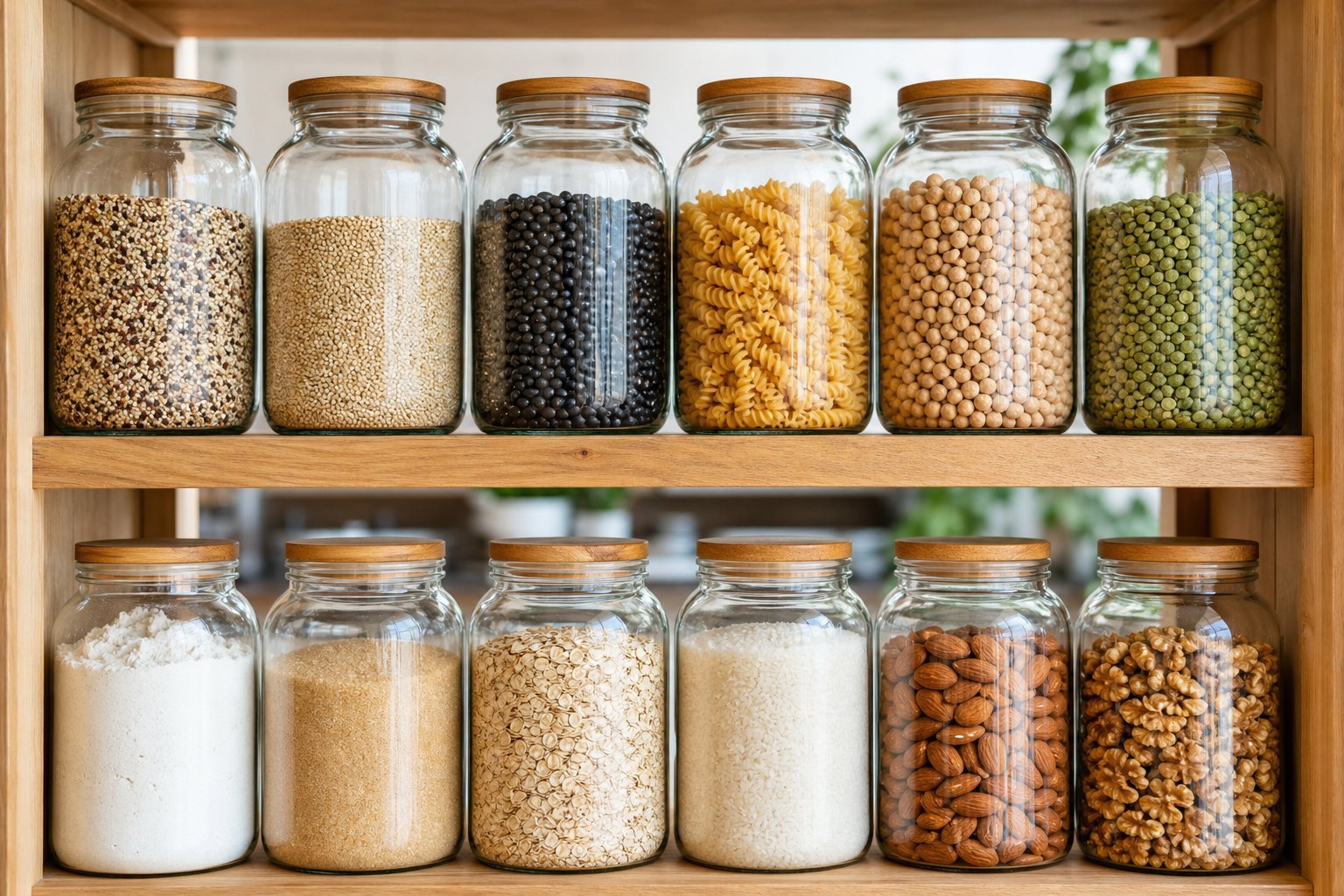
Check out our latest glass jars collection!
A cluttered pantry can make everyday cooking feel harder than it needs to be. Large glass jars are one of the simplest ways to turn bulky staples into neat, visible, easy-to-use storage.
They work best for ingredients you reach for often, such as flour, sugar, rice, pasta, oats, cereal, beans, and snacks. These items usually come in bags or boxes that spill, collapse, or hide what is left inside. Large airtight glass jars help protect dry goods from moisture, keep shelves cleaner, and make restocking easier.
Small containers still have a place for spices, herbs, and specialty ingredients used in tiny amounts. This guide explains which pantry items fit better in large glass jars, which ones belong in smaller containers, and how to choose the right jar size for a more organized kitchen.
Key Takeaways
- Large glass jars are perfect for bulk staples like flour, sugar, rice, pasta, oats, and other dry goods you use all the time
- Airtight glass jars block moisture and keep your pantry looking organized (and honestly, a little fancy)
- When you match jar size to how often you use something, your kitchen just works better, big jars for everyday stuff, small ones for spices and specialty items
Key Benefits of Large Glass Jars in Pantry Storage
Large glass jars aren’t just about looks, they actually make life easier. They keep bulk ingredients fresh longer and make daily cooking less of a hassle. If you use something often or buy it by the bagful, you’ll notice the difference.
Maximizing Shelf Life With Airtight Seals
Airtight lids stop moisture, air, and pantry pests from getting into your dry goods. That’s a big deal for flour, rice, and oats, which can go stale or buggy fast in their original bags.
Good airtight seals keep ingredients tasting and feeling the way they should for months longer than half-closed boxes or bags. Pasta stays crisp, brown sugar doesn’t turn into a brick, and cereal keeps its crunch instead of going flat in a week.
The seal matters most for stuff that hates humidity. Baking powder, cornstarch, and powdered sugar all work better when they stay dry. Plus, a tight seal keeps smells from jumping between jars, so your coffee won’t end up tasting like garlic.
Convenience and Visibility for Bulk Ingredients
With clear glass jars, you can see exactly how much you’ve got left, no more opening every container or digging around. That’s a lifesaver when you’re halfway through a recipe and realize you’re out of something.
Big jars mean fewer refills if you buy in bulk. A gallon jar holds about five pounds of flour or four pounds of sugar, so you’re not constantly topping things off. Wide mouths make scooping and pouring way easier, whether you need a couple cups of rice or just a handful of granola.
Glass jars make tracking your pantry a breeze. One glance and you know what to add to your shopping list. And hey, matching jars just look better and make it simpler to organize by type or how often you use stuff.
Safety and Health Advantages of Food-Grade Glass
Food-grade glass doesn’t leach chemicals into your food, unlike some plastics. It won’t pick up stains or smells from whatever you stored last.
You can toss glass jars in the dishwasher without worrying they’ll warp or lose their seal. They last for years and keep working just as well. The smooth, non-porous surface keeps bacteria from hiding in scratches, which matters for oily things like nuts and seeds that can go bad if stored wrong.
Ideal Pantry Staples for Large Glass Jars
Large glass jars shine for ingredients you buy in bulk and grab all the time. Grains, flour, and dried beans just fit better in quart jars or bigger canning jars.
Grains, Rice, and Pasta
Grains and rice are honestly some of the best things to keep in big glass jars. A quart jar holds about 3 to 4 cups of uncooked rice, plenty for meal prep. If you go through a lot, half-gallon mason jars can store up to 8 cups.
Best grains for large jar storage:
- White rice (jasmine, basmati, long-grain)
- Brown rice and wild rice
- Quinoa and farro
- Rolled oats and steel-cut oats
Short pasta shapes like penne, rotini, or macaroni also work great in tall jars. Spaghetti and other long noodles need taller jars, but at least you can see when you’re running low. The airtight seal keeps moisture out, so pasta doesn’t clump or get weird.
Wide-mouth jars make scooping grains less of a mess. We keep our most-used grains at eye level in matching jars, just for the sheer convenience when cooking gets busy.
Flour, Sugar, and Baking Staples
Baking staples need real protection from moisture and bugs, so big glass jars are a must. A 5-pound bag of flour fits perfectly in a half-gallon jar and stays fresh way longer than in the original bag.
Common baking items for large jars:
- All-purpose flour and bread flour
- Granulated sugar and brown sugar
- Powdered sugar
- Cocoa powder
Brown sugar doesn’t dry out if you store it in an airtight jar, throw in a terracotta disc and it stays soft. Granulated sugar pours cleanly from wide-mouth jars, and scooping is a breeze.
We really prefer clear glass for baking staples so you can see what’s inside and how much is left. Just label each jar with what’s in it and when you filled it. Keep flour and sugar away from sunlight and heat to help them last even longer.
Beans, Lentils, and Dried Legumes
Dried beans and lentils are compact, shelf-stable, and honestly look pretty cool layered in glass jars. A quart jar holds about 2 cups of dried beans, which gives you 5 to 6 cups cooked, easy for meal planning.
Top legumes for jar storage:
- Black beans, pinto beans, and kidney beans
- Chickpeas (garbanzo beans)
- Green, red, and French lentils
- Split peas
Glass jars block pantry moths and humidity, both of which can wreck a whole bag of beans. The airtight seal is important since beans can pick up odors. We like to line up different varieties for both the look and the convenience.
Canning jars with metal lids give the best seal for long-term storage. If you buy beans in bulk, move them into jars right away. Most dried legumes stay good for 1 to 2 years in well-sealed glass jars.
Creative Uses Beyond Basics: Large Jars for Snacks, Cereals, and More
Large glass jars really shine for snacks and cereals, especially if you want to keep things fresh and actually see what you have. Stuff that goes stale or attracts pests does way better in airtight glass than in flimsy packaging.
Storing Nuts, Seeds, and Dried Fruits
Nuts and seeds stay crisp and flavorful longer in big glass jars with tight lids than in their original bags. The wide opening makes scooping easy, and you can tell at a glance when you’re running low.
We like to keep each kind of nut or seed in its own jar, almonds, cashews, walnuts, pecans, pumpkin seeds, sunflower seeds, chia seeds, so flavors don’t mix and prepping meals is faster.
Key benefits for nuts and seeds:
- Protects them from moisture, so they stay crunchy
- Slows down oil oxidation (no one likes rancid nuts)
- Blocks light (especially important for seeds)
- Keeps pantry moths and bugs out
Dried fruits like raisins, cranberries, and apricots keep their texture better in glass jars. The airtight seal stops them from getting hard or sticky. Mason jars are great because you can see if things are clumping or if moisture’s getting in.
Breakfast Cereals and Granola
Cereal boxes are awkward and the cereal gets stale fast once opened. Large glass jars fix both problems, they save space and keep cereal crisp.
A big jar usually fits a whole box of cereal, so you can ditch the bag-in-box mess. Gallon jars work for most families, half-gallon for smaller households or if you like variety.
Granola especially needs airtight storage, since it goes soft quickly. The oils in nuts and seeds make granola more prone to staleness, but glass jars with good lids help it last weeks longer.
Popular breakfast items for large jar storage:
- Oatmeal (rolled, steel-cut, or quick oats)
- Bran flakes and whole grain cereals
- Homemade or store-bought granola
- Muesli and overnight oat mixes
Pour spouts are handy for mornings, but they’re not as airtight, so we usually stick with regular lids and just pour from the jar.
Homemade Treats and Baking Mixes
Large glass jars double as prep stations for cookies, brownies, or other baked goods when you layer the dry ingredients ahead of time. The layers look nice and make the jars giftable, too.
Batching homemade trail mixes, energy balls, or protein bites in one big jar saves space and cuts down on clutter. A large jar holds 3 to 4 cups of snacks, so you’re not juggling a bunch of little containers.
We keep baking mixes in mason jars with handwritten labels for what wet ingredients to add. Pancake mix, muffin mix, and cookie dough bases stay fresh for months if sealed right. Having dry ingredients pre-measured saves a ton of time on busy nights.
Successful jar storage for treats:
- Cookie dough (chilled, ready to bake)
- Decorated sugar cookies or biscotti
- Homemade protein bars, cut and ready
- Popcorn kernels with seasonings nearby
Glass jars make it easy to see what treats you have, so you don’t forget about them like you might with opaque containers.
When Small Containers Shine: Spices, Herbs, and Specialty Ingredients
Small containers are just better for spices, herbs, and those specialty ingredients you only use a pinch at a time. We’ve found that 4-ounce jars are the sweet spot for most spices and dried herbs.
Using Spice Jars for Seasonings
Glass jars are the best for spices because they don’t mess with the flavors. Keep your most-used spices in small glass jars with tight lids, this keeps their essential oils locked in.
Best spice jar sizes:
- 4-ounce jars: Great for most ground spices and dried herbs
- 2-ounce jars: Good for pricey stuff like saffron or special blends
- 8-ounce jars: For bulk whole spices
Small spice jars fit neatly in drawers or on tiered shelves, so you can see everything at a glance. Since glass doesn’t hold on to smells, you won’t get yesterday’s garlic in today’s cinnamon. People who switch to glass jars usually notice their spices stay fresher, especially if they keep them out of the sun.
Keeping Baking Soda and Cocoa Fresh
Baking soda and cocoa powder need to stay dry more than they need lots of space. Small glass jars with tight lids stop them from clumping or picking up weird pantry smells.
Baking soda works best in a 4 to 8-ounce jar, which is enough for several recipes and doesn’t hog shelf space. Cocoa powder is the same, most recipes only use a little at a time.
Both ingredients lose their punch if they get humid. Glass jars do a better job than plastic at keeping them dry, and you can see how much is left. We store these in small jars because most home bakers don’t go through a pound very quickly.
Maximizing Space With Mini Mason Jars
Mini mason jars can turn those weird pantry corners into actually useful storage. The 4-ounce size stacks up nicely and is just right for things you only need a bit of, like vanilla bean paste, cream of tartar, food coloring, or fancy salts.
These little jars squeeze onto narrow shelves or fit inside cabinet door organizers where bigger containers just can’t. We like to pair them with lazy Susans in deep cupboards. Give it a spin, and you can grab what you need, no more digging around or shifting everything else.
Stackable jars open up vertical space, so you free up shelf room for bulkier stuff. Since most mini mason jars use the same lid size, you can swap in airtight wooden lids if you want a tighter seal than those standard metal ones.
Size Matters: Comparing Quart Jars, Pint Jars, and Other Options
Jar size really changes how organized your pantry stays and how long your ingredients last. Quart jars work for flour and grains, pint jars tame spices and baking extras, and half-pints handle the smallest stashes.
When to Reach for Quart Jars
We keep quart jars (32 oz) for pantry basics: flour, sugar, rice, pasta, oats, and coffee beans. One jar holds 4 cups, so it fits a standard 2-pound bag of flour or about 3 cups of uncooked rice with some room to scoop.
Wide-mouth quart mason jars make filling and cleaning so much easier. You can just tip a bag of beans straight in, no funnel needed, and when it’s empty, your hand fits inside to wipe it out.
Best pantry items for quart jars:
- All-purpose flour, bread flour, whole wheat flour
- Granulated sugar, brown sugar
- Rolled oats, quinoa, farro
- Dried beans, lentils, split peas
- Pasta shapes (penne, rotini, shells)
Quart jars stack well and fit most cabinet heights. If you buy in bulk or bake a lot, a set of 6 to 12 quart jars keeps things tidy and airtight.
Choosing Pint or Half-Pint for Smaller Quantities
Pint jars (16 oz) and half-pint jars (8 oz) are game changers for baking stations and spice drawers. A pint holds 2 cups, perfect for baking soda, cornstarch, coconut sugar, chia seeds, or sesame seeds. Half-pints are great for spice blends, vanilla extract, poppy seeds, or flaky salt.
We use pint mason jars for things we grab weekly but don’t use up fast. Stuff like almond flour, cocoa powder, or dried herbs stays fresher in glass than in those flimsy packages.
Pint jar staples:
- Cocoa powder, matcha powder
- Baking soda, baking powder
- Nutritional yeast, flaxseed meal
- Dried cranberries, raisins
Half-pint favorites:
- Cinnamon, nutmeg, cardamom
- Vanilla beans, saffron threads
- Sesame seeds, poppy seeds
Both sizes are light and easy to move, and they fit into tight spots without hassle.
Matching Jar Types to Pantry Needs
We pick jar sizes based on how fast we go through an ingredient and how much shelf or counter space we’ve got. If you bake bread twice a week, a quart jar of yeast won’t last, but a half-pint of cream of tartar could stick around for a year.
| Pantry Item | Best Jar Size | Why |
|---|---|---|
| All-purpose flour | Quart (32 oz) | Holds 1-2 lb bags, used frequently |
| Brown sugar | Quart (32 oz) | Stays soft with tight seal, scoopable |
| Chia seeds | Pint (16 oz) | Lasts months, easier to pour |
| Ground cinnamon | Half-pint (8 oz) | Small batch, preserves potency |
| Pasta (short shapes) | Quart (32 oz) | Fits 12-16 oz boxes, easy to measure |
Glass jars beat plastic or paper at keeping out moisture and pests. We write on the lid or front with a dry-erase marker so we know what’s inside or when we opened it.
If you’re just getting started, try a mix: 4 quart jars for staples, 4 pint jars for baking stuff, and 4 half-pints for spices.
Practical Pantry Organization Tips Using Glass Jars
Organizing your pantry with glass jars takes some planning, labels, smart storage, and knowing which jars work best for what.
Labeling and Maintaining an Organized Pantry
Label the jars before you fill them, it saves you from juggling heavy jars later. Stick-on pantry labels make it easy to tell what’s what, especially when you’ve got five kinds of flour or sugar.
Group similar items together. Baking supplies like flour, sugar, and chocolate chips go in one area; rice, pasta, and grains in another. This way, restocking is easier and you’ll notice when you’re running low.
Labeling tips:
- Add purchase or expiration dates
- Use waterproof labels
- Place labels at eye level
- Swap out faded labels during cleanups
We wash our glass jars with warm, soapy water between refills. Take off any rubber gaskets from airtight lids to avoid trapped moisture. Make sure jars are totally dry before refilling, nobody wants spoiled dry goods.
Stacking and Storing for Easy Access
Stackable glass jars help you use vertical space, especially if your pantry is tight. We keep the biggest, heaviest jars on the bottom shelves for safety, mid-sized jars at eye level, and smaller spice jars up top.
Lazy Susans are a lifesaver in deep cupboards. We fit 6-8 small or medium jars on one, so everything’s just a spin away and nothing gets lost in the back.
Storage layout ideas:
| Arrangement | Best For | Benefits |
|---|---|---|
| By size | Visual appeal | Prevents toppling, easier access |
| By category | Cooking efficiency | Faster meal prep, logical flow |
| By frequency | Daily convenience | Most-used items at arm's reach |
Tiered organizers also help, use them for cans and bottles that don’t fit in jars.
Canning Jars for Long-Term Preservation
Canning jars with two-piece metal lids still work well for storing dry goods long-term. We use quart jars for things like oats or beans, and pint jars for smaller stuff like seeds or specialty flours.
For everyday pantry use, we often swap out the metal lids for wooden or latch-style ones. These airtight lids keep pests and moisture out and are just easier to open than traditional canning lids. They keep crackers crisp, flour fresh, and weevils away.
Wide-mouth canning jars make scooping and measuring simple. We prefer them for things we reach for a lot, like coffee beans, granola, or baking powder. Regular-mouth jars are fine for things you just pour, like rice or lentils.
Frequently Asked Questions
Here are quick answers to common questions about choosing large glass jars or smaller containers for pantry storage.
What pantry staples actually stay fresher longer in a large glass jar instead of a small plastic container?
Flour, sugar, rice, oats, pasta, coffee beans, and dry baking mixes often stay fresher in large airtight glass jars. Glass helps block moisture, odors, and pantry pests while keeping ingredients easy to see.
Which dry goods are easiest to pour and scoop when stored in wide-mouth glass jars?
Flour, sugar, rice, oats, granola, cereal, beans, lentils, and short pasta shapes are easy to scoop or pour from wide-mouth jars. The larger opening also helps prevent spills during measuring.
How do you choose the right jar size for bulky staples like pasta, rice, or oats without wasting shelf space?
Choose a jar that matches how much you usually buy and how often you use the ingredient. Daily staples deserve larger jars, while occasional ingredients fit better in pint or half-pint jars.
What foods tend to clump or go stale in small containers but store better with the extra airflow control of a larger jar?
Brown sugar, powdered sugar, pancake mix, flour, cereal, granola, and crackers often do better in larger airtight jars. A reliable seal helps reduce clumping, staleness, and moisture exposure.
Which ingredients are the biggest offenders for making a pantry look messy in small containers, and how do large jars help?
Pasta, cereal, snacks, rice, beans, flour, sugar, nuts, and dried fruit can make shelves look cluttered in bags and boxes. Large matching jars create cleaner lines and make inventory easier.
What should you avoid putting in large glass jars because it is better kept in smaller containers or original packaging?
Spices, dried herbs, yeast, specialty teas, and small amounts of delicate ingredients are usually better in smaller containers or original packaging. They need less air exposure and more targeted storage.
Partager:
Large Glass Jars vs Square Glass Jars: Which Shape Fits Your Pantry Better?
Golf Practice Net vs Chipping Net: Which One Fits Your Backyard Practice Goals?