

Check out our latest home & kitchen collection!
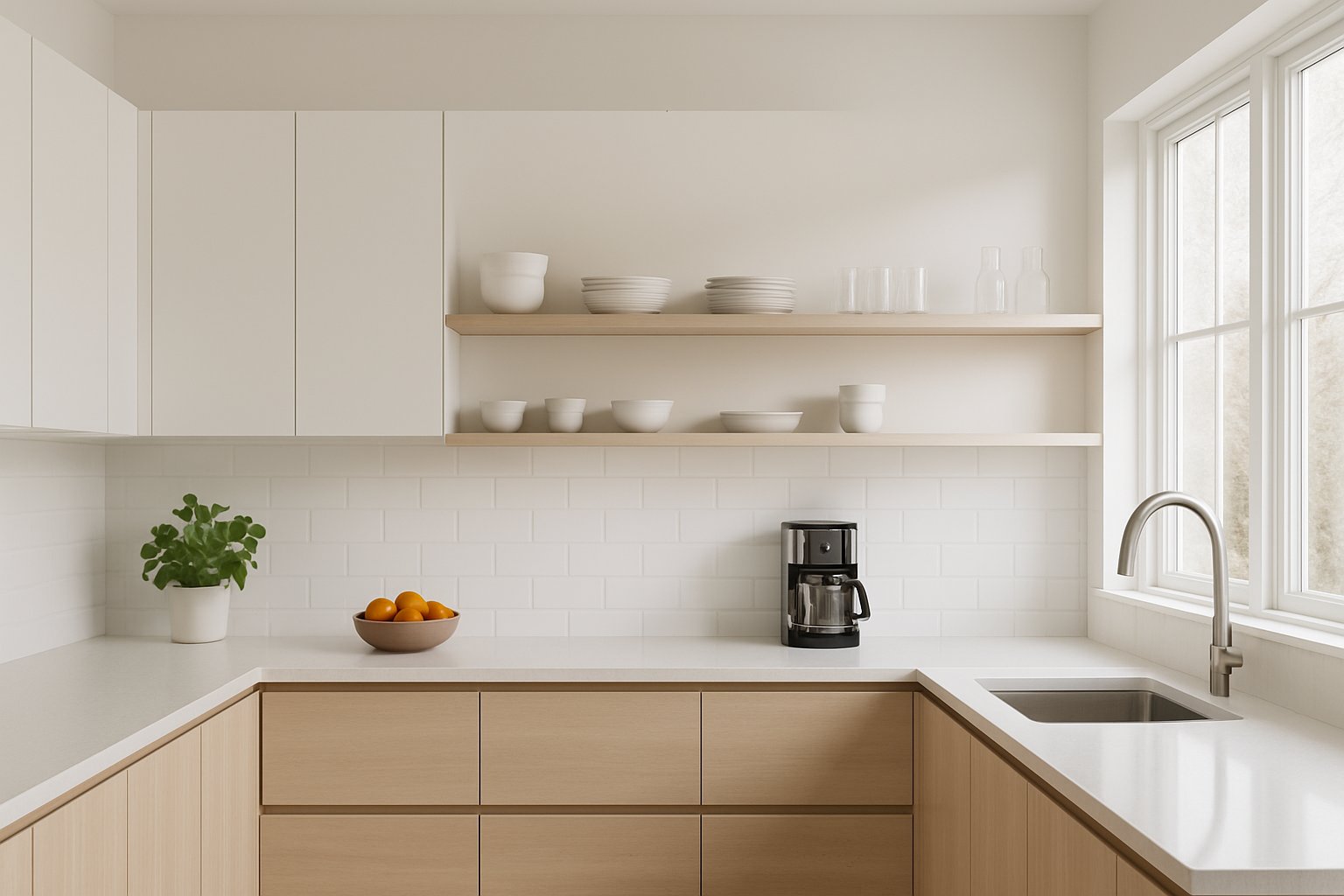
A minimalist kitchen isn’t about stripping your space bare or living with empty cabinets. It’s about shaping a cooking space that actually works for you, where everything has a purpose and nothing gets in your way.
The idea is to design a kitchen that feels calm and functional, with only the tools and items you genuinely use, stored so cooking feels easier, not more complicated.
Most of us have felt the frustration of digging through cluttered drawers for that one spatula or moving three appliances just to reach the coffee maker.
We collect duplicate utensils, single-use gadgets we never touch, and enough mugs for a small army. A minimalist approach helps us cut through that chaos by focusing on what actually matters: keeping the essentials accessible and letting go of the rest.
This guide walks through practical steps to transform your kitchen into a more streamlined space. We’ll look at how to declutter, pick colors and materials that calm the eye, organize storage for efficiency, and keep things simple once you get there.
Key Takeaways
- A minimalist kitchen puts functionality first by keeping only essential items that truly serve your daily cooking routine.
- Smart storage like flat-front cabinetry, pull-out drawers, and hidden appliances reduces visual clutter while making everything easy to reach.
- Neutral color palettes—earthy tones, simple materials like quartz and light wood—create a cohesive, calming cooking environment.
Understanding Minimalism in the Kitchen
A minimalist kitchen means removing unnecessary items and visual noise to create a space that’s both functional and calming. The approach centers on keeping only what we use, designing for efficiency, and making the space easy to maintain.
What Makes a Kitchen Truly Minimalist
A minimalist kitchen isn’t about empty counters for the sake of it. It’s about intentional design that puts function ahead of accumulation.
The foundation? Clean lines and simple shapes. Skip ornate cabinet hardware, excessive decor, and those gadgets that seemed clever but now just collect dust. The aesthetic usually sticks to a limited color palette—warm neutrals, classic black and white, or natural wood tones.
Natural materials like wood, stone, and metal bring warmth without adding clutter. Good lighting helps too, especially natural light that opens up the room and makes it feel inviting.
But honestly, the real test of minimalism is inside the cabinets and drawers. We keep what we genuinely use, not what we might need “someday.” It’s telling that professional chefs thrive with about a dozen essential tools—maybe we don’t need that fifth spatula after all.
Benefits of a Minimalist Kitchen
Minimalist kitchens aren’t just about looks. Cleaning is way faster when there aren’t piles of stuff to move or wipe down.
You get actual usable space, not just the illusion of it. With fewer items crowding counters and cabinets, you can prep meals easily and store what matters. There’s even research showing that visual clutter ramps up stress hormones—so a clear kitchen really can help you feel better.
And then there’s the money. When you can see what’s in your pantry and fridge, you stop buying duplicates. Food waste drops because nothing gets lost in the back. Minimalism nudges you toward more mindful shopping, which means lower grocery bills and less environmental impact.
Cooking just gets easier too. No more digging for the right tool or clearing a spot before you can start dinner. Everything has a place, and you only own what you actually use.
Laying the Foundation: Decluttering and Mindful Consumption
A minimalist kitchen starts by getting rid of what doesn’t serve you and building habits that keep clutter from creeping back. This means taking a hard look at everything in your space and rethinking how you bring new stuff in.
Starting Your Declutter Journey
You’ve got to pull everything out of your cabinets, drawers, and pantry before you can really decide what stays. It sounds overwhelming, but it’s the only way to see what you own versus what you forgot about.
Work one category at a time. Gather all utensils, then all dishes, then all food storage containers. Look for duplicates, broken stuff, and things you haven’t touched in six months.
Ask yourself:
- Do I use this regularly?
- Does it work right?
- Do I have something else that does the same job?
- Would I buy this again today?
Let go of specialty gadgets that only do one thing, chipped dishes, and those containers missing lids. “Just in case” items almost never get used. You probably don’t need three wooden spoons or five cutting boards—unless you’re running a restaurant.
Expired pantry stuff? Out it goes. Old spices lose their punch after a year, and that sauce from 2023 isn’t getting any tastier.
Mindful Purchasing Habits
After decluttering, the trick is not letting clutter sneak back in. Before buying anything new, wait 48 hours—this pause saves you from impulse buys that just end up as clutter.
Stick to the one-in, one-out rule: if a new spatula comes home, an old one leaves. This keeps the kitchen from ballooning back to chaos.
Shop with a list instead of browsing. Wandering through stores leads to “oh, that’s clever” purchases you’ll ignore in a week. Go for multi-purpose tools, not single-use gadgets.
Quality beats quantity every time. One great chef’s knife is better than a drawer full of dull ones. Durable glass containers outlast cheap plastic sets you’ll just replace next year.
Before you check out, ask: does this solve a real problem I have right now? If you have to justify it or say “maybe someday,” you probably don’t need it.
Choosing the Perfect Minimalist Color Palette
A neutral color palette really anchors minimalist kitchen design. Whites, grays, and beiges create a calm base that makes your space feel bigger and more organized. Layering textures and adding warmth keeps these colors from feeling cold or lifeless.
Exploring Neutral Tones for Your Space
Start with a base of white, gray, or beige—these reflect light and make even small kitchens feel open. White cabinets with light gray walls give you that classic minimalist vibe, while warm beige tones add coziness without complicating things.
Pay attention to undertones. Cool grays work best if you’ve got lots of natural light, while greige (that gray-beige blend) softens spaces with less sunlight. Always test paint samples on your actual walls—kitchen lighting can really mess with how colors look.
A few favorite combos:
- Crisp white cabinets + soft gray walls + beige accents
- Warm ivory walls + greige cabinets + white countertops
- Charcoal gray lower cabinets + white uppers + taupe backsplash
Keep it to 2-3 main colors. That restraint is what makes minimalist kitchens feel intentional, not random.
Incorporating Texture and Warmth
Neutral doesn’t mean bland. Layer different materials to add interest without extra colors. Natural wood cutting boards, linen towels, and matte ceramics give depth to painted surfaces.
Mix up your finishes. Glossy white subway tiles next to matte gray cabinets, or smooth stainless appliances with textured stone counters—these little contrasts keep things from looking flat.
Warm metals like brass or copper (used sparingly) look great with cool palettes. Even small touches—a wooden utensil holder or woven baskets—make beige and gray kitchens feel more inviting. The idea is to add just enough texture to keep it interesting, but not so much you lose the minimalist vibe.
Designing for Functionality and Simplicity
A minimalist kitchen works best when every design choice serves a purpose and makes daily life easier. The right layout boosts workflow, and natural light makes the space more inviting.
Optimizing Layout and Open Floor Plans
Open floor plans ditch unnecessary walls, making your kitchen feel bigger and letting you move around easily while cooking. The work triangle—sink, stove, fridge in a triangle, each point 4-9 feet apart—keeps things efficient.
Where you put your counter space matters. Try to have your main prep area between the sink and stove, and keep at least 36 inches clear for walkways. If you’ve got an open plan, an island can double as a prep spot and a casual dining area.
Things to focus on:
- Clear walkways—no obstacles
- Appliances close to where you prep
- Storage right where you use it
- Skip decorative extras that get in the way
Open layouts make clutter obvious, which is actually helpful. When everything’s visible, you’re more likely to keep it tidy.
Incorporating Natural Light
Natural light just changes everything. Big windows or skylights cut down on energy use and make it easier to see what you’re cooking—especially when you’re trying to tell if something’s browned or fresh.
If you can, put your sink under a window. You’ll spend a lot of time there, and natural light makes chores less of a drag. South-facing windows give steady light all day, while east-facing ones are great for bright mornings.
Ways to boost natural light:
- Swap heavy curtains for sheers or leave windows bare
- Use glossy backsplashes to reflect light
- Keep windowsills clear
- Pick light-colored walls and cabinets to bounce brightness around
Glass cabinet doors or open shelves near windows help spread light deeper into the room. Fewer light fixtures means less maintenance and a cleaner look, too.
Selecting Minimalist Materials and Kitchen Essentials
The right materials and tools give a minimalist kitchen both function and beauty. Natural elements like wood and stone bring warmth and last for decades, while a tight list of essentials keeps clutter in check.
Choosing Natural and Durable Materials
Go for materials that get better with age, not ones that fall apart quickly. Wood countertops and cutting boards develop character, while stone surfaces like granite or marble shrug off daily abuse. Glass storage containers outlast plastic—they don’t stain or hold odors.
Cotton dish towels beat paper products for both texture and durability. They’re washable, sturdy, and don’t fill your trash. When you pick minimalist furniture, try for solid wood instead of particleboard. A simple wooden stool or bench can do a lot without demanding attention.
Stainless steel is nearly indestructible for cookware and utensils. I’ve had the same saucepan for over a decade. Cast iron skillets actually improve with age if you take care of them. These materials just make sense—they’re timeless, useful, and you won’t be replacing them every year.
Minimalist Kitchen Must-Haves
Stick to versatile essentials. Here’s what really earns a spot:
Cutting Tools:
- 8-inch chef’s knife (handles almost everything)
- Paring knife
- Wood or plastic cutting board
- Kitchen shears
Cooking Vessels:
- 10-12 inch cast iron skillet
- 2-3 quart stainless saucepan
- 5-6 quart Dutch oven
- Rimmed baking sheet
- 9×13 inch glass baking dish
Daily Tools:
- Wooden spoon and silicone spatula
- Tongs
- Box grater
- Measuring cups and spoons
- Colander
Skip the single-use gadgets. That avocado slicer? The chef’s knife does it. Electric quesadilla maker? A skillet works fine. Every item should do multiple jobs, saving space and money—and honestly, it just makes cooking feel easier.
Smart Storage and Efficient Organization
Good storage turns a minimalist kitchen from bare-bones to actually livable. Focus on built-in solutions that use every inch and organizing strategies that keep essentials close without making things look messy.
Built-In Storage Solutions
Built-in storage lets you use awkward spaces normal cabinets miss. Pull-out pantry shelves fit into narrow gaps, turning wasted space into handy storage for spices and oils. Corner cabinets with lazy Susans or pull-outs stop things from getting lost forever.
Cabinet makers can build drawer dividers right in, so utensils stay sorted without extra organizers. Vertical dividers for baking sheets and cutting boards keep you from triggering an avalanche every time you grab one. Toe-kick drawers under your base cabinets hide flat stuff like placemats or rarely used serving pieces.
Under-shelf baskets hook onto shelves to double your vertical space—no tools needed. Wall-mounted magnetic strips hold knives and metal tools, freeing up drawers and counters. These built-in ideas mean you don’t need a bunch of random containers cluttering up your kitchen.
Practical Organizing Tips
We care way more about quality than about owning a bunch of organizing tools. Honestly, one solid set of glass storage containers beats a pile of random plastic tubs any day. Clear containers just make sense—you can see what’s inside without digging, so you’re less likely to buy duplicates or let food go to waste.
Group stuff based on how often you use it. Things like coffee, cooking oil, and salt? Those live at eye level, always within reach. Holiday cookie cutters and other seasonal bits? They get stashed on high shelves or in the back. This setup saves time and keeps frustration to a minimum.
The "one in, one out" rule helps keep things from piling up. Buy a new spatula? Out goes the old one. Labeling shelves and containers might seem like overkill, but it keeps everyone on the same page—cleanup’s way faster when you know where things go. We try to keep counters as empty as possible, except for daily essentials. Appliances get tucked away in lower cabinets, cords wrapped so they don’t turn into a tangled mess.
Frequently Asked Questions
Starting a minimalist kitchen is trickier than it looks. What do you keep? What do you toss? How do you actually make it work for real-life cooking? Here’s what’s worked for me—maybe it’ll save you some headaches.
How do you prioritize appliances in a minimalist kitchen setup?
We keep track of what we actually use for a couple weeks. If something never comes out during regular cooking, it’s probably just taking up space.
Our rule: keep appliances that do more than one thing, or that you use at least three times a week. For example, a solid food processor can stand in for a blender, chopper, and grater. An Instant Pot? It’s a pressure cooker, slow cooker, and rice maker all in one.
Counter space is precious. Only the real MVPs—coffee maker, maybe a toaster—get to stay out. Everything else is stored, or honestly, donated if we can’t remember the last time we used it.
What are some space-saving design tips for small minimalist kitchens?
Vertical storage is a game-changer. Floating shelves, magnetic knife strips, and wall-mounted pot racks clear up counters and drawers but keep things handy.
Corners usually get wasted, but carousel organizers and those swing-out corner units can turn them into useful spots. Even the skinny gap between the fridge and the wall? Pull-out shelves fit right in.
We ditched the clunky dish rack for a drying mat that rolls up when we’re done. Under-shelf baskets double up cabinet space, no tools required.
Light colors really open up a small kitchen. White or pale cabinets, plus glass backsplashes, bounce light around and just make the place feel bigger.
What are essential minimalist kitchen cabinet contents for the cooking aficionado?
If you love to cook, you really don’t need as much gear as the kitchen stores want you to believe. We stick to one good chef’s knife, a paring knife, and a serrated bread knife. That covers almost everything.
For pots and pans, we go with a 10-inch skillet, a 12-inch skillet, a 3-quart saucepan, and a big stockpot. Cast iron and stainless steel last forever and handle pretty much any job.
All our essential tools fit in one drawer: wooden spoons, spatula, tongs, whisk, measuring cups and spoons, and a decent veggie peeler. No need for avocado slicers or garlic presses—a knife works fine.
Baking gear stays simple too. One sheet pan, a 9x13 baking dish, and a set of mixing bowls. Parchment paper covers most baking needs, so we skip all those specialty pans.
Can you suggest a minimalist approach to selecting a kitchen table and chairs?
We hunt for tables with simple lines and, if possible, built-in storage. Drop-leaf or extendable tables are perfect—they fit daily life but can stretch for guests.
Materials matter. Solid wood tables get better with age, while trendy finishes seem to look tired fast.
Stackable or folding chairs are lifesavers when you don’t need all the seats out. Benches on one side can squeeze in more people and don’t clutter up the space visually.
The right table leaves about 36 inches of space all around so you can move comfortably. Honestly, measuring twice before buying is worth it—a too-big table just cramps everything up.
In the realm of minimalist kitchens, what's one rookie mistake to avoid?
Going overboard and tossing everything at once is a classic mistake. People give away their waffle maker, then realize they used it every Sunday—oops.
Hidden storage isn’t always the answer. If you can’t see it, you forget you own it. Some open shelving for daily items keeps you from buying duplicates.
All-neutral can look cold instead of calm. We add warmth with a wood cutting board, a houseplant, or just a pop of color in dish towels or containers.
Minimalism isn’t about being cheap. Investing in quality tools and storage up front might cost more, but it saves you from replacing junky stuff every few years.
What's the lowdown on the 30-day minimalism rule in relation to kitchen organization?
The 30-day rule gives us a way to figure out if stuff really deserves space in the kitchen. When we're on the fence about keeping something, we just stick it in a box and set a reminder for 30 days later.
If we don't reach for the item or even think about it during that month, it's probably time to donate or sell it. This approach takes some of the emotion out of decluttering, and honestly, it shows whether something fits into our actual cooking habits.
We especially use this rule for duplicate tools. Seriously, do we need three wooden spoons or four spatulas? After a month, it's pretty obvious that just one or two of each does the job.
Kitchen gadgets? They're perfect for this. That spiralizer or egg separator might feel like a must-have, but if it sits untouched for a month, maybe it's not so essential after all.
Share:
Smart Food Storage Habits That Reduce Grocery Costs
Smart Food Storage Habits That Reduce Grocery Costs