

Check out our latest home & kitchen collection!
Christmas baking season brings joy, delicious treats, and a pantry full of ingredients that need proper care. We've all felt that letdown, reaching for chocolate chips and finding them stale, or discovering brown sugar turned into a brick.
How you store your Christmas baking supplies really does make or break your treats, and let's be honest, nobody wants to waste money on ruined ingredients.
The upside? Most baking ingredients last way longer than you’d expect if you store them right. Nuts can keep for months in the freezer, and spices stay punchy for a year or more. Knowing where and how to stash each item totally changes the holiday baking game. Let's break down containers, the battle of pantry vs. fridge, and what actually works.
Getting organized now means less scrambling later, no more last-minute sprints to the store or baking fails because something went bad.
Whether you’re stocking up on sale or just want to make it from Thanksgiving through New Year’s without ingredient drama, here’s what’s worked for us.
Key Takeaways
- Airtight containers and smart storage spots (pantry, fridge, or freezer) keep ingredients fresh and lasting longer
- Chocolate, nuts, and whole wheat flour need protection from heat, moisture, and light to stay good
- Getting organized before the holidays saves money, reduces waste, and spares you from mid-recipe panic
Choosing Containers for Maximum Freshness
The right containers are a game changer for baking supplies. Airtight seals for dry goods, moisture-resistant for liquids, and labels that don’t fall off after two days—these little details matter more than you’d think.
Airtight Options for Dry Ingredients
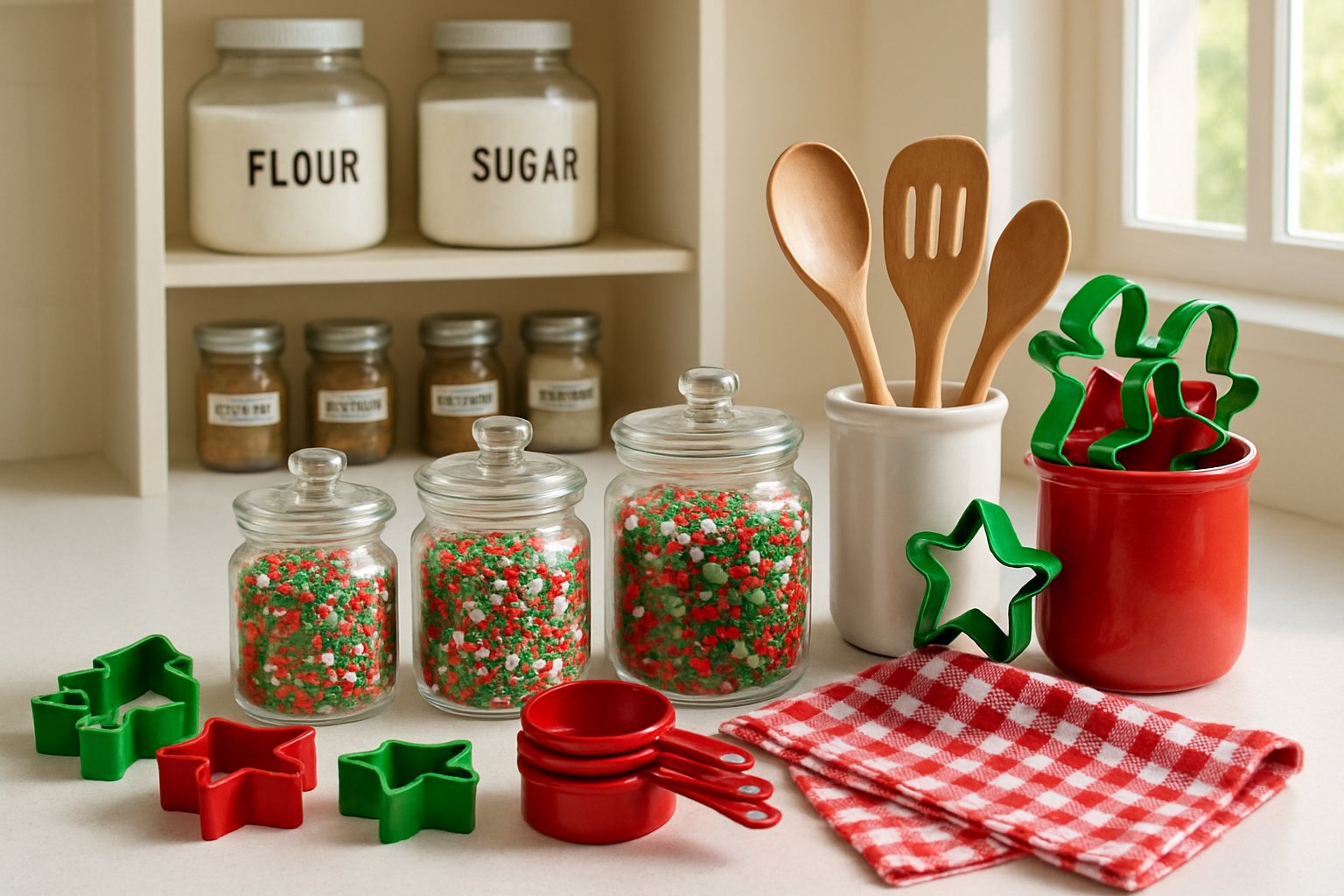
Flour, sugar, baking powder—these all need containers that actually keep out air and moisture. We swear by BPA-free plastic or glass containers with a real gasket seal. If you’re a frequent baker, a 5-10 pound container for flour with a wide opening is a lifesaver. Sugar can get by with a slightly looser seal, but still, airtight is best. For baking powder and soda, smaller jars with tight lids do the trick.
Glass is fantastic because it doesn’t hold onto smells and you can see what’s inside. Plastic’s lighter and less breakable, so it’s good for busy kitchens. Just skip those flimsy press-on lids—locking or snapping ones are worth the few extra bucks.
Store flour right and you’ll get a year out of it, easy. Brown sugar won’t turn into a rock if you keep it sealed, either.
Best Storage for Wet Ingredients
Wet stuff—think extracts, syrups, or open cans—needs a different approach. We keep vanilla and other extracts in their original dark bottles, tucked away from the stove. Opened condensed milk, evaporated milk, or pie fillings go straight into glass or food-safe plastic containers with tight lids, then into the fridge. Expect about a week before they need tossing.
Corn syrup, honey, and molasses? Leave them in their squeeze bottles or pour into something easy to handle with a flip-top lid. For buttermilk, heavy cream, and eggs, we just leave them in their original packaging in the fridge and double-check the dates before baking.
Sizing and Labeling Tips
Match your container size to how fast you use each ingredient. If you go through flour quickly, a big container makes sense. Specialty flours? Smaller is better.
Here's a quick cheat sheet:
| Ingredient | Container Size | Expected Usage |
|---|---|---|
| All-purpose flour | 5-10 lbs | 3-6 months |
| Sugar (white/brown) | 4-8 lbs | 3-6 months |
| Chocolate chips | 2-4 cups | 2-4 months |
| Baking powder/soda | 1-2 cups | 6-12 months |
| Specialty flours | 1-3 lbs | 2-4 months |
Label everything with the ingredient and the date you filled it. Masking tape and a Sharpie work, or a label maker if you’re feeling fancy. If something has a hard expiration, jot that down too.
Stackable, square containers save space. Round ones waste more room than you’d think.
Organizing and Storing Baking Tools
If your baking tools are a mess, you’ll spend more time searching than baking. Grouping similar items and making use of drawers or cabinets you already have makes a big difference.
Grouping and Storing Essential Baking Tools
Sort your tools by how often you use them. Spatulas, whisks, measuring cups, and wooden spoons should be easy to grab—keep them in a top drawer or a container on the counter.
Rolling pins are notorious for rolling away. Hang them on a wall hook or use a stand so they stay put. Stack mixing bowls and measuring cups by size in a lower cabinet.
Cookie cutters, piping tips, and decorating tools go in labeled bags or boxes. That way, you’re not dumping out a whole bin to find one little star. Store baking sheets and cooling racks vertically in pot lid holders—it’s so much easier than unstacking a teetering pile.
Rarely used stuff—like specialty pans or seasonal molds—can go up high or in the back until you actually need them.
Maximizing Space with Drawer Dividers and Holders
Drawer dividers are a lifesaver for messy utensil drawers. Adjustable ones help you keep whisks, spatulas, measuring spoons, and thermometers separated. No more digging through a jumble to find what you need.
For tiny things like piping tips or pastry brushes, use shallow containers inside the drawer. Clear acrylic dividers are especially handy—you can see everything at a glance.
Short on drawer space? Stick adhesive hooks inside cabinet doors for measuring cups and spoons. Magnetic strips on the inside of pantry doors can hold metal tools like spatulas and scrapers. These tricks free up drawers for the bigger, bulkier stuff.
Smart Storage for Popular Christmas Baking Ingredients
Cookies get stale, gingerbread dries out, and chocolate gets that weird white film if you store them wrong. Here’s how to keep your holiday treats in top shape.
Christmas Cookies: Keeping Them Fresh
How you store cookies depends on their texture. Crispy cookies need a container with a loose lid so they don’t go soft. Soft cookies need airtight containers—toss in a slice of bread to keep them moist (the bread will dry out instead of your cookies).
Layer cookies with parchment or waxed paper so they don’t stick. Don’t mix crispy and soft cookies in the same container—they’ll ruin each other’s texture.
Room temperature storage times:
- Sugar cookies: 3-5 days
- Shortbread: 1 week
- Decorated cookies: 5-7 days
Frosted cookies take more care. Let icing harden before stacking. For royal icing, you can stack them up; for buttercream, use parchment between layers.
Freeze cookies for up to 3 months—wrap them tight, then into freezer bags. Thaw while still wrapped so they don’t get soggy.
Gingerbread and Traditional Treats
Gingerbread actually gets better after a couple days in an airtight container—the spices mellow and the texture softens. A slice of apple in the container keeps it moist (swap it out every other day).
Gingerbread houses are a different story. Let the royal icing cure for a day or two before storing. They can last up to three weeks at room temp if it’s dry.
Fruitcake keeps for weeks if you wrap it in cheesecloth soaked with booze, then plastic wrap and foil. Re-soak weekly. Stollen does best wrapped in parchment, then foil, and stays good for a couple weeks.
Molasses belongs in a cool cupboard, and wipe the rim after each use. Spices lose their oomph after a year—date your jars when you open them.
Handling Nuts, Seeds, and Chocolate
Nuts go rancid fast thanks to their oils. Store them airtight in the fridge for six months, or the freezer for a year. Whole nuts last longer than chopped, so buy whole when you can.
Chocolate hates heat and moisture. Keep it wrapped in an airtight container in a cool, dark place (65-70°F is ideal). If you see white bloom, it’s still fine for baking, just not for showy decorations.
Chocolate storage:
- Dark: 1-2 years
- Milk: 8-10 months
- White: 4-6 months
Don’t freeze chocolate unless you absolutely have to. Freezer moisture causes bloom and weird texture. If you must, thaw it slowly, wrapped in a towel, to avoid condensation.
Seeds like sesame, poppy, or sunflower should go in the fridge (six months) or freezer (a year). Always give them a sniff—if they smell like paint, toss them.
Extending the Shelf Life of Ingredients
Temperature and light make or break your baking supplies. These two factors matter way more than most folks realize.
How Temperature and Light Affect Freshness
Heat and light speed up spoilage. Oils in nuts, whole wheat flour, and chocolate go rancid faster if they’re warm or in sunlight. Keep these in cool, dark cupboards—nowhere near the stove.
Ground spices lose their punch in a year if they’re in a hot, bright spot. Whole spices last longer if you store them right. Brown sugar likes steady temps—swings make it harden.
Airtight containers help by blocking both light and temperature changes. Opaque or dark containers are best for light-sensitive stuff like oils and chocolate. Most dry goods do best at 50-70°F, but high-fat ingredients (nuts, whole grains) last longer in the fridge.
Freezing Your Supplies Without Sacrificing Flavor
Freezing is a powerful tool if you do it right. Whole nuts last a year in the freezer, compared to six months in the fridge. Flours and coconut freeze well in airtight containers or heavy freezer bags.
The secret? Don’t let moisture in, and avoid temperature shock. Let frozen ingredients come to room temp while still sealed—this stops condensation. Butter freezes beautifully for a year; portion it before freezing if you want.
Chocolate is the odd one out. Freezing usually does more harm than good—bloom happens, and the texture changes. Just buy what you need and keep it cool and dark.
Pantry, Fridge, or Freezer: Where Does Everything Go?
Storing things in the right place extends shelf life and keeps your baking stash ready for action. The right spot means less spoilage, better flavor, and you get your money’s worth from every ingredient.
When to Refrigerate or Freeze Baking Supplies
Most dry ingredients can hang out in the pantry, but a few need chillier digs. Opened yeast should go in the fridge to keep its strength—unopened packs are fine in a cool, dry spot. Nuts? Their oils spoil fast at room temp, so stash them in airtight containers in the fridge or freezer for peak freshness.
Butter does well in the fridge for a few weeks if it’s wrapped up tight, and you can freeze it for up to six months without much fuss. Heavy cream and buttermilk always belong in the coldest part of the fridge. Cream cheese and mascarpone need to be sealed up and kept cold too.
Items that benefit from freezing:
- Extra butter sticks
- Nuts (almonds, pecans, walnuts)
- Chocolate chips (helps prevent bloom)
- Phyllo dough
- Pie crusts
Freezing extends shelf life by months, but only if you use freezer bags or airtight containers. Otherwise, you risk freezer burn or picking up weird odors.
Designated Pantry Spaces for Seasonal Supplies
Grouping Christmas baking supplies in one spot makes life easier. All-purpose flour, baking powder, baking soda, and cornstarch go in airtight containers on a lower shelf, away from heat. Sugars—granulated, powdered, brown—each get their own sealed container to block out moisture and stop clumping.
Spices like cinnamon, nutmeg, and ginger work best in a dark corner, since light zaps their flavor. Vanilla extract, almond extract, and other flavorings should stay in a cool, dark area too. Chocolate chips, candy melts, and cocoa powder can live in their original bags or in containers, as long as they’re sealed up.
Essential pantry organization tips:
- Keep baking soda away from pungent spices
- Store brown sugar with a moisture disc
- Label containers with purchase dates
- Put the most-used items at eye level
Having a system means you can actually find what you need when you need it.
Storing Baking Supplies for Efficient Holiday Prep
Getting supplies organized before the Christmas chaos lets us focus on baking, not scavenger hunts for missing ingredients. A little planning goes a long way, especially when the cookie cravings hit hard.
Planning and Stocking Up Ahead
Take inventory of baking supplies by early November—check expiration dates on everything from baking powder to vanilla. That’s early enough to catch sales but not so early that things go stale.
A master list by storage location keeps shopping trips efficient. Group pantry staples (flour, sugar, baking soda), fridge items (butter, eggs, milk), and freezer goods (nuts, specialty flours) separately. This way, you’re less likely to end up with three bags of brown sugar and zero powdered sugar.
Shelf-stable stuff like sprinkles, chocolate chips, and spices can be bought 4-6 weeks ahead. Butter and eggs? Wait until a week or two before the main baking days. Buying in bulk for high-use items saves money, but only if you’ve got containers that truly keep things fresh.
Labeling, Tracking, and Inventory Hacks
Clear labels with purchase or “use by” dates help avoid stale surprises. Write right on the container with a marker or use removable labels if you like things tidy.
A simple checklist taped inside a cabinet makes it obvious what’s running low. Break it down by:
- Dry goods (all the flours, sugars, leaveners)
- Flavorings (extracts, spices, food coloring)
- Mix-ins (chocolate, nuts, dried fruit)
- Decorating supplies (sprinkles, frosting, edible glitter)
Storing similar things in clear bins makes it easy to see what’s left. You’ll spot right away if you’re almost out of cinnamon or still drowning in chocolate chips—no need to open a dozen bags to find out.
Frequently Asked Questions
Storage matters a lot—how you stash your cookies determines whether they stay delicious for days or turn sad and stale overnight. Most cookies last a few days at room temp, but freezing can stretch that to months.
What's the secret to keeping cookies tasting oven-fresh for days on end?
It’s all about blocking out air and locking in moisture. Let cookies cool off completely before storing—trapping warmth means sogginess.
Airtight containers are a must. Glass jars, sturdy plastic Tupperware, or classic cookie tins all work, as long as they really seal.
Store soft and crispy cookies separately. Soft ones share moisture and can ruin crisp ones. Toss a piece of bread in with soft cookies to help them stay chewy for a couple extra days.
Tins versus plastic containers: which champions the freshness battle for cookies?
Both do the job if they’re airtight. Metal tins have that holiday vibe and last forever, but plastic lets you see what’s inside without opening every container.
It’s really the seal that matters, not the material. A tin with a loose lid won’t keep cookies fresh as long as a plastic container with a solid gasket.
Personally, I think plastic containers with rubber gaskets are the most reliable. Still, vintage tins are perfect for short-term storage during the holidays when cookies disappear fast.
Any tips on how bakers ensure their cookies stay fresh as the day they were baked?
Pros usually wrap cookies in foil or plastic wrap before sealing them in containers. That double layer keeps flavors from mingling and holds in freshness.
Stack cookies in layers with parchment or wax paper so they don’t stick or crumble. Keep containers somewhere cool and dry, away from sunlight and heat.
If you’re decorating, wait until frosting is totally set before stacking. Sometimes it’s better to store cookies unfrosted and add decorations just before serving for the best results.
Can I keep the magic of Christmas cookies alive by freezing or should I just chill with refrigeration?
Freezing is hands-down the best for long-term storage—cookies stay good for up to a year. Refrigeration only works for a week or two and can dry out cookies faster than room temp in some cases.
Wrap cookies tight in plastic wrap or foil, then use freezer-safe containers or bags. Most cookies freeze well, especially if they’re unfrosted.
When you’re ready to eat, let them thaw at room temp for 15-20 minutes. If they seem dry, a quick zap in the microwave with a damp paper towel brings back some softness.
How long can I keep the holiday cheer going with Christmas cookies in a tin?
Most homemade cookies stay fresh in a tin at room temp for 4-7 days. Crunchier ones like shortbread or biscotti can last up to two weeks if you’re lucky.
Cookies with perishable fillings or frostings—think cream cheese or custard—only last 3-5 days, tops. Watch for stale edges or flavor changes as your warning signs.
A tight lid and a cool storage spot help cookies last longer. Keep tins away from ovens, dishwashers, and sunny windows—heat and light are freshness killers.
Looking for the fountain of youth for spritz cookies – how do I store them to maintain their snap?
Spritz cookies—those delicate, buttery bites—really don’t get along with moisture. To keep that perfect crispness, I stash them in airtight containers and try to leave as little empty space as possible.
If you seal them up right, they’ll stay fresh at room temp for about 5-7 days. Mixing them with softer cookies? Not a good idea. They soak up moisture fast and turn soft before you know it.
Want to keep them longer? I just freeze them in sturdy containers so they don’t crumble. They thaw out pretty quickly and, honestly, still taste fantastic with that classic snap, even after a few months in the freezer.
Share:
How to Store and Preserve Cooking Ingredients You Use Daily
How to Store and Preserve Cooking Ingredients You Use Daily