

Check out our latest home & kitchen collection!
Opening your pantry to find stale crackers, rancid nuts, or weevil-infested flour isn't just disappointing, it's wasteful and expensive.
Storing everyday cooking ingredients the right way can stretch their shelf life by weeks or even months, saving you money and keeping your food tasting good and safe.
Most of us pick up storage habits by guessing or copying what we saw growing up, but knowing a bit of the science behind it? That really changes things.
We've all bought ingredients with the best intentions, only to toss them when they’ve gone bad. The truth is, each ingredient needs its own storage method, what works for rice won’t work for olive oil.
Even the temperature of your fridge, your choice of containers, or where you stash things in the kitchen can make a big difference in how long they last.
This guide digs into the practical, real-life ways to store the ingredients you reach for every day.
Let’s clear up the fridge-versus-pantry debate, figure out which containers are worth it, and get better at spotting when something’s past its prime.
Key Takeaways
- Keep your fridge at 40°F or lower and stash pantry staples in airtight containers away from heat and light.
- Each ingredient group needs its own storage approach to prevent spoilage and keep things tasting right.
- Good storage can stretch shelf life by weeks or months, cut down on waste, and save you money.
Fundamentals of Proper Ingredient Storage
Knowing how ingredients break down and setting up your storage spaces the right way are the basics for keeping food fresh and safe. These habits help us waste less, stay healthy, and enjoy better-tasting ingredients.
Understanding Shelf Life and Food Spoilage
Shelf life is basically how long something stays good if you store it right. Lots of things can speed up spoilage, and they don’t all affect every ingredient the same way.
Temperature is huge. Every 10°F over 40°F, bacteria double their growth speed. That’s why we keep fridges at 40°F or below and freezers at 0°F.
Moisture is another troublemaker. Too much, and produce turns mushy or moldy. Too little, and things dry out or get stale.
Other spoilage triggers:
- Oxygen causes fats to go rancid and makes cut produce brown
- Light breaks down vitamins and ruins oils, especially in clear containers
- Enzymes keep reacting in foods, changing textures and flavors over time
- pH matters too—acidic foods usually last longer
We have a lot more control than it seems, just by tweaking how we store things.
The Role of Food Safety and Microorganisms
Bacteria, yeasts, and molds are the main reasons food goes bad or makes us sick. Not every bacterium is dangerous, but the bad ones like Salmonella and E. coli love the “danger zone” between 40°F and 140°F.
Raw proteins need their own space, away from things you eat without cooking. Always keep raw meat on the fridge’s bottom shelf so leaks don’t drip onto other food.
Most harmful bacteria don’t make food look or smell different, so temperature control is your best bet. Refrigeration just slows bacteria down; freezing stops them in their tracks.
Good storage helps you avoid:
- Bacteria multiplying in perishables
- Mold on bread, cheese, and produce
- Toxins from bad canning or storage
- Raw and cooked foods contaminating each other
Best Practices for Storage Organization
Having an organized storage setup makes it easier to use things before they spoil and keeps you from losing stuff in the back of the fridge. Try grouping foods by type and temperature zone.
Fridge organization layout:
| Zone | Best For | Why |
|---|---|---|
| Top shelf | Leftovers, drinks, ready-to-eat foods | Most consistent temperature |
| Middle shelf | Dairy, eggs | Cool but not coldest |
| Bottom shelf | Raw meat, poultry, seafood | Coldest spot, catches drips |
| Drawers | Fruits and vegetables | Humidity-controlled |
| Door | Condiments, sauces | Warmest area, suitable for acidic items |
Label things with the date you bought or prepped them. It’s simple, but it helps you use up old stuff first and keeps track of what’s been sitting around.
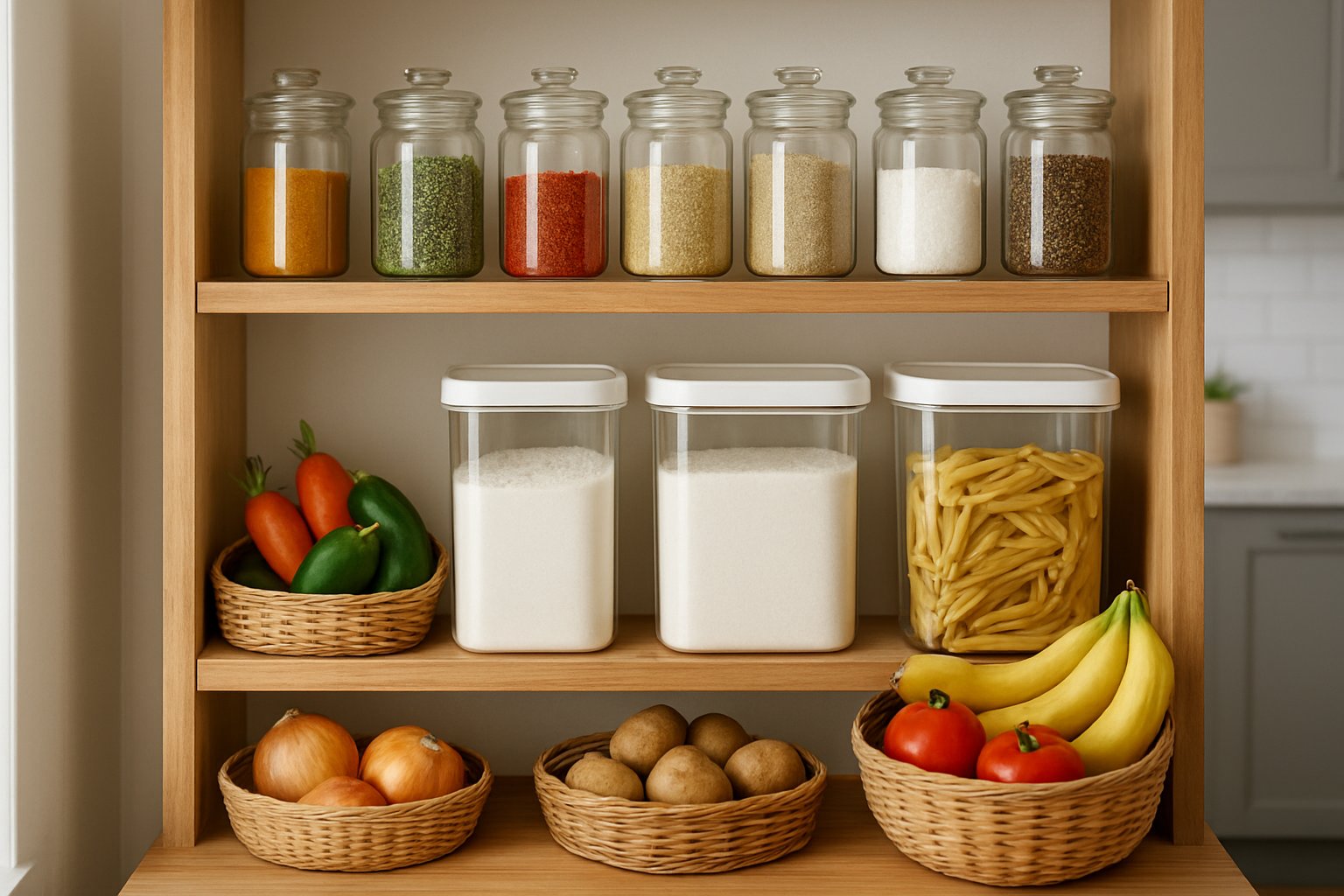
For the pantry, keep dry goods in airtight containers, away from heat and sunlight. Group similar things together—baking stuff in one spot, grains in another.
Storing Pantry Staples: Grains, Pasta, and Beans
Grains, pasta, and beans are kitchen basics, but how you store them makes all the difference. The right setup can keep them fresh for months or even years. Get it wrong, and you’re dealing with bugs, stale flavors, or worse.
Optimal Conditions for Grains and Rice
Grains and rice need airtight containers to keep out moisture and pests. Hard grains like wheat or barley last longer than soft ones like quinoa, but all do better with good storage.
Keep grains between 50-70°F, somewhere dark and dry. White rice can hang in there for 3-5 years like this. Brown rice, with its natural oils, usually lasts 6-12 months before it starts tasting off.
Humidity is the enemy. Try to keep it under 60-65% to avoid mold and sprouting. Clear, airtight containers are great—you can see what’s going on and keep bugs out.
Always label with the purchase date. That way you don’t end up with old grains hiding in the back while you use up the new stuff.
How to Store Dried Beans and Legumes
Dried beans and legumes are pantry champs. Stored right, they last almost forever. Get them out of their flimsy bags and into airtight glass or food-safe plastic containers as soon as you get home.
They want the same cool, dry spot as grains—50-70°F, low humidity. If they get damp, beans can get too hard to cook or start growing mold.
Bean storage tips:
- Toss in oxygen absorbers if you’re planning to store them for years
- Keep them out of sunlight to protect color and nutrients
- Check for bugs now and then
- Store each type separately so flavors don’t mingle
Cooked beans are a different story. In the fridge, they last about a week; in the freezer, several months.
Preserving Quality of Pasta
Dried pasta is pretty forgiving—1-2 years shelf life if you store it right, and honestly, it’s usually fine after that. The main thing is keeping out moisture and pests.
Once you open a box, move the pasta into an airtight container. That keeps out humidity and stops it from soaking up weird pantry smells. Glass or BPA-free plastic both work.
Fresh pasta is a whole different animal. It needs the fridge and should be used within 2-3 days, or you can freeze it for about a month. Its moisture makes it spoil fast.
Don’t store pasta next to strong-smelling foods like spices or coffee; it’ll pick up those odors. A cool, dry shelf away from the stove keeps it from getting brittle or funky.
Extending Freshness of Oils, Vinegars, and Condiments
Oils break down with light, heat, and air, and vinegars and condiments each have their quirks. A little know-how keeps flavors bright and cuts down on waste.
Best Practices for Oils and Vinegars
Most oils do best in a cool, dark spot, away from the stove. Extra virgin olive oil likes opaque bottles—ceramic or dark glass—and stays good for three to six months after opening. Avocado oil hangs in there for six to eight months; pop it in the fridge to stretch that a bit.
Nut oils (walnut, hazelnut, almond) need the fridge. Their fats go rancid fast at room temp. In airtight, dark bottles in the fridge, they last three to six months.
Coconut oil is a little different. Unrefined coconut oil keeps for two to three years in the pantry; refined, about 12 to 18 months. It’ll solidify if it gets cool, but that’s totally normal.
Vinegars are easygoing. Cider vinegar and friends are fine at room temp in their original bottles. As long as they’re sealed and away from heat, they’ll last for years. The acidity keeps them safe, though the flavor might fade over time.
Storing Mustard, Hot Sauce, and Pickled Items
Mustard and hot sauce don’t always need the fridge before opening, but once you crack them open, pop them in. Mustard stays sharp for up to a year in the fridge; hot sauce keeps its kick for about six months.
Hot sauce’s vinegar base helps preserve it, but the fridge keeps the flavor and color from fading. Watch for darkening or weird separation—that means it’s time to toss it.
Pickled stuff depends on the brine. Store-bought pickles last for months in the fridge after opening. Homemade pickles need the fridge right away and usually stay good for two to three weeks. Make sure they’re always covered by brine, and use clean utensils to avoid introducing bacteria.
Keeping Spices, Dried Herbs, and Baking Essentials Fresh
Spices lose their punch with heat and light. Sugars and honey hate moisture. Nuts go rancid if you don’t store them right.
Ideal Storage for Spices and Vanilla Beans
Spices should live in airtight containers, away from the stove—even if that’s where you want them for convenience. Heat and light zap their flavor. Ground spices last 2-3 years; whole spices, about 4 years.
Some quick tips:
- Keep temps around 70°F
- Use glass jars, metal tins, or ceramic containers
- Red spices like paprika do better in the fridge
- Date your spice jars when you open them
Dried herbs fade after 1-3 years. Rub a bit in your hands—if it barely smells or looks dull, swap it out.
Vanilla beans need a touch of moisture to stay soft. Wrap them in wax paper, tuck them in an airtight container, and stash them somewhere cool and dark. Vanilla extract lasts pretty much forever if it’s sealed and kept away from heat.
Managing Sugars, Honey, and Nuts
White and brown sugars go in airtight containers to block moisture and clumping. For brown sugar, a terra cotta disk or even a marshmallow helps keep it soft.
Honey will crystallize, but it doesn’t spoil. Just keep it at room temp in its original or a glass jar. If it gets gritty, warm the jar in hot water and it’ll go back to liquid.
Nut storage basics:
- Room temp: 1-3 months in airtight containers
- Fridge: 4-6 months in sealed bags or jars
- Freezer: Up to a year in freezer bags
Nuts have oils that go rancid if they get warm, exposed to light, or sit open. Buy smaller amounts, and once opened, stash them in the fridge or freezer for longer life.
Preserving Fresh and Dried Fruits
Dried fruits like dates and figs need protection from air and moisture. Homemade preserves are a whole other story—canning and pectin levels matter for safety and shelf life.
Best Storage for Dates, Figs, and Dried Fruit
Dried fruit’s biggest enemies: air, moisture, and heat. Once you open a pack of dates or figs, get them into airtight containers. Glass jars with tight lids are better than plastic bags—you can spot mold or moisture right away.
Storage temps make a big difference:
- 60°F or lower: Dried fruit lasts up to a year
- 80°F: Only about six months
Pack dried fruit snug but don’t crush it. Once opened, even resealable pouches don’t cut it—move the fruit to airtight containers within a week or two.
For homemade dried fruit, “condition” it first. Loosely pack it in jars for about 10 days, shaking them daily. If you see condensation, it needs more drying. Aim for about 20% moisture—enough to keep it chewy, not rock-hard or moldy.
Homemade Preserves and Chutneys
Making preserves and chutneys is a way to bottle up the best of the season. Pectin’s the magic behind the set—some fruits, like apples and citrus, have plenty on their own, but others (figs, for example) need a little help from commercial pectin.
We sterilize jars and lids in boiling water before filling them. Leave a bit of headspace—about ¼ to ½ inch—so things don’t overflow during processing. Once filled, process jars in a boiling water bath for the time your recipe says (it depends on jar size and altitude).
Store properly canned preserves and chutneys in a cool, dark pantry for up to 12-18 months. After cooling, check the seals—the lid shouldn’t flex when you press it. If it does, pop that jar in the fridge and use it up within a few weeks.
Food Preservation Methods for Everyday Use
Preserving food stretches out shelf life and keeps ingredients tasting their best. Refrigeration and freezing are the basics, but canning, pickling, and dehydrating come in handy for long-term storage.
Refrigeration and Freezing Techniques
We rely on the fridge every day to slow down bacteria and enzymes that spoil food. Most fridges sit between 35°F and 38°F—cold enough to keep things fresh for a while. Raw meat goes on the bottom shelf to avoid drips, and dairy belongs toward the back where it stays coldest.
Freezing stops spoilage almost altogether. Deep freezers hit 0°F fast, making smaller ice crystals that help foods keep their texture. It’s smart to portion things before freezing—herbs in oil, pre-measured ingredients, and squeeze out as much air as possible to dodge freezer burn.
For veggies, blanch them for 2-3 minutes before freezing. It halts the enzymes that mess with flavor and color. Label everything with dates. Oddly enough, a packed freezer works better than a half-empty one.
Home Canning: Water Bath and Pressure Methods
Water bath canning is for high-acid foods—think fruits, pickles, jams, and tomatoes (if you add acid). We submerge sealed jars in boiling water, usually for 10-85 minutes. All you need is a big pot with a rack.
Pressure canning is non-negotiable for low-acid foods like vegetables, meats, and beans. These foods can harbor Clostridium botulinum spores, which are nothing to mess with. A pressure canner gets up to 240°F to kill them off. Processing times run from 20-90 minutes, depending on what you’re canning and jar size.
Always stick to tested recipes from sources like the USDA or Ball. After 24 hours, check the seals—lids should curve down and stay put. Store canned goods in cool, dark places and they’ll last 1-2 years.
Pickling and Fermentation Basics
Pickling uses vinegar-based brines, salt, sugar, and spices to preserve food. Quick pickles go straight to the fridge and last up to two months—great for cucumbers, onions, or peppers. For shelf-stable versions, process jars in a water bath.
Fermentation is a whole other thing. Beneficial bacteria turn sugars into lactic acid, making sauerkraut, kimchi, and other tangy veggies. Mix shredded cabbage with 2-3% salt, pack it into jars, and keep it submerged. At room temp, fermentation kicks off in 3-10 days.
The salty brine keeps bad bacteria at bay and helps the good ones thrive. Taste as you go—once it’s tangy enough for you, it’s done. Store fermented foods in the fridge, where they can last for months and offer a probiotic boost.
Dehydrating and Freeze Drying
Dehydrating pulls out 90-95% of moisture, which stops microbes and intensifies flavor. Electric dehydrators work best at 125-135°F for veggies and a bit hotter for meats. Slice things evenly, about 1/4-inch thick, for consistent drying. Depending on the food, it can take 4-12 hours.
Dried foods should snap or crumble, not bend. Store them airtight, in a cool, dark spot, and they’ll last 6-12 months. To use, soak veggies in warm water or toss them straight into soups.
Freeze drying is a step up—removing 98-99% of moisture by turning ice straight into vapor. It keeps texture, color, and nutrients better than dehydrating, but the machines cost a small fortune. Freeze-dried foods can last 25 years or more, so they’re great for prepping, but not exactly an everyday thing.
Frequently Asked Questions
Storing ingredients right means knowing what each food needs—temperature, containers, and where you stash them all matter for keeping things fresh and cutting down on waste.
What's the best way to keep spices fresh and ready to impress my taste buds?
We stash our spices in airtight jars, away from heat, light, and moisture. Above the stove? That’s a no-go—heat kills flavor fast.
Whole spices keep their kick for 3-4 years, ground ones for 2-3. We write the purchase date on each jar so we know what’s still good.
Best spot? A cool, dark cupboard or a drawer. Glass jars with tight lids beat the flimsy packaging most spices come in.
Can we chat about the ultimate hacks for preserving dairy products without turning my fridge into a science experiment?
We keep the fridge at 40°F or colder. Milk and yogurt chill best on the middle or bottom shelves—those spots stay reliably cold.
Never use the fridge door for dairy. All that opening and closing makes the temperature jump around, which cuts shelf life short.
Cheese likes to breathe, so we wrap it in wax paper or cheese paper, not plastic. Hard cheeses outlast soft ones, and we sometimes flip sour cream or cottage cheese containers upside down to slow spoilage.
What are the top tricks for keeping your veggies crisp and your fruits perky in the kitchen jungle?
We use the crisper drawers and tweak the humidity—high for leafy greens, low for ethylene-producing fruits and veggies.
Some fruits, like apples and bananas, pump out ethylene gas that ripens other produce faster. We keep those away from ethylene-sensitive stuff like lettuce and berries.
Potatoes, onions, and garlic last longer at room temp in a cool, dark, well-ventilated spot. Don’t store potatoes and onions together—onions make potatoes sprout.
We only wash berries right before eating to keep mold at bay.
How do you prevent pantry staples like flour and sugar from clumping up and staging a pantry coup?
We dump flour and sugar into airtight containers as soon as we open them. Humidity’s the enemy—it makes everything clump.
Toss a few saltines or a terra cotta disk into brown sugar to keep it soft. They add just enough moisture to prevent a sugar brick.
All-purpose flour’s fine in a cool, dry place for up to 8 months. Whole grain flours go off faster, so we refrigerate or freeze them if we won’t use them up soon.
Any pro tips for making sure the bread stays bakery-fresh and doesn't become a science project in the bread bin?
We leave bread in its packaging at room temp if we’ll eat it within a couple days. For longer, we freeze it in airtight bags.
Oddly, the fridge makes bread stale faster—something called retrogradation. Cold temps make starches crystallize, so bread dries out.
We slice bread before freezing so we can grab what we need. Frozen bread stays good for up to 3 months and can go straight in the toaster.
Bread boxes are handy—they let in just enough air to keep bread from molding or drying out. Too much airflow dries it, too little and you get mold. It’s a balancing act, honestly.
Could you spill the beans on how to store oils and vinegars so they don't go rancid faster than you can say 'salad dressing'?
Most of the time, we stash cooking oils in a cool, dark cupboard, far from the stove. Heat, light, and oxygen mess with oils and make them taste funky.
If you’ve got delicate oils—walnut, flax, avocado—just pop them in the fridge after opening. They’ve got more polyunsaturated fats, and honestly, those go off way too fast at room temp.
Olive oil usually stays good for about a year, maybe a bit longer, if you keep it in a dark glass bottle or tin. We skip the clear plastic bottles; they let in too much light.
Vinegars are way less fussy. They’ll last basically forever if you leave them in their original bottles at room temp. Just keep the cap on tight so they don’t evaporate or lose their punch.
Share:
A Guide to Storing Christmas Baking Supplies for Fresh Results
A Guide to Storing Christmas Baking Supplies for Fresh Results