

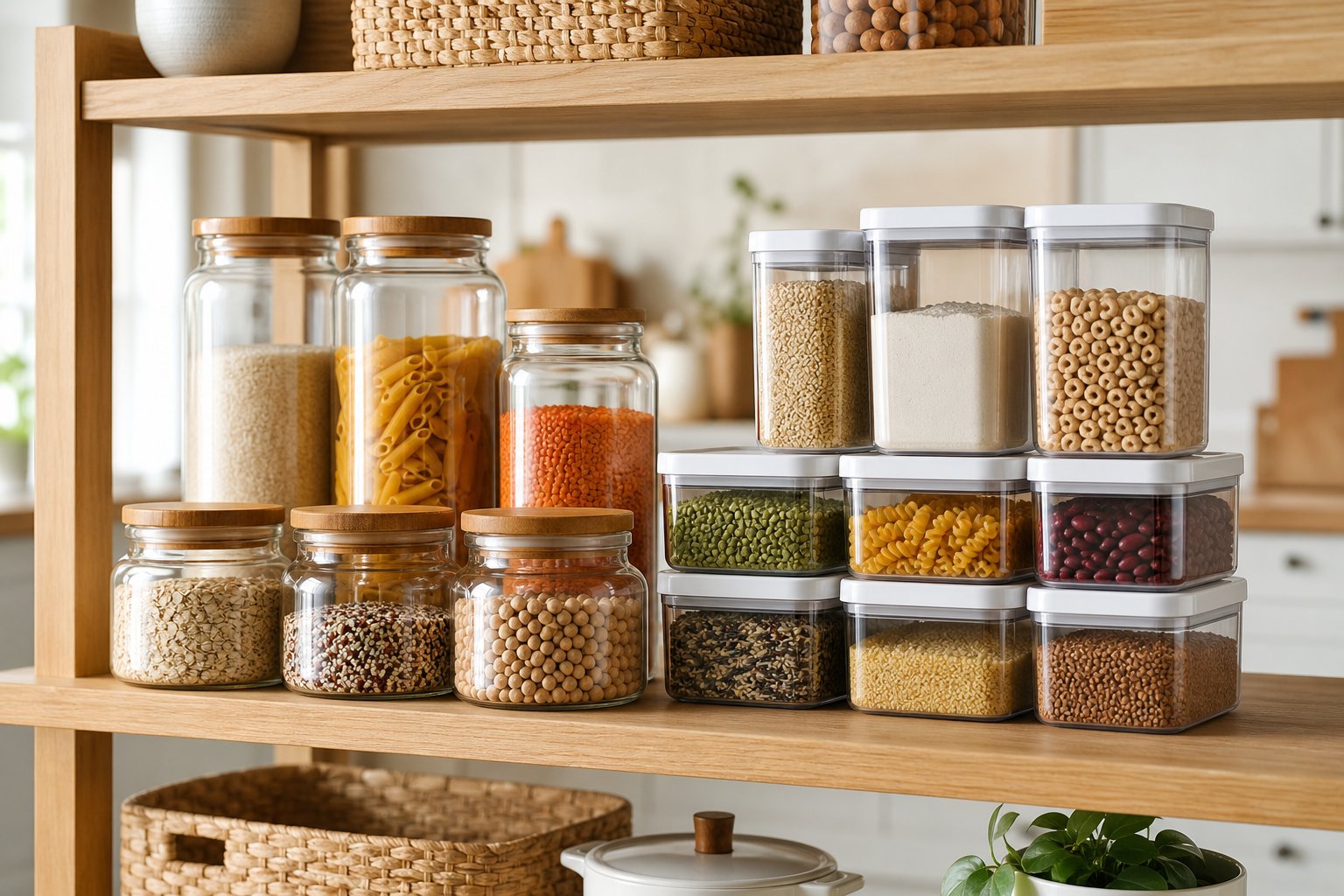
Check out our latest glass jars collection!
For dry pantry goods like flour, rice, pasta, cereal, and baking staples, both glass jars and plastic containers can work well. Glass stands out for odor resistance, easy cleaning, and long-term clarity, while plastic is lighter, easier to handle, and often more convenient for bulk or portable storage. For freshness, the quality of the airtight seal matters more than the container material itself.
It is easy to see why glass jars have become a pantry favorite. They create a clean, organized look while making ingredients easy to identify at a glance. But appearance is only part of the decision. The best pantry container also needs to protect dry goods from moisture, help reduce exposure to pantry pests, fit comfortably on the shelf, and hold up to everyday use.
Plastic containers have their own advantages, especially when weight, portability, and stackability matter. Instead of choosing one material for the entire pantry, it often makes more sense to consider what you store, where you store it, and how frequently you use it.
Here is how glass jars and plastic containers compare for freshness, seals, cleaning, durability, sizing, safety, cost, and everyday pantry organization.
Key Takeaways
- Freshness depends primarily on a secure, airtight seal rather than whether the container is made from glass or plastic.
- Glass resists stains and lingering odors well, while plastic is lighter and less vulnerable to breakage.
- Glass is well suited to frequently used pantry staples, spices, coffee, and ingredients with strong aromas.
- Plastic can be practical for bulk ingredients, children's snacks, high shelves, and portable storage.
- A mixed pantry system can provide the best balance of appearance, convenience, durability, and cost.
Quick Choice by Pantry Need
Not every pantry container needs to be glass, and not every ingredient benefits from plastic. The right choice depends on what you are storing, how much space you have, and how often you reach for the container.
Choose Glass for Long-Term Staples and Strong Aromas
Glass is a strong choice for ingredients that stay in the pantry for extended periods or have noticeable aromas. Its nonporous surface does not readily retain odors, making it particularly useful for coffee, tea, spices, nuts, and frequently used baking staples.
Glass is also easy to inspect. Clear jars allow you to see how much flour, rice, sugar, or pasta remains without opening the container, which can make restocking and meal preparation easier.
For ingredients such as garlic powder, curry blends, or loose tea, glass can be especially convenient because the container is easier to return to a neutral smell after washing.
Choose Plastic for Lightweight Bulk Storage
Plastic containers can make more sense for large quantities of flour, rice, oats, cereal, or backup pantry supplies. They are considerably lighter than comparable glass containers and are easier to lift from high shelves or move around a busy kitchen.
Impact resistance is another advantage. A plastic container that slips from a shelf is less likely to shatter, making plastic practical for households with children or for storage areas where containers are frequently moved.
Plastic can also work well for overflow storage, such as extra pasta, cereal, baking ingredients, or other staples purchased in larger quantities.
Build a Mixed Pantry Storage System
You do not have to choose one material exclusively. For many kitchens, combining glass and plastic provides the most practical setup.
- Glass: Coffee, tea, spices, nuts, sugar, frequently used flour, and other everyday staples
- Plastic: Bulk rice, backup pasta, cereal, children's snacks, and lightweight overflow storage
This approach keeps frequently used ingredients visible and easy to access while allowing heavier bulk items to remain lightweight, stackable, and manageable.
Freshness, Seals, and Pest Protection
When it comes to protecting dry pantry goods, the container material is only part of the equation. A secure lid and reliable seal play a major role in limiting exposure to moisture and helping protect food from insects. USDA guidance recommends placing dry foods such as rice, cereal, pasta, and dried mixes in plastic or glass containers for additional protection from moisture and pests.
Why Airtight Lids Matter More Than Container Material
A glass jar does not automatically keep food fresher than a plastic container. If the lid fits poorly, air and moisture can still enter. Likewise, a well-designed plastic container with an effective gasket can provide excellent protection for dry goods.
When comparing pantry storage containers, examine the lid before focusing on the body material. Look for a secure closure that fits consistently and remains easy to close after repeated use.
Containers with gasketed lids can be particularly helpful for ingredients that are sensitive to humidity, including flour, sugar, cereal, crackers, and certain baking staples.
Comparing Silicone Gaskets, Plastic Lids, and Bamboo Lids
Lid construction varies considerably between storage sets, so it is worth looking beyond appearance.
- Silicone gasket lids: A flexible gasket compresses against the container to create a close seal. Removable gaskets can also make thorough cleaning easier.
- Plastic lids without gaskets: These can work well when properly fitted, although the effectiveness of the seal depends on the specific lid design and condition.
- Bamboo lids: Bamboo provides a warm, decorative appearance, but an additional gasket or sealing ring is generally needed when an airtight closure is desired.
Whatever style you choose, inspect the seal periodically and replace damaged lids or gaskets when they no longer close securely.
Managing Moisture, Odors, and Pantry Pests
A secure container helps protect dry food from humidity and insects while keeping strong food aromas contained. Both glass and plastic containers can provide additional protection when they close properly.
Material becomes more noticeable when odors are involved. Glass is nonporous and does not readily retain strong smells. Some plastic containers may retain aromas or discoloration over time, particularly after repeated use with strongly scented ingredients.
If pantry pests are a concern, prioritize containers with intact walls and tightly fitting lids rather than assuming one material will always provide better protection. Check newly purchased packages for damage before transferring the contents into storage containers.
Durability, Cleaning, and Everyday Handling
Glass and plastic behave differently after months or years of opening, scooping, washing, and reorganizing. Choosing between them often comes down to which type of wear matters most in your kitchen.
Scratch, Stain, and Odor Resistance
Glass generally resists staining and lingering odors well and can maintain its clarity through repeated use. Plastic is more susceptible to visible scratching and discoloration, although durability varies according to the type and quality of plastic.
| Feature | Glass | Plastic |
|---|---|---|
| Resistance to food stains | High | Varies by material and use |
| Resistance to lingering odors | High | May retain strong aromas over time |
| Scratch resistance | Generally high during normal pantry use | More prone to surface scratching |
| Impact resistance | Can break if dropped | Generally more impact resistant |
For pantry staples that are frequently transferred between containers, glass can be appealing because it stays clear and neutral with proper care.
Breakage Risk Versus Impact Resistance
Glass requires more careful handling. A jar dropped onto a hard kitchen floor can chip, crack, or shatter, and heavier glass containers may be inconvenient on high shelves.
Plastic is usually the better choice when containers are frequently carried, packed, or handled by children. Its lower weight and greater impact resistance make it practical for snacks, lunches, camping supplies, and other portable uses.
For stationary pantry shelves and countertops, however, the extra weight of glass may be less important.
How to Extend Container Longevity
Good care can help both glass and plastic pantry containers remain useful for longer.
- Follow the manufacturer's cleaning instructions for containers, lids, and gaskets.
- Remove and clean detachable gaskets when crumbs or residue collect underneath them.
- Avoid stacking heavy glass jars in unstable arrangements.
- Inspect glass regularly for chips or cracks.
- Replace plastic containers that become badly damaged, warped, or unable to seal properly.
- Make sure container rims and gaskets are clean and dry before closing them.
A stable, well-organized pantry also reduces unnecessary knocks, drops, and pressure on lids.
Material Safety and Temperature Limits
For dry pantry storage at room temperature, both appropriate glass and food-contact plastic containers can be practical choices. Temperature becomes more important if you plan to move the same containers into the microwave, freezer, dishwasher, or another environment outside normal pantry use.
Understanding BPA-Free Plastic, BPA, BPS, and Phthalates
BPA is used in certain plastics and resins, although not every plastic food container contains BPA. The FDA's current position is that BPA is safe at the levels associated with currently approved food-contact uses. The composition of BPA-free plastics can vary, so a BPA-free label alone does not describe every material used in a container.
BPS and phthalates are separate chemical substances that may be used in certain consumer materials, but their presence should not be assumed simply because a product is made from plastic. For pantry storage, choose containers designed for food contact and follow the manufacturer's instructions for intended use.
Glass is chemically stable and does not depend on plastic additives, which can make it an appealing option for shoppers who prefer to minimize the use of plastic in their food storage system.
Microwave Use and Reheating Considerations
A pantry container should not automatically be treated as a microwave container. If you plan to reheat food, use only products specifically identified by the manufacturer as microwave safe.
Microwave-safe glass or ceramic dishes are commonly recommended for reheating food.
- Check the manufacturer's instructions before microwaving any glass or plastic container.
- Do not assume that a BPA-free label also means microwave safe.
- Avoid using damaged containers for purposes outside their recommended use.
- Vent microwave-safe lids as directed so steam can escape.
If a container is intended only for dry pantry storage, keep it in that role unless its product instructions specifically support heating.
Freezer Storage and Thermal Shock Prevention
Not every glass pantry jar is designed for freezing. Rapid temperature changes can damage some types of glass, so freezer use should always follow the manufacturer's instructions.
If a glass container is approved for freezer storage, leave appropriate space when freezing liquids or foods that expand. Avoid exposing glass to sudden temperature changes unless the product is specifically designed for them.
Plastic containers also vary in freezer suitability. Use containers labeled or specified for freezer use rather than assuming that every pantry container can tolerate prolonged freezing.
Sizing and Set Features for an Organized Pantry
The right container size and shape can make as much difference as the material. A well-planned set should fit your shelves, hold the quantities you normally buy, and make ingredients easy to scoop or pour.
Matching Jar Shapes to Shelf Space
Square and rectangular containers can use shelf space efficiently because their sides sit closely together. Round jars create a softer visual look but leave more unused space between containers.
Measure shelf height, width, and depth before purchasing a set. A tall container may look attractive on a countertop but become frustrating if it cannot fit comfortably inside your pantry.
For deep shelves, consider containers that make vertical space useful without hiding smaller items behind them. For shallow shelves, shorter containers can make labels and contents easier to see.
Selecting Sizes for Flour, Cereal, Pasta, and Snacks
Instead of relying on one container size for everything, match capacity to the amount you normally purchase.
- Flour and sugar: Choose a wide-mouth container large enough to hold your usual package with additional room for easy scooping.
- Cereal: Look for a container that accommodates a full box or bag without requiring frequent refilling.
- Long pasta: Select a jar or container tall enough to hold spaghetti and similar shapes without bending or breaking them.
- Snacks and small staples: Smaller containers can prevent unnecessary shelf space from being taken up by partially filled jars.
Buying according to the foods you actually keep in your pantry usually creates a more efficient setup than choosing a large matching set based on appearance alone.
Labeling, Stacking, and Easy Access
Clear labels make pantry storage easier to maintain, particularly when several ingredients have similar appearances. Writable or removable labels are useful when container contents change regularly.
If stacking is important, look for containers with flat, stable lids and bases designed to sit securely together. Avoid stacking arrangements that make heavy glass jars difficult to remove safely.
Wide openings can also improve everyday usability by making scooping, refilling, and cleaning easier. For ingredients affected by humidity, prioritize a reliable gasket and secure closure.
Cost, Portability, and Environmental Impact
Glass and plastic involve different trade-offs in price, weight, durability, and end-of-life disposal. The best choice depends on how often you expect to reuse each container and how it fits into your kitchen routine.
Upfront Price Versus Long-Term Value
Plastic storage containers are often less expensive and can be an economical way to organize a large pantry at once. Glass containers may require a higher initial investment, particularly when they include specialized lids or gaskets.
Long-term value depends on use. A well-maintained glass jar can remain useful for a long time, but breakage is possible and lids or seals may eventually need replacement. Plastic can also provide years of service when it remains undamaged and continues to seal correctly.
Rather than assuming that one material will always cost less over time, consider how frequently the container will be handled, washed, moved, and replaced in your household.
When Lightweight Containers Make Sense for Packed Lunches
Plastic has a clear advantage when portability matters. It is lighter to carry and generally less vulnerable to shattering if dropped.
For packed lunches, children's snacks, camping supplies, or food transported between locations, those benefits may matter more than appearance or stain resistance.
For dry pantry goods that remain on a stable shelf, weight may be less important, making glass a practical option for frequently used staples.
Reuse, Recycling, and Plastic Waste
Reusing containers for as long as they remain safe and functional can help reduce the need for frequent replacement. Recycling can also conserve resources and divert materials from disposal, although the materials accepted and the way they are processed vary by local recycling program.
Glass and plastic have different environmental trade-offs. Glass is heavier to transport, while plastic waste can persist in the environment when it is improperly discarded. Recycling outcomes also differ according to material type and local infrastructure.
Because of these variables, it is difficult to declare one material environmentally superior in every situation. A practical approach is to buy durable containers that suit your needs, reuse them for as long as possible, and follow local guidance when they eventually need to be recycled or discarded.
Frequently Asked Questions
Are glass jars better than plastic containers for keeping pantry dry goods fresh?
Not automatically. Freshness depends mainly on the quality of the seal. Both glass and plastic containers can protect dry goods effectively when they close securely and keep moisture out. Glass has the additional advantage of resisting lingering odors and stains.
Which container type is best for storing flour, sugar, pasta, and cereal?
Both can work well. Glass is useful for frequently accessed staples and ingredients you want to see clearly, while plastic is convenient for cereal, bulk ingredients, high shelves, and situations where lighter weight is helpful.
Do glass jars create a tighter seal than plastic containers?
Not necessarily. Seal performance depends primarily on the lid and gasket design. A high-quality plastic container can seal just as effectively as a properly designed glass jar.
Are plastic pantry containers safe for long-term food storage?
Food-contact plastic containers can be appropriate for long-term dry pantry storage when used as directed and kept in good condition. Replace containers that become badly damaged, warped, or unable to close securely.
Which option is easier to stack, clean, and organize in a busy kitchen?
Plastic is lighter and often easier to stack and move. Glass is typically easier to keep free from lingering stains and odors. The best choice depends on shelf layout, container design, and how frequently you handle each ingredient.
Do glass jars or plastic containers do a better job of preventing pantry pests?
Both can provide good protection when the container is intact and the lid closes securely. For pantry pest prevention, focus on a reliable seal and check food packaging for holes or damage before transferring dry goods into storage.
Glass or Plastic: Which Is Better for Your Pantry?
There is no single winner for every pantry. Glass jars are an excellent choice when you value easy cleaning, odor resistance, visibility, and a polished pantry appearance. Plastic containers make sense when low weight, impact resistance, portability, and convenient bulk storage matter more.
For many households, the most practical answer is a combination of both. Use glass for frequently reached-for staples and ingredients with strong aromas, and choose durable food-storage plastic for bulk goods, portable snacks, and containers that need to be moved regularly.
Whichever material you choose, prioritize a dependable seal, sensible sizing, easy access, and a storage system that works with the way you actually use your kitchen.
Share:
Do You Need to Pre-Freeze Food Before Vacuum Sealing? When It Helps and When It Does Not
How to Organize Baking Ingredients in Glass Jars for Easier Everyday Cooking