

Check out our latest collection of compact vacuum sealer for food!
Pre-freezing is not necessary for every food. In general, pre-freeze food before vacuum sealing when it is soft, high in moisture, liquid-based, or likely to lose its shape under vacuum pressure. Berries, delicate fruit, marinated meat, and liquid-based meals are common examples. Many dry or firm foods can be sealed without this extra step and then placed directly in the freezer.
Vacuum sealing and freezing serve different purposes, but they work well together for food storage. Knowing when to pre-freeze can help you create a cleaner seal, reduce mess, and protect the texture of delicate foods.
Below, we explain which foods benefit from pre-freezing, when sealing first makes more sense, and how to avoid common problems such as moisture near the seal, leaking bags, and damaged food.
Key Takeaways
- Pre-freezing is most helpful for soft, moist, liquid-based, or delicate foods that could leak or become compressed during sealing.
- Many dry and firm foods can be vacuum sealed without pre-freezing and placed directly in the freezer.
- Proper preparation, including drying, portioning, sealing, and maintaining a consistent freezer temperature, matters more than pre-freezing alone.
The Short Answer: Pre-Freeze Only When It Improves the Seal
Think of pre-freezing as a preparation technique rather than a universal rule. It is useful when excess moisture or a delicate texture could interfere with vacuum sealing. When food is already dry and firm, the extra step is usually unnecessary.
Why Most Dry Foods Can Be Sealed Fresh
Dry, firm foods generally do not require pre-freezing. Nuts, crackers, dry pasta, dried herbs, and similar foods can usually be vacuum sealed without additional freezer preparation.
Firm cuts of meat with minimal surface moisture, such as a trimmed steak or a chicken breast that has been thoroughly patted dry, can also often be sealed successfully without pre-freezing. Pre-freezing becomes more useful when food is wet, soft, bulky, or irregularly shaped.
How Surface Firmness Prevents Messy Seal Failures
A brief pre-freeze can make moist or soft foods easier to vacuum seal. Marinated meat, fish fillets, ground meat, and similar foods may release liquid as air is removed from the bag. That moisture can travel toward the sealing area and interfere with the heat seal.
Firming the surface first can help:
- Keep liquid away from the sealing area
- Help soft foods maintain their shape
- Reduce compression of delicate or irregularly shaped foods
- Create a cleaner, drier area for sealing
For wet or marinated meat, allowing the surface to firm before sealing can make the process cleaner and more reliable.
What Pre-Freezing Does Not Do for Food Safety
Pre-freezing can improve handling and seal quality, but it does not sanitize food or replace safe temperature control. Freezing does not destroy all microorganisms. Instead, it prevents microbial growth while food remains continuously frozen. A freezer maintained at 0°F (-18°C) or below is the standard recommendation for frozen food storage.
Vacuum sealing can reduce air exposure and help protect food from freezer burn, but it does not make unsafe food safe. Perishable foods still need to be handled, refrigerated, frozen, thawed, and cooked appropriately.
Foods That Benefit Most From a Brief Freeze
Some foods hold up well during vacuum sealing without additional preparation. Others can leak, bruise, flatten, or lose their shape unless they are firmed first.
Raw Meat, Poultry, and Larger Cuts
Beef, pork, and poultry can benefit from a brief pre-freeze when the surface is particularly moist or the cut is bulky or irregularly shaped. Firming the exterior helps keep juices from moving toward the opening of the bag during vacuum sealing.
For smaller cuts, a short period in the freezer may be enough to firm the surface. Larger roasts or thicker portions may require additional time. The goal is not necessarily to freeze the food completely, but to make the exterior firm enough to handle and seal cleanly.
Pat the food dry before placing it in the freezer. Reducing surface moisture makes it easier to keep the sealing area clean.
Fish and Delicate Seafood Fillets
Fish fillets can be especially delicate because they contain moisture and may deform under strong vacuum pressure. Drying the surface and briefly firming the fillet before sealing can help it maintain its shape and keep moisture away from the sealing area.
If the fish has been marinated, allow it to become sufficiently firm that excess liquid is less likely to travel toward the seal. Follow the operating instructions for your vacuum sealer, particularly if your machine offers different settings for delicate or moist foods.
Saucy Meals, Soups, and Stews
Soups, stocks, stews, sauces, and other liquid-heavy foods require special care. If your vacuum sealer is not designed to seal liquids directly, freeze the food until solid before vacuum sealing it.
A practical method is to freeze the liquid in an appropriate container or mold first. Once completely solid, transfer the frozen portion to a vacuum sealer bag and seal it according to your machine's instructions.
This helps prevent liquid from reaching the sealing area or being drawn into equipment that is not designed to handle it.
Soft, Juicy, or Easily Crushed Foods
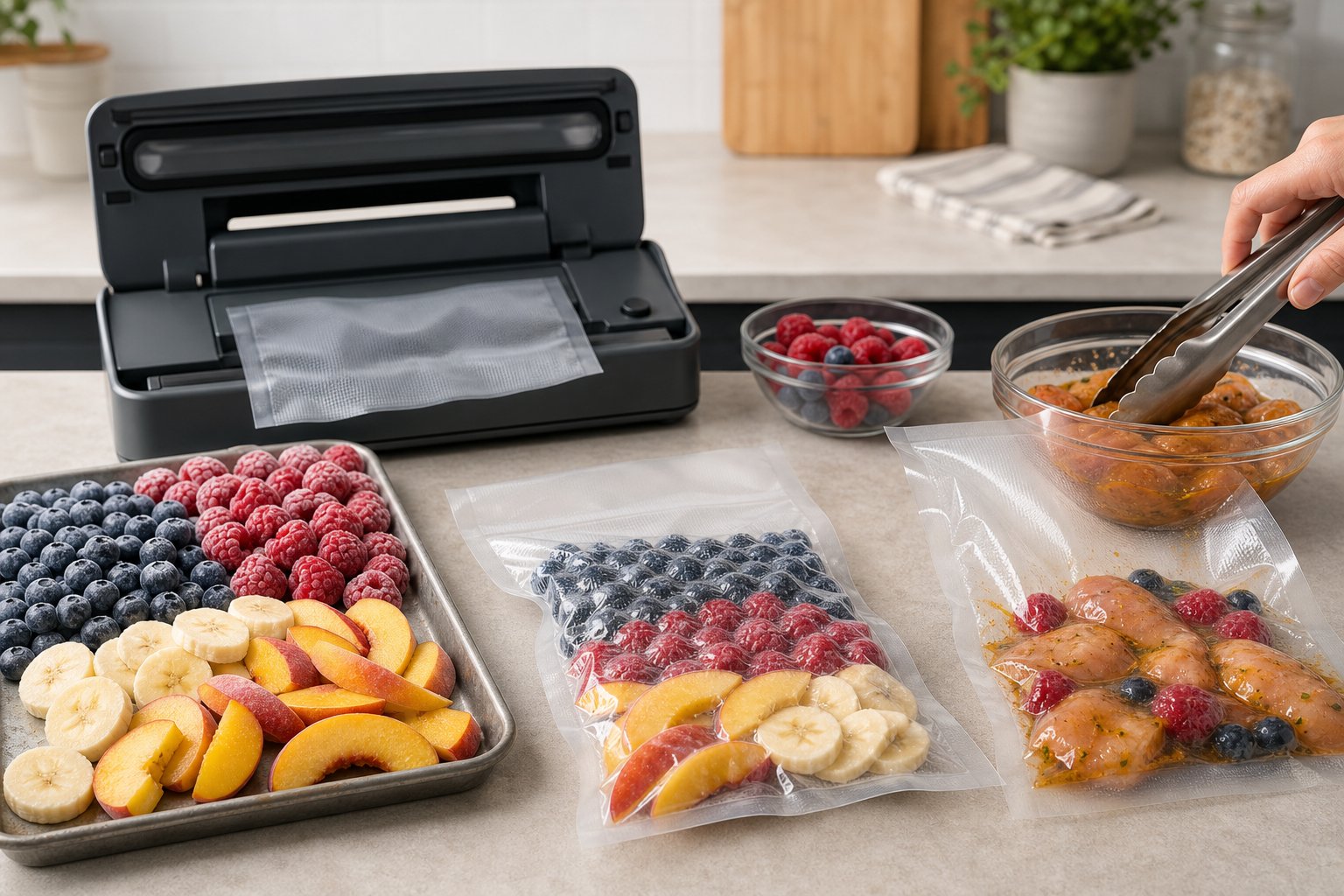
Berries, ripe fruit, and other soft, high-moisture foods often benefit from being frozen in a single layer before vacuum sealing. Firming the pieces first helps prevent them from being crushed and keeps individual portions from sticking together as easily.
Firm produce may not require this step solely for vacuum sealing. Prepare fruits and vegetables appropriately for freezing before packaging, then use pre-freezing when their texture or moisture level makes it helpful.
When Sealing Before Freezing Makes More Sense
Sealing first can be the simpler option when moisture is under control and the food is firm enough to maintain its shape. In these situations, pre-freezing may add handling without improving the final seal.
Dry Cuts and Firm Foods
Firm, relatively dry cuts of meat can often be sealed immediately. Steaks, pork chops, and chicken breasts that have been thoroughly patted dry generally produce less surface liquid that could interfere with the seal.
Before sealing, check that both the food and the inside of the bag near the sealing area are clean and dry. A properly formed vacuum package can reduce air exposure and help limit freezer burn during storage.
Short-Term Freezer Storage
If you plan to use the food relatively soon and it is already suitable for sealing, pre-freezing may not provide a meaningful advantage. Sealing and freezing promptly can simplify weekly meal preparation and everyday freezer organization.
For longer storage, the quality of the seal, freezer temperature, packaging condition, and temperature stability are more important than whether the food was briefly pre-frozen before sealing.
Foods That May Lose Texture From Extra Handling
Not every food benefits from a separate tray-freezing step. When food is already firm, dry, and easy to seal, additional handling may simply make the process more complicated.
In these cases, portioning, sealing, and freezing promptly is usually the more practical approach. The objective is to use pre-freezing only when it improves handling, protects shape, or helps keep moisture away from the seal.
How to Pre-Freeze Food for a Clean, Reliable Seal
A reliable vacuum seal starts with preparation. Portioning food, controlling moisture, and allowing delicate foods to firm appropriately can help prevent leaks and incomplete seals.
Portion and Pat Food Dry First
Divide meat, fish, vegetables, or prepared foods into practical portions before freezing. Smaller portions are generally easier to arrange in bags and more convenient to thaw later.
For foods with surface moisture, pat them dry with a clean paper towel before pre-freezing. Moisture near the opening of a vacuum sealer bag can interfere with the seal, so keeping this area clean and dry is important.
Use a Tray to Keep Portions Separate
Place individual pieces in a single layer on a freezer-safe tray or other suitable surface rather than piling them together. Leave a little space between pieces so they can firm individually instead of freezing into one solid mass.
This method works particularly well for berries, burger patties, chicken breasts, and fish fillets. Once the pieces are sufficiently firm, transfer them to vacuum sealer bags for final packaging.
Choose the Right Firming Time
Food does not always need to freeze completely before vacuum sealing. For meat, fish, and other solid foods, the goal is usually to make the exterior firm enough to hold its shape and keep moisture under control.
| Food Type | Approximate Firming Guide |
|---|---|
| Thin fish fillets | Until the surface is firm, often about 30 to 60 minutes |
| Chicken breasts or steaks | Until firm enough to handle cleanly, often about 1 to 2 hours |
| Ground meat portions | Until the portion holds its shape, often about 1 to 2 hours |
| Soups or sauces | Until completely solid; timing varies with portion size and container depth |
These times are approximate. Freezer temperature, portion thickness, food composition, and container size can all affect how quickly food firms. Check the food itself rather than relying only on the clock.
Freeze Liquids Solid Before Bagging
If your vacuum sealer is not designed to handle liquids, freeze soups, sauces, stocks, marinades, and similar foods until solid before placing them in vacuum bags.
A shallow freezer-safe container or suitable mold can make this easier. After the food has frozen completely, remove the frozen portion, place it in the bag, and vacuum seal it according to your equipment instructions.
This method helps keep liquid away from the sealing strip and reduces the chance of moisture being drawn into the machine.
Leave Enough Bag Space for the Seal
Leave enough empty bag material above the food for your vacuum sealer to create a clean, flat seal. The exact amount varies by machine and bag system, so follow the manufacturer's instructions.
Keep food particles, condensation, ice crystals, fat, and marinade away from the sealing area. Use bags intended for your vacuum sealing system and for freezer storage when the sealed food will be frozen.
Protecting Quality During Freezer Storage
Vacuum sealing can help protect frozen food, but packaging is only one part of successful freezer storage. Temperature, seal integrity, handling, and organization all contribute to maintaining quality.
How Vacuum Sealing Reduces Freezer Burn
Freezer burn occurs when frozen food loses moisture and becomes dehydrated at the surface. Air exposure contributes to this process and can leave meat and other foods with dry, grayish, or leathery areas.
Vacuum sealing removes much of the air surrounding the food, which can reduce moisture loss and help limit freezer burn. It does not eliminate every possible quality change, but a clean, intact seal provides better protection from air exposure than loosely packaged food.
For foods intended for longer freezer storage, minimizing trapped air and maintaining a secure seal can make a noticeable difference in quality.
Why Ice Crystals and Oxidation Still Matter
Vacuum sealing reduces air exposure, but it cannot prevent every change that occurs during freezing. Water within food still forms ice crystals, and repeated temperature fluctuations can negatively affect texture.
Freezing food promptly and maintaining a consistent freezer temperature can help preserve quality. Avoid repeatedly allowing frozen food to soften and refreeze.
Oxidation can also affect flavor, aroma, and color, particularly in foods containing more fat. Removing much of the surrounding air helps reduce oxidation, but proper sealing and stable frozen storage remain important.
Set the Freezer to 0°F (-18°C) or Colder
Keep your freezer at 0°F (-18°C) or below. Food that remains continuously frozen at this temperature can be stored safely, although its quality may gradually decline over time.
An appliance thermometer can help you verify freezer temperature, especially if the freezer's built-in display is unavailable or uncertain. Also check door seals periodically to make sure the freezer can maintain a stable temperature.
Label, Date, and Rotate Packages
Vacuum-sealed packages can become difficult to identify once frozen, so label each bag before placing it in the freezer.
A simple label might include:
| Detail | Example |
|---|---|
| Contents | Ground beef, 1 lb |
| Date sealed | Aug. 12, 2026 |
| Portion or notes | Dinner portion |
Arrange packages so older food is easy to use first. A first in, first out system can prevent forgotten packages from accumulating at the back of the freezer.
Safe Handling, Thawing, and Common Mistakes
Vacuum sealing can help protect food quality, but it does not replace established food-safety practices. Perishable foods still need appropriate refrigeration, freezing, thawing, and temperature control.
Keep Perishable Foods Cold Before Sealing
Keep raw meat, poultry, seafood, and other perishable foods refrigerated while you prepare portions for sealing. Work in manageable batches and return food you are not actively handling to the refrigerator.
USDA guidance recommends keeping perishable foods out of the temperature danger zone and generally limiting room-temperature exposure to two hours, or one hour when the surrounding temperature is above 90°F (32°C).
Vacuum Packaging Is Not a Substitute for Safe Storage
Removing air does not kill harmful microorganisms. Vacuum packaging creates a reduced-oxygen environment, which means proper temperature control remains essential for perishable foods.
This is particularly important for fish and seafood because Clostridium botulinum can grow and produce toxin under certain reduced-oxygen conditions when adequate controls are not maintained. FDA guidance specifically identifies vacuum packaging as a form of reduced-oxygen packaging for seafood.
Keep vacuum-sealed perishable foods appropriately refrigerated or frozen, and follow product-specific storage and thawing instructions.
Thaw Sealed Food Safely
USDA identifies three standard safe methods for thawing frozen foods: in the refrigerator, in cold water, or in the microwave. Food thawed in cold water should remain in a leak-proof package, and the water should be changed regularly. Food thawed in the microwave should be cooked promptly.
- Refrigerator thawing: A convenient method for planning ahead while keeping food at a controlled temperature.
- Cold water thawing: Faster than refrigerator thawing. Keep the food in a leak-proof package and change the cold water about every 30 minutes.
- Microwave thawing: Useful when time is limited. Cook the food promptly after thawing.
Use extra care with vacuum-packed fish. Follow the package's thawing directions closely. FDA guidance for reduced-oxygen packaged fish emphasizes maintaining appropriate temperature controls and, depending on the product and labeling, removing fish from reduced-oxygen packaging before thawing may be required.
Avoid Leaks, Wrinkles, and Contaminated Seal Edges
Inspect the opening of each bag before sealing. Wrinkles, moisture, food particles, grease, or marinade along the sealing area can prevent the bag from closing evenly.
Smooth the bag before sealing and make sure the sealing area is clean and dry. Check the finished package for an even, secure seal before freezing it.
If a seal fails during storage, consider the food's temperature history before repackaging it. Food that has remained continuously frozen can generally be repackaged promptly, while food that may have spent too long at unsafe temperatures should be handled according to established food-safety guidance rather than judged by appearance or smell alone.
Frequently Asked Questions
Do I need to freeze food before vacuum sealing it?
No. Pre-freezing is mainly useful for foods that are soft, moist, liquid-based, or easily crushed. Dry, firm foods can usually be vacuum sealed without pre-freezing.
Which foods should be pre-frozen before vacuum sealing?
Foods that commonly benefit include moist meat and poultry, delicate fish fillets, berries, soft fruit, and liquid-based foods. Soups, sauces, and stews should be frozen solid first when using a vacuum sealer that is not designed to handle liquids.
Can I vacuum seal fresh meat without freezing it first?
Yes. If the meat is firm and the surface is dry, you can usually vacuum seal it without pre-freezing. Pat it dry first and keep moisture away from the sealing area. A brief pre-freeze can help with particularly wet, marinated, soft, or irregularly shaped portions.
Why should liquids and moist foods be partially frozen before vacuum sealing?
Firming moist foods helps keep liquid away from the sealing area. For machines not designed for liquids, freezing liquid foods completely also helps prevent moisture from being drawn toward the machine during vacuum sealing.
How long should food be pre-frozen before vacuum sealing?
There is no single required time. Thin foods may firm within 30 to 60 minutes, while thicker portions may take 1 to 2 hours or longer. The food should be firm enough to hold its shape and keep surface moisture under control. Liquids should be frozen completely when your vacuum sealer is not designed to seal them directly.
Does pre-freezing help prevent freezer burn and extend storage time?
Not by itself. Pre-freezing mainly helps you create a cleaner seal and protect delicate textures. A well-formed vacuum seal can reduce air exposure and freezer burn, while freezer temperature, seal integrity, and consistent frozen storage have a greater effect on long-term quality.
Share:
How to Vacuum Seal Bone-In Meat Without Puncturing Reusable Bags
Glass Jars vs Plastic Containers: Which Is Better for Pantry Dry Goods?