

Check out our latest compact vacuum sealer for food collection!
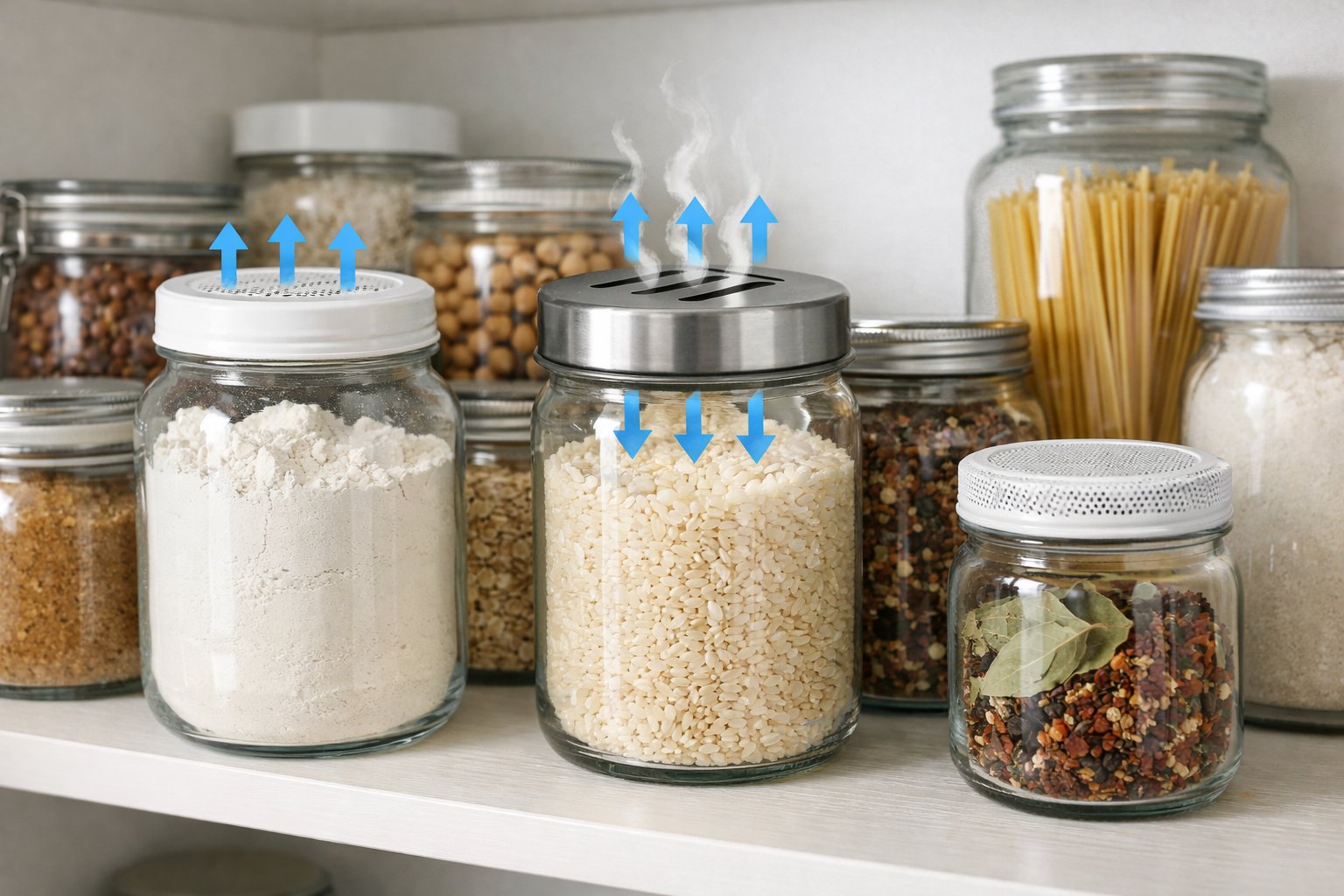
Air exchange actually plays a bigger part in keeping dry and semi-dry ingredients fresh than most people realize. Whether you’re tucking flour into a pantry jar or running an industrial dried sausage line, the air moving around those products changes how long they last, how they feel, and whether they stay safe to eat.
When you regulate air exchange, you control moisture, keep spoilage at bay, and help ingredients hold their shape by managing temperature, humidity, and what’s floating in the air.
Dry ingredients seem stable and low-maintenance, but they’re always reacting to their environment. How much air moves around them can mean the difference between spices that pop with aroma or turn flat, dried meats that hit the right chew or go off, and baking staples that work or flop. Too little air? You get moisture trapped, clumps, or even mold. Too much? Over-drying and loss of quality.
From home kitchens to giant food plants, knowing how air circulation works with dry goods helps us store things better. Temperature, humidity, how fast the air moves, and how often it’s exchanged all play a part. Get those right, and your ingredients work when you need them.
Key Takeaways
- Air exchange keeps moisture and water activity in check, helping dry and semi-dry ingredients avoid spoilage and stay good
- Good air movement balances temperature and humidity, so texture, flavor, and safety hold up during storage or processing
- Different ingredients have their own sweet spot for air exchange, depending on how much moisture they hold and what you’re using them for
Understanding Air Exchange in Ingredient Storage
Air exchange in storage areas shapes moisture, keeps temperatures steady, and makes or breaks ingredient quality. How quickly air moves through a space decides if those ingredients keep their function or go downhill early.
Principles of Air Movement and Moisture Control
Air moves through storage spaces because of pressure differences, pulling in fresh air and pushing out the stale stuff. That new air brings its own moisture level (measured as relative humidity), and that interacts with whatever’s being stored.
The way temperature and humidity play off each other is huge. Warm air can hold more moisture, so if the temperature jumps or drops, relative humidity changes—even if the total moisture doesn’t. Flour, starches, and dried dairy, for example, will soak up or give off moisture as these conditions shift.
Key things to watch:
- Air changes per hour (ACH) – how often all the air in a room gets swapped out
- Dew point temperature – the point where air cools enough for water to condense
- Vapor pressure – what drives moisture between air and whatever you’re storing
Keeping things steady stops clumping, caking, or weird flavors from creeping in. You need just enough air exchange to clear out heat and moisture, but not so much that you invite in contaminants or mess with the temperature.
Types of Air Exchange Systems in Storage
Outdoor air exchange ventilation is the simplest—either natural breezes or fans bring in outside air, maybe with some heating. It’s fine if your climate is mild, but not so great when it’s hot, cold, or humid outside.
Mechanical HVAC systems step it up with:
- Cooling coils to lower air temperature
- Dehumidifiers to pull out extra moisture
- Filters to catch dust and other stuff you don’t want
Hybrid systems mix outside air with recirculated, conditioned air. They’re better on energy and can adjust how much fresh air comes in based on what’s needed.
When moving ingredients, pneumatic systems matter too. Vacuum types pull air through without heating things up, while pressure systems push air that can actually warm the product. Some places use nitrogen or cold air loops with heat exchangers to keep things cool during transfers.
Controlled vs. Uncontrolled Air Environments
Uncontrolled storage just lets ingredients sit in whatever conditions happen to be there. So, seasons, heat from equipment, and the room’s humidity all mess with the storage climate. This really doesn’t work if you need food safety or are storing moisture-sensitive stuff for a while.
Controlled environments use sensors and automation to keep things on track. Modern systems watch temperature, humidity, and airflow constantly, tweaking as needed. You can set tight limits for every ingredient based on how sensitive it is.
You see this difference in sausage drying rooms—air changes can make or break safety and drying rates. Not enough air? Moisture sits and microbes thrive. Too much? Products dry unevenly or pick up stuff you don’t want.
| Environment Type | Temperature Control | Humidity Control | Air Exchange Rate | Best For |
|---|---|---|---|---|
| Uncontrolled | Passive | None | Variable | Short-term, stable ingredients |
| Semi-controlled | Basic heating/cooling | Minimal | Fixed ACH | General dry storage |
| Fully controlled | Precision HVAC | Active dehumidification | Adjustable ACH | Sensitive ingredients, long-term storage |
Effects of Air Exchange on Water Activity and Moisture Loss
Air exchange shapes how fast dry and semi-dry foods lose moisture, and how their water activity changes. The way air flows around the product decides if moisture leaves evenly—or if you end up with weird problems like case hardening.
Impact of Air Circulation on Water Activity
Water activity is about how much moisture is available in a product, not just how much total water is in there. When air moves around dry foods, it changes the balance between the surface moisture and the air.
Active air exchange can lower water activity by swapping out moist air for drier air, pulling water from the surface. Temperature’s a big deal here—warmer air grabs more moisture, and for every 20°F bump, it can hold about twice as much.
But here’s the catch: if you move air too fast, you drop water activity at the surface way before the inside catches up. That’s how you get case hardening—a tough, dry shell with a moist core. The outside blocks more moisture from escaping, so the inside stays wet and can spoil.
Controlled air exchange keeps water activity low enough (usually under 0.60 for dry goods) without creating big differences between the outside and inside. Dew point matters as much as air speed—humid air just can’t soak up more moisture, even if you crank the airflow.
Moisture Migration and Evaporation Dynamics
Moisture moves inside foods by diffusion—from wetter spots to drier ones. Air exchange keeps changing the surface, so moisture keeps moving out.
When air moves over an ingredient, it pulls surface moisture first. That leaves the surface drier than the inside, so water from deeper in the product moves out to balance things. How fast this happens depends on the food’s structure, how porous it is, and what it’s made of.
What changes evaporation:
- Air velocity – faster air clears moist air from the surface quicker
- Relative humidity – drier air can take up more moisture
- Temperature difference – warmer surfaces dry out faster
- Surface area – more exposed area means quicker drying
Dense or fatty foods lose moisture inside more slowly, so the surface can dry out before the core does—again, risking case hardening.
Monitoring and Managing Moisture Loss
You can track moisture loss by weighing products regularly and checking water activity. A water activity meter gives you a precise reading, but just weighing things over time tells you how much water is leaving.
Good management means matching air exchange to how each ingredient dries. Grains and beans can handle moderate air flow, but herbs and spices need it gentle or you’ll lose their aroma along with the moisture.
You’ll want to look for condensation inside containers (a sign you’re not getting enough air exchange) and check for hard exteriors (which means you’re drying too fast). Adjust ventilation if it’s humid outside—less air exchange when the incoming air is damp, since it won’t pull out much moisture anyway.
Containers with controlled ventilation help balance drying and protection. Vents or breathable materials let moisture out slowly, stopping wild swings that mess up quality.
Air Exchange and Its Role in Preserving Dry and Semi-Dry Ingredients
Air exchange keeps moisture in check and clears out nasty stuff that can spoil dry and semi-dry foods. Bringing in fresh air stops gases and odors from building up and keeps humidity steady, which helps the product last.
Prevention of Spoilage and Rancidity
Good air exchange clears out volatile compounds and extra moisture that cause fats in dried meats and other foods to go rancid. If you store things like biltong or pastirma without enough ventilation, fats break down faster because air gets stale and moisture hangs around. That’s when you get those funky off-flavors.
Traditional dried meats really need the right air movement. It stops moisture from building up on the surface, which would otherwise let microbes grow on dry and semi-dry sausages. Stale air makes little humid pockets where mold spores can settle and take off.
Fresh air also drops carbon dioxide levels from any leftover microbial activity. Too much CO2 means poor ventilation and signals conditions that spoil food. In practice, regular air changes help keep the low-moisture environment these foods need.
How often you swap out air matters just as much as how much you move. Storage for meats needs different rates depending on:
- Product moisture – Semi-dry sausage needs more frequent changes than fully dried stuff
- Outside humidity – Humid places need higher exchange rates
- How packed the storage is – Tight spaces restrict airflow and need fans or ducts to help
Influence on Shelf Life and Storage Stability
Air exchange stretches shelf life by keeping conditions steady and stopping quality loss. Dried meats stored with poor airflow lose quality faster than those with regular fresh air. Circulating air helps even out temperature swings that can cause condensation inside packaging.
To track storage stability, you can watch moisture content over time. Dry sausages, for example, keep their target moisture (around 13-14%) if you’re swapping out humid air before it can settle on the food. Without this, even sealed packages can fail if the air around them gets too damp.
Moving air stops layering, where warm, humid air floats up and cool, dry air sinks. That creates little microclimates, and some areas can get damp enough to ruin a whole batch.
Best air exchange rates strike a balance between energy use and preservation. Big facilities often aim for 4-6 air changes per hour. At home, you might just use a fan or crack a window to get similar results—nothing fancy needed.
Air Exchange in Dry and Semi-Dry Sausage Production
Getting air exchange right controls how quickly moisture leaves and keeps the environment just right for good bacteria during fermentation. That’s what shapes both safety and flavor in things like pepperoni, summer sausage, and chorizo.
Fermentation and Microbial Dynamics
Controlled air exchange during fermentation supports starter cultures and keeps bad bacteria down. Lactic acid bacteria turn sugars into acid, dropping the pH and giving fermented sausage that tangy kick.
Fermentation for semi-dry sausage usually happens at 70-95°F for anywhere from 8 to 72 hours, depending on the starter culture. Fresh air during this time clears out CO2 from the bacteria and stops oxygen from dropping too low. Too much air, though, dries out the surface before fermentation is done.
What fermentation needs:
- Steady temperature
- High humidity (85-95% relative)
- Gentle airflow—no blasting fans
- Enough time for the pH to drop (aim for pH 4.8-5.2)
Dry sausages like traditional salami ferment longer than stuff like lebanon bologna or pepperoni—think weeks, not days.
Drying Methods for Sausages
You’ve got to balance moisture removal through air exchange so the surface doesn’t dry too fast and trap moisture inside. The trick is matching how fast moisture leaves the surface with how fast it moves from the center out.
Key drying factors:
| Factor | Impact on Drying |
|---|---|
| Humidity | Higher humidity = slower drying |
| Temperature | Higher temperature = faster drying |
| Airflow | Faster air speed = faster moisture removal |
Big sausages like chorizo need slower, longer drying than skinny ones like pepperoni. If you see a gray ring, that means the surface dried too fast and trapped moisture inside—perfect for spoilage.
After fermentation and any smoking or curing, dry sausages go into drying rooms where you can dial in air exchange. Semi-dry sausages like summer sausage usually get cooked before a shorter drying period.
Temperature, Humidity, and Airflow Balancing
We juggle these three variables to keep production conditions just right. The first step is drying casings before smoking—if they're wet, they'll just pick up soot and turn out dark and sharp-tasting instead of clean and smoky.
For conditioning, we hold stuffed sausages at 115-130°F with all vents open until the casings feel dry or tacky. This gives sodium nitrite a little more time to work and gets the surface ready for smoke.
During the main drying phase, we usually stick with:
- Temperature: 50-60°F for slow-dried stuff
- Humidity: 70-80% to dodge case hardening
- Air velocity: 0.5-2.0 feet per second
Fine-ground meats like pepperoni need gentler air movement than coarse-ground sausages, since moisture has to work its way through more surface area. We tweak air circulation based on diameter, grind size, and how much moisture we want to lose, keeping an eye on weight to watch progress.
Ingredient Quality and Air Exchange: Meat Science Insights
Air exchange really changes meat proteins—there’s oxidation, moisture loss, and myoglobin shifts that decide color and shelf life.
Influence on Meat Proteins and Connective Tissue
When we adjust air flow during processing, we're hands-on with the structure of proteins and connective tissue. Air moving between 2-5 m/s creates drying conditions that influence how muscle fibers tighten and how collagen acts before processing.
Connective tissue slowly loses moisture with controlled air, which concentrates flavor but also shifts texture. In dry-aging, steady air at about 2 m/s helps moisture evaporate evenly across the surface.
Key protein changes under controlled air exchange:
- Actomyosin complex: Cross-linking goes up with longer air exposure
- Collagen degradation: Picks up speed in low-humidity, high-flow spots
- Water-holding capacity: Drops as air flow pulls out surface moisture
We've noticed pH levels drift toward neutral during air-exposed processing, which changes how the meat behaves. Drying speed really depends on air velocity, temperature, and humidity all working together.
Myoglobin Stability and Color Preservation
Myoglobin oxidation is a constant battle with air-exposed meats. This protein is what makes meat look fresh and red or, if things go sideways, brown and unappetizing.
Air brings in oxygen, which pushes myoglobin through three forms: deoxymyoglobin (purplish-red), oxymyoglobin (bright red), and metmyoglobin (brown). Fast air flow speeds up this process, especially right at the surface where oxygen hits hardest.
The link between air speed and color isn’t straightforward. Moderate air movement (about 2 m/s) can actually help color by drying out moisture that would otherwise let bacteria thrive. But crank it past 5 m/s and you’ll see the color go downhill fast.
Temperature matters a lot here. Cooler temps slow down myoglobin oxidation, which is why we keep things cold during pre-processing and storage.
Challenges and Best Practices for Home and Industrial Storage
Storing dry and semi-dry ingredients means watching out for moisture gradients and airflow patterns that can either keep things fresh or wreck them. The headaches are different at home versus a big facility, but the basics stay the same.
Avoiding Case Hardening and Uneven Drying
Case hardening happens when the outside dries up too fast, trapping wetness inside. This usually pops up when there's too much heat or air moving during drying or storage.
We've run into this with garlic powder, onion flakes, and dried herbs—they get tough on the outside and stay damp inside. That trapped moisture leads to surface mold and clumping. If the temperature keeps swinging, condensation just makes it worse.
Particle size is huge here. Small particles dry out faster on the surface but also balance out with the air more quickly. Bigger chunks need slower, steadier air to dry right through.
For anything that's had heat treatment, storage is even trickier. Heat can change the surface, making it more or less likely to let moisture in.
Packaging Solutions and Airflow Management
Vacuum packaging is hands-down the best way to keep dry and semi-dry ingredients safe from air and moisture. We love it for dried fruits, special flours, and anything with dextrose or other moisture-loving compounds.
In industrial storage, ventilation systems have to match each product’s needs. Even stuff with nitrate or other preservatives needs protection from humidity swings, despite being more resistant to microbes.
Key airflow management strategies:
- Keep relative humidity steady, usually 40-60% for most dry goods
- Use nitrogen in packaging for longer shelf life
- Choose barrier films with the right moisture resistance
- Rotate stock based on both date and how dry it actually is
At home, airtight containers with silica gel packets work well. Just stash them away from heat and check for moisture or clumps now and then.
Modern Air Exchange Technologies for Dry Ingredient Handling
There have been big leaps in air exchange systems for dry ingredients—now we’ve got automated controls and precise airflow that keep products in good shape during storage and transfer.
Automation and Controlled Airflow Systems
Automated air exchange has taken a lot of the guesswork out of moisture control. With sensors tied to HVAC, we can monitor and tweak temperature and humidity in real time. If something drifts out of range, the system steps in.
Modern controlled airflow features:
- Pressure monitoring to keep positive pressure in storage
- Dew point control to stop condensation
- Variable speed blowers that ramp up or down as needed
- Modular systems that grow with your space
With building management integration, we can track conditions in different zones at once. If one spot gets too damp, the system sends dry air there without messing with other areas.
Innovations in Mixing and Delivery
Pneumatic conveying now uses conditioned air to protect ingredients while moving them around. We use temperature-controlled air so sensitive stuff—like chocolate powder or certain vitamins—doesn’t get hit with heat. The air stays at the right temp all the way through.
Key delivery innovations:
| Technology | Primary Benefit |
|---|---|
| Dehumidified conveying air | Stops moisture pickup during transfer |
| Pre-cooling systems | Lowers ingredient temp before mixing |
| Sequential delivery controls | Cuts down on cross-contamination between batches |
Filter receivers and cyclone separators now snag ingredients more efficiently, sending conditioned air back into the loop. This closed system saves energy and keeps outside air (and its problems) out of the process.
Frequently Asked Questions
Air exchange shapes moisture, temperature, and oxidation in stored dry and semi-dry ingredients. Knowing how airflow interacts with different types helps us dodge staleness, clumping, and flavor loss.
What's the secret to keeping my spices snappy with the right air exchange?
We want as little air exchange as possible for spices—they’ve got delicate oils that fade fast with oxygen. A sealed container that you open only when needed is best. Too much air just steals the punch.
When you do open spice jars, try to keep it quick. Humidity in the room can make ground spices clump, and oxygen will break down those flavors.
How does the number of air changes affect the shelf life of my dry ingredients?
More air changes mean faster oxidation and moisture transfer, which cuts shelf life for most dry ingredients. Flour is a good example—exposed to air, its natural oils can go rancid. Keep air out with sealed containers, and you’ll add months to the shelf life compared to leaving it open.
But don’t ignore the humidity of the air you’re letting in. Humid air, even at moderate exchange rates, will bring in moisture that leads to caking and spoilage.
Can airflow management in my pantry help maintain the peak quality of semi-dry ingredients?
Definitely. Semi-dry stuff like dried fruits, jerky, and partly dried herbs need some air to avoid mold, but not so much that they get brittle. We’ve found gentle, indirect airflow works better than direct drafts.
For semi-dry sausages and the like, controlled air changes in storage affect how they dry out and the texture you end up with. Too little air and you get moisture pockets—perfect for bacteria. Too much and you dry the outside, but the inside stays wet.
Is there a perfect balance of air circulation to prevent my dry goods from getting stale?
It really depends on what you’re storing and how moist it is. For shelf-stable dry goods—crackers, cookies, chips—minimal air movement and low-humidity air are best. Airtight containers beat active air exchange every time.
If you’ve got things with a little moisture, like brown sugar or semi-soft dried fruit, you need just enough air to stop condensation but not enough to dry them out. Usually, a good seal and only opening when needed is the way to go.
How do I adjust air exchange to make sure my flour and sugar stay moisture-free?
We keep flour and sugar in airtight containers with almost no air exchange. The goal is to keep humid air away, not to circulate more air around. Airtight containers in a steady, climate-controlled space work best.
White sugar can take a bit more air than flour since it lacks oils that spoil, but humidity still causes both to clump. Keep them away from heat and temperature swings to avoid condensation inside the container.
Should I be concerned about air exchange rates when storing dry baking ingredients for that perfect cookie snap?
Air exchange rates can mess with the crispness and texture of baked goods. If you want cookies, crackers, or pretzels to stay snappy, you've gotta keep air out after baking—otherwise, humidity sneaks in and leaves them soft and chewy. Sealed containers help by blocking out moisture and locking in that crunch.
The ingredients themselves? They need some protection too. Baking powder and baking soda love to soak up moisture from the air, which just makes them less effective. It's best to keep these leavening agents in their original containers with tight lids, or toss them in airtight jars if you want them to stay strong.
Share:
How Storage Location Influences Ingredient Stability
How Storage Location Influences Ingredient Stability