

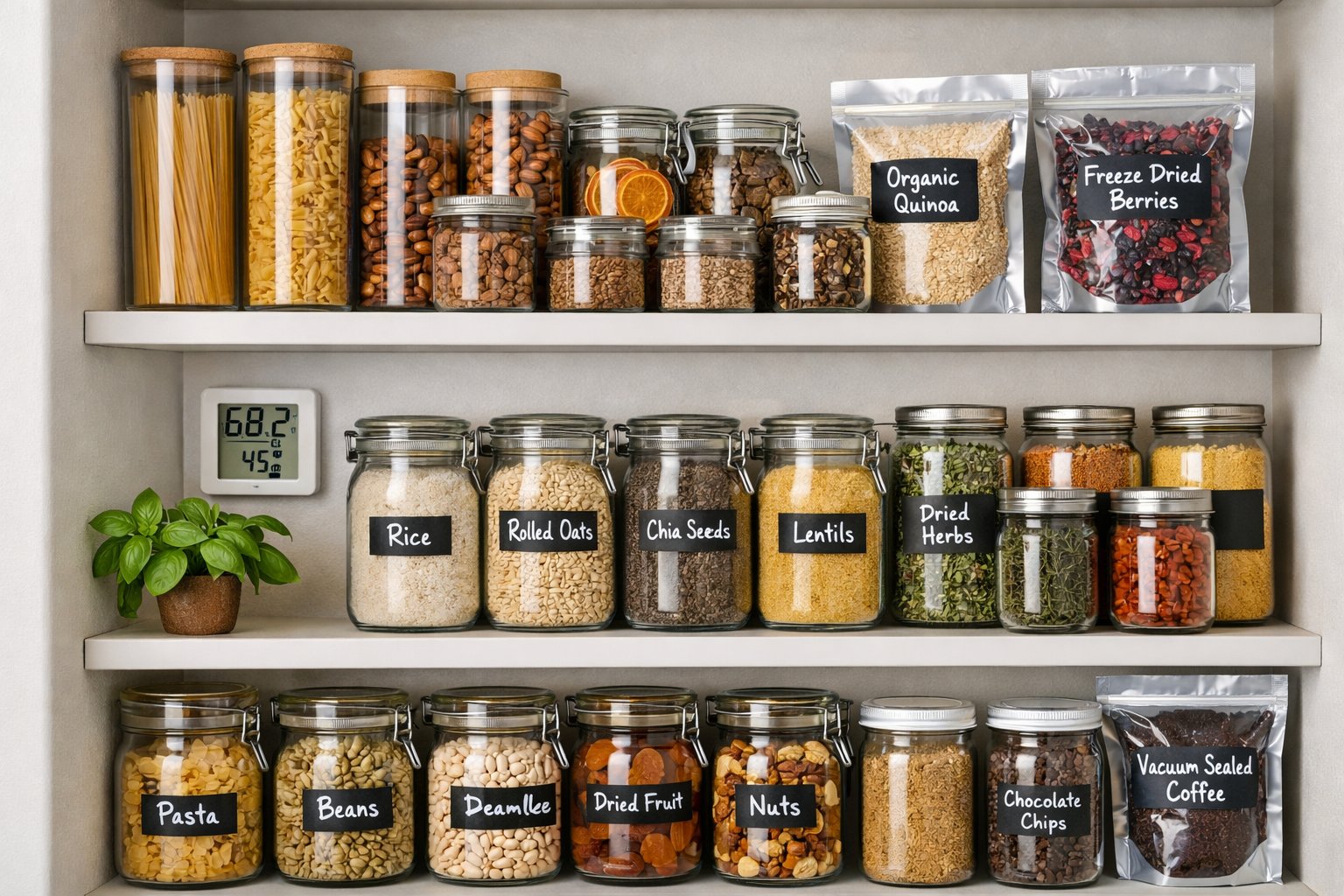
Check out our latest compact vacuum sealer for food collection!
Storage location isn’t just about convenience, it’s a key player in whether your ingredients stay fresh or lose their luster fast. Where you stash an ingredient changes its chemistry, texture, and shelf life, all thanks to temperature, humidity, light, and air. That cabinet above your stove? Super handy for spices, but the heat and steam from cooking can zap their flavor in weeks, not months.
We’ve all found some sad, forgotten ingredient, maybe it’s turned weirdly pale, clumped, or just smells off. That’s not just age; it’s your storage conditions working against you. The temperature in different kitchen spots can swing by 20 degrees, and humidity might jump from 30% to 70%. These shifts spark all sorts of breakdowns, depending on what you’re storing.
So, knowing how storage location affects stability? It really helps you decide where things belong. The cold back corner of the fridge, the dry pantry shelf, each spot has its own vibe that can either help or hurt your ingredients. Sometimes, just moving something to a better spot can add months to its shelf life.
Key Takeaways
- Where you store things controls their exposure to temperature, humidity, light, and air—all the big factors in ingredient breakdown
- Different areas in your kitchen set up totally different conditions for your ingredients
- Pairing ingredients with the right storage spots keeps them fresher, longer
How Storage Location Impacts Ingredient Stability
Where you keep your ingredients really shapes how much temperature, humidity, and light they have to deal with. Those three things drive the reactions that make food go bad. If you get this right, you’ll avoid weird textures, flavor loss, and even safety issues.
Role of Temperature, Humidity, and Light Exposure
Temperature is probably the biggest troublemaker when it comes to ingredients going bad. Every 10°C jump in temperature can double the rate of chemical reactions—think vitamins fading, oils going rancid, and spices losing punch. You’ll notice this if you keep oil next to the stove instead of tucked away in a cool spot.
Humidity is just as sneaky. Powders like spices, flour, or dried herbs suck up moisture if you store them somewhere damp, causing clumps, mold, and a stale feel. If humidity climbs over 60%, you’ll see starches and proteins start to break down. That’s why a dry pantry, away from sinks and dishwashers, is your friend.
Light, especially sunlight, can ruin photosensitive ingredients. Olive oil, dried herbs, and a bunch of vitamins fade or lose power when they catch too many rays. That’s why you’ll see amber bottles and opaque jars—they’re not just for looks. Closed cabinets or drawers, not open shelves by a window, make a big difference.
Physical Changes and Degradation Pathways
Storage conditions decide what kind of breakdown you’ll see. When oxygen gets in, oils go rancid and start to smell off. Nuts, seeds, and whole grain flours are especially vulnerable. If you keep them cool and sealed, you’ll slow this down a lot.
Moisture is another culprit. Dried pasta, crackers, and baking powder lose their snap or fizz if you stash them somewhere damp—think under the sink. Suddenly, your crackers are soft and your baking powder just doesn’t work.
Temperature swings are rough on some foods. Chocolate gets that white “bloom,” honey crystallizes, and spices turn into one big clump. These changes don’t always make food unsafe, but they sure make it less pleasant.
Effects on Efficacy and Safety
If you keep leavening agents in a warm, humid spot, they’ll lose their oomph and your baking will flop. Spices near heat lose their aroma fast, so you might end up doubling the amount just to get any flavor. Sometimes, it’s not even obvious until you taste the difference.
Safety’s at risk too. Moist storage areas invite mold to dried goods. If the temperature’s too high, bacteria can grow in things that need to be kept cold. When ingredients go off, you’ll notice weird flavors or smells—usually a sign to toss them before they get unsafe.
Shelf lives on packaging assume you’re storing things right. If you’re not, expect them to go bad way before that date. Paying attention to where you keep stuff can help you use things up before they’re wasted.
Environmental Factors and Storage Environments
Ingredient stability really comes down to three things: temperature, moisture, and light. Each one has its own way of helping or hurting your food.
Temperature Ranges and Control
Temperature’s the big one. Most foods and even pharmaceuticals break down way faster as the temperature climbs. Every 10°C up, and reactions speed up—sometimes double.
Room temperature is usually 20-25°C, but that range can be rough for delicate stuff. Go higher, and you’ll see more spoilage, mold, and loss of flavor. Cold storage (2-8°C) slows things down a lot, which is why you’ll find certain oils, nuts, and fresh herbs in the fridge.
Big temperature swings can be just as bad as steady heat. If you move things from a cold place to a warm one (or vice versa), you’ll get condensation inside containers. That little bit of moisture can cause trouble, even if the room feels dry.
Some ingredients, like chocolate or certain spices, have a “melting point.” Cross that line, and you can’t really get them back to how they were.
Humidity Control and Moisture Content
Keeping moisture in check makes all the difference for dry ingredients. If humidity goes above 60%, powders clump, mold pops up, and enzymes start working overtime.
You can manage moisture with the right packaging. Desiccants—those little packets—soak up extra water in containers, keeping things like salt, sugar, and dried herbs dry. They’re filled with silica gel or something similar.
If you store flour in a humid spot, it can taste weird and even attract bugs. Dried spices can gain water weight and lose their kick.
Photostability and Light Management
Light can break down lots of ingredients by snapping chemical bonds in pigments, vitamins, and flavors.
Some things, like olive oil and dried herbs, are super sensitive. Leave oil in a sunny spot and it’ll go rancid. Herbs fade and lose their aroma. Even vanilla extract can suffer if it’s out in the light for too long.
Opaque containers and dark storage help a lot. Amber glass, metal tins, and ceramic jars all block light. Try to keep sensitive stuff out of direct sunlight and away from bright bulbs.
Ingredient-Specific Considerations
Every ingredient reacts a bit differently to storage, depending on what it’s made of and how stable it is. Knowing these quirks can save you from wasting good food or losing potency.
Active Pharmaceutical Ingredient (API) Stability
APIs are the real divas of storage—they need precise conditions. Some break down fast at room temp, others are fine for ages.
Temperature is a big deal. Many APIs need to be chilled at 2-8°C, while a few have to be frozen at -20°C or colder. Some are so sensitive, they’ll start to degrade in just a few hours if left out.
Light is another issue. Photosensitive APIs fall apart under UV or even regular light, so amber bottles or solid packaging are a must.
Moisture is tough on hygroscopic APIs. They’ll suck up water from the air, causing clumping or loss of effectiveness. Desiccants, moisture-proof packaging, and keeping humidity below 60% all help.
Excipients and Additives
Excipients aren’t just fillers—they can break down or mess with APIs too. Preservatives like parabens or benzyl alcohol need careful storage to keep working, since they can evaporate or break down.
Surfactants are tricky. They’re prone to oxidation and can change with heat, so a cool, dark spot is best.
Antioxidants, ironically, also degrade by oxidation. Airtight containers and even a blanket of inert gas can help. Buffering agents can shift pH if they pick up CO₂ from the air, which can throw off the whole mix.
Liquid Formulations vs. Solids
Liquids have their own headaches. Water-based stuff is a playground for microbes, chemical reactions, and ingredient interactions you just don’t see with powders or tablets.
Liquids need tighter temperature control. Freezing can mess up emulsions or crack bottles, while heat speeds up breakdowns even faster than in solids.
Solids are usually more stable, but not immune. Tablets and powders can still clump, discolor, or lose strength if they get damp. Sealed containers with moisture indicators can catch problems early.
Suspensions and emulsions need a little more babysitting—check for separation or settling, and store at the right temp. Unlike tablets, you might need to shake them before using.
Packaging Materials and Storage Containers
The containers you pick really matter for keeping out light, air, and moisture. Some materials are way better than others, and matching the right container to the right ingredient can make a big difference.
Material Selection for Optimal Protection
You’ve got to match the container to the ingredient’s weak spots. Glass is great for oils and liquids—no weird chemical reactions, and it keeps things pure. Metal tins block all light and make a strong barrier against air, so they’re perfect for dried herbs or coffee.
Plastic containers are all over the place in terms of protection. HDPE is decent for keeping moisture out—good for flour, sugar, or beans. Polypropylene handles heat better, so it’s fine for stuff you might keep near the stove.
Quick comparison:
| Material | Light Protection | Oxygen Barrier | Moisture Resistance | Best For |
|---|---|---|---|---|
| Glass | Moderate to High | Moderate | Excellent | Oils, liquids, acidic foods |
| Metal | Excellent | Excellent | Excellent | Spices, tea, coffee |
| HDPE Plastic | Poor | Moderate | Good | Flour, sugar, dried beans |
| Polypropylene | Poor | Moderate | Good | Bulk grains, seeds |
No matter what, make sure your containers are food-safe. The last thing you want is plastic leaching into your ingredients.
Amber Vials, Insulated Containers, and Desiccants
Amber vials and dark-colored jars aren’t just for show—they really do block UV and visible light. Use them for vanilla, certain oils, and herbs that fade or lose power in the light. The darker, the better.
Insulated containers help keep the temperature steady for short trips or temporary storage. They’re handy for delicate ingredients, but not a substitute for a good fridge.
Desiccants—those little packets—keep things dry by sucking up moisture. Silica gel works for mushrooms, powders, and spices. Food-grade calcium oxide is even more hardcore. And yeah, rice in your salt shaker? Same idea—it keeps salt from clumping by absorbing moisture.
Impact on Microbial Growth and Contamination
Pick the wrong container, and you’re practically inviting microbes to move in. Bad seals let in moisture, and that’s all bacteria and mold need.
Airtight seals, like gasket jars or snap-lid containers, keep out both moisture and airborne nasties. Even a tiny gap can let spores sneak in.
Cleanliness is huge. Always wash and dry containers before refilling, since leftover crumbs or water can feed microbes. Smooth, uncracked surfaces are easier to keep clean and don’t give bacteria a place to hide.
Stability Testing Protocols and Regulatory Guidelines
Stability testing tells us how ingredients hold up over time, using controlled conditions for temperature and humidity. Regulatory groups like ICH Q1A(R2) lay out the specifics—long-term storage at 25°C/60% RH, accelerated testing at 40°C/75% RH, and guidelines based on global climate zones.
Long-Term Stability Studies
Long-term stability studies are really the backbone for figuring out how ingredients hold up under normal storage conditions over their expected shelf life. We run these tests at 25°C ± 2°C and 60% RH ± 5% RH for most products, checking on key quality attributes anywhere from 12 up to 36 months.
These studies try to mirror real-world storage in temperate climates. We pull samples at specific times—usually at 0, 3, 6, 9, 12, 18, 24, and 36 months—to see how things like color, potency, and texture change.
For ingredients headed to warmer regions, we use intermediate conditions—30°C ± 2°C/65% RH ± 5% RH—to get a sense of how they’ll fare between standard and accelerated testing.
We track parameters like potency, moisture, color, and microbial growth to make sure ingredients stay within spec from production all the way to the end user.
Accelerated Stability and Forced Degradation
Accelerated stability testing basically squeezes years of shelf life into just a few months by ramping up the heat and humidity—40°C ± 2°C/75% RH ± 5% RH for about 6 months. This lets us spot possible degradation issues and get a read on long-term stability without waiting forever.
We also use these conditions to check if our packaging does its job or if the formula needs tweaking. The extra stress from heat and humidity can reveal weaknesses that might not show up for years otherwise.
Forced degradation goes even further, throwing ingredients into extreme situations—crazy heat, harsh light, oxidizing conditions, wild pH swings. The goal isn’t to mimic storage, but to see what breaks down and how.
By figuring out what degradation products show up, we can set up stability-indicating tests. Once we know what might go wrong, we can make smarter choices about packaging, antioxidants, and shelf life.
Stability Chambers and Climatic Zones
Stability chambers are basically specialized rooms or cabinets that keep temperature and humidity exactly where we want them. We set these up to match the conditions needed for each study and keep them steady over time.
The ICH splits the world into four climate zones based on temp and humidity:
- Zone I: Temperate (21°C/45% RH)
- Zone II: Subtropical with possible high humidity (25°C/60% RH)
- Zone III: Hot and dry (30°C/35% RH)
- Zone IV: Hot and humid (30°C/65% or 70% RH)
We pick the right test conditions based on where the product will be sold. Something for Northern Europe needs different data than a product heading to Southeast Asia.
Modern chambers log temperature and humidity constantly. If things drift outside the set range, we get an alert and note it in the study records.
ICH Guidelines and Regulatory Compliance
ICH Q1A(R2) lays out the global rules for stability testing—how to store, when to test, and what data to gather. We follow these to make sure our results hold up with regulators in different countries.
The guideline says we need at least three batches under both long-term and accelerated conditions. For accelerated studies, we test at 0, 3, and 6 months, and add more time points if the product needs it.
ICH Q1B covers photostability—basically, making sure light-sensitive ingredients get tested with the right intensity and wavelength to see if they need special packaging.
Authorities like the FDA and EMA require all this stability data for product approvals. We submit detailed protocols covering our test plan, methods, criteria, and storage. This data backs up the expiration dates and storage advice you see on labels, making sure customers get products that actually last.
Common Storage Locations and Their Impact
Storage environments can make or break ingredient stability. Warehouses, kitchens, delivery trucks—each one brings its own set of headaches for keeping things fresh and safe.
Warehouse and Bulk Storage Dynamics
Big storage facilities have a tough job keeping temps steady across huge spaces. The difference between the top and bottom shelves can be 5-10°C, especially if the building doesn’t have great climate control.
Ingredients parked near loading docks or outside walls get hit hardest. Temps can swing from a comfy 25°C to a brutal 35-45°C in summer, even if the main thermostat looks fine.
Keeping humidity in check is crucial, especially for things like powdered spices, flours, and herbs. If it gets too damp, caking and clumping show up fast, sometimes in just weeks.
Key warehouse risks:
- Wild temperature swings across storage zones
- Moisture collecting near cooling units or exterior walls
- Long storage times that go way beyond what happens at home
- Light exposure from skylights or open layouts
Kitchen and Home Storage Habits
Most home kitchens are a far cry from the stable conditions manufacturers expect during shelf life testing. Cabinets near the stove can hit 30-40°C when you’re cooking, and fridges usually bounce between 2-8°C instead of holding steady.
We tend to stash ingredients wherever it’s handy, but that can backfire. Spices above the stove lose their punch from heat and steam. Oils near windows go rancid from sunlight. Even pantry staples get hit by seasonal temp swings.
Honestly, most homes don’t have climate-controlled storage for food. Room temps can go from 15°C to 30°C depending on the season and heating. So, storage guidelines end up being just that—guidelines, not guarantees.
Transportation and Temperature Excursions
Getting ingredients from factory to consumer is often the roughest part of the journey. Delivery trucks parked in the sun can hit 40-50°C inside, sometimes in just a few minutes.
How much this matters depends on the ingredient. Chocolate, probiotics, and fresh herbs can lose quality in hours. Even shelf-stable products can age faster every time they’re exposed to heat spikes.
The tricky part? Damage from transit isn’t always obvious right away. Sometimes, it shows up later as weird flavors, odd textures, or lower nutrition.
In-Use Storage and Reconstitution
Once you crack open a package, the rules change. Air, moisture, and temperature swings speed up the breakdown of ingredients that barely changed when sealed.
Prepared or reconstituted ingredients have the shortest shelf lives. Mixed spice blends, rehydrated foods, or opened jars usually need the fridge and quick use—7-14 days tops, even in good conditions.
There’s often a gap between package instructions and real-world habits. Maybe we forget to reseal containers, use damp utensils, or refrigerate inconsistently. Every slip shortens how long things actually last.
Frequently Asked Questions
Storage location impacts ingredient stability by influencing temperature, humidity, light, and airflow. The exact requirements shift depending on whether we’re talking kitchen staples or pharmaceuticals.
What's the scoop on keeping your spices sprightly and your grains grand?
Spices keep their flavor best in cool, dark spots away from heat—so, not above the stove. The essential oils that make spices taste good break down fast if temps go above 70°F.
Grains do well in dry, cool places—ideally 50°F to 70°F—in airtight containers. Pantries or cupboards away from outside walls are usually safest, since those walls can get hot or cold.
Keep grains away from appliances like dishwashers or fridges that throw off heat or moisture. That extra warmth can make the natural oils in whole grains go rancid faster.
What makes your oils go bad or helps your nuts stay fresh? What storage habits affect this?
Oils go bad when exposed to oxygen, light, and heat. We’ve seen olive oil go rancid in weeks if left near a window or stove.
Nuts are super sensitive to temperature swings. Every 10°F jump cuts their shelf life in half, roughly.
We stash nuts in the fridge at 35°F to 40°F for up to six months, or freeze them at 0°F for a year. Room temp is only okay for nuts you’ll use up soon.
Light also breaks down the healthy fats in oils and nuts. Dark bottles or opaque containers help block this.
What should you watch out for when keeping medicines at home?
Bathroom medicine cabinets? Not great for most meds. The humidity and temp swings from showers can wreck pharmaceuticals fast.
Better to keep meds at 68°F to 77°F in a dry spot—like a bedroom closet or kitchen pantry away from the sink. Most need less than 60% humidity.
If you have refrigerated meds, keep them between 36°F and 46°F. Storing them in the main fridge compartment (not the door) helps avoid temp changes from opening and closing.
Light-sensitive meds need dark containers or to be kept out of the light. Otherwise, they can lose potency or even form harmful breakdown products fast.
What do ICH ‘stability zones’ mean for storing chemicals?
ICH climate zones set the temp and humidity for different world regions. Zone I is temperate—21°C and 45% humidity.
Zone II covers subtropical and Mediterranean climates—25°C and 60% humidity. That’s the usual baseline for stability tests.
Zone III is hot and dry (30°C/35% RH), and Zone IV is hot and humid (30°C/65% RH).
These zones help us figure out how to store and mix ingredients. Something stable in Zone II might need refrigeration in Zone IV.
Why do heat and moisture matter for storing food and drugs?
Humidity over 65% is trouble—think mold, clumping, and faster chemical breakdown. We’ve watched powdered sugar turn into a solid brick in just a few hours if it’s humid enough.
Higher temps speed up chemical reactions that break down food and meds. For every 10°C increase, things can degrade two or three times faster.
We always track both factors, since they can make each other worse. Storing tablets at 40°C and 75% humidity can cut their potency in half in six months.
For moisture-sensitive stuff, airtight containers with desiccants are a must. And honestly, avoid storing them in basements or near water if you can help it.
What storage tips come from stability studies for grains like flour and rice?
Flour has natural oils that can go bad and start to smell if you don't store it right. Whole grain flours stick around for maybe one to three months at room temp, but if you stash them in the fridge, they'll hold up for six to twelve months.
Rice is a different beast—it really cares about moisture. White rice, if you keep it below 60°F and the humidity's under 60%, pretty much lasts for years. Brown rice, though, wants the fridge after half a year.
When we do stability studies, we push ingredients with extra heat and humidity to see how they react over time. We check if they look weird, smell off, or change chemically.
This testing helps us figure out the best storage spots. For flour, honestly, a cool pantry or your fridge works best, as long as you use airtight containers that keep out moisture and air.
Rice doesn't mind room temperature as much as flour does, but you still need to keep it away from dampness. Sealed containers are your friend, and following those storage timelines from the tests just makes life easier.
Share:
How Air Exchange Impacts Dry and Semi-Dry Ingredients
How Air Exchange Impacts Dry and Semi-Dry Ingredients