

Check out our latest compact vacuum sealer for food collection!
Fast dinners do not have to feel rushed or disappointing. With the right habits, you can cook meals that save time and still deliver on flavor, texture, and freshness.
Balancing speed and quality in the kitchen comes down to smart prep, a well-organized space, and choosing techniques that work for busy days. You do not need to cook for hours to make food that feels satisfying and well made.
In this guide, you will learn practical ways to prep faster, cook more efficiently, store ingredients better, and finish meals with confidence.
Key Takeaways
- A little prep and kitchen organization can shave off cooking time and keep meals tasty
- Efficient techniques and fresh ingredients give you better results with less fuss
- The right tools and a smart setup make it way easier to cook quickly without losing flavor or appeal
The Essentials Of Balancing Speed And Quality
Cooking at home is always a balancing act: you want food fast, but you also want it to taste good. Once you see why both speed and quality matter and what usually gets in the way, you can start to find what works for you.
Why Both Matter In Everyday Cooking
Speed is honestly what decides if we cook at all or just order takeout. After a long day or with hungry kids waiting, a 90-minute meal isn't happening, no matter how good it sounds. Time pressure is real; ignoring it usually means we just give up.
Quality, though, is what keeps us eating well and feeling satisfied. It's about taste, nutrition, and that feeling after the meal. If we only focus on speed, we get boring meals that leave us hungry an hour later.
We need meals that are ready in 30 to 45 minutes most nights, but still taste good and fill us up. It's not about being perfect. It's about finding that spot where we can reliably feed ourselves well without spending the whole evening in the kitchen.
Common Challenges Home Cooks Face
Time scarcity is the big one. Between work, family, and everything else, there just isn't much time to cook. That pushes us toward convenience foods or the same simple meals over and over.
Ingredient management is another headache. Maybe you know how to cook something great, but if your veggies are wilted or you're missing something, you're stuck. Poor storage or not prepping in advance can mess up your plans before you even start.
Decision fatigue hits hard when you're tired. Staring into the fridge at 6 PM, realizing nothing's prepped or thawed, often leads to just giving up. We need routines that cut down on those daily decisions and help us keep food fresh and ready.
Smart Prep: Mise En Place And Kitchen Organisation
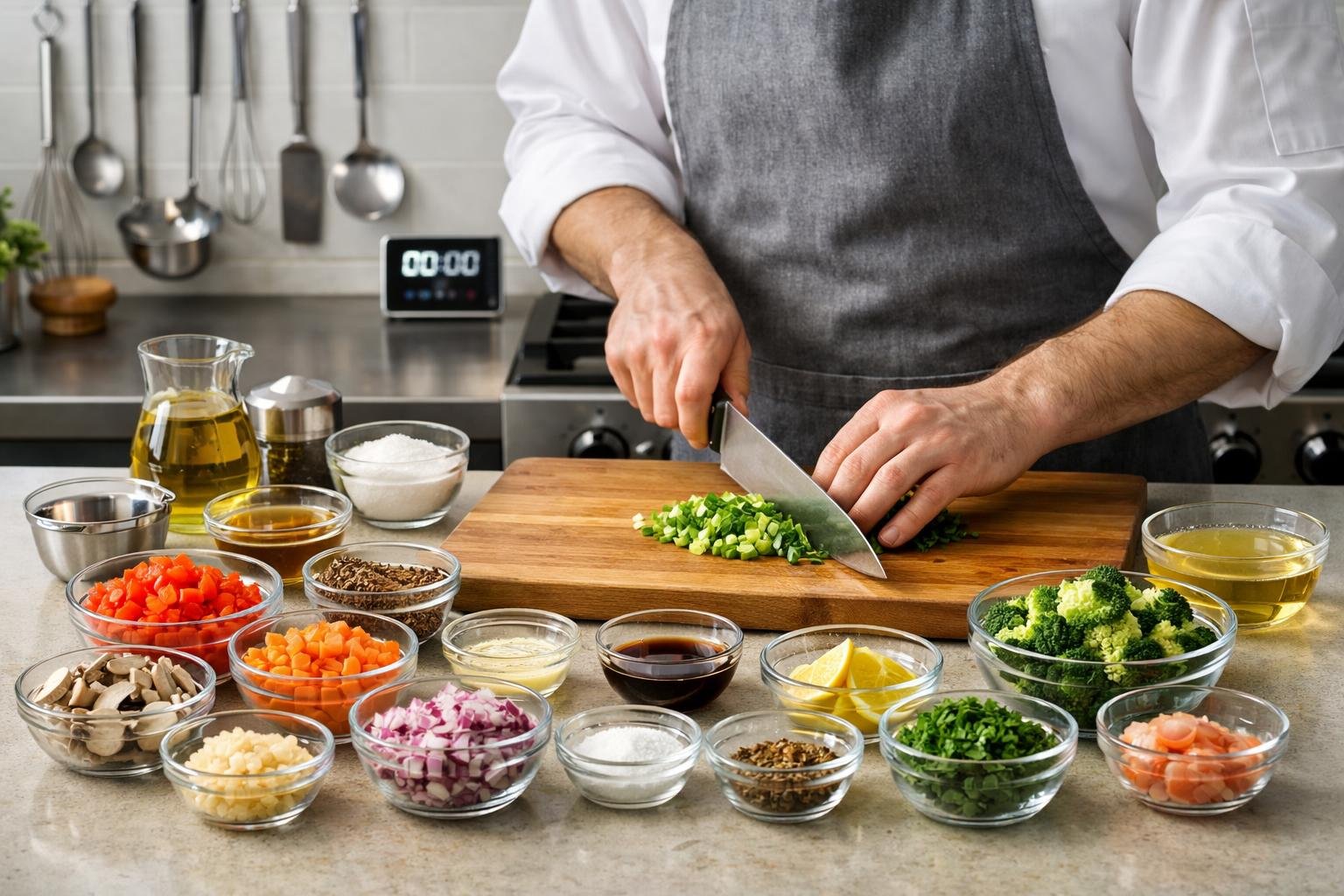
Mise en place, getting everything ready before you start, turns kitchen chaos into something manageable. When you organize your space and prep ahead, you move less, stress less, and keep quality up even when you're in a hurry.
Principles Of Mise En Place For Home Cooks
Mise en place, or "everything in its place," is how pro kitchens survive the rush. For us, it means measuring ingredients before the stove's on, chopping veggies in advance, and putting tools where we'll actually use them.
Prep first, cook second. Group similar tasks, chop all the veggies at once, not one at a time as the recipe says. It's less messy and keeps your momentum going.
Set up kitchen zones: keep oils, spices, and utensils near the stove, and your cutting boards and knives close to your prep area. This way, you're not running back and forth all night.
Pre-measuring prevents mistakes. When everything's in little bowls, it's easier to see what's missing or if you're about to double the salt by accident.
Setting Up An Organised Workspace
A clear space speeds things up and lets you focus. Keep your counters free by putting away appliances you rarely use and wiping things down before you start.
Keep the essentials close:
- Knives and boards near your main prep spot
- Go-to spices and oils by the stove
- Bowls and measuring tools in a handy drawer
- Utensils in a counter holder
Use wall racks or magnetic strips for tools and knives. This frees up space and makes grabbing things easier. Clear containers help you see what's inside without opening every lid.
Labels help, especially if you prep ahead. Mark what’s in each container and when you made it. That way, you don't end up with mystery leftovers or wasted food.
Check in on your setup now and then. If you're always reaching for the olive oil, maybe it belongs closer. Tiny tweaks can make a big difference over time.
Prepping Ingredients Efficiently
Batching is a lifesaver. Chop all your veggies in one go, instead of prepping each as you need it. That way, you only haul out the cutting board, and clean it, once.
Wash and dry produce after shopping, so it's ready to use. Pre-washed greens can go straight into the pan. Keep quick-grab items like cherry tomatoes up front in the fridge so you actually use them.
Prep tasks to handle ahead:
- Mince garlic and ginger for a few days at a time
- Chop onions and store them in a sealed container
- Portion proteins and keep them ready to go
- Measure dry ingredients for recipes you make often
Store prepped ingredients in clear, labeled containers. Tonight’s stuff goes up front, later-in-the-week things go in back. That way, you grab what you need without rooting around.
Don’t skip food safety, even when you’re moving fast. Use different boards for meat and veg, and wash your hands between. Nothing ruins dinner faster than a food safety slip-up.
Efficient Cooking Techniques For Faster Results
Learning a few basic techniques can seriously cut down your kitchen time and keep meals tasting great. Focus on sharper knife skills, picking the right quick-cooking methods, and juggling a couple of tasks at once.
Knife Skills You Need To Know
If you can dice an onion in 30 seconds instead of three minutes, you’re not just saving time, you’re making sure everything cooks evenly. The basics matter more than fancy gear.
Practice the claw grip for safety and speed, the rock-chop for herbs and veg, and hold your knife properly. Keep your blades sharp; a dull knife is slower and more dangerous.
Get good at three cuts: the dice, for even cooking, the julienne, for strips, and the chiffonade, for herbs. Honestly, those cover most of what you’ll need. Ten minutes of practice here and there really pays off.
Mastering Quick Cooking Methods
Some methods just get food done faster, without losing flavor or nutrition. High heat, like sautéing, stir-frying, or grilling, cooks fast and adds flavor.
Quick Cooking Methods:
- Sautéing: Veggies done in 5 to 8 minutes with just a bit of oil
- Pressure cooking: Turns tough cuts tender in a fraction of the time
- Broiling: Caramelizes food in minutes, skipping long roasts
- Stir-frying: Protein and veg together in one pan in about 10 to 15 minutes
Pressure cookers and instant pots are game-changers for beans or tougher meats. They use steam to break things down fast. You can have tender beef in under an hour instead of waiting all afternoon.
One-pot meals save time and dishes. Sheet pan dinners, skillet meals, one-pot pastas, they all let you cook everything together, making cleanup less of a headache.
Practising Multitasking In Your Kitchen
Multitasking isn't about doing everything at once. It's about lining things up so you use your time well. While water boils, chop your veg. While onions soften, measure spices or prep your protein.
The trick is knowing what needs your attention and what can simmer or bake while you work on something else. When something's cooking passively, use that time to prep the next step.
Read recipes all the way through before you start. Look for steps you can overlap. If you need chopped garlic, diced tomatoes, and minced herbs, do all the chopping in one go. Keep your tools close, set up your space, and you’ll save a surprising amount of time.
Choosing And Using Fresh Ingredients
Fresh ingredients are your best friend for fast, tasty meals. They're easier to prep, cook more evenly, and usually need less fuss to taste great. If you pick good stuff and store it well, you'll spend less time fixing problems later.
How Freshness Boosts Speed And Flavour
Fresh produce and proteins need less work. A crisp bell pepper just needs a rinse and a chop; a limp one takes more time to trim and still tastes flat. Fresh herbs release flavor right away, so you can skip long marinades or complicated spice mixes.
Fresh garlic chops quickly and doesn’t stick to your knife. The sugars in just-picked veggies caramelize faster, so you get big flavor in less time. Fresh proteins hold onto moisture better, cook more evenly, and are less likely to dry out or need a rescue.
When you start with good ingredients, you don't have to work so hard to make up for flavor or texture issues.
Best Practices For Storing Ingredients
Good storage keeps ingredients usable longer and makes fast cooking easier. Wrap leafy greens in damp paper towels and store them in containers. They’ll stay crisp for days and you won’t have to pick through wilted leaves.
Root veggies last longest in a cool, dark, well-ventilated spot. Don’t store onions and potatoes together; onions make potatoes sprout faster.
Treat sturdy herbs like rosemary like flowers. Stand them in water. Softer herbs like basil and parsley do best loosely wrapped in a damp towel in the fridge. Berries last longer unwashed in a container lined with a paper towel.
Airtight containers keep chopped veggies fresh for a few days, so you can prep ahead without losing quality. Date everything so you use older stuff first and avoid mystery science projects at the back of the fridge.
Leveraging Kitchen Gadgets And Tools
The right gadgets can really smooth out busy weeknight cooking and help you keep meals tasty. Picking the right tools and knowing how to use them lets you work faster without sacrificing quality.
Must-Have Kitchen Gadgets For Efficiency
Smart thermometers take the guesswork out of cooking. They monitor temps wirelessly, so you can prep the next thing while your protein cooks. No more slicing into chicken to check if it’s done.
A good food processor cuts prep time drastically. You can slice, shred, and chop in seconds, and everything cooks more evenly. It’s not just about speed. Your results get better, too.
Digital scales make baking and portioning quicker. Pour ingredients straight into your bowl and skip the measuring cups. For recipes where ratios matter, like bread, this is a game changer.
Efficiency tools to keep on hand:
- Instant-read thermometer for quick checks
- Sharp knives for clean, fast slicing
- Food processor with multiple blades
- Digital scale with tare function
- Immersion blender for fast sauces and soups
Using Tools Without Sacrificing Food Quality
Automation really shines when it takes care of the repetitive stuff, freeing us up to focus on the fun parts. A stand mixer kneads dough while we chop veggies or measure out spices. The machine keeps things steady, way more consistent than our arms ever could.
Temperature control? That's where things get serious. Smart ovens keep the heat right where we want it, so roasted veggies stay juicy and baked goods don’t turn into hockey pucks. We set the temp, let the sensors do their thing, and don’t have to babysit the oven.
But gadgets can’t do it all. A food processor won’t know when pie dough is just barely coming together, or when garlic has hit that perfect fragrant stage in the pan. We let the tools handle the grunt work, but our senses call the shots on texture and taste. This balance keeps things efficient but still creative. Cooking’s not just pushing buttons.
Presentation And Quality: The Final Touches
How we plate food and pick our ingredients really shapes how much we enjoy dinner, even if it’s just a random Wednesday. Little details can make a regular meal feel like something out of a restaurant.
Simple Steps For Impressive Plating
No need for art school here. Just wipe the plate rim with a damp cloth before serving. Suddenly, it looks like we put in extra effort.
Plating with some height makes food pop. Stack stuff, lean chicken against rice, whatever works. Odd numbers look better than even, so we’ll go for three things on a plate instead of four.
Color matters. If we’re serving chicken and mash, we’ll add something bright like green beans or carrots, not more beige. A handful of chopped herbs over the top, not just tossed on the side, can wake up the whole plate.
White plates are our go-to. They make food stand out, and we keep a simple set just for those times when we want dinner to look a little fancier.
Maintaining High Food Standards At Home
Quality starts at the shop and keeps going through storage and cooking. We check dates, skip bruised produce, and pick the freshest stuff we can find. Good ingredients need less fuss.
Storing things right makes a difference. Herbs last longer in a glass of water in the fridge. Tomatoes stay on the counter. Onions and potatoes? Keep them apart or you’ll have sprouts everywhere.
We taste as we go and fix seasoning before serving. If it needs salt or a squeeze of lemon, that’s usually the magic touch at the end.
Creating A Positive And Productive Cooking Environment
The kitchen’s vibe affects how well, and how happily, we cook. Good habits and a tidy space make everything smoother.
Building Good Workflow Habits
Setting up zones for different tasks changes everything. We keep our chopping area close to the sink, tools near the stove, and serving dishes by the plating spot.
A quick five-minute reset before starting helps a ton. We clear off counters, grab what we need, and get tools out before the heat goes on. That way, we’re not scrambling halfway through.
“Clean as you go” is a lifesaver. Wipe down surfaces, toss dirty tools in the sink, and load the dishwasher during downtime. If we finish chopping, the knife goes straight to the sink. If something’s simmering, we’re washing a bowl. It keeps the mess from piling up.
Encouraging A Positive Work Environment
Where we keep things matters. We store the essentials in the same spots so we’re not digging through drawers for a whisk. Clear labels on containers and a tidy fridge make grabbing ingredients a breeze.
Lighting, wow, we didn’t realize how much it helps until we fixed it. Good light over the cutting board and stove makes everything easier and safer. We also keep the space comfortable by cracking a window or running a fan, so the kitchen doesn’t feel like a sauna.
Music or a podcast makes chopping less of a chore, but we keep it low so we don’t miss the timer. The goal isn’t perfection. It is just about removing little annoyances and adding a few comforts to keep us going.
Frequently Asked Questions
Here are some of the questions that come up most when trying to get dinner on the table without sacrificing taste or technique.
What's the secret to perfectly diced onions without the tears and time crunch?
Chill the onion for about 30 minutes before cutting and use a sharp knife. Cut through the root, make a few even cuts, then slice across for a fast, clean dice.
Can you spill the beans on speeding up marinade magic without missing the flavour boat?
Score or pound the meat so the marinade works faster. Use acidic ingredients like citrus, vinegar, or yogurt, and let chicken marinate for about 30 minutes for solid flavor.
How do you pack the perfect pantry to make weeknight meals a breeze?
Keep staples like pasta, rice, beans, canned tomatoes, broth, and a few go-to spices on hand. Add oils, vinegar, and soy sauce so quick meals come together easily.
What are the top shelf strategies for keeping herbs as lively as a spring morning?
Store tender herbs in a glass of water in the fridge and wrap sturdy herbs in a damp paper towel. Wash herbs right before using them to help them last longer.
Could you share tips for making the freezer your trusty sidekick in the battle against the clock?
Freeze chopped onions, peppers, garlic, cooked grains, soups, and sauces in labeled portions. Flat-freezing bags saves space and helps food thaw faster.
How can you juggle meal prep like a pro and still keep your kitchen looking like a page from a magazine?
Clean as you go, group similar prep tasks, keep a scrap bowl nearby, and put ingredients away right after using them. Small habits keep the kitchen tidy and efficient.
Share:
What Are The Key Factors Behind Consistent Meal Quality
Which Kitchen Setup Works Best For Daily Meal Preparation