

Check out our latest compact vacuum sealer for food collection!
Ever pulled out a pantry staple only to find your oil smells off, your spices look faded, or your pasta’s got a weird funk? We usually blame time, but honestly, light does a lot more damage than we think.
Light sparks photochemical reactions that wreck vitamins, oxidize fats, ruin colors, and create those nasty off-flavors in food we’re trying to store.
This damage happens faster than most people realize. Both sunlight and the lighting in your kitchen can speed up the breakdown of nutrients and compounds that keep food tasting and looking fresh.
If you understand how different types of light interact with food, you can make smarter decisions about storage containers, pantry layout, and what kind of packaging to trust.
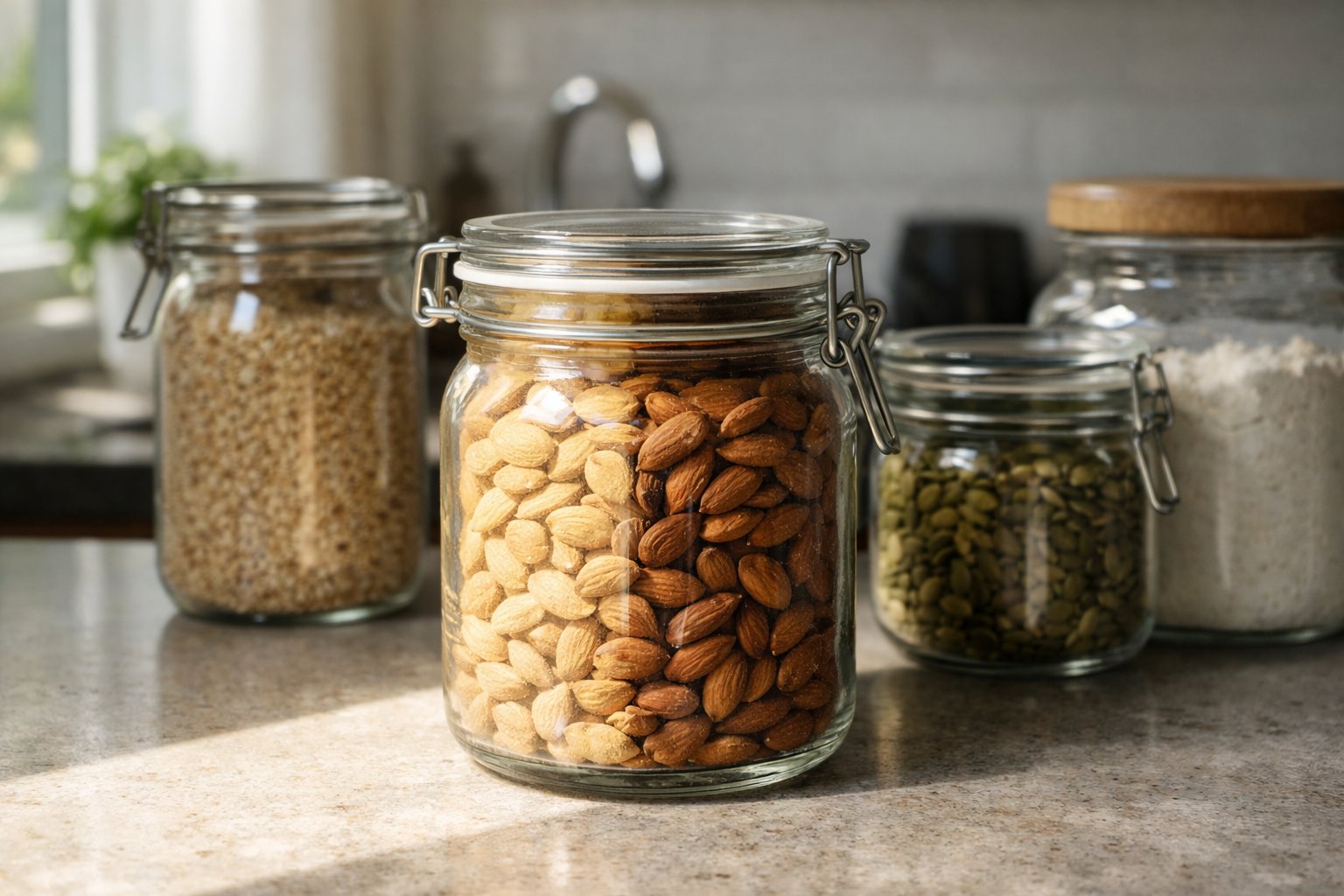
You don’t need fancy equipment or a science degree to protect your food from light. Just a few tweaks—like moving jars away from windows or choosing opaque containers, can keep your food tasting better and lasting longer.
Key Takeaways
- Light exposure destroys nutrients, oxidizes fats, and gives food weird flavors
- Some types of lighting are harsher on food than others, depending on the wavelengths
- The right packaging and storage spots help block damaging light and keep food quality up
How Light Exposure Breaks Down Food
Light acts as a spark for chemical reactions that chip away at nutrients, mess with flavors, and break down the structure of stored food. The kind and strength of the light decide which molecules go first and how quickly things fall apart.
Photodegradation Explained
Photodegradation is basically light energy busting apart molecular bonds in food. When photons hit food, they transfer energy that destabilizes vitamins, pigments, and especially fats.
And you don’t need glaring sunlight for this to happen. Foods sitting under regular kitchen lights or in the fridge still absorb enough energy to kick off these reactions over time.
The most at-risk compounds? Things like:
- Riboflavin (Vitamin B2) in dairy
- Chlorophyll in veggies
- Vitamins A and C
- Carotenoids like beta-carotene
Once photodegradation starts, it often snowballs. The first breakdown products can trigger more damage in neighboring molecules.
Light Energy and Food Interactions
Foods soak up light differently, depending on their chemistry. Dairy’s a great example—riboflavin in milk grabs visible light and passes that energy along to fats and proteins, which then develop that “sunlight” or “cardboard” taste.
Fats and oils break down fast when exposed to light. This doesn’t even need oxygen at first—light alone starts breaking fatty acids apart, and suddenly you’ve got rancid oil much sooner than you’d expect.
Meat pigments change under light too. Myoglobin, which keeps meat red, shifts to metmyoglobin, making it look brown or gray. That’s not just ugly—it means protein oxidation is happening beneath the surface.
Role of Light Wavelengths
Ultraviolet light is the most destructive, but it’s not the only one to watch out for. The UV spectrum (100-400 nm) slices through packaging and quickly destroys vitamins and starts up fat oxidation.
Visible light (400-700 nm) isn’t harmless either, especially the blue and violet end. Those wavelengths activate riboflavin and other sensitive compounds that then attack nearby nutrients.
Light wavelength effects:
| Wavelength Range | Primary Impact | Common Sources |
|---|---|---|
| UV (100-400 nm) | Vitamin destruction, rapid oxidation | Sunlight, some LED bulbs |
| Blue-Violet (400-500 nm) | Riboflavin activation, pigment bleaching | Fluorescent lights, daylight |
| Green-Red (500-700 nm) | Slower degradation, chlorophyll damage | Most artificial lighting |
Infrared brings heat into the mix, which speeds up chemical reactions even more than light alone.
Types of Light and Their Effects on Stored Foods
Different kinds of light mess with food in their own ways—from UV rays that blast apart vitamins to infrared that just heats everything up. If you get a handle on how each type damages food, you can pick better storage and packaging.
Impact of Ultraviolet Light
UV light is harshest on food. These rays cut through packaging and spark reactions that break down vitamins A, C, and D.
You can actually see the damage pretty quickly. Leave milk out under UV light and it’ll lose vitamin A in just a couple hours. And it’s not just nutrients—UV also speeds up fat oxidation, so you get that nasty, rancid smell and taste.
Common UV-induced changes:
- Chlorophyll bleaching in green veggies
- Riboflavin breakdown in milk and cheese
- Meat turning brown or gray
- Carotenoid pigments fading
UV-blocking films and opaque containers help a lot. Even switching from clear to amber glass makes a noticeable difference.
Effects of Visible Light
Visible light works more slowly than UV, but it still causes plenty of trouble. It drives reactions where light activates oxygen, and that oxygen attacks fats and pigments.
Blue and violet light carry more punch and break stuff down faster than red or yellow. That’s why food under LEDs can spoil differently than under old-school bulbs.
You’ll notice color fading, weird flavors, and changes in texture. Oils and fats get bitter and stale, meat loses its red color and goes brown or gray.
Infrared Light and Heat
Infrared doesn’t directly break molecules, but it heats things up. That extra warmth speeds up spoilage, mold, and all the chemical reactions you don’t want.
Even a small temperature jump matters. Food sitting in a sunbeam can get 10-15°C hotter than the room, which cuts shelf life way down.
Key Chemical Reactions Triggered by Light
When light hits food, it jumpstarts several breakdown paths. The worst are fat and oil oxidation, nutrient destruction, and the creation of stinky, weird-tasting byproducts.
Oxidation Reactions in Foods
Light makes oxidation happen faster everywhere in food. Photons break chemical bonds, generating free radicals—these are like little wrecking balls that set off chain reactions.
Photosensitized oxidation is a big one: light-sensitive stuff like riboflavin or chlorophyll grabs energy, then passes it to oxygen, creating highly reactive singlet oxygen. This quickly destroys vitamin C and carotenoids in fruits and veggies.
UV light is the worst, but even regular kitchen lights can start these reactions over time.
Some foods are more vulnerable—dairy (because of riboflavin), fresh meat (myoglobin pigments), and green vegetables (chlorophyll) all break down faster under light.
Lipid Oxidation and Rancidity
Lipid oxidation is probably the most common light-induced spoilage. Fats and oils go through three stages: initiation, propagation, and termination.
First, light knocks hydrogen atoms off fatty acids, creating radicals. These then react with oxygen, forming peroxides. As those break down, you get that stale, cardboard taste we all hate.
Foods that go rancid fastest:
- Nuts and seeds
- Cooking oils
- Butter and dairy
- Fatty fish
- Whole grain flours
Polyunsaturated fats (think flaxseed oil) oxidize way faster than saturated ones (like coconut oil). That’s why some oils last and others don’t.
Formation of Off Odors
As oxidation ramps up, foods start to stink. These off odors come from volatile compounds created as fats, proteins, and other molecules break apart under light.
Aldehydes like hexanal smell grassy or even paint-like in old oils. Ketones add fruity or chemical notes. Protein breakdown can release sulfur compounds—think burnt or medicinal. That “sunlight flavor” in milk? It’s basically this.
It doesn’t take much—some of these compounds are noticeable at parts per billion. That’s why you can smell rancidity before food is actually unsafe. Milk can pick up that burnt or plastic taste after just a short spell under fluorescent lights.
Nutrient Loss
Light doesn’t just mess with taste and smell—it destroys vitamins and healthy stuff, too. Riboflavin (vitamin B2) is extra sensitive, and once it goes, it actually speeds up the loss of other nutrients.
Vitamin A breaks down quickly under light. Milk in clear bottles can lose a lot of its vitamin A in just a few hours. Vitamin C gets oxidized, especially if there’s oxygen around.
Nutrients most at risk:
- Riboflavin (B2) – breaks down directly
- Vitamin A – lost through oxidation
- Vitamin C – oxidizes, especially with light and air
- Vitamin E – acts as an antioxidant but gets used up
- Folate – sensitive to UV
Carotenoids (like lycopene and beta-carotene) also fade, which is why colors in food can signal nutrient loss.
Quality Changes Caused By Light Exposure
Let’s be real—when light hits stored food, it speeds up everything we don’t want: fading colors, weird smells, and funky textures. These changes start at the molecular level but show up in ways anyone can see (and smell) on the shelf.
Food Discoloration and Pigment Loss
Who hasn’t seen a green pepper turn yellow or a bright tomato sauce go dull? Light breaks down pigment molecules that give food its good looks, often way faster than you’d guess.
Chlorophyll in greens fades, anthocyanins in berries and cabbage lose their punch, and carotenoids in carrots and tomatoes go from vibrant to blah. Meat isn’t safe either—myoglobin breaks down, leaving it brown or gray.
Riboflavin in dairy is notorious for this. Leave milk under store lights and it’ll get a yellowish tint, which actually means nutrients are breaking down and off odors are on the way.
We eat with our eyes first, so even slight discoloration can make perfectly safe food seem unappetizing.
Loss of Flavor and Sensory Appeal
Light kicks off photooxidation that messes with how food tastes and smells. Fats and oils are hit hardest—polyunsaturated fatty acids soak up light, turn into peroxides, and then aldehydes, giving that cardboard or bitter taste.
Dairy gets “sunlight flavor”—burnt or metallic notes that make milk pretty unappealing, even if it’s technically still safe. Oils, nuts, and fatty fish can get harsh and bitter. Meat proteins break down too, sometimes giving off sulfur odors.
These unpleasant smells and flavors creep up slowly. You might not notice them day to day, but compare food stored in the dark to something left under lights for a week, and the difference is pretty obvious.
So, as food loses its flavor and aroma, it’s also losing nutrients—a double whammy for anyone who actually cares about what they’re eating.
Changes in Texture and Freshness
Texture changes from light exposure aren't as obvious as shifts in color or flavor, but they're still important. Light-driven oxidation messes with protein structures in meat and dairy, sometimes leaving things a bit grainy or with a weird mouthfeel. Oxidized fats can end up feeling waxy or strangely coating on your tongue.
Fresh fruits and vegetables lose their crispness faster under light. Photooxidation speeds up moisture loss and breaks down cell walls, so that crisp apple or crunchy lettuce turns soft and kind of disappointing.
Light also speeds up staling in baked goods by pushing fat oxidation, which gives us that dry, crumbly texture in old bread or crackers. These texture changes just add to the other losses—no one wants food that's off-color, smells bad, and feels wrong in the mouth.
Packaging Solutions to Combat Light Damage
Modern food packaging—think UV-blocking films and modified atmosphere techniques—really helps protect against light-induced damage. Some solutions now block more than 80% of harmful wavelengths between 200-900 nanometers.
Choosing Effective Food Packaging Materials
Picking packaging that shields food from light isn't as straightforward as it sounds. PET (polyethylene terephthalate) gives some UV protection and stays clear, but usually needs additives to work well. Dark glass blocks light like a champ, but then you can't see what's inside.
Opaque stuff like aluminum foil and metallized films keep out nearly all light, but then, again, you can't see the product. That matters when people want to check what they're buying.
The trick is finding a balance. Look for materials that block the critical 200-900 nm range, but also think about recyclability and cost. Amber or dark-tinted containers are great for light-sensitive oils and drinks. Sometimes, layered materials with different polymers do the job—offering both protection and a peek inside.
Benefits of UV-Blocking Films
UV-blocking films stop photooxidation, which destroys vitamins, degrades fats, and fades colors. These coatings or additives in packaging go after the ultraviolet wavelengths that do the most harm.
There's more to it than just blocking light. UV-barrier packaging can really stretch shelf life for dairy, meats, and drinks without changing how we store them. These films help keep nutritional value, preserve natural colors, and stop the weird flavors that come from fat oxidation.
You don't have to use totally opaque packaging, either. Clear films with UV additives let you see the product but still keep out the worst light. That's a big deal in stores, where seeing the product often seals the sale.
Modified Atmosphere Packaging Options
Modified atmosphere packaging (MAP) mixes controlled gas environments with light-protective materials to tackle several spoilage routes at once. By swapping out oxygen for nitrogen or carbon dioxide, we slow down the oxidation that light makes worse.
MAP and UV-blocking materials work together—light and oxygen together are much worse than either alone. When we ditch the oxygen and block UV, we really slow down the breakdown of nutrients and formation of off-flavors.
You'll see MAP in vacuum-sealed coffee pouches, nitrogen-flushed snack bags, and gas-flushed trays for fresh meats. These need special equipment but can double or triple shelf life compared to regular packaging.
Smart Storage Techniques for Maximum Freshness
Proper storage isn't just about keeping food in the dark—temperature and where you place things play a big role in how well foods hold up against light-induced degradation.
Balancing Food Safety with Shelf Appeal
UV-barrier packaging protects food from light damage, but transparent materials let shoppers check product quality. The real challenge is blocking harmful light without making packaging so opaque that it hides the food.
Food Safety Considerations
Adding UV-blocking compounds to packaging means food safety is a top concern. Some synthetic UV absorbers—like benzotriazole and benzophenone derivatives—can migrate from the packaging into food, especially in liquids or fatty foods. That raises some fair worries about chemical exposure over time.
Natural UV-blockers are looking promising. Stuff like lignin, melanin, and tannic acid blocks UV and usually brings fewer toxicity issues. ZnO and TiO2 nanoparticles also work, though their safety at those tiny sizes needs more study.
Processing methods matter, too. High temperatures and solvents can change how stable UV-blocking additives are. Natural compounds with reactive groups—hydroxyl, amino, carboxyl—can cross-link with polymers, which can help keep them from migrating and also strengthen the packaging.
Maintaining Visual Clarity Without Compromise
One of the biggest trade-offs with UV-blocking packaging is color. Most strong UV-blockers absorb visible light, so you get brown, yellow, or green tints that make it hard to see the product. Shoppers want to check their meat, dairy, or drinks before buying, so transparency is a big deal.
Some materials manage this balancing act. Chitosan films with Piper betle oil block UV but stay clear. Sodium alginate films with tannic acid also block UV well and only slightly cut transparency. These show that you don't always have to sacrifice visibility for protection.
The secret is targeting the right wavelengths. UVA (315-400 nm) and UVB (280-315 nm) do most of the food damage, while visible light (400-800 nm) lets us see the product. Materials that absorb UV but let visible light through are the sweet spot for both protection and shelf appeal.
Frequently Asked Questions
Light exposure sparks chemical reactions that break down vitamins, oxidize fats, and mess with how food looks, smells, and tastes. UV light is especially rough on nutrients and packaging.
What are the impacts of light on the shelf-life and quality of food products in storage?
Light speeds up all kinds of food degradation. If we store food under light—especially UV and visible light—chemical reactions that would take ages in the dark happen much faster.
Nutritional value drops. Vitamins A, C, D, and B2 (riboflavin) break down under light, so stored foods lose nutrients. Fats oxidize and go rancid, so flavors get weird.
Light also changes how food looks and tastes. Chlorophyll breaks down, so veggies lose their green and look faded. Meats discolor and seem less fresh, even if they're still safe to eat.
Texture and overall quality take a hit too. Light-triggered reactions mess with proteins and fats, creating off-flavors and smells. That's why people often reject food that's been sitting under lights.
Can you shed some light on how different types of light affect food spoilage?
UV light does the most damage. It has enough energy to break chemical bonds, destroy vitamins, and start oxidation that leads to rancid flavors and color loss.
Visible light also causes spoilage, just usually slower than UV. How intense the light is and how long food sits under it matter a lot. Even LED lighting, which is cooler, can cause problems if foods are exposed for too long.
Different foods react differently. Oils and fats are super sensitive to photooxidation under pretty much any light. Milk loses riboflavin under light, which is why it's often in opaque jugs.
Too much light, regardless of type, fades product colors and speeds up spoilage of both food and packaging. That's why things like spices and oils usually come in dark or opaque containers.
What's the deal with UV light and food preservation, and are there any drawbacks?
UV light isn't really for preserving stored foods. Sometimes it's used to kill germs on surfaces or packaging, but that's a different story.
For storage, UV light is mostly bad news. It breaks down nutrients faster than other light and speeds up oxidation, which leads to rancidity.
We need to keep stored foods away from UV light, not expose them to it. That's why good packaging blocks UV, and why we shouldn't leave food in direct sunlight or near windows.
The real preservation move is keeping light out—using opaque packaging, dark storage, or UV-blocking materials.
In the battle against food spoilage, does freezing trump light protection methods?
Freezing and light protection do different jobs. Freezing stops microbes and slows enzyme activity by dropping the temperature below 0°C. Light protection stops photochemical spoilage.
When food is frozen, nutrient loss is super slow. Quick freezing makes small ice crystals, which helps keep food structure and quality.
But frozen foods still need light protection. Even at low temps, light can break down vitamins and oxidize fats. That's why frozen foods often come in opaque packaging.
Best results? Use both. Freezing keeps food safe and slows most reactions, while light-blocking packaging stops photodegradation—even in the freezer.
As a food preservation fan, what chemical strategies can I cook up to protect my grub from light damage?
Honestly, the best "chemical" strategy is a physical one: use packaging that blocks light. Opaque containers, dark glass, and light-blocking films stop photochemical reactions before they start.
Some foods have natural antioxidants that slow down light-triggered oxidation, but those can also break down under light. So, packaging is still your main defense.
You can also tweak storage—vacuum packaging or modified atmosphere packaging removes oxygen, which slows the oxidation that light speeds up.
The real-world approach? Pick packaging based on your food's sensitivity to light. UV-blocking materials are good for moderately sensitive stuff, but if something's super photosensitive, go for totally opaque packaging.
Could you give me the cold, hard facts on how freezing techniques in the food industry compare to light-blocking storage?
Commercial freezing methods drop food temperatures fast, especially through that tricky zone where ice crystals form (about −1 to −4°C). When you freeze food quickly, you get loads of tiny ice crystals instead of big, destructive ones. That keeps the texture and overall quality much closer to fresh—no one wants mushy peas.
Modern plate freezers—those are pretty much the grandkids of Clarence Birdseye’s 1920s inventions—can chill food down to −25°C or even lower. That sort of speed really cuts down on cellular damage, so frozen stuff holds together better during storage.
Light-blocking storage is a different beast. It doesn’t mess with temperature at all. Instead, it keeps light—especially the kind that triggers photochemical reactions—off the food. No fancy science here, just a physical barrier to stop those unwanted changes.
In real-world settings, companies usually combine both strategies. Ever notice how frozen foods almost always come in opaque packaging? That’s because just keeping things cold isn’t enough. If you leave frozen food in clear packaging, light can still sneak in and cause vitamin loss or fat oxidation. Not ideal.
Are these methods rivals? Not really. Cold storage (under 4°C) slows down microbes and chemical reactions, while blocking light tackles a totally separate set of problems—stuff that happens even if the food stays cold. It’s all about stacking the odds in favor of quality.
Share:
Why Half-Used Ingredients Lose Freshness the Fastest
How Improper Storage Creates Invisible Food Waste