

Check out our latest compact vacuum sealer for food collection!
You've probably opened a container of flour, pasta, or crackers only to find it clumpy, soggy, or spotted with mold, even though you sealed it up tight. We've all been there, wondering how on earth moisture managed to get inside what we thought was a secure storage setup. The truth is, moisture doesn't need an obvious opening to wreak havoc on our food supplies.
Moisture sneaks into stored food through temperature swings that cause condensation, humid air trapped during sealing, water vapor from the food itself, and small gaps in container seals that let outside humidity seep in.
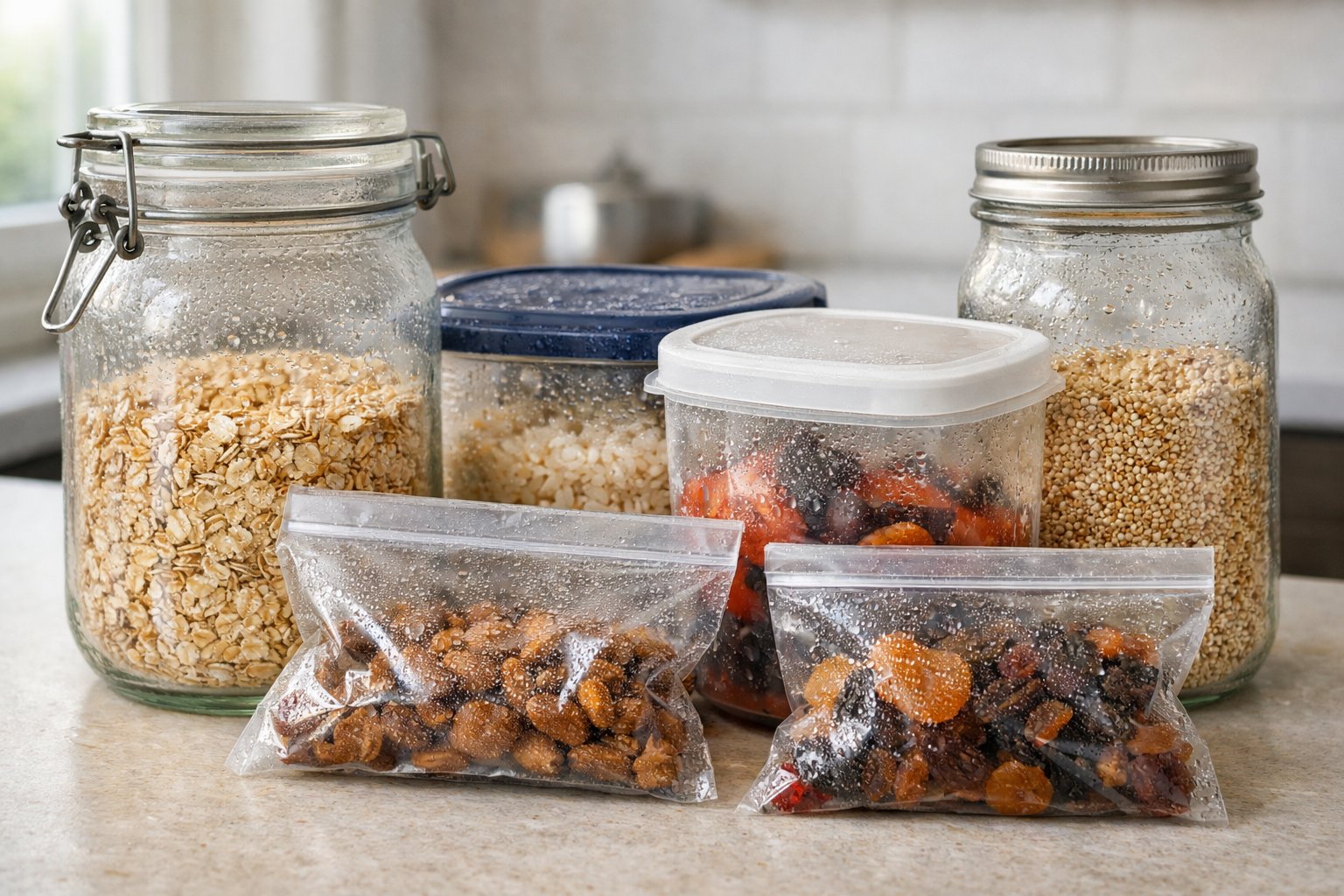
Even foods that seem bone dry still release tiny amounts of water over time. If that vapor can't escape, it builds up inside the container. When a warm container cools down in your pantry, condensation forms on the inside walls, quietly turning your dry goods into a playground for mold and bacteria, sometimes with no warning at all.
Once you understand how moisture gets past your defenses, you can make better choices about containers, storage spots, and prep methods. Let's dig into the science behind moisture buildup, the sneaky ways it gets into your sealed containers, and some practical strategies to keep your pantry staples fresher and safer for way longer.
Key Takeaways
- Moisture enters food storage through temperature changes causing condensation, trapped humid air during sealing, and natural water vapor release from ingredients
- High moisture levels trigger mold growth, bacterial contamination, texture loss, and drastically shortened shelf life in stored foods
- Proper sealing methods, moisture control tools like desiccants and dehumidifiers, and stable storage environments prevent moisture damage and reduce food waste
Why Hidden Moisture Is a Problem in Stored Food
Hidden moisture speeds up spoilage, messes with texture, and creates cozy conditions for harmful bacteria to thrive in your stored foods.
Impact on Shelf Life and Spoilage
Moisture creates a sealed, humid environment inside containers. This speeds up the growth of mold, yeast, and bacteria. Most of us have opened a container expecting fresh crackers, only to find them stale or flecked with mold.
When dried foods soak up moisture from the air, their shelf life nosedives. Foods with higher water activity quickly become breeding grounds for microorganisms that break down nutrients and develop funky flavors.
Even a little bit of moisture can start a chain reaction of deterioration. Grains, cereals, and dried goods are especially vulnerable since they're meant to be stored dry. Once moisture sneaks in, these foods lose their preservation edge and start going downhill in days instead of months.
Changes in Texture and Quality
Moisture migration just ruins the texture we expect from our stored foods. Crispy snacks like crackers and chips go soft and sad when they soak up water vapor. Meanwhile, moist things like cakes can dry out and turn brittle when they lose water to the air.
This happens because moisture moves from wetter to drier areas, creating uneven textures. Proteins can even change structure when exposed to extra moisture, making foods harder or mushier than they should be.
Common texture problems from hidden moisture:
- Crackers turning soft and chewy
- Bread developing a gummy interior
- Nuts losing their crunch
- Dried fruits becoming sticky or crystallized
Food Safety and Foodborne Illnesses
Hidden moisture brings real food safety risks by letting bacteria grow where you can't always see or smell them. Bacteria multiply fast in moist environments, and some dangerous strains can show up before you notice anything's wrong. That's a sneaky threat in your storage containers.
Mold from excess moisture can produce mycotoxins, which can make you sick even if you scrape off the visible mold. Moisture also lets bacteria like Salmonella and E. coli stick around longer on foods where they'd normally die in dry conditions.
Moisture-related food safety issues aren't always obvious. Sometimes food looks fine but harbors enough bacteria to cause illness. This is especially worrisome for foods stored at room temperature, where warmth and moisture speed up microbial growth.
Ways Moisture Sneaks into Food Storage
Moisture doesn't always show up as obvious water droplets. It can slip into containers via humid air, form from temperature changes, move between foods, or tag along on your hands and utensils.
Humidity Levels and Airborne Moisture
The air in your kitchen carries invisible water vapor that can get into food storage. When you open a container in a humid kitchen, that moisture-filled air rushes in and gets sealed inside when you close the lid.
Different spots in your home have different humidity levels. Kitchens near sinks or dishwashers tend to be more humid. Poorly ventilated pantries trap moisture, so food absorbs water from the air around it.
High-risk storage locations:
- Near dishwashers or sinks
- Unventilated pantries
- Basements with poor airflow
- Spots above refrigerators where warm air lingers
When the air holds more moisture than your food, water moves from the environment into your stored items.
Condensation and Temperature Swings
Temperature changes spark condensation inside sealed containers. If you put hot food in a container and let it cool, the steam turns into water droplets that settle on the lid and drip onto your food.
Moving containers between cold and warm areas can also cause condensation. Take a cold container from the fridge into a warm kitchen, and moisture forms on the outside—and sometimes inside the seal.
The backs and sides of refrigerators are colder than other spots. Storing containers there makes the temperature difference between food and container walls bigger, so moisture forms more easily. Even foods that start dry can pick up water this way.
Moisture Transfer Between Foods
Foods with a lot of water can release moisture that affects nearby items. If you store wet lettuce next to crackers or fresh tomatoes near bread, moisture moves from the wetter food to the drier one.
This happens even in closed containers if you pack different foods together. Cut veggies release their moisture as they sit. Cooked grains keep steaming after cooking. That water has to go somewhere, and it usually ends up on the other foods in the same container.
Contamination from Improper Handling
Our hands, utensils, and even the containers themselves can add moisture we don't notice. Scoop food with a damp spoon or pack items into containers that aren't fully dry, and you're adding water to the storage environment.
A few droplets on the rim or threads of a lid can create a humid little microenvironment once sealed. You can also introduce moisture by opening containers in humid conditions or storing them while condensation is still present on the outside.
Understanding Moisture Content and Water Activity
Moisture content tells you how much total water is in your food, while water activity reveals how much of that water microbes can actually use to grow and spoil your stash. Both matter, but they serve different purposes in figuring out whether your carefully stored ingredients will stay fresh or turn into science experiments.
What Is Moisture Content in Food?
Moisture content measures the total water in food, usually as a percentage of its weight. You figure it out by weighing food before and after drying, which reveals exactly how much water was inside.
Here's the catch: two foods might have the same moisture content but behave totally differently in storage. Honey has about 17-20% water and lasts years in the pantry. Fresh meat also has high moisture but spoils in days. The difference isn't just the amount of water—it's how that water acts.
Moisture content affects texture, weight, and how well recipes work. Crackers need low moisture to stay crisp, bread needs enough moisture to stay soft. We use moisture content for quality control and labeling, but it doesn't really predict shelf life or tell us when spoilage might hit.
Water Activity and Its Role in Spoilage
Water activity (aw) measures the ratio of water vapor pressure in food to pure water at the same temperature. It runs from 0 (bone dry) to 1.0 (pure water).
Unlike moisture content, aw tells you how much water is "free" and available for reactions and microbial growth. So it's a better predictor of shelf life and spoilage. Foods with aw under 0.60 can last at room temp pretty much forever, while foods above 0.90 support rapid bacterial growth.
| aw Range | Microbial Risk | Example Foods |
|---|---|---|
| Above 0.95 | Bacteria, yeast, mold | Fresh meat, produce |
| 0.85-0.95 | Yeast and mold | Soft cheese, cured meats |
| Below 0.85 | Minimal growth | Dried fruits, jerky |
| Below 0.60 | Stable storage | Crackers, spices |
How aw Affects Microbial Growth
Different microbes need specific aw levels to survive and multiply. Most bacteria need aw above 0.90, which explains why fresh foods spoil so fast. Pathogens like Clostridium botulinum require aw above 0.93 to make toxins.
Yeasts can handle drier conditions, growing at aw around 0.88 and up. Molds are the real survivors, thriving at aw as low as 0.70. That's why you sometimes find mold on dried fruit or in spice jars—these products have low moisture, but their aw still lets mold grow.
Lowering aw below 0.85 stops most dangerous bacteria even without refrigeration. Drying, adding salt or sugar, or combining preservation tricks all help. But even when bacteria can't grow, some molds can still produce mycotoxins at low aw, so you still need to store dried goods like nuts and grains properly.
The Science Behind Food Spoilage and Texture Changes
When moisture creeps into your stored foods, it kicks off chemical reactions that turn crispy snacks into mush and fresh ingredients into a science project. The texture changes you notice are actually signs of complex molecular breakdowns happening on a tiny scale.
Chemical Reactions Triggered by Moisture
Water acts as a catalyst for enzymatic and chemical reactions that break down the molecules in food. When moisture gets in, previously dormant enzymes wake up and start degrading proteins, fats, and carbs into simpler stuff.
Key moisture-driven reactions:
- Hydrolysis: Water splits up chemical bonds in starches, proteins, and fats
- Oxidation: Moisture speeds up fat breakdown, causing rancid flavors
- Maillard reaction reversal: Those crispy, browned surfaces start breaking down
- Microbial enzyme production: Bacteria and molds release enzymes that decompose food structure
The aw in food decides which reactions happen. Foods with aw above 0.60 can get moldy; above 0.85, bacteria thrive. Even a little extra moisture can push a stable food into the danger zone.
Temperature makes all this worse. For every 10°C rise, chemical reaction rates double. That's why spoilage races ahead in warm, humid conditions.
How Dry Foods Become Stale
Staling isn't just about losing moisture, like many people think. It's really about water moving around inside the food. Bread goes stale when water moves from the soft inside to the starch granules, making them recrystallize—a process called retrogradation.
Crackers and chips lose their crunch because they absorb moisture from the air. These foods are hygroscopic, so they naturally pull in water vapor. Even at 60% relative humidity, crispy foods can soak up enough moisture to get soft in just a few days.
The starches in these snacks start out organized and crisp. As moisture gets in, it messes up that structure, making them leathery or soft instead of snappy. That's why humidity matters more than age for a lot of shelf-stable snacks.
Why Some Foods Become Soggy
Soggy textures happen when moisture breaks down the stuff that keeps foods firm. In fruits and veggies, water disrupts cell walls and pectin, so the cells lose pressure and collapse—leaving you with that mushy mouthfeel.
Breaded or battered foods get soggy when moisture from the fridge or bad storage dissolves the proteins and starches in the coating. The coating soaks up water, swells, and loses its crispness.
Cookies and baked goods go soggy a bit differently. Sugar and salt attract moisture from the air. Once absorbed, this water dissolves those compounds and softens the gluten network. The crumb gets waterlogged at a microscopic level, turning crisp treats limp and disappointing.
Food Storage Strategies to Outsmart Moisture
Keeping food safe from moisture isn’t just about picking the right container—it’s about where you put things, how you organize your kitchen, and the habits you build over time. A mix of airtight containers, thoughtful storage, and a little location savvy goes a long way to keeping dampness at bay.
Best Practices for Kitchen Storage
Start by separating wet and dry foods as soon as you get home from the store. Lettuce, cucumbers, and tomatoes are basically little moisture factories, so if you tuck them next to crackers or cereal, you’re asking for soggy trouble.
The crisper drawer in your fridge isn't just a marketing gimmick. It’s designed to keep fruits and veggies at the right humidity. Play with the settings—leafy greens like it more humid, but apples and pears do better with less.
Temperature swings are a bigger deal than most folks realize. If you move food from warm to cold spots, you’ll get condensation inside containers. Let leftovers cool down to room temperature before they hit the fridge, but don’t push it past two hours (food safety still matters).
Give pantry shelves a few inches of breathing room from the wall. If containers are jammed together, moisture gets trapped. I try to leave a little space on at least two sides of each container—makes a difference.
Choosing Airtight Containers
Airtight doesn’t always mean airtight. I look for containers with a solid silicone or rubber gasket and a snap-lock lid that actually takes a bit of effort to close. If it just flops shut, that’s not sealing anything.
Glass containers with locking lids beat plastic for long-term storage. Glass doesn’t hold onto odors or moisture. Plastic is fine for short-term, but make sure it’s food-safe and BPA-free.
Container size matters more than you’d think. If you use a giant container for a small amount of food, you’re leaving a lot of humid air inside. Match the container to the food, keep headspace minimal. For flour or sugar, I always move them out of their original bags into something airtight right away.
Clear containers are a lifesaver—you can check on your food without popping the lid every time (which just lets in more humidity). Label everything with the date so you’re not opening things just to check what’s inside.
How Storage Location Affects Moisture
Don’t ever store food under the kitchen sink. That area gets hit with humidity from plumbing and sneaky leaks. I keep only cleaning stuff down there—food stays far away.
Pantries next to stoves, dishwashers, or outside walls aren’t great either. Cooking heat and temperature swings mean more condensation. Exterior walls get hit with temperature differences between inside and out.
The best place for storage? Cool, dark, and steady on temperature. An interior closet or cabinet away from heat sources is usually better than somewhere “convenient” but problematic. I check my pantry temperature once in a while—ideally, it’s between 50-70°F.
Basements sound smart for bulk storage, but they’re often humid. I use a cheap hygrometer to keep tabs on humidity—below 60% is the goal. If it creeps higher, I’ll toss in some moisture-absorbing packets or even a little dehumidifier.
Moisture Control Tools and Technologies
Modern food storage has some clever tricks for keeping moisture under control. From basic moisture-absorbing packets to packaging that plays with the air inside, there’s more going on than meets the eye.
Desiccants and Moisture Absorbers
Desiccants work by pulling water vapor out of the air. When you toss one in a sealed container, it keeps sucking up moisture until it’s full.
The classics? Silica gel, clay minerals, and molecular sieves. Silica gel works by grabbing water into its pores, while molecular sieves sort of trap water molecules in their crystal structure.
In big warehouses or factories, they’ll use monitoring systems that track humidity in real-time. That way, they can catch problems before food quality drops.
At home, you’ll mostly see desiccants in little packets or bigger tubs for closets and pantries. Some newer ones can actually be “regenerated” by heating them up, so you don’t have to keep buying replacements.
Modified Atmosphere Packaging Explained
Modified atmosphere packaging (MAP) swaps out the air in food packages with a custom mix of gases. By tweaking oxygen, nitrogen, and carbon dioxide, it slows down spoilage.
Lower oxygen levels keep bacteria in check, and more carbon dioxide helps stop mold. It’s pretty neat—no added preservatives, just a tweak of the air.
Some MAP setups use one-way valves so gases can escape but outside air can’t sneak in. That’s handy for foods that naturally give off gases as they sit.
The catch is, you need to get the gas mix right for each food. Fresh veggies need something different than, say, deli meats.
Silica Gel, Calcium Chloride, and Activated Charcoal
Silica gel packets are everywhere—those little “do not eat” pouches in electronics and food containers. They soak up about 40% of their own weight in water.
Calcium chloride is a moisture beast. It can absorb up to 14 times its weight (seriously), so it’s perfect for damp basements or big storage areas.
Activated charcoal? It’s more about killing smells, though it does grab a bit of moisture too.
| Material | Absorption Capacity | Best Use | Reusability |
|---|---|---|---|
| Silica Gel | 30-40% by weight | Small containers, electronics | Yes (with heating) |
| Calcium Chloride | Up to 1400% by weight | Large spaces, high humidity | No |
| Activated Charcoal | 10-15% by weight | Odor control, some moisture | Limited |
Each one has its sweet spot. Silica gel works in most conditions, calcium chloride is for really humid places, and charcoal is your go-to for musty smells.
Measuring and Monitoring Moisture in Your Stored Food
Keeping an eye on moisture can save your food before things get gross. Sometimes you just need your eyes and nose, but there are gadgets for when you want to get geeky about it.
Simple Signs of Moisture Trouble
You don’t need fancy tools to spot a problem. If you see condensation on the inside of a container, that’s too much moisture. Food that feels sticky, clumpy, or oddly soft has probably soaked up water.
Watch for changes in color, dark spots, or—ugh—mold. Grains and dried foods that stick or clump together have taken on water and might not be safe.
Heads up for these warning signs:
- Water droplets inside packaging
- Caked or clumpy powders
- Crispy things turning soft
- Weird, off smells
- Ice crystals in frozen foods (that’s from temp swings)
If something smells musty or stale, don’t ignore it. That’s usually the first hint of moisture trouble before you see anything.
Techniques for Measuring Moisture Content
If you want numbers, moisture analyzers can tell you exactly how much water is in your food. They heat up a sample, measure how much weight it loses, and that’s your moisture content.
Handheld moisture meters are handy, too. Some have pins you stick into food, others use sensors on the surface. You’ll get a reading in seconds.
| Method | Speed | Accuracy | Use Case |
|---|---|---|---|
| Visual inspection | Instant | Low | Daily checks |
| Moisture meters | Seconds | Medium | Regular monitoring |
| Lab analysis | Hours | High | Quality checks |
For home use, you can get a basic moisture meter for $20-100. Works well for grains, nuts, and dried goods. More serious setups need pro-grade, calibrated gear.
Using Karl Fischer Titration and Other Methods
Karl Fischer titration is the gold standard for super-accurate moisture testing. It can measure down to 0.001% water by reacting a chemical with just the water in your food. Labs use it to check other methods.
The process? Dissolve a sample, add the reagent, and see how much it takes to react with all the water. It’s especially good for fats, oils, and processed foods.
Near-infrared spectroscopy is a quicker, non-destructive way to check moisture—just shines light on the sample and reads the result. Good for quality control in production.
Old-school oven drying is still around, too. Weigh the food, dry it out, weigh it again. The difference tells you how much water was in there.
Reducing Food Waste Through Smart Moisture Management
Getting moisture under control is probably the easiest way to make your food last longer. When you nail the storage setup, you cut down on bacteria, mold, and waste—sometimes by weeks.
Extending Shelf Life with the Right Habits
Bacteria need water to grow, so if you keep things dry, you slow down spoilage a lot.
Temperature and humidity are a team—store dry goods away from heat and steam, and they’ll last for months. With refrigerated stuff, watch out for condensation.
One tip: Don’t pre-wash produce before you store it. Wet lettuce or berries might look nice, but that moisture is just asking for mold. Wash right before you eat, not before you store.
Pick the right container for the job. Airtight is great for dry foods, but produce that lets off moisture does better with a little ventilation. There’s no one-size-fits-all.
How Good Moisture Control Prevents Spoilage
Spoilage is all about bacteria, mold, and enzymes breaking food down. They all need moisture, so keeping food dry keeps them in check.
If you see condensation, soggy textures, or smell mustiness, spoilage has probably started. The best defense is stopping those conditions from popping up in the first place.
Changing the air around food—like with modified atmosphere packaging—helps too. Less oxygen, more carbon dioxide, and you slow down bacteria without any weird chemicals. At home, you can get close just by using good containers and smart storage spots.
Freezing pulls water out by turning it to ice, and drying just removes it entirely. Both help food last longer and cut waste.
Tips to Make Food Last Longer
For refrigerated produce:
- Line containers with paper towels to soak up extra moisture
- Wipe off damp veggies every day or so
- Store greens in bags that breathe, with something absorbent
- Don’t cram containers full—let air move around
For pantry storage:
- Keep dry goods away from sinks, dishwashers, and heat
- Use airtight containers for flour, sugar, and grains
- Check seals and swap out broken lids
- Keep shelves clean and dry
Honestly, the biggest win is buying only what you’ll actually eat. Most produce lasts three to five days, tops, even in perfect conditions. If you buy for that window, you’ll waste less—storage tricks can only do so much.
Frequently Asked Questions
Moisture sneaks up on you, and spotting it early can save a lot of food. Here’s what I’ve picked up about catching problems, what’s really at risk, and how to keep your stash safe.
What are the sneaky signs of moisture buildup in food containers?
Usually, you’ll spot condensation inside the lid or on the walls. Little water beads show up, especially if the container’s been in the fridge.
Texture is a giveaway too. Crackers that should snap go limp, dried herbs clump up, or things just feel off.
Sometimes the only clue is a musty or sour smell when you open the container. Even if the food looks okay, that scent means bacteria or mold are probably moving in.
How does unexpected moisture affect the longevity and safety of my stored pantry items?
Moisture cuts shelf life fast by making it easy for bacteria and mold to take over. Foods that should last months can go bad in days if they get damp.
With perishables, it’s a safety thing—moisture plus bad storage means bacteria can grow, even if the food looks fine.
Dry goods like flour, rice, and cereal will soak up moisture, clump, and sometimes even attract bugs or mold. Once that happens, there’s not much you can do but toss the lot.
What's the deal with fridge food getting all misty-eyed? Any tricks to combat that?
The back and sides of your fridge run colder than the middle, and those chilly spots create condensation. When you shove in warm food, the cold air turns steam into water droplets that end up inside your containers.
If you let food cool off to room temp before sealing it up, you'll see way less moisture. Sure, it takes a little patience, but honestly, it's usually worth it.
Leaving a bit of space at the top of your containers gives air a chance to move around instead of trapping all that dampness right up against your food. When you cram containers full, condensation just settles right back into your leftovers.
Are there DIY hacks to keep food high and dry in storage?
Tossing a paper towel at the bottom or under the lid of your container soaks up extra moisture naturally. This simple move works especially well for produce and leftover salads.
You can stash food-safe desiccant packets in your pantry storage to help with humidity. Just keep them away from direct contact with the food.
For grains and pasta, clear airtight containers with a sprinkle of rice at the bottom do wonders. The rice acts like a little moisture magnet, grabbing any dampness that sneaks in.
How does one play detective and spot hidden mold in their munchies stash?
Peek into the corners and bottom edges of containers—moisture loves to hide there, and mold usually pops up in those sneaky spots before you ever see it on top.
Watch for weird discoloration or fuzzy patches. Mold can show up white, green, black, or even pink, depending on what it's munching on.
And don't ignore your nose. If something smells off—musty, earthy, just plain wrong—it's probably time to toss it. Sometimes your nose knows before your eyes do.
Is there a secret handshake to prevent my food from getting soggy in storage? Or just smart tactics?
Airtight containers with good seals—yeah, that's really the trick for keeping moisture out. If the lid's worn or the container's scratched up, you'll lose that protective barrier.
Where you stash your food in the fridge actually makes a bigger difference than you'd think. Middle shelves, with a bit of space around each container, help keep temperatures steady and cut down on condensation.
The kind of container matters, too. Glass and ceramic-coated ones don't trap moisture like those old plastic tubs, plus they're just easier to keep clean and dry.
Share:
Understanding the Transition From Storage to Cooking
Why Proper Sealing Matters More Than Expiry Dates