

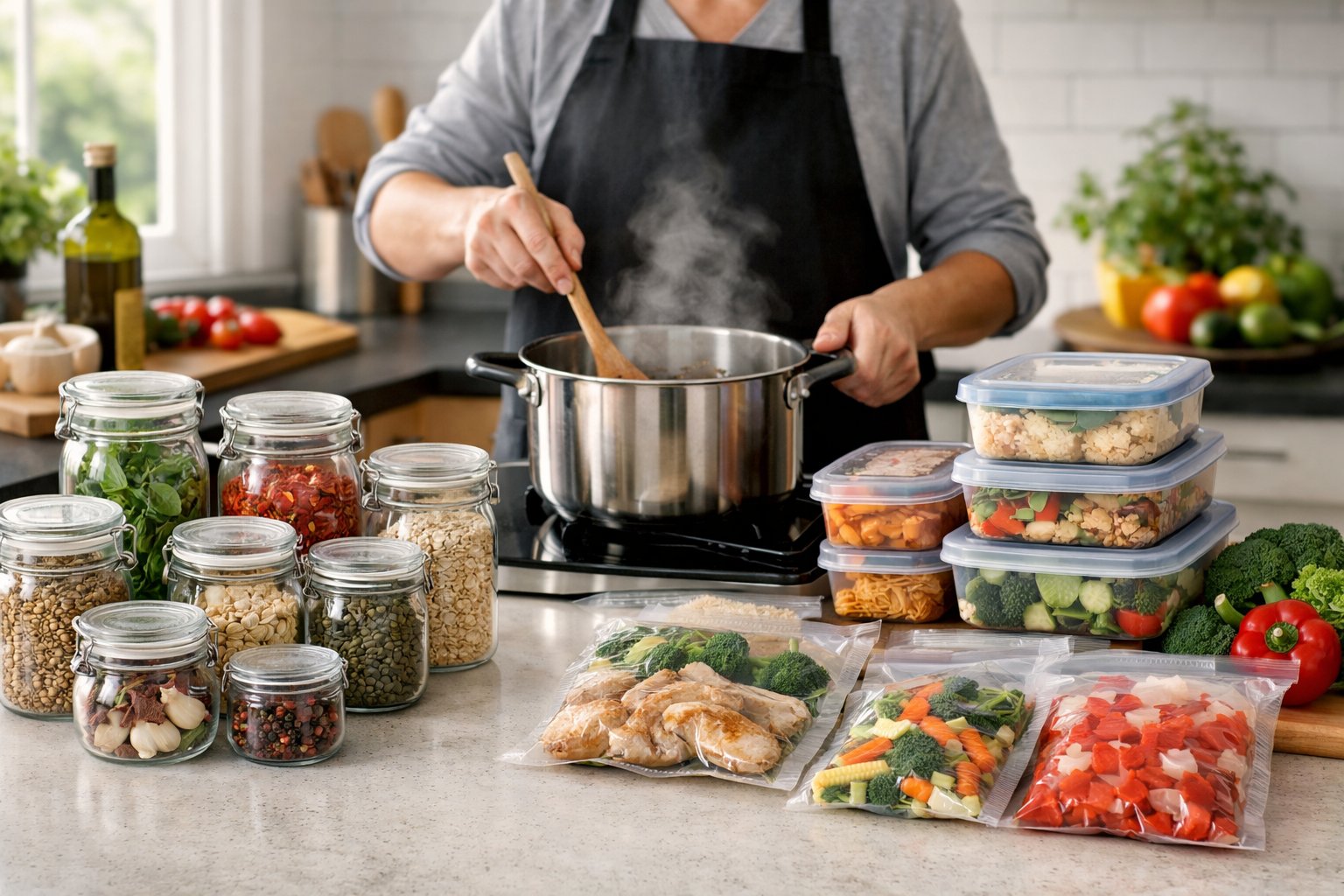
Check out our latest home & kitchen collection!
Every home cook knows the pain: you follow a recipe exactly, but somehow, each attempt turns out differently. The problem? It’s often not your technique, it’s how you store your ingredients.
Storage choices shape cooking consistency by affecting ingredient quality, moisture, and flavor. Even with the same recipe, ingredients stored differently will give you different results.
We tend to overlook just how much storage impacts our cooking. Flour that’s picked up moisture from the air makes baked goods heavy. Herbs left out in the open lose their punch, and veggies exposed to temperature swings in the fridge can throw off your timing and texture. These aren’t tiny issues, they decide whether a dish turns out the way you expect, or feels like a roll of the dice.
Key Takeaways
- Storage conditions temperature, humidity, and light, shape ingredient quality and how they cook
- The right containers and storage spots help prevent moisture loss, flavor fade, and unpredictable results
- Good storage cuts waste and helps you get the same results from your recipes, every time
Understanding Cooking Consistency
Cooking consistency means getting the same taste, texture, and look every time you make a dish. That reliability comes from controlling things like ingredient quality, measurements, and prep methods—and, honestly, storage plays a much bigger role than most of us admit.
Defining Consistency in Cooking
Consistency is about repeating results, not just following a recipe. It’s getting the same golden crust on chicken, the same creamy sauce, and the same tender veggies every time. That means watching cooking temps, timing, ingredient ratios, and prep techniques.
But even small changes in ingredients—like flour that’s sucked up extra moisture or onions that have gone bland—can mess with your results. Storage is the foundation here: it gives you a fighting chance at repeatable, predictable meals.
Why Consistency Matters for Meals
Consistency makes home-cooked meals satisfying. When you pull off a favorite dish again and again, you get more confident and build a stable meal rotation.
If your Tuesday pasta is perfect but Thursday’s is bland and mushy, it’s frustrating and leaves you second-guessing. For meal preppers, consistency is even more important—nobody wants Friday’s lunch to taste tired and stale.
Consistency helps you:
- Cut food waste by avoiding failed dishes
- Save time since you’re not redoing meals
- Control nutrition with steady portions and ingredients
- Grow your skills by repeating successes
Common Factors That Influence Consistency
Lots of things can mess with consistency, but ingredient quality and freshness top the list. Veggies that have hung around too long just don’t cook the same as fresh ones.
Temperature is huge. Room-temp butter creams differently than cold, and meat straight from the fridge cooks unevenly compared to meat that’s had a chance to warm up.
Measuring accurately matters, especially for baking. Level off dry ingredients, check liquids at eye level, and use a scale when precision counts.
Other factors—humidity, altitude, the state of your cookware—all play a part. Well-seasoned cast iron behaves differently than a pan with patchy seasoning. High humidity changes how flour absorbs liquid and how long browning takes.
But before you start cooking, how you’ve stored your ingredients sets the stage for everything else.
The Role of Storage Choices in Cooking Consistency
The way you store ingredients decides whether they’ll give you the same texture, flavor, and nutrition every time. Your container choice, how you manage temperature, and your spoilage-prevention habits all set you up for reliable cooking—or not.
Impact on Texture and Flavor Retention
If you store ingredients wrong, you’re fighting an uphill battle before you even start cooking. Herbs lose their aromatic oils fast when exposed to air and light. Leafy greens wilt in dry environments. Dry goods like flour, sugar, and spices soak up moisture and odors, messing with both texture and flavor. Ever opened flour that smells like onions? Not ideal.
Temperature swings matter, too. Refrigerators should stay between 32°F and 40°F, but if temps jump around, produce breaks down. Proteins like meat and fish are especially touchy—ice crystals form and melt, breaking down muscle fibers and giving you that dreaded mushy texture.
For freezing, packaging is everything. Air is the enemy. Wrap things tight, use freezer-safe materials, and squeeze out as much air as you can to avoid freezer burn.
Nutritional Value and Storage
Storage doesn’t just change taste—it affects nutrients. Vitamins break down at different rates depending on their exposure to light, air, and heat.
Water-soluble vitamins like C and B-complex don’t last long if produce sits out or in clear containers. You can lose 15-20% of vitamin C in veggies within a day if you store them wrong. Opaque, airtight containers in cool, dark spots help keep those nutrients around.
Fat-soluble vitamins (A, D, E, K) hold up better, but oils, nuts, and seeds still need protection from light and air. Dark glass or metal works best for oils. If you’re keeping nuts and seeds more than a month, stick them in the fridge or freezer.
Cut veggies lose nutrients faster than whole ones since more surface area is exposed. If you prep ahead, airtight containers with minimal air slow down the loss.
Preventing Food Spoilage for Reliable Results
Spoiled food throws a wrench in consistency because you never know when an ingredient’s gone from fresh to funky. Bacteria, mold, and enzymes are the main troublemakers, each thriving in different environments.
Temperature is your first line of defense. Bacteria love the “danger zone” between 40°F and 140°F, so keep cold foods cold and check your fridge with a thermometer—don’t just trust the dial.
Humidity makes a difference, too. High-humidity drawers (90-95%) are for leafy greens and carrots. Low-humidity (65-75%) works for things like peppers, squash, and apples.
| Storage Type | Best For | Humidity Level |
|---|---|---|
| High-humidity | Leafy greens, carrots, broccoli | 90-95% |
| Low-humidity | Peppers, squash, apples | 65-75% |
| Room temp | Onions, garlic, potatoes | 50-60% |
Check your ingredients regularly for spoilage. Date your containers when you store stuff, so you use older items first. Borrow a page from restaurant kitchens—rotate your stock and keep things fresh.
Storage Methods and Their Effects
Different storage methods create different conditions, changing how ingredients behave when you cook. Temperature, moisture, and air exposure all impact structure, which in turn affects texture, flavor, and timing.
Refrigeration Basics for Consistent Results
Refrigeration slows bacteria and enzymes, but it also dries out food. That dry air pulls moisture from exposed surfaces, which can mess with browning and texture.
Tips for fridge storage:
- Leave proteins uncovered for a couple hours before cooking to dry the surface for better searing
- Wrap veggies tightly to hold in moisture so they don’t wilt or cook unevenly
- Keep dairy sealed so it doesn’t pick up weird flavors
- Use airtight containers for cut produce to keep water content up
Where you put things matters, too. The back of the fridge is colder than the door, so ingredients stored in different spots end up at different temps and moisture levels. A chicken breast from the back shelf won’t cook quite the same as one from the front.
Letting refrigerated ingredients come to room temp before cooking usually makes things more predictable, especially with proteins.
Freezing and Preventing Freezer Burn
Freezing buys you time, but it’s not without side effects. Ice crystals form and rupture cell walls, changing how foods hold moisture and heat up.
Freezer burn happens when air gets to the food, drying it out. Avoid this by pushing out as much air as you can and using moisture-proof packaging.
Freezing tips:
| Method | Best For | Prevents Freezer Burn |
|---|---|---|
| Vacuum sealing | Meats, prepared meals | Excellent |
| Double wrap (plastic + foil) | Odd shapes, bones | Good |
| Freezer bags, air squeezed out | Liquids, veggies | Good |
| Airtight containers with headspace | Soups, sauces | Moderate |
Quick freezing is better—smaller ice crystals mean less damage. Lay things flat on a baking sheet to freeze, then bag for easy portions.
Canning and Dehydration Strategies
Canning and dehydration change ingredients in big ways. Canned foods are already cooked, so they just need heating. Their texture is softer, so add them late in cooking to avoid mush.
Dehydrated foods have concentrated flavor and little water. You’ll want to rehydrate before cooking—sometimes the soaking liquid is great to use in the dish. Dried herbs need just a brief soak, while beans take hours.
When swapping in canned or dried ingredients, adjust liquid and cooking time. Fresh tomatoes aren’t the same as canned, and you’ll need to tweak recipes accordingly.
Choosing the Right Storage Containers
Your storage containers play a huge role in keeping ingredients at their best, which directly affects how your food turns out. The right containers keep moisture in (or out), prevent oxidation, and block contamination.
Airtight Containers for Freshness
Airtight containers stop oxygen from getting in, which is key for keeping ingredients steady. Flour that absorbs moisture behaves differently in baking. Spices exposed to air lose their punch, and you end up dumping in more than the recipe calls for.
The best airtight containers use silicone gaskets and locking lids that clamp down tight. You can test a seal by filling the container with water, closing it, and giving it a gentle shake. If it leaks, it’s probably not airtight enough for keeping things fresh.
Why airtight matters:
- Stops dry goods like flour and sugar from picking up moisture
- Keeps spices and herbs potent
- Blocks oxidation that can turn nuts and seeds rancid
- Makes pantry staples behave the same way from start to finish
Not all containers labeled “airtight” are equal. Look for ones with multiple locks and flat, unwarped gaskets. It’s worth the extra effort—consistency really does start here.
Moisture-Proof Containers and Their Uses
Moisture-proof containers do more than just keep air out—they stop humidity from sneaking in and messing with your ingredients. Even tiny shifts in moisture can throw off your recipes. Ever found your brown sugar rock solid? That’s just moisture escaping. Rice left out grabs water from the air and suddenly cooks up mushy or sticky.
Some ingredients are especially finicky about humidity. Baking soda, baking powder, and yeast lose their oomph if they get damp. Cocoa powder clumps. Salt turns weird and stops pouring smoothly. Moisture-proof containers use thick walls and special gaskets to keep water vapor at bay.
Ingredients that need moisture-proof storage:
- Baking leaveners (baking soda, baking powder, yeast)
- Cocoa powder and chocolate chips
- Crackers and cereals
- Brown sugar and confectioner's sugar
If you live somewhere humid or stash containers near your stove or dishwasher, you’ll really notice the difference between moisture-proof and just airtight.
Material Matters: Glass, Plastic, and More
What you store food in actually matters. Glass doesn’t pick up smells or flavors and won’t leach anything into your food. It’s great for acidic stuff—think tomato sauce or vinaigrettes. Plus, glass doesn’t care if it’s hot or cold.
Polypropylene plastic (#5) is light and easy to handle, and it doesn’t have the chemical worries of old-school plastics. It’s fine for dry things and short-term storage, but it can hold onto strong smells (hello, leftover curry). For anything oily or acidic that’ll be stored a while, I’d skip plastic.
Stainless steel is tough and perfect for dry goods or when you’re on the move. It won’t react with food and can last basically forever. Downside? You can’t see what’s inside, so labeling is a must.
Quick material rundown:
| Material | Best For | Limitations |
|---|---|---|
| Glass | Acidic foods, long-term storage, liquids | Heavy, breakable |
| Polypropylene plastic | Dry goods, lightweight portability | Can stain, absorbs odors |
| Stainless steel | Bulk dry goods, durability needs | No visibility, no microwave use |
Honestly, pick the material that fits how you actually use your containers. There’s no universal “best”—it just depends.
Controlling Storage Temperature for Predictable Cooking
Keeping your storage temps steady really does matter. It changes how your ingredients cook, from how much moisture stays in to how evenly heat moves through. If you ignore temperature swings, you’re basically gambling every time you cook.
Why Temperature Control Is Essential
If you store food at random temps, you’re starting every meal with a wild card. A chicken breast at 2°C isn’t the same as one at 6°C, even if both are “cold.”
When temps bounce around, enzymes get busy and start changing proteins and moisture levels. Suddenly, your usual cook times don’t work—sometimes food’s underdone, sometimes it’s dry. With meat, temperature swings speed up bacterial growth and mess with texture, especially with ground meat. That changes how heat moves through as you cook.
Veggies and fruit have similar problems. If they’re stored too warm, their cell walls break down faster, so they get mushy when you cook them. Ever roasted carrots that just turn to mush? Often that’s storage, not your oven.
Using Temperature Monitoring Systems
Digital thermometers take the guesswork out of storage. Some just show the current temp; others keep a log and even ping your phone if things drift too far.
Stick a monitor in a few spots, since the back of your fridge is colder than the door—sometimes by several degrees. That difference can mess with your results.
Wireless systems are handy, especially if you want to catch a problem before it ruins your food. Commercial kitchens often track temps 24/7, but even at home, a cheap fridge thermometer is worth it. Check once a week to make sure things are still set right.
Optimal Freezer and Refrigerator Temperatures
Aim for your fridge to stay at or below 4°C. That slows bacteria and keeps your food from freezing. Freezer? -18°C or colder. Any warmer and you get big ice crystals that wreck texture.
| Storage Type | Optimal Temperature | Impact on Cooking |
|---|---|---|
| Refrigerator | ≤4°C | Maintains moisture, consistent thawing |
| Freezer | -18°C or colder | Preserves texture, predictable defrost times |
If you’ve ever had a bag of frozen veggies turn into a watery mess, that’s from ice crystals bursting cell walls—just poor freezer control.
Don’t keep stuff you use all the time in the fridge door or other warm spots. Store proteins on the lower shelves (cold air sinks), and put less sensitive items up top.
Practical Storage Tips for Better Cooking Consistency
How you store things really does change how they cook—and how safe they are. With a little organization and some good habits, you can keep ingredients fresher and your meals more predictable. It’s not rocket science, but it does take a bit of effort.
Labeling and Rotating Ingredients
Mark every container with the date and what’s inside. It sounds fussy, but it saves you from using stale stuff that’ll mess up your recipes.
Use the “first-in, first-out” method—older items in front, new stuff in the back. Flour that’s been sitting for six months isn’t the same as fresh—it might need more liquid and can make baked goods dense.
For pantry basics, just write the purchase date on the package. Spices fade after about a year, so dating them helps you know when to add extra or swap them out. Baking powder and soda lose their kick too, which can totally flatten your cakes.
Leftovers get a label with the date and maybe a quick note like “reheat at 350°F for 15 min.” It’s a lifesaver on busy nights.
Organizing Pantry and Leftover Storage
Group ingredients by use and how they need to be stored. Oils and nuts belong in cool, dark spots—heat and light turn them rancid fast.
How we set up our pantry:
- Baking station: flours, sugars, leaveners, extracts
- Cooking essentials: oils, vinegars, stocks near the stove
- Grains and pasta: airtight containers to block moisture
- Canned goods: sorted by type, labels facing out
For leftovers, use shallow, airtight containers so they cool fast and don’t dry out. Deep containers cool unevenly, which can let bacteria grow in the middle. Always keep cooked food above raw meat in the fridge to avoid drips and cross-contamination.
Most perishable stuff goes on the upper fridge shelves where the temp is most stable. The door is warmest, so skip putting milk or eggs there—even if the fridge has special holders.
Reducing Food Waste While Meal Prepping
Prep in stages instead of making everything at once. Chop veggies ahead, but don’t cook them until you need them.
Waste-reducing tricks:
- Freeze veggie scraps for stock instead of tossing them
- Stand herbs in water like flowers, or freeze them with oil in ice cube trays
- Blanch veggies before freezing to keep their color and texture
- Portion proteins before freezing so you only thaw what you’ll use
Some foods freeze better than others. Soups, stews, and casseroles are usually fine. Cream sauces and watery veggies (lettuce, cucumbers) get weird. When I make chili or pasta sauce, I freeze it in recipe-sized batches.
Cooked grains like rice and quinoa freeze well for up to three months. Spread them on a sheet pan to freeze individually before bagging—that way, you can grab just what you need without a clump.
Food Safety Tips to Prevent Foodborne Illness
Get hot food cooled down and into the fridge within two hours. Any longer and bacteria can multiply fast. Use shallow containers or even an ice bath to speed up cooling.
Keep the fridge at or below 40°F and the freezer at 0°F. Check with a thermometer every month. Even a few degrees off can shorten shelf life or make food unsafe.
Thaw frozen food in the fridge, microwave, or under cold water—never on the counter. Room temperature is perfect for bacteria, especially on the outside of big cuts while the inside stays frozen. Plan ahead and move things to the fridge the night before.
How long we keep things:
| Food Type | Refrigerator | Freezer |
|---|---|---|
| Cooked meat dishes | 3-4 days | 2-3 months |
| Cooked seafood | 2 days | 2-3 months |
| Soups and stews | 3-4 days | 2-3 months |
| Cooked grains | 3-4 days | 6 months |
Reheat leftovers to 165°F. Use a food thermometer and stir well, especially for thick dishes like casseroles—cold spots can hide bacteria.
Nutrient Retention and Long-Term Storage
How you store food really does change how many nutrients you actually get—especially B vitamins, which are pretty fragile. Shelf life isn’t just about safety; it’s also about how much nutrition you’re still getting.
Preserving B Vitamins During Storage
B vitamins break down fast if exposed to light, air, or temperature swings. Thiamine, riboflavin, and folate are especially sensitive.
Airtight containers slow down oxidation, which helps protect these water-soluble vitamins. Store stuff in the dark to protect riboflavin—it can break down in just days if left in the light. Keeping foods cold slows the enzymes that destroy B vitamins in veggies and grains.
Cooked foods lose B vitamins faster than raw ones, so freeze meals you won’t eat within three days. Freezing basically pauses vitamin loss, while leftovers in the fridge keep losing a bit every day.
Best ways to keep B vitamins:
- Store grains and flours in sealed, opaque containers
- Keep fridge temps below 40°F
- Freeze cooked meals within two hours
- Use frozen veggies within 8-12 months
How Storage Affects Shelf Life and Nutrition
Shelf life and nutrition don’t always line up. Food can be safe long after it’s lost some nutrients.
Frozen food holds onto nutrients really well if you keep it at 0°F or lower. In fact, veggies frozen right after harvest often have more vitamins than “fresh” ones that sat in storage or transit for weeks.
Canned foods last ages, but lose some vitamin C and B vitamins during processing. Once sealed, though, further nutrient loss is tiny. A can of beans from last year? Nearly as nutritious as a new one.
Oils and nuts lose nutrition as they go rancid, even if they look fine. Refrigerate nuts after opening and use oils before their “best by” date to keep the good fats and vitamins.
Frequently Asked Questions
How you store your ingredients affects how your food turns out—no question. Temperature, container choice, and where you put things all play into keeping food fresh and flavorful.
Does the way I store my food really make a difference in the outcome of my dishes?
Absolutely. Store things wrong and you’ll lose moisture, pick up weird odors, or end up with bland, mushy, or off-tasting food before you even start cooking.
Temperature swings wilt produce or make it spoil faster. Dairy gets funky if it’s not kept cold enough. Proteins can get freezer burn or bacteria if not wrapped and stored right.
Baked goods change texture based on storage too. Flour in a humid spot clumps or even gets moldy. Sugar exposed to moisture turns into a brick.
What's the skinny on keeping my fruits and veggies crisp; does the fridge layout matter?
Fridge layout definitely matters. Most fridges have crisper drawers with humidity controls for a reason.
Leafy greens and herbs last longer in high-humidity environments—use sealed containers or the high-humidity drawer (set it to 80-100%). That keeps them from wilting.
Fruits that give off ethylene gas (apples, avocados) need to be kept away from ethylene-sensitive veggies. Use the low-humidity drawer for onions and garlic to avoid mold. Avoid the back of the fridge for delicate produce—it’s colder and can freeze your lettuce or berries.
Got any tricks to prevent flavor loss in herbs and spices due to poor storage?
Airtight containers really make all the difference for keeping spices flavorful. I always stash dried herbs and ground spices in containers that actually seal up tight, and I keep them far from heat and light—definitely not near the stove.
Whole spices just last longer, no question. I’ll grab whole peppercorns, cumin seeds, or coriander, then grind them fresh when I need that punch of flavor.
Fresh herbs are a bit picky. For the tender ones—think basil or parsley—I stand them up in a glass of water at room temp, with a loose plastic bag over the leaves. The tougher types, like rosemary or thyme, do better wrapped in a damp paper towel and tucked into a sealed container in the fridge.
Light is basically the enemy here; it zaps the essential oils right out of spices. Opaque containers help, but if you only have clear jars, just keep them in a closed cabinet. Works well enough.
Is there a secret to preventing cross-contamination in the fridge that also aids in consistent cooking results?
Where you put things in the fridge actually matters. Raw proteins? Always bottom shelf. That way, if anything drips, it can’t mess up the rest of your food.
Ready-to-eat stuff—leftovers, washed produce, anything you’ll eat raw—should live up top. That keeps them out of harm’s way.
I like to use labeled containers for different foods, just to keep things organized and avoid flavor crossover. Sealed containers are a must, especially when you’ve got onions or other strong smells hanging around. Butter and eggs pick up those odors way too easily.
I try to check the fridge temp now and then, aiming for somewhere between 32°F and 40°F. If it gets too warm, bacteria have a field day, and that’s just not what you want for either safety or consistent results.
Can you dish out the details on how to optimize pantry storage for baking ingredients?
Baking ingredients stay happiest in cool, dark, and dry spots. I keep flour, sugar, and the rest in airtight containers—helps dodge both moisture and the occasional bug.
White flour is pretty forgiving, lasting 6-8 months at room temp if you seal it up. Whole grain flours don’t hang on as long because the oils go off, so I toss those in the fridge or freezer. I always let them warm up before baking, otherwise things can get weird.
Brown sugar’s another story—it dries out fast. I keep it soft with a terra cotta disk or even a slice of bread in the container. White sugar just needs to stay bone dry so it doesn’t clump up.
Leaveners like baking powder and soda lose their kick over time. I jot down the date when I buy them and swap them out every 6-12 months. If I’m not sure, I’ll mix a bit of baking powder with hot water; if it bubbles like crazy, it’s still good.
How can I tell if my food storage habits are impacting the taste and texture of my meals?
When produce wilts too quickly or gets soft spots just days after you buy it, something’s off with your storage—maybe the fridge is too humid, or the temperature’s not quite right.
Strange flavors in your meals often point back to how you’re storing ingredients. If your baked goods taste a bit stale, or your sauces seem flat, it might be time to check whether your spices have gone dull or if your dairy’s picked up some weird fridge smells.
Texture tells its own story. Bread that dries out overnight or veggies that go mushy? Those are pretty clear signs you need to rethink your humidity settings. And if you spot ice crystals or weird colors on frozen meat, the freezer probably isn’t doing its job.
Try a couple of quick tests. Smell a new jar of spices, then compare it to one that’s been sitting in your cabinet. Fresh spices should hit you with a strong, lively scent. You can also taste produce right when you bring it home, then again after a few days—see if you notice a drop in quality. Sometimes, it’s the little differences that give away a storage problem.
Share:
Why Prepped Ingredients Need Proper Storage
Why Prepped Ingredients Need Proper Storage