

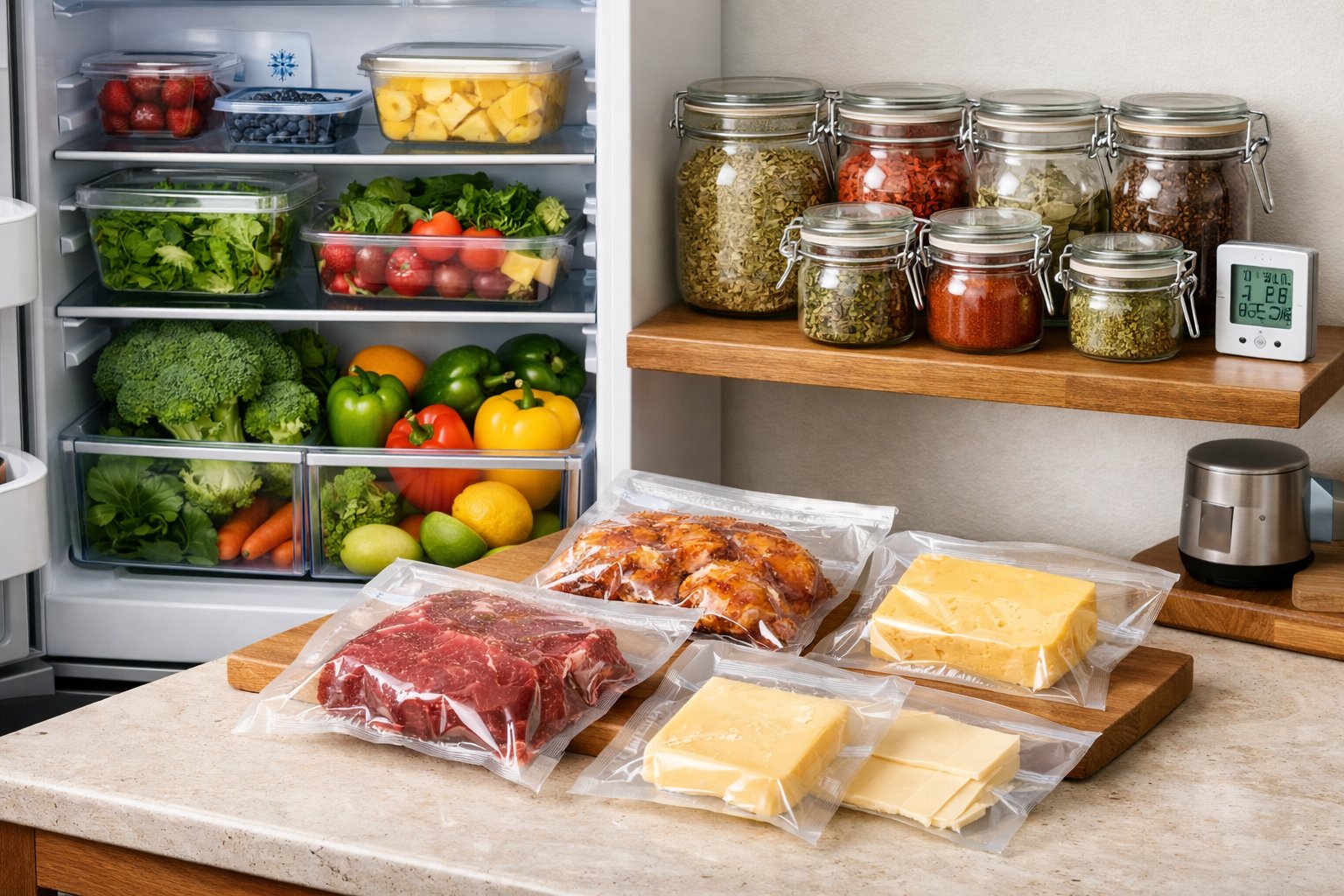
Check out our latest compact vacuum sealer for food collection!
Ever noticed how your herbs go limp, your bread gets weirdly bland, or yesterday’s leftovers just don’t taste right, even though nothing looks or smells “bad”?
Storage conditions, think temperature, light, and humidity, kick off chemical reactions and physical changes that mess with flavor compounds long before bacteria or mold make your food unsafe.
Oxidation, enzyme activity, and moisture loss slowly chip away at taste, leaving food technically edible but, honestly, kind of disappointing.
We tend to blame ourselves for not eating food fast enough, but storage is usually the real problem. A few tweaks in how we stash things can keep food tasting like it should for way longer. If you get why flavor fades, you can save not just your groceries, but the actual pleasure of eating.
The best part? You don’t need fancy gadgets or complicated tricks. When you know which factors matter most and how different foods react, you can keep ingredients tasting fresh and lively, no sweat.
Key Takeaways
- Storage conditions influence flavor through oxidation, enzymes, and moisture shifts—often before you see any spoilage
- Controlling temperature, blocking light, and using decent packaging are crucial to keeping taste and aroma intact
- Different foods need different storage approaches to hold onto their best flavor and texture
How Storage Conditions Change Taste Before Food Spoils
How we store food sets off chemical and physical changes that dull flavor long before anything gets dangerous. Noticing these early shifts can help you waste less and get more out of what you buy.
Differences Between Flavor Loss and Spoilage
We mix up flavor loss and spoilage all the time, but they’re not the same thing. Flavor loss happens when reactions like oxidation or moisture shifts zap away taste, even though the food’s still safe. Spoilage is when microbes take over, making food risky or obviously gross with mold, slime, or bad smells.
Timing and safety are the big differences. Bread tastes stale after a few days on the counter but is fine to eat until mold appears. Coffee? It loses its punch within days of opening, but it’ll be “safe” for months.
Temperature swings speed up flavor loss without necessarily making food spoil faster. Storing spices in a hot cupboard near the stove? They’ll lose their oomph as the volatile oils break down, but you won’t get the bacterial funk that means true spoilage. This matters for how we decide what to keep or toss.
Early Signs of Taste Decline
The first hints that taste is slipping are usually pretty subtle. Stale flavors show up when fats oxidize or moisture moves around, giving crackers, nuts, or chips that cardboard vibe. Fresh herbs lose their bold aroma in just a few days as their essential oils evaporate, leaving them flat and grassy.
You might notice that cold tomatoes from the fridge taste muted compared to ones stored at room temp—even though they look identical. Cold just shuts down the release of flavor compounds, with no obvious visual clue.
Texture shifts usually tag along with early flavor loss. Bread turns tough or rubbery as moisture redistributes, and cookies go soft when they soak up humidity. These changes mean taste compounds are breaking down, even if the food’s not technically “old.”
Impact on Food Quality and Enjoyment
When food loses flavor, we just don’t want to eat it—and that leads to a lot of waste. Maybe your cheese gets bitter or your olive oil tastes metallic. They’re still safe, but who wants to eat them? We’re more likely to toss these foods, even though they haven’t actually spoiled.
Wasted flavor is wasted money, especially with pricier stuff like fancy oils, aged cheeses, or artisan bread. Bad storage can turn premium ingredients into something pretty mediocre.
Cooking suffers, too. If your ingredients are bland, you’ll end up piling on extra salt, sugar, or spices, which can mess with nutrition and recipes. Basil that’s lost its aroma won’t make great pesto, no matter how much you add. Knowing how storage impacts taste helps you get your money’s worth and enjoy your meals more.
Key Storage Factors Affecting Flavor Retention
Four main things decide how well food keeps its original flavor: temperature, humidity, oxygen, and light. Each one triggers different reactions that can either protect or ruin the taste you expect.
Temperature and Temperature Control
Temperature is huge. It controls how fast chemical reactions and microbes do their thing. The “danger zone” between 40°F and 140°F speeds up both bacteria and the enzymes that break down flavor.
For most perishables, keep your fridge between 35-38°F. That slows down enzymes without freezing, so taste sticks around longer. Freezers should be at 0°F or below, which stops most problems, though some flavors still fade over time.
Temperature swings are worse than being a little too warm. When food goes in and out of different temps, condensation and ice crystals mess with cell walls, letting enzymes loose and breaking down flavor. You’ll notice this in fruit that starts tasting boozy or weirdly sharp after bouncing between fridge and counter.
Humidity and Moisture Content
Water activity (aw) shows how much moisture is available for reactions and microbes. Foods with high aw lose flavor faster; low-aw foods stay stable much longer.
Getting humidity right keeps food from going stale or mushy. Too much humidity makes dry goods clump and go stale, while too little dries out produce, ruining texture and concentrating (or sometimes killing) flavor.
You want to match humidity to the food. Leafy greens thrive at 95-100% humidity, but onions and garlic like it drier (65-70%). The wrong humidity triggers browning, fermentation, and loss of those delicate aromas that make food special.
Oxygen Exposure and Oxidation
As soon as food hits air, oxidation starts breaking down fats, colors, and flavors. Lipid oxidation is the villain behind rancid, fishy, or metallic tastes—think old nuts or oils.
Warmth, light, and metal make this worse. The first sign is usually just a bit of staleness before things get truly nasty. Foods high in polyunsaturated fats (whole grain flours, seeds, fatty fish) go bitter fast.
Oxygen also destroys vitamins—especially C and B-complex—that help protect other molecules. You lose both nutrition and some subtle flavors. Using vacuum sealing, nitrogen flushing, or just filling containers up to the top can really help slow this down.
Light Exposure
Light, especially UV, speeds up oxidation and breaks down sensitive compounds. It wrecks pigments, fats, and vitamins, leading to weird flavors and faded colors.
Some vitamins (riboflavin, A, C) are especially light-sensitive. Milk tastes like cardboard after just half an hour under bright lights because riboflavin breaks down and starts oxidizing the fats. Clear packaging does nothing to stop this.
To avoid it, stash food in dark or opaque containers. Amber glass, metal, or paper work well. Even just opening the fridge or cupboard a lot lets in enough light to speed up flavor loss for stuff like oils, spices, and dried herbs.
Role of Enzymes in Flavor Changes During Storage
Enzymes in food keep working after harvest, changing taste, texture, and even color before anything looks spoiled. These little protein machines love certain conditions—so our storage choices really matter for flavor.
Enzymatic Reactions Affecting Taste
Enzymes break down big molecules into smaller ones, shifting how food tastes and smells. Proteases split proteins, sometimes creating bitter or off notes in meat and dairy. Lipases attack fats, making nuts, seeds, and fatty fish go rancid.
Amylases turn starches into sugars, which is why corn-on-the-cob gets sweeter in storage (before it gets gross). This happens even in the fridge, just more slowly.
Polyphenol oxidase is the enzyme behind browning. When cells are cut or bruised and hit oxygen, this enzyme makes brown pigments and off-flavors. Apples, potatoes, and avocados are classic examples.
Most enzymes work best between 50-140°F. Freezing slows them down a lot, but doesn’t stop them completely.
Examples of Enzymatic Activity in Fruits and Vegetables
Bananas are the poster child for enzyme changes. As they ripen, enzymes break down cell walls and convert starches to sugars, changing both texture and sweetness. Enzymatic browning speeds up as polyphenol oxidase reacts with oxygen.
If you freeze veggies without blanching, they lose flavor fast. A quick dip in boiling water shuts down enzymes, so they keep their color and taste in the freezer.
Stone fruits keep ripening after harvest thanks to enzymes. Pectinases soften the flesh, while others tweak acids and aroma, shifting the sweet-tart balance.
| Food | Primary Enzyme | Flavor Impact |
|---|---|---|
| Apples | Polyphenol oxidase | Browning, metallic taste |
| Bananas | Amylase | Increased sweetness, mushiness |
| Corn | Peroxidase | Loss of fresh corn flavor |
| Potatoes | Polyphenol oxidase | Gray discoloration, bitter notes |
Prevention of Enzyme-Driven Quality Loss
Cool temps slow enzymes way down. Keeping produce at 35-40°F cuts enzyme activity by up to 90% compared to room temp, and freezing nearly stops it.
Blanching veggies before freezing (just 2-5 minutes in boiling water) kills enzymes for good. That’s why frozen veggies keep their color and flavor for months.
Acid slows enzymes, too. That’s why people use lemon or citric acid on cut fruit—the low pH buys you a few more hours before browning. Ascorbic acid (vitamin C) helps by both lowering pH and acting as an antioxidant.
Vacuum sealing pulls out oxygen, which many enzymes need. This really helps keep cut veggies and herbs looking and tasting fresh.
High salt or sugar makes it tough for enzymes to work. That’s the science behind jams and cured foods—concentrated environments slow down enzymes and microbes at the same time.
Microbial Action: Bacteria, Molds, and Yeasts Pre-Spoilage
Even before food looks or smells spoiled, microbes are busy changing flavors. They chow down on nutrients and leave behind byproducts that tweak taste, even while food is technically safe.
Microorganisms Impacting Flavor Before Spoilage
Bacteria are the main troublemakers in the fridge. Pseudomonas species love cold meat, fish, and dairy, making compounds that give off-flavors before you see anything wrong. That “just a little off” taste in milk a few days before it expires? Bacterial metabolites.
Yeasts mess with sugary and acidic foods in their own way. They ferment sugars into alcohol and CO2, so fruit juices can get a bit fizzy or boozy before they’re actually spoiled. In dairy, some yeasts make bitter or yeasty notes.
Molds release smelly compounds before you see fuzz. They’re most active on bread, cheese, and produce, making earthy or musty tastes that warn you well before visible mold pops up.
Food Types Prone to Microbial Changes in Taste
Dairy products can change flavor surprisingly fast. Bacteria like Pseudomonas fluorescens and Lactobacillus bring out bitter, sour, or even rancid notes in milk, cheese, and yogurt after just a few days in the fridge. Raw milk is especially at risk—heat-resistant enzymes from psychrotrophic bacteria stick around even after pasteurization, messing with taste.
Fresh meat and fish also pick up off-flavors quickly thanks to bacteria. Seafood, for example, gets that fishy or sulfurous smell from Photobacterium phosphoreum and a bunch of Pseudomonas strains. And vacuum-packed meats? Clostridium species can make them taste sour before you even notice gas bubbles or swelling.
Fruits and vegetables lose their fresh edge once yeasts and molds start breaking down their sugars and acids. Juices are easy targets for Alicyclobacillus bacteria, which give them a weird medicinal or antiseptic flavor—without any visible clues. Tomatoes and their sauces sometimes pick up odd notes from Lactobacillus fructivorans lurking around.
Physical and Chemical Changes During Storage
How we store food stirs up all sorts of chemical reactions and physical changes that can dull flavors long before anything looks spoiled. Moisture escapes, fats break down, nutrients disappear, and rough handling only speeds up the decline.
Dehydration and Drying
Leave food out or store it wrong? Moisture evaporates, and with it, those delicate flavor compounds that make food taste and smell the way it should. Bread, for instance, doesn't just dry out—it goes stale because water shifts from the starch inside to the crust, leaving it tough and bland.
Dried foods and anything left exposed to air lose punch as their essential oils and aromas drift away with the moisture. Herbs in open jars? They can lose half their flavor in just a few weeks. Even stuff in the fridge dries out if it isn’t sealed up tight—think freezer-burned peas or leathery carrots.
Humidity and airflow play huge roles here. Foods with lots of surface area, like lettuce or apple slices, dry out and lose flavor fastest.
Oxidative Rancidity and Lipid Degradation
When oxygen gets into fats and oils, it kicks off oxidative rancidity. Unsaturated fats break down into aldehydes and ketones, and suddenly that bag of nuts or bottle of oil tastes stale, bitter, or just plain weird. It’s that unmistakable "cardboard" flavor you can’t ignore.
Light, heat, and air make this happen even faster. Even foods with a little fat—like whole grain flour—can get bitter if left at room temperature for a month or two.
Foods that go rancid quickest:
- Nuts and seeds
- Vegetable and nut oils
- Fatty fish and meats
- Whole grain flours
- Butter and dairy fats
Natural antioxidants in foods help slow things down, but they only last so long. And if your food is stored in metal containers or touches copper or iron, oxidation speeds up even more. Packaging really matters here.
Nutrient and Vitamin Loss
Storage doesn’t just mess with taste—it chips away at nutrients, and that changes flavor, too. Vitamin C, for example, vanishes fast through oxidation. Oranges and fresh veggies taste flat instead of tangy, even if they still look okay.
B vitamins, especially in milk, break down with light or temperature swings. This releases compounds that add subtle off-flavors. Enzymes also break down proteins in cheese and meat, tweaking the amino acids and sometimes leaving things bitter or sour.
Light-sensitive vitamins like riboflavin in milk can disappear within hours of exposure, leaving behind a flat, slightly metallic taste. We often blame this on spoilage, but it’s really just a chemical shift, not always bacteria.
Impact of Physical Damage and Handling
Bruises and cuts break open cell walls, letting enzymes run wild and start breaking down flavors. Drop an apple or squeeze a tomato too hard, and enzymes like polyphenol oxidase react with oxygen, causing browning and a chain reaction that dulls sweetness and brings out bitterness.
Damaged spots lose moisture faster and let in more oxygen. A bruised peach, for example, loses its fruity aroma in a day or two, even if it looks fine. Even gentle pressure from stacking can create invisible tears in leafy greens, making them limp and bitter before you see any wilting.
Storage Methods to Minimize Flavor Loss
We can keep food tasting fresh by controlling its environment—think smart refrigeration, tweaking the air, using better packaging, and classic preservation tricks. The right combo slows down flavor loss well before spoilage shows up.
Refrigeration and Freezing Strategies
Chilling food slows down enzymes and oxidation, which are the main culprits behind flavor loss. Herbs and leafy greens keep their aroma best at 0–2°C, while dairy is happiest between 2–4°C.
Freezing stops most flavor-wrecking reactions—if you do it right. Quick freezing forms small ice crystals, which cause less damage. Set your freezer to -18°C or below, and try to avoid temperature swings that lead to freezer burn.
Some foods, though, hate the cold. Tomatoes, basil, and tropical fruits lose their flavor and texture in the fridge. Keep them at room temp until they’re ripe, then refrigerate only if you have to.
Tips for freezing:
- Freeze in meal-sized portions
- Squeeze out extra air from containers
- Label with dates so you know what’s what
- Don’t refreeze food once it’s thawed
Modified Atmosphere and Vacuum Techniques
Vacuum sealing pulls oxygen out of the package, slowing oxidation and keeping nuts, coffee, and fatty foods from going stale or rancid. It can buy you weeks or months of better flavor.
Modified atmosphere packaging (MAP) swaps out air for specific gas mixes. You’ll see nitrogen, carbon dioxide, and just a touch of oxygen, depending on the food. Carbon dioxide helps stall bacteria, while low oxygen stops oxidation.
Fresh-cut produce does best with 3-5% oxygen and extra carbon dioxide, which keeps it crisp and tasty. Meats stay fresher longer with high carbon dioxide, which holds off bacteria without messing with taste.
| Gas Mix | Typical Foods | Benefits |
|---|---|---|
| Low O₂, High CO₂ | Fresh produce, baked goods | Prevents browning, keeps aroma |
| High N₂ | Nuts, chips, coffee | Blocks oxidation, preserves crunch |
| Balanced mix | Fresh meats | Extends color, holds off off-flavors |
Packaging Innovations
Flavor sticks around longer when you use packaging that blocks oxygen, water, and light. Glass and metal are great, but modern food-grade plastics are lighter and can work just as well.
Multi-layer films combine plastics for different threats—maybe an outer layer blocks light, while an inner one keeps out oxygen. This is especially handy for delicate stuff like ground spices or tea.
Opaque or dark packaging protects flavors that break down in light. Coffee, oils, and milk all lose their edge fast under store lights, so dark bottles or cartons make a real difference.
Resealable packaging helps too. Zip-top bags or containers with tight lids keep air out after you open something, which is way better than just folding a bag or leaving a box open.
Preservation Techniques and Additives
Old-school methods like salting and adding acid keep flavor intact while making food last longer. Salt pulls out moisture that would otherwise fuel enzymes, and acid lowers pH to slow down flavor-killing reactions.
Antioxidants—like vitamin E (tocopherols) and vitamin C (ascorbic acid)—fight off rancidity and help keep fruits tasting bright. You’ll spot these on ingredient lists for foods meant to last.
Fermentation with lactic acid bacteria creates acidic conditions that not only preserve but also deepen flavors. These bacteria make compounds that add complexity instead of just holding the line.
Some common moves:
- Natural antioxidants – Rosemary extract, citric acid, tocopherols
- Controlled fermentation – Using specific bacterial cultures
- Strategic salting – Dry brining or curing to reduce water activity
- pH adjustment – Adding vinegar or citrus to slow enzymes
Preservatives do their best work alongside good temperature control and proper packaging. It’s the combo that really keeps flavors fresh until spoilage finally shows up.
Produce-Specific Examples and Practical Tips
How fast fruits and veggies ripen—and how much ethylene gas they’re exposed to—plays a huge role in how long they taste their best. Even simple tweaks in storage location or temperature can make a noticeable difference.
Bananas, Apples, and Pears: Managing Ripening and Flavor
Bananas pump out a lot of ethylene gas as they ripen, which speeds up their own sweetening and color change. To slow things down, keep them at room temp away from other produce, or move them to the fridge once they’re just right. Sure, the peel turns brown in the fridge, but the fruit inside stays firm and tasty for a few extra days.
Apples give off less ethylene than bananas but still benefit from cold storage. The crisper drawer in your fridge, with a perforated plastic bag, keeps them crisp and tart longer. Leave them out at room temp, and they’ll get mealy and lose their snap in just a few days.
Pears are a little different—they’re usually picked unripe and need to soften up at room temp first. Once they give a little near the stem, pop them in the fridge to stretch their peak flavor for another 3–5 days before the texture slips.
Tomatoes and Avocados: Ethylene Management
Tomatoes lose their best flavor if you chill them before they’re fully ripe. Cold temps mess with their cells, so they end up bland and watery, even if you bring them back to room temp. Let them ripen on the counter, out of direct sun. Once they’re ripe, a day or two in the fridge won’t hurt.
Avocados make and respond to ethylene, too. Want to ripen a firm one faster? Put it in a paper bag with an apple or banana—the extra ethylene speeds up the creamy, nutty flavor development. Ripe avocados keep in the fridge for 2–3 days, and if you’ve cut one, wrap it tight or brush with lemon juice to hold off browning and flavor loss.
Tips on Preventing Off-Flavors in Everyday Foods
Keep high ethylene producers apart from sensitive stuff. Store bananas, apples, and tomatoes away from greens, carrots, and cucumbers, which turn bitter or musty when exposed to ethylene.
Use breathable storage for moisture-sensitive produce. Berries, herbs, and mushrooms get funky fast if trapped with condensation. Paper towels or vented produce bags help keep that sour, fermented taste at bay.
Don’t let alliums mix. Onions and garlic pass on their strong sulfur notes to anything nearby—especially potatoes, which end up tasting weird and sprouting faster.
Watch temperature swings. Root veggies and cabbage go sulfurous and unpleasant if stored too warm. The crisper drawer’s steady coolness helps preserve their natural sweetness.
Frequently Asked Questions
Temperature, humidity, and even where you stash your food can change how it tastes—sometimes in ways you wouldn’t expect. Knowing these quirks helps keep ingredients tasting their best.
What quirky changes might your taste buds notice in foods stored at wacky temperatures?
If you store food at odd or inconsistent temps, you’re in for some surprises. Chocolate left too warm gets waxy and flat as cocoa butter oxidizes. Tomatoes chilled below 55°F lose their aroma, turning mealy and bland even if they look fine.
Oils and nuts kept in warm spots go bitter or soapy as rancidity speeds up. Fresh herbs wilt and lose their punch at room temp as their essential oils disappear. Bread stored in the fridge? It gets tough and stale, while it would’ve stayed softer on the counter.
Cheese can turn harsh and bitter if it keeps going from cold to warm and back. That cycle speeds up the breakdown of fats and proteins.
Can leaving food out for a spell turn your snack into a science experiment in taste alteration?
Definitely. Leave food out at room temp and oxidation takes over. Coffee loses its aromatic oils in minutes, tasting flat compared to a fresh bag.
Sliced apples and potatoes brown fast as enzymes react with oxygen, bringing off-flavors along with discoloration. Chips and crackers left open soak up moisture and go stale, losing their crunch for that dreaded cardboard taste.
Even cooked meats get a sour or metallic edge after sitting out, as enzymes keep breaking down amino acids. These changes kick in way before bacteria make the food unsafe.
In the quest for crispness, how critical is the role of humidity in the pantry's grand scheme?
Humidity really decides whether pantry staples stay tasty or turn disappointingly bland. Crackers, cereals, and dried spices just won’t survive long in a muggy cupboard—they soak up moisture, go stale, and lose their punch.
Ever notice how candy sometimes gets that gritty sugar crust? That’s high humidity messing with it, making the surface grainy and the sweetness uneven. Dried herbs, if you leave them in a damp spot, lose their aroma fast; the moisture just saps their essential oils. Baking powder and soda? They clump and lose their kick if they get too damp.
But let’s not pretend it’s all about keeping things bone dry. Bread, for instance, hates dry air. If it sits out in a parched pantry, it gets tough and loses that fresh, soft bite. There’s a bit of a balancing act here—each food seems to have its own humidity sweet spot.
Ever wonder if your refrigerator's mood swings affect the zing in your zucchini?
When your fridge can’t make up its mind about the temperature, your food definitely notices. Every time it warms up and cools down, condensation sneaks inside packages. That little bit of extra moisture? It speeds up the dulling of flavors and can turn textures weird.
Zucchini, cucumbers, leafy greens—they all lose their crispness and start tasting off after a few of these temperature rollercoasters. Dairy isn’t immune either; milk, for example, gets that sour or stale taste faster when the fridge isn’t steady. It’s wild how quickly things can go downhill just from a few too many door openings.
If you want to keep things tasting right, try to keep the fridge steady—around 2-4°C is the sweet spot. And maybe don’t store the good stuff near the door; that’s where the temperature swings hit hardest.
Could the secret to snacking bliss lie in the mystical world of proper food placement?
Where you stash your snacks and staples can make a surprising difference. Oils, nuts, spices—they all hate light. Even a bit of indirect sunlight can break down flavor compounds. Those clear containers look nice, but they’re not doing your food any favors if you care about taste.
Anything near the stove or dishwasher? It’s getting hit with heat, and that just speeds up the breakdown of flavor. Coffee and tea lose their aroma shockingly fast in a warm spot. Honestly, opaque, airtight containers tucked into a cool, dark cupboard are probably your best bet for keeping flavors intact.
And produce? That’s a whole other game. Don’t put apples next to veggies that are sensitive to ethylene—it’s a recipe for faster spoilage and weird flavors. It’s almost like your pantry and fridge need a seating chart just to keep everything tasting right.
Does the chill life of your canned goods have a secret say in their taste twist before they clock out?
Canned goods can last for years, but their flavor definitely shifts depending on how you store them. Ever notice canned tomatoes or fruits taste weirdly metallic if they've sat in a warm spot? That's the acids in the food getting a little too cozy with the can lining.
When you stash canned veggies somewhere hot, vitamins and those delicate flavor notes break down way faster. They're still safe, but honestly, they just taste dull—kind of lifeless compared to cans kept cool. And don't get me started on canned fish; if it's stored above room temp, the fats start oxidizing and, well, things get even fishier.
If you want the best flavor, keep your cans somewhere cool and steady, ideally under 21°C. You can really tell the difference between a can that's been treated right and one that's spent a summer in a hot garage—long before you ever need to worry about safety.
Share:
How Storage Choices Affect Food Texture Over Time
What Causes Stored Food to Smell Off While Still Edible