

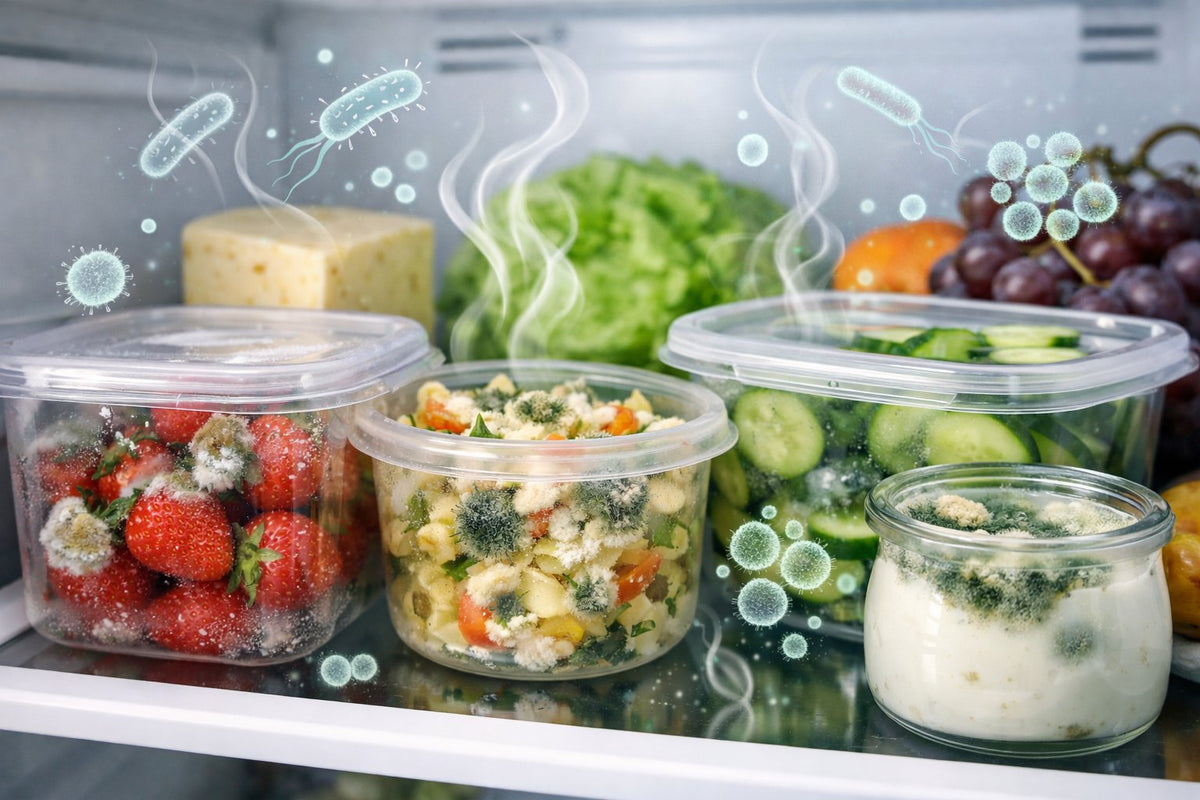
We've all been there, you open the fridge, catch a weird smell, and wonder if you need to toss those leftovers from two days ago. Stored food often smells off due to harmless spoilage bacteria and natural enzymatic reactions that change food's odor profile, even though dangerous pathogens like E. coli and Salmonella typically produce no smell at all.
The relationship between smell and safety is messier than we'd like, so our noses aren't always the best judges of what's actually safe to eat.
Not all bacteria are created equal. Some just make food smell funky or look unappetizing without making us sick. Others multiply silently on perfectly normal-looking food and can cause real problems.
Understanding which smells signal danger and which are just annoying helps us waste less food and make smarter decisions about what we keep or throw away.
Let's dig into why stored food develops those questionable odors, what's really happening at the microbial level, and how storage conditions affect everything from chemical reactions to bacterial growth.
Key Takeaways
- Spoilage bacteria create unpleasant odors in stored food but rarely cause illness, while dangerous pathogens often grow without any smell
- Chemical reactions like fat oxidation and enzymatic breakdown produce off-putting smells even when food remains safe to eat
- Proper storage conditions including temperature control and airtight packaging minimize both unwanted odors and actual food safety risks
Why Stored Food Smells Off—But Isn't Spoiled Yet
Stored food can develop off-putting smells from harmless spoilage bacteria and chemical reactions, while dangerous pathogens that cause foodborne illnesses often produce no odor at all. Knowing which smells signal real danger versus which just mean reduced food quality helps us make smarter storage decisions.
Odor Versus Food Safety
The connection between food smells and actual safety is messier than we'd like. Spoilage bacteria break down proteins and fats in stored food, releasing volatile compounds that smell sour, sulfurous, or just plain weird—but these organisms rarely cause foodborne illnesses.
Meanwhile, the real troublemakers like E. coli, Salmonella, and Listeria monocytogenes multiply silently. They don't announce themselves with funky odors or visible changes. You might open a container of leftovers that's been sitting for five days, take a sniff, and think everything's fine—but pathogenic bacteria could have reached dangerous levels.
This is why the sniff test fails us. It picks up on spoilage organisms while missing the pathogens we actually need to worry about. A carton of milk might smell perfectly fresh but harbor bacteria that'll make you sick, while vacuum-sealed meat can smell funky from fermentation but still be safe to cook and eat.
Key differences:
- Spoilage bacteria = bad smells, usually safe
- Pathogenic bacteria = no warning signs, actually dangerous
Volatile Compounds and Off-Smells
Chemical reactions in stored food create all sorts of smells that have nothing to do with signs of spoilage we should fear. Lipid oxidation happens when fats and oils react with oxygen, producing aldehydes and other volatile compounds. That's why nuts or cooking oil can smell like paint or fish—not appetizing, but not necessarily unsafe in small amounts.
Enzymatic activity keeps going even in the fridge. Vegetables release sulfur compounds during storage, making cabbage or onions smell stronger over time. Fish develops ammonia-like odors as enzymes break down proteins, which seems alarming but doesn't always mean the food has crossed into dangerous territory.
Some foods just naturally smell strong. Fermented products like kimchi and aged cheeses use the same lactic acid bacteria that spoil milk, but we've harnessed them intentionally. The pungent aromas are byproducts of controlled bacterial growth, not signs of food spoilage.
Temperature, packaging, and moisture all play a role in which volatile compounds escape and how intensely we smell them. Sealed containers trap these odors, so opening them after a few days can hit you with concentrated smells that seem worse than they are.
Distinguishing Safe Food from Spoiled Food
We need better tools than our noses to judge food quality and safety. Spoilage bacteria make themselves obvious—slime on deli meat, fuzz on bread, that unmistakable sour milk tang. These are visual and olfactory cues that food has degraded, though it won't necessarily cause foodborne illnesses.
Pathogenic bacteria operate on a different timeline. Leftovers shouldn't hang around longer than 3-4 days in the fridge, even if they pass the sniff test. By day four, harmful microorganisms can multiply to risky levels without changing appearance or smell.
| Safe but Smelly | Actually Dangerous |
|---|---|
| Vacuum-packed meat (fermentation smell) | Leftovers past 4 days (no obvious signs) |
| Strong cheese or kimchi | Deli meat with invisible Listeria |
| Oxidized nuts or oil | Fresh-looking chicken with Salmonella |
Temperature control matters more than smell. Keeping your fridge below 40°F slows bacterial growth, but psychrotrophic bacteria still function in cold environments. They're mostly responsible for the funky odors we detect, not the pathogens we can't.
When you spot visible mold or slime, or catch genuinely rotten smells (not just strong ones), those are legitimate signs of food spoilage. But fresh appearance and neutral smell don't guarantee safety—proper storage times and temperatures do.
Microbial Activity and Its Role in Odors
Microorganisms release volatile compounds as they metabolize food components, creating the distinctive smells we associate with aging groceries. Some bacteria produce harmless odors in still-edible food, while others generate warning signs of genuine contamination.
Spoilage Bacteria vs. Pathogenic Bacteria
Spoilage bacteria are the ones we can actually detect through our senses. They break down proteins, fats, and carbohydrates in food, releasing compounds that create sour, musty, or ammonia-like odors. These bacteria make food smell or taste unpleasant, but they're often harmless to consume.
Pathogenic bacteria like E. coli, Salmonella, Clostridium perfringens, and Clostridium botulinum work differently. They cause foodborne illness without necessarily announcing their presence through smell or appearance. This is why we can't rely solely on our noses to determine food safety.
The critical difference is that spoilage bacteria are basically loud neighbors—annoying but not dangerous. Clostridium botulinum, which causes botulism, can grow in improperly stored low-acid foods without producing any warning odor. So understanding storage conditions matters more than trusting your sense of smell.
The Funky Side of Mold and Yeast
Mold growth produces that characteristic musty smell through volatile organic compounds released during metabolism. When you open a container and get hit with that earthy, damp odor, you're detecting the byproducts of fungal activity. Most visible mold on food should prompt you to discard the item, even if the food underneath seems fine.
Yeasts contribute their own distinctive aromas during bacterial growth. They ferment sugars into alcohol and carbon dioxide, creating slightly sweet or bread-like smells in foods where they're unwelcome. In moldy food, mycotoxins can develop—these toxic compounds may persist even after you remove visible mold.
The musty smell from mold isn't always dangerous, but it does indicate extensive microbial activity that's altered the food's composition beyond its intended state.
Friendly Bacteria—Fermentation and Sour Notes
Not all bacterial smells signal spoilage. Lactic acid bacteria intentionally transform foods through controlled fermentation, creating sauerkraut, yogurt, and other cultured products. These bacteria produce lactic acid, which gives fermented foods their characteristic tangy smell and sour taste.
Sour milk from unintended bacterial growth differs from cultured buttermilk, even though both involve microbial activity. The difference lies in controlled conditions and specific bacterial strains. When we ferment foods deliberately, we're harnessing microbial activity to preserve and enhance flavor.
The sour notes in properly fermented foods indicate successful preservation, not spoilage. These controlled environments prevent pathogenic bacteria from taking hold while beneficial organisms do their work.
Chemical and Enzymatic Changes in Stored Food
Stored food develops off-putting smells through lipid oxidation that creates rancid or stale odors, enzymatic reactions that alter texture and release aromatic compounds, and shifts in water activity that either suppress or amplify these processes.
Lipid Oxidation: Rancid and Stale Smells
When you store foods containing fats and oils, oxygen from the air reacts with unsaturated fatty acids in a process called lipid oxidation. This chemical reaction breaks down fats into aldehydes, ketones, and other volatile compounds that create those unmistakable rancid or stale smells.
You'll notice this most in foods like nuts, cooking oils, and whole grain flours. The double bonds in unsaturated fats are particularly vulnerable to oxidation. Light, heat, and certain metals speed up this process, which explains why oils come in dark bottles and why we should store fatty foods in cool places.
The smell develops gradually. At first, you might detect a slightly grassy or paint-like odor. As oxidation progresses, the smell becomes distinctly rancid—sharp and unpleasant but not necessarily dangerous to consume in small amounts.
Common foods affected by lipid oxidation:
- Nuts and seeds
- Vegetable and seed oils
- Whole grain products
- Butter and margarine
- Fried foods
Enzymatic Reactions and Texture Oddities
Enzymes naturally present in food keep working after harvest or slaughter, breaking down proteins, carbohydrates, and fats even at refrigerator temperatures. These enzymatic reactions cause texture changes and release aromatic compounds that we pick up as "off" smells.
In fruits and vegetables, pectinolytic enzymes break down pectin in cell walls, making produce soft or mushy. Proteolytic enzymes in meat tenderize protein fibers, which can improve tenderness at first but eventually create odd textures. Meanwhile, lipases split fat molecules, releasing free fatty acids that smell sour or cheesy.
We've all seen enzymatic browning—when cut apples or avocados turn brown within minutes. The enzyme polyphenol oxidase reacts with oxygen to create brown pigments and subtle flavor changes. While harmless, these reactions signal that chemical spoilage has begun.
Water Activity and Its Impact on Aroma
Water activity measures the available moisture in food that microorganisms and enzymes use. This metric directly influences how quickly chemical spoilage develops and which types of reactions dominate.
Foods with high water activity (above 0.85) support rapid enzymatic reactions and microbial growth. You see this in fresh produce, cooked grains, and opened dairy products. These items develop off smells quickly because enzymes stay highly active and bacteria multiply.
Lower water activity slows enzymatic reactions dramatically. Dried foods, aged cheeses, and cured meats keep their quality longer because limited moisture restricts enzyme function. But oxidation still happens in these foods since it doesn't require water—explaining why dried nuts eventually smell stale despite their low moisture content.
Storage Conditions and Packaging Factors
Proper storage environments and the right packaging choices determine whether your food develops off-putting odors while remaining perfectly safe to eat. Temperature fluctuations, inadequate sealing, and shared storage spaces create conditions where volatile compounds transfer between foods or mild bacterial activity produces smells without compromising safety.
Temperature Control and Fridge Odors
We often overlook how temperature variations affect stored food odors. Refrigerators should stay between 37-40°F, but frequent door openings and overcrowding create warm spots where condensation builds up.
This moisture encourages low-level bacterial activity that produces noticeable smells before actual spoilage happens. Foods stored near the back wall or in door compartments experience the most temperature swings.
Freezing at 0°F or below stops most odor-causing reactions, though freezer burn develops when moisture escapes from improperly wrapped items. The dry, oxidized surface smells stale but remains edible. You can prevent this by keeping freezer temperatures steady and using moisture-resistant packaging.
Regular fridge cleaning helps eliminate odor sources, but even clean refrigerators concentrate food aromas in the enclosed space. The recirculating air carries volatile compounds throughout the unit, making everything smell slightly off even when nothing has spoiled.
The Importance of Airtight Containers
Airtight containers act as barriers against oxygen exposure and moisture exchange. Foods exposed to air undergo oxidation reactions that create rancid or stale odors without bacterial involvement.
Benefits of proper sealing:
- Prevents volatile compound release into shared storage spaces
- Reduces oxidative reactions that cause off-odors
- Maintains optimal moisture levels within the container
- Blocks absorption of external smells
Glass and rigid plastic containers with rubber gasket seals work better than basic plastic wrap or bags with simple closures. It's a good idea to transfer items from original food packaging into dedicated storage containers, especially for strong-smelling foods like cheese or onions.
Even slight gaps in seals let air in, which speeds up enzymatic activity in fruits and vegetables. These natural enzymes produce ethylene gas and other compounds that smell fermented or overripe while the food remains safe.
Cross-Contamination and Absorbed Odors
Foods with porous textures or lots of fat—think butter, eggs, baked goods—tend to soak up nearby smells fast. You can end up with weird flavor mashups after just a few hours, even if the food's still safe.
Raw meats leak juices packed with proteins that drip onto shelves and break down, creating that classic "fridge smell." It's best to stash these in sealed containers on the lowest shelf so nothing else gets contaminated.
It helps to keep strong-smelling stuff—fish, garlic, fermented foods—far from milder items. Their powerful aromas slip right through plastic bags and thin wraps, messing with everything else in the fridge. Setting up zones for different food types can really cut down on unwanted odor transfer.
Shelf Life, Expiration Dates, and Signs to Watch For
Sometimes food smells odd before it's actually unsafe, so it's important to know what the dates on packaging really mean, and what warning signs matter.
Understanding Expiry Dates and Shelf Stability
Expiration dates are confusing. "Best before" just means the food's at peak quality until then—it might lose some flavor or texture after, but it's usually still fine. "Use by" is more about safety, especially for things like baby formula.
"Sell by" dates are for stores, not us. Loads of foods—canned goods, pasta, rice—last way longer than those dates if you store them right.
Shelf life depends on moisture, packaging, and temperature. Foods with less moisture are less likely to spoil. Dairy and meat, on the other hand, need to be kept cold—below 40°F (4°C) is ideal. Keeping things cool, dry, and sealed up tight helps food last.
Visual and Scent Clues to Safe Food
Sometimes food smells a little off but isn't dangerous. Color changes aren't always bad news—cut fruit browns, oils darken, dressings separate, but that's often just oxidation or settling.
Off odors? Not always a dealbreaker. Nuts and oils can smell a bit rancid from fat oxidation but might still be safe (though, let's be honest, not tasty). Stale crackers or bread smell musty because they've soaked up moisture, not because they're crawling with bacteria.
Watch for condensation inside packaging—that's where bacteria thrive. Cloudy liquids that should be clear, or lots of liquid pooling around food, are worth a closer look.
Signs of Food Spoilage to Never Ignore
Some red flags mean it's time to toss the food, no matter what the date says. Visible mold on soft foods like bread or cheese? Just throw the whole thing out; mold roots go deeper than you think. Slimy textures on meat or produce? That's bacteria at work—don't risk it.
Bulging, rusty, or leaking cans are dangerous—botulism is no joke. Don't even taste those. If dairy, eggs, or meat smell strongly sour or like ammonia, that's a sign of serious bacterial growth.
A food thermometer can be a lifesaver. If perishable foods sit above 40°F for over two hours, bacteria like Salmonella and E. coli can multiply fast. When in doubt, it's safer to throw it out.
Smart Storage Habits for Fewer Funky Odors
A little effort with containers, storage, and cleanup goes a long way in keeping your fridge from smelling like a science experiment.
Prevention with Storage Systems
Airtight containers are your best friend here. Good glass or sturdy plastic with tight lids keeps onions and garlic from making your milk taste weird.
Keep food types apart. Raw meat stays on the bottom shelf in sealed containers. Dairy and leftovers do better higher up, away from the mess.
Handy storage zones:
- Bottom shelf: raw meat and seafood, sealed up tight
- Middle: dairy, eggs, leftovers
- Top shelf and door: condiments, drinks
- Crisper drawers: fruits and veggies—keep them separate if you can
Vacuum-sealing pulls out oxygen, which slows spoilage and keeps fats from going rancid. Sometimes opening vacuum-packed meat releases a funky smell from trapped gases. It should fade within 10 to 15 minutes. If it doesn't, or the meat is slimy, throw it out.
Temperature matters more than you'd think. Dropping your fridge from 40°F to 37°F can really slow down the bacteria that sour dairy.
Preservation Methods for Odor Control
Preservation methods like canning, freezing, and dehydrating cut down on bacteria and the smells they create. Canning seals everything up so nothing grows.
Freezing stops bacteria cold, but you still need to wrap things well to avoid freezer burn. Nuts and oils keep longer in the freezer since cold slows rancidity.
Dehydrating drops water activity so low bacteria can't survive. Dried herbs, fruits, and jerky can hang out in the pantry for ages without stinking up the place.
Cool leftovers quickly—shallow containers, fridge within two hours. This stops bacteria from multiplying and keeps odors down.
Combos that work:
- Fridge + airtight containers for the short term
- Freezer + vacuum-seal for long-term freshness
- Dehydration for shelf-stable snacks
Safe Food Handling and Cleanup
Good habits start before you even store food. Keep raw and cooked foods separate, use clean tools, and wash your hands between tasks. These steps cut down on cross-contamination and keep food fresher.
Label everything with dates. Leftovers might smell fine on day five, but bacteria like Listeria can multiply without any odor. Sticking to the 3-4 day rule is safer.
Clean your fridge regularly. Wipe up spills right away, and do a deep clean every month—shelves, drawers, the works. Baking soda helps absorb smells between cleanings.
Check the seals on containers and the fridge door. If a dollar bill slips out easily when you close the door on it, the gasket probably needs replacing.
Sealed Storage and the Sniff Test
Airtight and vacuum storage are two of the simplest ways to cut down on the off-smells covered above. Less air means slower fat oxidation, and a good seal keeps strong aromas from drifting into butter, eggs and leftovers. For fatty foods headed to the fridge or freezer, like cheese, nuts and portioned meat, vacuum storage removes most of the air around them, which helps slow the rancid, stale notes that build up over time.
Sealed storage also changes how you should judge food when you open it. Because a tight seal traps volatile compounds, the first whiff is often stronger than the food itself. Give it a minute in the open air before you decide. A mild, trapped smell that fades is usually just concentration. A sour, sulfurous or ammonia-like odor that's still there after 10 to 15 minutes, or any slime or mold, means it's time to throw it out.
A seal doesn't reset the clock, either. Vacuum-sealed or not, leftovers still follow the 3 to 4 day rule, and perishables still belong in the fridge or freezer. Since the pathogens that cause illness usually don't smell at all, storage time and temperature stay more reliable than any sniff test.
For a closer look at choosing containers by food type, our guide to what causes stored food to develop off-smells without spoiling covers which foods suit glass jars, which suit vacuum storage, and which need their own sealed space.
Frequently Asked Questions
Food odors can be confusing—sometimes they mean trouble, sometimes not. Here are some common questions.
How can you identify if food has spoiled without relying solely on odor?
Look for texture changes—slimy meat or greens, mushy veggies, or dried-out foods that should be moist. These are solid clues.
Color helps, too. If meat turns gray or green, or you see weird spots, that's not good. Browning that goes beyond the usual oxidation can mean spoilage.
Any visible mold? Toss it. And don't forget to check dates and how long food's been stored—some bacteria grow without obvious signs.
What are the underlying reasons for unexpected changes in food aroma?
Storage conditions kick off chemical reactions that mess with food smells, even if it's still safe. Temperature swings activate enzymes, breaking down proteins and fats into new, sometimes odd-smelling compounds.
Changes in moisture can release different smells. Foods that dry out or get soggy will smell different, even if they're fine.
And of course, odors move around. Strong-smelling foods can make everything else in the fridge pick up their scent, especially fatty foods.
Can you explain the difference between natural food odors and those caused by spoilage?
Natural odors come from the compounds that define a food's usual smell—these might get stronger with storage, but it's normal. Cabbage, for example, gets more sulfurous over time, but that's not spoilage.
Spoilage odors are different. They're caused by bacteria producing things like ammonia or hydrogen sulfide, which smell truly foul.
You can usually tell by whether the smell fits what you expect. Cheese can be pungent, but spoiled chicken has a rotten, unmistakable stench.
What steps can you take to minimize the transformation of food smell during storage?
Keep your fridge cold—40°F or lower is best. Try not to leave the door open too long, and organize things so you don't have to dig around.
Airtight containers help a lot. Glass or good plastic with tight lids keeps foods from sharing smells and slows down oxidation.
Separate strong-smelling foods, use up older items first, and cool cooked foods quickly so they don't spend time in the danger zone.
How does parosmia affect the perception of food freshness?
Parosmia messes with your sense of smell, making fresh foods seem rotten when they're actually fine. It's a problem with how your nose or brain processes odors, so you can't trust smell alone.
If you have parosmia, rely on how the food looks, feels, and how long it's been stored. Smell isn't a safe guide in this case.
It often shows up after illness or head injuries. If you think you have it, talk to a doctor and use other ways to check food safety.
In what ways does packaging affect the shelf life and odor of stored foods?
Modified atmosphere packaging changes the mix of gases around food, slowing down spoilage and keeping odors at bay. By cutting down oxygen, it keeps aerobic bacteria in check and stops fats from turning rancid too soon, so foods hang onto their original smell longer.
Vacuum sealing pulls out the air that brings in moisture and helps microbes thrive. It's especially handy for stopping freezer burn and keeping meat tasting right, though you've still got to store vacuum-sealed stuff in the fridge or freezer.
Breathable packaging for produce lets out ethylene gas and manages moisture. Mushrooms and leafy greens, for example, need a bit of airflow—otherwise, trapped moisture speeds up spoilage and gives them that unpleasant musty smell.
Share:
How Storage Conditions Influence Taste Before Food Spoils
How Container Size Impacts Food Longevity