

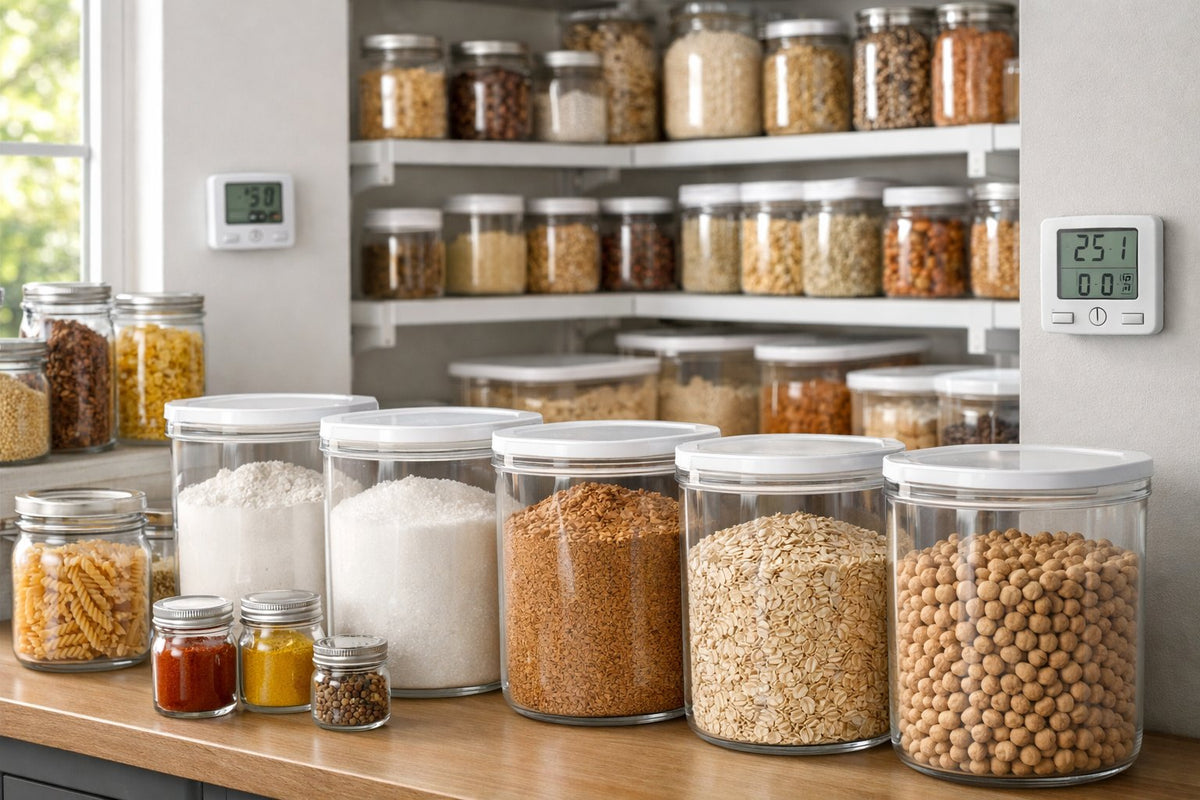
Whether we're stashing fresh herbs, ground spices, or specialty oils in our kitchens, the storage environment quietly decides how long those ingredients will actually stay potent and safe.
Temperature swings, humidity, light, and even the air itself can speed up degradation, making ingredients lose flavor, change color, or develop weird smells, sometimes well before the expiration date. What keeps dried pasta fresh won't cut it for delicate vanilla extract, and that pantry we thought was ideal might actually be working against us.
Who hasn't opened a jar of paprika to find it's faded or discovered that pricey olive oil tastes off, even though it's "still good"? Usually, it's not a manufacturing issue. It's just that our storage conditions don't match what the ingredient needs.
Getting a handle on how storage affects ingredient stability lets us make better calls about where to keep things, which containers to use, and when it's really time to toss something. The science isn't rocket science, honestly. A few tweaks to storage can stretch out the usable life of kitchen staples and help us hang on to the quality we paid for.
Key Takeaways
- Temperature and humidity are the main drivers of chemical and physical breakdown in stored ingredients
- Different ingredients need storage tailored to their sensitivity to light, moisture, oxygen, and temperature shifts
- Good packaging and controlled storage can seriously extend shelf life and keep quality up
Understanding Ingredient Stability
Ingredient stability is what decides if our food and pharma products hold up from when they're made to when we actually use them. It's about tracking physical traits, chemical makeup, and microbial safety as products deal with temperature changes, humidity, light, and time.
Defining Stability and Shelf Life
Stability means an ingredient keeps its original qualities—potency, look, texture, safety—under certain storage conditions for a set time. We measure this with shelf life, which is just how long a product stays within acceptable quality limits.
Shelf life isn't just a guess. It's the time an ingredient meets set standards for effectiveness and safety. In pharma, that means an active ingredient keeps at least 90-95% of its labeled potency. With food, it's more about color, flavor, nutrition, and no funky odors.
Storage conditions directly shape shelf life. An ingredient at 25°C might last 24 months, but bump it up to 40°C and it could break down in just 6 months. That's why "store in a cool, dry place" isn't a suggestion—it's required to keep things intact.
Types of Stability: Physical, Chemical, and Microbial
Physical stability is about changes you can see or feel—color fading, texture getting weird, powders clumping, or liquids separating. For example, lyophilized powders can absorb moisture and cake up, even if the main compounds are still okay.
Chemical stability tracks changes at the molecular level that mess with potency or safety. Oxidation, hydrolysis, and photodegradation are the usual suspects. Oils go rancid, vitamins lose strength, proteins get ruined. Sometimes these reactions make things less effective, or even unsafe.
Microbial stability is all about keeping out bacteria, mold, and viruses. Microbial contamination is an immediate problem, especially in anything with water or lots of nutrients. We fight this with preservatives, pH tweaks, drying things out, or just keeping stuff cold.
Degradation Mechanisms and Product Integrity
Degradation is just how fast ingredients lose their good qualities. Hydrolysis happens when water breaks chemical bonds, which is why moisture-sensitive stuff needs desiccants or dry storage.
Oxidation is when oxygen reacts with fats, oils, vitamins, and other compounds. We fight it with nitrogen flushing, good packaging, or antioxidants. Higher temperatures make oxidation worse, so refrigeration helps a lot.
Photodegradation is light breaking down molecules. Stuff like riboflavin, retinol, or pigments can degrade fast in the light. Amber glass, opaque containers, or light-blocking packaging all help keep these safe.
And temperature? It speeds everything up. Every 10°C increase can double or triple reaction rates (thanks, Arrhenius equation). That's why freezing things works so well, and leaving them in the heat is a recipe for disaster.
Key Storage Conditions That Affect Stability
Temperature, moisture, and light all play their part in how fast ingredients lose quality—nutrients, flavor, the whole lot.
Temperature Control and Room Temperature Storage
Most shelf-stable ingredients do fine at room temperature (about 20°C to 25°C), but keeping the temperature steady matters more than the exact number.
Temperature control slows down the chemical reactions that break down ingredients. Once things get too warm, degradation speeds up fast—doesn't matter if it's spices, oils, or grains.
Refrigeration (2°C to 8°C) is needed for ingredients with more moisture or those that oxidize quickly. Think fresh herbs, some oils, and anything dairy-based. The cooler temp helps keep their chemical structure in check.
The real killer? Temperature swings. Shuffling stuff between warm and cold areas leads to condensation, which brings in moisture and speeds up spoilage.
Humidity and Moisture Impact
Moisture is a catalyst for all sorts of breakdowns. High humidity encourages microbes, clumps powders, and triggers hydrolysis that breaks down fats and proteins.
Different ingredients have different moisture tolerances. Dried herbs and spices soak up moisture easily, which means lost flavor and maybe even mold. Grains and flours go rancid faster with humidity because enzymes start breaking down the fats.
Ideal storage humidity is usually under 60% relative humidity for dry goods. Airtight containers with solid seals help keep that environment steady.
Light Exposure and Photodegradation
Light kicks off photodegradation, where photons snap chemical bonds in ingredients. This hits flavor compounds, vitamins, pigments—the stuff we care about.
Ultraviolet and visible light both do damage, but UV is especially harsh. Oils go rancid, herbs lose their essential oils, colored things fade as pigments break apart.
Simple solutions work: opaque containers, dark shelves, or amber glass to filter out the worst light. Even "stable" ingredients last longer in the dark—flour keeps more nutrients, spices stay punchier.
Degradation Processes and Indicators
Ingredients break down through a few main pathways, each leaving its own marks—chemical changes, physical shifts, or contamination.
Chemical Degradation and Degradation Products
Chemical degradation comes from oxidation, hydrolysis, and photodegradation. Expose oils to air and you get rancid flavors, plus lost nutrition. Moisture in dried herbs and spices breaks down the compounds that make them taste good.
Light speeds up the breakdown in sensitive ingredients. Olive oil gets funky in clear bottles. Vitamins in fortified foods lose power under harsh lights. And heat just makes all of this go faster—every 10°C increase can double the rate for a lot of compounds.
Common signs of degradation:
- Color changes (browning, fading)
- Off-odors (rancid nuts, musty flour)
- Texture shifts (veggies going soft)
- Flavor loss (spices losing punch)
You don't need fancy tests to spot these—if almonds taste bitter or flour smells musty, chemical breakdown is already happening.
Crystallization and Phase Separation
Crystallization is when dissolved stuff forms solid crystals, usually from temperature changes or concentration shifts. Honey crystallizes when glucose separates—totally normal. Salt and sugar clump up if moisture sneaks in.
Phase separation is when mixtures split into layers. Natural nut butters separate as oil floats up. Vinaigrettes split into oil and water. Frozen sauces can separate when thawed if ice crystals mess with the emulsion.
Temperature cycling makes both worse. Think chocolate with white "bloom" or jam with sugar crystals near the lid.
Microbial Growth and Contamination
Microbes need moisture, nutrients, the right temperature, and time. Bacteria love 4°C to 60°C, so we avoid that range by refrigerating or heating. Molds pop up in humid spots—fuzzy bread, cheese, preserves.
You'll see surface changes, slime, mold, swollen packages, cloudy liquids, or weird fermentation smells. Moist, fresh foods are more at risk than dry goods.
Keeping things cold slows down microbes. Freezing stops them, though it doesn't kill what's already there. Dry storage blocks mold on vulnerable items.
Packaging and Material Influence
The containers and wraps we use really do make a difference. Different materials protect against moisture, oxygen, and light to varying degrees.
Role of Packaging Materials and Blister Packs
Packaging is our first shield between ingredients and the outside world. Glass is great—it keeps moisture and air out and doesn't leach anything, so it's perfect for oils and spices. Plastics are mixed—HDPE and PET are decent, but cheaper plastics let air in.
Blister packs (more common for meds) show how isolating portions can stretch shelf life by keeping exposure down. Metal containers like aluminum tins block light and air but can react with acids. Basically, your packaging choice can be the difference between fresh and stale.
Some materials just work better in certain conditions—what's fine in the pantry might flop in the fridge.
Barrier Properties and Desiccants
Barrier strength decides how well packaging keeps out moisture, air, and light. Multi-layer packaging—foil, plastic, paper—gives max protection (like those shiny coffee bags).
Key barrier features:
- Moisture resistance – keeps powders from clumping and crackers from getting stale
- Oxygen barrier – slows down nut and grain oxidation
- Light blocking – protects vitamins, keeps oils from going rancid
Desiccants soak up moisture in sealed containers, keeping things crisp and mold-free. Those silica gel packs in spice jars can drop humidity below 40%, which is a game-changer for things like dried mushrooms or supplements.
Stability Studies and Testing Approaches
Stability testing checks how ingredients or pharma products handle stress over time, using long-term, accelerated, and intermediate studies.
Stability Testing: Long-Term, Accelerated, and Intermediate
Long-term stability studies run at 25°C ± 2°C and 60% RH ± 5% RH for 24 to 36 months, mimicking real storage. They show exactly how ingredients hold up over their shelf life.
Accelerated testing cranks up the heat and humidity (40°C ± 2°C, 75% RH ± 5% RH) for 6 months, speeding up breakdown to spot problems faster.
Intermediate conditions (30°C ± 2°C, 65% RH ± 5% RH for up to 24 months) fill the gap, especially if products are headed to warmer, more humid regions.
Each type has its place. Long-term tells us if shelf life claims are real, accelerated predicts future issues, and intermediate covers those in-between cases.
Regulatory Guidelines: ICH Q1A(R2) and Climatic Zones
The ICH Q1A(R2) guideline sets the global standard for stability testing. It lays out the exact temperature and humidity needed for each type of study and spells out when to test, all depending on where the product will be sold.
Climatic zones break the world into regions by typical environmental conditions:
- Zone I: Temperate (21°C, 45% RH)
- Zone II: Subtropical (25°C, 60% RH)
- Zone III: Hot and dry (30°C, 35% RH)
- Zone IV: Hot and humid (30°C, 65-75% RH)
Manufacturers build their stability protocols around the target market's climatic zone. If a product's headed for Zone IV, it gets tested more rigorously than if it's going to Zone I—heat and humidity just speed up all kinds of degradation.
The FDA and EMA both follow ICH Q1A(R2), but add a few of their own twists for their regions. For light-sensitive ingredients, labs use ICH Q1B's photostability testing.
Analytical Techniques: Stability Data and LC-MS
Testing labs rely on LC-MS (liquid chromatography-mass spectrometry) as a main tool for checking stability. It separates complex ingredient mixtures and spots degradation products with impressive precision, even at parts-per-million levels.
Collecting stability data means testing samples at set intervals: 0, 3, 6, 9, 12, 18, 24, and 36 months for long-term studies. At each point, testers look at potency, purity, physical appearance, moisture, and how well things dissolve.
HPLC (high-performance liquid chromatography) measures active ingredient levels over time. UV-Vis spectroscopy helps spot color shifts. Karl Fischer titration checks for moisture uptake. No single technique catches everything, so labs mix and match methods to cover their bases.
Modern stability programs churn out huge piles of data. Analysts track trends with statistical analysis, plotting degradation curves to predict when an ingredient will dip below spec. This lets manufacturers set shelf life without just guessing.
Risk Management and Quality Control
Keeping ingredient quality high means having a plan to spot degradation risks before they mess with food safety, and making sure products stay good for as long as they should.
Risk Assessment and CAPA Strategies
Risk assessment helps food and ingredient producers catch environmental factors that threaten stability before anything goes wrong. They look at temperature swings, humidity, light, and packaging to find weak spots in storage. It's a proactive approach—sort of like what the pharmaceutical world does—that digs into how time, temp, humidity, light, and storage conditions all interact.
When issues turn up during risk assessment, producers use CAPA (Corrective and Preventive Action) strategies. If they find a temperature spike or a packaging fail, corrective actions fix it on the spot—like moving stuff to better storage or tossing out what's already compromised. Preventive actions aim to stop it from happening again, maybe by upgrading equipment or tightening up procedures. Everything gets documented, and over time, that record helps improve storage.
Assessing Expiration Dates and Shelf Life
Expiration dates are basically the manufacturer's promise that ingredients stay good if you store them right. But let's be honest—those dates assume perfect conditions, not the chaos of real kitchens. Shelf life depends on sticking to the storage guidelines: refrigerated stuff at 2°C to 8°C, pantry items in cool, dry spots, and light-sensitive things in opaque containers.
We keep an eye on how long things have been stored and watch for warning signs like discoloration, separation, or weird smells—sometimes problems show up before the official expiration date. If products go through temperature swings during shipping or storage, they might not last as long as the label says. Rotating inventory (first-in, first-out) helps us use things while they're still good, and keeping the right environment is key to preserving shelf life.
Putting It Into Practice at Home
All of that science comes down to a few simple habits in a home kitchen. For dry pantry ingredients, the two biggest threats are moisture and air, with light and heat close behind.
- Seal dry goods properly. Once the original bag is opened, flour, sugar, rice, oats, dried herbs, spices, coffee and nuts should go into containers with a tight, sealing lid. Airtight glass jars work well here. Glass doesn't absorb odors or leach anything into food, and a good seal keeps humid air and pantry pests out.
- Keep clear jars out of the light. Glass lets you see what's left, but it also lets light in. Store clear jars in a closed cupboard or pantry, away from windows and bright under-cabinet lights, especially for spices and dried herbs.
- Pick a cool, steady spot. Keep jars away from the stove, oven, dishwasher and fridge exhaust, where temperatures swing and condensation can form.
- Only fill jars with cool, dry contents. Never top up a jar with ingredients that are still warm or damp. Trapped moisture is what leads to clumping and mold.
- Label and rotate. Write the date on each jar and use older batches first. Move whole grain flours and nuts to the fridge or freezer if you won't finish them in a month or two.
None of this needs lab equipment. A good seal, a dark cupboard and steady temperatures do most of the work.
Frequently Asked Questions
Storage conditions mess with ingredients in all sorts of ways: chemical reactions from temperature changes, moisture sneaking in, oxidation, and light damage. Knowing what's at play helps us protect quality and stretch shelf life.
What conditions could cause degradation of ingredients during storage?
Temperature extremes, humidity swings, light, and oxygen are the big troublemakers for ingredient stability. They trigger chemical reactions that break down active compounds and change physical properties.
pH issues and microbes add to the instability in a lot of foods. When storage spaces don't have good climate control, vitamins, fats, and proteins break down faster.
Cross-contamination from strong odors and the wrong containers can mess with ingredient quality. Even small stuff like poor air flow creates pockets of bad conditions that speed up spoilage.
In what ways do temperature fluctuations affect the integrity of stored food products?
Temperature swings put stress on ingredients, making chemical breakdown happen faster. Every time it gets warmer, reaction rates jump and sensitive compounds degrade quicker than if things stayed steady.
These ups and downs also cause condensation, which brings moisture into dry ingredients where it shouldn't be. That moisture can lead to clumping or even microbial growth.
Oils and fats are especially at risk—they go rancid and develop off-flavors. Proteins can denature, and carbs might crystallize if they're warmed and cooled over and over.
Can humidity levels in storage areas compromise the quality of food ingredients?
High humidity lets moisture-sensitive ingredients soak up water and lose their texture. Dry goods like grains, powders, and herbs get clumpy or soggy when there's too much moisture.
Too much humidity also speeds up mold and bacteria growth, making things unsafe. Chemical reactions like oxidation happen faster in humid conditions, too.
On the flip side, low humidity can dry out ingredients too much. That changes texture, saps nutrients, and dulls the flavor of items that need a little moisture to stay at their best.
What role does packaging play in maintaining ingredient stability in different storage environments?
Packaging is the first line of defense against the stuff that breaks down ingredients. Good packaging blocks oxygen, moisture, light, and temperature swings.
Different ingredients need different packaging, depending on what they're sensitive to. Oxygen-sensitive stuff does better with vacuum sealing or modified atmospheres; light-sensitive things need opaque containers.
Sometimes the packaging itself can cause problems if it reacts with ingredients or lets gases through. Picking the right packaging can make a huge difference in how long something stays good.
How might the oxidation process impact the shelf life of ingredients in my pantry?
Oxidation ruins fats and oils, giving them rancid flavors and nasty smells. It also destroys essential fatty acids and fat-soluble vitamins, so nutrition takes a hit over time.
You'll often see color changes—pigments break down and browning happens. Nuts, whole grain flours, and oils are the worst offenders for that telltale off taste and odor.
The more surface area an ingredient has exposed to air, the faster oxidation happens. Once it starts, it's a chain reaction that keeps getting worse until the ingredient's just not usable anymore.
What are some practical tips for managing light exposure to ensure the longevity of stored ingredients?
Stash light-sensitive ingredients in opaque containers or tuck them away in dark spots to keep out those pesky damaging rays. Oils, spices, and dried herbs really do better when shielded from both sunlight and harsh indoor lighting.
Try to keep your pantry out of direct sunlight, and if you need see-through storage, go for amber or dark-colored glass. Even a quick blast of bright light can mess with the quality of some ingredients.
Take a look around your storage areas for sneaky light sources—like under-cabinet lights that might stay on longer than you realize. And don't forget to rotate your stock now and then; it's an easy way to make sure nothing sits around long enough for the light to do any real damage.
Share:
What Happens to Food When Storage Is Not Truly Airtight
Why Some Ingredients Are More Sensitive to Air Than Others