

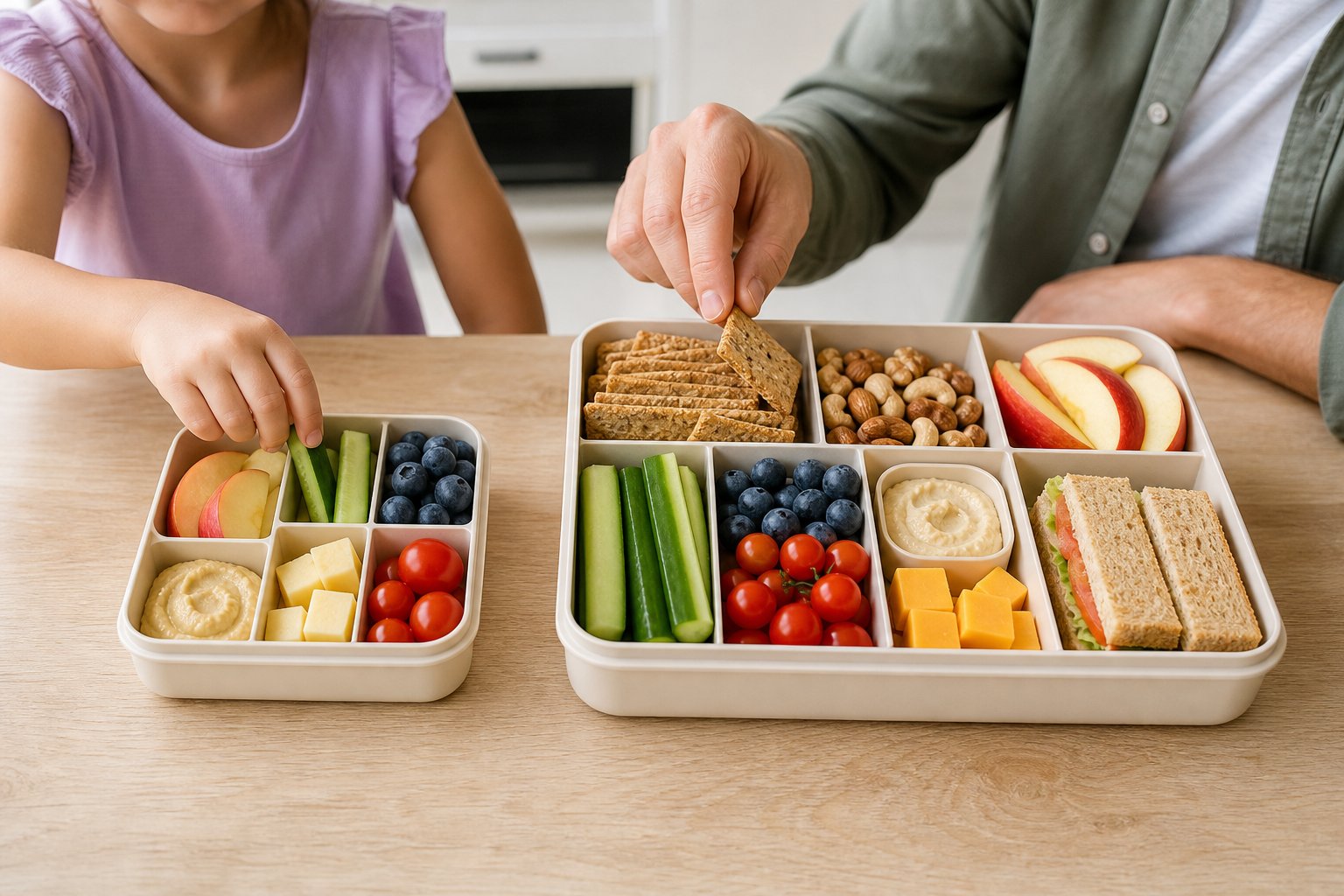
Check out our latest snack box collections!
Choosing the right portion size for a compartment snack box starts with the person eating from it. Appetite, activity level, meal timing, and the foods being packed all matter more than following one fixed portion rule.
A practical approach is to choose a box with enough room for a satisfying main item, produce, a grain or starch, and any small extras you want to include. Then adjust the amounts based on what regularly gets eaten or comes home as leftovers. This works for everything from a child's school snack to an adult lunch or a snack box for a long day out.
Key Takeaways
- Snack box size should reflect the eater's appetite, schedule, and activity level.
- A mix of protein, produce, and carbohydrates can help create a more satisfying snack or meal.
- Compartments can make portions easier to visualize while keeping different foods separate.
- Adjust future portions based on hunger and leftover patterns rather than relying on rigid serving rules.
Match Capacity and Compartments to the Eater
A compartment snack box should provide enough space for the foods you normally pack without leaving everything crowded or requiring more compartments than you need. Consider both overall capacity and how the sections are divided.
Adult Lunch and Snack Box Capacity Guidelines
There is no single ideal container capacity for every adult. A compact box may be enough for a snack or light lunch, while a larger box makes more sense for a full meal or a long day away from home.
Instead of choosing by volume alone, look for a layout that gives you:
- A larger section: For the main item, such as eggs, chicken, beans, a sandwich, or another protein-rich food.
- A medium section: For grains, crackers, rice, bread, or another carbohydrate.
- One or two smaller sections: For vegetables, fruit, or other sides.
- A small sealed container: For dressing, dips, spreads, or sauces when needed.
If you regularly finish everything and still feel hungry, consider a larger container or an additional snack. If food frequently comes home uneaten, a smaller box or slightly smaller portions may be a better fit.
Kids' Portions by Age, Appetite, and Lunch Length
Children's portion needs vary considerably, even among children of the same age. Appetite, growth, activity, food preferences, and how much time they have to eat can all affect how much food is appropriate.
| Stage | Practical Layout | What to Prioritize |
|---|---|---|
| Younger children | A few small, easy-to-reach sections | Manageable portions, age-appropriate textures, and easy-open lids |
| School-age children | Three or four sections | Space for a main item, produce, and one or two sides |
| Older kids and teens | Larger or more flexible compartments | Enough food for longer school days and higher activity levels |
If your child regularly has after-school activities or a long day away from home, you may need to pack more food or include a separate snack. If substantial amounts regularly come home uneaten, try reducing portions gradually rather than filling every compartment automatically.
Selecting the Right Number of Sections
You do not need a large number of compartments to build a useful snack box. The best layout depends on how much variety you want and whether you prefer to keep foods separate.
Two compartments work well for a simple main-and-side combination. Three compartments provide room for a main item, produce, and another side. Four or more compartments can be useful for snack-style meals, greater variety, or foods that need to stay separate.
Removable dividers add flexibility because the same box can accommodate a larger meal one day and several smaller snacks the next. If you often pack yogurt, dips, dressings, or other moist foods, use a properly sealed container rather than relying on an internal divider to contain liquids.
Build Balanced Portions in Each Section
Once you have chosen a box, decide which foods deserve the most space. A simple structure can make packing easier without turning every snack or lunch into a complicated calculation.
Give the Largest Space to the Main Meal Item
Use the largest compartment for the main item. Depending on the meal, that might be sliced turkey, hard-boiled eggs, shredded chicken, beans, tofu, a sandwich, or another substantial food.
For children, foods can be cut or prepared in age-appropriate sizes that are easier to handle. The goal is to give the main item enough room without crowding out fruit, vegetables, grains, or other sides.
Pair Protein, Produce, and Carbohydrates
A practical snack box can include a combination of protein, produce, and carbohydrates. You do not need every food group in every individual compartment. Instead, aim for variety across the box as a whole.
- Protein: Eggs, turkey, edamame, cheese, yogurt, beans, or hummus
- Produce: Fruit, cherry tomatoes, cucumber, carrots, berries, or other vegetables
- Carbohydrates: Whole-grain crackers, bread, rice, wraps, or another grain or starch
When packing for young children, choose foods and textures that are appropriate for their age and eating skills.
Use Small Spaces for Extras and Dips
Small compartments are useful for dips, sauces, spreads, or a few extra bites. Hummus, dressing, yogurt-based dips, or a small treat can fit well without taking over the rest of the box.
Small reusable cups can also help separate moist foods from crackers or other foods that lose their texture when exposed to moisture. For liquids or runny foods, use a container specifically designed to close securely.
Portion Dry Snacks Without Overpacking
Dry snacks such as crackers, pretzels, trail mix, and dried fruit can be easy to pour into a container without considering how much you are adding. Pre-portioning them can make packing more consistent and leave enough room for other foods.
Use Simple Measurements When Helpful
You do not need to weigh every snack. If consistency matters, use a measuring cup or the serving information on the food package as a practical reference, then adjust the amount for the eater's appetite and the rest of the meal.
After packing the same foods a few times, you will also become more familiar with how much fits comfortably into each compartment without overfilling it.
Choose Age-Appropriate Snack Servings
There is no universal snack portion that applies to every child or adult. Younger children may need smaller portions and different textures, while older children, teens, and adults may prefer larger amounts depending on appetite and activity.
| Snack Type | Portioning Approach |
|---|---|
| Crackers or pretzels | Start with an amount that fits comfortably alongside the rest of the snack or meal |
| Trail mix | Use a smaller compartment and consider the other foods being packed |
| Nuts | Pack an age-appropriate amount and consider choking and allergy concerns |
| Dried fruit | Use a modest portion alongside other foods rather than filling a large compartment |
Treat these as flexible starting points rather than strict rules. Appetite, activity, the type of food, and the size of the overall meal should guide the final amount.
Keep Crunchy Foods Fresh and Separate
Crackers, pretzels, and similar foods can lose their crunch when stored against moist fruit, vegetables, dips, or sauces. Place dry foods in a separate compartment or container whenever possible.
At home, keep opened dry snacks in suitable storage containers and follow the product's storage instructions. When packing a snack box, position dry foods away from anything likely to release moisture.
Choose a Box That Fits Your Packing Routine
Portioning becomes easier when the container fits the way you actually prepare and eat food. Divider style, material, seals, cleaning requirements, and portability can all affect how useful a snack box is from day to day.
Fixed Compartments Versus Removable Dividers
Fixed compartments provide a consistent layout, which can make routine packing simple. You know exactly where each food will go and how much space is available.
Removable dividers provide more flexibility. They can be useful when the same box needs to accommodate different meals, appetites, or family members.
- Fixed compartments: Consistent layout and simple everyday packing, but less flexibility.
- Removable dividers: Adjustable for different meals, although the divider design and fit can vary by container.
If your packing needs change frequently, an adjustable layout may be the more practical choice.
Materials, Seals, and Cleaning Considerations
When choosing a plastic snack box, check the manufacturer's food-contact, care, and temperature-use information rather than assuming every plastic container has the same properties.
Glass containers can be useful when you prefer a rigid, stain-resistant material, although they are typically heavier than plastic options.
Seals are especially important when packing moist foods. A well-fitting gasket or separately sealed sauce container can help reduce leaks and keep dry foods away from excess moisture.
Always follow the manufacturer's cleaning instructions for the container, lid, dividers, and seals. Dishwasher suitability can differ between products and individual components.
When to Use a Bento Box, Snack Box, or Meal Prep Container
| Container Type | Best For |
|---|---|
| Bento box | Meals with several foods that benefit from separate sections |
| Snack box | Smaller portions and grab-and-go snacks |
| Meal prep container | Larger prepared meals and batch cooking |
A bento-style box works well when you want several foods in one container. A smaller snack box is useful for lighter portions, while a meal prep container may be more practical for larger dishes or foods intended for reheating.
Choose the format that matches what you are packing rather than trying to make one container style work for every situation.
Pack Safely for School, Work, and Travel
Where the snack box will be stored before eating should influence how you pack it. A lunch that remains in a backpack for several hours requires different temperature control from a shelf-stable snack eaten shortly after leaving home.
Prevent Leaks, Sogginess, and Temperature Problems
Check lids and seals before packing moist foods, and use separate containers for foods that could leak into other compartments.
For refrigerated foods such as meat, poultry, eggs, and other perishables, use an insulated lunch bag with adequate cold sources. USDA guidance recommends at least two cold sources for perishable packed lunches, such as frozen gel packs or frozen beverages. Perishable foods should not remain at room temperature for more than two hours, or more than one hour when the temperature is above 90°F. :contentReference[oaicite:0]{index=0}
Useful packing options include:
- Small sealed cups for dips, sauces, and dressings
- Separate containers for yogurt and other wet foods
- An insulated lunch bag for foods that need refrigeration
- Adequate cold sources positioned around perishable foods
Avoid Allergen Cross-Contact
If a food allergy is involved, take cross-contact seriously. Keep allergen-containing foods separated as appropriate, clean containers and preparation surfaces thoroughly, read ingredient labels carefully, and follow any school, workplace, or healthcare guidance that applies to the person with the allergy.
In the United States, the FDA identifies nine major food allergens for labeling purposes: milk, eggs, fish, Crustacean shellfish, tree nuts, peanuts, wheat, soybeans, and sesame. :contentReference[oaicite:1]{index=1}
For school lunches, also follow the school's allergy policies and avoid sharing food when allergy restrictions apply.
Pack Smart for Road Trips and Long Days Out
For travel, choose foods based on how long they will be out of refrigeration and the conditions in which they will be stored.
Shelf-stable options can include:
- Whole fruit
- Crackers or other shelf-stable dry snacks
- Unopened foods that are specifically labeled for room-temperature storage
Foods that normally require refrigeration should be kept properly chilled during travel. An insulated cooler or lunch bag with sufficient cold sources is a safer choice than relying on the container alone. :contentReference[oaicite:2]{index=2}
Make Portions Easier With Meal Prep and Planning
A little planning can make portioning more consistent and reduce rushed decisions during busy mornings. Preparing a few components ahead of time also makes it easier to see how much food you actually use throughout the week.
Pre-Portion Snacks for Faster Weekday Packing
Set aside a little time during the week to prepare foods that store well and can be packed quickly.
- Wash and prepare produce according to how soon you plan to use it.
- Divide dry snacks into small containers or bags when convenient.
- Store prepared items properly so they are easy to grab during packing.
- Prepare suitable proteins ahead of time and refrigerate them safely until needed.
This reduces the number of decisions you need to make when assembling a snack box and makes it easier to repeat portions that have worked well before.
Adjust Portions for Hunger, Activity, and Waste
Portions are not one-size-fits-all. Instead of trying to make the same amount work every day, pay attention to the eater's appetite, schedule, activity, and what regularly comes home uneaten.
| Factor | What to Watch For |
|---|---|
| Activity level | Busier days may call for more food or an additional snack. |
| Appetite | Adjust the amount based on consistent hunger and fullness cues. |
| Leftover patterns | Frequently uneaten foods may signal that portions are too large or that different foods would work better. |
Watching what actually gets eaten can help you fine-tune future portions while reducing unnecessary food waste.
Build More Satisfying Snack Pairings
Pairing foods with different nutritional roles can make a snack more substantial and varied. For example, combine a carbohydrate-rich food with a source of protein or fat, then add fruit or vegetables when practical.
Simple pairings include:
- Apple slices with peanut butter or another suitable spread
- Whole-grain crackers with cheese
- Berries with plain yogurt
- Vegetable sticks with hummus
Choose pairings that suit the eater's dietary needs, preferences, age, and any allergy restrictions.
Frequently Asked Questions
What is a good portion size for a child's compartment snack box?
Start with small, manageable portions and adjust them according to the child's appetite, age, activity, and how much food regularly comes home uneaten. The right amount varies from child to child, so a flexible approach is more useful than a fixed amount for every age.
How much food should I pack in a snack box for an adult?
Pack enough for the purpose of the box. A snack may need only a few small sections, while a full lunch needs room for a substantial main item and several sides. If you regularly finish the box and remain hungry, increase the amount or add another snack.
Which foods work best in each compartment to create a balanced snack?
A simple approach is to combine a protein-rich food, a grain or starch, fruit, and vegetables across the box.
- Protein: Cheese, hard-boiled eggs, turkey, beans, or hummus
- Grain or starch: Crackers, bread, rice, or a small wrap
- Fruit: Berries, apple slices, or another easy-to-pack fruit
- Vegetables: Carrots, cucumber, tomatoes, or snap peas
You can adjust the combination based on appetite, preferences, dietary needs, and the size of the meal.
How do I choose a snack box size for school, work, or travel?
Choose a box that fits the amount and type of food you normally pack. School boxes should be easy to open and carry, work lunches may need more capacity, and travel boxes benefit from secure lids and a shape that fits comfortably inside an insulated bag or cooler when refrigeration is required.
Can compartment snack boxes help with portion control and reducing food waste?
They can make portions easier to see because each food has a defined space. Tracking what regularly gets eaten or returned can also help you adjust future portions and reduce unnecessary waste.
How can I pack snacks that stay fresh without becoming soggy or mixed together?
Keep wet and dry foods separate. Use sealed containers for yogurt, sauces, dips, and dressings rather than assuming internal dividers will contain liquids. Moist produce can also be packed separately from crackers and other foods that you want to keep crisp.
Share:
How to Pack an Adult Snack Box for Workdays, Commuting, and Busy Afternoons
How to Clean a Compartment Snack Box and Insulated Carry Bag After Daily Use