

Check out our latest snack box collections!
An adult snack box is a simple way to turn everyday ingredients into a convenient mini meal. The best way to pack an adult snack box is to combine protein, a source of healthy fat, something crunchy, and fresh produce in a sturdy container that can handle your commute and workday. It is a small change that can make weekday eating easier and more enjoyable.
Many of us have relied on a desk drawer full of granola bars or faced limited vending machine choices when afternoon hunger hits. Packing a snack box ahead of time helps eliminate that scramble. Instead of grabbing whatever is nearby, you have a balanced mix of foods ready for your desk, commute, or errands.
Here is how we put together our snack boxes, which ingredients travel well, and several easy combinations you can try this week. We will also cover storage tips for keeping ingredients fresh and ways to adjust portions based on your appetite.
Key Takeaways
- A well-rounded adult snack box can include protein, healthy fats, fiber-rich carbohydrates, and fresh produce.
- Sturdy, travel-friendly ingredients make snack boxes easier to pack for commutes and busy afternoons.
- Simple preparation and smart storage can make snack boxes easier to fit into your schedule and appetite.
Build a Balanced Box That Actually Satisfies
A snack box that feels satisfying needs more than something crunchy. We build ours around five simple elements: protein, fiber-rich carbohydrates, produce, healthy fats, and a small extra that makes the box more enjoyable.
Start With a Protein Anchor
Adding protein can help make a snack box feel more substantial. We usually start here and choose options that are convenient to portion and easy to keep safely chilled when needed.
Some of our favorites include:
- Hard-boiled eggs
- Turkey or chicken slices, rolled for easy grabbing
- Cottage cheese or cubed cheese
- Unopened tuna or salmon pouches
- A handful of nuts for a quick plant-based option
The right amount depends on whether the box is meant to be a light snack, a substantial afternoon option, or part of a full lunch.
Add Fiber-Rich Carbohydrates
Fiber-rich carbohydrates add texture, variety, and staying power to a snack box. We reach for whole grain options whenever they make sense.
Whole grain crackers, a small serving of brown rice, or air-popped popcorn can all work well. You can also add a slice of whole grain bread if you want the box to feel more like lunch.
There is no need to overcomplicate the portion. A few crackers paired with cheese, turkey, hummus, or another protein can be enough to round out the box.
Include Produce and Healthy Fats
This is where the box starts to feel more like a complete mini meal instead of a random collection of snacks. Fresh fruit and vegetables add color, texture, and variety.
We rotate through whatever looks good at the store or market:
| Produce | Healthy Fat Pairing |
|---|---|
| Berries | Almond butter |
| Cucumber slices | Hummus |
| Apple wedges | Cheese |
| Grapes | Nuts |
| Bell pepper strips | Avocado |
Healthy fats can also make a snack feel more satisfying. A small serving of nuts, nut butter, avocado, hummus, or cheese can complement the produce and protein already in the box.
Leave Room for Something Fun
If every snack box feels identical, it can get boring quickly. We like to include something small that feels like a treat, such as a square of dark chocolate or a few pieces of dried fruit.
The goal is simply to pack a box you will actually look forward to eating.
Choose Ingredients That Travel Well
The ingredients you choose can make a big difference. We look for proteins that can be transported safely, produce that keeps its texture, carbohydrates that stay crisp, and a few extras for variety.
Reliable Proteins for Cold Packing
Hard-boiled eggs are an easy option because they are compact and simple to portion. Keep them chilled until you are ready to eat.
Sliced turkey, other deli meats, and seafood can also work when packed safely with an ice pack or refrigerated at your destination. Unopened shelf-stable tuna or salmon pouches are convenient when you want to avoid carrying an open container.
For plant-based options, tofu and edamame work well in a properly chilled lunch box. Greek yogurt, cottage cheese, leftover grilled chicken, and chickpea salad are other useful choices when you have reliable refrigeration or an insulated bag with cold packs.
Crunchy Produce and Dip Pairings
Fresh vegetables add crunch and color, and many are easy to prepare the night before. We like cucumber slices, baby carrots, celery, snap peas, bell peppers, and cherry tomatoes.
Pair them with hummus or another favorite dip. Packing dips in a separate, sealed container helps prevent other ingredients from becoming soggy.
Grapes, apple slices, and berries are convenient fruit options. Bananas are usually easiest to pack whole and peel when you are ready to eat. Delicate berries can be kept in their own small compartment to help protect them from being crushed.
Carbs That Stay Crisp
No one wants a soggy cracker at 2 p.m., so it helps to keep dry ingredients away from moisture. Whole grain crackers, pita chips, pretzels, rice cakes, and popcorn are all easy options.
Pack crisp ingredients in their own compartment or container so they do not absorb moisture from dips, fruit, or vegetables.
Sweet and Savory Extras
A little variety helps keep snack boxes interesting. Dried fruit is easy to portion and adds sweetness, while a small serving of dark chocolate can provide an enjoyable finishing touch.
Keep extras modest so they complement the rest of the box rather than crowding out the foods you intended to pack.
Pack for Workdays, Commuting, and Errands
Your snack box can change depending on the day. A desk-friendly box can hold more variety, while a commuting or errand-day box may need to be compact, secure, and easy to eat.
Make a Desk-Friendly Midday Box
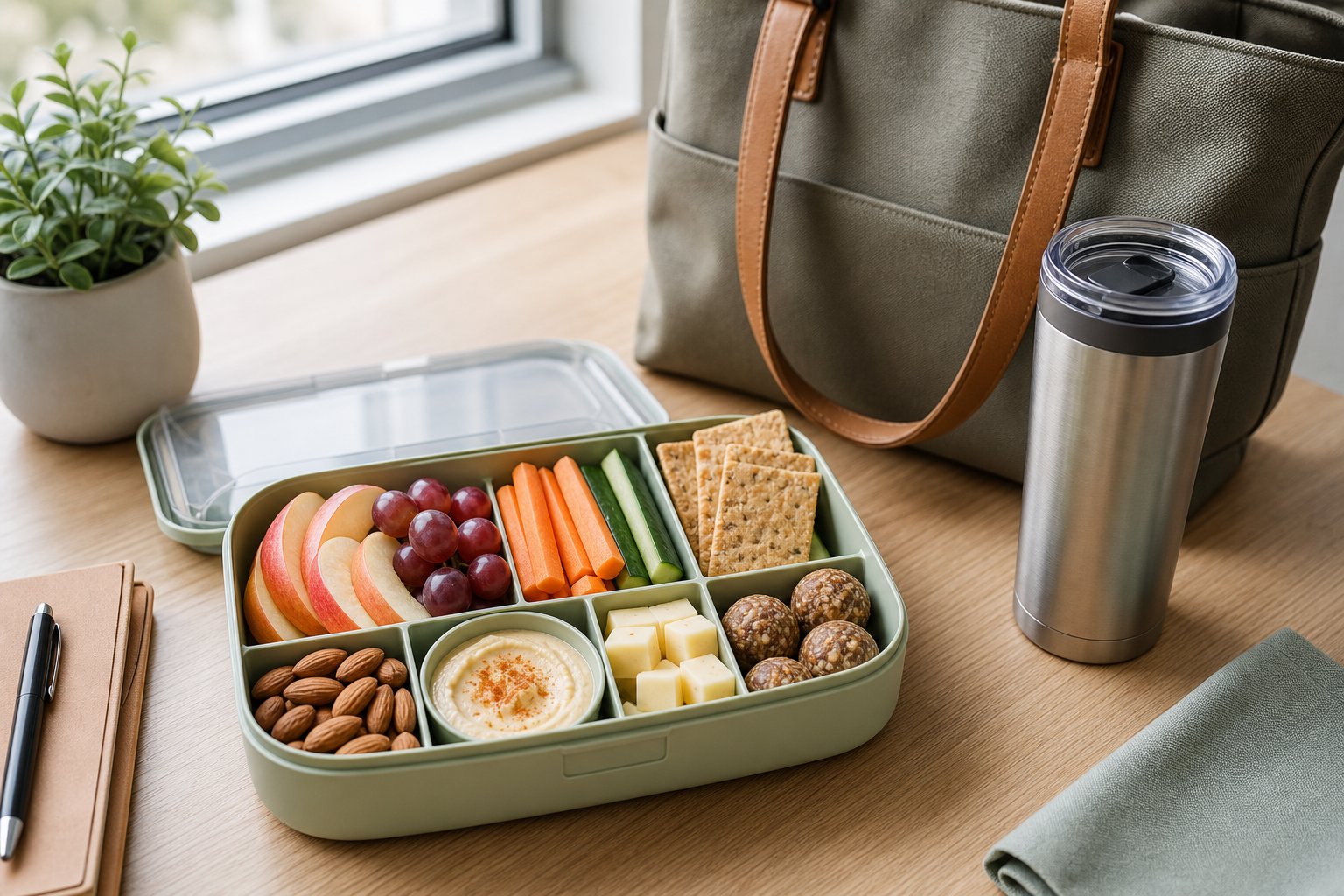
For a desk lunch or midday snack, multi-compartment containers make it easy to separate ingredients. Try cubed cheese, turkey, crackers, and a handful of grapes or berries.
You can add roasted chickpeas or almonds for extra crunch, or include a small pasta salad or serving of quinoa if you want something more substantial.
A snack-board-style lunch box is also an easy way to add variety to repeat workdays.
Keep a Commuter Box Safe and Compact
Commuting usually means limited space and little tolerance for spills, so we keep these boxes simple. Leak-resistant containers with secure lids can make a big difference.
Shelf-stable jerky or meat sticks, when labeled for storage at room temperature, can be convenient alongside trail mix or other dry snacks. If you include vegetables, dairy, meat, eggs, or other perishable foods, pack them in an insulated bag with an ice pack.
For busy commutes, choose foods that are easy to eat without utensils and avoid anything likely to leak or spill.
Scale Up for a More Filling Lunch
Some days call for more than a snack. In that case, add a base such as brown rice, rice noodles, quinoa, or beans to your protein and produce.
Walnuts or roasted almonds can add texture, while a larger portion of pasta salad or another prepared dish can make the box feel more like a complete lunch. Preparing grains and proteins ahead of time makes assembly easier during busy mornings.
The idea is to turn individually prepared components into a convenient meal that fits your day.
Use Shelf-Stable Backups for Long Days
Long workdays are easier when you have a backup. Trail mix, roasted chickpeas, crackers, dried fruit, nuts, and other foods labeled for room-temperature storage can be useful to keep in a desk drawer or bag.
For perishable foods, use an insulated lunch bag and sufficient cold packs to keep the contents properly chilled until you can refrigerate or eat them.
A shelf-stable backup can also help when meetings run late or your main snack box is not enough.
Try These Easy Adult Snack Box Combinations
Once you know the basic formula, building an adult snack box is mostly a matter of mixing and matching what you already have. Here are six combinations we regularly come back to.
Classic Egg, Cheese, and Hummus Box
This combination is quick and easy to customize. Start with hard-boiled eggs and add your favorite seasoning for extra flavor.
Add a few spoonfuls of hummus, cucumber slices, whole grain crackers, and a portion of cheddar or another favorite cheese.
If the eggs are already prepared, the box comes together quickly. Keep the finished box properly chilled until you are ready to eat.
Mediterranean Chickpea and Veggie Box
This option works well when you want something fresh but still satisfying. Start with chickpeas, either roasted for crunch or lightly dressed with olive oil and lemon.
Add cherry tomatoes, olives, mozzarella, and fresh basil. A small amount of balsamic glaze can add extra flavor if you enjoy it.
Finish the box with pita chips or another crunchy whole grain option, and keep perishable ingredients chilled.
Turkey and Cheddar Crunch Box
This is an easy no-cook option for busy mornings. Pair turkey slices with Swiss or cheddar cheese, then add baby carrots, grapes, and whole grain crackers or pita chips.
Keeping the crackers separate from moist ingredients helps them stay crisp during your commute. Use an ice pack or refrigeration for the turkey and cheese.
Greek Yogurt Parfait Box
For a sweeter option, start with Greek yogurt and pack granola separately so it stays crunchy.
Add strawberries, blueberries, blackberries, or whatever fruit you have on hand. A small spoonful of nut butter can add richness and make the box more satisfying.
Keep the yogurt chilled until you are ready to eat.
Vegetarian Protein and Dip Box
This box requires very little cooking. Pair hummus, guacamole, tzatziki, or a Greek yogurt dip with cucumbers, bell peppers, baby carrots, and cherry tomatoes.
For additional protein, add roasted chickpeas, edamame, or hard-boiled eggs. Pita chips can provide a crunchy finishing touch.
Keep any perishable dips and proteins properly chilled during transport.
Sweet and Salty Afternoon Box
For an afternoon snack, combine a small portion of dark chocolate with whole grain crackers, fruit, and nuts or nut butter.
Apple slices with nut butter are another simple pairing. If you include cheese or another perishable ingredient, use refrigeration or an insulated bag with a cold pack.
Meal Prep, Storage, and Food Safety Tips
A little planning can make snack boxes easier to prepare throughout the week. Prepping components ahead of time, separating wet and dry foods, and keeping perishable ingredients properly chilled can help maintain quality and reduce last-minute work.
Prep Components Before Assembling
We prefer to prepare ingredients separately before building individual boxes. Hard-boiled eggs, sliced cheese, cut vegetables, and portioned dips are easier to mix and match when stored in separate containers.
You can wash produce, slice cheese, prepare eggs, and portion dry snacks ahead of time. Then, assembling a snack box on a workday takes only a few simple steps.
Store prepared ingredients in suitable covered containers in the refrigerator and follow appropriate storage guidance for each food.
Keep Wet and Dry Foods Separate
Crackers, pretzels, popcorn, and other crisp ingredients can become soggy when they sit next to moist foods. Use separate compartments or small containers whenever possible.
Hummus, yogurt-based dips, chicken salad, cottage cheese, and similar foods are best packed in sealed containers. Fresh fruit and vegetables can also release moisture, so separating them from dry ingredients helps protect texture.
A simple system works well: keep dry foods together, moist ingredients contained, and dips sealed until you are ready to eat.
Use an Ice Pack for Perishable Foods
Deli meat, cheese, hard-boiled eggs, yogurt, cooked poultry, and other perishable foods should be kept properly chilled.
If you do not have immediate access to a refrigerator, use an insulated lunch bag with a frozen ice pack or another suitable cold source. Keep your snack box refrigerated until you are ready to leave whenever possible.
On longer commutes or warmer days, additional cold packs may be useful depending on your lunch bag and the foods you are carrying.
Refresh Boxes Through the Week
You do not have to assemble an entire week of snack boxes at once. Fresh fruit, vegetables, and dips can lose their best texture over time, so we prefer to prepare components ahead and assemble smaller batches.
A quick midweek restock can keep ingredients fresher and give you a chance to change the combinations.
Switching proteins, dips, fruits, or crunchy ingredients can also keep your snack boxes from feeling repetitive.
Customize Boxes for Your Appetite and Preferences
Not every workday requires the same snack box. Once you have the basic formula down, you can adjust portions and ingredients based on your appetite, schedule, budget, and preferences.
Make a Higher-Protein Option
When you want a more substantial box, increase the protein portion or combine two different protein foods.
Hard-boiled eggs, tuna, grilled chicken, cottage cheese, yogurt, tofu, edamame, and beans are all options to consider. Choose foods that fit your preferences and keep perishable ingredients properly chilled.
For convenient shelf-stable options, look for products specifically labeled for room-temperature storage and follow the package directions.
Create a Vegetarian or Plant-Based Box
There are plenty of satisfying meat-free options. Chickpeas can be roasted for crunch or blended into hummus, while edamame, lentils, beans, and tofu can add protein and variety.
Quinoa or brown rice can make the box more substantial when you want more than crackers. Add vegetables, fruit, dips, or nuts to complete the combination.
Choose Budget-Friendly Swaps
Snack boxes can become expensive if every ingredient is purchased in single-serving packages. Buying larger packages and portioning ingredients yourself can often be more economical.
A block of cheese, canned or dried beans, bulk nuts, oats, popcorn kernels, and seasonal produce can all be useful staples. Preparing eggs, grains, or other ingredients at home can also reduce reliance on individually packaged snacks.
Add Variety Without Overcomplicating Prep
Snack boxes do not need to be elaborate to feel interesting. Start with a protein, a whole grain or crunchy item, something fresh, and an optional treat.
Rotating between two or three combinations during the week keeps preparation manageable. One day might include turkey, crackers, and grapes, while another could feature hummus, chickpeas, vegetables, and cheese.
Nuts, dried fruit, or a small piece of dark chocolate are also easy ways to add variety without creating extra prep work.
Frequently Asked Questions
What should I include in a balanced adult snack box for a busy workday?
Start with a protein, fresh fruit or vegetables, a fiber-rich carbohydrate, and a source of healthy fat. Examples include eggs, cheese, whole grain crackers, produce, hummus, or nuts. Add a small treat if you want extra variety.
How do I keep snacks fresh and safe during a long commute?
Keep dairy, eggs, meat, cooked foods, and other perishables chilled in an insulated bag with a cold pack. Shelf-stable foods such as crackers, dried fruit, and nuts can usually be packed separately according to their storage instructions.
Which containers work best for packing snacks without leaks or crushed food?
Multi-compartment containers with secure lids are useful for separating wet and dry ingredients. Small leak-resistant cups work well for dips and dressings, while firm compartments can help protect delicate foods such as berries.
How can I prepare a week of snack boxes without spending hours in the kitchen?
Batch-prep a few versatile ingredients, such as washed vegetables, cooked eggs, cheese, nuts, and dips. Choose two or three combinations for the week, then assemble boxes in smaller batches as needed.
What are some budget-friendly snack box ideas that still feel satisfying?
Try portioning larger packages of nuts, popcorn, oats, cheese, beans, and seasonal fruit instead of buying individual snack packs. Eggs, homemade popcorn, chickpeas, and simple produce can also work well in budget-friendly boxes.
How do I pack protein-rich snacks that do not need reheating?
Hard-boiled eggs, Greek yogurt, cottage cheese, chilled chicken, tofu, edamame, and tuna can all be eaten without reheating when stored safely. For situations without refrigeration, choose protein foods specifically labeled as shelf-stable and follow their storage directions.
Share:
How to Pack Wet and Dry Foods in the Same Snack Box Without Making Everything Soggy
How to Choose Portion Sizes in a Compartment Snack Box for Kids and Adults