

Check out our latest home & kitchen collection!
A cluttered kitchen isn't just an eyesore, it slows you down, makes cooking less fun, and piles on extra cleaning. When everything has a home that's easy to get to and put back, your kitchen just sort of stays cleaner.
Most of us have had that moment, digging through a packed cabinet or shuffling appliances around because there's nowhere to stash them.
Here's the thing: you don't have to remodel your kitchen to fix this. A few smart storage tweaks can totally change how your kitchen works, and how much time you spend scrubbing it.
Move your most-used stuff within arm’s reach, add a couple of basic organizers, and suddenly daily cleaning gets way easier.
Let’s run through some practical storage ideas that cut clutter, simplify cooking, and make cleanup less of a chore. No perfection required, just real-life solutions that fit how you actually use your kitchen.
Key Takeaways
- Store things where you use them so clutter doesn't pile up
- Organize by zones and categories to speed up cooking and cleaning
- Simple tools like drawer dividers, lazy Susans, and shelf risers help you use space better—no renovation needed
Prioritizing Cleanliness With Smart Kitchen Storage
The way you store stuff shapes how easy it is to keep your kitchen clean. When you can grab what you need and put it back without fuss, you spend less time wiping and searching.
Essential Principles of Kitchen Organization
A clean kitchen starts with one rule: everything needs a home. If things don’t have a spot, they end up scattered everywhere, making counters look messy and cleaning harder.
Store your go-to items where you can reach them fast. Stash the once-a-year gadgets up high or in the back. This way, you’re not shifting things around all the time and spreading crumbs everywhere.
A few core organizing ideas:
- Zone-based storage: Group by task—baking, cooking, prep, whatever works for you
- Go vertical: Stack containers, add shelf risers, use the full cabinet height
- See it all: Clear bins and open shelves make it easy to spot what you need
- One-in, one-out: When you get something new, ditch something old to keep things in check
The "first in, first out" trick for pantry stuff helps you use up older food before it gets gross and sticky way in the back.
Designing Cleaning-Friendly Storage Layouts
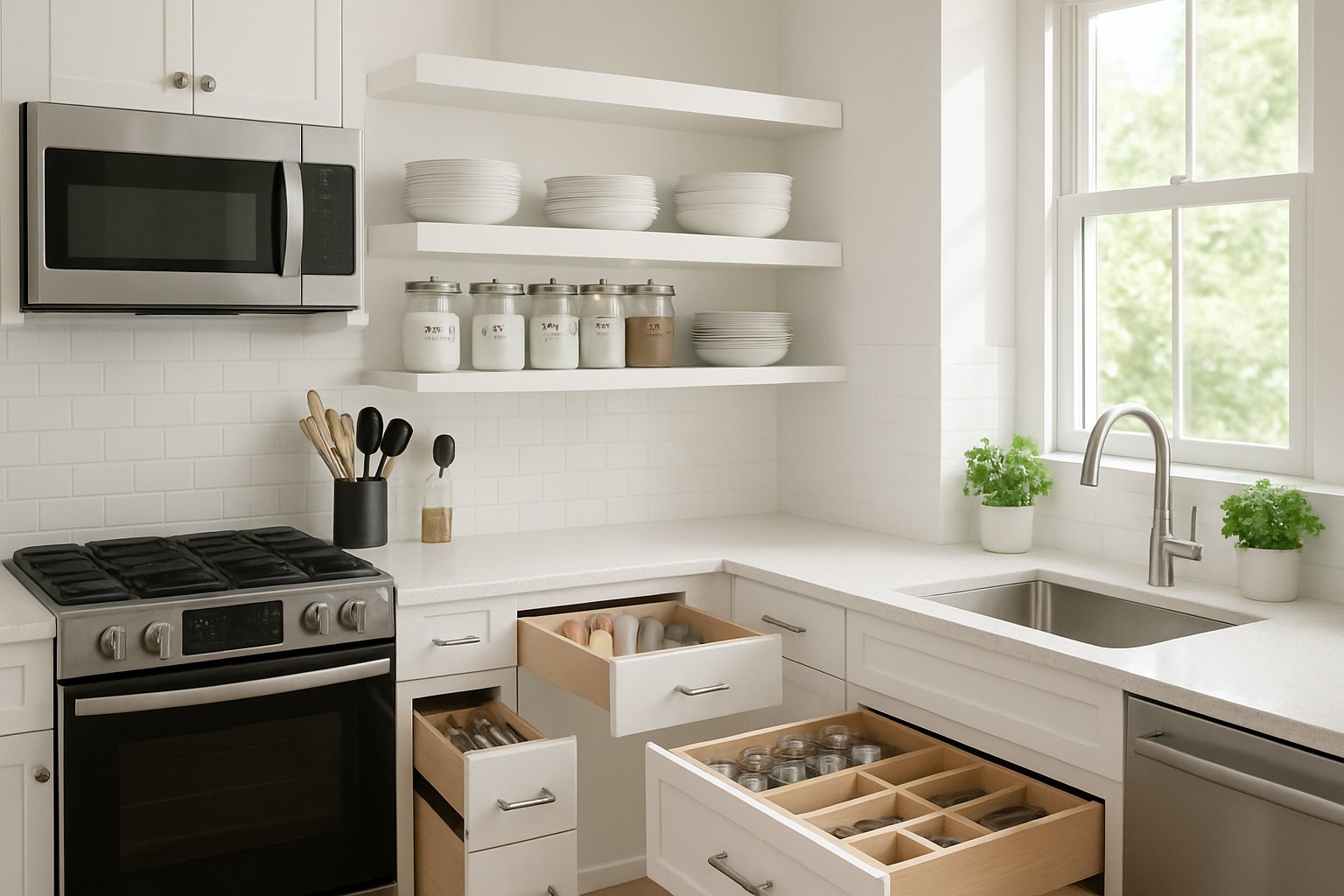
Storage should make cleaning easier, not harder. Removable drawer inserts pop out for a quick wash, unlike fixed dividers that trap crumbs.
Pull-out shelves mean you’re not reaching into dark cabinet corners where spills go unnoticed. You can actually wipe every inch without awkward contortions.
Under the sink, raised trays or sliding bins keep cleaners off the cabinet floor. You’ll spot leaks sooner and avoid water damage.
Toe-kick drawers and corner carousels use those weird, dusty spots that usually collect junk. Wall-mounted magnetic strips for knives or utensils free up the counter and are a breeze to wipe down—way easier than scrubbing a knife block.
Avoiding Clutter With Better Storage Planning
Good storage planning stops clutter before it starts. Be honest about what you use and what's just taking up real estate.
Countertop appliances need to earn their place. If you don’t use it weekly, stick it in a cabinet or appliance garage. More open counter means less to clean and a calmer vibe.
Quick storage planning checklist:
| Storage Area | Planning Strategy |
|---|---|
| Countertops | Only daily-use stuff stays out |
| Upper cabinets | Lighter, rarely-used things go here |
| Lower cabinets | Store heavy pots and appliances |
| Drawers | Dividers keep utensils and tools sorted |
Multi-purpose storage (like an island with shelves and bins) cuts down on the number of organizers you need. Fewer surfaces to dust, fewer nooks for crumbs to hide.
Decluttering Strategies for a Tidy Kitchen
Getting rid of extra stuff and organizing what’s left sets you up for a kitchen that works with you, not against you. Pair smart decluttering with purposeful storage and suddenly, counters clear off and drawers actually open.
Sorting and Reducing Kitchen Items
Start by emptying cabinets and drawers, one category at a time. Pile up all your spatulas or mixing bowls in one spot and you’ll see just how many extras you have.
You might realize you’ve got six wooden spoons but only use two. If you haven’t touched something in a year, it’s probably time to let it go.
Things to check first:
- Broken or worn-out tools
- Duplicate gadgets
- One-trick appliances you never use
- Expired food
- Mismatched containers with missing lids
Be real about your cooking style. That bread maker? If it’s just collecting dust, it’s not making you a baker. Stained towels won’t magically clean themselves.
Aim to keep just one solid version of each tool you actually use.
Choosing the Right Storage for Essentials
Once you’ve trimmed down to the essentials, you need storage that keeps things handy and organized. Clear bins work great for pantry basics—you see what’s inside instantly.
Drawer dividers stop utensils from becoming a jumbled mess. Stackable organizers use vertical space in cabinets. Keep stuff near where you use it: coffee supplies by the coffee maker, cutting boards near the prep area.
Counter space is prime real estate. Only leave out what you use daily (or almost daily). Stash everything else in cabinets or on shelves until you need it.
Pull-out shelves and lazy Susans help you reach things in deep cabinets—no more losing stuff in the back. If you can see and grab what you own, you’re less likely to buy duplicates or forget ingredients.
Supporting a Routine Cleaning Habit
Decluttering isn’t a one-and-done deal. You need simple habits to keep clutter from sneaking back in.
A quick daily reset (five minutes, tops): clear the counters, put things away, wipe down surfaces before bed. This stops dishes and random stuff from piling up overnight.
Once a week, check the fridge for expired food and sweep through drawers for stray items. Before bringing something new into the kitchen, ask yourself if you have a spot for it. If not, maybe skip it.
Stick to the "one in, one out" rule. Buy a new cutting board? Donate the old one. This keeps storage in check and forces you to be intentional about what stays.
Optimizing Cabinets and Drawers for Maximum Efficiency
The way you set up drawers and cabinets can seriously cut down cleaning time and make everything easier to find. Swapping cabinets for drawers, adding shallow storage, and using pullouts can keep things neat with way less effort.
Switching Cabinets to Kitchen Drawers
Standard lower cabinets make you crouch and dig through piles, which gets messy fast. Deep kitchen drawers fix this by letting you see everything at a glance.
Swap out base cabinets for drawers, and you’ll stop stacking and losing stuff. Drawer dividers or pegboards keep pots, pans, and containers from sliding around.
Usually, this means removing cabinet doors and shelves, then adding heavy-duty drawer slides. Deep drawers are perfect for big items like mixing bowls, appliances, or dry goods in bins. Even switching just a couple cabinets to drawers can make a big difference.
Using Shallow Drawers and Pegboards
Shallow drawers (about 3-6 inches deep) are perfect for things that disappear in deep storage—utensils, spices, measuring cups.
Pegboard systems inside these drawers let you move pegs around for a custom fit. You can change the layout whenever you get new tools or ditch old ones. It’s a lifesaver for keeping whisks and spatulas from turning into a tangled mess.
It only takes about 15 minutes per drawer to set up a pegboard. Measure, cut to size, add pegs, done.
Pullout Shelves and Pull-Out Pantry Benefits
Pullout shelves turn deep cabinets into usable storage. You can reach the back without unloading the front, so you actually use what you have—and nothing gets lost.
A pull-out pantry makes use of narrow spaces between appliances or at the end of cabinets. These slim shelves pull out all the way, so you can see everything—cans, spices, oils. It’s easier to keep track of what you have and avoid waste.
Some real perks:
- No more old food hiding in the back
- Wiping down shelves is a breeze
- You know what you have for meal planning
- Less clutter on the counter
Installing these means measuring your space and choosing slides that can handle the weight. Soft-close hardware is a nice touch—no more slamming.
Leveraging Specialty Storage Features
Sometimes regular cabinets just don’t cut it. Specialty storage solves those annoying problems—like where to put small stuff or heavy appliances without hogging counter space.
Making the Most of Lazy Susans
Lazy Susans make deep corner cabinets actually usable. The turntable style works best for base cabinets—just spin to grab what you need instead of crawling inside.
Group items by height and how often you use them. Tall bottles in the center, short stuff near the edge. Kidney-shaped ones fit corners better than round ones.
Clean your lazy Susan every month—sticky messes spin everywhere if you ignore them. Small bins or dividers can help keep things from sliding around.
Custom Spice Drawer Setups
A dedicated spice drawer beats those crowded cabinet racks. Shallow drawers (3-4 inches deep) let jars lie flat with labels up so you can see everything.
Measure your spice jars before adding dividers. Most grocery store jars are about 1.5 inches wide, but bulk jars are bigger. Adjustable inserts let you change the layout if your collection grows or shrinks.
Keep the spice drawer near the stove for quick grabs. LED strip lights inside make it easy to tell paprika from cayenne, even at night.
Utilizing Appliance Garages
Appliance garages hide clutter behind cabinet doors but keep your gadgets plugged in and ready. Corners or the end of a counter work well—they’re out of the way but handy.
Standard garages are 18-24 inches wide and deep, with an outlet strip in the back. Roll-up (tambour) doors save space compared to swinging doors.
Install these at counter height so you can slide in heavy mixers or food processors without lifting. Shelf risers inside help you stack smaller appliances over bigger ones.
Expanding Kitchen Storage With Islands, Carts, and Shelving
When counters are packed and cabinets overflow, adding an island, cart, or open shelves can give you the breathing room you need. Islands anchor the kitchen and offer tons of storage. Carts are flexible—roll them where you need, then tuck them away. Open shelves keep essentials in sight and easy to grab.
Kitchen Island Storage Ideas
A kitchen island really changes how we stash our cooking gear by putting storage right where we need it. Deep drawers work way better than old-school cabinets for pots, pans, and baking sheets—especially if you add pullout organizers so nothing gets lost in the back.
One side can handle closed storage for daily dishes and utensils, while the other side shows off open shelves for cookbooks, wire baskets, or nice serving pieces. Honestly, shallow shelves (about 12-15 inches deep) beat full-depth ones because you can actually grab what you need without crawling onto the counter.
Built-in wine racks, spice pullouts, and vertical dividers for sheet pans squeeze more usefulness out of every inch. Some islands hide compartments behind decorative panels for small appliances or pet stuff. If you’ve got a sink or cooktop in the island, it’s smarter to put deeper cabinets on the far side so nothing blocks your main work area.
Produce that doesn’t belong in the fridge—like onions and potatoes—stays fresher in wire baskets tucked under drawers, where it’s cool and dry.
Benefits of Rolling Carts
Rolling carts fix the flexibility problem that fixed islands just can’t. You can move them right where you need extra prep space, then roll them away when you’re hosting or just want a clear path.
The best carts mix open shelving (for quick grabs) with closed drawers for linens or small gadgets. Some have butcher block tops for chopping, others go with stainless steel for a heatproof spot to land hot pans.
They’re a lifesaver in small kitchens where a permanent island would just get in the way. Wheel one next to the stove for cooking, pull it out as a drink station for parties, or park it in a corner for extra pantry space. Locking wheels are a must if you actually want to chop on them.
Incorporating Open Shelving
Open shelving puts everything you use most right in sight and kind of forces you to stay organized since it’s all on display. Floating shelves can go on empty wall space or at the ends of an island.
The trick is to be picky about what you show off. Stuff you grab every day—coffee mugs, spice jars, oils, serving bowls—should live here. The less photogenic stuff? Hide it behind doors.
Wire shelves can adjust as your needs change, while wood shelves add a bit of warmth. Space shelves 12-18 inches apart for dishes, but go taller for bottles or pitchers. Baskets or trays help corral similar things so the shelves don’t look like a yard sale.
Maintaining Order With Zone-Based Storage Systems
Zone-based storage means breaking your kitchen into task areas, putting things where you’ll actually use them, and keeping the counters clear for what matters.
Creating Effective Kitchen Zones
First, figure out the natural work areas in your kitchen. Most kitchens revolve around three main zones: prep, cooking, and cleaning. Each zone needs its own tools and ingredients close by.
The prep zone usually lands between the fridge and sink—where you chop veggies and pull ingredients together. Knives, cutting boards, mixing bowls, and measuring cups all live here. The cooking zone centers on the stove and oven, with pots, pans, spatulas, and oils nearby.
Cleaning happens around the sink and dishwasher. Dish soap, sponges, towels, and cleaning supplies stay close. Some folks set up extra zones—a baking station, coffee bar, whatever fits your habits.
The point is to match storage to how you actually cook, not just where the cabinets happen to be.
Arranging Storage for Prep, Cooking, and Cleaning
Keep prep tools in drawers or cabinets nearest your main cutting area. Knives go in a nearby drawer or on a magnetic strip, mixing bowls nest in a lower cabinet. Spices and oils used for prep fit best in a pull-out drawer or lazy Susan by the counter.
Cooking stuff clusters around heat sources. Heavy pots and pans belong in deep drawers under the cooktop, lighter things like wooden spoons can go in countertop crocks or wall racks. Pot holders and trivets need a drawer by the stove—don’t stash them across the room.
Cleaning supplies want water access. The under-sink cabinet gets dish soap, scrubbers, trash bags. Hang dish towels on hooks near the sink, and keep backup supplies in a nearby pantry instead of hogging under-sink space.
This setup saves you steps and keeps counters free for real work.
Storing Items by Frequency of Use
Daily-use items get the easiest-to-reach spots. Coffee mugs at eye level, plates in the cabinet closest to the dishwasher, cooking oils on the counter or in a handy cabinet.
Weekly-use items go in less prime spots. Baking sheets fit vertically in a lower cabinet, the food processor sits on a pull-out shelf, specialty pots stack deeper out of the way.
Occasional-use items belong up high, in corners, or wherever you don’t mind reaching:
- Holiday platters
- Oddball appliances (ice cream maker, pasta roller)
- Seasonal stuff (picnic gear, coolers)
- Backup tools you rarely touch
We try to check in every so often—if something hasn’t been used in six months, it either heads to basement storage or gets donated. Rotating out the dead weight keeps your best stuff front and center and keeps kitchen clutter from creeping back in.
Frequently Asked Questions
Let’s be honest: smart storage doesn’t just happen, and everyone’s got questions about organizing kitchens and keeping surfaces clear. Here are some of the most common ones we hear.
What's the secret to keeping your kitchen spotless with clever organization hacks?
Honestly, it’s not about buying some fancy gadget—it’s about giving everything a home. When we know exactly where cutting boards, towels, and utensils belong, there’s less “where does this go?” and way fewer piles on the counter.
Using vertical space really helps. Hooks under cabinets for mugs, hanging racks for pots—these keep drawers from overflowing. Cabinet door organizers are perfect for lids, foil, or cleaning stuff.
Daily habits matter too. We try to put things back right after using them and do a quick five-minute tidy-up before bed. When everything has a spot, the kitchen kind of stays clean on its own.
Got a tiny kitchen? What are your go-to organizing tips for making the most of every nook and cranny?
Rolling carts are a lifesaver in small spaces. Pull one out for extra prep, then roll it away when you’re done.
Stackable containers and shelf risers let you double or triple up inside cabinets. Instead of one layer of plates, add a riser and fit more. It’s great for canned goods and spices, too.
Don’t ignore weird gaps between appliances—a slim pull-out pantry between the fridge and counter can hold tons of stuff that would otherwise crowd your shelves. Magnetic strips on the wall store knives and metal spice tins without eating up drawer space.
Ever play 'Hide and Seek' with your spices? Where's the smartest place to store your kitchen essentials for easy access?
Spices lose flavor fast if they’re near heat or light, so we skip storing them right by the stove. A drawer with a tiered insert near the cooking area is perfect—you can see every label at a glance.
For daily-use items like oils, salt, and pepper, we keep a small area on the counter or a shallow shelf at eye level. Lazy Susans are awesome for corner cabinets filled with condiments or baking supplies.
Bulk items and backups go up high or down low since we grab them less often. The sweet spot at waist-to-eye level is for the stuff we use most.
Looking for a 'recipe' to keep your countertops clutter-free - any thoughts?
We stick to a simple rule: only daily-use appliances get counter space. Coffee maker? Sure. Knife block? Usually. That bread machine you use twice a month? Cabinet or pantry.
A landing zone for incoming stuff keeps chaos at bay. We toss mail, keys, and random bits in a basket or tray by the entrance, then clear it out every few days.
Clear containers in the pantry make it easy to see what needs restocking without dragging everything onto the counter. Pegboards or wall racks for utensils also free up counter space (and look pretty cool).
Feeling overwhelmed by gadgets and gizmos? What's the effective way to sort out the kitchen chaos?
Start by pulling everything out and asking, “When did I last use this?” If that avocado slicer hasn’t seen daylight in six months, it’s just taking up space. We donate duplicates or things we can do with a regular knife.
Drawer dividers turn messy utensil drawers into organized zones. We group like with like—measuring spoons together, spatulas in their own spot. Suddenly, finding what you need is way less of a hunt.
For what we keep, we store it close to where it gets used. Baking tools by the mixer, grilling stuff near the back door, coffee gear around the coffee maker. Less running around, less mess.
Share:
The Importance of Airflow in Proper Food Storage
The Importance of Airflow in Proper Food Storage