

Check out our latest home & kitchen collection!
When you open your fridge or pantry, you probably don't think about the invisible force keeping your food fresh: moving air. But proper airflow really makes a difference, it prevents spoilage, controls humidity, and helps groceries last longer by keeping temperatures steady everywhere.
Without enough air moving around, you end up with pockets of still air where moisture builds up, ethylene gas hangs around, and temperatures bounce up and down. That's just asking for soggy lettuce, moldy berries, and rapid spoilage.
The gap between a fridge with good airflow and one that's packed tight? It can mean lettuce lasting three weeks instead of three days.
We've all pulled out a forgotten container of berries or found sprouting potatoes in the pantry, usually, that's less about the food's age and more about poor air circulation. If you understand how air moves through your storage, you can make little tweaks that seriously cut down on waste.
You don't need fancy gadgets or a kitchen remodel to improve airflow. Just being smart about how you organize your fridge and pantry, like giving things a bit of space, can help keep temperatures even, stop condensation, and spread out those gases that make food go bad too soon.
Key Takeaways
- Good air circulation keeps temperatures steady, reduces moisture buildup, and spreads out ethylene gas that speeds up spoilage
- Different foods like different airflow: leafy greens want gentle movement, root veggies are fine with less
- Simple tricks—like not overstuffing shelves and leaving space between items—boost storage and can even save a bit on energy
The Role of Airflow in Food Storage
Airflow quietly does a lot in food storage. It keeps temperatures even, controls moisture, and limits the growth of bacteria and mold. These things together decide how long your food actually stays good.
How Airflow Maintains Freshness
When air moves around stored food, it stops hot and cold spots from forming. That matters because produce gives off heat as it "breathes," and even a tiny temperature jump—just 2 or 3°F—can cut shelf life in half.
Airflow also helps with ethylene gas, that sneaky ripening hormone. Fruits like bananas, apples, and tomatoes pump it out constantly. If the gas can't escape, it builds up and speeds up spoilage in nearby foods that are sensitive—like lettuce or berries. Moving air between storage areas breaks that chain reaction.
There's a sweet spot, though. Too little airflow and you get stagnant pockets where things go bad fast. Too much, and your veggies dry out. The goal is steady, gentle movement—enough to keep things fresh, but not so much that you end up with shriveled produce.
Impact on Food Safety
Airflow isn't just about freshness—it helps keep food safe, too. When air gets stuck, warm spots can form, and that's where bacteria like Salmonella and E. coli love to grow (especially between 40°F and 140°F).
In the fridge, moving air makes sure the cold reaches everywhere—not just the bottom, leaving the top to warm up. This keeps all your groceries in the safe zone. In bigger storage setups, airflow often moves from clean areas toward spots where contamination is more likely, which helps prevent cross-contamination.
Less condensation is another bonus. Dry surfaces mean bacteria have a tougher time spreading. So, just by keeping air moving, you're making your kitchen a little safer.
Moisture, Mold, and Spoilage Prevention
Airflow is your best defense against mold. If air sits still, humidity can collect in corners and create damp spots where mold sets up shop—sometimes in just a day or two. Circulating air stops these wet patches and keeps humidity where you want it.
Different foods want different humidity: greens love it moist (95-100%), while onions and garlic like things much drier (65-70%). Airflow helps you hit those targets, either by moving out extra moisture or keeping things from drying up.
If you notice condensation on containers, mold in certain spots, musty smells, or slimy veggies, it's a sign your airflow needs work. Fixing it right away stops small problems from turning into a fridge full of ruined food.
Key Elements of Effective Airflow
Good airflow in storage comes down to a handful of things: smart design, the right air speed, clean air, and temperature management. Nail these, and suddenly your produce lasts way longer.
Airflow System Design Basics
First off, think about how air naturally moves. Warm air rises, cool air sinks—that's convection. But you can't just trust it to do all the work. Pressure pushes air from crowded spots to emptier ones, and smooth, steady flow (laminar flow) is better than wild, swirling air.
Where you put vents and fans matters. You want air to loop through the whole space, not get stuck in corners. Commercial fridges use fans to spread air evenly and avoid hot or cold spots. If you overfill a fridge, you choke off airflow; underfill it, and you waste energy.
Importance of Air Velocity
How fast the air moves changes everything. Most food storage needs air moving at 50-200 feet per minute, but it depends on what you're storing.
Go too fast and you dry out veggies, use more energy, and might even bruise delicate foods. Too slow, and warm spots and ethylene gas build up, making things spoil faster.
Leafy greens prefer a gentle breeze (maybe 75-100 feet per minute), while root veggies can handle more. Adjusting fan speeds or adding baffles helps create the right conditions for each shelf. It's about steady, gentle movement—not gusts of cold air blasting your food.
Filtration and Clean Air
Clean air isn't just a nice-to-have—it's crucial. Dust, mold, and bacteria floating in the air can land on food and speed up spoilage.
In pro kitchens, you'll see several filter layers:
- Pre-filters for big stuff like dust and lint
- MERV-rated filters for smaller particles and some germs
- HEPA filters for really sensitive foods, grabbing nearly everything down to 0.3 microns
What you need depends on what you're storing. Cut fruits and ready-to-eat stuff need cleaner air than whole apples or potatoes. And don't forget—the air system itself has to stay clean, or it's just blowing germs around. Filters need regular changing or cleaning, no excuses.
Temperature Zones and Air Circulation
Not all foods want the same temperature. Good airflow systems let you run different zones at once.
Some ballpark temperature and humidity ranges:
| Food Category | Temperature Range | Humidity Level |
|---|---|---|
| Leafy greens | 32-36°F | 95-100% |
| Root vegetables | 32-40°F | 90-95% |
| Citrus fruits | 38-48°F | 85-90% |
| Berries | 31-32°F | 90-95% |
Air movement helps keep these areas steady—pulling out the heat produce makes as it sits. Cooling units and airflow patterns should create gentle gradients, not sharp boundaries.
How often the air changes in a room (air change rate) matters, too. More changes mean better control, but higher energy bills. Usually, 15-40 changes per hour does the trick, depending on what you're storing. Put the most delicate foods in the steadiest spots, and let hardier things hang out where temps might swing a bit.
Optimizing Airflow in Home Fridges & Pantries
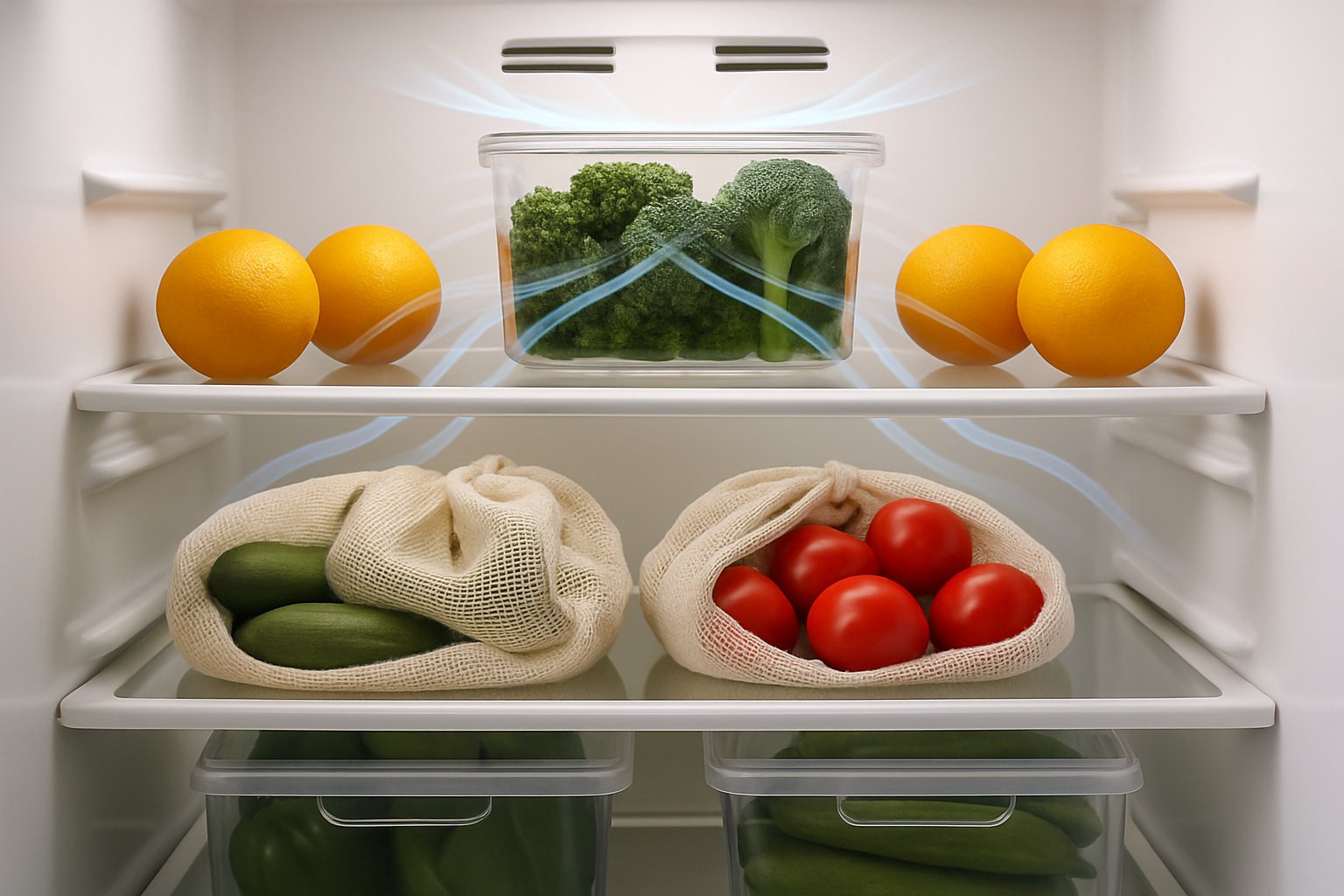
How you arrange your fridge and pantry really does affect how long your food stays fresh. Keep vents clear, give items some breathing room, and tailor storage to what you're storing—it's not rocket science, but it works.
Avoiding Overcrowding and Blocked Vents
Fridges need room for cold air to flow. Stuff them too full, and you block vents, causing warm patches where food goes bad fast.
Most fridges have vents at the back or sides. Try to leave at least a couple inches around them. If you jam containers right up against a vent, the compressor works overtime and still can't keep things cool.
Same goes for pantries. Don't pack things wall-to-wall. Leave gaps so air can move and moisture doesn't get trapped.
Quick tips:
- 2-3 inches between fridge walls and containers
- Keep shelves 70-80% full, max
- Wire shelves let air flow better than solid ones
- In the pantry, aim for at least an inch between containers
Best Practices for Food Arrangement
Where you put things matters. Keep grab-and-go items up front so you don't hold the door open forever and mess up the airflow.
Dense stuff like milk and condiments can handle the door, where temps swing more. Delicate produce belongs in the crisper, where humidity stays high. Put raw meat on the bottom shelf, just in case of leaks.
In the pantry, heavy cans go low for safety, lighter stuff like bread up high. Onions and potatoes do best in mesh bags or open containers for max airflow.
Handy checklist:
- Shallow containers (under 2 inches) for leftovers—they cool faster
- Clear, stackable bins keep things tidy without blocking air
- Use breathable bags for produce, not sealed plastic
- Keep apples and bananas away from sensitive veggies
Tailoring Airflow for Different Food Types
Every food's a little different. Leafy greens and herbs want high humidity and gentle airflow, so the crisper drawer with the humidity slider cranked up is perfect.
Root veggies like carrots are fine with moderate airflow and a bit less humidity—open bags or containers work well. Cheese, deli meats, and leftovers need steady cold and low humidity, so stash them in the main fridge compartment. Hard cheeses can handle more air; soft ones need to be wrapped up.
For the pantry, grains and dry goods like sealed containers to keep moisture out. Oils and vinegars don't need much air—just keep them cool and dark. Never store onions and potatoes together, though; onions give off gases that make potatoes sprout, even if the air's moving.
Airflow and Humidity Control
Getting humidity right, while keeping air moving, is the secret to long-lasting produce. Mess up either, and you'll find sad, moldy veggies hiding in the back of your fridge.
Balancing Humidity for Fruits and Veggies
Different produce wants wildly different humidity. Greens love it nearly wet (95-100%), onions and garlic like it dry (65-70%), root veggies are happy in the middle (90-95%), and most fruits are somewhere around 85-95%.
Airflow is what lets you tweak humidity. Gentle air in high-humidity spots keeps water from pooling on leaves without drying them to dust. For foods that like it dry, a little more airflow pulls away extra moisture.
The trick is to match airflow to humidity. Put moisture-loving foods where air moves slow and steady. Stash humidity-sensitive stuff like garlic where the air's a bit brisker. Use drawers or containers with adjustable vents to fine-tune these little microclimates. It's a bit of trial and error, honestly, but you get the hang of it.
Preventing Moisture Build-Up
Condensation is a real headache for food storage. Whenever warm air meets a cold surface, water droplets pop up—and suddenly you've got the perfect recipe for mold and bacteria.
Consistent airflow keeps those temperature differences in check. If air isn't moving, moisture just piles up in the corners and against container walls. Even at home, just leaving a bit of space between items in the fridge lets cold air do its job and stops water from collecting.
A few things that actually help:
- Keep 1-2 inches of space between your food
- Use wire shelving so air can move up and down, not just side to side
- Toss a small fan in bigger storage rooms
- Drop moisture-absorbing packets near anything especially sensitive
Cross-ventilation? It's a game-changer. Letting air travel through (not just around) the storage area keeps surfaces dry and spoilage way down.
Energy Efficiency Through Proper Airflow
Good airflow in your fridge or pantry doesn't just keep food fresh—it makes your appliances work less and saves you some cash on electricity.
Reducing Hotspots and Appliance Strain
Hotspots crop up when cold air can't get everywhere, so the fridge ends up working extra hard to cool those stubborn warm spots. Stack stuff in front of vents or cram the shelves, and suddenly the compressor's running all the time. That wears out parts and bumps up your power bill.
Just keeping a bit of space between items helps a lot. Air can flow around everything, instead of getting trapped. Wire shelving, again, beats solid ones for letting air move top to bottom.
And don't forget the back wall! If you shove things right up against it, you block the main airflow. Leaving a 3-4 inch gap back there lets cold air travel down and warm air rise back to the cooling bit. It's just natural convection—no need to make the fridge fight itself.
How Good Airflow Saves on Energy Bills
A fridge with clear airflow paths can use 25-30% less energy than one with blocked circulation. When air moves freely, temperatures stay steady and the compressor doesn't have to keep kicking on. Basically, you're letting the laws of physics do their thing.
If air can't reach certain spots, the thermostat might think the whole fridge is warm, even if most of it is cold. That triggers more cooling cycles and wastes energy. Those fancy variable speed fans in modern fridges? They only work well if the air can actually move where it's supposed to.
Fan speed and power use aren't linear, either. Running a fan at 80% of its max only takes about half the energy of running it full blast, and that's usually plenty for most storage needs.
Advanced Strategies and Maintenance
Optimizing airflow isn't just about slapping in a fan or moving a few things around. It takes some planning (and, honestly, a bit of maintenance too). New tech helps us design better spaces, but if we don't keep up with cleaning, even the best systems get sluggish.
Computational Fluid Dynamics for Storage Layout
Now we've got computational fluid dynamics (CFD) software to map out airflow before you even load up a shelf. This stuff can show exactly where air will get stuck, where cold spots will be, and how temperatures will spread.
Big food storage operations use CFD modeling all the time to get their layouts right. The software can test different shelf setups, vent positions, and even how dense you can pack things before airflow suffers. At home, we can just use the same logic—think about where air will go as you organize your fridge or pantry.
CFD looks at things like air speed, temperature changes, and where stuff blocks the flow. By tweaking these variables in a simulation, you can spot the best arrangement before you waste time (or food) on a poor setup.
Regular Maintenance and Cleaning Tips
Even the best airflow plans fall apart if you let dust and grime build up. Cleaning vents, fans, and ducts every few months keeps things moving.
Maintenance worth doing:
- Vacuum or brush condenser coils every quarter
- Wipe down vents and fans once a month
- Check door seals for leaks that mess with circulation
- Swap out air filters in climate-controlled storage every 90 days
Dust can cut airflow by as much as a third, making your fridge work harder and less evenly. And if you see ice building up around vents, that's a red flag—air isn't getting through and you need to deal with it fast.
Frequently Asked Questions
People always have questions about how to actually make airflow work in their own storage. Let's tackle a few that come up a lot.
How can strategic airflow prevent spoilage in our pantry fortress?
Smart airflow in the pantry stops moisture and heat from building up, which is exactly what mold and bacteria want. If you keep the air moving, you're basically kicking out the conditions that make food go bad.
The trick is to avoid overstuffing. Just leaving a bit of space—an inch or two—between things lets air get around and keeps humidity from getting trapped.
And don't forget about ethylene. Onions, potatoes, and some other foods give off gases that speed up spoilage. Keep them apart and let air move, even in a pantry.
What are the top tactics for maintaining airflow that keeps our fridge's goodies in top-notch condition?
Biggest mistake? Overcrowding. If you block the back vents or jam everything together, cold air can't circulate and you get warm spots—perfect for spoilage.
Try to keep your fridge about three-quarters full. Wire shelves help air move up and down, and you want to avoid pushing food right against the back wall.
Also, clean those condenser coils every six months. If they're dusty, your fridge has to work a lot harder and airflow drops.
Could ventilating food storage be the secret sauce for longer-lasting produce?
Honestly, yes. Ventilation is huge for keeping produce fresh. It manages ethylene gas and moisture, both of which make fruits and veggies spoil faster if they build up.
We've seen apples last months instead of weeks with good airflow. It's that dramatic.
Just match the airflow to the produce. Leafy greens want gentle circulation and high humidity. Roots don't need as much, but still benefit from a bit of air to prevent rot.
Can you dish out how poor airflow might invite unwanted guests (yikes, bacteria!) to our food fiesta?
If air isn't moving, moisture sits on food and packaging. That's basically an open invitation for bacteria and mold.
Stagnant air also means temperature swings. You might have spots that get too warm, even if the thermostat says you're safe. Bacteria love those spots.
Neglect air circulation, and you're just asking for trouble—Listeria, mold, all sorts of bad actors thrive in those humid, warm pockets.
What's the skinny on using airflow hacks to sidestep the soggy sadness of wilted veggies?
Wilted veggies are just losing water faster than they can keep it. You want gentle, steady airflow that stops humidity from building up but doesn't dry things out.
For greens, store them where air moves a bit but not directly on them. Keep them away from the main fridge vent, but make sure they're not in a dead zone either.
Perforated bags or containers with little holes work well—they let humidity escape but keep things from drying out too fast. It's a balancing act, but definitely worth the effort.
In the battle against moisture, how does airflow come out as the kitchen champ for dry goods?
Airflow keeps dry goods from turning soggy or clumping up—think flour or sugar. When air moves, it whisks away humidity before it can sneak into your food.
Honestly, it's worth making sure your pantry isn't sealed up tight. Even a little gap under the door helps. If you trap air inside, any temperature change can leave condensation on your packages. Not great.
Some folks toss in moisture-absorbing packets, and yeah, that helps too. Good airflow spreads out any humidity, and those absorbers grab what’s left. Your snacks stay crisp, your flour stays powdery—pretty simple, really.
Share:
How to Maintain a Clean Kitchen Through Better Storage Choices
How to Maintain a Clean Kitchen Through Better Storage Choices