

Check out our latest home & kitchen collection!
Buying in bulk saves money and means fewer shopping trips, but if you don’t store things right, you might just end up tossing food and losing cash anyway. Who hasn’t opened a bag of flour to find pantry moths, or bitten into a cracker that’s gone soft and sad? The upside: you don’t need fancy gadgets or a degree in food science to keep your bulk pantry stash fresh.
It really comes down to four things: air, light, temperature, and moisture. If you can manage these, staples like rice, beans, flour, and spices will last months—sometimes even years. Simple stuff like airtight containers, a cool dark spot, and using up the oldest stuff first works wonders.
This guide covers practical storage for all kinds of bulk pantry items—grains, legumes, oils, spices. You’ll find tips on containers, where to stash things, and how to spot trouble before it ruins your dinner.
Key Takeaways
- Airtight containers in cool, dark places keep bulk items safe from moisture, pests, and light.
- Use a “first in, first out” system, and label everything with purchase dates to cut down on waste.
- Grains sometimes need freezing before storage, while oils do best away from heat and light.
Key Principles for Bulk Pantry Freshness
To keep bulk pantry items in good shape, you’ve got to watch three things: temperature and humidity, light, and air. Nail these basics and your food will keep its flavor, texture, and nutrients way longer.
Temperature and Humidity Control
Aim for a pantry temp between 50°F and 70°F. Anything hotter speeds up spoilage and makes bugs happy. Too cold? You’ll get condensation when things warm up again.
Humidity matters, too. Most dry goods like it dry—15% humidity or less. In muggy places, toss silica gel packets into your containers to soak up extra moisture. They keep flour from clumping, rice from getting musty, and nuts from turning weird.
For long-term storage (over six months), oxygen absorbers help. They suck out oxygen in sealed containers, so mold and bugs can’t survive. One 300cc absorber per gallon does the trick—just seal it up right after.
Keep your containers away from anything warm: ovens, dishwashers, sunny windows. Even a few hours of heat can undo months of careful storage.
Light Protection Strategies
Light zaps nutrients and makes fats and oils go bad faster. We stick all our bulk stuff in dark cupboards or pantries, away from windows and bright lights.
Opaque containers are better for things like whole grain flours, nuts, and dried herbs. If you like clear containers (because, let’s be honest, they look nice), tuck them in the back or behind doors.
Mylar bags are great for long-term storage and block light really well. We use them for stuff we don’t grab often—emergency supplies, seasonal items, that kind of thing.
Preventing Air and Moisture Exposure
Air dries things out and makes fats go rancid. We lean on airtight containers with solid seals or screw-on lids that actually click shut.
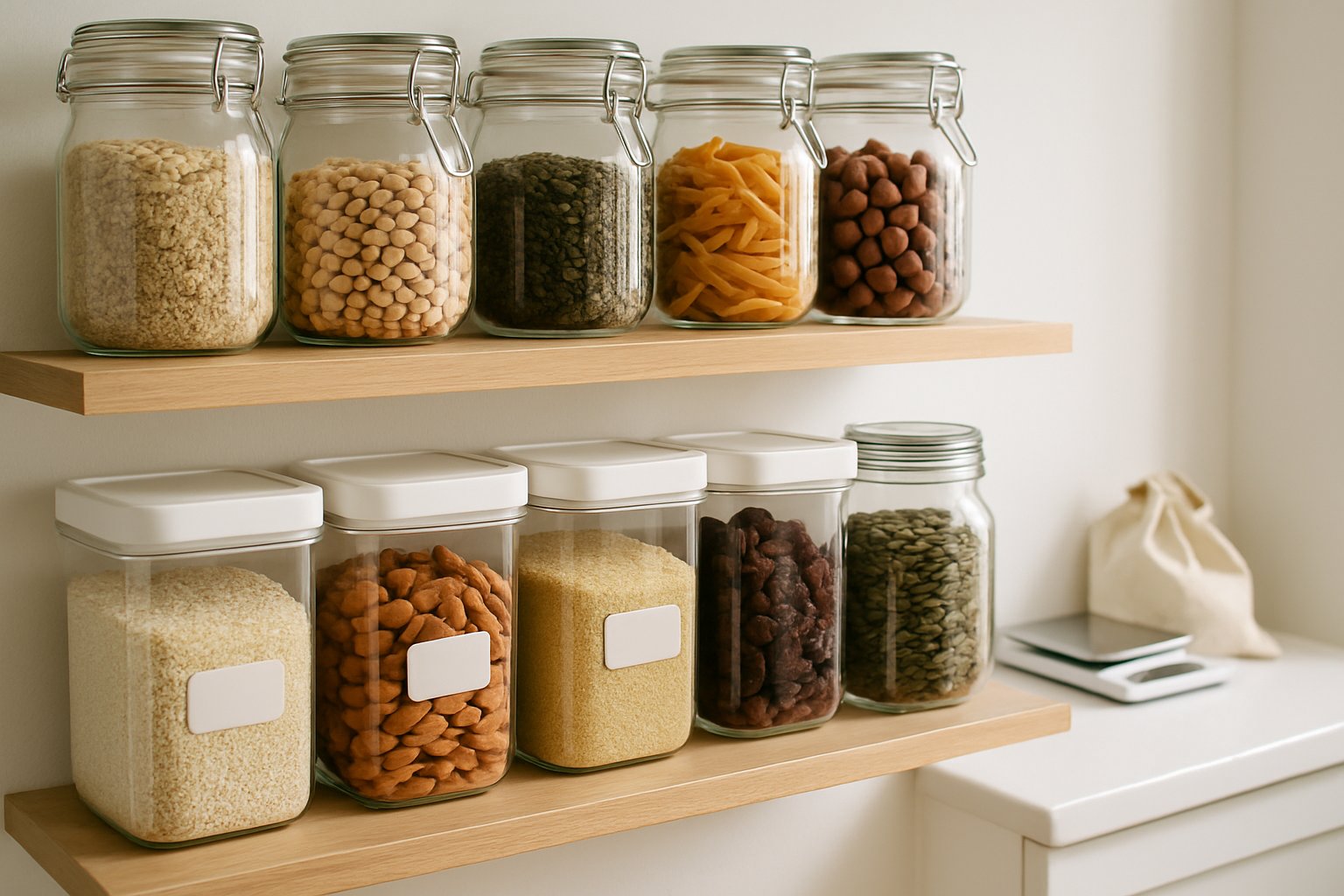
Glass jars with clamp lids are perfect for grains, beans, and pasta. For flours and powders, BPA-free plastic containers with locking lids are lighter and less likely to break. If we’re being extra careful, we’ll double-bag stuff in mylar before it goes into a hard container.
We always wash and dry containers before reusing. Leftover oils or moisture from old contents can mess up new batches. When moving bulk foods, we use clean, dry scoops and seal things up right away.
Effective Storage Solutions for Bulk Items
The right storage keeps bulk pantry items fresh for months and helps avoid waste and pests. It’s all about picking good containers, rotating your stash, and keeping things clean.
Choosing the Right Airtight Container
Airtight containers are non-negotiable. Glass jars with rubber seals are great for things you check often—rice, beans, pasta. You can see what’s inside and they don’t let pests in or pick up smells.
BPA-free plastic containers with locking lids are a lighter option for flours and sugars. We like square or rectangular ones; they fit better and stack up neatly.
For long-term storage—think more than six months—vacuum-sealed bags are a game changer, especially for nuts, whole grains, and dried fruit. Stainless steel canisters are tough, block light, and work well for spices and coffee.
Don’t forget about size. Match your container to how fast you’ll use the item. Smaller containers mean less air exposure each time you open them.
Rotation and Inventory Management
“First in, first out” is the golden rule. Put the oldest stuff up front so you grab it first. That way, nothing lingers and goes bad.
Label everything with what’s inside, when you bought it, and when it expires. Waterproof labels or a label maker work best. We use MM-DD-YYYY to avoid confusion later.
Every couple of months, we check our storage—look for bad smells, weird colors, or moisture. This helps us see what we’re actually using and what’s just sitting there. A basic inventory list on your phone or pantry door helps spot when you’re running low or about to double up.
Cleaning and Pantry Maintenance
We wash containers with warm, soapy water and dry them completely before refilling. Even a little moisture can lead to mold.
Shelves need attention, too. Wipe them down monthly to get rid of dust and crumbs that attract bugs. We toss a few bay leaves on shelves—they help keep pests away without chemicals.
The pantry should stay cool, dark, and have decent airflow. Keep bulk stuff away from hot appliances and sunlight. In humid places, silica gel packets go into containers to keep things dry.
Spills? Clean them up right away. Sticky spots attract insects. When everything’s organized and labeled, it’s easier to notice problems early.
Storing Grains, Rice, and Quinoa for Maximum Shelf Life
Different grains need different storage, mainly because of their oil content and how processed they are. White rice can last decades if you store it right, but brown rice and quinoa, with their healthy oils, need more attention to avoid going rancid.
Handling White Rice and Brown Rice
White rice is the long-term storage champ—up to 30 years in airtight containers at room temperature. Milling removes the oily bran, which is what usually spoils. We like to use food-grade buckets with oxygen absorbers for this.
Brown rice is trickier. Its natural oils make it healthier, but also more likely to go bad—just 6 months at room temp. We keep brown rice in airtight containers in the fridge or freezer. A little hassle, but better than throwing out a whole bag.
Check for moisture before sealing—grains should break, not bend. Keep humidity under 15% and temps between 50-70°F for pantry storage.
Best Practices for Quinoa and Oats
Quinoa’s higher fat content means it can get bitter if stored wrong. Airtight containers in cool, dark spots keep it good for 2-3 years. For longer, pop it in the fridge or freezer.
Rolled oats stay fresh 2-3 years sealed and away from heat, while steel-cut oats can last up to 5 years. Both need airtight storage to keep out moisture and bugs.
Keep all these away from direct light, which can zap B vitamins and speed up spoilage. Opaque containers or closed cabinets are your friends here.
Tips for Wheat, Corn, and Pasta
Wheat berries with oxygen absorbers in mylar bags? Those can go 20+ years. Whole wheat flour, though, only lasts 3-6 months at room temp—freeze it, or just grind wheat berries as needed.
Cornmeal’s the same—freeze it for freshness past a year. Dried whole corn kernels do fine in airtight containers for years if you keep moisture under 10%.
Dried pasta (refined wheat) lasts 1-2 years in its package or an airtight container. Whole wheat pasta, with more oils, should be used in 6-12 months. Always check for musty smells or off colors before cooking, and rotate older boxes forward.
Keeping Legumes and Beans Fresh in Bulk
Legumes and dried beans last for years if you focus on three things: the right containers, keeping pests out, and managing moisture. Get these right, and your pantry basics stay tasty and nutritious.
Storing Black Beans and Dried Beans
Use airtight, food-grade containers for beans—glass jars, metal canisters with tight lids, or sturdy plastic bins. They keep moisture and pests out.
Clear containers let you spot problems without opening them, which helps keep things fresher.
Label each container with the storage date. It’s easy to forget when you bought a batch, and this way you’ll use the oldest first.
Keep beans in a cool, dark spot—under 60°F is ideal. A basement or cool pantry is better than a cupboard by the stove.
Smaller containers are better for beans you use often. Every time you open a big container, you expose all the beans to air and moisture. Dividing them up keeps most of your stash safe.
Preventing Pest Infestation
Bay leaves are our go-to for keeping bugs away. Toss a couple into each container—they repel weevils and other pests without weird smells.
Check your storage every month for holes, webbing, or little bugs. Catching problems early saves the rest of your beans.
Keep storage areas clean. Sweep up spills and wipe shelves every few weeks. Less mess means fewer pests.
Diatomaceous earth is another trick—sprinkle a thin layer in containers or around shelves. It’s safe for people but tough on insects.
Never mix new beans with old without checking for pests first. One bad batch can ruin the rest.
Moisture Control for Long-Term Storage
Keep humidity under 60% for beans. High moisture breeds mold and ruins your stash.
Silica gel packets are a lifesaver here. Drop a few (food-safe) into each container, especially if it’s humid where you live. Swap them out every six months or when they change color.
Beans should feel dry and flow easily. If they clump or feel damp, move them to a dry container and fix your storage humidity.
Don’t store legumes near water sources or anywhere with big temperature swings. Condensation inside containers speeds up spoilage. A steady, dry spot is best for long-term bean storage.
Baking Essentials: Flour and Baking Supplies
Flour and leavening agents lose their punch faster than most folks realize. If you want your baking to turn out right, protecting these essentials from moisture, air, and pests is worth a couple of easy storage tweaks.
Storing Flour to Prevent Spoilage
White flour usually lasts 6-8 months in the bag it comes in, but whole wheat flour, with its natural oils, can go bad in just 1-3 months at room temperature. So, we’ve got to move quickly after bringing it home if we want to stretch those dates.
Flour doesn’t play well with oxygen, moisture, heat, light, or pantry pests like weevils and moths. The original paper or plastic packaging? Honestly, it barely shields against any of those.
Best storage practices for flour:
- Dump flour into airtight containers right after opening
- Store containers in cool, dark spots far from the stove or dishwasher
- Mark containers with the purchase date so you know what’s what
- For whole wheat and specialty flours, stash them in the fridge or freezer for peak freshness
Freezing flour is a game-changer. It keeps it fresh way longer and doesn’t mess with baking results. Just let it warm up to room temp before baking, or tack on a few extra minutes to your mixing time if you’re in a rush.
Using Mylar Bags and Oxygen Absorbers
If you’re thinking long-term, Mylar bags with oxygen absorbers can keep flour and baking goods fresh for 25-30 years. That’s no exaggeration—it’s a favorite trick for bulk buyers and anyone prepping for emergencies.
You just fill up food-grade Mylar bags with flour, toss in an oxygen absorber (300-500cc for a 1-gallon bag is standard), and seal it up with heat. The absorber gets rid of leftover oxygen, stopping spoilage and bugs in their tracks.
Why this combo works:
- Mylar keeps out light and moisture
- Oxygen absorbers remove the air that lets bacteria and mold thrive
- Sealed bags block pests and contamination
- Food-grade buckets add another layer of protection for multiple bags
Some folks swear by adding bay leaves to storage containers. The scent seems to keep insects out, and it doesn’t mess with the flour’s flavor—worth a try, honestly.
Managing Baking Powder and Baking Soda
Baking powder and baking soda won’t exactly spoil, but they do lose their kick. Baking powder is usually good for 6-12 months after opening, baking soda for about two years.
You can check baking powder by stirring a teaspoon into hot water—if it fizzes big time, you’re good. For baking soda, mix it with vinegar and look for a good bubble.
Keep both in their original containers with the lids on tight. They soak up moisture and smells like crazy, so stash them in a cool, dry pantry.
If you buy in bulk, pour some into a smaller airtight container for daily use, and keep the rest sealed up. That way, you’re not exposing the whole stash to air every time you bake.
Extending the Freshness of Oils, Condiments, and Spices
Oils break down in heat and light, condiments need a little TLC to avoid contamination, and spices lose their punch when exposed to air. Each one needs its own storage approach if you want to get the most out of them.
Storage Tips for Olive Oil and Vegetable Oil
Oils hate light, heat, and oxygen. Olive oil can stick around for up to two years if you treat it right, but if you slip up, it’ll go rancid fast.
Store olive oil and vegetable oil in dark glass bottles or metal tins. Skip the pretty clear bottles—they’re not doing you any favors. Keep them in a cool pantry, not beside the stove where they’re easy to grab but exposed to heat.
Key storage practices:
- Aim for temps between 57-70°F
- Always screw the lid back on tight
- Don’t leave them near heat or sunny windows
- If you buy in bulk, pour into smaller bottles to lower air exposure
Once a bottle’s open, the countdown begins. Vegetable oil usually stays good for 3-6 months, extra virgin olive oil for about 3 months. You’ll know oil’s gone off if it smells musty or tastes bitter—trust your senses.
Keeping Spices Fresh and Potent
Whole spices can last 3-4 years, but ground ones lose their oomph after 1-2 years. The difference? Ground spices have more surface area, so their essential oils escape faster.
Store spices in airtight jars away from heat, light, and moisture. Glass jars with rubber gaskets or metal tins are solid choices. Don’t keep them above the stove or in direct sunlight, no matter how convenient that seems.
Best practices for common spices:
- Black pepper: Buy whole peppercorns and grind when you need them—way more flavor
- Bay leaves: Airtight containers keep them good for 2-3 years
- Ground spices: Opaque containers or a dark cupboard are best
Rub a pinch between your fingers and sniff. If you can barely smell anything, it’s time to toss and replace. If you buy spices in bulk, divvy them up—keep one jar for daily use and the rest sealed tight.
Moisture’s the enemy here. Don’t shake spices over steaming pots, and always use dry spoons.
Safeguarding Condiments for Longevity
Most condiments have preservatives, but they still need proper storage once opened. The fridge is your friend—even for stuff that seems like it could sit out.
Refrigeration requirements after opening:
- Ketchup: 6 months in the fridge (1 month room temp)
- Mustard: 12 months refrigerated
- Soy sauce: 2-3 years in the fridge (room temp is okay, but not ideal)
- Apple cider vinegar: Lasts forever in a cool, dark spot
- Worcestershire sauce: 12 months in the fridge
Use clean utensils—don’t double-dip. Wipe bottle rims before closing so you don’t get that crusty mess that harbors bacteria.
Vinegar-based condiments like mustard and apple cider vinegar are naturally acidic, which helps them keep. Sometimes you can leave them out after opening, but the fridge keeps them tasting better for longer. Soy sauce and worcestershire have loads of salt, which helps preserve them, but refrigeration keeps the flavor sharp.
If you see separation, smell something funky, or spot mold, don’t risk it. Ketchup with a watery layer is normal—just shake it. Fuzzy growth or bad smells? Time to say goodbye.
Best Storage Practices for Snacks, Onions, and Canned Goods
Snacks, onions, and canned goods all have their quirks when it comes to storage. The right containers, temps, and a bit of organization go a long way to keep everything at its best.
Maintaining Snack Freshness
Airtight containers are the secret to keeping snacks crispy. Chips, crackers, pretzels—moisture ruins them, so get them out of the original bags and into something that seals.
Key snack storage tips:
- Roll up bags tightly, clip them, and then put in containers
- Eat opened snacks within a week for best crunch
- Keep snacks away from heat and sunlight
- Silica gel packets can help with moisture if you’re serious about it
If you buy snacks in bulk, split them into smaller bags or boxes. That way, you’re only opening one at a time and the rest stay fresh.
Room temp is fine for most snacks, but a cool pantry (under 75°F) stretches their shelf life. Chocolate-covered stuff does better in cooler spots so it doesn’t melt or get that weird white “bloom.”
Proper Onion Storage
Onions need air and darkness to stay fresh. We store them in a cool, dry place—ideally between 45-55°F—to slow down sprouting and keep them firm.
Best storage spots:
- Hang mesh bags in the pantry
- Use wire baskets in the basement
- Paper bags with holes punched in work too
- Always keep onions away from potatoes—they make each other spoil faster
Never refrigerate whole onions—the cold and humidity turn them soft and moldy. Sliced or chopped onions? Throw them in an airtight container in the fridge; they’ll last about a week.
Sweet onions last only a week or two, while yellow and white onions can hang on for 2-3 months if you store them right. Check for soft spots or sprouts and use those first.
Organizing and Storing Canned Goods
We stash canned goods in a cool, dark place under 75°F to keep them tasting good and holding onto nutrients. Heat and light? They’re the enemy, so avoid spots near ovens or sunny windows.
The FIFO method—First In, First Out—really works. Put new cans behind the old ones so you’re always using up the oldest stock first. Once you get in the habit, it’s easy.
| Storage Practice | Why It Matters |
|---|---|
| Keep cans off the floor | Stops moisture damage and rust |
| Use tiered racks | Makes cans easier to see and grab |
| Inspect for dents or bulging | Catches possible contamination |
| Label homemade canned goods | Helps you track what’s inside and when you made it |
Keep low-acid canned goods (beans, meats, soups) separate from high-acid ones (tomatoes, fruits). Acidic foods eat away at the metal faster, so use them within 12-18 months. Low-acid cans can last 2-5 years.
Once you open a can, move leftovers into glass or plastic containers—don’t leave them in the can, or you’ll get that metallic taste and risk spoilage. Leftovers stay good in the fridge for 3-4 days.
Frequently Asked Questions
People have lots of questions about keeping bulk pantry items fresh and organized. Here’s what we’ve figured out after years of trial and error.
What's the secret to keeping my dry goods fresh for the long haul?
It’s all about controlling air, moisture, and temperature. Airtight containers keep oxygen out, which slows spoilage and keeps bugs away.
Try to keep storage areas below 70°F and humidity under 60%. Heat makes oils in grains and nuts go rancid, and moisture brings on mold.
Dark places protect nutrients and stop vitamins from breaking down. UV light is sneaky—it zaps nutrition and messes with flavor.
Got any clever hacks for storing my bulk-bought beans, grains, and pastas?
We use matching containers for similar items so they stack neatly and the pantry looks less chaotic (well, most days). It also helps save space.
A couple of bay leaves in each container of rice, pasta, or flour keeps bugs away—no chemicals needed.
If we’re not using grains right away, we freeze them for 48 hours first. That kills any insect eggs before they become a problem.
Label everything with the purchase date. We keep the stuff we use most at eye level and stash the rest higher or lower.
I'm all out of fridge space! How can I keep my bulk food fresh without it?
Most pantry staples don’t need the fridge. Rice, beans, pasta, flour, sugar, oats—they’re fine in cool, dry conditions for months.
We put nuts and whole grain flours in the freezer instead of the fridge. That keeps their oils from going bad and saves fridge space.
Dried fruits last longer in airtight containers in dark cabinets. If you’re worried about moisture, toss in a food-safe desiccant packet.
Dehydrated foods like jerky, herbs, and powdered milk stay shelf-stable as long as you keep out humidity. We check them every month for any signs of moisture.
In the quest for the ultimate pantry, which containers truly are the crème de la crème for food freshness?
BPA-free plastic containers are practical—lightweight, tough, and less likely to break. We like the ones with rubber gaskets for a better seal.
Glass jars are our go-to for stuff we use a lot. They don’t hang onto smells, you can see what’s inside, and they’re easy to clean.
For long-term storage, food-grade buckets with gamma seal lids are hard to beat. They hold a lot and keep pests and moisture out—great for rice or beans.
Metal containers with tight lids are solid for light-sensitive stuff like flour. We steer clear of ones that dent easily, though, since a dented lid can ruin the seal.
What should I be stockpiling in my pantry to maximize my bulk buys?
We stick to shelf-stable foods we actually eat. Rice, beans, lentils, oats, pasta—they’re flexible and last forever if you store them right.
Baking basics like flour, sugar, baking soda, and salt are worth buying in bulk. We go through them fast enough that they won’t spoil.
Oils and vinegars in bigger bottles make sense if you cook a lot. We keep olive oil out of the light and heat, and unopened bottles last up to two years.
Canned goods, dried herbs, and spices round out the list. We buy spices in smaller amounts since they lose their punch after six months to a year.
Can you spill the beans on how to maintain tip-top freshness for bulk foods over years, not just months?
Vacuum sealing really helps keep bulk foods fresh. We usually vacuum seal portions for long-term storage and just keep one container open for everyday use.
Oxygen absorbers are a game changer, too. These little packets suck out leftover oxygen from sealed containers, which works especially well for grains and dried goods you want to stash away for five to ten years.
We try to stick with the first-in, first-out rule. Whenever we buy new stuff, it goes to the back, and we grab from the front so nothing sits around too long.
Temperature swings? Total enemy. We learned (maybe the hard way) not to store bulk foods near ovens, dishwashers, or out in the garage where things heat up or cool down unpredictably.
Every month or so, we poke around our storage, just to be sure. If we spot pests, moisture, or odd smells, we don’t mess around—we toss anything sketchy right away.
Share:
How to Store Snacks for On-the-Go Convenience
How to Store Snacks for On-the-Go Convenience