

Check out our latest compact vacuum sealer for food collection!
Cross-contamination during storage isn’t exactly a thrilling kitchen topic, but honestly, it’s one of the most important things for keeping food safe. If you’ve ever stored raw meats above ready-to-eat foods or let meat juices drip onto your veggies, you’ve set up a perfect storm for bacteria to spread. That’s how foodborne illnesses sneak into our kitchens, often in ways we could’ve easily avoided with better habits.
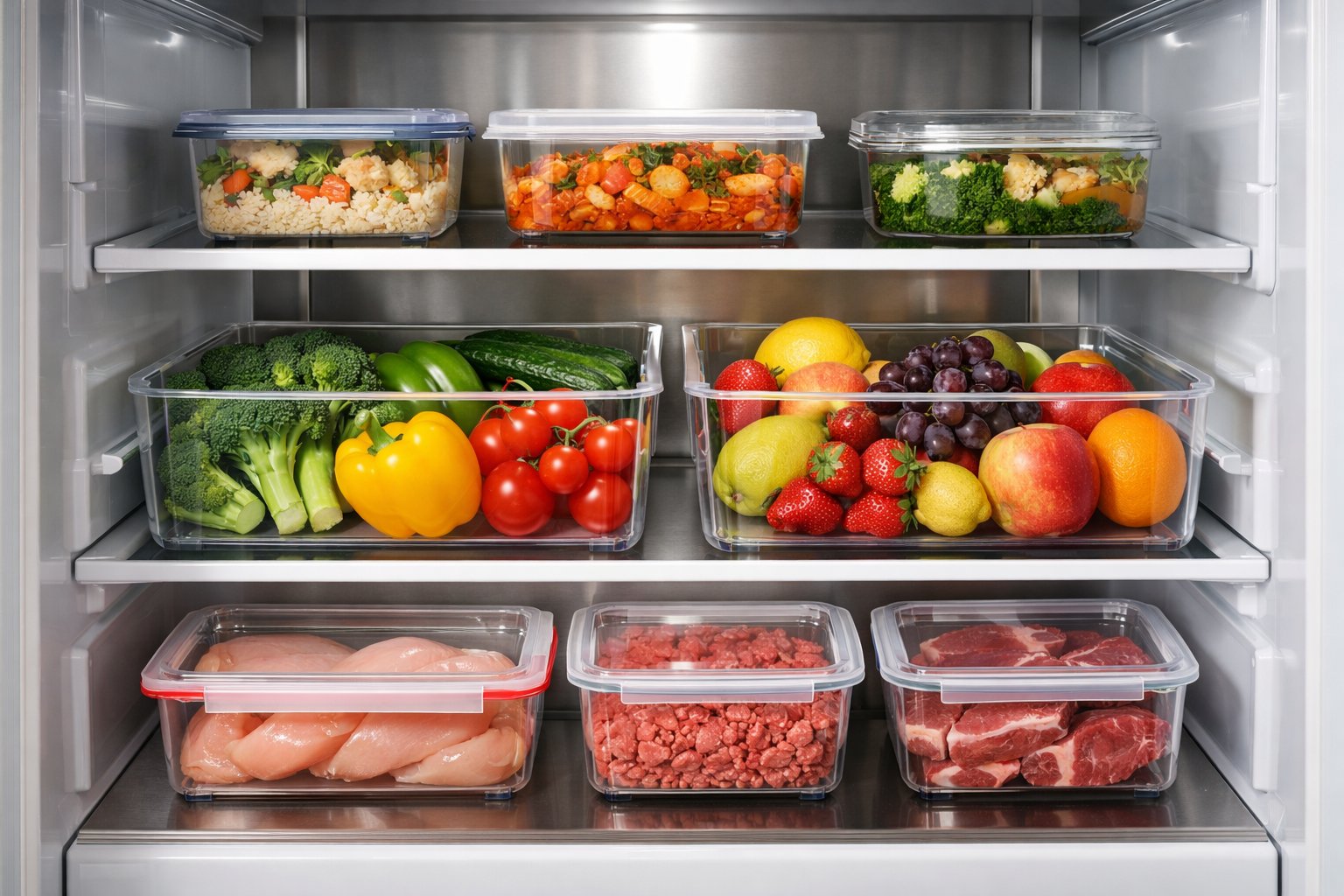
The big idea here? Keep raw foods away from ready-to-eat stuff, store everything at the right temperature, and actually think about where things go in your fridge and pantry. Raw meats always belong on the bottom shelf, produce gets its own drawer, and sealed containers are your best friend. It’s not rocket science, but it does take sticking with it.
Here are some strategies that work in real kitchens, not just in theory. We’ll cover how bacteria spread and how to set up storage zones that actually make sense, so you don’t have to overthink every time you put away groceries.
Key Takeaways
- Raw meats go on bottom shelves in sealed containers—no exceptions
- Set up separate storage zones for raw, ready-to-eat, and produce items
- Clean and sanitize storage areas often, and keep cleaning chemicals far from your food
Understanding Cross-Contamination Risks
Cross-contamination is a real threat in food storage. Harmful bacteria can jump between raw and ready-to-eat foods if we’re not careful. It helps to know which pathogens we’re up against and what storage habits make things better or worse.
What Is Cross-Contamination?
Cross-contamination happens when germs move from one food, surface, or utensil to another. It’s a major reason people get sick from food, whether at home or in restaurants.
There are three main types. Biological contamination is when bacteria, viruses, or parasites hop between foods. Chemical contamination is when cleaning products or other chemicals touch food. Physical contamination can be bits of packaging, hair, or other random stuff that falls in.
The worst-case scenario? Raw animal products contaminating ready-to-eat foods. Raw meat, poultry, seafood, and eggs can carry bacteria that survive even in the fridge. If they drip onto or touch foods that won’t be cooked again, those germs can hitch a ride without anyone noticing.
How Cross-Contamination Happens in Storage
Cross-contamination in storage usually comes from direct contact or drips in the fridge. Store raw chicken above salad greens, and you’ve got a problem—the juices can drip down and spread bacteria.
Improperly sealed containers make things worse. A leaky package of ground beef can ooze onto whatever’s next to it. Even condensation in the fridge can move bacteria from one shelf to another.
Common storage mistakes:
- Putting raw meats on top shelves where they might drip
- Using containers that don’t seal tight
- Storing cooked foods right next to raw items
- Mixing different types of raw proteins together
- Reusing containers without washing them properly
If your fridge creeps above 40°F, bacteria multiply faster. Not great.
Common Foodborne Pathogens and Illnesses
Some nasty bugs thrive in storage and can make you seriously sick. Salmonella loves raw poultry, eggs, and meat. It causes over a million U.S. infections a year, with symptoms like diarrhea, fever, and cramps.
E. coli O157
Listeria monocytogenes is extra sneaky because it grows in the fridge. It shows up in deli meats, soft cheeses, and other ready-to-eat foods. Pregnant women are at high risk, since listeria can cause miscarriage or stillbirth.
Cross-contamination is behind a huge chunk of foodborne illness outbreaks. That’s why good storage habits matter so much.
Principles of Safe Food Storage
Good food storage keeps contamination at bay by controlling how and where we stash different foods. It’s about knowing the right order, keeping categories apart, and stopping bacteria from moving around via leaks or drips.
Proper Storage Hierarchy in Refrigerators
We organize fridges by cooking temperatures, top to bottom. This keeps bacteria from raw foods from dripping onto foods that need less—or no—cooking.
Top shelf? That’s for ready-to-eat foods—leftovers, deli meats, salads, anything you’ll eat as is. Next comes seafood, which needs to hit 145°F. Below that, whole cuts of beef, pork, and lamb (also 145°F). Ground meats and ground seafood go under those, since they need 155°F. Raw poultry gets the very bottom shelf, since it must be cooked to 165°F.
Gravity helps us out here. If something leaks, it can’t go up—so the riskiest items go lowest.
Separation of Raw and Ready-To-Eat Foods
Raw meats and poultry carry bacteria that only cooking can kill. If they touch ready-to-eat foods, there’s no second chance to get rid of those germs.
We keep raw animal products away from produce, cooked foods, and anything else that won’t be cooked again. That means using different containers, separate fridge zones, and giving each type its own space.
Separation basics:
- Raw proteins stay below ready-to-eat items, never above
- Use different bins or drawers for raw meat and produce
- Keep eggs away from foods you’ll eat raw
- Dedicate fridge areas for each food type
- Store food allergens separately, too
Don’t reuse a container for raw chicken one day and salad the next without a deep clean.
Storing Food to Prevent Drips and Leaks
Containers are your first line of defense. Cover foods completely and use leak-proof containers so juices can’t escape.
Raw meats need extra protection. Put them in sealed containers or heavy-duty bags, and then set those on a plate or tray to catch any leaks. Two barriers are better than one.
Always use containers with tight lids, not loose wraps that can slip or tear. When thawing frozen proteins, use a deep dish to catch all the liquid, and keep it on the lowest fridge shelf. No one wants chicken juice on their carrots.
Check containers regularly for cracks or warping. If a container’s busted, toss it. No point risking a mess.
Organizing Storage Spaces and Containers
A smart storage setup keeps foods apart and makes it obvious where everything belongs. Color-coding and keeping things off the floor are the basics here.
Using Color-Coded Containers and Shelves
Color-coded systems make life easier. Maybe red containers for raw meat, yellow for poultry, green for produce, blue for seafood. It’s a quick visual cue—no more guessing.
You can mark shelves with colored tape or labels, too. Extend the system to cutting boards and utensils if you want to go all in.
Color coding helps everyone know what goes where, and you’re way less likely to put raw chicken next to a salad by mistake. It also keeps cleaning chemicals away from food (because who wants that?).
Storing Food at Least Six Inches Off the Floor
Always keep food at least six inches above the floor. That keeps it safe from dirt, pests, or a surprise puddle from a leaky pipe.
This rule applies everywhere—walk-in coolers, pantries, dry storage. Use shelves, pallets, or racks so air can circulate underneath.
It also makes cleaning easier. You can sweep and mop under shelves without hauling everything out. Less dust and gunk means fewer hiding spots for bacteria.
Safe Handling Practices for Food Handlers
Food handlers are the first defense against cross-contamination. Our habits—good or bad—make a difference. Personal hygiene and using gloves and utensils the right way set up strong barriers against germs.
Personal Hygiene and Hand Washing
Always wash your hands before touching food, after dealing with raw products, and after anything that could bring in germs. Use warm water and soap, scrub for at least 20 seconds, and don’t forget between your fingers and under your nails.
Wash up after handling raw meat, poultry, or seafood—especially before moving to ready-to-eat foods. If you touch your face, hair, or phone, wash again.
Tie back long hair, ditch jewelry, and wear clean clothes or aprons. Cover cuts with waterproof bandages and gloves. If you’re sick—especially with stomach stuff—don’t handle food. Seriously, just don’t.
Using Gloves and Utensils the Right Way
Gloves help, but they’re not a magic fix. Wash hands before putting them on, and change gloves between tasks. Don’t use the same gloves for raw chicken and then grab veggies.
Toss single-use gloves after touching raw proteins, dirty surfaces, or if they rip. Never wash and reuse disposable gloves. Color-coded gloves can help you remember what’s safe for what.
Utensils need the same care. Use separate tongs, boards, and containers for raw and cooked foods. Clean them between uses, and never put cooked food on a surface that just held raw meat without sanitizing it first.
Cleaning and Sanitizing Storage Areas
Regular cleaning and sanitizing keep bacteria and mess at bay. Consistent routines and the right products help protect your ingredients.
Cleaning Schedules and Frequency
Clean high-touch spots like fridge handles, shelf edges, and bins every day. These gather bacteria fast. Do a deeper clean of shelves, walls, and floors in coolers and pantries every week.
Monthly, get into the nitty-gritty: clean fridge coils, check door seals, sanitize containers. Clean up spills right away—don’t wait for scheduled cleaning.
Rotate what’s in storage during cleaning so you can get underneath and behind stuff. Keep a cleaning log—it helps spot patterns if you ever have a problem.
Choosing Safe Cleaning Agents
Pick cleaning agents that get rid of grime but don’t leave harmful residues. EPA-approved food-safe sanitizers work best for storage areas.
Good options:
- Quaternary ammonium compounds for general sanitizing
- Chlorine-based solutions for deep cleaning (follow the label for concentration)
- Food-safe degreasers for sticky messes
Never mix cleaning products. It’s dangerous and can make them less effective. Store cleaning supplies away from food, always. If you use a sanitizer that needs rinsing, use clean water after. If it’s no-rinse, double-check the label.
Read instructions carefully. Too little sanitizer won’t kill bacteria; too much leaves residue.
Preventing Chemical and Allergen Contamination
Chemical contamination and allergen cross-contact need their own storage systems. It’s not just about separating raw from cooked—chemicals and allergens deserve special attention, too.
Storing Chemicals Away from Food
Let’s be real: chemicals and food don’t mix. All cleaning supplies, sanitizers, and pesticides need their own space, totally separate from food storage. Ideally, stash chemicals in a locked cabinet or room, and keep them on lower shelves so nothing drips onto food below. It’s not just about following rules—it’s about common sense.
Labels matter. Every container should have a clear label, and the original packaging is best since it’s got all the safety info. If we pour chemicals into smaller bottles, we slap on a label right away—product name, hazard warnings, the works. No guessing games.
Physical distance is our best friend here. Chemicals stay at least six feet from any food prep or storage spots. Some places use color-coded bins—red for chemicals, green for food-safe stuff—so it’s obvious what’s what. Honestly, it helps when you’re in a rush.
Never, ever store chemicals above food or food-contact surfaces. Not even for a minute. One leak and you’re tossing out a whole batch of ingredients. Nobody wants that.
Managing Food Allergens and Cross-Contact
Food allergens deserve the same caution as raw meat, maybe more. The big difference? You can’t “cook out” allergens, so prevention is the only way to go.
We keep allergenic ingredients in their own sealed, clearly labeled containers. Those bins sit on lower shelves, away from allergen-free foods, so nothing drips where it shouldn’t.
We don’t store almond flour next to regular flour, or dairy milk with plant-based milks. It’s easy to grab the wrong thing when you’re busy, so spacing them apart just makes sense.
Before putting allergen-free foods into a storage area, we clean the surfaces if they held allergenic items before. Even tiny traces can set off a reaction for someone sensitive.
Ensuring Compliance and Continuous Improvement
To keep food safe, we need good training and solid systems that actually work in real life—not just on paper.
Food Safety Training for Storage Staff
Our storage team needs to know more than just the basics. Training covers contamination risks, safe handling, and what the law expects. We talk about HACCP (Hazard Analysis and Critical Control Points), but we focus on how each storage choice affects food safety.
Training isn’t just a “one and done” thing. We do refresher sessions regularly, because things change and people forget. We want staff to spot problems like bad stacking or mixing up raw and ready-to-eat foods before they become issues.
We don’t just hope training sticks—we check. Watching staff in action and doing quick assessments helps us see if everyone really gets why we do things a certain way. When people understand the “why,” they make better calls when something unexpected happens.
Implementing Food Safety Management Systems
We put food safety management systems in place so there’s a clear, documented way to control contamination. A HACCP-based setup shows us where the biggest risks are and what to watch out for.
We write down procedures for receiving materials, assigning storage spots, logging temperatures, and cleaning schedules. Records back us up if something goes wrong—they show we’re doing things right and help us trace issues fast. Internal audits aren’t just a checkbox; they help us see where real-life practice and paperwork don’t match up.
When we spot trends or problems, we don’t just patch them up—we update our processes. This way, we’re not always reacting to disasters but actually staying ahead of them. It’s a smarter way to run things, even if it takes a little extra effort.
Frequently Asked Questions
Food storage isn’t just about tossing things on a shelf. Placement, wrapping, and temperature matter if you want to keep food safe and tasty. Here’s what people ask us all the time.
What's the scoop on keeping different foods from swapping flavors and germs in the fridge?
Airtight containers and sealed bags are our go-to for stopping flavor swaps and bacteria. Raw meats live on the bottom shelf—no exceptions—so they can’t drip onto anything else. Ready-to-eat stuff gets the top shelves.
Physical barriers make all the difference. We wrap everything separately, even when it’s in a container. That double layer really cuts down on cross-contamination.
Any clever tips for playing it cool with raw and cooked foods in the same space?
We split the fridge into zones: raw on one side, cooked on another. Cooked foods go above raw, never beside them.
Color-coding helps us out, too. Red containers mean raw proteins; clear or blue ones are for cooked, ready-to-eat items. It’s a lifesaver when you’re moving fast.
If space is tight, we use covered containers with tight lids instead of just wrapping things loosely. Six inches of separation is ideal, but sometimes you just have to work with what you’ve got.
Could you dish out the nitty-gritty on arranging my fridge to stop the spread of bacteria?
Top-to-bottom is our rule, based on cooking temps. Ready-to-eat and leftovers up top, then seafood, whole cuts of beef and pork, ground meats, and poultry at the very bottom.
Crisper drawers? Those are for fruits and veggies, but we keep unwashed produce away from ready-to-eat stuff. Soil can carry bacteria, so we don’t mix them up.
We keep the fridge at 40°F or lower and check with a thermometer every month. Door shelves? Just condiments and shelf-stable stuff, since temps swing more there.
What are the top tricks to keeping my groceries in tip-top shape without a bacteria bash in the pantry?
We move dry goods into sealed containers once opened. Flour, grains, cereals—they all get airtight storage to keep pests and moisture out.
Stuff that doesn’t need cooking goes higher up, while things you’ll cook can go on lower shelves. Chemicals and cleaning supplies? They never share space with food. Ever.
We rotate stock—first in, first out. When we buy new, the old stuff moves to the front. That way, we don’t forget things until they’re expired and risky.
Can you spill the beans on the best practices for wrapping and protecting food before it hits storage?
Raw proteins get double-wrapped: plastic wrap first, then into a sealed container or heavy-duty bag. That way, if something leaks, it’s contained.
Cooked foods cool on the counter for up to two hours, then go into shallow, covered containers before hitting the fridge. Shallow is better because it cools faster and keeps food out of the danger zone.
We always label containers with what’s inside and the date—just masking tape and a marker. That way, we don’t open things up just to check, which keeps air and germs out.
I'm all ears for the lowdown on how to stop those pesky germs in their tracks before my next big cook-off. Got any tips?
We always prep our storage area before a big cooking session—just wipe down the shelves with hot, soapy water. Starting with a clean slate keeps old bacteria away from fresh ingredients.
We stick to dedicated storage containers for each food type. Raw chicken never shares space with cooked veggies, not even after a wash. That might sound fussy, but it saves a lot of headaches.
Washing hands for at least 20 seconds before touching anything headed for storage? Yeah, it’s a small thing, but it really helps keep bacteria from hitching a ride from other kitchen surfaces.
When it’s a marathon cooking day, we keep an eye on temps. Perishables don’t sit out for more than two hours—if the kitchen’s sweltering above 90°F, we cut that down to just one. Better safe than sorry, right?
Share:
Why Storage Size and Headspace Affect Ingredient Longevity
Why Storage Size and Headspace Affect Ingredient Longevity