

Check out our latest compact vacuum sealer for food collection!
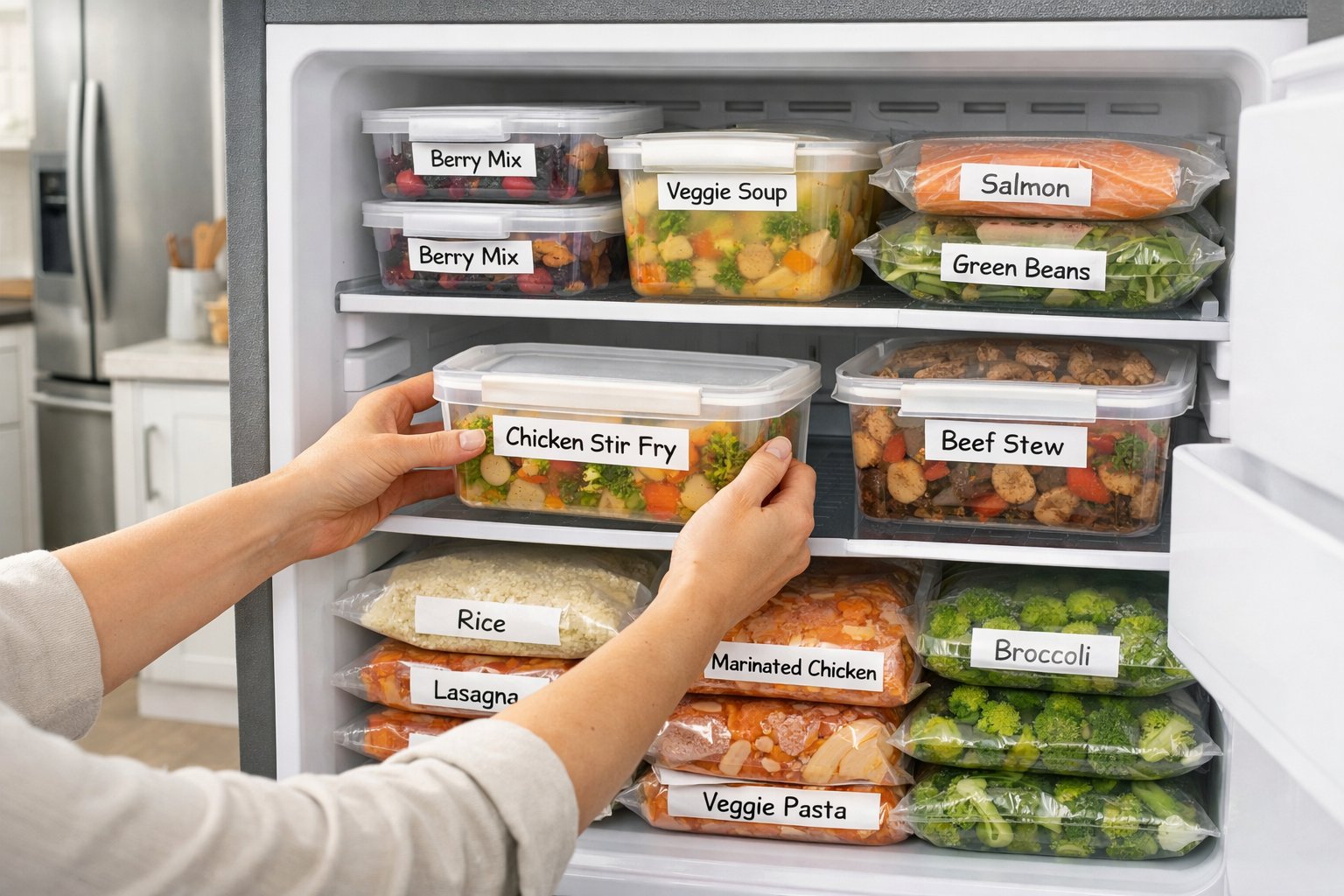
A chaotic freezer costs the average household money, wastes food, and turns meal prep into a frustrating treasure hunt through mystery packages. The problem isn’t usually lack of space, it’s how we stash our frozen goods. Freezing whole packages instead of splitting things up? That’s how you end up with a jumbled mess and no clue what’s buried in the back.
Better portion planning can turn your freezer from a disorganized icebox into a meal prep station that actually saves money and time. Breaking down bulk buys and batch-cooked meals into individual or family-sized portions before freezing means you only thaw what you need. Suddenly, you’re not digging through icy piles while cold air whooshes out and frost creeps in.
Let’s talk through some real-world strategies for portioning different foods, picking containers that actually fit your life, and keeping a system that doesn’t fall apart after one week. No need for fancy gadgets or complicated spreadsheets. This stuff works whether your freezer is tiny or you’ve got a chest freezer in the garage.
Key Takeaways
- Portion planning before freezing keeps clutter down and food visible (and edible)
- Dividing bulk and batch meals into ready-to-use portions makes meal prep easy and stops over-thawing
- Simple labeling and inventory habits help keep your freezer organized in the long run
Why Portion Planning Is Key for a Tidy Freezer
Portion planning has a direct impact on how much space you have and how fresh your food stays. When you freeze things in the right sizes, you cut down on waste and chaos.
How Portion Size Impacts Freezer Space
Big, awkward containers hog space and leave weird gaps everywhere. Freeze a whole gallon of soup or a giant casserole, and suddenly nothing else fits right.
Smaller portions fix this. If you freeze soup in 1-2 cup servings using flat freezer bags, they stack up like books. Same goes for cooked grains or pasta—one big bag of rice becomes a few thin, stackable packets that thaw quickly and squeeze into tight spots.
| Large Portions | Right-Sized Portions |
|---|---|
| Hard to stack | Lay flat and stack easily |
| Create wasted space | Maximize every inch |
| Slow to thaw | Thaw in minutes, not hours |
| Force us to use everything at once | Let us grab only what we need |
When everything’s portioned, you can see what’s there without digging through frozen bricks.
Preventing Freezer Burn and Food Waste
Freezer burn creeps in when air gets to your food, drying it out and wrecking the texture. Huge portions mean more surface area for air, especially if you thaw and refreeze leftovers.
Portioning means you only thaw what you’ll eat. Need a cup of marinara? Grab a frozen cube, not a whole quart. That keeps each portion sealed until you want it.
Small portions freeze faster, which helps food keep its texture and flavor. Try freezing stew in muffin tins, then pop the pucks into a bag once they’re solid. Each one stays protected and ready to reheat—no need to expose the whole batch to temperature swings.
Labeling and dating small containers makes it easy to use older stuff first. That way, you actually eat what you freeze before it gets weird.
Declutter Before You Organize: Resetting Your Freezer
Before you can fix your portion planning, you’ve got to deal with what’s already in there. Pull everything out, toss what’s bad, and figure out how much room you actually have.
Emptying and Cleaning for a Fresh Start
First, get every item out of the freezer—no exceptions. Use coolers or insulated bags with ice packs to keep things cold. This way, nothing hides in the back.
Wipe down all the surfaces with warm water and white vinegar. It clears away ice, spills, and funky smells without harsh chemicals. Don’t forget the drawer tracks and shelf edges, where frost piles up.
Check your freezer’s temp while you’re at it. It should be 0°F or lower. If you’ve noticed frost building up fast or things half-thawed, tweak the setting.
This reset takes maybe 20 minutes, but it’s worth it. You’ll finally see what space you’re working with.
Sorting Through Mystery Items
Now for the honest part: sort everything into keep, toss, or use-this-week. Anything with heavy freezer burn, a thick coat of ice, or no label? Toss it.
Check dates if you labeled things. Ground meat stays good for 3-4 months, whole cuts for 6-12 months, cooked meals for 2-3 months. Beyond that, stuff gets weird, even if it’s technically safe.
Those mystery bags of leftovers you forgot about? If you can’t ID it or remember when you froze it, it’s time to let go. That’s where most freezer clutter comes from—stuff you’ll never eat.
Set aside anything borderline for immediate meals. That clears space without wasting food.
Assessing Freezer Layout and Capacity
With everything out and clean, measure the usable space. Most of us overestimate how much our freezer can hold.
Figure out your freezer’s natural zones:
Upright Freezer:
- Top shelf (8-10 inches): quick-grab stuff
- Middle shelves (10-12 inches): main storage
- Bottom drawer (6-8 inches): bulky items
- Door bins (3-4 inches): small portions
Chest Freezer:
- Upper basket: things you use often
- Main cavity: bulk storage with bins
- Bottom: long-term storage
Spot any weird corners, broken drawers, or frost magnets. These spots need different solutions than the prime real estate. Knowing this now saves you headaches later when you’re trying to fit portioned meals in.
Master Portion Planning for Freezer Efficiency
Getting portions right means less waste and a freezer that actually works for you. Matching container size to what you’ll eat, timing your batches, and leaving room for expansion keeps things manageable.
Choosing the Right Portion Size for Meals
Match your portions to your eaters. Single servings fit nicely in 1-liter containers or 2-3 cup bags. Family meals need 4-7 cup containers or bigger bags—enough for everyone, but not so much you’re refreezing leftovers.
Measure your usual plates and see how much you actually eat. A typical protein serving is 150-200 grams. Sides are usually 150-250 grams. Soups and stews? About 350-500 ml per person.
Portion guidelines:
- Singles: 1L containers, 2-3 cups
- Couples: 2L containers, 4-5 cups
- Families (4+): 3L or bigger, 6-8 cups
Don’t overfill. Small, uniform portions stack better and thaw faster. Mark the portion count on each container so you’re not guessing later.
Batch Freezing: When and How Much
Batch freezing makes sense when you’ve got extra ingredients or you’re meal prepping. Doubling or tripling recipes saves time and uses up bulk buys before things spoil.
Freeze only what you’ll use within a week after thawing. Cooked grains and proteins stay good 2-3 months, soups and stews 3-4 months. Always write the freeze date (YYYY-MM-DD) on every package. It makes rotating your stash way easier.
Don’t overload your freezer—limit each batch to what fits on one shelf. Too much at once slows freezing and can cause partial thaws when you’re searching for something. Leave space between new packages for the first day to help them freeze quickly, then stack them together.
Leaving Room for Headspace and Expansion
Always leave some space between the food and the lid. Liquids expand 5-10% as they freeze. Soups and sauces need 2-3 cm of headspace. Dense foods like mashed potatoes or rice need about 1-2 cm.
Mark a fill line on your containers with a permanent marker. That keeps lids from bulging or cracking. For bags, squeeze out the air but leave the top 3-4 cm empty before sealing.
Headspace by food:
| Food Type | Headspace Needed |
|---|---|
| Liquids (soups, broths) | 2-3 cm |
| Sauces, purees | 2 cm |
| Dense solids (grains, proteins) | 1-2 cm |
Stack only after things are solid. Soft lids can collapse under weight and lose their seal. Try stacking one batch first to see if your containers hold up.
Smart Storage Solutions for Maximum Space
The right containers and freezing tricks can basically double your freezer space and keep portions easy to grab. Flat freezing and clever stacking turn a messy drawer into organized storage.
Best Containers for Stackable Freezer Storage
Honestly, rectangular containers are a game-changer. They fit together without wasted space, unlike round ones that leave awkward gaps.
Stackable containers with straight sides build stable towers that won’t topple when you’re rummaging. Clear containers are best for spotting what’s inside at a glance. Glass is great for reheating straight from the freezer, but it’s bulkier than plastic.
Pick container sizes that match your usual portions. Smaller (1-2 cups) for singles, bigger (4-6 cups) for families. If you stick to a few sizes, stacking is a breeze.
What to look for:
- Shape: Rectangular beats round
- Material: Clear plastic for easy ID, glass for reheating
- Lid: Snap-on, airtight
- Sizes: A couple of sizes to match your needs
Flat Freezing and Space-Saving Techniques
Flat freezing in bags is our go-to for soups, sauces, and marinades. Fill the bag halfway, press out the air, seal, and lay it flat on a baking sheet until it’s solid. Once frozen, stack them like files or stand them up in bins.
Flat packets are about an inch thick—so much better than bulky containers. You can fit 8-10 of these in the space of 3-4 containers. Plus, they thaw faster.
For ground meat or cookie dough, flatten the bag and use a chopstick to make break lines. You can snap off what you need, no thawing the whole thing.
| Freezing bags flat on cookie sheets | Prevents bulging and creates uniform thickness | | Removing air before sealing | Cuts freezer burn and saves space | | Labeling before freezing | You know what’s inside without guessing |
Labeling and Inventory: Never Lose Track Again
A solid labeling system and basic inventory habits stop those mystery packages from piling up and help you actually use what you freeze.
Effective Labeling Strategies
Every package needs three things before it hits the freezer: what’s inside, how much, and when you froze it. The date matters—food stays safe for ages, but quality drops over time.
Write directly on freezer bags with a permanent marker before you fill them. For containers, waterproof labels stick better in cold, damp conditions. Masking tape and regular markers? They usually peel or smear.
Be specific with portions—write “chicken breasts, 2 pieces” or “ground beef, 1 lb,” not just “chicken.” That saves you from opening everything to check.
Color-coding helps too. Use different colored markers or labels for proteins, veggies, or meals. It makes life a little easier when you’re in a rush.
Tools for Marking and Tracking
A good permanent marker made for freezer use costs just a few bucks and lasts for months. Look for ones labeled "freezer safe" or at least those with ink that holds up in the cold.
Pre-printed waterproof labels with spots for item, date, and quantity make things easier. Many peel off cleanly, which is great for reusable containers.
Basic labeling toolkit:
- Freezer-safe permanent marker
- Waterproof labels or masking tape (as backup)
- Label maker (tidy, but not necessary)
- Dry-erase marker for reusable containers
We hang a clipboard near the freezer with our inventory sheet for quick updates.
Maintaining a Freezer Inventory List
A freezer inventory list helps us keep track of what’s inside, so we don’t end up with three half-eaten bags of peas or forget something until it’s freezer-burned. We keep the list where we’ll actually see it—on the freezer door, or in a digital note we check.
Start by grouping things: meats, veggies, fruits, prepared meals, and extras. Under each, jot down the item, quantity, and date added.
Update the list right away when adding or removing something. It takes just a few seconds and keeps the system from falling apart. Cross out what you use, add new stuff when you restock.
Simple inventory format:
| Category | Item | Quantity | Date Added |
|---|---|---|---|
| Meats | Chicken thighs | 2 lbs | 03/01/26 |
| Vegetables | Chopped bell peppers | 3 bags | 02/28/26 |
| Prepared | Lasagna portions | 4 | 02/25/26 |
Some folks swear by digital apps, but honestly, a paper sheet with a pen tied to it works just fine. Use whatever you’ll actually stick with.
Keep It Fresh: Ongoing Organization Habits
A tidy freezer doesn’t stay that way by magic. We need a few habits to avoid those mystery packages and keep food safe.
First In, First Out (FIFO) Method
FIFO’s as basic as it gets: put newer items behind older ones so we use up what we bought first. This keeps food from hiding in the back for months.
When adding new frozen chicken or veggies, push the old packages forward. It’s a tiny extra step, but it saves us from finding sad, frostbitten food later. Dating each package helps a ton—you can spot what’s getting old at a glance.
Every couple of weeks, we do a quick scan and move stuff that’s been sitting too long to the front or add it to our meal plan. This alone cuts down on food waste.
We jot down what goes in and out on a notepad or our phones. That ongoing list stops us from buying doubles or letting good meals get buried.
Routine Maintenance for Clutter Control
Set aside 15 minutes a week to check on your freezer. We look for things that wandered out of their zones and put them back where they belong.
Once a month, we dig a little deeper: wipe up spills, chip away ice, and combine half-empty bags into one. Three half-used bags of berries? Just dump them together and free up space.
Pick a schedule you’ll actually follow—Sunday nights work for us since we’re already planning meals. During these checks, we move stuff near its use-by date to eye level so we don’t forget about it.
Safe Storage Practices to Avoid Cross-Contamination
Raw meats always go on the bottom shelf or in a separate bin to keep drips away from other foods. Even if they’re already packaged, we stick them in sealed bags or containers.
Ready-to-eat stuff like frozen fruit or leftovers goes on upper shelves, far from raw proteins. That way, we don’t risk cross-contamination. Bread and baked goods? Keep them away from strong-smelling foods like fish—otherwise, everything tastes like the sea.
We use separate cutting boards and utensils when prepping for the freezer. Every container gets a clear label with what’s inside and when we froze it. These little habits keep things safe and make life easier for everyone in the house.
Upgrading Your Freezer Game: Tools and Pro Tips
With the right gear and a few tricks, a freezer becomes more than just a cold box—suddenly, it’s a food-saving machine. A couple of upgrades, some smart organizing, and you’ll use every inch of space.
Vacuum Sealing for Long-Term Freshness
Vacuum sealing pulls the air out of storage bags, which keeps food fresh way longer. A decent vacuum sealer blocks freezer burn by locking in moisture and flavor.
We vacuum seal proteins, batch-cooked meals, and prepped ingredients we want to keep for months. Sure, a vacuum sealer isn’t cheap, but it pays off by saving food you’d otherwise toss.
Best things to vacuum seal:
- Raw meats portioned for single meals
- Cheese blocks (they dry out fast otherwise)
- Marinated proteins for quick dinners
- Blanched veggies from bulk hauls
- Stocks and sauces, frozen flat
The flat-pack trick works great with vacuum-sealed bags: freeze liquids or mushy foods in thin layers. They stack neatly and thaw fast.
Optimizing with Baskets and Dividers
Baskets and dividers give everything a home and stop avalanches when you open the door. Clear bins let you see what’s inside. Wire baskets help air circulate, which keeps things evenly cold.
We give each basket or section a job—breakfast stuff here, proteins there, meal prep containers in another spot. No more digging and letting all the cold air out.
Chest freezers? Stackable bins are a lifesaver. Drawer-style freezers do better with adjustable dividers so you can fit what you actually have.
Label everything with contents and freeze dates. Even clear containers turn mysterious after a few weeks in the deep freeze.
Monitoring Freezer Temperature for Quality
Your freezer should stay at 0°F (-18°C) or lower for safe storage. If it creeps higher, you risk weird textures, off flavors, or worse.
We keep an appliance thermometer in the middle of the freezer to double-check, since built-in displays sometimes aren’t that reliable. We glance at it once a week and tweak the dial if needed.
Opening the door a lot, overstuffing, or blocking vents makes the temperature jump. We aim for about 75% full—enough frozen stuff to hold the cold, but not so much that air can’t circulate. Leave small gaps between containers so the cold air can flow.
Frequently Asked Questions
Smart portioning and a bit of planning solve most freezer headaches—plus, they keep meals easy to grab and waste low. Here’s what folks ask about most often.
What are some creative ways to compartmentalize portions in a freezer for easy access?
We freeze soups, sauces, or chili in silicone muffin tins, then pop out the frozen pucks and toss them in labeled bags. They stack neatly and thaw fast. Ice cube trays are perfect for smaller bits like pesto or tomato paste—grab just what you need.
Flat freezer bags are our go-to for things like ground meat or mashed potatoes. We flatten them before freezing, so they stack like books and thaw quickly.
Silicone divider trays let us freeze whole meals with protein, veggies, and starches in separate spots. Grab one, and you’ve got dinner—no need to hunt for sides.
Could you share some top tips for keeping a freezer organized while accommodating various food portions?
We give each section of the freezer a job—proteins in one spot, veggies in another, prepared meals somewhere else. That way, we don’t lose things in the chaos.
Clear bins or baskets group similar items, so small portions don’t vanish into the back. We label every bin so we can see what’s inside without digging.
Whenever we can, we freeze things flat. Once the bags are solid, we stand them up like files and flip through them. No more digging through piles.
How can I utilize containers and labels to make the most of my freezer space and keep portions in check?
We stick to square or rectangular containers—they fit together without wasted gaps. Stackable ones with flat lids make stable towers, so nothing topples when we’re reaching in.
Masking tape and a permanent marker work surprisingly well for labels. We jot the contents, portion size, and freeze date on every package. Saves us from playing “guess the mystery lump” later.
Clear containers let us see inside without opening them, which helps the freezer stay cold. We use opaque containers for stuff we don’t grab often, but always label them on a few sides.
What's the ideal sequence for storing different types of foods in the freezer to optimize space and reduce clutter?
We keep the stuff we use most—like veggies, bread, and quick proteins—at eye level or up front. Special occasion things go deeper or lower.
Raw proteins always go on the bottom or in the lowest section to keep drips away from everything else. We separate meats into clearly labeled bags or containers, so there’s no confusion later.
Prepared meals and leftovers get the middle spots where we’ll see them and remember to use them. We stack them with the oldest in front, so nothing gets forgotten.
Can you suggest a system for rotating food in the freezer to maintain freshness and minimize waste?
We stick to first-in, first-out: date every package and put new stuff behind old. That way, we use up what’s already there before adding more.
Once a month, we do a freezer review. Anything hitting three months gets moved to the front, and we plan meals around it. That fifteen-minute check keeps things from piling up.
We keep a little whiteboard or list on the freezer door to track what’s inside and when we froze it. Cross things off as we use them, add new stuff as it goes in. Honestly, it works way better than trying to remember everything ourselves.
What are the best practices for decluttering a full freezer without sacrificing the variety of food available?
First, pull everything out and sort the items into three piles: keep, use soon, and discard. If something's covered in ice crystals, looks unrecognizable, or has a date from another era, it's probably time to compost it or toss it. You’ll be amazed how much space that frees up—not to mention the relief of letting go of stuff you’ll never eat.
Combine all those half-used bags into one container when you can. Seriously, no one needs three half-empty bags of frozen peas. Merging them into a single, clearly labeled bag with today’s date saves space and still keeps options open.
Take a good look at how much you actually use at a time. If you keep thawing too much or end up short, it’s worth repackaging things in serving sizes that fit your real habits, not some fantasy meal plan. That way, you avoid waste and keep the mix of foods you actually reach for.
Share:
A Guide to Separating Ready-to-Cook and Ready-to-Eat Ingredients
Why Half-Used Ingredients Spoil Faster Than You Expect