

Check out our latest compact vacuum sealer for food collection!
Keeping ready-to-cook and ready-to-eat ingredients separate in your kitchen isn't just about being organized. It's a core food safety habit that really matters for anyone who eats what you cook. When raw meats, poultry, or seafood touch foods you'll eat without more cooking, bacteria like Salmonella, E. Coli, and Listeria can sneak in and cause some nasty illnesses.
Here's the deal: raw ingredients that need cooking should never touch foods that are already prepared or that you'll eat as-is. This separation has to happen at every point, shopping, storing, prepping, and cooking. Cross-contamination isn't always obvious; it can happen through shared boards, knives, or even just your hands.
If you know how to keep these two types of ingredients apart, your kitchen stays safer and your food stays fresher. Let's get into some real storage ideas, handling tricks, and everyday situations where food safety just makes sense.
Key Takeaways
- Store ready-to-cook stuff below ready-to-eat foods in the fridge to avoid drips and spills contaminating your meal
- Use different boards, knives, and containers for raw and ready-to-eat foods—don't mix 'em
- Cook raw meats to the right internal temps, and wash anything that touched them with hot soapy water before moving on
Key Differences Between Ready-to-Cook and Ready-to-Eat Ingredients
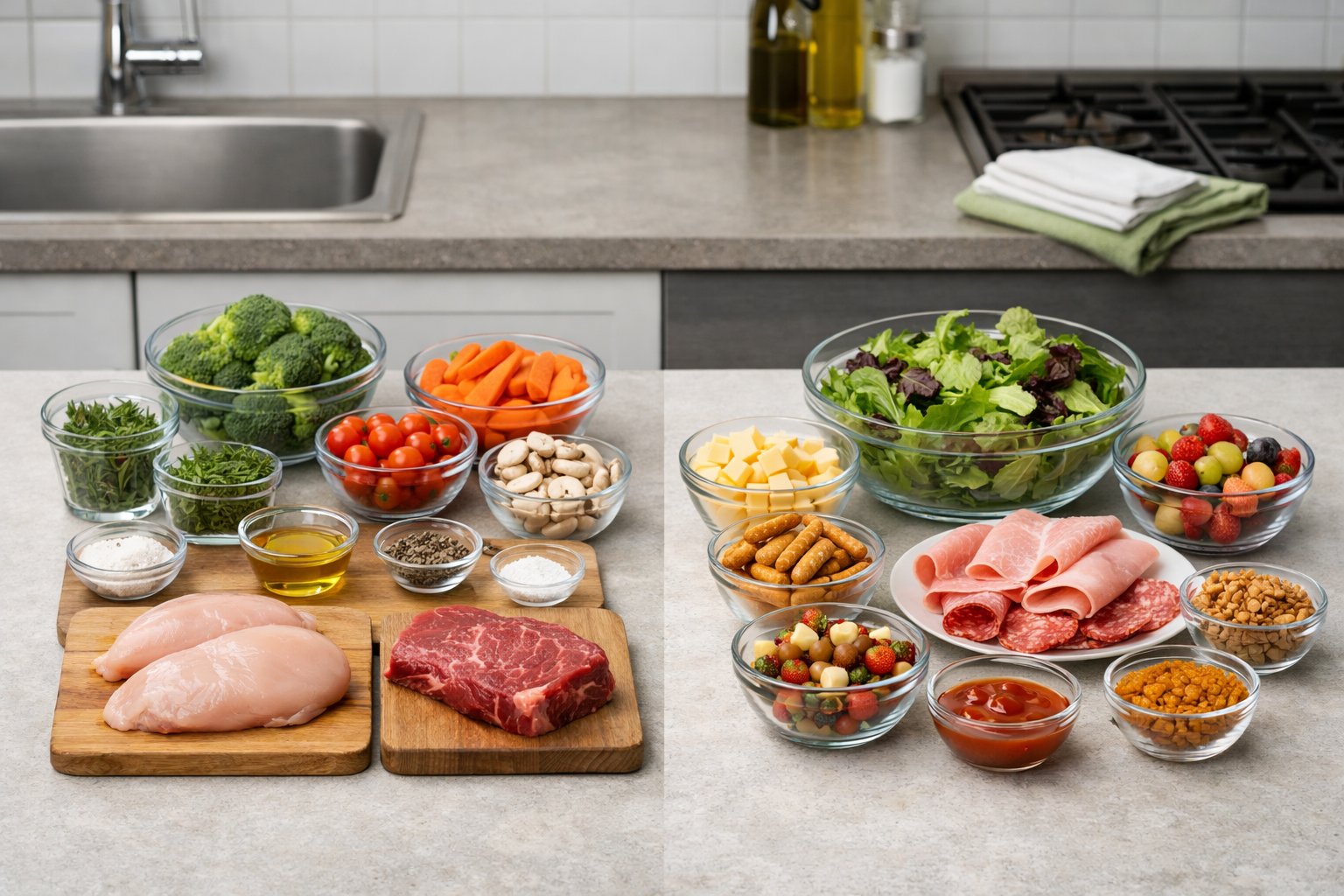
Ready-to-cook foods need to be cooked—obviously—before you eat them, while ready-to-eat foods are good to go as soon as you open the package. This difference changes how you need to store, handle, and prep each type.
Understanding Ready-to-Cook Ingredients
Ready-to-cook products are partly prepped but still need heat to be safe. Think raw meats, pre-marinated chicken, frozen pot pies with raw crusts, instant khichdi mixes, and dosa batter. Cooking these kills off bacteria like Salmonella and E. coli that hang out in raw stuff.
Cooking is the last safety checkpoint for RTC foods. Some products—like breaded chicken nuggets or stuffed chicken—look cooked because they're browned, but they're often still raw inside. Raw cookie dough is another classic example. People sometimes eat it as-is, but it's not meant for that.
Common RTC ingredients:
- Raw proteins (chicken, beef, pork, fish)
- Pre-marinated meats/veggies
- Frozen meals with raw parts
- Instant kits needing water and heat
- Stuff like raw pie crusts
Defining Ready-to-Eat Foods
Ready-to-eat foods are fully prepped and don't need cooking for safety. You can eat them straight from the package, or heat them up if you want, but that's just for taste. Deli meats, cheese, sandwiches, pickles, sausages, canned dal, and packaged curries all count.
These have already been fully cooked or processed before you buy them. Heating them up is just for flavor or texture, not safety. Grab a salad from the store? It's safe right away, though you might want to add dressing or toppings.
The big draw here is convenience. Still, you have to store them right—once you open a pack of deli meat, toss it in the fridge and eat it within the time on the label.
Comparing Processing and Preparation Needs
The main difference is that RTC foods need to be cooked to kill germs, while RTE foods just need safe storage.
| Aspect | Ready-to-Cook | Ready-to-Eat |
|---|---|---|
| Cooking Required | Yes, for safety | No, just for taste |
| Storage | Chill or freeze raw stuff | Follow what's on the label |
| Safety Control | Cooking is the last step | Done during production |
| Prep Time | 10-45 minutes usually | Instant to 5 minutes |
Cooking instructions on RTC packages aren't just suggestions—they're there for a reason. Microwave wattage, standing time, and internal temps all matter. Not everyone knows their microwave's wattage, which can be risky.
For RTE foods, the manufacturer and your fridge do the heavy lifting. You don't have to worry about cooking temps, but you do need to keep them cold and use them before they go bad. Cross-contamination is a biggie here—since you won't be cooking them again, any bacteria from hands or surfaces go straight into your mouth.
Why Separation Matters: Food Safety and Health Risks
Keeping ready-to-cook and ready-to-eat foods apart is all about stopping bacteria like salmonella and E. coli from getting into your meals. Once you see how cross-contamination happens, it's easier to avoid.
Understanding Cross-Contamination
Cross-contamination is when bacteria move from one food to another, either by touching or via shared tools. Raw meats, poultry, seafood, and eggs are the usual suspects.
If you put cooked chicken back on the same plate that had raw chicken, you just put bacteria right onto your meal. Same goes for using one cutting board for raw beef and then chopping lettuce on it.
Liquids can transfer bacteria too. If raw meat juice drips onto veggies in your fridge or shopping cart, that's a problem. Marinades used on raw protein shouldn't touch cooked food unless you boil them first.
Bacteria and Foodborne Illnesses
Bacteria grow fast at room temperature, so a little contamination can get out of hand quickly. Food poisoning can be mild or really serious—sometimes even sending people to the hospital. Kids, pregnant women, older adults, and anyone with a weak immune system are at the highest risk.
Cooking usually kills bacteria on raw animal products. But ready-to-eat foods skip that safety step, so any germs they pick up stick around.
Common Pathogens in Ingredients
Salmonella shows up a lot in raw poultry, eggs, and unpasteurized dairy. It can cause fever, diarrhea, and cramps, sometimes within hours.
E. coli is often in raw ground beef and unwashed produce. Most strains are harmless, but the bad ones can cause serious stomach issues.
Other bugs to watch for:
- Campylobacter in raw poultry and unpasteurized milk
- Listeria in deli meats and soft cheeses
- Toxoplasma in raw or undercooked meat
Each of these needs certain temps to die, so keeping things separate is your first defense.
Smart Storage Solutions for Ingredient Separation
Good food storage is about the right containers, organizing your fridge, and having a system that keeps things fresh and safe.
Organizing Your Refrigerator for Safe Storage
Put raw ingredients on the lowest shelves, with ready-to-eat foods on top. That way, if anything leaks, it won't drip onto food you won't be cooking. The bottom shelf is for raw meat, poultry, and seafood, all in sealed containers.
Middle shelves work for stuff that still needs cooking—dairy, eggs, marinated things.
Top shelves are for ready-to-eat foods like leftovers, deli meats, and prepped meals. This setup keeps bacteria from raw foods away from the stuff you'll eat as-is.
The fridge door is fine for condiments and drinks, but skip putting eggs or milk there—it's too warm and the temp fluctuates.
Selecting Proper Containers and Packaging
Airtight containers keep smells and moisture where they belong. Use see-through containers with tight lids for ready-to-eat stuff, and mark containers for raw ingredients.
Plastic bags with a waterproof lining work for freezing foods and stopping leaks. Double-bag raw meats in the fridge to be safe.
Color-coded containers help—yellow for poultry, red for meat, green for produce. It's a quick visual cue when you're rushing.
Label everything with what's inside and when you put it in there. Modified atmosphere packaging (MAP) can help some foods last longer by tweaking the air inside the package.
Glass containers don't stain or hold onto smells. They're great for leftovers and ready-to-eat foods, and they're easy to clean.
Using Kitchen Storage Systems for Freshness
Use bins and drawer dividers to keep things in their own zones. In the freezer, keep raw proteins away from veggies and ready-made meals.
Pull-out shelves help you see what's in the back, so you don't have to move everything around and risk cross-contamination.
Stackable bins with holes let produce breathe and stay fresh, while keeping them away from raw proteins.
Rotate your stock—first in, first out—so you use older items before newer ones. It's a simple way to cut down on waste and keep things safe.
Best Practices When Handling Ready-to-Cook and Ready-to-Eat Ingredients
Keeping raw foods away from stuff that won't be cooked again means using separate surfaces, washing your hands a lot, and cleaning all your tools. It's the backbone of food safety at home.
Safe Prep Surfaces and Cutting Boards
Always use different cutting boards for raw meats and ready-to-eat foods. Seriously, don't mix them up. Color-coded boards help—a red one for meat, green for veggies, blue for seafood.
Board basics:
- Plastic boards can go in the dishwasher (easy win)
- Wood boards need a good scrub and full drying
- Glass boards don't hold bacteria, but they'll wreck your knives
If you only have one counter, do all your raw food prep first, then clean and sanitize before moving on to ready-to-eat stuff. A bleach solution (one tablespoon per gallon of water) or a commercial spray works for sanitizing.
Washing Hands and Cleaning Up
Wash your hands with soap and warm water for at least 20 seconds before you start, and after handling raw meat, poultry, seafood, or eggs. Also, after touching your face, taking out the trash, or messing with your phone.
Switching tasks? Wash up between handling raw and ready-to-eat foods. If you're making chicken and salad, wash after the chicken before you touch the salad.
Use paper towels to dry your hands. Cloth towels can hang onto bacteria and spread it around.
Maintaining Hygienic Utensils
Clean and sanitize utensils as soon as they've touched raw ingredients. That knife you used for raw beef? Don't use it on veggies or cooked food until it's washed.
Dishwashers do the best job since the water's so hot. If you wash by hand, use hot soapy water and let utensils air dry or use a clean paper towel.
Utensil tips:
- Dedicate one set for raw foods, another for ready-to-eat
- Store them separately if you can
- Avoid wooden spoons for raw meat—wood absorbs germs. Stainless steel, silicone, and heat-safe plastics are easier to clean.
Don't use the same utensils for serving if they've touched raw ingredients, unless you've washed them first.
Cooking Instructions and Temperature Control
Cooking food right means checking temps with a thermometer—not just guessing by look or feel. Pay attention to those package instructions; they're there for a reason. Manufacturer guidelines are tested for safety, so it's worth following them.
Using Food Thermometers Accurately
Color and texture just won’t cut it when we’re trying to figure out if food’s safe. Only a food thermometer really tells us if meat, poultry, seafood, and eggs hit those temperatures that knock out nasty bacteria like Salmonella.
Stick the thermometer right into the thickest part, steering clear of bone, fat, or gristle—those spots can throw off your reading. With thinner foods like burgers or chicken breasts, sliding the probe in sideways usually works best.
Honestly, digital instant-read thermometers make life easier for home cooks. But they need regular checks—calibration matters, especially if you’ve dropped yours or it’s been through a lot.
Understanding Safe Internal Temperatures
Not all foods play by the same rules. Poultry needs to hit 165°F, ground meats 160°F, and whole cuts of beef, pork, lamb, or veal 145°F, plus a three-minute rest.
That rest? It’s not just a suggestion. Food keeps cooking after you pull it off the heat, and that extra time helps wipe out any lingering bacteria.
Leftovers and casseroles? They’ve gotta reach 165°F when you reheat them. And don’t trust just one spot—microwaves are notorious for leaving cold pockets.
Following Cooking Guidelines on Packaging
Manufacturers don’t just guess at those cooking directions—they test them to make sure food gets hot enough. If the packaging or ingredients change, you might need to double-check the instructions, since heating patterns could shift.
Ready-to-eat foods that need heating have their own rules, different from stuff you cook from scratch. Following every package direction, including microwave wattage and oven placement, really matters.
Those instructions are there for a reason. If you skip steps or fudge times and temps, you risk leaving food in the danger zone—where bacteria can thrive.
Ingredient Examples and Common Scenarios
It helps to know which ingredients need cooking and which are good to go. Let’s dig into some foods that call for extra attention—and the mistakes that trip people up.
Identifying High-Risk Ready-to-Cook Foods
Poultry and seafood top the danger list. Raw chicken, turkey, duck, and any fish or shellfish can carry bacteria that only proper cooking kills. Keep these separate from other foods—no exceptions.
Frozen dumplings can be deceiving; they look done, but most are raw inside and need thorough cooking. Same with frozen veggies—blanching isn’t the same as cooking.
Ground meats are risky because bacteria spread through the whole batch during processing. Even fresh beef, pork, and lamb need cooking, though with whole cuts, the risk is usually just on the surface.
Raw grains and legumes—think rice, millet, flour—aren’t as innocent as they seem. Flour, for example, can harbor bacteria even though it’s dry. Bran and vermicelli? Same deal.
Frozen fruit is tricky. Some are fine to thaw and eat, but if the package says “for cooking,” you need to heat it to kill off any bugs.
Popular Ready-to-Eat Foods in the Kitchen
Prepared sandwiches, pies, and dairy products like yogurt and cheese are ready for you. They’ve already been cooked or processed, so there’s no need for extra heat.
Beef jerky and other cured meats are safe straight from the package—they went through their safety steps at the plant.
Pre-washed salads, sliced fruit, and deli meats? Usually good to go, but check those labels just in case. Cooked rice from takeout or meal prep is ready-to-eat—unlike raw grains you prep yourself.
Breads, crackers, and baked goods? Safe. Pasteurized juices and milk belong here too.
Cross-Use Mistakes to Avoid
It’s all too common: someone chops raw chicken on a board, then slices veggies on the same surface without washing. That’s a direct path for bacteria to your salad.
Storing raw seafood above sandwiches in the fridge is a recipe for disaster—drips can contaminate foods below. Always put raw stuff on the bottom shelf.
Dipping a marinade brush that touched raw meat into a sauce you plan to serve? That’s a no-go. The brush brings bacteria right along with it.
Thawing frozen dumplings in a container with washed fruit? You’re just spreading bacteria. Use separate containers and fridge zones for different foods.
Handling raw flour, then touching garnishes without washing up? Yep, that’ll transfer pathogens too. Swap utensils or wash up between tasks.
Frequently Asked Questions
Keeping ingredients separated isn’t just about safety—it helps with freshness and makes the kitchen run smoother. Knowing where to store things, which containers to use, and how to organize your workflow keeps bacteria at bay.
How can I maintain the optimum freshness of ingredients when storing both ready-to-cook and ready-to-eat items?
Ready-to-eat foods go on the top shelves in the fridge, far from any drips from raw stuff below. Raw meats, poultry, and seafood always live on the bottom in sealed containers—no exceptions.
Temperature zones are more important than they seem. We keep the fridge at 40°F or below, with ready-to-eat items tucked into the coldest spots, usually the back of the middle shelves. Raw items that need cooking stay at the bottom, where opening the door doesn’t mess with their temp as much.
Airtight containers do double duty: they keep food fresh and stop cross-contamination. We label and date everything, rotating older stuff to the front so it gets used first. Less waste, better quality.
Could you share your top tricks for organizing a kitchen for safe handling of ready-to-cook and ready-to-eat ingredients?
We carve out zones—one for prepping raw foods, another for ready-to-eat stuff. This setup just feels natural and makes it harder to mix things up.
Color-coded cutting boards are a lifesaver. One color for raw proteins, others for produce, bread, cooked foods. Same goes for knives and utensils.
Bins and drawer dividers keep tools sorted. We have separate tongs, spatulas, and serving gear for raw and cooked foods. If space is tight, we just make sure to wash and sanitize thoroughly between uses.
What are the golden principles for separating high-risk ingredients like raw meat from ready-to-eat foods?
Raw meat, poultry, seafood, and eggs don’t get to mingle with foods that won’t be cooked. We treat them as contamination sources—separate gear, separate surfaces.
It starts at the grocery store. Bag raw proteins separately, keep them away from produce in the cart. This habit sticks with us through storage and prep.
We prep ready-to-eat foods first, then move on to raw ingredients. That way, bacteria from raw stuff can’t sneak onto foods that won’t get cooked. And handwashing—always between tasks.
Can you dish out some epic tips for preventing cross-contamination in a food-lover's kitchen?
We clean and sanitize all surfaces, boards, and utensils after they touch raw proteins. A little bleach (one tablespoon per gallon of water) or a commercial sanitizer works great after a good soap-and-water scrub.
Marinating raw meats? Always in the fridge, never on the counter. Used marinade gets tossed or boiled before you use it as a sauce. Plates and containers that held raw stuff get washed before touching cooked food.
Handwashing is the unsung hero. Soap and warm water, 20 seconds, after handling raw ingredients, before ready-to-eat stuff, and after any interruption.
Could you enlighten me on the perfect containers and gadgets for keeping my cooking flow smooth and my ingredients uncontaminated?
Glass and food-grade plastic containers with tight lids are our go-tos. Clear ones are handy, you can see what’s inside without opening and letting out the cold.
Having separate sets for raw and ready-to-eat foods takes the guesswork out. Labels help, and some folks go all-in with different colored containers. Stackable ones save space and keep things tidy.
Dedicated tools make cooking less stressful. We use separate boards, knives, bowls, and measuring cups for raw proteins and other foods. Kitchen shears for opening meat packages? They never touch ready-to-eat stuff. A reliable meat thermometer is non-negotiable, and a kitchen timer helps us keep track when we’re sanitizing.
What should every chef know to keep their ready-to-eat treats safe and their prep game top-notch?
Ready-to-eat foods need careful handling, just like raw ingredients—but with the opposite focus. We’ve got to keep these items away from raw proteins, unwashed produce, and any surfaces that might carry contamination. No shortcuts here; cross-contamination is a real risk.
When it comes to prep timing, it’s a bit of a balancing act. I usually cook the components that need time to cool first, then handle the ready-to-eat stuff closer to serving. That way, the delicate things stay fresh, and everything lands on the table at the right temp. It’s not always perfect, but it works.
We always stash ready-to-eat foods in covered containers, even in the fridge. It’s the best way to protect them from stray airborne stuff or accidental bumps. And if I’m taking food somewhere else, I rely on insulated carriers and ice packs to keep things under 40°F until it’s time to serve. It’s a bit of extra work, but honestly, it’s worth it.
Share:
What Happens to Food Quality When Storage Isn’t Properly Sealed
How to Reduce Freezer Clutter with Better Portion Planning