

Check out our latest glass jars collection!
Marinated proteins should make meal prep easier, not leave your fridge smelling like garlic or your shelves covered in sauce. The right storage method keeps chicken, beef, pork, and seafood flavorful while protecting their texture and freshness.
To store marinated proteins safely, use airtight, leak-proof containers, match marinating time to the protein, and keep everything cold until cooking. Delicate seafood needs a short soak, while tougher cuts can handle more time without losing texture.
In this guide, you’ll learn how to prevent leaks and odours, choose the best storage tools, freeze marinated proteins properly, and keep every batch safe, tidy, and ready to cook.
Key Takeaways
- Pick airtight, leak-proof containers or solid freezer bags to stop spills and keep fridge smells where they belong
- Marinate according to protein, delicate seafood needs just 15-30 minutes, but tougher meats can soak overnight
- Freeze marinated proteins flat in sealed bags for easy meal prep that keeps marinating as it thaws
The Science of Marination and Its Effects on Proteins
Marination works thanks to a cool chemical process: acids break down protein fibers, oils carry flavors into the meat, and enzymes help tenderize tough muscle. If you get how these interact, you can avoid classic mistakes like mushy texture from overdoing it, or weirdly uneven flavor.
How Acids, Oils, and Enzymes Interact with Meat
Acidic marinades, think vinegar, citrus, yogurt, break down surface proteins by basically unwinding the tightly coiled structures, so the meat soaks up flavor and gets more tender. Acid only gets about 3-4mm into the meat, so marination time matters way more than how much acid you use.
Oils do something different. They help deliver fat-soluble flavors from herbs, spices, and aromatics. Oil doesn’t really get deep into the meat (since meat is mostly water), but it coats the surface and helps keep things juicy when you cook.
Enzymatic marinades rely on natural tenderizers in stuff like pineapple (bromelain), papaya (papain), or ginger (zingibain). These enzymes break down collagen and muscle fibers, fast. If you use them, you really have to watch the clock or risk turning your protein to mush.
The best marinades usually stick to a rough ratio: 3 parts oil, 1 part acid, plus salt and whatever flavorings you love.
Understanding Marinating Times by Protein Type
Different proteins need different marination times, no surprise there. Here’s what actually works:
| Protein Type | Minimum Time | Maximum Time | Notes |
|---|---|---|---|
| Fish and shellfish | 15 minutes | 30 minutes | Delicate, breaks down quickly |
| Chicken breast | 30 minutes | 2 hours | Lean, oil-based marinades help |
| Chicken thighs | 1 hour | 12 hours | Fatty, handles longer marinating |
| Pork chops | 1 hour | 4 hours | Moderate density |
| Beef steaks | 2 hours | 24 hours | Dense, needs time |
| Lamb | 2 hours | 24 hours | Similar to beef |
Seafood really needs the shortest time. Shrimp, for example, can turn to mush in less than an hour if you use too much acid.
Poultry sits somewhere in the middle. Boneless pieces soak up flavor faster than bone-in, just because there’s more surface area.
Red meats, especially tough cuts, can marinate for hours and come out better for it. The denser the muscle, the more time it needs for acids and enzymes to get in and do their thing.
Risks of Over-Marinating and Texture Loss
Over-marinating? That’s a recipe for mush. We call it the "ceviche effect", the outer layer basically cooks in the acid, turning grey and soft, while the inside stays untouched.
Fish is the fastest to suffer. Leave it in acid for more than 30-45 minutes, and it starts to coagulate, just like if you cooked it. The texture gets chalky and weird.
Poultry gets stringy and cottony when it sits too long in enzyme-heavy marinades. We never go past 2 hours with pineapple or papaya on chicken, no matter the cut.
Over-marinated beef or pork? You’ll see a greyish crust on the surface. That’s acid "cooking" the meat, and it won’t brown right when you sear it. The meat loses moisture too, so you end up with something dry and tough instead of tender.
Salt also matters. If your marinade has more than 2% salt and you leave it too long, you’ll basically cure the meat. It’ll taste preserved, not fresh.
Choosing the Right Containers and Tools for Marinated Proteins
Your container choice can make or break your marinated protein game. Pick the wrong one, and you’ll end up with leaks, weird smells, or even cross-contamination.
Comparing Airtight Containers, Bags, and Vacuum Sealers
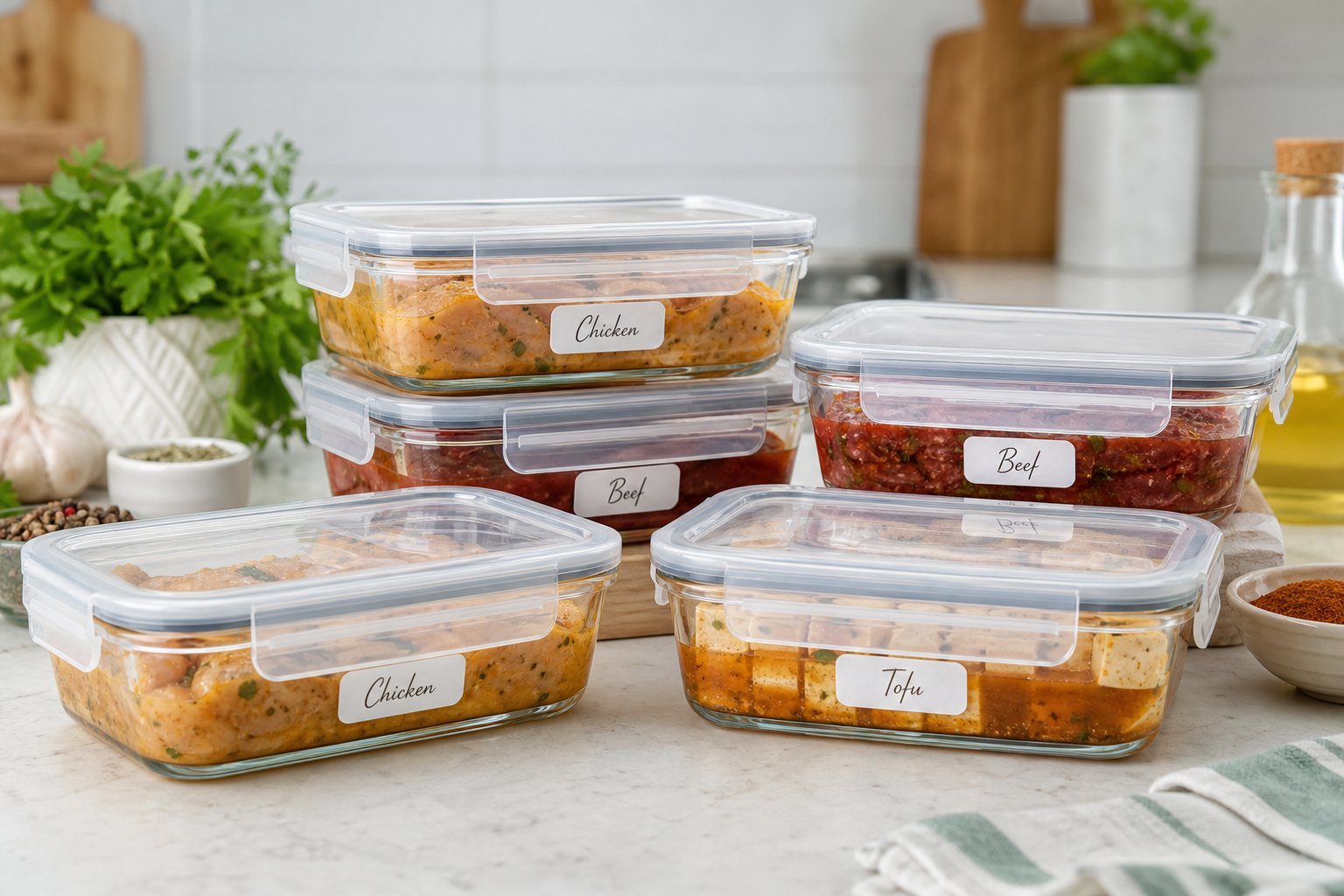
Glass containers are the best for acidic marinades. They don’t react with vinegar, citrus, or wine, and locking lids keep everything sealed.
Food-grade plastic is lighter, but make sure it’s BPA-free and safe for acidic foods. The catch? Plastic can hang onto odors, especially if you love garlic or fish.
Zip-top bags let you squeeze out extra air and massage the marinade around. They’re space-savers, but cheap ones can leak, especially if you flip them to coat everything.
Vacuum sealers are kind of the gold standard. They suck out nearly all the air, stop oxidation, and keep the marinade right up against the meat. If you batch-prep or marinate tough cuts, this is the way to go.
Benefits of Vacuum Sealing for Leak and Odour Control
Vacuum sealing keeps air (and odors) in check. We’ve noticed that vacuum-sealed bags stop that garlic-ginger smell from escaping and messing with the rest of the fridge.
The tight seal means no liquid leaks, even if you stack bags or move them around. That’s a lifesaver when you’re juggling different proteins and marinades.
Vacuum sealing actually speeds up marinating, too. Less air means the marinade gets in faster, so you can often cut marinating time by a third or even more.
Plus, you get a longer window to use your marinated meat. Vacuum-sealed chicken can stay fresh for up to 48 hours in the fridge; fish is good for about 24.
Avoiding Cross-Contamination in Storage
Always store raw marinated proteins on the bottom shelf, just in case something leaks, you won’t risk contaminating other food. We like to put a rimmed tray underneath as backup.
Never reuse containers from raw marinated meat for cooked stuff unless you’ve washed them really well in hot, soapy water. Label everything with the protein and the date you started marinating.
Keep separate tongs and utensils for raw and cooked proteins. If you save some marinade for basting, make sure it never touched raw meat.
Marinating more than one protein at a time? Color-code or label your containers so you don’t mix up the chicken and fish.
Optimal Fridge Storage: Prevent Leaks and Odour Transfer
Good fridge storage keeps your marinated proteins from leaking onto other foods and stops strong smells from spreading or seeping in. Placement and containment make all the difference.
Placement in the Fridge for Safety and Freshness
We always stick marinated beef, pork, and poultry on the bottom shelf. It keeps any drips away from produce or dairy, and that shelf usually stays coldest, which helps the meat last.
Push marinated proteins toward the back of the fridge, not near the door. It’s colder and less prone to temperature swings there, so your meat stays fresher.
Keep them away from strong-smelling foods like onions or blue cheese. You want to avoid cross-flavoring, nobody wants garlicky strawberries.
Preventing Drips and Spills
Double containment is our go-to move. Pop your sealed bag or container inside a bigger dish or rimmed baking sheet. If anything leaks, it won’t hit the fridge shelves.
Containers that actually prevent leaks:
- Glass containers with locking lids and silicone gaskets
- Heavy-duty freezer bags (squeeze out the air!)
- Vacuum-sealed bags, barely any liquid movement
- Plastic containers with snap-lock sides
We always store marinated proteins flat instead of upright. It keeps the seal tight and marinates everything evenly. For bags, lay them flat on a sheet pan, that way they won’t tip or get punctured by something else in the fridge.
Before you stash anything, check the seals. Press down on lids, run your finger along bag zippers, make sure nothing’s coming loose.
Managing Odours and Flavour Contamination
Airtight seals are a must when you use bold flavors like garlic or curry. Otherwise, those smells will get into everything, from milk to berries.
Glass blocks odors better than thin plastic. If you’re working with strong ingredients, it’s worth using glass. With bags, we sometimes put them inside a covered container for extra insurance.
It helps to dedicate a few containers just for marinated proteins. That way, you don’t end up with dessert or yogurt tasting like last week’s marinade. Label them so they stay in the savory rotation.
Keep highly acidic marinades away from delicate stuff like butter or soft cheese. Even if your container is solid, strong acids can sometimes affect nearby foods through shared fridge air.
Safe Marinating and Storage Times for All Protein Types
Marinating times vary a lot between proteins, and pushing the limits can ruin texture or even cause food safety problems. If you know the right timelines, you’ll always end up with safe, tasty meals.
Recommended Refrigerated Marinating Durations
Seafood soaks up marinade super fast, usually just 15 to 30 minutes. Any longer, and acid starts to "cook" it, leaving you with mush.
Chicken and other poultry do best with 2 to 12 hours. If you’re using an acidic marinade, stick to the lower end. For whole birds or oil-based marinades, overnight is fine.
With beef, it depends on the cut. Tender cuts like striploin need just a couple of hours, while tougher cuts are happy with 6 to 24 hours. Don’t keep marinated beef in the fridge for more than 5 days, after that, it’s a no-go.
Pork is a lot like chicken. Four to twelve hours works for most cuts. Lamb can handle anywhere from 4 to 24 hours, depending on thickness.
Keep your marinated meat refrigerated at 4°C (about 39°F) or below the whole time.
Signs Your Marinated Protein Has Gone Bad
Visual changes usually give you the first heads-up. Fresh marinated meat keeps its natural color under the marinade, though it’ll darken a bit, that’s normal. But when you spot grey or greenish patches, especially around the edges, that’s a red flag for bacterial growth.
Honestly, your nose is the best tool here. Marinated meat should smell mostly like the marinade with a hint of the protein’s natural scent. If you get a sour whiff, or anything ammonia-like or just plain rotten, it’s time to toss it, no matter how long it’s been in the fridge.
Texture matters too. If the surface feels really slimy or sticky, even after you rinse off the marinade, bacteria have probably taken over. Some slickness is fine (that’s just the marinade), but if it doesn’t wash away, it’s not safe.
When you’re not sure, just throw it out. Seriously, don’t taste questionable marinated meat. It’s not worth the risk.
Freezing Marinated Proteins Without Texture Loss
Freezing marinated meat can lock in flavor and quality, but if you do it wrong, you’ll end up with mushy, freezer-burned disappointment. Marinades actually help protect during freezing by holding in moisture, but it’s the details that make or break your meal prep.
How to Freeze Marinated Meat for Freshness
Vacuum-sealed bags work best for freezing marinated beef, chicken, pork, or fish. They keep air out, which stops ice crystals from wrecking the protein’s structure and turning it to mush after thawing.
No vacuum sealer? Wrap the marinated protein tightly in plastic wrap, then add a layer of aluminum foil or parchment. Pop it in a heavy-duty freezer bag, squeeze out as much air as you can, and seal it up.
Skip these marinade ingredients when freezing:
- Mayonnaise (it gets weirdly rubbery)
- Dairy-heavy stuff like sour cream or yogurt
- High-water veggies mixed into the marinade
Olive oil-based marinades survive the freezer best, in our experience. Don’t forget to label each package with the protein and date. Lay the bags flat at first, they’ll freeze faster and stack better later.
Wondering how long marinated meat lasts in the freezer? Raw marinated proteins stay good for 4-12 months, while cooked ones hold up for around 3 months.
Safely Thawing and Cooking Frozen Marinated Proteins
The fridge method is still the safest bet. Put your frozen marinated protein on a plate or in a bowl (to catch drips) and let it thaw overnight or for up to 24 hours, depending on size.
In a hurry? Submerge the sealed bag in cold water, changing the water every half hour. A 500g piece usually thaws in 1-2 hours this way. Hot water is a no-go, it thaws unevenly and can push the meat into the danger zone for bacteria.
Once thawed, cook the protein to the right internal temp. For chicken, that’s 74°C; ground meats, 71°C; and whole cuts of beef or pork, 63°C. I treat cooked marinated meats the same way as raw when reheating.
Don’t refreeze thawed marinated proteins unless you cook them first. Freeze-thaw-refreeze cycles just wreck the texture, and no amount of sauce can save it.
Expert Tips: Batch Prep, Reusing Marinade, and More
Batch marinating saves time and money, and knowing when you can reuse marinade keeps things safe and less wasteful. Storing everything right means your proteins stay fresh for days or even weeks without losing flavor or texture.
Batch Marinating and Long-Term Storage Strategies
I like to prep several proteins at once to streamline meal prep. Use different airtight containers or freezer bags for each type, keeps flavors from mingling and avoids cross-contamination.
For the fridge: Marinated chicken and pork last up to 2 days, beef and lamb up to 3, and fish should be cooked within 24 hours. Always label each container with the protein and marinating date.
For the freezer: You can freeze proteins in their marinade before they even start marinating. Put the meat and marinade straight into a freezer bag, squeeze out the air, and freeze flat. When you thaw it in the fridge, it’ll marinate as it defrosts, saves a step.
Don’t freeze proteins that have already been marinated in the fridge. Too much acid and ice crystals break down the muscle fibers, and you’ll end up with mush.
Always store marinated proteins on the bottom shelf of your fridge to avoid drips contaminating other foods.
When and How to Reuse Marinade Safely
If you want to reuse marinade that touched raw meat, you have to boil it for at least 5 minutes to kill bacteria like salmonella and E. coli. That makes it safe for basting or as a sauce.
Pour the used marinade into a small saucepan, bring it to a rolling boil, and keep it there for 5 minutes, stirring now and then. You’ll notice it thickens and the flavors concentrate.
Taste it before using. Boiling cranks up the acidity and saltiness, sometimes it gets too intense, so thin it with stock or water if needed.
Never pour raw marinade over cooked food. It’s just not worth the risk. If you want extra marinade for basting or serving, set some aside before adding raw meat.
For veggies or tofu, reusing marinade is a bit safer since they don’t carry as much risk, but boiling is still a smart move.
Frequently Asked Questions
Here are quick answers to common questions about storing marinated proteins safely and neatly.
What containers or bags actually prevent marinade leaks in the fridge or cooler?
Use glass containers with silicone-sealed lids, heavy-duty freezer bags, or vacuum-sealed bags. For extra protection, place bags or containers on a rimmed tray in the fridge.
How can I keep strong marinade smells from taking over my fridge and affecting other foods?
Use airtight glass containers when possible, or double-bag strong marinades with garlic, fish sauce, or bold spices. Store them on the bottom shelf away from fruit, dairy, and ready-to-eat foods.
How long can marinated chicken, beef, pork, or seafood be safely stored before cooking?
Chicken, beef, and pork should usually be cooked within 1 to 2 days. Seafood should be marinated briefly and cooked the same day because its texture breaks down quickly.
What is the best way to freeze marinated meats without getting freezer burn or mushy texture?
Freeze marinated meats flat in heavy-duty freezer bags or vacuum-sealed bags with as much air removed as possible. Avoid over-marinating before freezing, since the protein continues to absorb flavour as it thaws.
Should I marinate in a zip-top bag, a sealed container, or a vacuum-sealed bag for best results?
Zip-top freezer bags are practical for everyday use, glass containers are best for acidic marinades, and vacuum-sealed bags are ideal for long-term freezing and leak control.
What is the safest way to transport marinated proteins to a BBQ or campsite without spills or cross-contamination?
Pack raw marinated proteins in sealed bags or leak-proof containers, then keep them in a separate cooler with ice packs. Store them away from cooked foods, snacks, and drinks.
Share:
How to Create a Weekly Food Prep Workflow With a Cordless Vacuum Sealer
How to Keep Bulk Snacks Fresh With Portion Boxes and Airtight Storage