

Check out our latest snack box collections!
Bulk snacks are only a bargain if they stay fresh. Once a large bag is opened, air, moisture, pantry odours, and repeated handling can quickly turn crunchy snacks soft or stale.
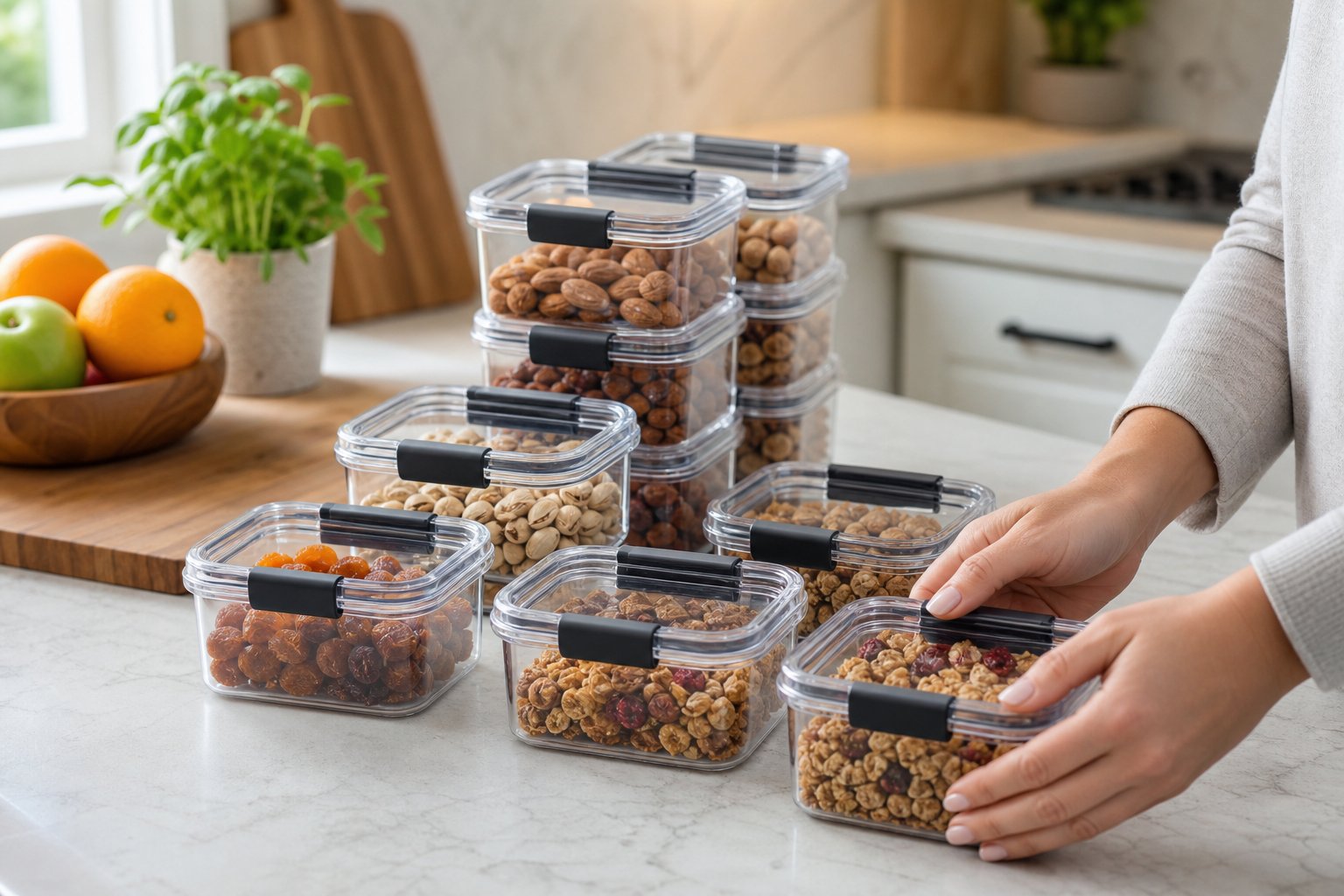
Airtight containers and portion boxes help keep bulk snacks fresh by sealing out moisture, limiting air exposure, and making everyday snacking easier. Instead of reopening the same large bag again and again, you can divide snacks into ready-to-grab portions while keeping the rest protected.
In this guide, you’ll learn how to choose the right containers, portion snacks for freshness, organize your pantry, and build a simple storage system that helps reduce waste.
Key Takeaways
- Airtight containers and portion boxes seal out moisture and air, making snacks last and easy to grab
- Label with dates and group by snack type to rotate stock and avoid waste
- Stackable containers and smart grouping make the most of pantry space and help snacks stay fresh
Choosing the Best Containers for Snack Freshness
The container material decides how long your snacks stay fresh. Features like transparency and stackability really affect how often you’ll use your storage system.
Comparing Glass, Plastic, and Stainless Steel Designs
Glass containers let you see everything inside and don’t pick up smells or stains. You can toss them in the microwave or dishwasher, which is great if you like to portion out snacks before eating. Mason jars are awesome for nuts, dried fruit, and granola, so you always know what you have left.
Stainless steel containers are tough and lighter than glass. They nest when empty and don’t shatter if you drop them. We use them for pantry storage where you don’t need to see inside. The opaque design also protects light-sensitive snacks like certain nuts and seeds.
Food-grade plastic containers are the lightest and usually the cheapest option. They won’t break if dropped, and newer designs actually seal pretty well. They work great for dry snacks like crackers, pretzels, and cereal, especially if you need something portable or kid-friendly.
The Role of BPA-Free and Food-Grade Materials
BPA-free plastic containers put your mind at ease about chemicals leaching into food, which matters a lot for fatty or acidic snacks. Always look for containers labelled as food-grade plastic. These meet safety standards and won’t leave weird tastes behind.
Food-grade buckets with gamma seal lids are magic for big batches of flour, sugar, or tons of individually wrapped snacks. The twist-off lids seal tightly but still open easily.
All glass and stainless steel containers are naturally BPA-free. Glass doesn’t react with foods at all. Stainless steel (usually 304 or 18/8 grade) resists corrosion and holds up for years without breaking down.
Stackable and Clear Options for Easy Identification
Stackable containers let you use vertical space in cabinets and pantries. Square or rectangular containers stack better than round ones, so you don’t waste space between them. With stackable systems, you can build up, not out, which is a lifesaver in small kitchens.
Clear bins and see-through containers mean no more guessing. You’ll see when you’re running low without opening every container. This visibility makes it easier to rotate stock and use up older items first.
Clear containers are also great for kids (and honestly, for anyone who doesn’t want to hunt for snacks). Just add simple labels and everyone can find what they need. Stackable bins with clear fronts let you set up snack “zones” and keep everything visible.
Benefits and Strategies of Portion Control with Boxes
Portioning snacks into individual servings keeps them fresh and makes grab-and-go snacking a breeze. When you pair these boxes with airtight storage, you get a system that keeps bulk snacks fresh and your pantry looking tidy.
Portioning Snacks for Longevity and Convenience
Every time you reach into a big bag of nuts, granola, or crackers, you expose the whole thing to air. That speeds up staleness and moisture problems. But if you divide snacks into portion boxes right after buying, you cut down on how often the rest gets exposed.
Portion control containers with compartments make this easy. You can pre-portion a week’s worth of snacks in one go, then keep the rest in the original bag or a big airtight container. It’s especially handy for organizing your pantry around the snacks you eat most.
Having ready-to-grab, pre-portioned snacks saves you time and stress in the morning or when packing lunches. We like 3-compartment containers for variety in one box, so you can mix nuts, dried fruit, crackers, or whatever you’re in the mood for.
For snack stations at home or work, stack small portion boxes in a basket or drawer. Everyone can help themselves, and it keeps bulk buying practical for any household size.
Combining Portion Boxes with Airtight Storage
The best snack organization setups use both portion boxes and airtight containers. We portion out what we’ll use right away, and keep the rest sealed up tight.
Here’s how we usually do it:
Immediate Use: Fill 5-7 portion boxes with single servings for the week
Bulk Reserve: Store the remaining snacks in airtight containers with tight lids
Rotation System: Once a week, refill the portion boxes from bulk storage to keep everything fresh
We like glass containers with airtight lids for the bulk reserve because they don’t pick up smells and keep out pests. BPA-free plastic is lighter and works well on higher shelves. Both keep snacks crunchy and stop nuts and chips from going rancid.
Label bulk containers with the purchase date so you know how fresh things are. Most nuts stay good for 3-4 months if you store them right. Crackers and pretzels usually last 6-8 weeks.
Encouraging Healthy Snacking Habits
Portion boxes help us stick to good serving sizes without having to measure or think too much. When healthy snacks are pre-portioned and visible in a snack basket or drawer, we’re way more likely to pick them over junk food.
Snack storage ideas that support healthy habits include clear containers and ones with multiple compartments for variety. We’ve noticed that when we keep nuts, fruit, and whole-grain crackers in separate sections, balanced snacking just sort of happens.
If you have a family, give everyone their own colour or style of portion box. That way, no one argues over whose snack is whose, and you cut down on packaging waste. Kids especially love this because they can pick out their own snacks without needing help.
Portion control works best when it feels generous, not restrictive. Keep plenty of boxes ready and switch up the snacks each week to keep things interesting and avoid falling back into old habits.
Labelling and Inventory Management Tips
Labelling keeps you from buying duplicates and helps you use up older snacks before they go bad. Waterproof labels and date tracking keep your snack stash organized and safe.
Using Label Makers for Storage Success
A label maker is a game-changer for bulk snack storage. It prints out neat, easy-to-read labels that stick to both portion boxes and big airtight containers.
Every label should have three things: snack name, purchase date, and quantity. This way, you’ll always know what you’ve got and avoid mystery containers piling up. Label makers aren’t too expensive and usually pay for themselves by cutting food waste.
For families, add serving info to the labels, like “12 servings” or “individual portions.” It helps everyone use the system the right way. We’ve noticed clear labels stop people from digging into bulk containers and messing up the freshness.
Stick a label on both the lid and the front of containers. That way, you can spot what’s inside whether things are stacked or lined up. Keep extra labels handy so you can relabel right away when you bring home new snacks.
Waterproof and Colour-Coded Solutions
Waterproof labels are a must for containers stored in places that get damp or near sinks. Paper labels peel off with condensation, and then you’re back to guessing what’s inside.
Try colour-coding your labels to make snack categories pop. Maybe blue for sweet, red for savoury, and green for protein snacks. It saves time and helps everyone find what they want.
Pre-printed waterproof labels are handy for snacks you buy all the time, while blank ones let you label whatever you pick up in bulk. Many label makers now have waterproof cartridges just for food storage.
Before you go all-in on a labelling spree, test a label on your container and stick it in the fridge overnight. You want to make sure it actually stays put.
Tracking Expiration Dates for Food Safety
Write the original package date on your labels, not the date you transferred the snacks. That way, you know how long they’ve really been around.
We keep containers with the soonest expiration dates at the front of the pantry. This first-in, first-out method helps you use up older snacks before opening new ones. Once a month, check expiration dates and move anything close to expiring to a “use soon” spot.
Snacks last different amounts of time after opening. Crackers usually make it three months in airtight storage, while nuts can go six months if kept cool. It helps to make a quick chart of shelf lives for your most common snacks.
If you store more than 10 types of snacks, jot down what you have in a simple spreadsheet or notebook, with the snack name, purchase date, quantity, and expiration date. It only takes a few minutes a week and saves you from tossing forgotten snacks later.
Maximising Pantry Space for Bulk Snack Storage
Making your pantry work harder means using adjustable shelves, vertical solutions, and clever add-ons like shelf risers. These tricks help you squeeze more snacks into even a small pantry while keeping everything easy to see and grab.
Using Adjustable and Pull-Out Shelving
Adjustable shelves let you fit tall airtight containers for things like pretzels or cereal right next to shorter boxes for granola bars. Even moving a shelf up or down just a bit can double your space.
Install shelves with strong brackets so they don’t wobble when you pull out heavy containers of nuts or dried fruit. Most systems let you adjust in small increments.
Pull-out shelves and drawers turn deep pantry spaces from black holes into easy-access storage. Instead of stacking containers three deep and forgetting what’s in back, you just slide the shelf out and see everything.
Go for pull-out systems that hold at least 15 kilograms, which is enough for several big containers and portion boxes. Full-extension slides are best so you can pull the whole shelf out without tipping.
Vertical Storage and Door Organisers
Vertical storage uses the space between shelves. Stack square or rectangular containers, not round ones, since they fit together with no wasted gaps. Keep your go-to snacks at eye level and store backup supplies up high.
Over-the-door organisers give you extra storage without tools or permanent changes. Wire racks with tiers work for portion boxes and small containers. Each door usually holds 5-10 kilograms, depending on the rack.
Use door storage for lightweight snacks you grab often. Mount spice racks or slim baskets for single-serve boxes, trail mix bags, or small airtight jars. Spread out the weight so you don’t strain the door hinges.
Utilising Shelf Risers and Under-Shelf Baskets
Shelf risers add a second layer to existing shelves, basically doubling your space. Tiered risers with two or three levels let you stack portion boxes or small containers while still seeing everything.
Pick risers that can handle the weight of full containers. Metal or thick plastic ones usually support 5-8 kilograms per tier. Place them at the back so there’s room in front for other snacks.
Under-shelf baskets hang from the shelf above and use that dead space underneath. They’re perfect for bagged snacks, granola bars, or lightweight portion boxes. Wire baskets make it easy to see what’s inside from below.
Look for under-shelf baskets with rubber or plastic where they clip on. That keeps your shelves safe and stops the baskets from sliding around when you pull stuff out.
Keeping Snacks Fresh: Airtight Sealing, Vacuum Methods, and Pest Prevention
If you want to keep bulk snacks fresh, you really need to block out oxygen, moisture, and pests. We usually combine vacuum sealing, moisture-absorbing packets, and sturdy packaging to keep things crisp for way longer than just tossing bags in the pantry.
Vacuum Sealing for Extended Freshness
Vacuum sealing pulls out 80-90% of the air, which slows oxidation and keeps snacks like chips, nuts, and dried fruit crunchy. In my experience, vacuum-sealed bags can keep snacks fresh 3-5 times longer than regular storage.
Most vacuum sealers handle snack-sized portions easily. If your snacks have oils or moisture, chill them first to avoid condensation inside the bag. For fragile snacks like crackers or cookies, I like to use the pulse function instead of a full vacuum so they don’t get crushed.
Mylar bags with oxygen absorbers are another great option. The metallic layer blocks light and moisture, while the absorber grabs any leftover oxygen after sealing. I’ve found this combo works especially well for long-term storage in cool pantries.
Always label vacuum-sealed packages with the contents and date. It’s a simple trick, but it saves you from wasting food by making it easy to use the oldest stuff first.
Using Oxygen Absorbers, Silica Gel, and Desiccants
Oxygen absorbers suck the oxygen out of sealed containers, which keeps dry snacks like pretzels, crackers, and cereal from going stale. These little packets have iron powder that grabs the oxygen, making the container almost oxygen-free.
Silica gel packets fight moisture, not oxygen. I toss these in with snacks that need to stay dry, like cookies, granola, and chocolate-covered treats. Each packet soaks up humidity that would otherwise make things soggy or clumpy.
Make sure you pick the right size absorber for your container. A 100cc oxygen absorber is good for a 1-litre jar, while 300cc packets fit gallon-sized bins. Swap out moisture-absorbing packets every few months, or sooner if they feel heavy.
Don’t mix oxygen absorbers and silica gel in the same package. They do different jobs and just work better separately. Keep unused desiccants sealed up until you need them.
Controlling Moisture, Light, and Pests
Light breaks down fats and oils in snacks, so they go rancid and lose flavor. I keep snack boxes in opaque containers or stash them in dark pantry corners, away from windows. Mylar bags are perfect for light-sensitive snacks like nuts and seeds.
Controlling moisture means more than just tossing in a desiccant. Keep your snack storage between 10-21°C and as dry as possible. Basements or pantries near water heaters usually get too damp for good snack storage.
To keep pests out, focus on solid packaging. Airtight lids and zip bags do most of the work, but I like to add natural deterrents too. Bay leaves tucked into storage areas keep pantry moths away without changing the taste of your snacks. Sprinkling diatomaceous earth around (not in) storage shelves helps keep crawling bugs at bay.
I check snacks every month for pests or moisture. Wiping containers with a little apple cider vinegar removes residue that attracts bugs. These habits help protect bulk buys and even prevent freezer burn if you store snacks in the freezer.
Smart Systems for Snack Rotation and Grouping
Rotating snacks properly keeps them fresh and saves money, while grouping makes it easier to grab what you want. A simple rotation system and some smart organization can turn a messy snack shelf into something you’ll actually want to use.
First-In, First-Out (FIFO) and Rotation Techniques
The FIFO method works: use the oldest snacks first, and add new ones behind the old. This way, nothing gets lost in the back and goes stale.
Gravity-fed racks make rotation almost automatic. Pull the front box, and the next one slides forward. I find this works great for boxes of crackers, granola bars, or prepped snack bags.
Label everything with the purchase or prep date. I just use masking tape and a marker. For bulk snacks in airtight containers, the date tells you which one to finish up first.
Stacking new snacks behind old ones on deep shelves stops the “shove it anywhere” problem. I set up specific spots for each snack type, so I don’t end up with three half-eaten bags of the same chips hiding on different shelves.
Grouping Similar Items for Easy Access
Group snacks by type, use, or even by who eats them most. I keep salty snacks together, sweets in another bin, and healthy stuff in its own spot.
If you’ve got kids, put their snacks on lower shelves so they can help themselves. Keep treats you want to ration a little higher up. I use separate bins for school lunches and after-dinner snacks.
Common grouping strategies:
- By category: Crisps, crackers, nuts, dried fruit, sweets
- By occasion: School lunches, movie night, workout fuel, party supplies
- By diet needs: Gluten-free, nut-free, low-sugar options
- By family member: Individual bins for each person’s favorites
Label each group with something clear, whether you use printed labels, chalkboard markers, or whatever works. It keeps snacks separate and makes restocking a breeze when you see a section running low.
Transparent containers make it easy to see what you have left, so you don’t open everything or buy doubles by accident.
Frequently Asked Questions
Keeping bulk snacks fresh comes down to the right containers, smart portioning, and proper storage habits. Here are quick answers to the most common snack storage questions.
What are the best containers to keep trail mix, nuts, and granola crunchy after opening a bulk bag?
Use glass jars or BPA-free plastic containers with airtight lids and silicone gaskets. They help block moisture and keep snacks crunchy. Store them in a cool, dry pantry away from heat.
How do portion boxes help prevent snacks from going stale compared to scooping from one big container?
Portion boxes reduce how often the main container is opened. Less air and moisture reach the full batch, so the rest of your snacks stay fresher for longer.
Which lid and seal features actually matter for keeping pantry snacks fresh in a busy household?
Look for silicone or rubber gaskets, tight locking lids, and durable hinges. A secure seal matters more than the container shape because it keeps air and humidity out.
How should you store bulk snacks to protect them from humidity, heat, and strong pantry odours?
Keep snacks in airtight containers on middle pantry shelves. Avoid warm spots near the stove, dishwasher, or fridge. Store strong-smelling foods separately so snacks do not absorb odours.
What is the best way to portion snacks for school lunches and workdays without crushing chips or crackers?
Use sturdy reusable containers instead of soft bags. Pack fragile snacks on top and avoid overfilling the container. Divided boxes also help keep snacks protected.
How do you clean and fully dry airtight containers so your snacks do not pick up moisture or lingering flavours?
Wash containers and lid seals with warm, soapy water, then rinse well. Let every part dry fully before refilling. Even a little moisture can make snacks stale faster.
Share:
How to Store Marinated Proteins Without Leaks, Odors, or Texture Loss
How to Vacuum Seal Lunch Portions for Work, School, and Busy Weekdays