

Check out our latest compact vacuum sealer for food collection!
Ever pop open a container and find your crackers limp, cheese fuzzy, or leftovers smelling like a science experiment after just a day or two? Yeah, me too. Usually, the culprit is a container that didn’t seal as well as we hoped.
When food storage isn’t properly sealed, air, moisture, bacteria, and mold rush in and mess with food quality, spoilage speeds up, nutrients fade, textures go weird, and we end up tossing more than we eat.
This goes way beyond soggy cereal. Oxygen makes nuts and oils go rancid. Moisture ruins dry goods and dries out the stuff in the fridge. Microorganisms? They love an exposed surface. Produce wilts in hours, bread gets stale way too fast, and fatty foods end up tasting bitter or just plain off.
Knowing what happens when seals fail helps us pick better containers, rethink our storage habits, and figure out which foods need the most protection. It's not just about avoiding waste, but about keeping food fresher longer and not wondering why that box of crackers tastes like the back of the pantry.
Key Takeaways
- Bad seals let in air, moisture, and germs, which means faster spoilage, lost nutrients, and weird textures.
- Each food has its own enemy: fats go rancid, dry goods get buggy, produce wilts, leftovers grow bacteria.
- Pick real airtight containers, match the storage method to the food, and keep temps right, your food (and wallet) will thank you.
How Improper Sealing Impacts Food Quality
When seals don’t hold, food quality tanks in three big ways: freshness and flavor disappear, textures get funky, and nutrients break down. Once air and moisture sneak in, stuff goes south fast.
Loss of Freshness and Flavor
Oxygen slipping through a bad seal kicks off oxidation, attacking fats and oils and leaving behind those off-flavors we all dread. If you’ve ever tasted nuts gone stale or chips that just taste… wrong, that’s what’s happening. Even “sealed” foods can lose their spark in a few days if the seal isn’t truly airtight.
Aromatics vanish too. Fresh herbs, coffee, spices—they all lose their punch if their containers aren’t locked down. Those fragrant oils just evaporate away.
Moisture messes with flavor as well. Dry foods soak up humidity and taste musty, while moist foods lose water and get that concentrated, off-putting flavor. The right container keeps things balanced.
Common flavor fails from bad seals:
- Rancid or cardboard taste in fatty foods
- Faded aroma in herbs and spices
- Stale or flat taste in baked goods and snacks
- Leftovers that taste like the fridge
Texture Changes and Staleness
Texture takes a hit fast when storage goes sideways. Crackers and cookies get soft when they suck up moisture. Bread dries out and turns into a brick. Neither feels right, and suddenly good food seems ruined.
Oxidation can mess with proteins in meats and cheeses, making them tough or even slimy. Fresh pasta gets brittle. Dried fruit either turns to rocks or gets sticky and clumps together.
Freezer burn? That’s what happens when moisture escapes frozen food because of a lousy seal. Those dry, gray patches on meat aren’t just ugly—they’re a sign ice crystals formed inside, then left, taking flavor and tenderness with them.
Seal quality matters—more than we think. Even tiny gaps let in enough air to make pastries go stale in hours or dried pasta in days.
Nutritional Degradation
Vitamins—especially C and B—break down fast when oxygen gets in. Leafy greens, berries, and other produce lose nutritional value in containers that don’t seal tight. Sometimes food looks okay, but the nutrients are long gone.
Light and oxygen also destroy vitamins A, D, E, and K. Fats with omega-3s oxidize quickly, creating compounds that aren’t just less nutritious but can even be harmful. Opaque, airtight containers protect both quality and health.
Enzymes in fresh foods keep working if seals fail, breaking down proteins and carbs and speeding up spoilage. Food freshness depends on stopping these reactions cold.
Moisture sneaking in can make water-soluble vitamins leach out or break down faster. We lose the nutrition we paid for—all because the seal wasn’t up to the job.
Contamination Dangers: Bacteria, Mold, and More
Leave food unsealed and you’re basically inviting bacteria, mold, and other nasties to move in. They multiply fast on exposed food, raising food safety risks and wasting money.
Bacterial Contamination Risks
Bad seals let bacteria like salmonella, E. coli, and listeria set up shop. It doesn’t take much—a cracked lid or loose wrap gives them access.
Salmonella loves exposed poultry, eggs, and produce. We usually can’t see or smell it, but it can make you sick within a day or two. E. coli is just as sneaky, especially in undercooked meats and raw veggies left out.
Listeria is even trickier since it grows in the fridge. When we leave deli meats, soft cheese, or salads unsealed, listeria can multiply. Pregnant women, the elderly, and folks with weak immune systems are at the most risk.
If food sits between 40°F and 140°F, bacteria grow like crazy. Unsealed containers don’t keep food protected from these temperature swings.
Cross-Contamination Challenges
Open or poorly sealed containers turn your fridge or pantry into a germ highway. Raw chicken juice can drip onto fruit. Unsealed leftovers pick up bacteria from their neighbors.
A single uncovered bowl of raw meat can contaminate everything nearby, sometimes just through airborne droplets or leaks. The FDA even calls cross-contamination a leading cause of foodborne illness at home.
To avoid this, we need real airtight seals. Check those gaskets, snap lids closed, and double-wrap stuff if the original packaging is busted. Even tiny gaps let bacteria jump from food to food.
Where you store things matters, too. Keep raw proteins on the bottom shelf, sealed up tight, so gravity doesn’t make things worse.
Mold Growth Consequences
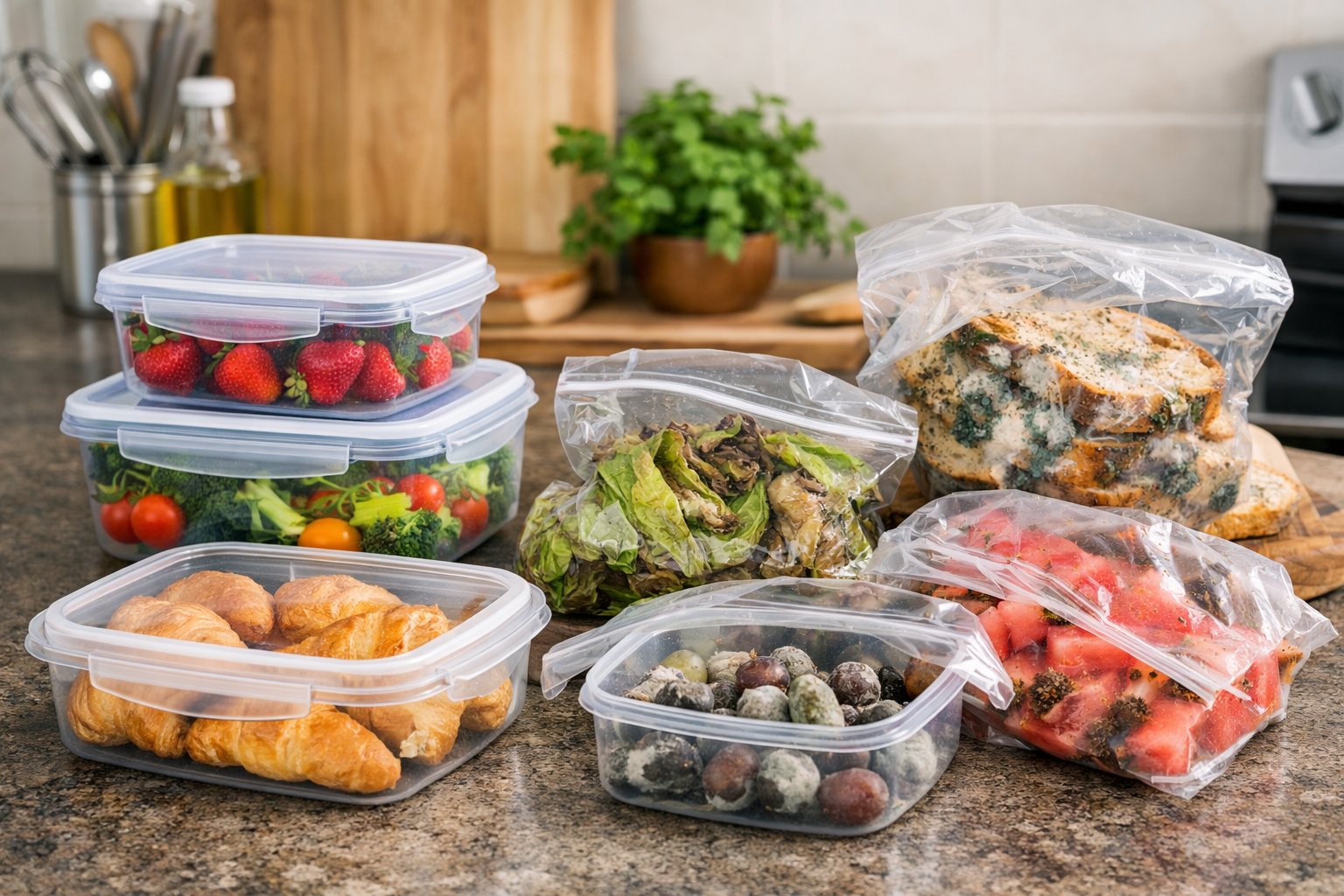
Mold spores float everywhere, just waiting for a chance to settle. Unsealed food gives them everything they need—moisture, nutrients, oxygen. Fuzzy growth on bread, cheese, or produce pops up within days if storage isn’t right.
Some molds make mycotoxins, which can trigger allergies or even more serious health issues. Cutting off the visible mold isn’t enough—roots grow deep into soft foods.
Mold brings off-flavors and musty smells that can spread to other foods. If your fridge smells musty, check for an unsealed container hosting a mold party. Spores spread quickly and can ruin stuff you thought was safe.
For hard cheeses and firm veggies, you can sometimes cut away moldy spots with a generous margin, but honestly, it’s better to prevent mold in the first place.
Spoilage Signs and Shelf Life Shocks
When food isn’t sealed tight, it goes downhill faster than we expect. The signs? Visible damage, weird smells, and expiration dates that suddenly don’t mean much.
How Food Spoils When Not Sealed
Unsealed food faces three big threats: oxygen, moisture, and microbes. Oxygen breaks down fats and vitamins, turning oils rancid and making stuff brown.
Just look at cut fruit that darkens in hours or chips that go stale overnight. The oxygen that keeps us alive also speeds up food spoilage by feeding bacteria, yeast, and mold.
Moisture swings cause chaos, too. Crackers and cereal soak up humidity and lose their crunch. Produce dries out and shrivels.
Without a sealed barrier, airborne microbes land on food and start multiplying fast. That’s where slime on deli meats, fuzz on bread, and sour dairy smells come from. Even perfect temperature control can’t save food if the packaging lets the environment in.
Freezer Burn and Weird Smells
Freezer burn looks like gray-brown leathery spots on frozen food. It’s not a burn, just air exposure drying out the surface. Ice crystals form inside bad containers and draw water out of the food.
Those funky freezer smells? Foods soak up each other’s odors. Unsealed fish can make your ice cream taste like the ocean. Onions share their scent with butter.
Freezer burn signs:
- Discolored patches on meat
- Ice crystals on veggies
- Dried, tough texture after thawing
- Stale, cardboard-like flavors
These issues don’t always make food unsafe, but they wreck the quality. Good seals keep air out and shelf life up.
Spotting Use-By Date Pitfalls
Use-by dates show when food’s at its best, not when it’s unsafe. The catch? They only count if the packaging stays sealed. Once you open something, the clock resets.
Unopened yogurt might last till its date, but once you break the seal, you’ve got maybe 3-5 days—no matter what the label says.
Date label reality check:
- Dates assume sealed, unopened storage
- Opened foods need a new timeline
- Resealing properly can buy you extra days
- Trust your senses over the printed date
If you see mold, smell something sour, or notice sliminess, toss it. The date stamped on the carton doesn’t matter if your milk smells off or your bread is sprouting fuzz.
Temperature Matters: Keeping Food Out of the Danger Zone
When food isn’t sealed right, temperature control gets even more important because exposed food hits unsafe temps faster. Bacteria multiply like mad between 40°F and 140°F, and bad seals let warm air in or cold air out.
Importance of Temperature Control
Temperature control is our first defense against foodborne illness. When food hangs out in the wrong range, bacteria like E. coli, Salmonella, and Campylobacter can double every 20 minutes.
Sealing and temperature go hand in hand. An unsealed container in the fridge lets warm air reach the food, and hot food that isn’t sealed cools too slowly. Never leave perishable food at room temp for more than two hours—or one hour if it’s hot out.
The risks are real. Unsealed, poorly stored food is a breeding ground for the stuff that makes us sick.
The Danger Zone Explained
The danger zone is 40°F to 140°F. Below 40°F, bacteria slow down. Above 140°F, most of them die.
We need to keep cold foods at or below 40°F, hot foods at or above 140°F. With bad seals, keeping these temps is tough. An open container in the fridge lets temps swing, and exposed hot food cools off dangerously fast.
Safe Temperature Guidelines:
- Cold storage: 40°F or below
- Freezer storage: 0°F or below (ideally -18°C)
- Hot holding: 140°F or above
- Reheating: 165°F minimum
Refrigeration and Freezing Fails
Refrigeration only works if we seal food properly and keep the fridge cold enough. I always recommend using a refrigerator thermometer—sometimes those built-in dials are just wishful thinking. Aim for 40°F or below. If we leave containers unsealed, moisture escapes, and odors wander from one food to another. That’s how your butter ends up tasting like onions.
Freezing at 0°F (-18°C) completely halts bacterial growth, but only if we seal food tightly. If not, freezer burn sets in fast. You’ve seen those icy, shriveled patches on forgotten leftovers? That’s the result of exposed food—ice crystals rip up the structure, so when you thaw it, everything turns mushy.
Leftovers should go into shallow, sealed containers within two hours of cooking. It’s tempting to just toss a pot in the fridge, but deep containers with loose lids keep food warm too long, and that’s prime time for bacteria.
Storage Methods: From Airtight to Vacuum Sealing
Different sealing methods offer different levels of defense against oxygen, moisture, and contaminants. Knowing how airtight containers and vacuum sealing systems work helps us pick what’s best for each food.
Why Airtight Containers Matter
Airtight containers put a barrier between food and the outside world. When we snap these shut properly, they stop air from sneaking in and limit moisture loss.
Why does this matter? Oxygen exposure kicks off oxidation, which turns fats rancid and makes fruit brown. Airtight containers slow this process by keeping the air around food stable. They’re especially great for pantry staples—think flour, sugar, coffee beans.
Seal quality varies a lot. Glass containers with silicone gaskets usually protect better than thin plastic tubs with snap-on lids. I look for containers that give a satisfying “pop” when opened—it’s a small thing, but it means the seal held.
In the fridge, airtight containers help keep textures right and block odors. Leftover soup won’t make strawberries taste garlicky, and cheese stays moist instead of turning into a brick.
Vacuum Sealing for Maximum Freshness
Vacuum sealing pulls out nearly all the oxygen before sealing the bag tight. A vacuum sealer sucks the air out of special bags and heat-seals them shut in one go.
By removing oxygen, you hit all three main spoilage triggers at once. Bacteria slow down, oxidation nearly stops, and moisture stays put—no more freezer burn.
You really notice the difference with meat. Fresh meat that usually lasts 2-3 days in the fridge can stretch to 1-2 weeks when vacuum sealed. In the freezer, vacuum-sealed cuts stay good for 2-3 years, compared to maybe 6 months in regular packaging.
Vacuum Seal Bag Construction
Multi-layer vacuum bags resist punctures better than standard plastic and keep oxygen from leaking in over time. They can handle freezing and even sous vide cooking.
Pairing vacuum sealing with proper refrigeration or freezing slows spoilage to a crawl.
Choosing the Right Storage Solution
The “best” storage method depends on how long you want to keep food and what it is. For short-term storage and dry goods, good airtight containers usually do the trick.
If you meal prep or buy in bulk, vacuum sealing can be a game changer. You can portion proteins, prep ingredients, and stash produce for months. Sure, a vacuum sealer costs up front, but you’ll save money by wasting less and shopping smarter.
Delicate foods—soft cheeses, baked goods—need gentle treatment. Airtight containers prevent crushing but still limit air. Hard cheeses and cured meats do much better with vacuum sealing since they’re prone to mold.
Space matters too. Vacuum-sealed bags stack up neatly and fit into freezer nooks better than stiff containers.
Best Practices for Safe and High-Quality Food Storage
Temperature control, organization, and separating different foods are the foundation of good storage. When we stick to these, we protect both food quality and everyone’s health.
Food Storage Guidelines for Every Kitchen
Keep refrigerators at 41°F or below and freezers at 0°F or colder. These aren’t just suggestions—they’re the line between safe and sketchy.
Essential temperature zones:
- Cold storage: 38°F to 41°F for perishables
- Freezer: 0°F or colder for long-term storage
- Dry storage: 50°F to 70°F with 50-60% humidity
Check temps at least twice a day. Put your thermometer in the warmest spot—usually the door. Don’t overload the fridge; if it’s stuffed, cold air can’t circulate, and warm spots crop up. I try to keep it at 70-80% full.
Use food-grade containers with tight lids. Label everything with what it is, when you made it, and when to use it by. This habit alone can slash waste and stop you from serving expired food.
Store containers at least 6 inches off the floor and 2 inches from walls. That way, air can move, cleaning’s easier, and pests have fewer hiding spots.
Sorting Raw and Cooked Foods Right
Put raw meat on the bottom shelf, always in leak-proof containers. This stops one of the most common kitchen accidents—raw juices dripping onto food that’s ready to eat.
Top-to-bottom refrigerator organization:
| Shelf Position | What to Store | Why |
|---|---|---|
| Top shelf | Ready-to-eat foods, leftovers | No raw food drips from above |
| Second shelf | Raw seafood | Lower cooking temp than meat |
| Third shelf | Whole beef and pork cuts | Separated from ground products |
| Fourth shelf | Ground meats and fish | Higher cooking temp required |
| Bottom shelf | All poultry | Highest cooking temp, prevents drips |
Never put raw meat above cooked or ready-to-eat food. Even a single drop from raw chicken can ruin a whole dish.
Raw and cooked foods have different timelines. Use raw ground meat within 1-2 days, whole cuts in 3-5. Cooked foods are safe for up to 7 days if cooled and stored right, but honestly, I aim for 3-4 days for best taste.
Preventing Foodborne Illness with Smart Storage
Cool hot foods quickly before refrigerating. Food has to drop from 135°F to 70°F in 2 hours, then hit 41°F within another 4 hours. Use shallow containers (2-3 inches deep) or ice baths to help. Don’t just shove a hot pot into the fridge—it’ll warm everything else up.
Don’t thaw food on the counter. Thaw in the fridge (safest), under cold running water (cook right after), or in the microwave (again, cook right away). Planning ahead for fridge thawing saves a lot of stress.
Critical practices to prevent foodborne illness:
- Never refreeze thawed food unless you cook it first
- Wash hands before and after handling raw foods
- Use separate cutting boards for raw meats and produce
- Keep fridge doors closed as much as possible
- Toss any food that smells weird or looks off
Check your storage areas daily for pests, equipment problems, or temperature swings. These quick checks can save you from a big headache—or worse.
Unique Challenges: Fermentation and Long-Term Storage
Fermented foods need just the right amount of air and the right microbes, so sealing gets tricky. Unlike most preserved foods, fermentation depends on living organisms that need careful handling during both the active process and storage.
The Role of Fermentation
Fermentation transforms food using good microbes that create acids, enzymes, and other compounds. This process naturally extends shelf life by making the environment too acidic for bad bacteria. Think kimchi, sauerkraut, yogurt.
These microbes need oxygen at certain stages. During active fermentation, gases build up and need to escape—otherwise, the container could burst. Many fermented veggies need anaerobic (no oxygen) conditions so the right bacteria thrive.
Temperature is huge here. Fermentation usually happens at room temp, but once you refrigerate the finished product, things slow down a lot. Cooling doesn’t stop fermentation, but it keeps the flavors and texture where you want them.
Key fermentation factors:
- Living bacterial cultures (mainly lactic acid bacteria)
- pH drops as acids develop
- Salt controls which microbes grow
- Time shapes flavor
How Sealing Affects Preservation
If you don’t seal fermentation containers right, you can let in bad bacteria or mold, or let the good microbes escape. We need containers that let gases out during the active phase but keep contaminants away.
After fermentation, tight sealing is critical. Oxygen at this point can cause spoilage, weird flavors, and mold. The acidic environment only works if you keep new microbes out.
Container choice really matters. Glass jars with airlocks let carbon dioxide out but block oxygen. Once fermentation is done, regular sealed containers work, but you have to refrigerate them to slow things down.
Partial sealing during storage causes dehydration, oxidation, and contamination. Even tiny gaps let mold spores reach the brine, and that’s all it takes to ruin a whole batch.
Frequently Asked Questions
Food that isn’t sealed right spoils faster, loses nutrients, and can even become unsafe. Temperature, how well you seal it, and how long it sits all play a part in whether it’s safe to eat.
How does improper sealing affect the shelf life of ready-to-eat foods?
Ready-to-eat foods go downhill fast with a bad seal. Moisture escapes, textures change, and bacteria find their way in—even through tiny gaps.
Deli meats and salads dry out at the edges and get slimy within a day or two instead of lasting 3-5 days. The lost moisture creates a perfect surface for bacteria.
Cooked rice and pasta turn hard and crusty in the fridge if exposed to air. They also soak up nearby odors. A good seal keeps them moist and prevents cross-contamination.
Cheese takes a hit, too. Hard cheeses dry out and crumble, while soft cheeses can mold within days. Who hasn’t opened a bag of shredded cheese to find it clumpy or smelling off?
What are the risks of consuming improperly sealed canned goods?
Improperly sealed canned goods can contain dangerous bacteria like Clostridium botulinum—the one behind botulism. This is nothing to mess with; botulism can be fatal.
Watch for bulging lids, leaking liquid, or a hiss when you open the can. If you see any of these, toss it. Dented cans are risky too, especially if the dent is on a seam or caused a puncture.
Commercial cans get processed at high temps to kill bacteria and form a vacuum seal. If that seal breaks, air gets in and bacteria can grow. Even if it looks okay, toxins might be there.
Home-canned foods are even riskier if you don’t follow proper canning steps. Low-acid foods—veggies, meat, beans—need pressure canning. Boiling water isn’t hot enough to kill botulism spores in those.
Can you give examples of how shelf-stable food quality might be compromised?
Shelf-stable foods depend on packaging to stay fresh. When seals fail, quality drops—sometimes fast.
Crackers and chips lose their crunch almost immediately if exposed to humid air. They soak up moisture and go stale or chewy. I’ve reached into a box of crackers only to find them soft and disappointing.
Dried fruits can get rock-hard or, in humid conditions, sticky and moldy—pretty ironic for something called “dried.”
Coffee grounds and beans lose their aroma and flavor to oxidation. Ground coffee especially goes flat within days if exposed to air. That fresh-roasted smell just vanishes.
Spices and dried herbs fade away if the container doesn’t seal. The essential oils evaporate, and you’re left with colored dust that doesn’t add much to your food.
What are the consequences of not following USDA guidelines for food storage?
USDA guidelines are there to keep food safe and prevent illness. Ignoring them is basically gambling with bacteria that multiply fast in the danger zone (40°F–140°F).
Leaving perishable food out for over two hours (or just one hour above 90°F) lets bacteria double every 20 minutes. That leftover chicken sitting on the counter can be risky before you’re done cleaning up.
Storing raw meat on upper shelves risks cross-contamination. If juices drip onto ready-to-eat foods below, you’re spreading bacteria like Salmonella and E. coli. Always keep raw meat on the bottom, sealed up.
Thawing frozen food on the counter is another big mistake. The outside warms up while the inside is still frozen—perfect for bacteria. Thaw in the fridge, in cold water, or the microwave to keep things safe.
Not using leftovers within 3-4 days means bacteria can build up even in the fridge. Cold slows growth, but doesn’t stop it. After that, it’s safer to toss it than risk getting sick.
What's the lowdown on maintaining food safety after opening canned goods?
Once you pop open a can, the food inside suddenly needs refrigeration. That sterile barrier is gone, and bacteria from the air can start creeping in.
Move the food into a clean, sealed container before sticking it in the fridge. Leaving it in the can can mess with the flavor—sometimes you get that weird metallic tang—and it can make stuff spoil faster, especially if you’re dealing with acidic things like tomatoes or fruit. Glass or plastic containers with tight-fitting lids are your best bet.
Most opened canned foods—think veggies, beans, soups, or sauces—hold up for about 3 to 4 days in the fridge. Seafood and fish, though? They’re fussier. Try to use those within a day or two, tops.
Jotting down the date on the container helps a ton. Who actually remembers when they opened that can of beans? A quick scribble with a marker saves you from sniff tests and guessing games later.
Tomato products like sauce or paste can sometimes last up to a week if you’ve sealed them well, but always peek for mold around the lid or on top before using. If you spot any, just toss the whole thing—better safe than sorry.
How does ambient temperature impact the quality of stored canned food?
Heat really messes with canned food, even if the cans are sealed tight. If you keep cans above 70°F, chemical reactions start working faster—breaking down nutrients, messing with the flavor, and changing the texture in ways you probably won’t like.
Once temps climb past 75°F, you’ll notice canned goods lose quality a lot quicker. If you store food at 85°F or higher, it can lose about half its nutritional value in just a year, compared to food kept at a cooler 65°F. Vitamins A and C, in particular, don’t hold up well when things get too warm.
Share:
How to Keep Marinated Ingredients Fresh Without Over-Soaking
A Guide to Separating Ready-to-Cook and Ready-to-Eat Ingredients