

Check out our latest home & kitchen collection!
Kitchen storage systems can either make your life easier or turn into another chore on your to-do list. The difference comes down to how much effort it takes to keep them organized after you install them. Some systems stay neat with almost no work, while others fall apart the moment you put away groceries.
The easiest kitchen storage systems to maintain share three key features: they bring items into view instead of hiding them, they have dedicated spots for specific things, and they require minimal bending or reaching to use.
When we can see what we have and grab it without effort, we're much more likely to put it back where it belongs. Systems that fight against our natural habits create frustration and clutter.
Most kitchens waste about 40% of their available cabinet space through poor organization. But the good news is that you don't need to gut your kitchen or spend thousands of dollars to fix it. Small changes like pull-out shelves, drawer dividers, and corner solutions can transform how your kitchen works without major construction.
Key Takeaways
- Storage systems that bring items into view and within reach require less effort to maintain than deep cabinets with fixed shelves
- Dedicated spaces for specific items like spices, pots, and small appliances prevent clutter from building up over time
- Simple upgrades like drawer dividers and pull-out shelves create more usable space without expensive renovations
Key Factors That Make Kitchen Storage Easy to Maintain
The best kitchen storage systems share common features that make them simple to keep clean and organized. These include easy access to items, flexibility to change as your needs evolve, logical organization zones, and materials that stand up to daily use.
Accessibility and Ease of Use
We can't maintain what we can't reach. Pull-out shelves and drawers are game-changers because they bring everything forward instead of making us dig around in dark corners. When items are visible and within reach, we're more likely to put them back where they belong.
Deep cabinets without pull-out systems become black holes where food expires and dishes go missing. Accessibility also means choosing storage at the right height. Everyday items should sit between waist and eye level, while rarely used appliances can go higher or lower.
Easy-to-use storage systems encourage good habits. If putting away a pot requires removing three other items first, we'll probably leave it on the counter instead.
Adjustability and Customization
Kitchen needs change constantly. Adjustable shelving lets us reconfigure storage spaces without calling a contractor or buying new cabinets. We might need room for a new stand mixer one month and extra space for bulk groceries the next.
Adjustable shelves typically move in one-inch increments, which gives us precise control over vertical space. This flexibility prevents wasted gaps above items and maximizes every cubic inch. We also appreciate drawer dividers that move and expand to fit different utensil sizes.
Modern kitchen storage often includes modular components like removable bins and stackable containers. These pieces work together but can be rearranged when our cooking habits shift. Fixed storage might look neat initially, but it rarely adapts well to real life.
Smart Zoning and Organization
We maintain storage systems better when each storage zone has a clear purpose. Grouping similar items together makes sense for our brains and our routines. Baking supplies near the mixing area, spices by the stove, and snacks in one designated spot all contribute to kitchen organization that sticks.
A proper storage zone system means we always know where things go. When everything has a home, cleanup becomes automatic rather than a decision-making process. We assign zones based on how often we use items and what tasks require them.
This approach also reveals what we actually need versus what just takes up space. Clear zones make it obvious when we have three garlic presses or expired cans hiding behind newer purchases.
Durability and Material Choices
Flimsy storage systems create maintenance headaches. We need materials that handle daily opening, closing, and the occasional slam without breaking down. Solid wood, metal drawer glides, and quality hardware cost more upfront but require less replacement and repair.
Easy-to-clean surfaces matter just as much as structural strength. Smooth finishes on shelves wipe clean quickly, while textured or porous materials trap crumbs and spills. Metal and coated wire resist moisture better than particle board in areas near sinks or dishwashers.
The best materials balance durability with weight. Heavy glass shelves look elegant but make adjustments difficult. Lightweight but sturdy options like bamboo or coated metal give us flexibility without sacrificing strength.
Optimizing Drawers for Effortless Maintenance
Well-organized drawers stay tidy longer because they have built-in systems that prevent clutter from taking over. The right combination of dividers, depth, and accessibility features means we spend less time reorganizing and more time cooking.
Custom and Adjustable Drawer Dividers
Adjustable drawer dividers give us flexibility that fixed organizers can't match. When we can move dividers to fit our exact utensils and tools, we're not stuck with awkward gaps where junk accumulates. I've found that adjustable systems let us adapt our storage as our needs change, whether we add new gadgets or pare down our collection.
Drawer dividers work best when they actually stay in place. Look for versions with non-slip bases or tension-fit designs that won't slide around every time we open the drawer. The ones with small adjustments (even half-inch increments) give us better control over compartment sizes.
We can use these dividers to create specific zones for different item types. Cooking utensils go in one section, measuring tools in another, and sharp items in their own protected space. This separation makes it easier to put things back where they belong after washing.
Deep Drawer Designs
Deep drawers seem great until we realize everything piles on top of each other. The solution is using vertical space smartly with stacked organizers or tiered trays. These let us see items at different levels without digging through layers.
We can store pots and pans in deep drawers when we add adjustable pegs or dividers that keep lids separate from bases. This prevents the annoying crash when we pull out one pan and three lids come with it.
Deep drawers also work well for storing small appliances or bulk items when we add pull-out inserts. The key is making sure we can access the bottom without removing everything on top.
Tiered and Pull-Out Solutions
Pull-out shelves and trays turn hard-to-reach cabinet spaces into accessible storage. We don't have to crouch down and feel around in the back anymore. Everything rolls forward with one motion.
Tiered organizers work particularly well for spices, canned goods, or baking supplies. Each level sits slightly higher than the one in front, so we can read labels without moving items around. This visibility means we actually use what we have instead of buying duplicates.
Installing pull-out solutions does require some upfront effort, but the maintenance payoff is worth it. We're more likely to keep drawers organized when accessing them doesn't require contortion or frustration.
Maximizing Cabinet Space the Easy Way
Smart storage solutions help us access items quickly and keep cabinets organized with minimal effort. Pull-out systems bring items to us instead of making us dig around, vertical organizers use height we often waste, and door-mounted storage creates space where none existed before.
Pull-Out and Sliding Shelves
Pull-out shelves solve the problem of items getting lost in deep cabinets. We can see everything at once without kneeling down or moving other items out of the way. These shelves typically mount on metal glides that let us pull the entire shelf forward with one hand.
Deep base cabinets work best with pull-out pantry shelves since they can reach 20-24 inches deep. We can store canned goods, boxed items, or small appliances on these and access them easily. The hardware takes up about 4-6 inches of interior space, though newer 2025 models use slimmer profiles.
Corner cabinets benefit most from pull-out corner systems. These specialized units swing out or pull forward to reveal items that would normally sit in hard-to-reach spots. Some include multiple tiers that rotate or slide independently.
We should place pull-out shelves near areas where we use those items most. A pull-out pantry near the stove keeps cooking oils and spices within reach. Pull-out trash bins belong near the prep area.
Vertical Storage Solutions
Most cabinets have 6-12 inches of unused vertical space above stacked items. We can add stackable shelf inserts to create a second level for plates, bowls, or mugs. These simple platforms double our storage without any installation.
Wall cabinets that reach the ceiling give us space for items we use less often. We can store seasonal appliances, extra serving platters, or bulk paper goods on the top shelves. This beats leaving that space empty or building up dust.
Vertical dividers help us store baking sheets, cutting boards, and trays on their sides instead of stacking them flat. We can grab what we need without lifting everything on top. These dividers either install permanently or sit loose inside the cabinet.
Utilizing Cabinet Door Space
The inside of cabinet doors offers storage space that requires zero counter or shelf area. Over-the-door organizers hook over the top edge of doors and hold spices, measuring cups, cleaning supplies, or plastic wrap.
We can mount small racks or wire baskets directly to door interiors with screws. These work well for pot lids, aluminum foil boxes, or kitchen towels. The items stay visible and easy to grab.
Command hooks or adhesive strips let us hang lightweight items like oven mitts or small utensils without drilling holes. We should check weight limits since cabinet doors aren't as sturdy as walls.
Most cabinet organizers for doors work best on full-height doors rather than drawers. We need to make sure added items don't hit shelves when we close the door.
Making the Most of Corners and Awkward Spaces
Corner spaces create maintenance headaches when items get lost in the back, forcing us to empty entire cabinets just to find one pot. Smart corner storage turns these problem areas into accessible spots that actually stay organized.
Lazy Susan and Rotating Systems
A lazy susan turntable solves the biggest corner cabinet problem: reaching items without crawling inside. We spin the shelf and everything comes to us instead of disappearing into the back corner.
Full-circle lazy susans work best in cabinets with at least 33 inches of depth. They rotate 360 degrees and hold heavy items like appliances and mixing bowls. Half-moon or kidney-shaped models fit tighter spaces where doors limit rotation.
Modern lazy susan systems include:
- Adjustable shelves that accommodate tall bottles or short spice jars
- Raised edges that prevent items from sliding off during rotation
- Soft-close mechanisms that stop the constant spinning and banging
We maintain these systems by wiping down the turntable surface monthly and checking that the rotation stays smooth. If the lazy susan wobbles or sticks, tightening the center post usually fixes it. The key advantage is that every item stays visible and within reach without removing anything else first.
Corner Cabinets and Magic Corner Solutions
Magic corner systems pull stored items directly out of the cabinet using attached shelves that swing forward with the door. These corner cabinet solutions cost more than basic lazy susans but eliminate the need to reach into dark corners entirely.
Swing-out shelving uses pivoting arms that bring two or three shelves out at once. We can load them with pots, pans, small appliances, or dry goods. Pull-out corner drawers extend fully like regular drawers but fit into angled corner spaces.
Diagonal corner cabinets cut across the corner at 45 degrees, creating deeper storage that's easier to access than traditional 90-degree corners. Adding pull-out trays inside these cabinets prevents items from getting stuck in the back.
The maintenance trade-off is simple: more moving parts mean more cleaning points. We wipe down tracks and hinges every few months to prevent dust buildup that slows the mechanisms. Still, spending five minutes on maintenance beats digging through a messy corner cabinet every time we need something.
Clever Open and Wall-Mounted Storage Ideas
Wall-mounted and open storage systems are easier to maintain because everything stays visible and accessible. When items aren't buried in deep cabinets, we can quickly spot spills, dust buildup, or expired ingredients before they become bigger problems.
Open Shelving and Floating Shelves
Open shelving puts everything on display, which means we're more likely to keep it clean and organized. There's no hiding a dusty plate or cluttered corner when it's right out in the open for everyone to see.
Floating shelves work especially well in small kitchens where bulky cabinets make the space feel cramped. We can install them in different heights to fit our storage needs. Wood shelves add warmth to the kitchen, while metal brackets create a modern look.
The maintenance advantage is simple: a quick wipe-down with a damp cloth keeps everything clean. We don't need to open and close cabinet doors, which means fewer fingerprints and less wear on hardware. Just remember to style them with a mix of everyday items and a few decorative pieces. Stack plates and bowls where we can easily reach them, and add a plant or two to soften the look.
Mounted Pot Racks and Hooks
Wall-mounted pot racks free up cabinet space while keeping cookware within arm's reach. Hanging pots and pans on the wall means we can grab what we need without digging through stacked cookware.
These systems are easy to clean because nothing sits in dark corners collecting grease. We can wipe down the rack and hanging items in seconds. Under-cabinet hooks work great for smaller kitchens where floor-to-ceiling racks won't fit.
Rail systems with S-hooks let us rearrange tools as our cooking habits change. We can hang measuring cups, kitchen towels, or even cutting boards. The key is keeping only the items we actually use on display. Stainless steel racks resist rust and handle frequent cleaning better than painted options.
Magnetic Strips and Wall Racks
Magnetic knife strips keep sharp blades safe and visible while taking up almost no space. We can mount them on the backsplash, side of the fridge, or inside pantry doors. They're safer than knife blocks because we can see each blade clearly.
Magnetic spice jars stick to metal surfaces and make it easy to find what we need while cooking. We can arrange them alphabetically or by how often we use them. The clear containers let us see when supplies run low.
Wall racks with magnetic hooks hold light utensils, oven mitts, or measuring spoons. These systems adapt to our needs because we can move the magnets around anytime. Cleaning is straightforward since there are no grooves or hard-to-reach spots where food particles hide.
Pantry and Small Item Organization to Make Life Easier
Smart pantry systems keep ingredients visible and accessible while stackable organizers, spice racks, and rolling carts prevent clutter from taking over limited space.
Pull-Out Pantry and Stackable Organizers
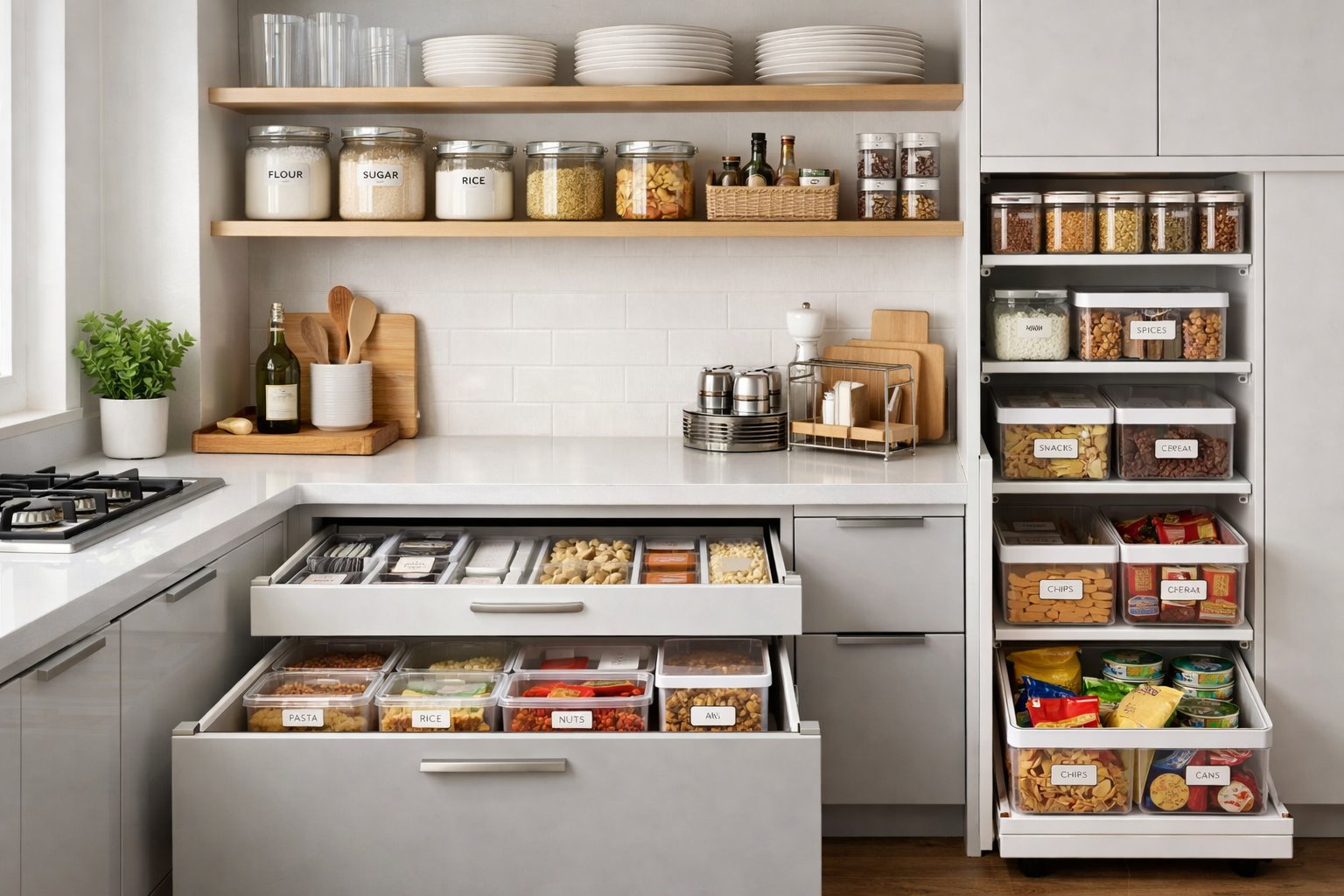
Pull-out pantry systems work like drawers that let us see everything from front to back without digging through layers of forgotten cans. These sliding bins fit into narrow spaces between appliances or inside existing cabinets, and they're especially useful for storing oils, spices, and snack items that usually get pushed to the back.
Stackable organizers maximize vertical space on pantry shelves. Clear stackable bins let us group similar items together—breakfast foods in one, baking supplies in another—while keeping everything visible at a glance. We can also use stackable can organizers that hold cans on their sides, making it easy to grab one without causing an avalanche.
The key to maintaining these systems is choosing bins that fit our shelves exactly. Measure shelf depth before buying anything. Bins with handles make pulling items out much easier, especially on higher shelves. We should store everyday items at eye level and less-used ingredients up top or down low.
Spice Racks and Specialty Storage
A good spice rack transforms how we cook by putting every seasoning within easy reach. We can mount tiered spice racks inside cabinet doors to save counter space, or use drawer inserts that lay spices flat so we can read every label. Wall-mounted magnetic strips work great for storing spices in small metal tins.
Store spices away from heat and direct sunlight to keep them fresh longer. Label the tops of jars if we're storing them in drawers, or label the fronts for shelf storage. Group spices by use—baking spices together, everyday seasonings nearby, and specialty items somewhere less prominent.
Lazy Susans are perfect for oils, vinegars, and condiments. A quick spin brings everything into view without moving multiple bottles around. We can also use small bins or baskets to corral packets, seasoning mixes, and other tiny items that create visual clutter.
Over-the-Door and Rolling Cart Solutions
Over-the-door organizers turn wasted space into practical storage. Wire racks that hang on pantry doors hold snacks, boxed goods, or cleaning supplies. Shallow door-mounted shelves work perfectly for spice storage since bottles don't need much depth. These organizers install without tools and move easily if we rearrange our kitchen.
Rolling carts give us portable storage that moves where we need it. We can load a cart with baking supplies and roll it next to the counter when making cookies, then tuck it back into the pantry afterward. Three-tier rolling carts fit into narrow gaps between appliances or next to the refrigerator.
Put small appliances or heavy storage bins on rolling plant stands so we can slide them out without lifting. This works especially well in floor-level pantry spaces where bending down repeatedly gets old fast.
Frequently Asked Questions
Keeping kitchen storage systems running smoothly comes down to practical choices and simple habits. Here are answers to common questions about maintaining organized, efficient kitchen spaces.
What's the secret to keeping those kitchen storage containers spotless?
We wash our storage containers right after emptying them, which prevents stains and odors from setting in. Hot soapy water works for most containers, but we toss dishwasher-safe ones in the machine for easier cleanup.
For stubborn stains or smells, we soak containers in a mixture of baking soda and warm water for about 15 minutes. This simple trick lifts most residue without harsh scrubbing.
We also make sure containers are completely dry before putting lids back on or storing them away. Moisture trapped inside leads to mildew and funky smells that nobody wants near their food.
Spill the beans: how can I organize my pantry for hassle-free access?
We group similar items together in clear containers or bins so we can see what we have at a glance. Pasta with pasta, snacks with snacks, baking supplies in one spot.
We put the stuff we use most often at eye level and within easy reach. Less frequently used items go on higher or lower shelves where they're still accessible but not taking up prime real estate.
Labels are our best friends here. We label shelves and containers so everyone in the household knows where things belong and can put them back in the right spot.
Got any clever tips for maximizing space in a tiny kitchen?
We use vertical space by adding hooks under cabinets for mugs and hanging racks on walls for utensils. Going up instead of out makes a huge difference in small kitchens.
Stackable containers and tiered shelf organizers help us fit more into existing cabinets without creating chaos. We can actually see what's in the back without pulling everything out.
We installed a pegboard on one wall for pots, pans, and cooking tools. It keeps these bulky items accessible without eating up cabinet space, plus we can rearrange the hooks whenever our needs change.
How often should I be rethinking my kitchen organization strategy?
We do a quick reorganization every 3 to 6 months to keep things running smoothly. This schedule lets us catch clutter before it gets out of hand and adjust systems that aren't working.
Seasonal changes are a good time to reassess what we're storing and where. We swap out holiday baking supplies for summer grilling gear and move items based on what we're actually cooking.
If we find ourselves constantly frustrated by a particular storage spot, we fix it right away instead of waiting for the next scheduled cleanup. No point in suffering through a bad system for months.
Is it really worth investing in custom cabinetry for ease of maintenance?
Custom cabinetry can absolutely make maintenance easier if it's designed around your specific needs and habits. Pull-out drawers and organizers reduce bending and digging, which means we're more likely to keep things tidy.
The investment makes sense when standard cabinets leave awkward spaces or don't match how we actually use our kitchen. Custom solutions eliminate those frustrating gaps where items get lost and forgotten.
That said, we can achieve similar results with modular inserts and DIY organizers at a fraction of the cost. Start with affordable additions before committing to a full custom build.
What's the best way to avoid a Tupperware avalanche in my kitchen cupboards?
We store containers with their lids already attached when possible, or we dedicate one small bin just for lids. This prevents the dreaded lid hunt and keeps everything paired up.
We limit ourselves to a reasonable number of containers that actually fit in our designated space. Fewer containers means less chaos and we're more likely to keep them organized.
Stacking containers by size in nested sets saves tons of space and prevents toppling towers. We keep only the sizes we regularly use and donate or recycle the rest.
Share:
Why Kitchens Feel Cluttered Even With Enough Space
Why Kitchens Feel Cluttered Even With Enough Space