

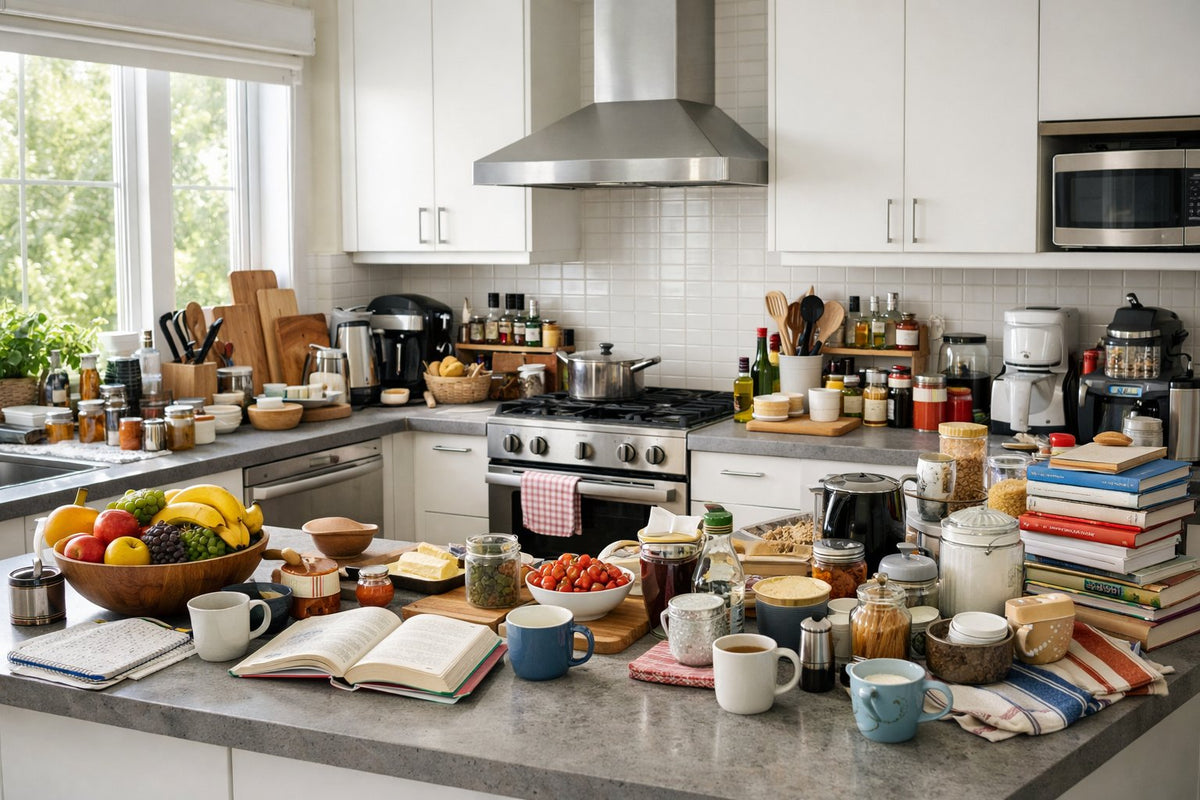
You've probably stood in your kitchen and wondered why it feels so cramped and chaotic, even though you've got plenty of cabinets, drawers, and counter space. The problem usually isn't the size of your kitchen or even how much stuff you own.
Kitchen clutter happens because of poor storage planning, awkward layouts, mismatched items everywhere, and those everyday habits that leave things scattered instead of put away.
We've all been there, open a cabinet, and stuff practically leaps out at you, or you can't find an inch of countertop that isn't covered in appliances you barely use. The upside? You don't need to gut your kitchen or toss out half your cookware to make things better. A few tweaks to how you organize and store things can make a huge difference in how calm and functional your kitchen feels.
Getting real about what's actually causing the clutter helps you fix the right things instead of just shuffling piles around. Let's dig into the reasons your kitchen feels messy and some fixes that genuinely work.
Key Takeaways
- Most kitchen clutter comes from bad storage systems and layouts, not just owning too much
- Visual chaos—think mismatched containers and crowded counters—makes spaces feel messier than they are
- Simple tricks like drawer dividers, vertical storage, and clearing surfaces can totally change how your kitchen works
What Makes Kitchens Feel Cluttered Despite Ample Space
The issue isn't really about square footage—it's about how we use it. So many cluttered kitchens suffer from visual disorder, avoidable storage mistakes, and that classic mismatch between what we need and what we think we need.
Visual Clutter vs. Physical Clutter
Physical clutter is when we've just got too much jammed into our cabinets and drawers. Visual clutter, though, is what hits you the second you walk in—the space looks chaotic, even if it technically isn't.
Countertops loaded with small appliances create visual noise, even in big kitchens. A coffee maker, toaster, air fryer, blender, and stand mixer, all out at once? It's a lot for your brain to process. Open shelves showing off random mugs, mismatched containers, and scattered spices only add to the overwhelm.
We tend to underestimate how much this "visual weight" affects us. Even a large kitchen feels tight if every appliance is on display. The pantry door covered in sticky notes, a fridge plastered with magnets and papers, overflowing dish racks—none of these have anything to do with storage capacity, but they all make things feel off.
Common Mistakes That Lead to Clutter
A big one: storing things based on where they fit, not where you actually use them. That turkey roaster you use once a year gets the prime cabinet spot, while your daily blender is shoved in the back. It's backwards, right?
Bulk shopping can make it worse. Those "great deals" on canned goods and BOGO snacks seem smart until you've got three bottles of soy sauce and a shelf full of expired chickpeas. Not to mention the broken or duplicate items—scratched pans, an old coffee grinder you replaced, a dozen water bottles for three people. They just eat up space. We also put off regular cleanouts, so the mess snowballs until it feels like a massive project.
Misjudging Storage Needs
We assume more cabinets will solve the problem, but often it just means we keep more stuff. Without clear zones, items wander and disappear.
If we don’t have the right storage tools, cabinets turn into black holes. Stack plates too high, toss pots and pans in random piles, lose measuring cups in deep corners—suddenly, all that storage feels useless.
And we constantly mismatch storage to how often we use things. Everyday snacks end up on top shelves, while serving platters hog the eye-level space. When the stuff you use most is buried, even a big kitchen feels cramped.
Inefficient Kitchen Layouts and Traffic Flow
Even a roomy kitchen can feel tight if the layout creates bottlenecks or makes you zigzag between workstations. How you arrange your appliances and move between them decides whether cooking feels smooth or like a weird obstacle course.
Poor Work Triangle Placement
The work triangle links your fridge, stove, and sink—the three stations you use most. If these are too far apart, you waste time trekking back and forth. Too close? Now you’re bumping into yourself.
Ideally, each leg of the triangle should be 4 to 9 feet. If your fridge is 15 feet from the stove, you’re basically hiking for ingredients. A sink jammed right next to the cooktop leaves you no room for prep or cooling hot pots.
Kitchen islands can mess with this triangle if they’re in the wrong spot. An oversized island might give you storage, but if you’re constantly walking around it just to grab a spoon or drain pasta, it’s not doing you any favors. Clear, direct paths between your main zones are key.
Obstructed Pathways and Entry Points
Extra doorways and those open-concept designs can create traffic jams right through your cooking space. Family members cutting through to other rooms? Suddenly, you can’t get to the stove or sink.
You really want at least 36 inches of walkway, and 42 to 48 inches between counters or an island and the wall. Barstools sticking out into the walkway? Tripping hazard. Appliance doors that swing into your path? Instant blockade.
Corner fridges or dishwashers can trap you when the doors are open. It’s better to keep frequently used appliances away from high-traffic areas and make sure doors open fully without blocking anything else.
Overstocking and Duplication: The Real Space Hogs
We like to blame tiny cabinets for kitchen chaos, but it’s usually just that we’re stuffing them full. Buying too much and keeping duplicates creates storage headaches that no amount of space can fix.
Buying in Bulk Without Planning
Big-box stores tempt us with 24-packs of soup and giant spice jars, but without a plan, bulk buys turn into a storage nightmare. Pantries fill up with canned goods we forget to use, cookies go stale, and backup condiments push daily stuff into the abyss.
Organizers find that people often store two or three times more food than they’ll ever eat. The real issue? Bulk items rarely have a rotation system. We forget what’s buried in the back, buy more at the store, and end up with expired products hogging space.
The fix? Get honest about what you actually use. Count how many cans or boxes you go through in a month and buy just that. If you host a party now and then, make a special shopping trip instead of keeping a permanent mountain of extras.
Hoarding Duplicates and Unused Gadgets
Drawers stuffed with five spatulas, three can openers, and a pile of peelers—but we all reach for the same one. Organizers always pull out duplicate utensils first when decluttering.
Small appliances are even worse. The waffle maker you used once last year, the quesadilla press from your wedding registry, the bread machine collecting dust—they all hog valuable cabinet space. We keep them out of guilt or “maybe someday,” but they just block everyday items.
The six-month rule really helps: if you haven’t used an appliance or extra tool in six months, it’s ready for donation or storage somewhere else. One good version of each tool is enough. Suddenly, drawers work again and you’ve got space for what you actually use.
Chaotic Storage: Why Organization Matters
Smart storage systems can turn cabinet chaos into something that actually works. The right containers, risers, and dividers let you see everything at a glance and grab what you need without digging.
Stackable Containers and Reusable Solutions
Stackable containers make the most of vertical space and keep ingredients visible and fresh. Move pantry staples like flour, rice, and pasta into clear containers and you’ll ditch the bulky packaging that wastes space and looks messy.
Reusable containers also solve the label mess. Instead of staring at a jumble of branded boxes, you get a cohesive system. It’s more important than you’d think—visual clutter is a major stress factor in kitchens.
Just make sure your containers actually stack well. Wobbly towers defeat the point and can cause avalanches. Look for ridged lids or interlocking designs so you’re not chasing rice across the floor.
The Game-Changing Power of Shelf Risers
Shelf risers are a simple way to double your usable cabinet space. Most cabinets have way too much vertical space between shelves, leaving a bunch of empty air above your plates or mugs.
Add a riser and suddenly you can fit twice as much. Works great for dishes, cans, spices, and baking stuff. Plus, everything stays visible—no more forgetting about the paprika hiding in the back.
It’s worth measuring your cabinets before buying risers. You want them tall enough to be useful but not so high that you can’t stack anything on top. Expandable risers are nice since you can adjust them for different cabinet widths.
Drawer Dividers: The Unsung Heroes
Drawer dividers keep utensils and gadgets from turning into a tangled mess. Without them, you end up with a dreaded junk drawer where nothing is findable.
The difference between a functional drawer and chaos is usually just containment. Use dividers or little bins to group like with like—spatulas together, measuring spoons together, scissors in their own spot. Suddenly, you can grab what you need without digging.
Adjustable dividers work best since everyone’s drawers and needs are different. Set them up to fit your actual tools, not some idealized version of what a kitchen “should” look like.
Visual Overload: When Design Adds to the Mess
Sometimes the clutter isn’t about what’s on the counters, but how it all looks. Mismatched containers, too many decorations, and messy open shelves create visual noise—even in an organized kitchen.
Bulky Packaging vs. Food Storage Jars
Original packaging is a major visual clutter culprit. Cereal boxes, chip bags, snack containers—they come in every color and shape, making your shelves look like a jumble sale.
Food storage jars fix this by creating some visual order. Move dry goods into matching glass or ceramic jars and your kitchen instantly looks more put together.
Clear jars are best for stuff you use a lot—flour, sugar, pasta—since you can see what’s inside. Labels help, but sometimes you don’t even need them if the contents are obvious. Square or rectangular jars save more space than round ones, which leave weird gaps.
You don’t need to buy a whole set at once. Start with your most-used items—coffee, oats, rice—and build from there. Swapping out just a few bulky boxes for coordinated jars makes a big difference.
To keep that coordinated look practical, choose matching clear pantry glass jars in sizes that fit your shelves and the ingredients you actually use. Keep labels consistent and front-facing so similar-looking foods are easy to identify. Store the jars in the pantry or on an existing shelf rather than moving everything onto the counter. The goal is less visual clutter, not another display to work around.
Too Many Decor Pieces
We all love a decorated kitchen, but too many little things just add to the chaos. Cutting boards leaning against the backsplash, utensil crocks, fruit bowls, cookbooks, plants, dish towels—it’s a lot.
It’s not that any one item is bad. It’s just the sheer number. When every surface is loaded with stuff, your eyes don’t know where to land.
Pick two or three focal pieces and stash the rest. One beautiful cutting board or a single plant makes more of a statement than a bunch of little things. Rotate decor seasonally if you want to mix it up, but keep it simple for a calmer vibe.
Messy Open Shelving
Open shelving looks amazing in magazines, but in real life? It gets messy fast. Without structure, shelves turn into dumping grounds for random mugs and containers.
Treat open shelves like a curated display, not general storage. Group similar items—white dishes, matching glassware, uniform containers. Leave some space between groups so it doesn’t look crammed.
Only store what looks good and gets used often. That chipped mug or plastic takeout container? Hide it behind closed doors. Save open shelves for the things that add to your kitchen, not the stuff that drags it down.
Bad Habits and Neglected Zones
So many of us create clutter through tiny daily habits that seem harmless. Papers pile up on counters, expired stuff hides in the back of cabinets, and we skip the quick tidy-ups that would save us a headache later.
Letting Paperwork and Junk Drawers Take Over
We all do it—walk into the kitchen with the mail and drop it on the counter. Takeout menus, school forms, and bills pile up until there’s barely any workspace left.
The kitchen counter’s an easy target because it’s right there and always in sight. But all that stuff just turns into background clutter, making the whole room feel busy even if the rest is spotless.
What usually piles up?
- Junk mail and flyers
- Takeout menus, business cards
- Permission slips, school notices
- Receipts, warranty cards
- Pens, rubber bands, random bits
Honestly, the trick is to deal with mail before it even gets inside. Toss the junk right away. Set up a folder or basket for things that need your attention, but stash it somewhere besides the kitchen—maybe in a home office, by the front door, or at a little “command center.”
Junk drawers? They’re gonna happen. The key is to tame them. Toss in some little boxes or dividers so stuff doesn’t just mix into a big mess.
Ignoring Expired Food and Random Items
We shove leftovers or sauces to the back of the fridge and forget them until they’re unrecognizable. Pantries aren’t much better—half-empty boxes and dusty spices just hang around, hoping for a second chance.
It’s not just about keeping things clean; it’s about not wasting money or space. If old stuff hogs the shelves, we can’t see what’s actually there, so we end up buying doubles.
Try a “use now” bin in the fridge or pantry for things that are about to expire. Having one spot for these items makes it way more likely we’ll grab them before they go bad.
A quick weekly fridge check goes a long way. Just pick a day (Sunday seems popular) to scan shelves, toss old stuff, and wipe things down. It’s five minutes, tops, but it saves you from dealing with a huge gross mess later.
Skipping Daily Reset Routines
A lot of us treat kitchen organizing like a one-time fix. But if we don’t keep up with it, clutter sneaks back in, no matter how well we set things up at first.
A daily reset doesn’t take much. Before bed, just spend a few minutes clearing counters, loading the dishwasher, and putting away stray items.
This isn’t about having a perfect kitchen—it’s about stopping little messes from turning into big ones. If we put things back where they belong, we keep the system running instead of having to start over every month.
Habits have to be easy or we’ll skip them. If putting something away means moving three other things first, forget it. That’s why having a spot for everything (and making it easy to reach) is so important.
Frequently Asked Questions
Smart storage, good spacing, and clever placement can totally change how a kitchen feels and works. Here are some real-world answers to common layout and organization headaches.
What are the best design strategies to reduce kitchen clutter while maximizing space?
Honestly, vertical storage is a game-changer when counters and floors are tight. Wall-mounted magnetic strips keep knives and utensils handy, and hooks or rails inside cabinet doors are perfect for measuring cups, lids, and towels.
Pull-out shelves and drawer dividers make deep cabinets usable—no more lost pans or mystery gadgets. Corner lazy Susans or pull-outs turn wasted corners into storage that actually gets used.
Grouping things by activity—like all baking stuff together or a coffee station—really cuts down on the visual mess. When everything has a spot based on how you use it, counters stay clear and drawers close without a struggle.
How can you effectively declutter kitchen counters to create a more organized cooking area?
We keep only the essentials on the counter. Daily-use items like the coffee maker or toaster get a pass, but that waffle iron? It lives in a cabinet.
Trays or shallow baskets are great for rounding up little things like salt, pepper, or oils. It looks intentional, not scattered, and it’s easy to move if you need the space.
Mounting things on the wall—paper towel holders, knife blocks, cutting boards—frees up counter space fast. Why let them hog your prep area?
What should the ideal distance be between your kitchen counter and island to prevent a cramped feeling?
Aim for 42 to 48 inches between the counter and island. That’s usually enough for cabinet doors, dishwashers, and two people to pass by without bumping elbows.
If your kitchen’s small, you can get by with 36 inches, but it’s a squeeze with more than one cook. Less than that? It just feels crowded, even if the room is technically big enough.
If you’ve got seating at the island, leave at least 36 inches behind the stools so people can walk by without awkward shuffling.
Could you share some kitchen island placement tips for better workflow and reduced clutter?
Islands should keep the path clear between the sink, stove, and fridge—the classic work triangle. If the island blocks your route, cooking gets annoying and clutter builds up.
The best islands offer storage on more than one side. Drawers, shelves, or cabinets keep tools and dishes close to where you need them, leaving other counters open.
Don’t push islands too close to doorways or busy spots. You want at least 36 inches around entrances so the island helps, not hinders, your cooking flow.
What is the golden rule for keeping clear counter space next to a stove?
Keep 12 to 18 inches of free counter space on both sides of the stove. You need those landing zones for prepping and setting down hot pans. Otherwise you’re left awkwardly holding something hot while hunting for a safe spot.
Try not to let spice racks, utensil crocks, or decorations live there. When stove-side counters stay clear, cooking’s safer and the whole kitchen looks tidier.
Stash heat-resistant trivets in a nearby drawer so you can grab them when you need to set down a hot pot, but don’t let them eat up counter space all the time.
Are there any clever ideas for integrating corner seating into a kitchen island without adding to the clutter?
We like to tuck storage into corner banquettes by sliding drawers or lift-up compartments under the bench seats. That way, you get a spot for table linens, small appliances, or those random seasonal things you never know where to stash.
L-shaped or even gently curved seating wrapped around the island’s corners makes the most of every inch—no need to shove the island further into walkways. It’s an easy way to carve out a casual dining area without dragging in a whole breakfast nook set.
Floating or wall-mounted benches in the corners work wonders, too. No chair legs to trip over or trap crumbs, and the space just feels lighter. Toss a few hooks or slim shelves above the nook to hold cookbooks or maybe a phone charger—handy, but not hogging your counters.
Share:
What Makes Some Kitchen Storage Systems Easier to Maintain
What Makes Some Kitchen Storage Systems Easier to Maintain