

Check out our latest home & kitchen collection!
Ever opened your fridge and caught a weird whiff, then panicked about what to toss? Turns out, not every funky smell means danger. Food can pick up strong odors in storage thanks to natural enzymes and harmless bacteria, even when it’s totally fine to eat.
Knowing which smells matter and which don’t can save you money, and cut down on food waste.
The link between food smells and safety is messier than most people realize. We’re told to trust our noses, but the truth is, some dangerous bacteria like E. coli and Salmonella don’t smell at all. Meanwhile, some safe foods just naturally release stinky compounds as they sit in the fridge. No wonder we’re confused.
Let’s get into why stored food starts to stink, which odors you can ignore, and when to actually worry.
By the end, you’ll be able to size up those questionable leftovers, keep your fridge in shape, and make better calls about what stays and what goes.
Key Takeaways
- Natural enzymes and harmless bacteria can make stored food smell, while dangerous bugs might not smell at all
- Different spoilage types cause different odors—not all mean food is unsafe
- Good storage (right temps, proper packaging) helps prevent both bad smells and real spoilage
Why Stored Food Smells Even When Safe To Eat
Food in the fridge can smell off without being dangerous, while some stuff hides harmful bacteria with no odor at all. The trick is knowing which bugs cause smells and which cause illness.
Difference Between Spoilage and Food Safety
Spoilage bacteria are behind most of the nasty smells you find in leftovers. They break down proteins and other parts of food, making things sour or slimy. But usually, they won’t make you sick.
Psychrotrophic bacteria love cold fridges. They munch on milk proteins and pump out acids and stinky stuff. Oddly enough, some of these bacteria are the same ones we use to make yogurt and cheese.
Pathogenic bacteria like Salmonella, E. coli, and Listeria don’t give themselves away with a smell. They can multiply quietly on food that looks and smells just fine—and they’re the real food poisoning culprits.
So, smelly food might be safe, and fresh-looking food could be risky. Smell alone just isn’t enough to judge safety.
Invisible Pathogens vs. Detectable Spoilage
The bugs that rot food and the ones that make us sick usually aren’t the same. When meat gets slimy or green, spoilage bacteria are doing their thing. They rarely infect us, though after a while, some can leave behind toxins.
On the other hand, dangerous pathogens like Listeria monocytogenes and Staphylococcus aureus don’t leave visible or smelly clues. They hang out in the fridge, multiplying and maybe making toxins, all without changing the food’s appearance or scent.
That’s why leftovers shouldn’t stick around for more than 3-4 days, even if they look and smell normal. By day four, harmful bacteria can multiply to risky levels, even if everything seems fine.
Vacuum-sealed meat can smell weird when you open it, thanks to the lack of oxygen inside, but often, it’s still safe.
How Storage Conditions Impact Odor
Temperature and moisture control which bacteria grow and how fast they make things stink. Warmer, wetter conditions speed up spoilage bacteria, but those same conditions might also help invisible pathogens.
Keeping the fridge below 40°F slows bacteria but doesn’t stop the cold-loving spoilage types. These guys keep breaking down food and releasing smells, creating that classic fridge funk.
Food quality can drop for reasons beyond bacteria—like oxidation, enzymes, and moisture loss. Sealed containers can trap all those smelly compounds, so opening them can be a shock.
Sometimes, strong-smelling foods share their odors with nearby items, even if nothing’s actually spoiled. Ever had everything in your fridge start smelling like onions? Yeah, that.
The Science Behind Food Odors
Food smells come from volatile compounds escaping into the air, and honestly, not every odor means something’s wrong. Chemical reactions and microbes both play a part, but some foods are just naturally stinky and still fine to eat.
Role of Chemical Spoilage and Oxidation
When food sits around, fats and oils go through lipid oxidation—they react with oxygen, creating aldehydes and other smelly stuff. That’s why old oil or nuts can smell fishy or like paint, even before they’re actually unsafe.
Air, light, and heat speed up oxidation. Nuts, oils, and fatty meats are easy targets. The chemicals from oxidation aren’t always dangerous in small doses, but they’re a sign the food’s not at its best.
Preservatives like vitamin E or BHT slow this down, which is why processed foods often keep their smell longer than fresh ones. Chemical spoilage creeps up slowly, and the odors can be gross, but that doesn’t always mean you’ll get sick.
Microbial Activity and Off-Putting Smells
Bacteria break down proteins and carbs in stored food, letting off all sorts of smells. Lactic acid bacteria make dairy go sour. Other bacteria release sulfur or ammonia, which is why rotten meat smells so bad.
Microbial growth depends on how cold, wet, and nutrient-rich the food is. Even in the fridge, bacteria stick around, though they grow slower. As they eat, they leave behind waste products—that’s most of the stink.
Yeasts and molds have their own signature smells. Molds make things musty or earthy, while some yeasts go for alcoholic or vinegary. A food might not even smell that bad at first, which can fool you.
Musty mold smells can seep deeper than you’d expect—scraping off the surface doesn’t always cut it, especially with soft foods.
Why Some Foods Smell Bad But Are Technically Safe
Fermented foods like kimchi, sauerkraut, and funky cheeses smell strong on purpose. The same lactic acid bacteria that spoil milk are used to make these. We’re basically controlling bacteria to preserve food and create bold flavors.
Some veggies, like cabbage or onions, have sulfur compounds that get even stronger in storage. Fish can smell like ammonia as enzymes break down proteins, but if it’s been kept cold, it can still be safe.
The smells—like trimethylamine in fish or sulfides in veggies—are just natural byproducts. What seems “bad” to one person might be totally normal in another culture.
Types of Spoilage and Their Smells
Spoilage comes with its own signature odors, depending on the food and the microbes involved. Bacteria make proteins stink, molds go musty, and fermentation brings out sour or acidic notes.
Sour or Acidic Smells in Dairy
Lactic acid bacteria are the main reason milk and dairy get that sharp, tangy smell. They turn lactose into lactic acid, dropping the pH and making things sour. We want this in yogurt and cheese, but in regular milk, it means spoilage.
Psychrotrophic bacteria can multiply in the fridge, which is why milk sometimes goes off before its date. We like to think cold means safe, but these bacteria don’t mind the chill.
Fresh dairy should smell mild and sweet. If it’s vinegary or acidic, bacteria have taken over. Even if milk looks okay, a sour smell means it’s well on its way out.
Rotten or Sulfur Odors in Meat and Eggs
Proteins create the worst smells when bacteria break them down. Clostridium perfringens loves meat and poultry, making things putrid and sulfurous.
That classic rotten egg smell comes from sulfur released as proteins break down. Staphylococcus aureus can hit meats too, but sometimes you won’t notice any smell at first.
Listeria monocytogenes is especially sneaky—it grows in the fridge and doesn’t always smell. That’s why lunch meats and soft cheeses can be risky, even if they seem fine.
| Bacteria | Common Foods | Odor Character |
|---|---|---|
| Clostridium perfringens | Meat, poultry | Putrid, sulfurous |
| Staphylococcus aureus | Prepared meats | Variable, often mild |
| Listeria monocytogenes | Deli meats, soft cheeses | Minimal odor |
Fermented, Musty, and Moldy Aromas
Molds and yeasts go for their own vibe. Open a container and see fuzz with a musty, earthy scent? That’s mold doing its thing.
Yeasts ferment sugars, making things smell fruity or boozy. Ever sniffed bread that’s gone a little too far or fruit starting to ferment? Not always immediately gross, but definitely a sign things are changing.
That musty mold smell can go deeper than the surface, especially in soft foods. Don’t just scrape and hope for the best.
Specific Examples: Sour Milk and Mold Growth
Sour milk shows how bacteria spoil food step by step. First, it gets a little tangy, then sour, then just plain gross and acidic.
Mold on bread or cheese starts with fuzzy patches, then that unmistakable musty smell. Some molds make toxins that stick around even after you cut away the visible part, especially in soft or porous foods.
Hard cheeses can sometimes be saved by cutting away a generous chunk around the mold, but soft cheeses and bread? Better to just toss them.
When Bad Smells Don't Mean Danger
A funky smell doesn’t always mean food is dangerous. Spoilage bacteria make things gross, but they’re not usually the ones that make us sick.
Spoilage Bacteria Versus Foodborne Pathogens
Spoilage bacteria break down food, causing slime, weird colors, and bad smells. Open a vacuum-packed steak and get a weird whiff? That’s usually spoilage bacteria fermenting proteins and sugars, making acids and gases.
The thing is, these bacteria are more about making food unappetizing than actually hurting us.
Foodborne pathogens like E. coli, Salmonella, and Listeria are sneakier. They grow without any obvious signs—no smell, no slime, no color change. Food can look and smell perfectly normal and still be risky. Some make toxins in the food, others cause trouble after you eat them.
The bacteria that turn milk sour aren’t the same ones that land you in the ER. That’s why a fresh-smelling meal isn’t always a safe one, especially if it’s been hanging around for days.
Sniff Test Limitations and Sensory Evaluation
Most of us trust our noses, but honestly, the sniff test just isn’t enough for food safety. Our sense of smell picks up on spoilage organisms, not the dangerous pathogens lurking in leftovers. You might open a container, take a whiff, and think it’s fine—meanwhile, Listeria monocytogenes could be having a field day in there.
Why the sniff test lets us down:
- Pathogens don’t make noticeable odors
- Food sometimes smells bad but isn’t actually unsafe (thanks, spoilage bacteria)
- Food can smell fine and still be risky (hello, pathogenic bacteria)
Using our senses—sight, smell, taste—helps us spot obvious spoilage, but it misses what we can’t see or smell. That’s why, even if leftovers seem okay, we really shouldn’t keep them past 3-4 days in the fridge. Pathogens multiply quietly, and their timeline doesn’t line up with what our noses tell us.
Critical Factors Affecting Food Smells and Safety
Water activity, temperature, and how we handle food all play a role in whether stored food starts to smell funky or stays safe to eat. These things impact how fast microbes grow and how chemical reactions create odors, which might not always mean danger.
Water Activity and Shelf Stability
Water activity is just a fancy way of saying how much moisture is available for microbial growth and reactions in food. When it’s below 0.6, bacteria can’t really do their thing. That’s why flour, dried pasta, and crackers hang out in the pantry for months.
Low water activity keeps food safe, but it doesn’t stop smells from creeping in. Open a box of cereal, and it’ll start sucking up humidity, raising its water activity, and eventually turning stale. It’s still safe—bacteria can’t multiply—but oxidation makes it less tasty.
Potatoes and onions fall somewhere in between. They’ve got enough moisture for some microbial activity, but their skins help out. Store them somewhere humid, though, and they’ll start to spoil faster, picking up earthy or fermented smells as enzymes and microbes get to work.
Temperature Control: Refrigeration and Freezing
Refrigeration slows down microbes but doesn’t freeze them in their tracks. Psychrotrophic bacteria (yeah, that’s a word) keep growing between 32°F and 40°F, making things smell sour or just a bit off before food actually gets dangerous.
Milk and cheese pick up odors in the fridge from bacterial activity and fat oxidation. The cold stops most pathogens, but those smelly compounds still sneak out when you open the container.
Freezing? It stops bacteria cold, but chemical reactions keep crawling along, just slower. Ever notice freezer burn on meat? That’s moisture escaping and fats oxidizing, which leads to some less-than-appetizing smells. The meat’s still safe—bacteria can’t grow at 0°F—but the flavor takes a hit.
Packaging, Expiration Dates, and Food Handling
Good packaging keeps oxygen and stray microbes out, which helps prevent odors (at least for a while). Opened deli meat, for example, starts to soak up smells from everything else in the fridge, and oxidation speeds up, so you’ll get those sulfur notes before it’s actually unsafe.
Expiration dates mostly mark when quality starts to go downhill, not when food suddenly becomes dangerous. Canned and dried foods might smell metallic or cardboardy after their date because of packaging breakdown and fat oxidation, but as long as water activity stays low, pathogens can’t really get started.
How we handle food matters, too. Every time we open a container, we let in more oxygen and possibly new microbes, which speeds up chemical changes. Often, we’ll notice smells before bacteria reach risky levels, which can be confusing.
Best Practices to Prevent Odors and Spoilage
Keeping odors at bay is all about temperature, good containers, and knowing the difference between “gone bad” and “just smells weird.”
Smart Storage and Food Preservation Methods
Let’s keep it simple: fridges should be at or below 40°F (4°C), freezers at 0°F (-18°C). That slows down bacteria and keeps both spoilage and smells in check.
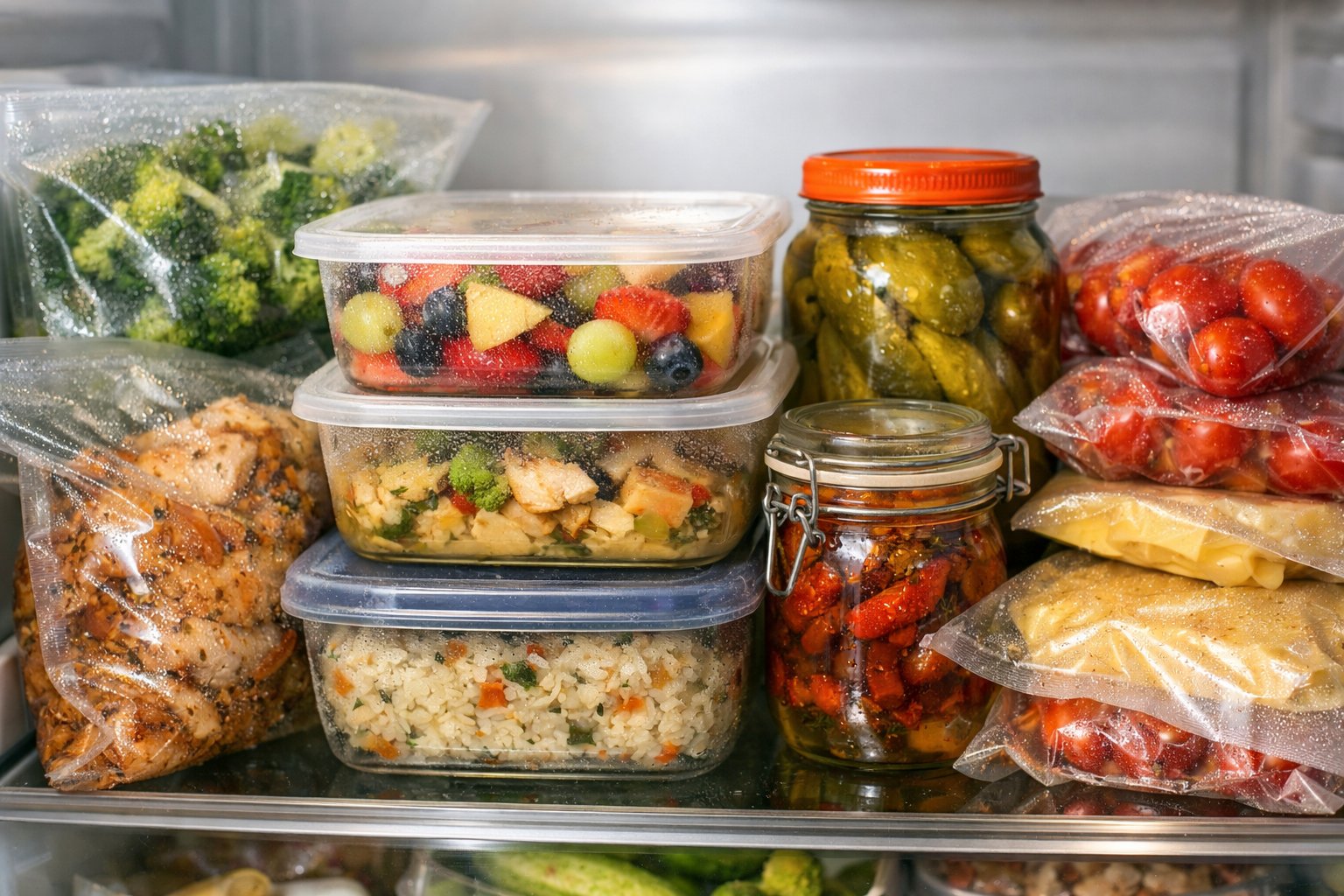
Airtight containers are a lifesaver for blocking odor transfer and stopping moisture loss. Glass or silicone with tight lids work best. Store onions, garlic, and stinky cheeses in sealed containers, not just wrapped in plastic.
Raw meats go on the bottom shelf, always in leak-proof containers. Here are some storage tips we actually use:
- Dairy belongs in the main fridge, not the door
- Fruits and veggies do best in separate crispers with the right humidity
- Cheese likes to breathe—wrap it in wax paper before sealing it up
- Label everything with the date so you know what’s what
A box of baking soda in the fridge helps soak up stray odors. Swapping it out every three months keeps it working.
Recognizing Signs of Spoiled Food and When To Toss It
Smell isn’t always enough. We need to look for other signs before tossing food.
Visual and texture changes are usually more telling. Meat turning brown or gray, sticky surfaces, or a sour whiff? Time to let it go. Green spots on bread, yellowed dairy, or slimy veggies? Same story.
Mold looks fuzzy and comes in all sorts of colors—white, green, black, blue. If you spot it on bread, soft cheese, or leftovers, just toss the whole thing. Hard cheese? Cut away the mold plus an inch around it.
Here’s a quick reference:
| Food Type | Spoilage Signs |
|---|---|
| Meat | Gray/brown, sticky, sour smell |
| Dairy | Curdling, separation, mold |
| Vegetables | Slimy, dark spots, limp beyond hope |
| Bread | Mold, hard, weird smell |
Fish should smell fresh and ocean-like, not like ammonia. If eggs float in water, they’re past their prime.
Reducing Food Waste and Promoting Meal Prep Efficiency
A little planning goes a long way. Buy only what you’ll use in a week to avoid the “forgotten produce graveyard” in the crisper.
First-in, first-out rotation is key. Move older items to the front so you see them first. Clear containers let you spot what’s about to go bad.
Blanching veggies before freezing stops enzymes from ruining color and flavor. Freeze proteins in meal-sized portions to avoid thawing and refreezing. Cooked meals last 3-4 days in the fridge—plan batches accordingly.
Freeze extras. Overripe bananas? Smoothies. Wilting herbs? Chop and freeze in oil. Stale bread? Breadcrumbs. These tricks save money and reduce waste.
Prepping ingredients on shopping day—washing greens, chopping veggies, marinating proteins—makes weeknight cooking a breeze and helps use up what you buy before it spoils.
Frequently Asked Questions
Fridge odors aren’t always a sign of spoiled food. Here’s what we’ve picked up about managing weird smells and keeping things safe.
What's the secret to keeping that funky old lady fridge smell at bay?
Honestly? Prevention. Keep an open box of baking soda on a middle shelf—it’ll absorb odors for about three months. Then swap it out.
Clean the fridge every couple of weeks. Wipe shelves with warm water and a spoonful of baking soda; it gets rid of smells without harsh chemicals.
Seal leftovers tight and double-wrap anything strong-smelling, like onions or fish.
What are some ninja-level tactics to banish that mystery scent from the fridge without scrubbing it raw?
Coffee grounds actually work. Put a small bowl of fresh grounds on a shelf, change weekly.
Activated charcoal filters are even better than baking soda. Stick one in the back and it’ll last a couple months.
For stubborn smells, empty the fridge and wipe it down with equal parts water and white vinegar. The vinegar smell fades as it dries, taking other odors with it.
Any pro tips for evicting bad odors from the kitchen icebox, no chemical warfare required?
Vanilla extract on a cotton ball in a dish can mask odors while you hunt down the source.
Fresh citrus peels (orange, lemon) in a bowl absorb smells and add a nice scent. Swap them out every few days.
A plate of white vinegar left overnight will soak up persistent odors. Take it out in the morning—it actually helps.
Why does my fridge play the 'guess that smell' game when everything inside is fresh?
Check the drip pan underneath—it collects condensation and sometimes grows bacteria. Pull it out every few months and wash with soapy water.
Door seals trap crumbs and moisture. Wipe the rubber gaskets with soapy water and a toothbrush now and then.
Airflow matters more than you’d think. Overstuffed fridges block vents and trap odors. Leave about 20% of the space open.
Got any quick-fixes for when your fridge decides to start smelling like a science project?
First thing, check the crisper drawers—forgotten produce hides there. Toss anything wilted.
Spills can leave lingering odors. Lift out shelves and drawers, wash them with dish soap.
If your fridge has an air filter, swap it out every six months. Mark your calendar—it’s easy to forget, but it makes a difference.
What's the deal with my fridge's 'eau de leftovers' and how do I make it smell like a daisy instead?
Leftovers give off gases as they break down, even if they're still good to eat. We usually toss everything into glass containers with tight lids—those seem to trap smells better than plastic ones.
We slap dates on containers and try to stick to a three-day rule for most leftovers. After that, we either freeze them or just toss them, no matter how they look or smell. Not worth the risk, honestly.
Foods with strong smells, like blue cheese or kimchi, get double-sealed and stashed away from stuff that soaks up odors, like butter or eggs.
Share:
How Improper Storage Creates Invisible Food Waste
What Makes a Kitchen Feel Organized Versus Just Clean