

Check out our latest home & kitchen collection!
Walking into a kitchen with shiny counters and a just-mopped floor feels satisfying. But if you’re always searching for the spatula or digging through drawers for a measuring cup, that clean space isn’t really organized, is it?
An organized kitchen gives everything a real home, groups items in ways that make sense, and lets you grab what you need without a scavenger hunt or juggling clutter.
Cleaning tackles surfaces and germs. Organization is about systems and how things actually work. You can scrub your kitchen till it sparkles, but if your pantry’s a jumble of boxes and your cabinets overflow with three sets of tongs, the stress creeps in at dinnertime. Organization is what makes cleanliness stick and cooking feel less like a hassle.
It’s really about workflow and how easily you can reach what you need. When things are organized, prep goes faster, food waste drops (because you can actually see what you have), and cooking feels less like a chore. It’s not just about looks; it’s about setting up systems that match how you use your kitchen every day.
Key Takeaways
- A clean kitchen might look nice, but an organized kitchen runs smoother because everything has a logical spot.
- Organization makes cooking less stressful and saves time—items are grouped by how and when you use them.
- Smart storage plus simple habits keep things organized, so both cleaning and cooking get easier.
What Defines an Organized Kitchen Versus a Clean Kitchen
A clean kitchen might shine, but an organized kitchen actually works. The real difference is in how you store and access things for daily cooking—not just how it looks.
Organization vs. Cleanliness: Key Differences
Cleaning is about wiping away dirt and mess. You can mop, scrub, and polish until everything gleams, but that’s mostly about appearance and hygiene.
Organization is a whole different animal. It means giving every item a home based on how you use it. You might have a spotless counter, but if you can’t find the colander when you need it, is that kitchen really working for you?
A pantry shows this best. You can clean the shelves, but organizing means grouping like items, keeping go-to ingredients at eye level, and using clear containers so you know what’s left. The best kitchens blend both: clean surfaces and storage that matches your actual habits.
The Impact of a Tidy Layout on Daily Function
How you lay out your kitchen changes everything. Set up work zones for prep, cooking, and cleaning, and suddenly you’re not zigzagging everywhere. Keep oils, spices, and utensils near the stove where you use them most.
This setup saves time and sanity, especially on hectic nights. No more crossing the room or sifting through chaotic drawers. Minutes saved every meal add up quickly.
Where you put things matters more than how pretty it looks. Baking stuff goes together. Heavy pots belong in lower cabinets near the stove. Dishes should live close to the dishwasher. These choices decide whether your kitchen helps you or trips you up.
How Organization Supports Meal Prep and Cooking
Meal prep isn’t just about clean counters; it’s about reaching what you need, fast. Organize by task and how often you use things. Keep cutting boards, knives, and mixing bowls within arm’s reach of your prep space.
A sorted pantry makes meal prep way less annoying. You see what you’ve got, skip buying duplicates, and waste less food. Clear bins and labels mean less rummaging.
This setup even lets you cook several dishes at once. You can grab everything for the week in one go, not ten. Suddenly, big cooking projects feel doable, and you’re more likely to cook at home instead of giving in to takeout.
The Psychological Benefits of Kitchen Organization
Organizing your kitchen isn’t just about stuff—it’s about how you feel in the busiest room of your house. Knowing where everything is clears your mind, lowers stress, and makes daily routines smoother.
Mental Well-Being and Stress Reduction
A messy kitchen creates decision fatigue. Every time you open a cluttered drawer, your brain works overtime, making tiny choices about where things might be hiding. That low-level stress adds up.
When your kitchen’s organized, you know exactly where the measuring cups and spatulas live. There’s comfort in that predictability.
It’s not just about finding things faster. Walking into an organized kitchen means you’re not confronted by chaos or reminders of things left undone. The space feels ready to help you, not drain you.
Researchers have found that organized kitchens can lower cortisol and boost your mood. Even the act of organizing can feel oddly therapeutic—a way to create order when everything else feels a little out of control.
Motivation and Healthy Eating
You’re way more likely to cook healthy meals if your kitchen’s organized. When ingredients are easy to spot and grab, you’ll actually use them instead of defaulting to takeout.
A sorted pantry and fridge make healthy eating less of a pain. Quick ingredient checks cut down on waste and those “I have nothing to eat” moments.
It works both ways. When your tools are handy, prepping meals feels less overwhelming. If the cutting board isn’t buried under junk, you’ll chop veggies more often. If you can find your measuring spoons, you might even try a new recipe.
Organization builds on itself. You cook more, make better choices, and keep things tidy because it genuinely helps. The kitchen stops working against you and starts working for you.
Visual Calm Versus Visual Noise
Visual clutter is like background noise for your brain—always there, quietly draining energy. Counters covered in appliances, mail, or random stuff create “visual noise.”
An organized kitchen gives you visual calm. Clear counters, contained storage, and purposeful zones let your eyes (and mind) rest. It’s not about being a minimalist; it’s about putting things where they belong.
You can feel the difference right away. Less visual noise means you can actually focus, whether you’re following a recipe or just making coffee. Your stress drops because the space isn’t constantly nagging at you.
Ever notice how much better the kitchen feels after you organize it? It’s lighter, more open, and just easier to be in. That’s your brain enjoying the break.
Decluttering: The Foundation of a Truly Organized Space
A tidy kitchen starts by getting rid of what doesn’t belong, cutting down on repeats, and setting limits for what comes in next.
How to Tackle Kitchen Clutter Effectively
Here’s the trap: trying to organize stuff you don’t even need. Declutter first, or you’re just shuffling problems around.
Pick one spot—a drawer, a cabinet, a chunk of counter. Empty it out completely. Lay everything out so you can see it all. You’ll spot duplicates and forgotten gadgets right away.
Sort into categories: cooking tools, bakeware, storage containers, utensils, appliances. Group similar things together so you can see what you actually have.
Ask yourself: When did I last use this? Do I need three muffin tins? Is this chipped bowl even safe?
Make four piles: keep, donate, trash, and relocate elsewhere. If it doesn’t serve your kitchen, it needs to go. Mail belongs in the office, not on your counter.
Reducing Duplicates and Unnecessary Items
Most people don’t need seven wooden spoons or four can openers. A truly organized kitchen has only what you use.
Count your duplicates. Maybe you have twelve mugs but only drink from four. Keep the favorites, donate the rest.
Common kitchen duplicates:
- Spatulas and spoons
- Water bottles and travel mugs
- Storage containers with no lids
- Expired spices and condiments
- One-off gadgets (hello, avocado slicer)
Look at rarely used appliances. If the panini press hasn’t seen daylight in months, it’s just taking up space. Be honest about what you actually use.
Toss broken stuff right away. That cracked cutting board isn’t coming back.
Setting Boundaries for New Additions
Even after you tidy up, clutter sneaks back in unless you set limits.
Try a one-in, one-out rule for tools and gadgets. Buy a new frying pan? Let an old one go. That keeps things from piling up.
Set hard limits for categories—maybe six mugs, three cutting boards, whatever fits your space and habits. If you hit the cap, something else has to leave before new stuff comes in.
Before buying, ask: Do I already own something similar? Where will this live? Will I use it at least once a month?
Suggested boundaries:
- Mugs: 2 per person plus a couple for guests
- Pots and pans: 1 of each size you actually use
- Baking sheets: 2–3 unless you bake for a crowd
- Food containers: Enough for your usual prep, not a mountain
Skip freebie gadgets and promo mugs. Just because it’s free doesn’t mean it deserves a drawer.
Smart Storage Solutions That Make Organization Stick
Good storage turns a tidy-up into lasting order by giving every item a home. Pull-out shelves, drawer dividers, and shelf risers help you keep things sorted because they work with how you move around your kitchen.
Essential Storage Tools for an Efficient Kitchen
Three tools make the biggest difference: drawer dividers, shelf risers, and pull-out shelves. Dividers stop your utensils from turning into a jumble. Shelf risers double your cabinet space, so you can grab things without unstacking everything. Pull-out shelves make it easy to reach stuff hiding in the back.
These tools work because they cut down on the little annoyances that lead to clutter. If you can see and grab what you need without moving a dozen things, you’re way more likely to put it back. Magnetic knife strips and under-cabinet hooks add storage without eating up shelf space.
Pick storage that matches your habits. If you use spices daily, a wall rack might be perfect. Lazy Susans in corner cabinets stop things from vanishing into the abyss.
Pull-Out Shelves, Shelf Risers, and Drawer Organizers
Pull-out shelves take deep, awkward cabinets and make them usable. Install them in pantries for canned goods or under the sink for cleaning stuff. The sliding shelf means nothing gets lost in the dark corners.
Shelf risers add layers to cabinets, so you can store plates, mugs, or spices without stacking everything precariously. The extra levels mean you can fit more without making a mess.
Drawer organizers come in all shapes:
- Adjustable dividers for any drawer size
- Built-in knife blocks to keep blades safe
- Tiered trays for cutlery or tools
- Deep systems with pegs to hold plates
With organizers, you avoid the dreaded junk drawer—everything has a spot. Customize each drawer for what it holds, whether that’s baking gear, silverware, or containers.
Creating an Organized Pantry and Clear Countertops
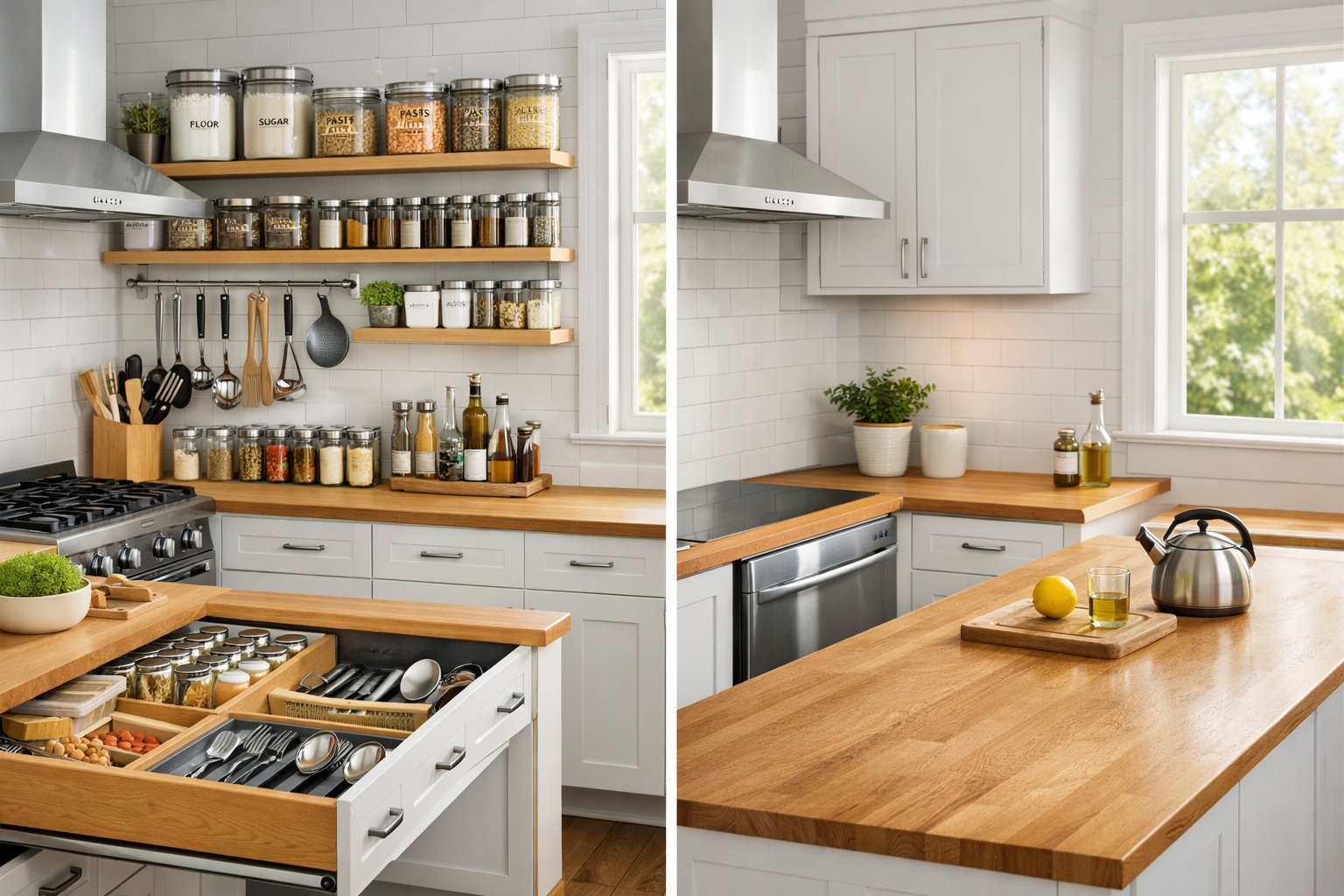
An organized pantry really starts with being able to see what you have. We like to pour dry goods—flour, rice, pasta—into clear, stackable containers so we can tell at a glance what's running low or what we have plenty of. It cuts down on buying duplicates and keeps surprises to a minimum.
Pull-out pantry shelves are a lifesaver for those deep cabinets where cans and jars go to disappear. Tiered shelves give canned goods a little "stadium seating," so you can actually read the labels without playing Jenga. Door-mounted racks? Great for spices, wraps, or even cleaning sprays, and they don’t eat up shelf space.
Countertops only stay clear if you get things off of them—simple as that. Hanging pot racks keep pans handy but out of the way. Under-cabinet hooks work for mugs or the spatula you reach for every morning. Knife strips on the wall beat those clunky knife blocks any day.
We try to keep only the stuff we use daily on the counters, and everything else gets tucked away but stays within reach.
Organizing Drawers and Cabinets for Easy Access
We sort drawers by how often we use things and what they are. So, everyday utensils live in the drawer closest to the action, while the garlic press and cherry pitter hang out in the back. Adjustable dividers help keep things from mixing into one big jumble.
Roll-out trash bins and recycling centers hide under the sink but are still easy to grab. Slide-out racks for baking sheets and cutting boards keep those flat things upright—no more digging through a stack. Under-sink sliding drawers make sense of that wild tangle of cleaning products around the pipes.
Corner cabinets are tricky, but lazy Susans or pull-out units help bring the hidden stuff forward. Hooks on the inside of cabinet doors are perfect for lids, measuring cups, or whatever else you can hang. Pegboard systems inside cabinets let you switch things up as your needs change.
Creating Kitchen Habits for Lasting Organization
Honestly, keeping a kitchen organized is more about habits than about fancy containers. The difference between a kitchen that stays neat and one that always feels messy? Routines that work with your cooking style, clear systems for where things go, and keeping the essentials close by.
Daily and Weekly Routines for Maintenance
We’ve noticed that just 10 minutes each night can save you from a weekend mess. That’s loading the dishwasher, wiping the counters with soapy water, and putting things back where they belong. Nothing heroic.
Daily tasks: put away clean dishes before breakfast, clear the sink after each meal, and give the counters a quick once-over. Weekly routines: clean out the fridge (Thursday is good, right before grocery day), reorganize the pantry, and check for expired stuff.
The "one in, one out" rule is a classic for a reason—new spice in, old spice out. We also batch similar tasks—wash all the produce at once, prep containers for leftovers, combine half-empty boxes.
The trick is to make these habits second nature, not something you dread. Start with two daily tasks and add more as you go.
The Role of Labels and Zones
Labels take the guesswork out of where things go. We slap labels on everything from pantry containers to drawer dividers, sometimes with a label maker, sometimes just masking tape and a Sharpie.
Zones help, too:
- Prep zone: cutting boards, knives, mixing bowls near your main counter
- Cooking zone: pots, pans, spatulas by the stove
- Cleaning zone: soap, paper towels, spray under the sink
- Storage zone: containers, wraps, foil in one drawer
Be specific with labels. Instead of "snacks," go with "granola bars" or "crackers." It just makes it easier for everyone to keep things in order.
We stash cleaning supplies where we actually use them—dish soap at the sink, spray near the chopping board, paper towels where spills happen. It just makes cleanup less of a hassle.
Cleaning Supplies and Workspace Strategies
Clear counters aren’t just for looks—they’re for actually being able to cook. We only keep daily-use stuff out: coffee maker, knife block, and maybe a small crock for utensils.
Under the sink, we keep a cleaning caddy with dish soap, spray, all-purpose cleaner, paper towels, and a couple of microfiber cloths. We even keep extra paper towels in two spots because, let’s be honest, sometimes you just don’t want to walk across the kitchen.
Workspace habits: wipe down surfaces right after prepping, wash boards between ingredients, and keep a little bowl for scraps. Cleaning as you go really does prevent that end-of-cooking burnout.
We keep a drawer near the sink stocked with clean towels and cloths, so it’s easy to grab a fresh one. As soon as the disinfectant spray is running low, it goes on the shopping list—no waiting until it’s bone dry.
A Tidy Kitchen's Role in Food Safety and Efficiency
A tidy kitchen isn’t just about looks—it actually keeps you safer and makes cooking less of a headache. Clear surfaces and regular cleaning routines help keep germs at bay and make meal prep run smoother.
Preventing Cross-Contamination
Cross-contamination is sneaky—it’s when bacteria hop from raw foods to ready-to-eat stuff through surfaces, tools, or your hands. We use separate cutting boards for raw meat and produce, and store them apart to keep things clear.
Keeping the prep area organized lets us set up zones for different tasks. Wiping counters between uses with hot, soapy water helps block those invisible bacteria highways. And yes, we wash our hands for at least 20 seconds before switching between ingredients (even if we sometimes rush it).
In the fridge, raw meat goes on the bottom shelf—no drippy disasters. Leftovers get stashed above raw stuff, always in sealed containers.
When everything has a spot—cutting boards, cleaning supplies—it’s just easier to stick to safe habits without overthinking it.
Sanitizing for a Healthy Kitchen
Cleaning gets rid of crumbs and grime, but sanitizing knocks out the germs. Both steps matter, especially for anything that touches food.
A quick bleach spray does the trick: 1 teaspoon of unscented bleach to 4 cups of cool water in a spray bottle. After cleaning with soap, we spray this on and let it sit for a minute before letting it air dry. We mix a new batch weekly since it loses oomph.
If bleach isn’t your thing, white vinegar or hydrogen peroxide work too. Heat 1/2 cup to about 150°F, spray it on, and let it sit for a minute (or use it cold and wait 10 minutes).
Sanitize these often:
- Countertops and cutting boards after each use
- Sink basin once or twice a week
- Sponges daily—dishwasher or microwave
- Fridge handles and shelves during monthly deep cleans
We swap out dish towels and sponges more often than we’d like to admit, but it really helps keep germs from spreading.
Streamlining Meal Prep with Effective Systems
Meal prep goes faster when you know exactly where everything is. If tools have set homes, you spend less time searching and more time actually cooking.
We put daily-use items—knives, boards, bowls—right by the main prep spot. The once-a-month gadgets can go up high or in the back.
Grouping like with like—measuring cups with baking stuff, pot holders near the stove, containers with matching lids—just makes things flow. It’s one of those little things that saves time when you’re juggling dinner on a busy night.
Clear counters mean real workspace. No dodging toasters or piles of mail. You can lay out ingredients, see what you’re working with, and spot spills before they get sticky.
Labeling shelves and using clear containers help you see what you have. Less waste, fewer duplicates, and fewer mystery science projects in the back of the pantry.
Frequently Asked Questions
Here are the questions we get all the time about kitchen organization—hopefully, these help you tackle your own trouble spots.
What are the top strategies for organizing kitchen cabinets effectively?
We start by emptying the cabinets and sorting everything—baking stuff here, pans there, and a pile for things we forgot we owned. It’s a reality check on what you actually use.
Keep like items together and give each group a dedicated spot. Everyday stuff goes at eye level and within reach. Holiday platters and fondue pots? Top or bottom shelves.
Stackable organizers, lazy Susans, and shelf risers work wonders. And we always try to store things close to where they’ll be used—mugs by the coffee maker, pots near the stove.
Could you outline some efficient kitchen layout tips for meal prep aficionados?
We break the kitchen into zones: prep, cook, clean, store. The prep zone gets boards, knives, bowls, and a chunk of counter near the sink for rinsing.
Cooking oils, spices, and utensils live right by the stove. Baking sheets and roasting pans get a lower cabinet near the oven—no hauling hot trays across the room.
Set up a landing spot near the fridge for ingredients as you pull them out. Clear that space for laying out everything you need at once.
For small kitchen gurus, what are the insider tricks to maximizing space?
We go vertical—magnetic knife strips, hanging pot racks, and sticky hooks on cabinet doors save precious counter and drawer space. The backs of cabinet doors are gold for storing lids, measuring spoons, or cleaning gear.
Nesting bowls, stackable containers, collapsible colanders—they all help. We swap out big gadgets for smaller ones when possible. A hand mixer instead of a stand mixer, for example.
Rolling carts are a game changer—they add storage and prep space, then roll out of the way. Over-the-sink cutting boards give you bonus workspace without taking up room.
What's your recipe for a one-day kitchen organization overhaul without breaking a sweat?
We go one zone at a time—don’t pull out everything at once unless you want chaos. Start with the spot that bugs you most, like the junk drawer or under the sink.
Set a timer for 30 minutes, then take a 10-minute break. Sort into keep, donate, and toss piles—be honest about what you actually use.
Have your organizing supplies ready: shelf risers, bins, labels, cleaning stuff. That way, you won’t get distracted running to the store halfway through.
Hey home chefs, what's your secret ingredient to maintaining a kitchen that's both clean and orderly?
We clean as we go—wash a bowl while something simmers, wipe the counter while the pasta boils. It keeps the mess from piling up.
Everything has a home, and we put it back right after using it. This one habit keeps counters from turning into a dumping ground.
A quick five-minute reset at night—wipe counters, empty the drainer, sweep up crumbs—makes mornings a lot less stressful. Starting the day with a clean kitchen just feels better.
Could you dish out some tips for arranging utensils in a kitchen sans cabinets – not everyone has the luxury of space!
I like using countertop crocks or jars for the tools I reach for most—spatulas, wooden spoons, whisks, that sort of thing. I’ll toss daily essentials in one, and less-used gadgets in another. It’s not fancy, but it keeps the clutter down.
Wall-mounted rails with S-hooks? Those are a lifesaver. I hang up utensils, pot holders, sometimes a small pan or two. It’s just easier when everything’s right by the stove, especially if you’re in the middle of a recipe and your hands are a mess.
Pegboard walls are another trick. They turn empty space into a spot for utensils, cutting boards, maybe even a stray pan. I usually put prep stuff to one side and cooking tools to the other, but honestly, you can move things around until it feels right for how you cook.
Share:
What Makes Stored Food Smell Even When It’s Still Safe
Why Kitchen Organization Fails Without Clear Storage Zones