

Check out our latest home & kitchen collection!
You've measured everything out, set your timer, grabbed your favorite recipe, but somehow, dinner still drags on. The real culprits behind slow cooking often show up before you even turn on the stove: cold ingredients straight from the fridge, skipping basic prep, or not having your tools in order. Spotting what actually slows you down before you get started can help you work smarter in the kitchen, not just harder.
Most of us underestimate how much our setup impacts cooking speed. Cold chicken breasts? They take forever because the outside browns before the inside even warms up. A messy workspace means we’re always searching for a spatula or the right pan. Even the pan itself matters, some heat up fast, others are sluggish, and that changes how quickly dinner lands on the table.
These are fixable problems. Little tweaks, like letting ingredients sit out for 20 minutes or lining up your tools before you start, can shave off real minutes. If you spot what’s slowing you down before you even start, you can fix it and actually eat on time.
Key Takeaways
- Cold ingredients from the fridge cook unevenly and take longer to reach safe temperatures
- Skipping basic prep and organization before cooking adds unnecessary time searching for tools and ingredients
- Cookware material, oven calibration, and starting temperatures directly impact how quickly food actually cooks
The Hidden Impact of Ingredient Temperature
Cold ingredients act like heat sponges, sucking up energy that should be cooking your food. This messes with cook times and can make textures weird, whether you’re baking or pan-searing.
Using Cold Butter and Dairy
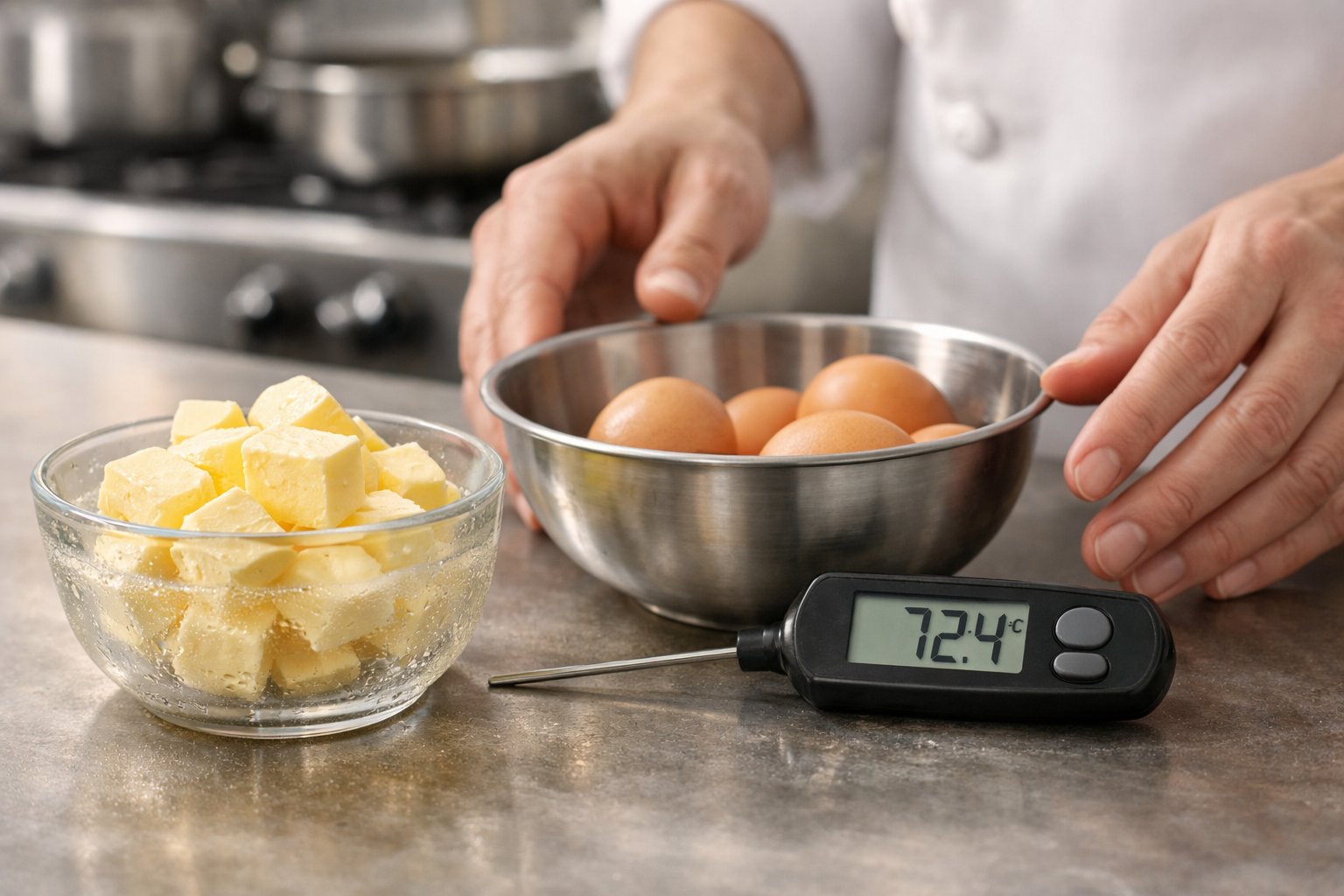
Cold butter right from the fridge is around 35°F to 40°F—way too cold for most recipes. If you try to cream it with sugar, it just clumps instead of fluffing up, so your cookies or cakes turn out dense and don’t rise like they should.
Butter’s fat structure changes as it warms. At room temp (about 65°F), it’s soft enough to trap air bubbles, making lighter baked goods. Cold butter just stays in lumps and refuses to blend.
Same goes for milk, cream, and eggs. Cold milk causes roux or batters to seize, making them lumpy and tough to work with. Cold cream takes ages to reduce since the pan has to heat it up before anything else can happen.
Letting butter sit out for 20-30 minutes before baking makes a big difference. It’s easier to mix, doughs spread better, and batters come together without a fight.
Chilled Proteins and Uneven Cooking
Pull a chicken breast from the fridge—it’s about 38°F. You need it to hit 165°F inside. That’s a 127-degree climb! But if it starts closer to room temp (say, 73°F), you’re only climbing 92 degrees.
Put cold meat in a hot pan and the outside browns (or burns) before the inside is safe. The gradient’s too steep, so you get dry, tough edges and a raw or rubbery center.
Thicker cuts are even worse. Cold steaks or pork chops take much longer, and by the time the inside is done, the outside’s overcooked.
Letting proteins hang out at room temp for 15-30 minutes before cooking helps a ton. You get better sears, more even doneness, and juicier results.
Baking and Room Temperature Ingredients
Baking’s all about chemistry—and temperature is a huge part of that. Cold eggs don’t mix well with fats, so cakes can end up flat and dense. Proteins in eggs blend more smoothly when they’re not fridge-cold.
Room temp ingredients also mix faster and more evenly, so you don’t overwork batters and turn muffins into bricks. Cold batters slow down leavening agents, so your baked goods might not rise as much.
Most pro bakers keep eggs, butter, and dairy out for at least 30 minutes before starting. It’s a small habit, but it really does make recipes more predictable and less likely to surprise you in a bad way.
Prep Pitfalls: Why Mise En Place Matters
Mise en place—the French for "everything in its place"—can turn kitchen chaos into a smooth operation. If you skip it, you’ll end up chopping onions while the oil smokes, hunting for a whisk while the sauce boils over, and generally making dinner way more stressful than it needs to be.
Ingredient Prep Efficiency
Measuring and prepping everything before you start keeps you from scrambling mid-recipe. When you prep first, you catch missing ingredients before the sauce is already on the stove and you realize you’re out of garlic.
This approach trims cooking time, since you’re not pausing to measure, chop, or dig through the pantry. Pro kitchens do this so they don’t fall apart during the dinner rush.
It also stops you from doubling up on ingredients or forgetting something entirely. When everything’s laid out in front of you, you can see what goes in and when.
Treat prep as a separate stage. Once the heat’s on, your hands should be free for cooking, not wrestling with a can opener or dicing carrots.
Chopping and Portioning Ahead
Cutting veggies and proteins before you start means you won’t hold up the whole dish at a crucial moment. There’s nothing worse than realizing you need to julienne carrots while the wok is already sizzling.
Try to chop everything to a similar size for even cooking. If pieces are all over the place, some will be mushy and others raw.
Pre-portioning into little bowls or containers also speeds things up. That’s straight out of the restaurant playbook—prep cooks spend hours getting everything ready for the line cooks.
Fresh herbs, garlic, and aromatics are especially worth prepping first since they usually hit the pan right away. Having them ready means you won’t burn the garlic and have to start over.
Organizing Tools and Workspace
Set out your tools before you start. It saves you from digging through drawers with sticky hands or realizing your only spatula is in the dishwasher. Knives, cutting boards, pans, spoons—get them all within arm’s reach.
Keep your workspace clear. Have one spot for raw ingredients, one for prepped stuff, and another for equipment.
Clean as you go. Wash the cutting board after the onions so it’s ready for the next thing and you’re not left with a disaster at the end.
Having everything handy just makes cooking less exhausting and, dare I say, more fun.
Cookware Choices and Heat Distribution
The pans and dishes you use totally change how heat gets to your food. If heat’s not moving evenly, you’ll get burnt spots, raw middles, and meals that drag on longer than they should.
Material Matters: Ceramic Bakeware Versus Metal
Ceramic bakeware heats up slowly, so casseroles and roasted veggies need extra oven time. Once hot, ceramic holds heat well, but that first warm-up can tack on 10-15 minutes to recipes meant for metal pans.
Metal bakeware, especially aluminum, heats up and cooks food much faster—sometimes 30-50% faster than stainless steel, and both outpace ceramic by a mile. If you use a glass or ceramic dish for a recipe written for metal, you’re basically starting behind.
Thickness matters too. Thin pans heat up quickly but can create hot spots, while thick, copper-core pans spread heat more evenly. So, you’re not just picking a material, you’re picking how well the heat travels across your food.
Pan Size, Overcrowding, and Cooking in Batches
If you crowd too much food into one pan, you’ll drop the temperature and trap steam. Instead of browning, your chicken or potatoes will just steam and get soggy, dragging out the cook time.
Why cooking in batches matters:
- Keeps the pan hot enough for browning
- Lets air circulate around the food
- Stops steam from making things mushy
- Actually cuts down total cooking time, even with multiple rounds
A 12-inch pan might fit eight pieces of chicken, but leaving space means each one gets a proper sear. Cooking in batches might seem slower, but each batch finishes faster, and the results are way better.
Understanding Heat Spots and Consistency
Burners rarely match the size of your pans perfectly, which means some spots are hotter than others. Even good pans can lose 25-45°F from center to edge if the burner’s too small.
Disc-bottom pans with thick aluminum or copper cores spread heat more evenly than thin, fully-clad ones. Premium pans might only lose 11°F across the surface, while cheap ones can drop 68°F. Those cold spots mean some food cooks slower, so you’re left waiting or settling for uneven results.
You can check for hot spots by heating a pan dry and sprinkling in flour. The flour browns first where the pan’s hottest, showing you exactly where the heat is uneven.
Oven and Appliance Oversights
Your oven’s readiness sets the stage for how well your meal turns out. Skip the basics, ignore heat patterns, or pick the wrong setting, and you’ll battle problems no cooking trick can fix once the food’s in.
Skipping Preheating
We’ve all tossed food into a cold oven to “save time.” It almost never works. Leavening agents like baking powder need instant heat to rise properly. If the oven’s not hot, those chemical reactions don’t happen right, and the gases escape before the structure sets.
Baked goods take the biggest hit. Cookies spread into flat puddles, bread stops rising, and meats get weird textures as proteins tighten up too slowly.
Most ovens hit 350°F in 10-15 minutes. Gas ovens usually need a bit longer—15-20 minutes. Use a separate oven thermometer if you can, since built-in thermostats can be off by 25°F or more, especially if your oven’s seen better days.
Oven Hot Spots and Placement
Even preheated ovens don’t always heat evenly. Gas ovens are especially notorious for hot spots that burn the edges while the middle stays raw. Rack position matters too—top racks are hotter, bottoms cooler, and the center is usually safest.
To test your oven, lay out slices of white bread on a baking sheet and see how they brown. Uneven browning shows you where the trouble spots are. Once you know, rotate dishes halfway through or avoid putting food in those hot zones.
Rack placement makes a huge difference. Cookies and pastries do best in the center. Pizzas crisp up better on the bottom rack. Casseroles need the middle to keep the top from burning before the insides are done.
Crowding the oven blocks airflow and creates cold spots. Leave at least two inches between dishes and the oven walls. That simple spacing can actually cut cooking time by 15-20% compared to jam-packed arrangements.
Choosing the Right Settings
If you pick “bake” when you really need convection, you’re wasting time and energy. Convection uses fans to move hot air, speeding things up by 25-30% and giving you more even results. Standard bake is better for delicate stuff like soufflés that can’t handle moving air.
| Setting | Best For | Temperature Adjustment |
|---|---|---|
| Bake | Cakes, breads, custards | Recipe temperature |
| Convection | Roasted vegetables, cookies | Reduce by 25°F |
| Broil | Melting cheese, crisping tops | Watch constantly |
Broil gives you intense top-down heat but needs constant attention. It’s great for finishing, not for cooking from scratch. Some recipes, like slow-roasted meats or certain breads, do call for cold starts, but those are rare exceptions.
Meal Prep Habits That Add Extra Minutes
Sloppy meal prep habits can jam up your whole cooking process. Without a little advance planning, smart recipe choices, or efficient batch cooking, you’ll end up spending way more time in the kitchen than you meant to.
Not Planning Ahead
Walking into the kitchen without a plan? That’s a recipe for wasting 20-30 extra minutes, easy. We stare into the fridge, debate dinner, and then—oops—realize we’re missing half the ingredients.
Meal planning can save hours each week by cutting out the endless back-and-forth and last-minute store runs. When we’ve got a plan and the ingredients on hand, we just get to it. No more scrambling or second-guessing.
Honestly, even jotting down a rough outline for three or four dinners gives us a roadmap. We can make a shopping list, group ingredients by recipe, and mentally gear up for what’s coming.
Multi-Step Recipes and Overcomplication
Picking recipes with a million steps? That’s how a quick dinner turns into a marathon. We don’t need to julienne every veggie or whip up fancy sauces just to eat well.
Overly complex recipes hog our attention and leave us with a mountain of dirty dishes. One-pan meals and simpler methods get dinner done faster and still taste great.
Techniques that drag out dinner:
- Making multiple sauces or dressings from scratch
- Using more than two cooking methods in one dish
- Recipes with a double-digit ingredient list
- Needing specialty equipment for prep
If we stick to recipes with 5-7 ingredients and keep the steps straightforward, dinner hits the table way sooner. Save the ambitious stuff for a relaxed weekend—no need to complicate a Tuesday night.
Lack of Batch Cooking
Making single portions or prepping from scratch for every meal? That’s a time sink. Batch cooking turns daily kitchen chaos into one solid prep session that covers us for days.
Cooking up a big batch of proteins, grains, or veggies means we’re assembling, not starting from zero every night. It can cut our weekday cooking time in half.
The trick is prepping versatile basics. Cook a bunch of chicken or beef, and use it for tacos, salads, grain bowls, or pasta all week. Same goes for veggies and grains—chop once, use again and again.
Techniques That Delay Cooking (And What Speeds Things Up)
Some cooking methods just eat up time, while others really move things along. Knowing which ones to pick for our schedule? That’s half the battle.
Searing Versus Steaming
Searing means preheating a pan until it’s blazing hot—takes a few minutes before we even start. Then, if we crowd the pan, the temp drops and food steams instead of browning. Each batch needs space and patience to get that crust.
Steaming? Once the water boils, we’re off. Stack up veggies in a steamer basket and cook everything at once. Steam transfers heat better than dry oven air, so veggies cook faster.
For proteins, though, searing brings the flavor. Getting the pan hot and ingredients dry helps avoid steaming and gets that caramelization we want.
Blanching Vegetables Effectively
Blanching takes time up front—boil water, blanch, ice bath. Adds 10-15 minutes before we even get to the main cooking.
But here’s the thing: once veggies are blanched, they finish in a stir-fry or sauté in just a couple minutes. We can blanch ahead and stash them in the fridge, ready for action.
No need to blanch delicate veggies like spinach or thin zucchini. Save it for heartier stuff—broccoli, green beans, carrots—that need a head start.
Pressure Cooker Shortcuts
Pressure cookers are game changers for tough cuts and dried beans, cutting cook times by more than half. Meat that usually takes three hours? Done in 45 minutes. Beans cook up in 20 minutes, no soaking.
Downside? Waiting for the pot to pressurize and release can tack on 10-20 minutes. For quick things like fish or chicken breasts, pressure cooking actually slows us down.
Best bets for pressure cooking:
- Dried beans and legumes
- Tough meats (chuck roast, short ribs)
- Stocks and broths
- Hearty grains
We see the biggest payoff with foods that usually take forever.
The Truth About Cooking with Foil
Aluminum foil—does it speed things up or slow them down? It really depends on how we use it, what we’re cooking, and the method involved.
When Foil Slows Cooking Down
Wrap food tightly in foil, and you trap heat and moisture. That insulation means it takes longer for heat to reach the food. A potato wrapped in foil bakes slower than one left bare on the oven rack.
Thicker foil insulates more, stretching out cook times. Double layers? Even slower.
Foil can also mess with heat distribution. Covering a dish in the oven blocks browning and reflects heat away, which slows surface cooking. Foods that need dry heat—like roasted veggies for that crispy edge—won’t get there if they’re wrapped up tight.
How Foil Can Help You Cook Faster
Used right, foil can speed things up by trapping steam and creating a mini pressure cooker. Loosely tenting foil over food keeps it moist and lets some heat circulate. This works great for lean meats or fish that dry out easily.
Steam inside a foil packet transfers heat better than dry air. Fish fillets in foil with a splash of liquid? Done in 10-12 minutes at 400°F, faster than cooking them exposed where they dry out.
When foil helps:
- Grilling veggies in packets
- Steaming fish “en papillote”
- Keeping reheated foods moist
- Covering casseroles to trap heat at the end
Blocking evaporation with foil keeps the surface temp higher, so things cook faster—at least, if we don’t seal it up too tight.
Best Practices For Foil Use
Match your foil style to your goal. Loose tenting speeds things up and keeps food moist. Skip the foil if you want browning and crispiness.
For roasting, cover with foil at first to cook faster, then uncover for the last 20-30 minutes to brown. That way, we get the best of both.
Quick foil guide:
| Method | Foil Use | Result |
|---|---|---|
| Tight wrap | Full enclosure | Slower, steam-cooked |
| Loose tent | Draped on top | Faster, stays moist |
| No foil | Fully exposed | Fastest, best browning |
| Foil shield | Edges only | Prevents burning |
Skip foil for broiling or high-heat searing—direct heat is key. Don’t use foil with acidic foods for long; it can taste metallic. Standard foil works for most things and doesn’t slow cooking as much as heavy-duty.
Frequently Asked Questions
We can lose precious minutes before the stove’s even on. Messy storage, awkward kitchen layouts, and sloppy prep habits all add up to delays.
What kitchen organization tips can expedite the meal prep process?
Keep your go-to tools close—knives, boards, and spoons should live near your main prep spot, not scattered around.
Group like with like. Oils, vinegars, and sprays in one place. Baking stuff in another.
Clear containers let us see what’s inside, so we don’t waste time opening a dozen jars. Label shelves or use drawer dividers to keep things tidy and avoid the “where’s my spatula” panic.
Are there specific storage techniques that help maintain ingredient freshness and reduce cooking times?
How we store stuff matters. Keep onions and potatoes apart in cool, dark spots—onions make potatoes spoil faster.
Airtight containers keep rice, pasta, and flour fresh and dry, so they cook up quickly. Freeze veggies flat in bags; they thaw way faster than a giant frozen lump.
Pre-portioning helps too. Divide ground meat before freezing, so we only thaw what we need. Saves time and cuts down on waste.
How does the arrangement of a kitchen affect the efficiency of the cooking process?
That kitchen triangle—sink, stove, fridge—actually matters. If they’re too far apart, we waste time trekking back and forth.
Store your most-used stuff where you use it. Pots and pans by the stove, mixing bowls and prep tools by your main counter.
A bit of counter space near the stove lets us set down hot pans without a cross-kitchen shuffle. If space is tight, we end up moving things around constantly, and those tiny delays add up fast.
Can improper meal planning lead to longer cooking durations, and how can one avoid it?
If we pick recipes without checking what’s on hand, we’re stuck improvising or making substitutions that might take longer. It’s frustrating and usually slows us down.
Planning meals that use overlapping ingredients saves time. Chop extra onions for Monday’s chili and Wednesday’s stir-fry in one go.
Stick to simpler recipes for busy nights and save the complicated stuff for when you’ve actually got time. It’s just less stressful.
What are the common missteps in pre-cooking prep that might delay getting the meal on the table?
Not reading the whole recipe before starting gets us every time. Suddenly, something needs an hour to marinate or we’re missing a key ingredient.
Skipping the step where we bring ingredients to room temp can cost us. Cold meat straight from the fridge cooks slower than meat that’s sat out for a bit.
We also tend to underestimate how long chopping and measuring takes. Trying to prep while cooking usually means we’re rushing to chop veggies while something’s burning. Prepping before turning on the heat keeps us ahead of the game.
How does multitasking in the kitchen impact the overall speed of meal preparation?
Multitasking might seem like a shortcut, but it usually slows things down in the kitchen. When we bounce between tasks, it’s easy to lose focus and miss those crucial moments—like catching garlic before it goes from golden to burnt, or knowing exactly when the oil’s ready.
Honestly, just finishing one thing at a time works out better. Chopping all the veggies in one go? Way faster than stopping every few minutes to slice something new while juggling other steps.
And then there’s the constant ping of distractions—phones, kids, random chores. Every time we stop to check a message or handle another job, it takes a moment to get our head back in the game. Those little pauses add up, making dinner take longer than it should.
Share:
Why Ingredient Storage Impacts Cooking Speed
Why Ingredient Storage Impacts Cooking Speed