

Check out our latest home & kitchen collection!
Ever noticed how some meals seem to fly together while others drag on, even if you’re following the same recipe? Ingredient storage actually plays a bigger role in cooking speed than most folks realize. Cold ingredients straight from the fridge, or just not stored right, can tack on minutes you didn’t expect and mess with how evenly your food cooks.
When you grab meat, dairy, or veggies straight from the fridge and toss them in a hot pan, the outside might brown up fast while the inside stays oddly cold and raw. That’s because cold stuff needs more time to heat up inside, which throws off your timing and can leave you with unevenly cooked meals. You end up either waiting longer or risking food that’s not quite done.
But temperature isn’t the only thing at play. Storage also changes moisture, texture, and even how ingredients react to heat. An onion stored properly cooks very differently from one left out in the open for days. Picking up on these links helps you plan better, waste less, and actually get dinner done when you want.
Key Takeaways
- Cold ingredients add cooking time and can make dishes uneven
- Good storage keeps moisture and texture right, which speeds up and evens out cooking
- Letting ingredients come to room temp and using smart storage makes cooking smoother
How Ingredient Storage Affects Cooking Speed
How you store your ingredients really shapes how fast you can get a meal on the table. Organization and maintenance affect everything from how long you spend prepping to the end result on your plate.
Impact on Cooking Time and Prep Efficiency
When ingredients are scattered all over or buried in the back of the fridge, you lose time just hunting for what you need. A messy pantry can eat up 10–15 minutes of your prep, just searching. If you keep your go-to items at eye level and within easy reach, you cut down on pointless steps.
Storage temperature matters, too. Ingredients kept at the right temp (32°F to 40°F for most produce) hold their shape better, making them easier to chop and slice. Cold butter straight from the fridge? It’ll fight you and slow down baking, while butter at baking temp mixes right in.
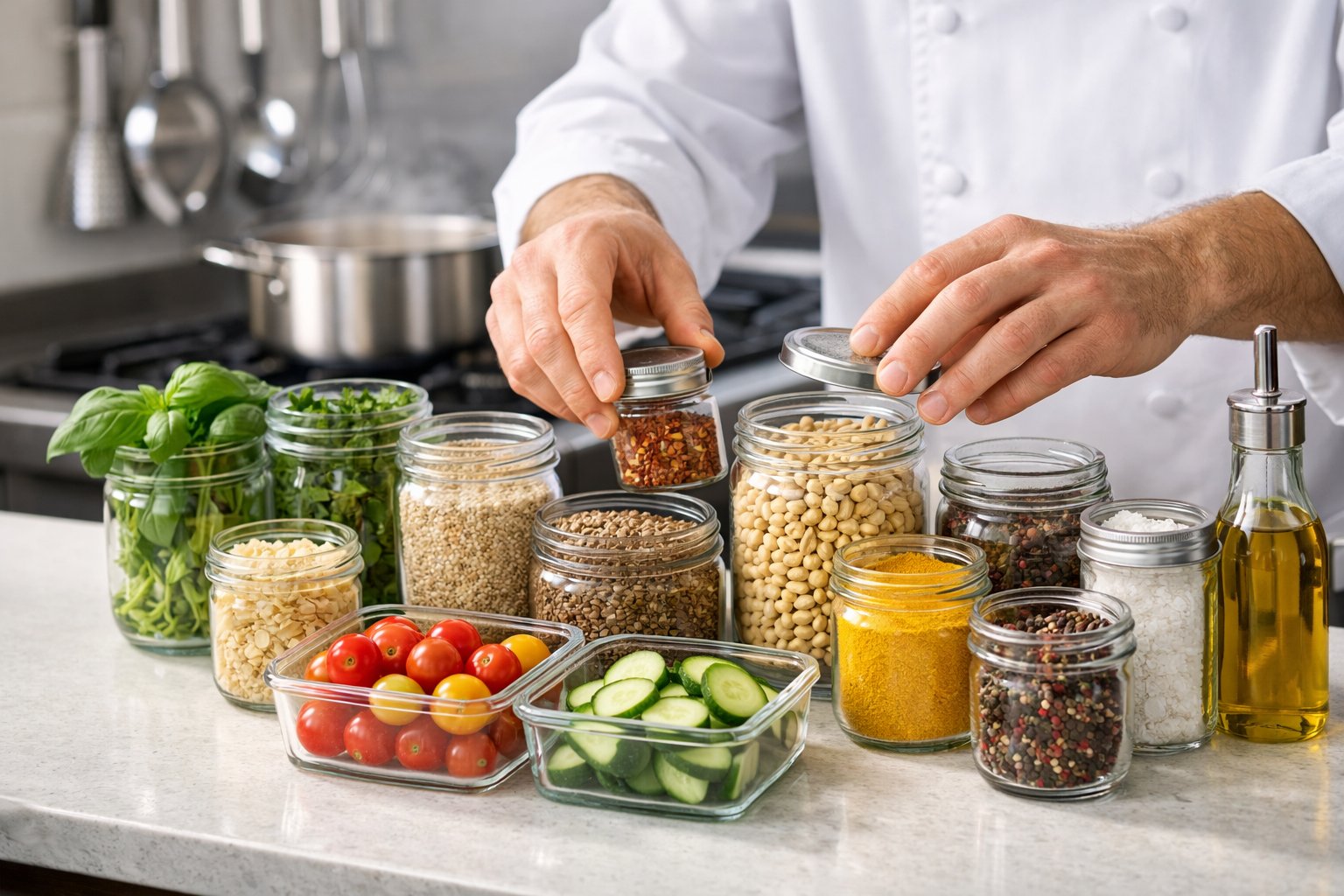
Clear, airtight containers with labels take the guesswork out of finding stuff. You can spot what you need without poking around or opening a bunch of lids. This really helps if you share your kitchen—everyone can find things without making a mess.
Role of Freshness and Texture
Fresh ingredients cook faster and more predictably. Wilted veggies lose moisture and take longer to soften. If you store leafy greens in high-humidity drawers, they keep their water content and cook evenly in just a few minutes.
Spices fade when exposed to light and air, so you end up using more to get the same flavor. That’s more time spent measuring and tweaking. Keep spices in cool, dark spots in opaque containers to keep them strong.
Proteins stored poorly can get icy or dried out on the surface. These weird spots cook unevenly—some bits finish while others lag behind. You either have to cook longer or turn the heat down, both of which drag things out.
Influence on Meal Planning and Organization
A well-organized pantry or fridge makes meal planning way easier. When you can see what you’ve got, you can quickly figure out what’s possible for dinner without running back and forth. That’s a mental load off.
Having prepped ingredients ready to go is a game changer on busy nights. Pre-washed greens, chopped aromatics, or portioned proteins in their own containers can turn a 45-minute meal into a 20-minute one. Stackable containers help you fit more in the fridge and keep things easy to grab.
Using a FIFO (first-in, first-out) system saves you from cooking around spoiled stuff. Mark dates on containers and put older items up front. This way, you use things at their freshest, and they’ll cook up faster and better.
The Science Behind Ingredient Storage and Cooking
Good storage isn’t just about avoiding moldy food—it’s about keeping the chemistry and texture that make ingredients cook well and taste great. Temperature swings and too much moisture can kick off enzyme activity that breaks down food, and poor storage speeds up the loss of nutrients that help with flavor and cooking.
Temperature, Humidity, and Enzyme Activity
Enzymes keep working in veggies even after they’re picked, breaking down cell walls and starches. If you leave veggies at room temp, those enzymes speed things up, making produce soft and floppy. That matters because firmer veggies with strong cell walls take more time and heat to cook through.
Humidity is just as important. Too much moisture encourages bacteria on proteins and produce, making slimy surfaces that slow down browning. Ever tried to sear a wet chicken breast? You have to wait for the water to evaporate before you get that nice crust.
Freezing stops enzymes in their tracks, but if you freeze things wrong—without good wrapping—you get freezer burn and dry patches that cook unevenly and need extra attention.
Flavor and Nutrient Loss: Why It Matters
Water-soluble vitamins like B and C leach out during cooking, but how you store veggies decides how much you lose before you even start. Veggies stored badly for a week can lose a third or more of their vitamin C. That’s not just about nutrition—those compounds help build flavor as you cook.
Heat-sensitive vitamins break down faster if ingredients aren’t kept cold enough. When proteins sit around at the wrong temp, their amino acids start to break down, which changes how they cook and set up in the pan.
Nutrient levels really do affect how ingredients behave. Fresh garlic with all its allicin gives off more moisture and flavor than dried-up old cloves. Same with herbs—fresh basil kept in water cooks faster and gives off more oils than wilted leaves.
Storage Methods for Common Ingredients
Different foods need different storage tricks to stay fresh and easy to use. If you organize your grains, produce, baked goods, and proteins right, you’ll keep them at their best and make cooking less of a hassle.
Best Practices for Grains and Cereals
Keep grains and cereals in airtight containers to block out moisture, bugs, and staleness. Rice, wheat, corn, and rye do best in glass or plastic containers, stashed in a cool, dark pantry, away from heat.
Whole grains have more oil than refined ones, so they go rancid faster. Store them in the fridge or freezer if you want them to last—about 6 months in the fridge or up to a year in the freezer.
For stuff you use a lot, move it into clear containers with tight lids. Label them with the date so you know how old they are. Opened cereal boxes keep their crunch if you stick them (still in the bag) inside a bigger airtight container.
Keep different grains separate to avoid flavor mixing and contamination. Cornmeal and grits especially need cold storage since their oils go off quickly at room temp.
Storing Fresh Produce and Herbs
Organize produce by how much ethylene gas they give off and how sensitive they are to cold. Tomatoes, avocados, and bananas stay on the counter till ripe; greens, carrots, and peppers go in the fridge’s crisper drawer.
Soft herbs like parsley, cilantro, and basil do best with their stems trimmed and set in water, either on the counter or in the fridge. Tougher herbs—rosemary, thyme, sage—get wrapped in damp paper towels and stored in the crisper.
Produce Storage Quick Reference:
| Location | Items |
|---|---|
| Counter | Tomatoes, bananas, avocados, citrus, onions, garlic |
| Crisper (high humidity) | Leafy greens, broccoli, carrots, peppers |
| Crisper (low humidity) | Apples, grapes, berries |
Don’t wash produce before storing; the extra moisture speeds up spoilage. Wash right before using. Keep fruits and veggies apart, since fruits give off ethylene that can make veggies age faster.
Managing Breads, Pasta, and Baked Goods
Bread is happiest at room temp for a couple of days, stored in a bread box or paper bag that keeps it moist but lets it breathe. Refrigerating bread actually makes it go stale faster.
For longer storage, slice bread and freeze it. You can pull out just what you need, and frozen bread toasts up great. Store-bought bread with preservatives can last a week on the counter in its bag.
Dry pasta keeps for ages in a sealed pantry container. Fresh pasta needs the fridge and gets used within a few days, or you can freeze it for a month. Keep different shapes in clear containers to spot them quickly.
Baked goods with cream or frosting need the fridge, but cookies, muffins, and plain cakes can stay covered at room temp for several days. Store different baked goods separately to avoid flavor and moisture swapping.
Keeping Meats and Dairy Safe and Ready
Raw meat needs to be stored carefully. Keep it on the bottom fridge shelf, in its package, on a tray to catch drips. Use or freeze ground meat within a couple of days, whole cuts in 3–5 days.
Freezer Storage Times:
- Ground meat: 3–4 months
- Steaks and chops: 6–12 months
- Whole poultry: 12 months
- Chicken pieces: 9 months
Portion meat before freezing, wrap servings tightly in plastic, then put them in freezer bags with the air out. Flattened packages freeze and thaw faster. Always label with date and contents.
Dairy belongs in the main fridge compartment, not the door, since the temp there swings too much. Milk, yogurt, and cheese stay fresher in steady cold. Hard cheeses last longer than soft ones—wrap them in wax or parchment, then a loose bag so they can breathe but don’t dry out.
Butter can sit out in a covered dish for a week if you use it fast, making it soft and ready. The rest goes in the fridge or freezer for up to 9 months.
Choosing the Right Containers and Storage Tools
The container you use for each ingredient changes how fast you can grab it, how well it keeps, and whether it helps or hurts your cooking speed. Material and seal type matter for both prep and shelf life.
Airtight vs. Breathable Storage
Airtight containers are best for stuff that loses flavor or texture in air. Flour, sugar, coffee, spices, and most dry goods stay fresher in tight-sealed containers, safe from moisture and pests. You don’t want to find bugs in your flour halfway through a recipe.
Some foods need air to stay good. Garlic, onions, and potatoes can get soggy or sprout if sealed up. Mesh bags or open bins let them breathe.
Match your container to the ingredient. Hard cheeses can be wrapped in parchment, soft cheeses need airtight. Fresh herbs last longer in containers with a little airflow and a damp towel, but dried herbs want a tight seal to keep their oils.
Material Matters: Glass, Plastic, or Metal
Glass containers let you see what’s inside, don’t hold smells, and work in the pantry or fridge. They’re heavy and cost more, but they last. We like glass for anything acidic or oily.
Plastic containers are light, cheap, and less likely to break. Good ones handle most needs, though they can stain and sometimes hold onto odors. They’re handy for grains, snacks, and things you use a lot.
Metal, especially stainless steel, blocks light and is great for light-sensitive things like olive oil. It’s tough and doesn’t leach anything, but you can’t see inside without opening. Metal works well for big batches of spices, tea, or coffee.
How Storage Influences Cooking Methods and Results
How you store ingredients changes which cooking methods work best and how fast they get the job done. Moisture levels decide if you can get a crisp crust or need to stick to gentler cooking, and if nutrients and texture are off, you might have to rethink your whole approach.
Moisture Control: Boiling, Steaming, and Blanching
If you stash vegetables the wrong way, they dry out and go limp. That messes with how long you need to boil or steam them. Fresh broccoli with sturdy cell walls steams in about 4-5 minutes. Broccoli that's lost moisture from bad storage? It can turn to mush in half that time because the structure just falls apart.
Blanching gets trickier with sad, wilted veggies. Normally, you’d blanch fresh produce for 2-3 minutes before freezing. But if the veggies are already compromised, they'll overcook and lose their snap before you even deactivate the enzymes.
Storage temperature really comes into play, too. Veggies kept chilled at 32-40°F hang onto their moisture and cook as expected. If your fridge temperature jumps around, you get uneven moisture—so some bits end up overcooked while others stay weirdly tough.
Dry Storage and Techniques: Baking, Roasting, and Frying
Dry-heat methods like baking, roasting, and frying live or die by how much moisture is on the surface. Proteins stored in airtight containers at the right temp brown up beautifully thanks to the Maillard reaction—that crave-worthy crust. But if you leave meat uncovered in the fridge, it dries out too much, and then you just don't get the browning you want.
With roasting vegetables, storage can make the difference between caramelized perfection and a burnt mess. Root veggies kept in cool, dark spots (50-60°F) hold onto their starches, so they caramelize nicely at 400-425°F. If you store them somewhere warm, those starches turn to sugar too soon, and you risk burning the outside before the inside is even cooked.
Frying brings its own headaches. If you store things in oil or don’t seal them right, they soak up moisture—cue dangerous splatters and soggy results. You need dry surfaces for a good fry. Properly stored chicken just needs a quick pat dry, but if it’s been sitting uncovered in the fridge, it gets tacky and takes way more work to prep.
Prep Speed for Quick Cooking: Grilling and Sautéing
Grilling and sautéing need ingredients that can take the heat—literally. When you pre-cut veggies and stash them in airtight containers, they’re ready for the pan. But if you store them poorly, you waste time trimming browned edges and tossing out oxidized bits, adding an extra 5-10 minutes to what should be fast cooking.
For grilling, proteins that have marinated and been stored right cook about 30% faster than those you just marinated. The flavors and acids have time to work their magic, so you can go straight from fridge to grill—no waiting around.
Surface moisture is a big deal for sautéing. If you store ingredients with enough ventilation, they get a bit of surface dryness, which is perfect for searing. Wet veggies from bad storage just steam instead of brown, so you end up cooking them longer at a lower temp. That totally defeats the point of a quick sauté.
Maintaining Nutritional Value Through Proper Storage
How you store your food isn’t just about keeping it fresh or making cooking easier—it decides how many nutrients survive until you cook. Fluctuating temperatures, too much light, or moisture can strip foods of vitamins and minerals before you even get started.
Preserving B Vitamins, Dietary Fiber, and Polyphenols
B vitamins are fragile. Thiamin (B1), riboflavin (B2), and folate break down fast with light and heat. Keep whole grains, legumes, and fortified foods in opaque containers in a cool, dark place. Otherwise, you can lose up to half their B vitamins in just a few weeks.
Dietary fiber is pretty stable, but the foods it’s in—whole grains, beans, veggies—can lose other important nutrients. Dried beans will keep their fiber for ages if you store them airtight and dry. That also stops mold, which nobody wants.
Polyphenols and phenolic compounds in fruits, veggies, and whole grains drop off quickly if exposed to oxygen or temperature swings. Fresh berries lose anthocyanins in just days at room temp. To slow this, refrigerate them right away in breathable containers with a paper towel to soak up extra moisture. Whole grain flours have polyphenols in the bran, but they oxidize fast—freezing flour keeps these compounds around way longer than just leaving it in the pantry.
Minimizing Nutrient Loss During Food Processing
Milling strips off the nutrient-dense outer layers from grains. You lose B vitamins, fiber, and phenolic compounds when you turn whole wheat into white flour. If you can, store whole grains and mill them as needed. Just remember, you’ll want to refrigerate or freeze them to avoid rancid flavors in the germ.
Fermentation actually boosts some nutrients. Fermenting veggies or grains lets good bacteria create more B vitamins and make nutrients easier to absorb. Store fermented foods in sealed containers in the fridge, and they'll keep their nutrition for months. The acidity from fermentation helps preserve vitamins, too.
Pre-cut and processed veggies lose nutrients fast from oxidation and cell damage. A whole head of broccoli in the crisper keeps more vitamin C and sulforaphane than pre-cut florets, which can lose a quarter of their vitamin C in just 24 hours.
Trends and Innovations in Ingredient Storage
New storage tech is slashing food waste—sometimes by as much as 60%—while making kitchens smarter and greener. From AI-driven gadgets that track freshness to eco-friendly containers that naturally extend shelf life, the landscape is changing fast.
Smart Storage Solutions
IoT-enabled fridges with sensors and AI now watch over your food in real time. They keep tabs on inventory, suggest recipes with what you have, and can even order groceries automatically when you’re running low.
Temperature control is more precise than ever. Devices like the Breville Control °Freak let you dial in the exact temp you want, so ingredients stay fresher longer. Smart containers with built-in sensors ping you when food is about to expire—no more guessing games.
Voice assistants like Amazon Alexa or Google Assistant let you check your fridge inventory without opening the door, which helps keep temps steady and food fresher. The smart kitchen appliances market is already worth $10.93 billion in 2024 and is expected to hit $50.01 billion by 2033. Clearly, people are jumping on board.
Sustainability and Reducing Waste
Energy-efficient storage gear can cut your utility bills by 10-15% compared to old-school appliances. That’s good news for your wallet and the planet.
Packaging has gotten smarter, too. Some now include color-changing freshness indicators, so you know exactly when food’s past its prime rather than tossing it too soon because of an arbitrary date.
Regenerative agriculture is shaping how we store produce, since sustainably grown ingredients sometimes need different handling to keep their nutrition intact. Modular storage systems are popping up, letting you customize your space and use less energy. And with precision fermentation, some foods stay fresh longer without chemical preservatives. It’s a lot to keep up with, but honestly, it’s exciting.
Frequently Asked Questions
Organizing ingredients well means you spend less time searching and more time actually cooking. Where you put stuff and how you set up your storage makes a real difference in how quickly you can whip up a meal.
How can the way you store your ingredients reduce time spent at the stovetop?
Put ingredients in clear, labeled containers at eye level, and you’ll stop wasting time digging around. Keeping essentials like oils, spices, and cooking wines near the stove saves you trips across the kitchen.
If you pre-portion ingredients in grab-and-go containers, you can toss them in the pan right away—no stopping to measure. That keeps your momentum going and prevents pots from overheating while you hunt for the next thing.
What's the secret sauce for keeping your veggies crisp and your prep time short?
Store veggies in breathable containers or bags with a paper towel inside. That soaks up excess moisture and keeps them crisp a week longer than plastic bags alone. If you wash and chop veggies right after shopping, you can add them to recipes instantly—no extra prep.
Keep ethylene-producing fruits like apples away from ethylene-sensitive veggies like lettuce to avoid early wilting. For cut veggies, store them in water-filled containers in the fridge. They’ll stay crunchy and you won’t need to chop at the last minute.
In what ways does tossing your ingredients in the right spots in the fridge help you blaze through recipes?
Group ingredients by meal type—breakfast stuff together, lunch bits in one area, dinner stuff somewhere else. That way, you can grab everything for a meal in one go.
Dairy and condiments fit well on the door shelves, leaving the main shelves for meal prep containers and produce. Put tonight’s dinner ingredients front and center, with later-in-the-week stuff behind. Meat and fish should go on the bottom shelf where it’s coldest, which keeps things safer and reduces spoilage.
Can the layout of your pantry make or break the speed of your stir-fry?
A well-organized pantry with all your Asian sauces, oils, and dried goods in one spot makes assembling a stir-fry a breeze. Turntables for bottles and jars mean nothing gets lost, and stackable containers make it easy to see your rice, noodles, and other staples.
If you keep your wok, spatulas, and stir-fry tools near those ingredients, you’ve basically got a stir-fry station. No more frantic searches for soy sauce while your veggies overcook.
Why do meal preppers swear by the mantra 'a place for everything' to cut down kitchen chaos and cooking time?
When everything has a home, you build muscle memory and just reach for what you need without thinking. That saves minutes every meal—time you’d otherwise spend rummaging through cabinets.
Consistent spots also make it easier to see what you’re running low on, so you don’t get halfway through a recipe only to realize you’re out of something crucial. Less mental clutter, more focus on actually cooking.
How does playing Tetris with your Tupperware actually help you beat the dinner rush?
Stacking containers that fit inside each other saves a surprising amount of space—sometimes nearly half. It’s just easier to grab what you need when everything’s right there, no digging. If you color-code or number the lids and bases, you skip that whole annoying lid search that somehow always eats up way more time than it should.
We like to keep containers with their lids on, stashed close to where we prep food. That way, leftovers go straight in—no scrambling. Sometimes we even keep a couple of empty containers in the fridge, just in case we feel like prepping ahead or have random extra food. It’s not a perfect system, but honestly, it makes dinner chaos a little less…chaotic.
Share:
What Slows Down Cooking Before You Even Start
What Slows Down Cooking Before You Even Start