

We've all stood in front of the pantry, eyeing that half-used bag of flour, wondering if we should just roll it up or actually bother with a container. It’s not just about making your shelves look pretty, how you store food really does affect how long it stays fresh and safe.
Dry goods like flour, sugar, rice, and opened crackers do best in airtight containers to fend off pests, moisture, and staleness. On the flip side, many refrigerated items and unopened shelf-stable products can hang out in their original packaging until you open them.
The packaging food comes in gets it safely from the factory to your kitchen, but it’s not always great for storage after you open it up. A torn bag of chips or a half-eaten box of cereal is just begging for humidity, air, and maybe even a few pantry bugs.
Knowing when to switch things up helps keep your food fresh, your shelves organized, and saves you from finding a bag of stale crackers when you’re hungry.
You don’t have to guess your way through this. Let’s look at which foods actually need to be transferred, when the original packaging does its job, and how to set up a system that keeps things fresh without making life harder than it needs to be.
Key Takeaways
- Move opened dry goods like flour, rice, pasta, and cereals into airtight containers to keep pests and moisture out
- Leave unopened shelf-stable items and most refrigerated foods in their original packaging until you’re ready to use them
- Label transferred foods with dates and contents, and try to use the oldest stuff first to cut down on waste
Why and When to Transfer Food Out of Original Packaging
You don’t always need to transfer food out of its original packaging, but knowing when it helps can mean the difference between crisp veggies and soggy ones nobody wants to eat.
A Quick Transfer-or-Keep Decision Guide
Choose packaging based on the food’s storage needs, not just how tidy the container looks.
| Food or situation | What to do |
|---|---|
| Opened flour, sugar, rice, pasta, and dried beans | Transfer to clean, completely dry, airtight glass jars if the original package no longer closes securely. |
| Freezer portions or meal-prep foods | Compatible vacuum storage bags may help with portioning, freezer organization, and reducing air exposure. Continue to follow safe refrigeration, freezing, and storage times. |
| Produce needing ventilation | Keep suitable vented packaging rather than automatically moving it into an airtight jar or vacuum bag. Follow the food’s storage instructions. |
| Intact unopened cans, shelf-stable pouches, or specially packaged foods | Keep the original packaging until needed, following its label instructions. |
When transferring food, retain the product name, relevant dates, cooking instructions, and allergen information. Changing containers does not reset a food’s storage time.
Impact on Shelf Life and Freshness
Some foods just do better in airtight containers. Things like pasta, rice, flour, and beans last longer when you get them out of their bags and into something sealed up tight. Original packaging often isn’t built for the long haul.
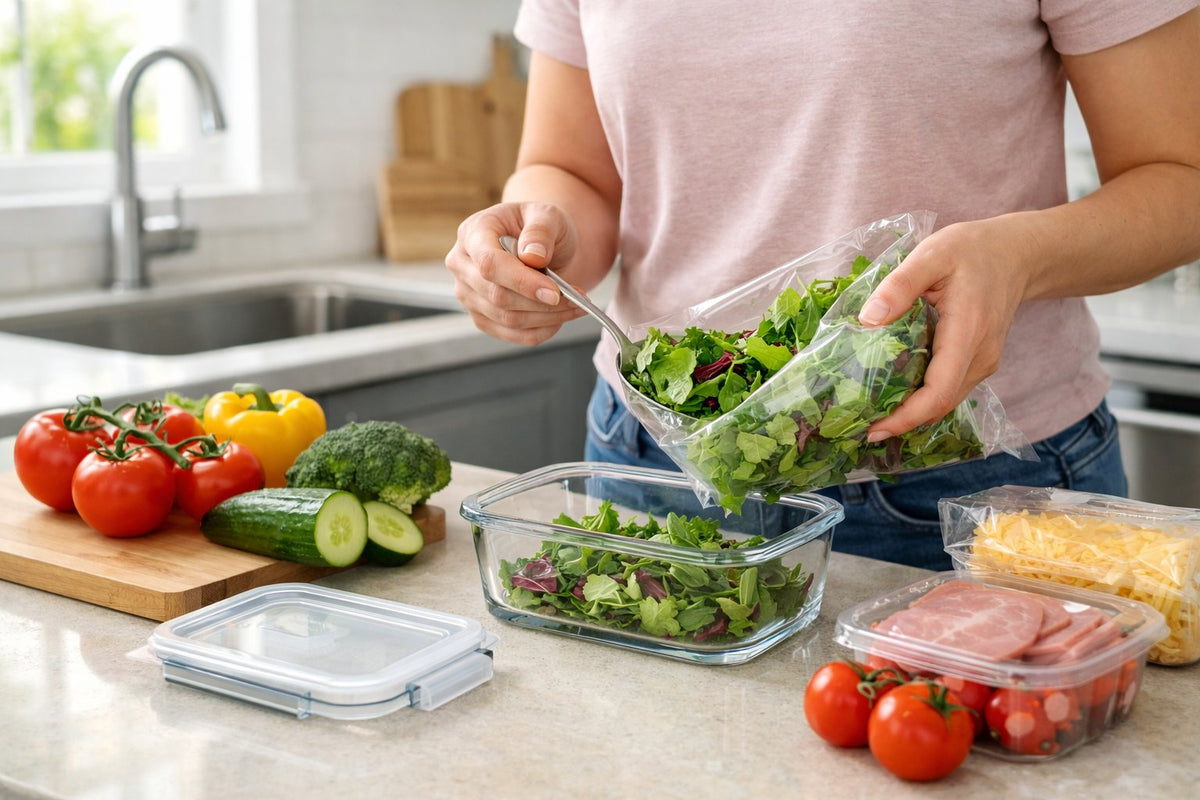
Fresh produce? That’s trickier. Leafy greens in those plastic boxes can get slimy fast because of trapped moisture. If you line a container with paper towels and move the greens over, they’ll usually stay fresher—some humidity is good, but not a swamp.
Berries are another special case. Their packaging gives them air, but if you store unwashed berries in a breathable container with a paper towel, they’ll typically outlast the ones left in their original plastic.
Good candidates for transferring:
- Bulk dry goods (grains, legumes, baking ingredients)
- Leafy greens that get soggy
- Herbs stored upright in water
- Opened cheese or deli meats
Risks of Air Exposure and Moisture
When food sits open to the air, it spoils faster. Dry goods soak up moisture and go stale or clump together. Airtight containers just do a better job than chip clips or a rolled-down bag.
Some produce, though, hates too much moisture. Carrots get slimy in sealed bags, but if you put them in a container with the lid slightly open, they’ll keep their crunch. It’s a balancing act—some foods want more air, others less.
Refrigerated stuff isn’t immune, either. Once you open a can of tomatoes or beans, move them to a covered container. The metal can react with acidic foods, especially once air gets in.
Preventing Cross-Contamination
Food safety is a big deal. Raw meat packaging can leak and contaminate other food in your fridge. Put raw proteins in sealed containers or bags on the lowest shelf. That way, if anything drips, it won’t ruin your ready-to-eat stuff.
Strong-smelling foods like onions or fish can stink up everything nearby if you leave them in thin packaging. Airtight containers keep those odors where they belong.
Key transfers for safety:
- Raw meat, poultry, seafood into leak-proof containers
- Opened canned goods into non-reactive storage
- Cut produce into clean, covered containers within two hours
- Leftovers from takeout containers into proper storage
Don’t forget to label containers with what’s inside and the date, especially after tossing the original packaging.
Foods That Should Be Transferred Immediately
Some foods just don’t last once you’ve opened them. Getting them into airtight containers right away keeps them fresher, longer.
Dry Goods: Flour, Sugar, Grains, and Beans
Flour and sugar are magnets for moisture and pests once you open their flimsy bags. Pantry bugs love them, and humidity is their enemy. Move these into airtight containers or glass jars as soon as you can.
Grains like rice, quinoa, and oats are in the same boat. Their packaging isn’t usually airtight, so air and bugs can sneak in. Beans, dried or split, also need protection from moisture to avoid clumping or mold.
Storage tips:
- Use food-grade plastic or glass containers with snug lids
- Label with the item and purchase date
- Store in a cool, dry spot
Glass jars are nice because you can see what’s inside and they’re easy to clean. Plus, they don’t hold onto weird smells.
Cereal, Crackers, and Snacks
Once you open cereal or crackers, they go stale fast. The boxes and bags they come in don’t seal well, especially if you live somewhere humid.
Move them to leak-proof containers to keep them crunchy and tasty way longer. Snacks like chips, pretzels, and cookies? Same deal. Even those resealable bags get less effective the more you open and close them.
Clear containers let you keep an eye on what you have, and smaller ones are handy if you want to avoid dumping everything into one giant bin.
Coffee, Nuts, and Powdered Ingredients
Coffee beans and grounds lose their flavor fast if exposed to air, light, or moisture. Most bags—even the ones with fold-over tops—don’t keep coffee fresh for long. Opaque airtight containers are best, but glass jars work if you keep them in a dark spot.
Nuts go rancid quickly because of their oils. Once you open them, put them in sealed containers. If you want them to last, the fridge isn’t a bad idea.
Powdered stuff like cocoa, protein powder, and powdered milk clumps up if moisture gets in. Their original containers often don’t seal well after opening. Move them to something with a tight seal to keep them usable.
When to Leave Food in Its Original Packaging
Sometimes, it’s better not to mess with the packaging. Some foods stay fresher when you just leave them alone—especially produce with specialized packaging, sealed perishables, and canned goods that are best left sealed until you need them.
Produce Packaging and Ethylene Gas
Apples do best in their original plastic bag in the crisper. The bag keeps them humid enough but lets ethylene gas out so they don’t overripen. If you want, poke a few holes to help the gas escape.
Broccoli and cauliflower? Leave them unwashed in their packaging until you’re ready to use them. The factory packaging keeps the moisture right and stops them from picking up fridge odors.
Keep these in original packaging:
- Bell peppers and chile peppers in the crisper
- Green beans, snap peas, and peas in the high-humidity drawer
- Carrots (without greens) in their bag
- Grapes in vented containers on the stems
Berries last longer in their original vented containers. Don’t wash them until you’re ready to eat—extra moisture speeds up mold. The packaging lets air in and stops them from getting crushed.
Sealed Perishables and Factory Packaging
Vacuum-sealed or modified atmosphere packaging for meat and poultry is hard to beat. It keeps things safe and fresh. Only rewrap if you’re freezing—then add a layer of foil or wrap over the original package.
Deli meats and cheeses in sealed packaging have special gas inside to slow bacteria. Opening the package exposes them to air, so keep them sealed until you need them.
Pre-washed salad mixes come in bags with special air control to keep them crisp. Regular containers can’t do the same.
Canned Foods Before Opening
Canned goods are shelf-stable because of their sealed packaging. High-acid stuff like tomatoes or pineapple lasts 12–18 months; low-acid veggies and meats can go even longer.
Don’t transfer unopened cans to other containers—the can itself keeps out air, light, and pests. Once you open it, though, leftovers need to go in the fridge in a covered container within two hours.
Pouched shelf-stable items work the same way. The packaging keeps oxygen out until you open it.
What to Do With Canned Goods After Opening
When you open a can, its protection is gone. You can’t just toss it back in the fridge and hope for the best—move the contents to a proper container within two hours.
Why Not Store Food in Opened Metal Cans
Storing food in an opened can is a bad idea. The metal can react with acids and oxygen, making your food taste metallic—especially things like tomatoes or fruit.
Even with modern linings, those are made for sealed cans. Once air and moisture get in, the protection doesn’t hold up. Plus, the jagged edge of an opened can is tough to cover and lets in bacteria and odors. Nobody likes that weird fridge taste.
Best Containers for Leftover Canned Food
Glass containers are ideal for leftovers—they don’t react with acids or absorb smells. Glass jars with tight lids work for everything from beans to fruit.
Food-grade plastic containers with airtight seals are lighter and work fine for most canned stuff. Look for BPA-free and make sure the lids seal well.
For things like canned ham or jerky, use small containers to cut down on air exposure. Always label with the date you opened it, and try to use up high-acid foods within 3–4 days and low-acid ones within a week.
Date Labels and Rotating Your Pantry
Once you move food to a new container, you’re in charge of tracking freshness. Labeling and knowing what the different date terms mean can help you avoid waste and keep things safe.
Understanding Expiration, Best By, and Use-By Dates
Food date terms can be confusing. "Best if used by" is about quality, not safety—if your beans are a month past that, they’re usually still fine.
"Use-by" is the manufacturer’s best guess for top quality. Most foods (except infant formula) aren’t federally regulated for these dates, but it’s a good guide for when to rotate your stock. "Expiration" shows up on perishables and means it’s time to toss.
Once you transfer stuff to a new container, those dates are gone. Write down when you opened or transferred it. Most dried goods last 6–8 months for flour, 1–2 years for rice and dried beans, and 1–2 years for dried pasta in airtight containers.
How to Label and Track Storage Times
It’s smart to mark every container with three things: the product name, the date you moved it, and the use-by date based on its typical shelf life. Grab a permanent marker and jot this info right on the container, or use masking tape that actually sticks.
Keep your date format the same each time—something like "Transferred: 01/02/26" and "Use by: 07/02/26" in big, legible numbers. Stick labels on both the top and front so you can spot dates no matter how things are stacked or shelved. For those opaque containers or Mylar bags, double-labeling means you won’t need to dig around just to check dates.
A simple spreadsheet or a pantry inventory app makes it much easier to track everything across your pantry. List each item, its transfer date, and calculate use-by dates based on standard shelf life. This is especially helpful if you buy in bulk and split things into several containers.
Storage Tips for Different Food Types
How you store food really depends on temperature, moisture, and how fast it spoils. Refrigerated stuff needs a bit more care with placement and packaging. Pantry staples? Organization is key to keeping them fresh and easy to find.
Refrigerator Storage Smarts
Think about where you put things in the fridge. Raw meats, poultry, and seafood should always go on the bottom shelf in sealed containers or their original packaging. Nobody wants meat juice ruining their produce.
The coldest spots—usually the back of the lower shelves—are best for dairy and other super-perishables. Door shelves are warmer and fluctuate, so stick condiments and long-lasting items there, not milk or eggs.
If you open a package of deli meat, cheese, or produce and can’t reseal it, transfer it into an airtight container. That helps keep moisture just right and stops odors from spreading. Leafy greens do better in containers with a paper towel to soak up extra moisture.
Cold Storage for Perishable Foods
Keep raw meat refrigerated at 40°F or below. Use or freeze raw poultry and ground meat within 1–2 days, and fresh beef, pork, lamb, or veal steaks, chops, and roasts within 3–5 days. Do not assume that transferring meat to an airtight container or vacuum-sealing it at home extends these recommended storage times.
Berries and other delicate produce often come in ventilated packaging that helps prevent moisture problems. You can keep them in those until you’re ready to use, or move them to clean containers lined with paper towels. Keep apples and bananas (they give off ethylene) away from greens and carrots, which are sensitive to it—they’ll ripen too fast otherwise.
Dairy usually stays freshest in its original container, which blocks light and keeps humidity right. Once opened, though, it’s better to transfer stuff like cottage cheese or sour cream to smaller airtight containers to cut down on air exposure and keep things fresh.
Organizing Your Pantry for Efficiency
Dry goods—flour, rice, pasta, cereal—need protection from moisture and bugs. The original packaging rarely seals well after opening, so airtight containers are just better for long-term storage. Clear containers let you see what’s inside and how much you’ve got left without opening everything.
Label containers with purchase dates, and stick to the first-in, first-out rule. That way, you use older stuff before newer buys and toss less food. Put the things you reach for most at eye level, and stash bulk or rarely used items up high or down low.
Group items by category—baking stuff together, grains in one spot, snacks in another. That makes meal prep less of a scavenger hunt and helps avoid buying doubles. Store light-sensitive things, like certain oils or spices, in opaque containers or darker pantry spots to keep them tasting right.
Frequently Asked Questions
Getting the details right—labeling, timing, and how you store things—makes all the difference between food staying fresh or turning risky. A little know-how here really pays off.
What steps should I follow to label food once it's out of its original packaging?
Always label containers with the food name and the date you moved it. This keeps things clear and helps you track how long something’s been sitting there.
Use a permanent marker or labels that won’t peel off in the fridge or freezer. If you can, add the original expiration date or at least when you first opened the package.
For frozen foods, make sure to note the freeze date and what’s inside. Everything looks the same when frozen, and nobody enjoys the mystery container game months later.
How soon can I stock my fridge with food after turning it on?
Wait at least 2-4 hours after turning on a new fridge before adding food. That gives it time to cool down to a safe 40°F or below.
Check with a refrigerator thermometer instead of guessing. Bigger fridges or really warm rooms might need up to 24 hours to settle at the right temp.
If you load food in too early, it won’t chill properly. That’s risky for food safety, and it makes the compressor work overtime—which wastes energy and can even shorten your fridge’s life.
Can leaving food uncovered in the fridge overnight really spell disaster?
Leaving food uncovered overnight probably won’t cause instant disaster, but it does mess with quality. Uncovered food dries out, soaks up weird fridge smells, and loses flavor and texture.
The bigger issue is cross-contamination. Uncovered foods can pick up bacteria from other stuff or spread their own.
Cover or seal food before you put it in the fridge. It keeps things moist, prevents freezer burn, and just makes your fridge a lot more hygienic.
What's the magic '2-2-4 rule' in food safety, and why should I care?
The 2-2-4 rule is an easy way to remember safe storage for perishable foods: don’t leave food out for more than 2 hours at room temp, refrigerate within 2 hours of cooking, and use leftovers within 4 days.
This stops bacteria from growing while food sits in the "danger zone" between 40°F and 140°F. Bacteria multiply fast at those temps, even if food seems fine.
When it’s hot out—over 90°F—be extra careful. Food shouldn’t sit out more than 1 hour.
Is there a specific time limit for safely eating food that's been left out?
Anything left at room temperature for more than 2 hours shouldn’t be eaten. This goes for cooked dishes, cut fruits and veggies, dairy—anything that needs refrigeration.
Above 90°F, that safe window drops to just 1 hour. Bacteria can double every 20 minutes in the heat, so food gets unsafe fast, even if it looks or smells okay.
You really can’t trust your eyes or nose here. If you’re not sure, just toss it. It’s not worth getting sick.
Does transferring food to different containers extend its fridge or freezer shelf life?
Moving food into airtight containers usually keeps it fresher than just leaving it in flimsy, half-open packages. The real advantage? Less air sneaking in, less moisture messing things up, and fewer chances for stray fridge smells or germs to get in.
If you toss opened deli meats or cheese into a decent airtight container, you might squeeze out another day or two of freshness in the fridge. In the freezer, the difference can be much bigger—airtight containers help block freezer burn and keep things tasting right for a good while longer.
Of course, the container itself isn’t magic. It’s that tight seal that counts. And let’s not forget: you still have to get food chilled or frozen quickly, and stick to safe storage times.
Share:
Understanding Air, Light, and Moisture in Food Storage
How Improper Storage Creates Invisible Food Waste