

Check out our latest collection of compact vacuum sealer for food!
A small freezer can feel full long before it is actually organized. When groceries, leftovers, meal prep, and frozen staples all compete for space, the wrong setup makes cooking feel harder than it should. The good news is that a smarter storage system can turn even a tight freezer into a cleaner, faster, and more useful part of your kitchen.
The best setup for small freezers uses flat freezer bags, stackable containers, clear bins, and simple zones that keep similar foods together. This helps you see what you have, grab meals faster, and avoid wasted space.
In this guide, you will learn which storage containers, freezer zones, drawer systems, and kitchen organization tools work best for small freezers and busy kitchens.
Key Takeaways
- Flat, stackable containers and labeled freezer bags save vertical space in small freezers
- Group similar foods into zones, and keep the stuff you use most at eye level
- Use vertical storage hacks and door organizers to grab extra space in cramped kitchens
Maximizing Every Inch: Small Freezer Organization Essentials
Small freezers force you to get creative. The right mix of clear bins, flat freezing, and simple labeling turns a cramped space into something you can actually use.
Clear Bins and Categorized Zones
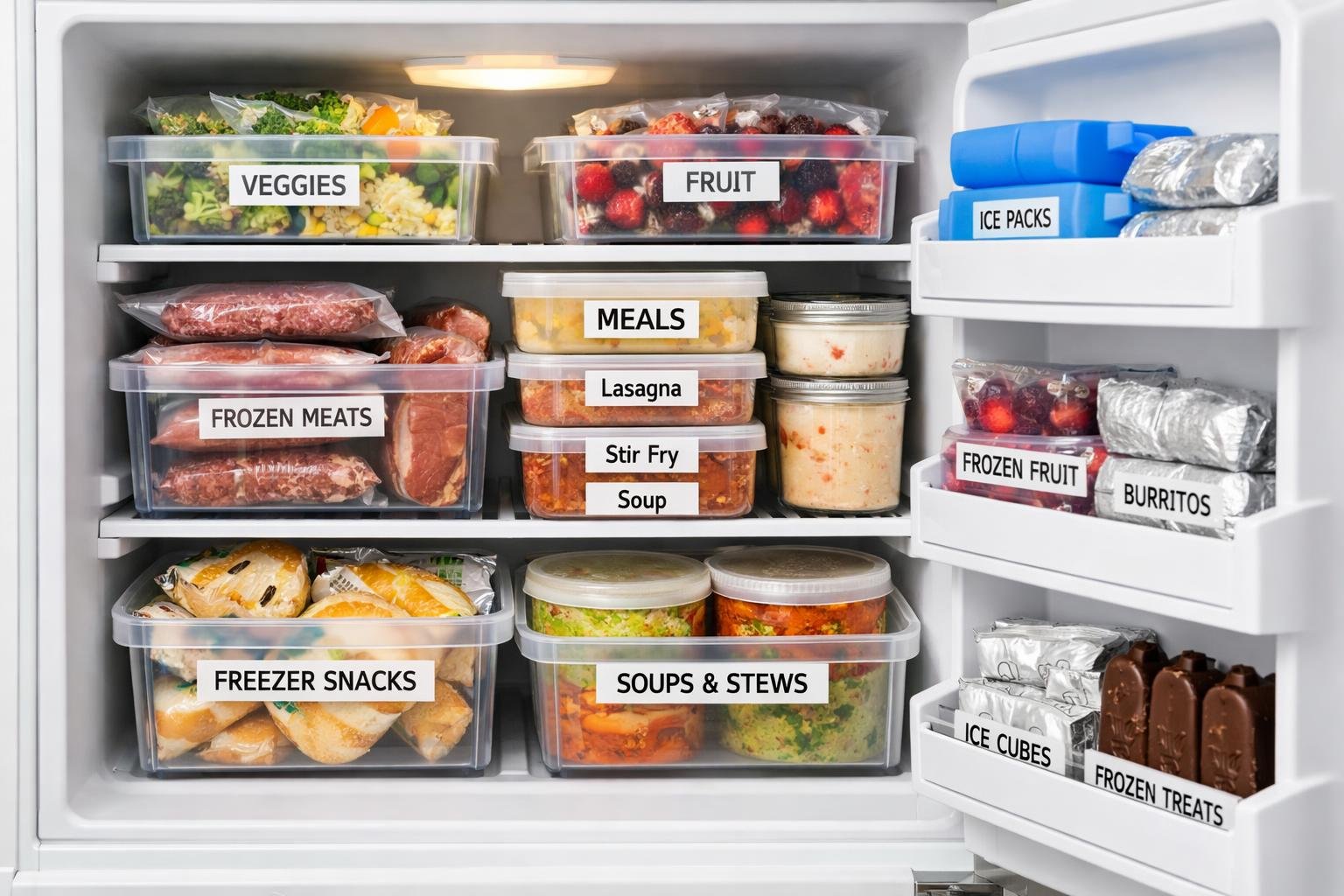
We break up small freezers into zones with clear plastic bins. Each bin gets a job: one for proteins, another for veggies, one for meals. That way, reaching for something does not trigger a frozen food avalanche.
Clear bins let you see what is inside, so there is no need to guess what each frozen item is. We slap labels on the front and keep like things together. Chicken in one bin, ground meat in another. Easy.
The freezer door? That is for little stuff: butter, herbs frozen in ice cube trays, bags of nuts. We skip ice cream here because it gets freezer burn fast.
Zone Setup for Small Freezers:
- Top section: Frozen fruits, veggies, bread
- Middle section: Meal prep containers, leftovers, batch meals
- Bottom section: Raw meats, fish, so if they leak, it is not a disaster
- Door: Butter, frozen herbs, small stuff you grab a lot
Stackable Containers and Flat Freezing
We freeze stuff like soups or sauces flat in bags, then stand them up like files once they are solid. A flat bag takes up way less space than a round container.
Square or rectangular containers beat round ones every time for space. We portion proteins before freezing, so we do not have to thaw a whole pack for one meal.
For meal prep, we stick to one container size that stacks well. Glass with straight sides nests when empty and stacks tight when full.
Bulky boxes? Out. We ditch cardboard packaging for things like waffles or fish sticks and just keep the bags. If we need the cooking instructions, we tape them right on.
Labeling and Rotation Strategies
Everything homemade gets a label with what it is and the freeze date. Permanent marker on bags, masking tape on containers. No more mystery meals lurking in the back.
We follow “first in, first out,” with old stuff up front and new stuff in back. After a grocery run, we shift things forward and tuck the newbies behind.
Quick Reference Label System:
| Item Type | Label Info | Typical Storage Time |
|---|---|---|
| Cooked meals | Dish, date, servings | 2 to 3 months |
| Raw meats | Cut, weight, date | 3 to 6 months |
| Veggies | Type, blanched or raw, date | 8 to 12 months |
| Baked goods | Item, date | 2 to 3 months |
We keep a freezer list on our phone or stuck to the door. It helps avoid buying doubles and makes meal planning way faster.
Best Storage Containers for Tight Spaces and Quick Meals
The right containers make all the difference. They use vertical space, keep food visible, and with drawer organizers or turntables, you can actually find what you need.
Canisters and Airtight Containers
We go for square or rectangle canisters because they stack better and do not waste corners. Round ones just do not fit as well.
Airtight seals are non-negotiable. Silicone gaskets hold up better than basic snap-on lids, especially after a few dishwasher runs.
Translucent containers let us see what is inside, saving time and keeping the cold air in. Glass containers are handy because they freeze and reheat, so you can cook and store in the same dish.
Nesting containers matter more than you would think. Sets that shrink down when empty free up space for other essentials.
Space-Saving Drawer Organizers
Drawer organizers carve out zones for containers and end the lid-hunting headache. We use adjustable dividers because they are way better than fighting with a fixed layout.
Vertical lid holders? Total game changer. Instead of a slippery pile, lids stand up straight and do not slide everywhere.
Expandable organizers grow with your collection. The best ones fit snug in most drawers and do not slide around.
Non-slip bases keep things from shuffling every time you open a drawer. For deep drawers, tiered organizers keep small containers visible instead of buried.
Shelf Risers and Turntables
Shelf risers double vertical space. Flat stuff like pizza can go below, while containers sit above.
Turntables, also called lazy Susans, are awesome in corners or deep spots where things vanish. A spin brings everything into reach, with no more digging.
Nine-inch turntables fit small freezers, 12-inch ones are great for pantries. Big ones are handy for appliances you need to grab fast.
Non-slip surfaces are a must. Divided turntables keep like items together, and raised edges save you from spills.
Drawer and Cabinet Hacks for Busy Kitchens
Good drawer and cabinet setups keep your go-to tools handy and stop the chaos that slows down dinner. The right dividers and organizers turn clutter into a real workstation.
Drawer Dividers and Sliding Organizers
Drawer dividers are a must. Adjustable bamboo or plastic ones let you make custom spaces for utensils and gadgets. Fixed ones are fine for silverware, but expandable ones fit all sorts of drawers.
Sliding organizers create stacked tiers, which are great for spices since you can see every label at a glance. Deep drawers need vertical dividers for baking sheets, cutting boards, and platters so they stand up instead of lying flat.
We keep our most-used stuff in the easiest drawers, including kitchen shears, measuring spoons, and wooden spoons. Rarely used tools go up or down. Clear acrylic organizers help us see what is running low.
Cabinet Organizers and Lid Solutions
Cabinet organizers tackle the mess of pots, pans, and lids. Vertical lid holders go inside doors or on shelves, keeping everything separate and easy to grab.
Stackable shelf risers double cabinet space. We put serving bowls up top, daily plates below. Under the sink, sliding drawers pull out fully, so there is no more crawling into dark corners.
Lazy Susans are still the MVP for corners and deep shelves. We use them for oils, vinegars, and condiments that would otherwise disappear. Tiered versions hold even more.
Pullout and In-Drawer Knife Storage
Knife storage should be safe and easy. In-drawer knife blocks protect blades and keep counters clear. They fit standard drawers and hold knives flat.
Magnetic strips on the wall or inside cabinet doors show you every knife at a glance. We keep them near our main prep area but out of high-traffic spots.
Knife inserts with angled slots keep blades from clattering. We like ones with rubber grips because they do not shift when you open the drawer. Some even have slots for shears or peelers.
Smart Wall and Vertical Storage Solutions
Wall storage turns empty space into a home for utensils, spices, and tools, freeing up counters and freezer prep areas. Pegboards, open shelves, and magnetic strips keep essentials right where you need them.
Pegboards for Utensils and Gadgets
A pegboard above your counter or near the freezer makes grabbing tools a breeze. Measuring cups, tongs, spatulas, and bag clips all get a spot.
Pegboards are flexible. Move hooks and baskets around as your needs change. A small one inside a pantry door is perfect for light stuff like chip clips or shears.
Mount it at eye level for quick grabbing during food prep. Labeled hooks help everyone put things back where they belong.
Open Shelving You’ll Actually Use
Open shelves work best for daily stuff, including containers, labels, markers, and ingredients. Near the freezer is ideal.
Narrow shelves, about 6 to 8 inches deep, are great for spices and oils. Deeper shelves stack containers or freezer bags. We mount shelves 12 to 16 inches apart so nothing gets crammed.
Keep your most-used items at arm level. Higher shelves are for extras or seasonal things. Bins or baskets keep shelves tidy and make mornings less frantic.
Magnetic Knife and Spice Racks
A magnetic knife strip on the wall frees up a whole drawer and keeps knives safer than tossing them in with everything else. Hang it above your prep spot where you portion freezer food.
Magnetic spice racks are a lifesaver when cabinet space is tight. We use magnetic jars on the fridge or a metal strip, keeping 20 to 30 spices right in sight. They are super handy when seasoning before freezing.
Label the tops of spice jars so you can spot what you need without squinting. It is a small thing, but it saves time when you are in a rush.
Door, Pantry, and Odd Spot Organizing Ideas
Pantry doors, weird wall spaces, and random vertical spots can be storage goldmines without a remodel. These tricks are especially handy when your freezer is full and you still need your must-haves close by.
Over-the-Door Racks and Pantry Organization
Door-mounted storage turns all that empty vertical space into useful storage with no drills and no commitment. Over-the-door racks really shine for lightweight stuff you grab all the time: think spice jars, snack bags, or those little condiment bottles that always end up lost in the back.
Most racks use metal hooks that slide right over the top of a standard door, holding a few tiers of shallow shelves. You can actually see what you have, which stops ingredients from disappearing into deep cabinet black holes. On pantry doors, wire racks beat out solid shelves since they let air circulate and make it easy to spot what is there.
Best items for door storage:
- Individual spice bottles
- Seasoning packets and sauce mixes
- Small oil bottles
- Snack-sized items
- Aluminum foil and plastic wrap boxes
Clear bins with handles, mounted on pantry doors, act like shallow pull-out drawers. If you label each bin by category, everyone knows where things go, so there is no more mystery stashing after grocery runs.
Adhesive Bins and Hanging Baskets
Adhesive bins stick straight onto walls, cabinet sides, or inside pantry doors with no tools needed. They are best for super light stuff since most hold only about 2 to 3 pounds.
We usually stash things like tea bags, coffee filters, or random small packets in these. Stick them at eye level near your prep space for quick grabs.
Hanging wire baskets can handle more weight and squeeze storage into awkward corners or skinny wall sections. With S-hooks, you can hang them from shelves, cabinet edges, or rails. They are especially handy for produce like onions and potatoes that need air, freeing up precious fridge space.
Wire baskets do not trap moisture, and you can see what is inside right away. Stack a few vertically on wall bars to use up every inch in a narrow pantry.
Bottle Storage and Niche Solutions
Bottles are tricky because they are tall, oddly shaped, and hog shelf space. Lazy Susans are a lifesaver here: spin to reach what you need instead of digging through a crowd. On a deep pantry shelf, group bottles by type: oils, vinegars, sauces.
If you have a narrow gap between appliances or cabinets, a slim rolling cart, about 6 to 8 inches wide, can slide right in and hold bottles or tall containers. For bulk cans, those gravity-fed dispensers keep things rotating and easy to grab.
Niche storage ideas:
- 4 to 6 inch gaps: magnetic spice strips, slim pull-out organizers
- Corners: rotating shelves, triangular wire baskets
- Under-shelf: repurposed cup holders for small bottles
It is worth measuring these weird spaces before you buy organizers because guesswork leads to a lot of “almost fits” that just frustrate.
Expert-Approved Systems for Stress-Free Meal Prep
The right setup takes freezer meal prep from total chaos to something you can actually manage. A few smart tools and habits help you make the most of a small freezer, so your prepped meals are not just buried in icy limbo.
Lazy Susans for Fast Access
Turns out, lazy Susans are not just for the dinner table. In a small freezer, a 9-inch turntable fits most shelves and makes it easy to reach stuff in the back.
We put the meals we use most often on the outer edge and bulk items in the middle. No more unloading half the freezer to grab one lunch.
Clear plastic turntables are better than metal in the freezer because they do not freeze to condensation. We label everything with names and dates on the outside, so it is easy to spot. The spinning also keeps containers from freezing together in one big block.
Professional Organizers' Tips
Pros swear by vertical dividers to carve out zones in a packed freezer. Wire shelf dividers keep meal prep containers separate from veggies and other staples, so nothing comes crashing out when you open the door.
The “first in, first out” trick keeps food fresh. Put new meals behind older ones, so nothing gets lost in the back. Some organizers like keeping a simple inventory list on the door with meal names and freeze dates.
Uniform container sizes matter more than you would think. Stackable rectangular containers make stable towers. Mixing round and square containers just wastes space, especially in a tiny freezer.
Meal Prep Routines That Save Time
Sunday batch cooking goes a lot smoother with a tidy freezer. The best routine we have found is cooking 2 to 3 recipes at once, then cooling and portioning everything in about two hours.
Durable glass containers hold up better in freeze-thaw cycles. Leave about half an inch of headspace for expansion. We label right away with freezer markers. Otherwise, good luck remembering what is what.
Match container size to your actual portions. We use 25 to 34 ounce containers for singles and 68 ounce for family meals. Locking lids keep out freezer burn and help with the weekly Tetris game of fitting new meals around the old ones.
Bonus Solutions: Making the Most of Every Kitchen Quirk
Stashing away bulky appliances and clearing your counters takes some clever use of hidden spots and overhead storage. The goal: keep essentials close but out of the way, so your workspace stays open.
Appliance Garage and Hidden Storage
An appliance garage gives you a home for countertop gadgets without hogging space. These cabinets have sliding or tambour doors. Just move them aside or up, and your blender or toaster is right there, but hidden.
Adding outlets inside the garage means you do not have to plug and unplug every time. Handy in small kitchens where every inch counts. You can prep without shuffling appliances back and forth.
For freezer tools, stash vacuum sealers and other gear in a similar hidden spot near the freezer. That way, your packing station is all in one place. Keep stuff you use weekly at eye level, and stash the once-in-a-while gadgets higher or lower.
Pot Racks and Multi-Purpose Turntables
A pot rack above the stove or prep area turns empty air into storage. Metal bars or grids keep pots and pans handy, freeing up cabinets for containers and meal prep supplies.
Wall-mounted racks work better than ceiling ones in tight spaces because they avoid head bumps and blocked sight lines.
Turntables fix the deep cabinet headache. A lazy Susan in a corner cabinet lets you spin for oils, spices, or cans without digging. We even use them in the fridge to grab frozen herbs or small containers during meal prep. Square turntables fit corners better than round, hugging the walls while still spinning smoothly.
Frequently Asked Questions
Small freezer organization works best when containers stack neatly, seal tightly, and make food easy to see. These quick answers cover the basics.
What container sizes and shapes stack best in a small freezer without wasting space?
Rectangular or square containers with straight sides stack best. Shallow 2 to 3 inch containers and flat freezer bags also save space and are easy to file upright.
Which freezer-safe materials are least likely to crack, warp, or get brittle over time?
Borosilicate glass, thick silicone, and heavy-duty freezer-safe plastic hold up best. Avoid thin plastic containers that are not marked freezer-safe.
What are the safest types of lids and seals for preventing freezer burn and leaks in a packed freezer?
Locking lids with silicone gaskets seal well and help block air. Double-seal freezer bags also work well when you press out extra air before freezing.
Which containers can go from freezer to oven or microwave without creating a cleanup nightmare?
Borosilicate glass is the most flexible option for freezer, oven, and microwave use. Remove the lid first and let the dish rest briefly before heating.
How can I organize a small freezer for batch cooking so I can grab meals fast on busy weeknights?
Use separate bins for breakfasts, lunches, dinners, and ingredients. File flat freezer bags upright and keep the meals you use most near the front.
What labeling and portioning system helps track dates and servings so food does not get forgotten in the back?
Label each item with the meal name, freeze date, and servings. Keep older items in front and use a freezer list on the door or your phone.
Share:
How Can Batch Cooking Be Structured For Better Freshness And Easier Weeknights
What Mistakes Shorten The Shelf Life Of Prepared Meals In Cold Storage