

Check out our latest compact vacuum sealer for food collection!
Cooking at home can feel easier and more enjoyable with a few smart changes. You do not need a full kitchen makeover or advanced skills to get better results. Small improvements in how you prep, organize, and season your food can make everyday meals feel smoother from start to finish.
Simple upgrades like organizing storage, prepping ingredients ahead of time, and using fresh seasonings can improve both your cooking process and your meals. When your kitchen supports the way you cook, it becomes easier to save time, reduce stress, and enjoy the food you make. In this guide, you will learn practical tips to build a more efficient kitchen routine and create better meals with less effort.
Key Takeaways
- Organizing tools and storage makes the kitchen flow better and cuts frustration
- Prepping ingredients before cooking helps you work faster and more smoothly
- Fresh ingredients and good seasoning methods make meals taste way better
Upgrade Your Kitchen Tools for Effortless Cooking
The right kitchen tools can seriously cut prep time and make cooking feel less like a chore. When you invest in reliable essentials—sharp knives, solid measuring tools—you set yourself up for a smoother, more enjoyable kitchen experience.
Choosing High-Quality Essentials
You don’t need every gadget out there, but the tools you use should actually work. High-quality kitchen tools last longer, feel better in your hands, and make cooking tasks less frustrating.
Start with the basics: a solid chef’s knife, a reliable cutting board, measuring cups and spoons, and a couple of sturdy mixing bowls. These are the items you grab every day, so they need to hold up.
What makes a tool high-quality:
- Durable materials that don’t warp or dull easily
- Comfortable design that fits your hand
- Easy to clean without fussy parts
- Multi-purpose so you’re not drowning in single-use gadgets
Going for quality over quantity means your kitchen actually works for you. Cheap tools might save you money at first, but they usually need replacing fast. Honestly, buying once and buying right saves both money and space over time.
Knife Skills That Change Everything
A sharp knife is a game-changer. Even the best recipes can turn into a slog if you’re hacking away with a dull blade.
Learning a few basic knife skills—proper grip, steady cutting, knowing which knife for what—makes prep faster and safer. A chef’s knife handles most jobs, while a paring knife is perfect for smaller, detail work.
Keep your knives sharp with regular honing and the occasional pro sharpening. A sharp blade needs less force, so you’re less likely to slip and cut yourself. Investing in a good knife and basic sharpening tools pays off every time you cook.
Find the Right Cutting Board
Your cutting board gets a workout, so it needs to be durable, easy to clean, and gentle on your knife edges.
Wood and bamboo boards are naturally antimicrobial and knife-friendly, though you’ll need to oil them now and then. Plastic boards are dishwasher-safe and cheap, but they can develop grooves that hold bacteria. Newer options like titanium are super sanitary and resist odors, though they’re less common.
Have at least two cutting boards—one for raw proteins, one for everything else. And size matters: too small, and stuff spills off; too big, and it hogs the counter.
Measuring Cups and Spoons You Can Trust
Accurate measurements matter, especially in baking. You want tools that give you consistent results every time.
Look for measuring cups with clear markings that don’t fade. Metal or glass beats plastic, which can warp. For dry ingredients, flat rims help you level off for exact amounts.
Measuring spoons should nest together and have long handles for digging into spice jars. Sets that include odd sizes like 1/8 teaspoon are handy for precise seasoning.
Having two sets means you won’t have to stop and wash between wet and dry ingredients—a tiny upgrade, but it keeps things moving.
Streamline Your Kitchen Routine Like a Pro
A steady kitchen routine changes how you approach cooking. When you build good habits and set up your kitchen for flow, you spend less time hunting for tools and more time actually making food.
Embrace Daily Cooking Habits
Simple daily habits lay the groundwork for smoother cooking. Clearing the sink and wiping counters in the morning gives you a clean slate for meal prep.
Prepping ingredients right after shopping—washing and chopping veggies, storing them in clear containers—makes weeknight dinners faster. This pairs nicely with checking what needs to be used up, which helps cut down on food waste.
Key daily habits that help:
- Empty the dishwasher in the morning
- Wipe counters after meals
- Put away ingredients right after using them
- Check pantry and fridge before planning meals
- Prep breakfast the night before
Resetting your workspace between tasks helps too. Take 30 seconds to clear used bowls and wipe up spills. It keeps chaos at bay, especially during multi-step recipes.
Optimizing Your Kitchen Flow
How you arrange your kitchen tools and ingredients makes a big difference. Keep everyday items at arm level; stash rarely used stuff up high or down low.
Set up zones for different tasks. The prep zone—cutting boards, knives, mixing bowls—should be near the sink. Cooking zone? Oils, spices, utensils by the stove. Storage containers live near the fridge for quick leftovers.
Essential kitchen zones:
- Prep area: cutting boards, knives, peelers, bowls
- Cooking station: oils, go-to spices, spatulas, tongs
- Baking corner: measuring cups, flour, sugar, baking sheets
- Clean-up spot: dish soap, sponges, drying rack
Group like items in drawers and cabinets. All baking supplies on one shelf, so you’re not digging all over for things.
How Kitchen Routine Impacts Results
Your habits in the kitchen shape how your meals turn out. Following the same prep sequence means you’re less likely to skip steps or forget ingredients.
A reliable routine helps with food safety, too. Weekly resets give you a chance to check dates and rotate stock, so nothing gets wasted or forgotten.
You’ll cook with more confidence when you know where things are and how long tasks take. That certainty makes it easier to try more ambitious recipes.
Regular maintenance keeps things running. Sharpen knives monthly, deep clean the fridge every few months, and reorganize drawers before they get out of hand. It’s not glamorous, but it pays off.
Master Prep with Effective Mise en Place
Getting ingredients ready before you start cooking stops the frantic mid-recipe scramble for spices. When everything’s organized ahead, timing finally works with you, not against you.
Prep Ahead for Seamless Meals
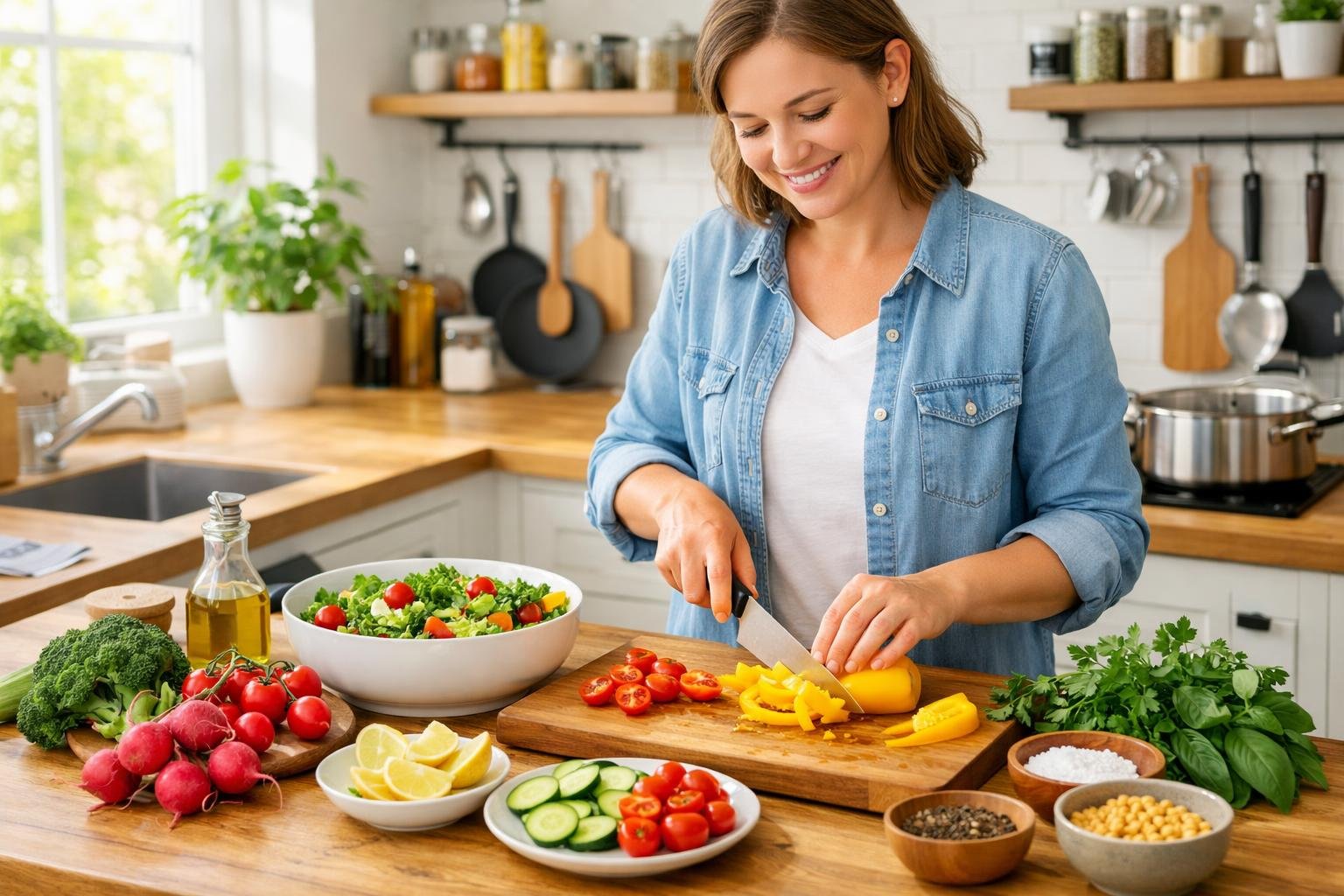
Mise en place—having everything in its place—means you finish all your chopping, measuring, and arranging before you heat the pan. Gather every ingredient, put them in little bowls or containers near your workspace, and you’re set.
Read through the recipe twice to spot what needs prepping. Then tackle each part: wash and chop veggies, measure spices, bring stuff to room temp if needed. Arrange everything in the order you’ll use it, making the flow across your counter make sense.
Professional kitchens swear by mise en place for a reason—it removes stress and guesswork. At home, it can turn chaotic cooking into a calm, controlled process.
Meal Prep Strategies for Home Cooks
Set aside a block of time to prep ingredients you’ll use in multiple meals. Chop a big batch of onions on Sunday and you’ll have them ready for several dinners—no more repetitive knife work.
Multi-use prep ideas:
- Roast a few sheet pans of veggies for grain bowls, pasta, or sandwiches
- Cook proteins in larger batches so they’re easy to reheat
- Wash and portion salad greens into containers with paper towels
- Pre-measure spice blends for recipes you make often
Store prepped ingredients in clear containers so you can see what’s left. Label with dates to use things while they’re fresh. Root veggies stay crisp in water, and herbs last longer wrapped in damp towels in sealed bags.
Organizing Ingredients for Speed
Set up your prep station to cut down on extra steps. Ingredients sit on one side of the board; prepped stuff moves to the other or into containers.
Group similar tasks—chop all veggies, then herbs, then proteins last to avoid cross-contamination. Keep your knife, board, and waste bowl close together.
Quick organization tips:
- Place salt, pepper, and oil near the stove
- Keep measuring spoons and cups in a container on the counter
- Use small bowls (ramekins are great) for measured ingredients
- Have a big bowl for scraps so you’re not running to the trash
Arrange your mise en place based on cooking order, not just the recipe list. If garlic goes in last, it sits furthest from the stove. This setup creates a visual timeline so you don’t miss a beat.
Smart Storage for a Clutter-Free Cooking Space
Good storage changes how you move in the kitchen. When ingredients are visible, tools are easy to grab, and counters stay clear, cooking speeds up and feels less stressful.
Create Storage Systems That Work
Storage should fit how you really cook—not just look good in photos. Pull-out spice racks by the stove keep seasonings handy. Vertical dividers in drawers stop pots and lids from piling up. Deep drawers under the cooktop are better than cabinets for heavy cookware—you can see everything at once.
Group items by task: baking stuff together, breakfast foods on one shelf, meal prep containers in a drawer. Clear bins and matching jars help you spot when staples are running low, so you’re not caught off guard mid-recipe.
Food storage basics matter, too. Glass containers with visible contents cut down on waste because you remember what’s there. Labelled pantry and fridge zones turn storage into a system, not a guessing game.
Countertop Setups for Every Cook
Clear counters give you space to work, but keeping the right things within reach speeds up prep. Oils, salt, and pepper live near the stove in matching containers on a tray—looks tidy, works well.
Knife blocks tucked in drawers (not on counters) free up space and keep blades safe. Reserve counter space for daily-use appliances like the coffee maker; stash the rest in cabinets.
A single wooden cutting board propped up adds warmth without eating up your prep area. This way, your kitchen stays functional and ready for whatever you feel like cooking next.
Organise Tools for Easy Access
Kitchen storage just works better when tools actually live where we use them. Utensils belong in crocks by the stove, measuring cups tucked into baking bins, colanders hanging on hooks near the sink. No more running laps across the kitchen for a spatula.
Drawer dividers save us from the chaos of tangled spatulas and whisks. Adjustable bamboo inserts are a favorite—they fit all sorts of drawer sizes and create neat little compartments.
We keep pots and pans with their lids using vertical pegs or racks on cabinet doors. That way, no more avalanches when you tug out a pan. Pull-out shelves in lower cabinets are a game changer, too—no more awkward reaching for heavy stuff, especially when you’re in a hurry.
Elevate Flavour with Fresh Ingredients and Seasoning
What we add to our food—and when—totally changes the final flavour. Using ingredients at their peak, and layering herbs and spices at the right times, makes even basic meals taste richer and more satisfying.
Choosing Seasonal Ingredients
Seasonal produce just tastes better. When tomatoes show up in August or squash in October, they’ve had time to develop full flavour and sweetness. The difference is real.
Buying in season also means less time in trucks and storage, so we get crisper, juicier ingredients. A strawberry picked nearby in June? Worlds apart from a winter import.
To keep things fresh, we store produce right as soon as we get home. Leafy greens wrapped in damp towels last longer in the crisper. Stone fruits like peaches and plums ripen on the counter, then move to the fridge. Root veggies stay happy in cool, dark spots with airflow.
Planning meals around what’s in season keeps things interesting and helps us avoid bland, out-of-season standbys.
Unlock the Power of Herbs and Spices
Fresh herbs and whole spices bring so much more aroma and taste thanks to their volatile oils. Those fade fast once you chop or grind them, so freshly chopped basil or just-ground pepper always pops more than the pre-packaged stuff.
Hardy herbs—think rosemary, thyme, oregano—can handle longer cooking and even get better. Delicate types like parsley, cilantro, and basil lose their spark if cooked too long, so we toss them in at the end or use them as a garnish.
Toasting whole spices in a dry pan for a minute before grinding wakes up their oils and deepens the flavour. Cumin, coriander, fennel—this trick works wonders.
We keep whole spices in airtight jars away from heat and light. Fresh herbs last longer upright in a jar of water, loosely covered with a bag.
Cook More Nutritious Meals Every Day
Fresh, well-stored ingredients hold onto more vitamins and minerals. Leafy greens, for example, lose vitamin C quickly after harvest, so using them soon after shopping keeps the nutrition high.
Herbs and spices aren’t just for taste. Turmeric brings curcumin, garlic has allicin, and ginger offers gingerol—all with anti-inflammatory perks. Using these often is a simple way to boost meals.
Combining seasonal veggies with aromatic herbs makes plant-based dishes more tempting. Even a basic roasted veg plate gets a lift from fresh herbs and a squeeze of lemon.
Meal prep helps, too. Washing and portioning veggies right after shopping makes it easier to use them. Stocking a variety of dried herbs and whole spices means bland food is never the only option.
Experiment with Cooking Methods for Better Results
How we cook something can totally change its texture, taste, and even nutrition. Choosing the right technique for each dish can turn everyday meals into something you’ll actually want to make again.
Explore Essential Cooking Techniques
Mastering a few core methods opens up tons of options. Dry-heat techniques—like roasting, sautéing, and grilling—give us those deep, caramelized flavours. They’re great for veggies, meats, and even fruit if you want that concentrated taste.
Moist-heat methods (steaming, poaching, braising) keep food tender and preserve nutrients. Steaming veggies keeps them bright and crisp—plus, no extra fat. Braising tough meat low and slow in liquid breaks it down into something fork-tender.
Pressure cooking is kind of a hybrid. You get the depth of slow cooking but way faster, and it locks in moisture and nutrients.
Choose the Right Method for Each Dish
Picking how to cook something starts with what you want out of it. Roasting root veggies at high heat caramelizes sugars and crisps the outside. Delicate fish needs gentle cooking—poaching or steaming keeps it from falling apart.
We look at timing and texture, too. Quick sautéing keeps greens bright and a bit crisp, great for sides. Long braises turn cheap cuts into melt-in-your-mouth mains.
How you cook something changes how leftovers keep. Braised dishes often taste better the next day as flavours meld. Crispy roasted foods need reheating in the oven, not the microwave, to get that texture back.
Frequently Asked Questions
Small kitchen upgrades can make daily cooking easier, faster, and more enjoyable. These concise answers cover simple ways to improve prep, storage, and flavor.
What's the secret to keeping herbs fresh that'll make your sauces sing?
Store tender herbs like parsley and cilantro upright in a glass with a little water. For hardy herbs like rosemary and thyme, wrap them in a slightly damp paper towel and refrigerate them in a sealed container.
How can proper knife sharpening make your meal prep a cut above the rest?
A sharp knife cuts more cleanly, speeds up prep, and helps ingredients cook more evenly. It also takes less force to use, which improves control and safety.
Got any clever spice organization tips to spice up the flavour game instantly?
Keep spices where you can see them clearly, such as in labeled jars on a tiered rack or drawer insert. Store your most-used spices close to the stove for quicker access while cooking.
What are your top quick fridge hacks to keep your veggies vibrant and lasting longer?
Line crisper drawers with paper towels to absorb extra moisture and store vegetables in breathable bags or containers. Washing and drying greens well before storing them also helps them last longer.
Can you dish out the scoop on the best non-stick pans for hassle-free cooking?
Ceramic and hard-anodized non-stick pans are both practical for everyday cooking. Use low to medium heat and avoid metal utensils to help the coating last longer.
What's the best way to arrange your pantry to save time and keep your ingredients top-notch?
Group similar items together and place everyday essentials at eye level. Use clear airtight containers for dry goods so they stay fresh and are easy to find.
Share:
How Do You Improve Cooking Results Without Complex Techniques
How Can You Improve Golf Consistency Without Changing Your Swing