

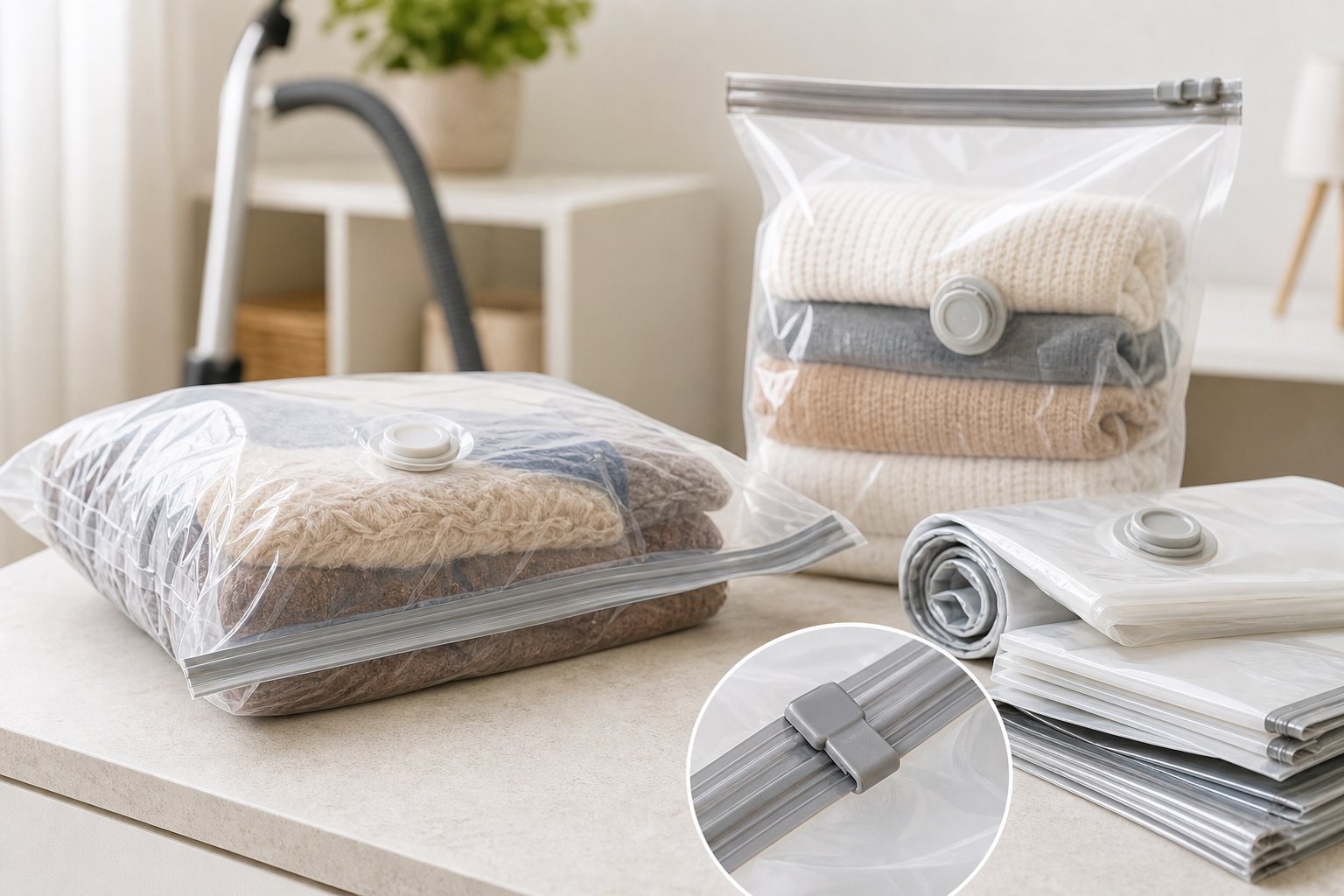
Check out our latest collection of compact vacuum sealer!
Storage should make life easier, not leave you fighting with weak seals, leaky bags, or bulky piles that slowly puff back up. Vacuum storage bags can be a simple way to save space, protect fabrics, and keep closets, suitcases, and seasonal items easier to manage. The real difference comes down to the features that help a bag last through repeated use.
For daily reuse, the most important features are a strong double-zip seal, durable puncture-resistant material, a reliable one-way valve, and compatibility with both vacuums and manual pumps. These details help the bag hold compression, clean more easily between uses, and stay practical for home storage or travel.
If you want vacuum bags that do more than shrink clothes once and fail later, this guide will show you which features matter most for reuse, cleaning, storage, and everyday convenience.
Key Takeaways
- Tough seals and thick material matter most for bags you’ll use again and again
- Bags that fit both vacuums and portable pumps give you way more flexibility
- The right size and filtration keep your things protected and help you save space, whether at home or on the go
Key Types of Vacuum Bags and Their Uses
Not all vacuum bags do the same job. You’ve got bags for picking up dust, compressing clothes, or even keeping food fresh. Each type uses different materials and designs, and that really affects how well they hold up and how many times you can reuse them.
Everyday Cleaning Bags
You’ll usually see three main types of vacuum bags for upright and canister vacuums, depending on filtration. Paper bags are the cheapest, but they rip easily if you overfill them and suction drops off as they fill up. Synthetic bags, made from polypropylene or polyester, keep airflow steady longer and don’t mind a bit of moisture.
HEPA-certified bags trap 99.97% of particles at 0.3 microns, so if you’ve got allergies or pets, they’re a must. Always check your vacuum’s model before buying, since universal bags almost never fit right, no matter what the packaging says. The collar and bag size can vary a lot between brands.
Most disposable vacuum bags just aren’t built for reuse. If you empty and reinstall them, you’ll probably break the seal and let dust or allergens escape back into the room.
Vacuum Storage Bags for Organizing
Vacuum storage bags shrink down clothes, bedding, and seasonal stuff by sucking out the air. They’re usually made from several layers, with nylon for strength and polyethylene for keeping air out. The best ones have double-zip seals and one-way valves that don’t let air sneak back in.
Bags with thicker material, around 80 to 100 microns, handle bumps and pokes better and survive more reuses. Better bags often have reinforced seams and valve guards, so your vacuum nozzle won’t wreck them.
If you want to reuse bags daily, go for ones with a slider mechanism instead of a basic zip. The slider makes sealing easier and more reliable. Most decent vacuum storage bags last 3 to 5 compression cycles before the seal weakens, but if you clean them well between uses, they can last longer.
Travel-Ready Vacuum Bags
Travel vacuum bags come in two main types: roll-up bags that don’t need a vacuum, and smaller ones built for handheld vacuums. Roll-up bags let you push air out by hand, so you can use them anywhere, including at the airport or on your way home when your suitcase is bursting.
We usually grab travel bags around 40x60cm for normal packing. Smaller ones, around 30x40cm, fit office outfits or overnight gear. For travel, portability comes first. These bags use simpler valves that work with little pumps or even a straw if you’re desperate.
Travel bags don’t last as long as storage bags because all the packing and unpacking wears out the seals. Check the valves before every trip, and swap out any bag that looks worn around the closure.
Specialty and Food-Safe Options
Bags for storing food need FDA-approved materials that won’t leach chemicals. You’ll find two main types: chamber bags for commercial sealers and embossed bags for home countertop models. The bumpy texture in embossed bags helps your home sealer suck out all the air.
Space saver bags for food use thicker plastic, around 3 to 6 mil, than clothing bags and have to be BPA-free. People use quart and gallon sizes for meal prep, and bigger ones for bulk meats or sous vide.
Don’t reuse bags for raw meat or fish because it is not worth the risk. But if you’re storing dry goods or blanched veggies, you can wash and air-dry the bags for another round. Always check for holes or bad seals before you reuse any food-safe bag.
Essential Features for Reusability
Bags that really last through daily use all have a few things in common: strong materials, reliable seals, and valves that don’t quit after a couple of uses. These features decide if your bag will last months or if you’ll be tossing it after a couple of cycles.
Material Durability and Thickness
Bags made from multi-layer polyethylene or polypropylene just outlast single-layer ones. Thickness is way more important than most people realize. Bags in the 80 to 100 micron range resist punctures and handle being squished over and over without getting weak spots.
Reinforced bags with extra layers help keep air from slowly leaking in. Some designs also add thicker material to corners and seams, which is smart since that’s where tears usually start.
The better bags also deal with hot or cold storage better. Cheap plastic gets brittle in a cold attic or sticky in a warm closet, but multi-layer bags stay flexible in different conditions.
Seal Technology and Air Retention
A good seal is everything. Bags with double zip seals give you a backup if one track doesn’t close all the way.
Look for bags with slider mechanisms because they’re usually sturdier and don’t crack after a few uses. Some bags also have color-changing sliders that show you when the bag’s sealed, which is actually helpful.
Some bags use textured seals that grip together better than smooth ones, which helps stop sneaky air leaks.
Valve Quality and Ease of Use
The triple-seal turbo valve is the current gold standard for reusable bags. This valve uses a multi-layer cap that keeps air out once you’ve vacuumed the bag. Single-flap valves just don’t hold up as long and tend to leak.
Valve placement matters too. Valves in the center of the bag let you pull air out more evenly and make the whole process faster. A centered valve placement usually supports better airflow.
Valve caps should twist on and off easily. If you need to crank them tight, they’ll crack eventually. Too loose, and you lose the seal. The best ones use rubber gaskets that stay flexible, so you don’t get leaks after a few uses.
Choosing the Right Capacity and Size
Size affects how much you can store and how often you need to shuffle things around. The right bag size depends on what you’re storing and where, whether that is a closet, under the bed, or in your suitcase.
Matching Bag Size With Your Storage
If you don’t know where to start, medium bags, about 24x32 inches, fit most stuff like sweaters, blankets, and seasonal clothes. They don’t hog space, even when full.
Small bags are great for accessories, scarves, or underwear. They slip easily into drawers or tight spaces.
Large bags, about 32x40 inches, work for comforters, coats, or big winter clothes. They fill up closet shelves fast and can hold a whole season’s worth of gear if you swap items twice a year. Always measure your shelves before buying because bags that are too wide just make things harder.
Jumbo Bags for Large Items
Jumbo vacuum bags, around 40 inches or more, handle king-size bedding, heavy coats, or a bunch of blankets at once. We usually stash these for things we don’t need to access much, since packing and resealing them takes more effort.
The best jumbo bags have reinforced seams so they don’t split under the weight. Always go for double-zip seals on jumbo sizes, since there’s more area for air leaks.
These bags can shrink bulky stuff by up to 75%, turning a huge comforter into a flat, easy-to-store package. Keep jumbo bags on the floor or under beds because they get heavy when full.
Suitcase and Travel-Friendly Options
Travel vacuum bags come in compact sizes, such as 16x20 or 20x28 inches, that fit right into suitcases. Roll-compression bags are our go-to for travel because they don’t need a vacuum, and you can squeeze them down as much as you need.
Standard vacuum-sealed travel bags need a little pump or adapter. Some newer bags let you push the air out by hand, but they don’t get quite as flat as the vacuum-sealed ones.
We pack these with soft stuff like t-shirts and pajamas, not dress shirts or blazers that wrinkle. Usually, you’ll get 6 to 8 extra inches of space in a carry-on, which is enough for a few more outfits.
Filtration and Health Benefits
The filtration in your vacuum bag can actually change the air quality in your house, especially if you’ve got allergies, pets, or anyone sensitive to dust. The bag’s material and design decide what gets trapped and what ends up back in the air.
Filtration Efficiency for Dust and Allergens
Good bags use several layers, sometimes up to seven, to trap everything from big crumbs to tiny allergens. True HEPA bags grab 99.97% of particles at 0.3 microns, catching pollen, mold spores, and dust mite waste.
Make sure you’re getting a “sealed HEPA system,” not just a “HEPA-type” label. Some bags have a HEPA layer but leak around the seams or collar. Always check for a listed micron rating and efficiency.
For daily use, synthetic bags with electrostatic charge keep filtering well as they fill up. Paper bags can get tiny tears, especially when they’re more than half full, and that lets dust escape. If someone in your home has asthma or allergies, don’t skip on bag quality.
Pet Owners: Managing Dander and Hair
Pets bring two big headaches: piles of hair and invisible dander that triggers allergies. Pet-specific bags use channels to stop fur from clogging things up, so you get more use before changing the bag.
Dander is tiny, around 2.5 to 10 microns. Basic filters miss most of it, but bags with layered density can trap both the hair and the tiny particles. We like bags with enzyme-based odor control, since that actually breaks down pet smells instead of just masking them.
If you have several pets, swap the bag when it’s half full. Overpacked bags turn hair into dense mats that block airflow and strain your vacuum.
Safe Materials for Long-Term Storage
Synthetic and HEPA bags hold up way better in storage than paper ones. Paper bags soak up moisture and fall apart before you even use them. If you buy paper bags in bulk, keep them sealed up with desiccant packs.
Bags with anti-bacterial coatings, like silver ions or plant-based stuff, block mold and mildew when you leave bags sitting for a while. That’s handy if you vacuum once a week but don’t toss the bag right away. Without these coatings, bags can get musty and gross in just a few days.
Keep unused bags in their packaging until you need them. Synthetic bags can pick up static and attract dust if you leave them out, and big temperature swings can ruin the adhesive in the collar.
Pumps and Appliances: What Makes Life Easier?
The pump you use changes how fast and how easily you can compress and reuse your bags. Electric pumps save time and effort. Hand pumps are lightweight and portable, and most household vacuums work fine if you know their quirks.
Hand Pump Versus Electric Pump
Hand pumps need some elbow grease, but they’re easy on your wallet. Expect to spend a couple of minutes pumping out the air from a big bag. Your arms might get a little workout. The nice thing is, these pumps are small enough to toss in your suitcase, so they’re handy for travel.
Electric pumps make things a lot faster, usually getting the job done in under a minute. If you’re dealing with thick comforters, a 5KPa suction model pulls out the air much more efficiently. We’ve tried a few cordless, rechargeable ones and honestly, not having to hunt for outlets while you’re packing or reorganizing is a real plus.
So, what’s the bottom line? If you’re only sealing a bag or two once in a while, a hand pump is totally fine. But if you’re packing up several bags at once or using them often, electric pumps really save your hands and a lot of time.
Vacuum Compatibility and Attachment Tips
Most vacuum storage bags hook up easily to regular home vacuums through their one-way valves. Just double-check that your vacuum hose matches the valve size, usually about 1.25 to 1.5 inches.
Attachment fit actually matters. Some bags come with adapters to help you get a snug fit with different hose sizes. If the connection isn’t tight, air leaks right back in.
Test the seal before filling up the bag. While the vacuum’s running, put your hand near the valve to feel for escaping air. Handheld vacuums usually don’t have enough power for the bigger bags.
Using Household Appliances Efficiently
Upright and canister vacuums give you the best suction for these bags. Let the vacuum run for 15 to 20 seconds after the bag looks flat to squeeze out every bit of air.
Take it easy on your vacuum motor. If you’re sealing a lot of bags in one go, let your vacuum rest for a couple of minutes between bags. That way, you avoid overheating and keep the suction strong.
Clean out your vacuum filter before you start. A dirty filter slows down airflow and makes the process drag on. We’ve noticed some newer bagless vacuums sometimes lose suction if you run them too long, so the old-school corded bag models often do a better job for this.
Lifestyle Considerations for Home and Travel
Your storage needs change depending on what you’re doing, such as clearing out the linen closet, packing for a trip, or stashing away off-season clothes. The best vacuum storage bags flex to fit these situations, so you don’t have to buy a different kind for every job.
Maximizing Closet and Under-Bed Space
Vacuum seal bags really do wonders for cramped closets and under-bed storage. We’ve seen them shrink bulky items like comforters and winter coats by up to 80%, which frees up shelf space you probably forgot you had.
Pick the right size for your stuff:
- Jumbo bags, 30x40 inches or more: Comforters, duvets, stacks of blankets
- Large bags, 24x32 inches: Heavy winter jackets, thick sweaters
- Medium bags, 20x28 inches: Everyday clothes, towels, lighter bedding
- Small bags, 16x20 inches: Accessories, scarves, delicates
For under-bed storage, go for bags that flatten out instead of turning into awkward lumps. Otherwise, you’ll lose precious clearance. Measure the space under your bed before buying. Some bags squish down to 2 to 3 inches, but others stay a bit puffier even when fully compressed.
Reusable valves are a must at home since you’ll probably swap clothes in and out with the seasons. Double-zip seals, especially the ones with slider tools, lock in air for 6 to 12 months without needing to re-vacuum.
Maintaining Clothing and Fabrics in Storage
Vacuum bags keep dust, moisture, and bugs away from your clothes, but the bag material makes a difference in how your stuff comes out later. We always go for multi-layer composite bags, around 60 to 80 microns thick, instead of the flimsy single-layer ones that tear too easily.
Some fabric-specific tips:
- Natural fibers such as wool, cashmere, and down: Use bags with breathable panels or don’t store for more than 3 to 6 months to avoid damaging the fibers.
- Synthetics such as polyester and nylon: These can handle being tightly compressed for a year or more.
- Delicates: Don’t go overboard with the vacuum. Medium compression helps prevent deep creases.
Wash and dry everything thoroughly before sealing. Even a little moisture can turn into mildew, especially in damp basements or humid climates. We’ve started tossing silica gel packets into the bags for extra protection, and it seems to help, especially with valuable or sentimental items.
When you’re traveling, vacuum bags keep clothes compact and protect them from spills or dampness. The roll-up travel bags don’t need a pump, but you’ll only get about half the compression of the pump-assisted versions you use at home.
Eco-Friendly and Reusable Options
The best bags hold up for 20 to 50 uses before the seals start to go. That’s way less plastic waste compared to throwaway bags or constantly buying new bins.
If you’re always switching out clothes or traveling, look for bags with reinforced seals and thicker plastic, over 70 microns. The cheaper ones, around 40 to 50 microns, might only last for a handful of uses before they leak, so you end up tossing them sooner.
Features that help bags last:
- Dual-seal systems that keep the zipper separate from the vacuum valve
- Replaceable valve caps for when the rubber wears out
- Reinforced corners so sharp stuff inside doesn’t poke through
We always pick bags that work with standard vacuums instead of ones that need a special pump. If you lose or break that proprietary pump, you’re not stuck with useless bags.
Some brands now make bags from recycled or plant-based plastics. They do cost a bit more, maybe 20 to 30%, but if you care about sustainability, they’re just as strong and reliable as the regular ones.
Frequently Asked Questions
Here are quick answers to common questions about vacuum bag materials, seals, sizing, pumps, cleaning, and closure styles.
What materials hold up best when you plan to reuse vacuum bags every week without tearing or stretching?
Multi-layer nylon and polyethylene bags usually hold up best. Look for thick material, reinforced corners, and double-welded seams. These features help prevent stretching, tearing, and weak spots during repeated use.
Which valve and seal designs are the most reliable for preventing slow leaks during long-term storage?
Double-zip seals and one-way valves with silicone gaskets are the most reliable. A good valve cap also matters because it helps stop air from slowly leaking back into the bag.
What size and shape options make vacuum bags easier to pack in a suitcase versus stack in a closet?
Medium rectangular bags are best for suitcases because they fit neatly and compress evenly. Large or jumbo rectangular bags work better for closets, shelves, and under-bed storage.
How do you choose a pump or vacuum compatibility setup that works at home and while traveling?
Choose bags with universal valves that work with a vacuum, electric pump, or hand pump. Use a vacuum or electric pump at home and a compact hand pump for travel.
What features make vacuum bags easier to clean and dry between uses, especially for items like baby clothes?
Smooth, clear interiors are easiest to wipe clean and dry. Let the bag air dry completely before reusing it so moisture does not get trapped with clothing.
Which closure styles are quickest for daily packing and unpacking without losing compression performance over time?
Slider-tab closures are usually the fastest for daily use. Double-zip closures take a little more time but often provide a stronger seal for long-term storage.
Share:
Can Vacuum Storage Help Keep Opened Pantry Packs Easier to Manage?
Why Vacuum Bags Work Well for Flat, Stackable Storage in Small Kitchens