

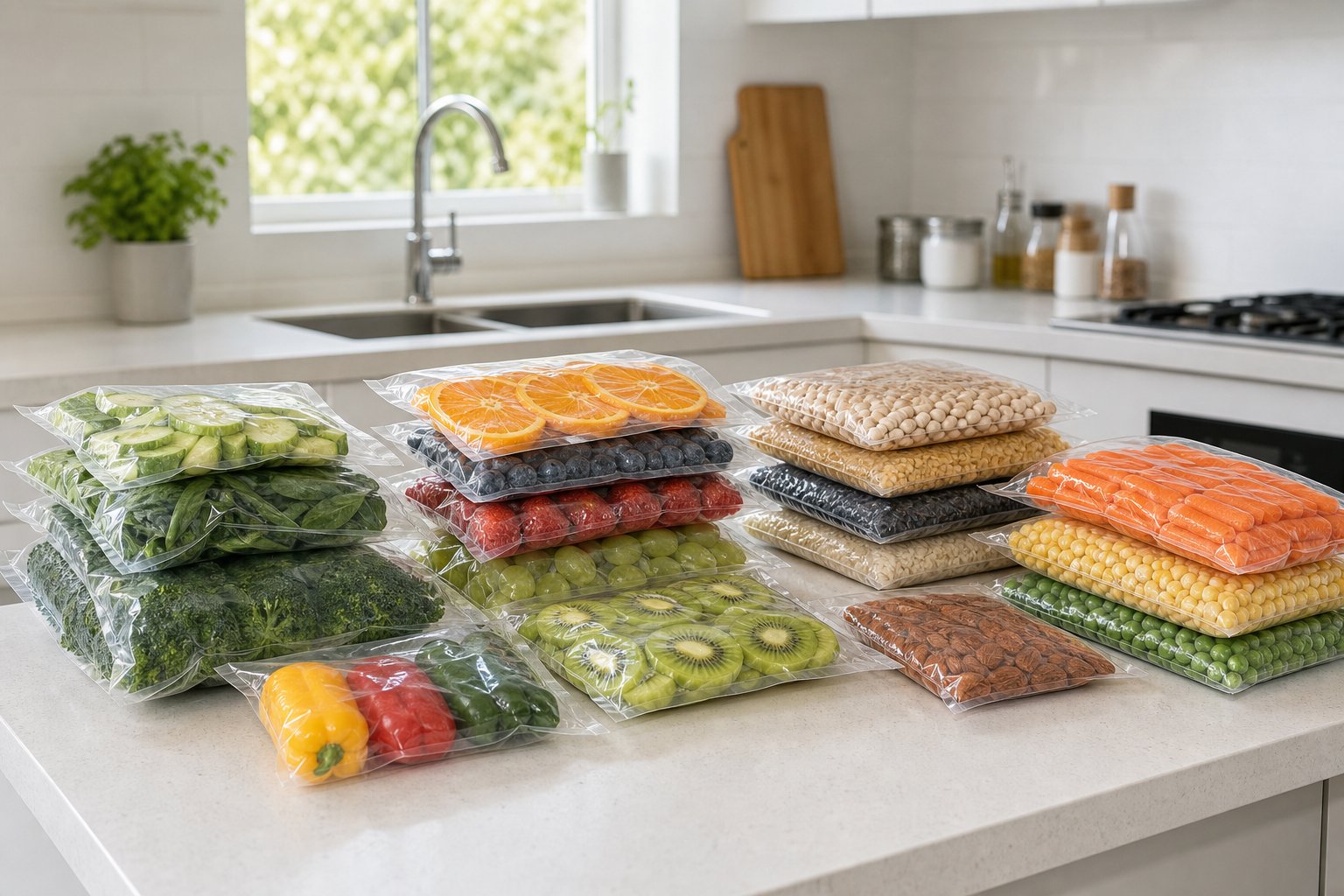
Check out our latest collection of compact vacuum sealer for food!
Small kitchens demand storage that works harder. When every drawer, shelf, and freezer corner matters, bulky containers can waste space fast. Vacuum bags solve that problem by removing excess air and creating flat food packages that are easier to stack, file, and organize.
Instead of storing food in awkward shapes, vacuum-sealed bags mold closely around meats, vegetables, grains, leftovers, and meal prep portions. The result is cleaner storage, better visibility, and more usable space in compact kitchens.
They also help protect food from freezer burn, reduce waste, and make bulk buying easier to manage. In this guide, you will learn why vacuum bags work so well, how to choose the right ones, and how to use them for fresher, more organized storage.
Key Takeaways
- Vacuum bags can shrink your food storage space by up to 50% by getting rid of air and making flat, stackable packages
- The compact design lets you organize freezers, fridges, and pantries efficiently and keeps food fresh longer
- Picking the right bags and sealing them well helps you get the most out of meal prep, leftovers, and bulk buys
How Vacuum Bags Enable Flat, Stackable Storage
Vacuum storage bags turn bulky food packages into neat, compressed shapes by sucking out the air and sealing them tight. You end up cutting storage volume in half, and you get these flat surfaces that are just so much easier to stack in small spaces.
The Science of Air Removal
Vacuum bags work by pulling air out of sealed packages and creating negative pressure inside. When you use a vacuum sealer, the machine draws the air out and then heat-seals the bag. Without air, food packages lose that puffiness and weird shape.
That’s the big difference between vacuum seal bags and regular storage. Standard containers or zip bags trap air around the food, so you’re basically storing a bunch of nothing. When you vacuum seal, you get rid of that wasted space.
Once the air’s gone, the pressure outside the bag pushes in on all sides, squeezing the contents into a compact form. The airtight seal keeps everything compressed, so air can’t sneak back in and puff up the package again.
Compression and Shape Transformation
Vacuum sealing doesn’t just make food smaller, it changes how it fits in your kitchen. Meats, veggies, and leftovers that used to take up weird, uneven spaces flatten out into neat rectangles. That’s why space saver bags work so well in small kitchens.
The bags hug the food tightly, leaving no gaps. A pound of ground beef that would fill up a big container becomes a slim, even patty. Soups and stews? Freeze them flat in vacuum bags instead of dealing with bulky containers.
Flattening food has other perks, too. More surface area touches the freezer shelf, so things freeze and thaw faster. The consistent thickness also makes it easier to manage portions for meal prep.
Why Stackability Matters in Small Kitchens
When you can stack your food vertically, you make the most of every inch. Flat vacuum-sealed bags let you layer them up, so a freezer drawer that used to hold four containers now fits eight or ten bags.
Properly sealed bags stay flat and sturdy, so you can stack them without everything sliding around. No more collapsing piles or shifting packages.
In a small kitchen, you need this kind of space-saving trick. Countertops and cabinets fill up fast, so making the most of your freezer and fridge is key. Vacuum bags help you keep things organized without needing extra furniture or storage bins.
Choosing the Right Vacuum Bags for Kitchen Use
Vacuum sealer bags come in all sorts of thicknesses and sizes. Picking the right ones for your sealer and your food can make a real difference in both food freshness and storage space.
Standard vs. Heavy-Duty Food-Grade Bags
Standard vacuum bags are usually about 3 mil thick, and honestly, they work great for everyday stuff, veggies, prepped ingredients, softer foods.
Heavy-duty bags (4 to 5 mil) give you more protection for things like bones, hard cheeses, or big cuts of meat. They also hold up better if you’re doing sous vide, since they can handle higher temps without falling apart.
Always go for BPA-free bags to keep chemicals out of your food. The good ones use multiple layers, polyethylene for flexibility, nylon or polyester to keep out air and moisture. This combo keeps food fresh way longer than those cheap, single-layer bags.
Size and Compatibility with Sealers
External vacuum sealers need bags with a bit of texture or little channels so air can escape during sealing. Chamber sealers work with both smooth and textured bags since they suck the air out of the whole package at once.
Measure your usual food portions before buying bags. Quart-sized ones are perfect for snacks and single servings, while gallon bags are better for family meals or bulk stuff. Having a few different sizes means you’re not wasting bag space on small items.
You can buy pre-cut bags or rolls. Rolls let you cut the size you need, which is handy for odd-shaped foods, but pre-cut bags are quicker if you’re meal prepping in a hurry.
Durability and Reusable Options
Reusable vacuum bags cost a bit more upfront ($0.50 to $1.50 each vs. $0.20 to $0.50 for single-use), but you get your money’s worth after a few uses. I wash mine with warm soapy water and a bottle brush to get into the corners.
If you clean them well and let them dry upside down, most reusable bags last 10 uses or more. Just keep them out of direct sunlight, and you’ll extend their life even more.
Thicker bags, whether reusable or not, just hold up better. The 4 to 5 mil ones resist tearing, especially when you’re yanking frozen food out of a jam-packed freezer.
Benefits of Vacuum Sealing for Food Storage
Vacuum sealing pulls air out of storage bags, creating a tight seal that slows bacteria, keeps moisture out, and locks in freshness. These conditions directly tackle the big headaches in food storage: spoilage, freezer burn, and waste.
Extending Food Freshness and Shelf Life
Vacuum packaging keeps food fresh longer by taking away the oxygen that bacteria and mold need to grow. When you seal food in vacuum bags, you’re basically telling those microbes, “Sorry, not today.”
Food in regular containers lasts maybe 1-3 days in the fridge. Vacuum sealed, it can last 1-2 weeks. Meat that would be good for six months in the freezer can stick around for 2-3 years when vacuum sealed.
It also slows down oxidation, so your produce stays bright and full of vitamins, and proteins don’t get that weird gray color.
Vacuum storage really shines for meal prep. Portion out proteins, chop veggies, or prep full meals ahead of time, you can pull out what you need all week, and it’ll still taste fresh.
Preventing Freezer Burn and Odors
Freezer burn happens when air gets to your frozen food and forms ice crystals, which suck out moisture and leave dry, bland patches.
Vacuum bags put a stop to that by sealing food away from air. No more ice crystals, no more freezer-burned meat. I’ve kept vacuum sealed steaks in the freezer for over a year, and they came out just fine.
The airtight seal also keeps strong smells from spreading. Fish, onions, curry, whatever you’ve got, it stays put in its own bag.
This matters most for pricey stuff. Losing a steak or shrimp to freezer burn is just painful, both for your dinner plans and your wallet.
Reducing Food Waste
Americans toss out almost 40% of their food, mostly because it spoils before anyone eats it. Vacuum sealing helps you actually use what you buy.
Bulk purchases finally make sense when you can freeze portions for months. Buy the big pack of chicken, seal individual servings, and take your time using them up.
You can also save seasonal produce or sale items for later, instead of scrambling to eat everything at once.
Plus, when you can see and organize your freezer with flat bags, you’re way less likely to lose food in the back and forget about it.
Top Use Cases: Meal Prep, Leftovers, and Bulk Storage
Vacuum seal bags really shine when you’re tight on space and want to keep food fresh. Whether it’s prepping meals for the week, storing leftovers, or buying in bulk, flat vacuum bags can totally change how much you fit in your kitchen.
Meal Prep and Portion Control
Meal prepping is so much easier with vacuum bags. Each bag holds a single serving or a meal’s worth of whatever you’re prepping, protein, grains, veggies.
It keeps everything the same size, so you can just grab and go. No more digging through stacks of containers.
Foods I often seal this way:
- Marinated chicken or pork chops
- Cooked rice or quinoa in 1-cup portions
- Chopped veggies for stir-fries
- Ground meat in quarter-pound packs
Since the bags fit right around the food, you don’t waste space. I can fit five or six days of meals in the same drawer that used to hold just two days’ worth of containers.
Freezer and Pantry Organization
Vacuum-sealed bags stack up like files instead of rolling around like loose containers. I stand them up vertically, labels facing out, so I can flip through and grab what I need.
Flat bags also solve the “freezer Tetris” problem. No more weird gaps between round containers, everything fits together, edge to edge.
For pantry stuff like nuts, dried fruit, or coffee, removing air keeps things fresh, and the flat bags slide right into tight cabinet spaces. Use a permanent marker to label each bag with what’s inside and the date.
Buying in Bulk Without Waste
Buying in bulk only saves money if the food doesn’t go bad first. Vacuum bags let you split up big packages right away and keep them fresh for months.
I’ll break down a five-pound pack of chicken thighs into meal-sized portions before freezing. Same goes for cheese, deli meats, and bread.
Bulk items I usually portion and seal:
- Family packs of meat or fish
- Bulk cheese (shredded or block)
- Big bags of frozen veggies
- Large containers of spices or baking supplies
The real win is you don’t have to rush to finish everything before it spoils. You seal up individual portions and use them at your own pace.
Efficient Space Management for Small Kitchens
Vacuum storage bags really do change the game for small kitchens. They compress food into flat packs that stack neatly and use about half the space of regular storage.
Maximizing Shelf and Drawer Space
Vacuum-sealed bags fix the problem of wasted vertical space in tight kitchens. Regular containers leave a foot or more of empty space between pantry shelves, but vacuum bags create flat packages you can stack right on top of each other.
Grains, nuts, dried fruit, and pasta all shrink down in vacuum bags. A five-pound bag of flour that used to sprawl across a shelf now takes up maybe half the space. Same goes for rice, beans, and other dry goods.
Drawers get way more organized, too. Instead of boxes tipping over or half-empty bags hogging space, flat vacuum-sealed packs line up neatly. You can label and store them upright, like files, so you see everything at a glance.
The best part? When you need to reorganize, these bags flex to fit your shelves, not the other way around.
Keeping Counters and Freezers Clutter-Free
Vacuum bags make freezer space so much easier to manage. Rigid containers and loosely sealed bags just leave air pockets and awkward shapes that waste valuable room. When you vacuum-seal, bags flatten completely and stack up like tidy little bricks.
Meat, veggies, and prepared meals all fit neatly once you pull out the air. That giant family pack of chicken breasts that used to hog a whole shelf? Now it slips in as a slim package you can squeeze between other things. Batch-cooked meals portion out into single servings and actually stay stacked, no more piles toppling over.
Better freezer and pantry organization helps keep counters clear, too. When you stash bulk items in vacuum bags, you’re not stuck with overflow cluttering up your workspace. Bread, cheese, and other foods stay fresh longer, so you don’t end up juggling a bunch of half-open packages on the counter.
Vacuum bags’ flat shape lets you use those weird, narrow spots that regular containers can’t reach. That awkward gap next to the fridge or the shallow drawer under the oven? Suddenly, it’s prime storage real estate.
Best Practices for Using and Maintaining Vacuum Bags
To really get the benefits of vacuum sealing, you’ve got to pay attention to a few details when packing, keep up with maintenance, and use some smart storage habits. These steps help your bags last longer and keep your food protected.
Proper Sealing Techniques
Start with the vacuum sealer connection point: it has to be totally clean and dry. If there’s any moisture or crumbs around the valve, you’ll lose your seal and air will sneak back in.
Lay items as flat as possible before pulling out the air. This helps everything compress evenly and keeps sharp edges from poking through the bag. Leave about two inches of space between your food and the seal line, otherwise, the closure won’t form right.
Don’t cram too much in. Overfilling puts uneven pressure on the seams and can cause leaks. If you use a vacuum sealer attachment, press steadily around the valve while sucking out the air to keep the connection tight.
After sealing, press gently on the bag to check the seal. You should feel firm resistance. If it feels squishy or you spot air pockets, just reseal it.
Cleaning and Reusing Bags Safely
Turn bags inside out after you use them and check for punctures or worn seams. Even tiny holes ruin the vacuum.
Wash bags with warm water and mild dish soap, really get into the corners, since gunk likes to hide there. Skip the harsh chemicals, since those can break down the plastic. Let bags air dry all the way before putting them away, because trapped moisture leads to mold.
Store clean bags flat in a drawer or hang them up with clips to avoid creases. Deep creases weaken the material and make leaks more likely next time.
If you spot any damage, just toss the bag. Quality vacuum bags usually last 5-10 uses if you handle them gently.
Long-Term Storage Tips
Keep sealed vacuum bags in cool, dry spots out of direct sunlight. Heat and UV rays break down plastics and weaken seals. Kitchen cabinets, pantry shelves, or under-counter spaces all work.
Stack bags flat instead of upright to spread weight out and keep seals from getting stressed. Put heavier bags on the bottom, lighter ones on top.
Check your stored bags every couple of months for air leaks. A little air loss over time is normal, but if a bag puffs up, the seal’s shot and you’ll need to reseal. Re-vacuum as needed to keep everything tight.
Keep bags away from anything sharp or rough. We like to label each bag with what’s inside and the storage date, using removable labels that peel off clean.
Frequently Asked Questions
Here are quick answers to common questions about using vacuum bags for small-kitchen storage, meal prep, and long-term organization.
How do vacuum storage bags help you stack pantry and cabinet items more neatly in a small kitchen?
Vacuum bags remove excess air and turn bulky items into flatter, more uniform shapes. This makes them easier to stack in cabinets, drawers, pantry bins, and freezer shelves.
Which vacuum bags hold their seal best for long-term storage of bulky items like blankets and seasonal linens?
Thicker bags with double-zip closures, strong one-way valves, and multi-layer construction usually hold their seal best. Check the valve and zipper area first if a bag starts to lose suction.
Do you need a hand pump, a compact electric pump, or a regular vacuum to get consistent results with vacuum storage bags?
A regular vacuum works fastest for large bags. A compact electric pump is useful for frequent small jobs, while a hand pump is best for travel or occasional use.
What foods and meal prep items are best suited for vacuum-seal bags, and which ones are better stored another way?
Vacuum-seal bags work well for meats, cooked grains, blanched vegetables, shredded cheese, and freezer meals. Soft berries, leafy greens, bread, and delicate foods are usually better in rigid containers.
How can you prevent punctures, leaks, and loss of suction when storing sharper or oddly shaped kitchen items?
Wrap sharp edges with paper towels, freezer paper, or a soft barrier before sealing. Avoid overfilling the bag, and store sealed bags flat so pressure stays even.
Are vacuum storage bags a practical option for travel and small-space living, or do they end up being more hassle than help?
They are practical for off-season items, bulk food storage, freezer organization, and travel packing. For items you use every day, open bins or containers may be easier.
Share:
Which Vacuum Bag Features Matter Most for Daily Reuse, Cleaning, and Storage?
Can Vacuum Storage Make Weekly Ingredient Access Easier Without Overfilling the Fridge?